Solution topic
Ketchup Bottling Line: Particles, Stringing, and Inner Seal at Bottle Mouth Determine Key Configuration
Configure sauce filling, multi-head line, heat or induction sealing, capping, and labeling according to ketchup particle size and viscosity, bottle and cap type, and inner seal str
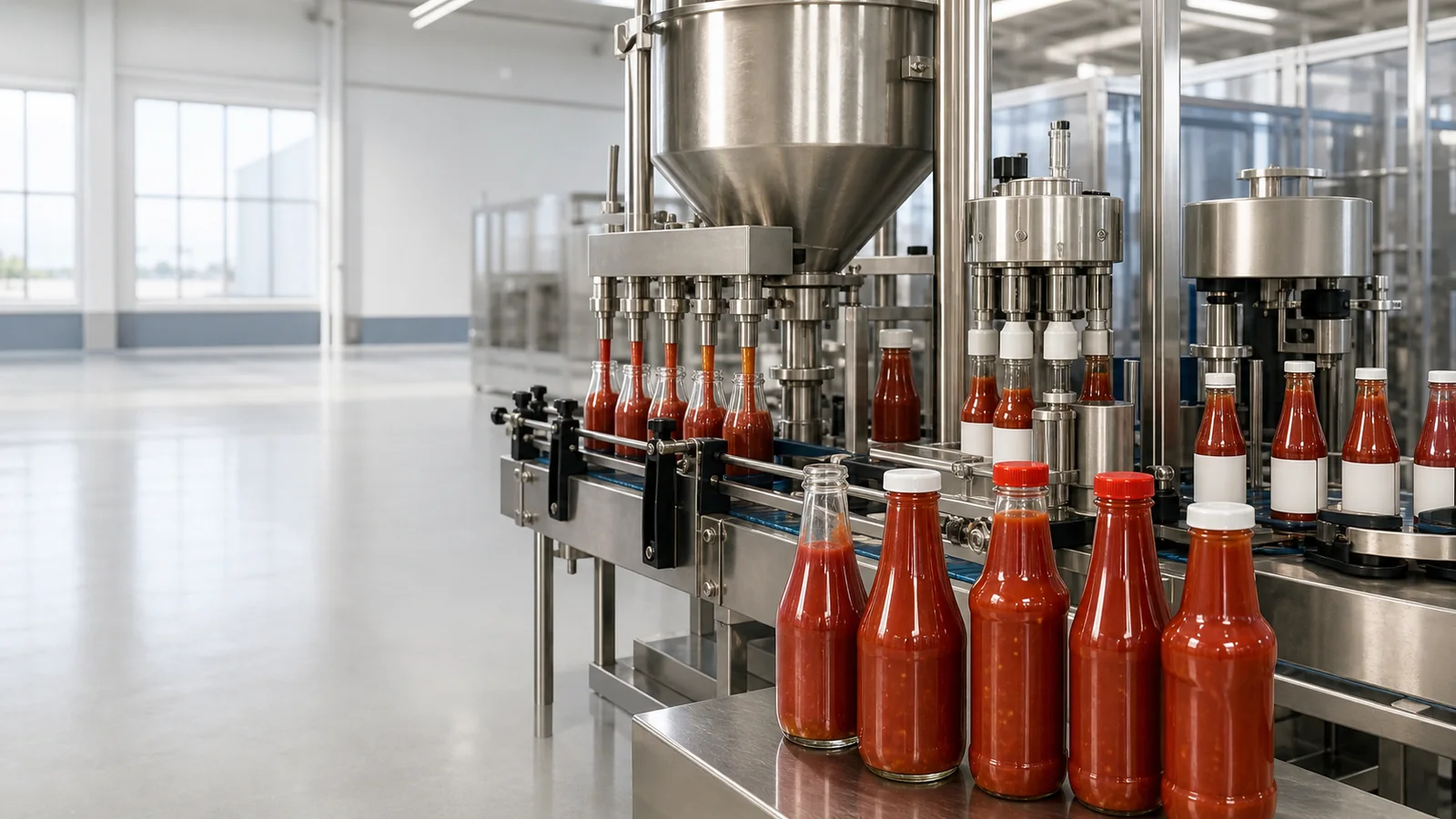
- Whether ketchup contains particles affects the filling pump and valve body; the cap structure determines whether heat sealing film or induction liner is needed before or after capping. Provide sauce and cap/film samples, filling temperature, fill volume, target capacity, and cleaning/changeover requirements.
Solution summary prepared for you
- For bottled ketchup, first use a ketchup piston filling machine to verify particle passage, stringing, and filling nozzle suitability. Do not decide the valve body based only on viscosity name.
- A multi-head servo liquid filling line should be evaluated after the sample process and target capacity are clear, and checked together with inner sealing, screw capping, and cleaning/changeover.
- Use in-line heat sealing when the film is placed directly on the bottle mouth. Use in-line induction sealing only when a matching aluminum foil liner is inside the screw cap and the cap closes stably.
Route comparison
- Suitable for projects that need to confirm particle passage, stringing, and fill volume process with actual ketchup, then plan the bottled downstream section.
- The ketchup piston filling machine makes it easy to build trial records for the valve body, filling nozzle, and supply around the official material.
- Particles, temperature, fill volume, cleaning, and bottle mouth cleanliness requirements must be specified. Re-check when the sample state changes.
- Without a representative sauce or when the bottle type is not yet determined, it is not appropriate to finalize valve body and filling nozzle details.
- First complete trial filling with the ketchup piston filling machine. If stringing is obvious, add an anti-drip, anti-stringing filling nozzle component for testing.
- Suitable for projects where the sample filling process is stable, target capacity is clear, and multiple filling heads need to connect with the bottled main line.
- A multi-head servo liquid filling line can expand filling stations on the established material process and check cycle time together with the downstream section.
- Supply, cleaning, bottle type changeover, and inner sealing and screw capping speed must be evaluated together. Do not simply increase the number of filling heads.
- If particle passage and flow-stop cut-off are still unresolved, continue with single-machine sample verification.
- Use a multi-head servo liquid filling line to carry the mature process, and evaluate a heated hopper and jacketed tank as needed.
- Suitable for projects where bottle type, screw cap, and inner seal structure are defined, and heat or induction sealing, capping, and marking need to be integrated into the main line.
- By splitting stations according to the actual cap structure, direct film lidding, cap liner, and threaded cap can each use corresponding equipment.
- Film or liner, bottle mouth, cap closure state, and process order all require sample confirmation. Labeling and coding are also affected by bottle orientation.
- When the cap and inner seal structure are not yet selected, the combination of heat sealer, induction sealer, or capper should not be fixed in advance.
- Use an in-line heat sealing machine for bottles for direct film lidding, an in-line induction aluminum foil sealing machine for cap liners, and an automatic screw capping machine for threaded caps, followed by labeling and coding.
Associated Equipment / Consumables
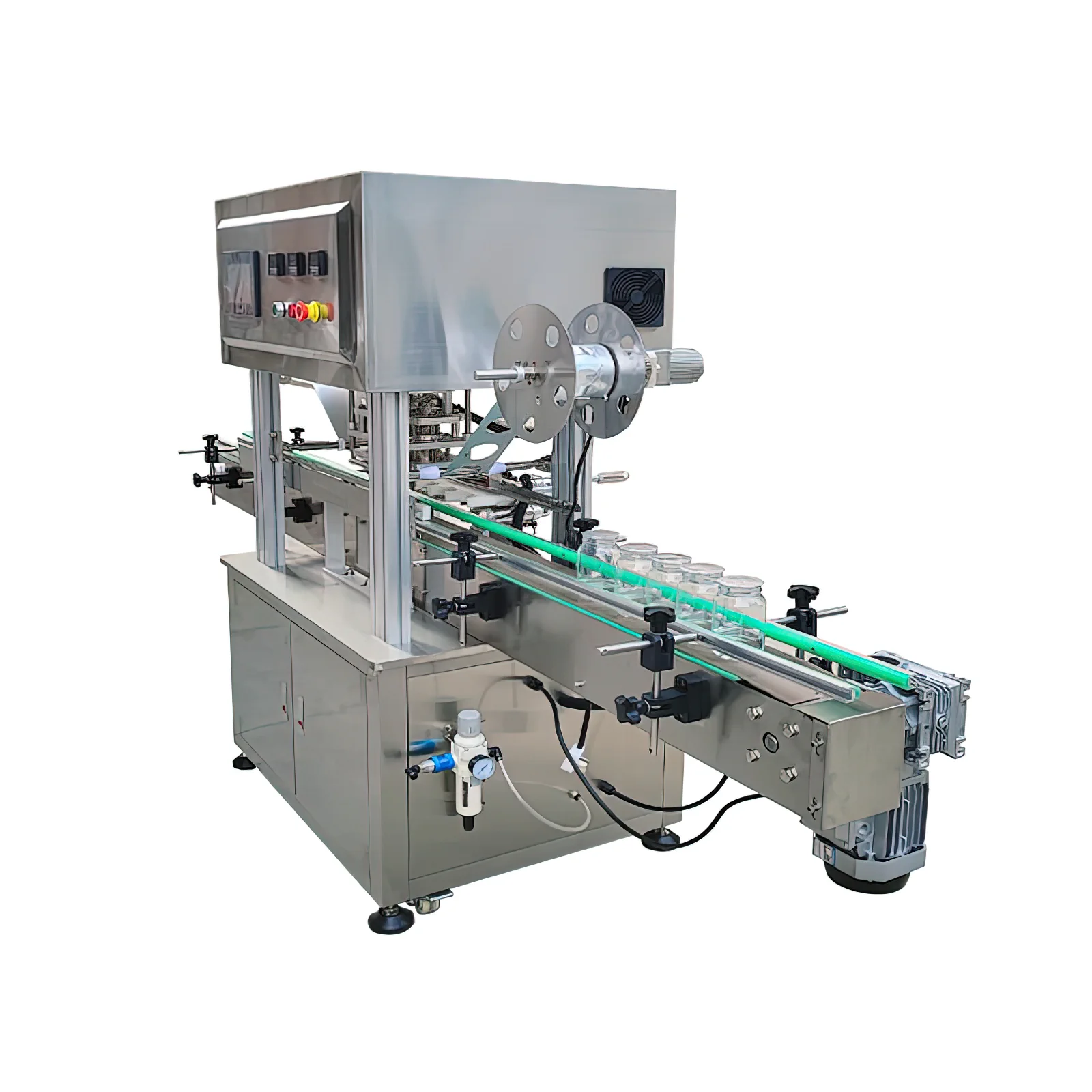 Inline Heat-Press Bottle Sealing Machine
Heat-seal foil or composite lidding directly to bottle and jar rims, with integration into an existing filling line configured per project. Test the container and seal layer before selecting positioning, film feed, se...
 Piston Sauce Filling Machine
Establish the sample process with a piston filling machine; Trial filling should cover the planned temperature and fill volume, and check whether sauce contaminates the bottle mouth, so t...
 Automatic Screw Capping Machine
Establish the sample process with a piston filling machine; Trial filling should cover the planned temperature and fill volume, and check whether sauce contaminates the bottle mouth, s...
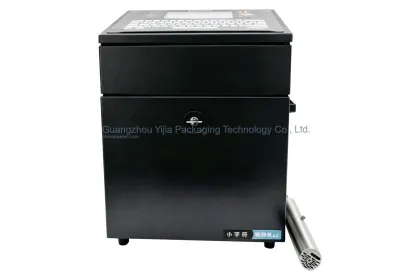 Date & Batch Inkjet Printer
First record the sauce and cap/film conditions; Particle and viscosity descriptions are only for initial communication. Valve passage, discharge cut-off, and bottle mouth cleanliness still...
Core process
Prepare actual ketchup, all bottle types, screw caps, and direct sealing film or cap liner, and state particles, stringing, and filling temperature.
The ketchup piston filling machine first verifies particle passage, metered discharge, and stringing after flow stops, then determines the filling nozzle and supply configuration.
After the sample filling results are stable and the target capacity is clear, a multi-head servo liquid filling line can be used to evaluate multi-head configuration and main line cycle time.
Use an in-line heat sealing machine for bottles when the film is placed directly on the bottle mouth. Only evaluate an in-line induction aluminum foil sealing machine when the aluminum foil liner is inside a matching cap.
The automatic screw capping machine confirms cap feeding, positioning, and tightening action based on the actual bottle body and threaded cap, and maintains the correct order with the inner seal structure.
After the filling, inner sealing, and screw capping cycle times are clear, arrange the labeling machine for round and square bottles and the date/batch number coding machine according to bottle type.
Sample details
Material data is used to test valve passage and discharge cut-off, and also helps determine whether heated supply or anti-drip components are needed.
Provide an official ketchup sample, stating visible particles, stringing state, planned filling temperature, fill volume, and cleaning requirements.The actual bottle sample affects filling nozzle position, inner seal contact, screw capping positioning, and label layout.
Submit glass bottles, PET bottles, or other planned bottle types, indicating mouth diameter, height, thread, and bottle body positioning area.This information determines the order of heat sealing, induction sealing, and screw capping. The film or liner should be provided together with the corresponding cap.
Send screw caps and state whether the bottle mouth will be directly film-lidded, use an aluminum foil liner inside the cap, or have no aluminum foil inner seal.The production combination is used to determine when to upgrade from single-head sample process to multi-head, and to verify the matching cycle time of each downstream section.
List the main bottle types, each fill volume, planned capacity, shifts, and changeover frequency between different specifications.Downstream data helps arrange labeling and coding, and also evaluates whether the main line flow suits daily cleaning and changeovers.
Provide label size, date/batch number position, bottle orientation, on-site space, and cleaning/changeover arrangements.Common selection mistakes
Use the actual sauce for trial filling and record particle passage, tailing after flow stops, and sauce residue on the bottle mouth.
First establish the sample process on the ketchup piston filling machine, then evaluate multi-head servo configurations based on production capacity.
Confirm the bottle, cap, film, or liner separately, and determine the correct order of heat sealing, screw capping, and induction sealing.
During trial filling, observe both the flow-stop action and the bottle mouth surface. If necessary, verify anti-drip, anti-stringing components.
When confirming the bottle type list, also provide label layout, batch number area, and changeover sequence, then arrange labeling and coding.
View detailed technical notes
First observe particles and stringing with an actual ketchup sample
The starting point of a bottling line is trial filling with the product. The passage of ketchup particles, production temperature, and trailing after discharge stops affect the valve body, filling nozzle, and bottle mouth cleanliness.
Bottle cap structure determines the sequence of inner sealing in the downstream process
After filling, not all products go to the same type of sealing machine. Film placed directly over the bottle mouth uses heat sealing, while aluminum foil liner inside a screw cap uses induction sealing once the capping conditions are stable.
Establish sample process with piston filling first
A piston filling machine for sauces is used to confirm whether particles pass through smoothly, the filling action, and the clean cut-off when stopping. If product sticks to the bottle mouth, nozzle adjustment should also be tested simultaneously.
Evaluate multi-head configuration after capacity is defined
After stable single-machine sample results, a multi-head servo liquid filling line can be expanded according to target capacity. Product supply and cleaning methods must be confirmed together with the multi-head configuration.
Test heat sealing film and induction liner separately
An inline heat sealing machine handles direct film sealing over the bottle mouth. An inline induction foil sealing machine is for the liner inside the cap. Both packaging types require testing with complete cap and film materials.
Determine screw capping action based on actual bottle caps
An automatic screw capping machine must arrange cap feeding and tightening according to bottle body positioning, cap type, and thread fit. Different inner seal structures also change the position of capping in the process.
Select insulation and anti-stringing options based on samples
Only evaluate insulated hoppers and jacketed tanks when the product requires temperature-controlled supply. If trailing is obvious after filling stops, then test anti-drip and anti-stringing filling nozzle assemblies.
Labeling and coding follow the main line's pace
After filling, inner sealing, and capping are stable, a labeling machine for round and square bottles and an inkjet date/batch coding machine are integrated according to bottle orientation, label layout, and traceability position.
Include cleaning and changeover in the full line acceptance
For projects with multiple bottle types, record sauce changeover, product line cleaning, cap changes, and label/batch adjustments to avoid accepting only a single-spec continuous run.
Common questions
How should filling equipment be selected first when ketchup contains particles?
Test the ketchup piston filling machine with the actual sauce first to see whether particles pass smoothly, the fill volume is stable, and whether the sauce strings when flow stops. Then decide on the valve body and filling nozzle.
When is a multi-head filling line needed?
After the sample filling process is stable and the target production capacity is clear, compare multi-head servo liquid filling lines and re-match the downstream cycle time.
For the inner seal of a ketchup bottle mouth, heat sealing or induction?
Choose heat sealing trial when the aluminum foil film is placed directly on the bottle mouth. Use the induction method only when an aluminum foil liner is fitted inside a matching screw cap and the cap closes stably.
Do all high-viscosity sauces need a heated hopper?
Not necessarily. Test the material state at the planned filling temperature. Only add a heated hopper and jacketed tank if the supply temperature needs to be controlled.
Does stringing affect sealing?
If the sauce drags onto the bottle mouth after flow stops, it may interfere with the film, liner, or cap contact. Try an anti-drip, anti-stringing filling nozzle and check that the bottle mouth is clean.
When should labeling and coding be integrated into the main line?
First get the filling, inner sealing, and screw capping cycle times running smoothly, then arrange the downstream section based on label layout, batch number position, bottle orientation, and changeover plan.