Solution topic
How to Choose Large-mouth Pails Filling and Sealing Cap Pressing? Start With Pail Mouth, Film Material, Cap Type and Filling Method
Large-diameter pail packaging should not be selected by sealing machine name alone. First confirm pail capacity, mouth structure, film or foil liner, cap type, material condition, and target output, then decide between heat-press sealing, induction sealing, capping, or a filling and sealing line.
- Large-diameter pail packaging should not be selected by sealing machine name alone. First confirm pail capacity, mouth structure, film or foil liner, cap type, material condition, and target output, then decide between heat-press sealing, induction sealing, capping, or a filling and sealing line.
- How to Choose Filling, Sealing and Cap Pressing for Large-Mouth Pails
Start With the Current Production Conditions
We need to pack sauce in 20-liter plastic pails, including filling, sealing, and capping. How should the equipment be selected?
First determine the packaging route
Large-diameter pail packaging should not be selected by sealing machine name alone. First confirm pail capacity, mouth structure, film or foil liner, cap type, material condition, and target output, then decide between heat-press sealing, induction sealing, capping, or a filling and sealing line.
Heat-Press Aluminum Foil Sealing + Outer Cap Pressing
Suitable for: Food or chemical drum projects with flat rims requiring direct heat sealing of aluminum foil onto the drum rim, then pressing a plastic cap. Advantages: Direct heat seal provides visible seal integrity, ideal for leak and moisture sensitive products. Limitations: Confirm rim flatness, film heat-seal layer compatibility, and drum ability to withstand sealing pressure. Not recommended: For severely deformed rims or non-heat-sealable films, evaluate induction foil sealing. Equipment direction: Our large-diameter drum heat sealing machine seals foil, followed by automatic capping machine for outer cap.
Induction Foil Sealing + Screw Capping
Suitable for: Plastic pail projects where the cap already has an aluminum foil liner, sealed by induction heating to bond the liner to the pail opening. Advantages: Non-contact sealing, does not affect pail opening appearance, suitable for high-speed inline production. Limitations: Pail opening must be plastic; aluminum foil liner must fit tightly with cap; induction effect affected by diameter and material. Not recommended: If pail opening is metal or paper can, induction effect is unstable; consider heat sealing. Equipment direction: Our water-cooled induction aluminum foil sealing machine or tabletop air-cooled induction aluminum foil sealing machine can perform inline or offline induction sealing; upstream can be equipped with an automatic capping machine.
Weighing Filling + Heat-Press Sealing + Cap Pressing Line
Suitable for: Large-capacity barrel liquid or sauce, requiring precise weight-based filling, and automatic sealing and capping in-line. Advantages: Filling tolerance needs to be tested with the product; sealing and capping are completed in one step, reducing manual intervention, suitable for continuous production. Limitations: Need to confirm barrel dimensional stability, nozzle drip prevention, and front/back section rhythm matching. Not recommended: When barrel specifications change frequently or production capacity is low, individual machines combined are more flexible; the line investment is larger. Equipment direction: Our weighing barrel filling machine can fill accurately, followed by a large-diameter barrel heat sealing machine and automatic screw capping machine, connected by food-grade conveyor.
Recommended equipment route: Sample and container confirmation
Pail-mouth size, film heat-seal layer, and lid structure affect tooling and sealing parameters, so they must be confirmed first.
Recommended Equipment Route: Filling Equipment
For large pails, weighing filling is usually more accurate, while servo piston filling suits sauce-type materials.
Recommended Equipment Route: Sealing Equipment
Choose heat-press or induction sealing according to film type, and match it with the pail mouth and lid.
Recommended equipment route: press-capping equipment
Outer-cap pressing or screw capping should be selected according to cap structure, while sealing and torque stability must be confirmed.
Recommended Equipment Route: Conveying and Downstream Handling
In-line conveying can improve efficiency, and coding is used for production date and batch traceability.
Route comparison
- Suitable for food or chemical pail projects with flat pail mouths, where aluminum foil film is heat-sealed directly on the mouth before pressing a plastic outer lid.
- Foil film is heat sealed directly to the pail mouth, giving a visible seal suitable for products requiring strong leak and moisture protection.
- Pail-mouth flatness, heat-seal layer compatibility, and whether the pail can withstand sealing pressure must be confirmed.
- If the pail mouth is badly deformed or the film cannot be heat sealed, evaluate an induction foil sealing route first.
- Our large-diameter pail heat-sealing machine can complete foil film heat sealing, and can be followed by an automatic capping or lid-pressing machine.
- Suitable for plastic pails whose lids already contain foil liners, where induction heating seals the liner to the pail mouth.
- Non-contact sealing does not affect bucket-mouth appearance and suits high-speed line production.
- The pail mouth must be plastic, and the foil liner must fit tightly with the cap. Induction results are affected by mouth diameter and material.
- If the pail mouth is metal or paper material, induction performance may be unstable. Heat sealing is recommended instead.
- Our water-cooled induction aluminum foil sealer or desktop air-cooled induction aluminum foil sealer can perform induction sealing online or offline, and can be paired with an automatic capping machine upstream.
- Suitable for large-capacity drum liquid or sauce, requiring weight-based precise filling, with automatic sealing and capping in a fully automatic line.
- Filling accuracy should be tested with the actual material. Filling, sealing, and capping in one pass reduces manual handling and suits continuous production.
- Confirm bucket dimensional stability, anti-drip filling nozzle, and upstream/downstream cycle matching.
- If pail sizes change frequently or output is not high, a stand-alone machine combination is more flexible and the connected-line investment is larger.
- Our weighing-type pail filling machine provides accurate filling, followed by a large-diameter pail heat sealing machine and automatic screw capping/crimping machine, connected by a food-grade conveyor line.
Core process
Associated Equipment / Consumables
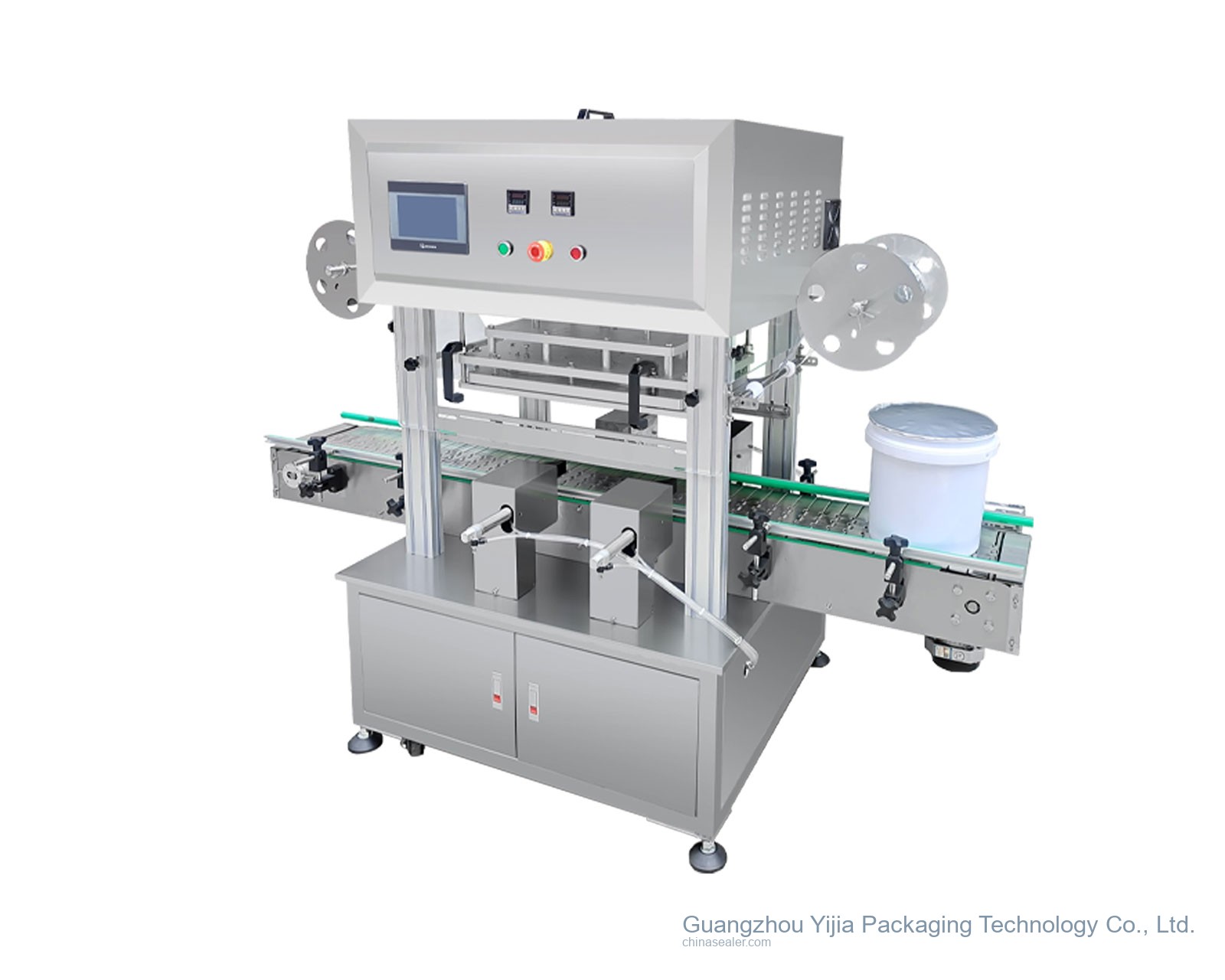 Large-Diameter Pail Heat Seal Sealer
Sample and container confirmation; Pail-mouth size, film heat-seal layer, and lid structure affect tooling and sealing parameters, so they must be confirmed first; Pail, Film Mate...
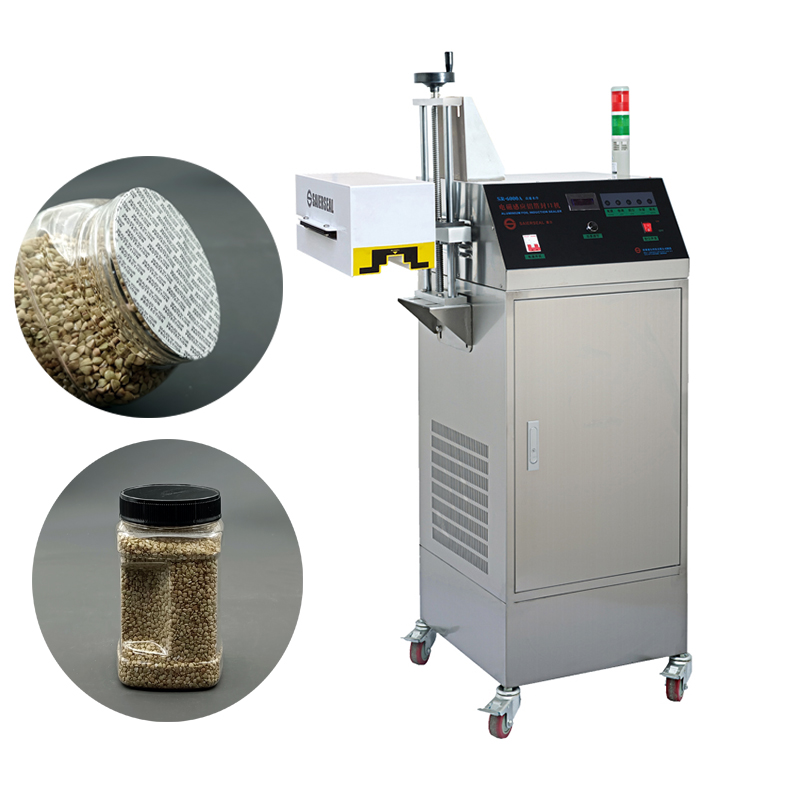 Water-Cooled Induction Aluminum Foil Sealing Machine
Sample and container confirmation; Pail-mouth size, film heat-seal layer, and lid structure affect tooling and sealing parameters, so they must be confirmed first;...
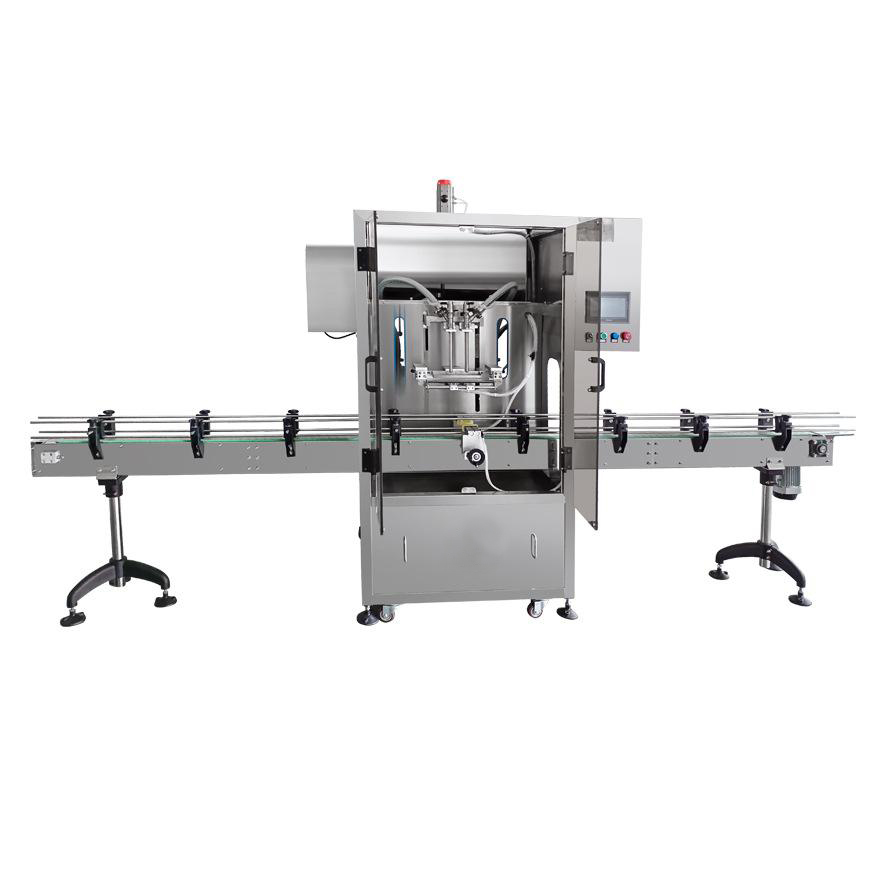 Servo Piston Liquid Filling Machine
Filling Equipment; For large pails, weighing filling is usually more accurate, while servo piston filling suits sauce-type materials; Weighing Pail Filling Machine or Servo Piston...
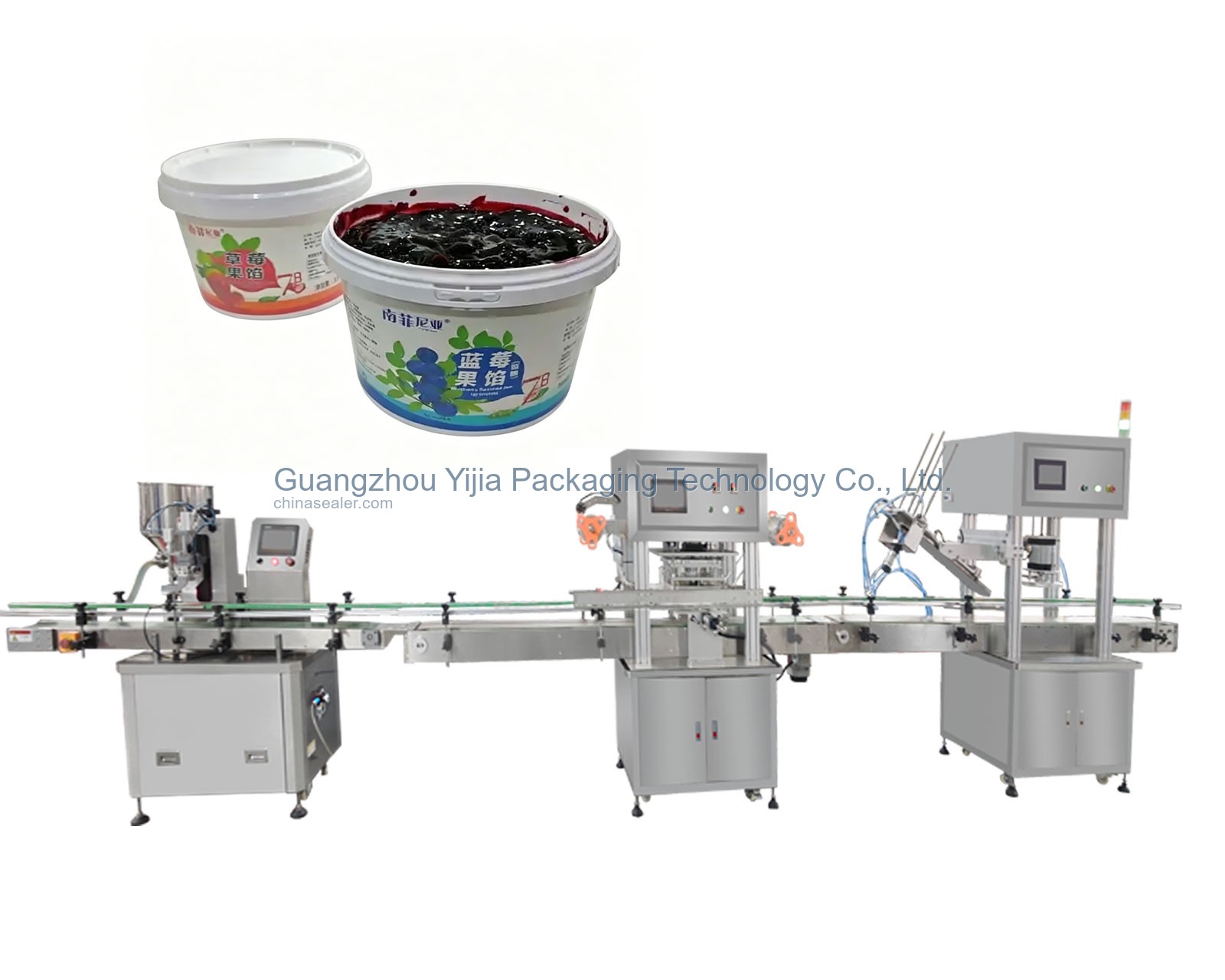 Paper Can / Plastic Pail Aluminum Foil Sealing and Capping Machine
Conveying and Downstream Handling; In-line conveying can improve efficiency, and coding is used for production date and batch traceability; food-grad...
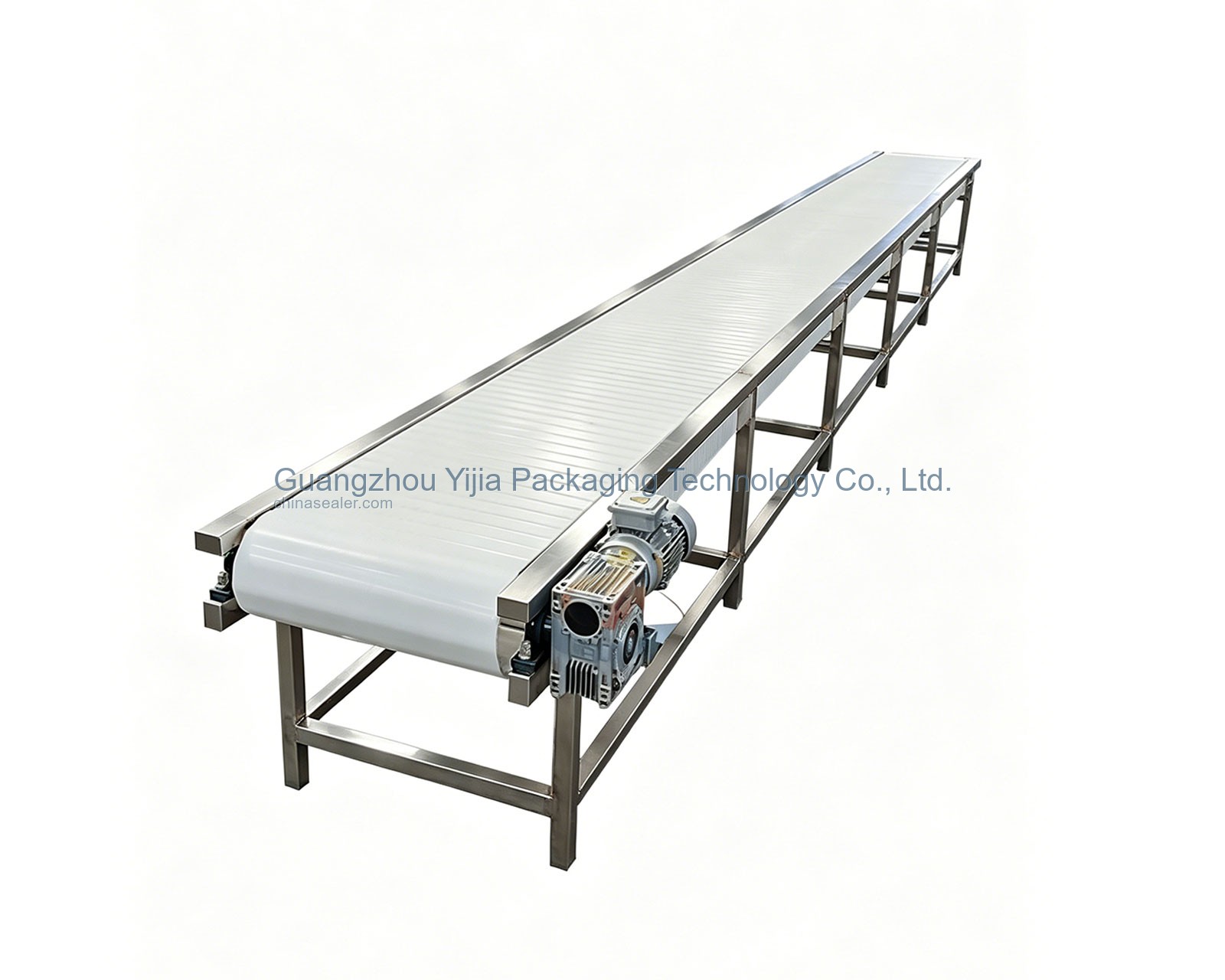 Food-grade conveyor line
Conveying and Downstream Handling; In-line conveying can improve efficiency, and coding is used for production date and batch traceability; food-grade conveyor and date/batch inkjet coder
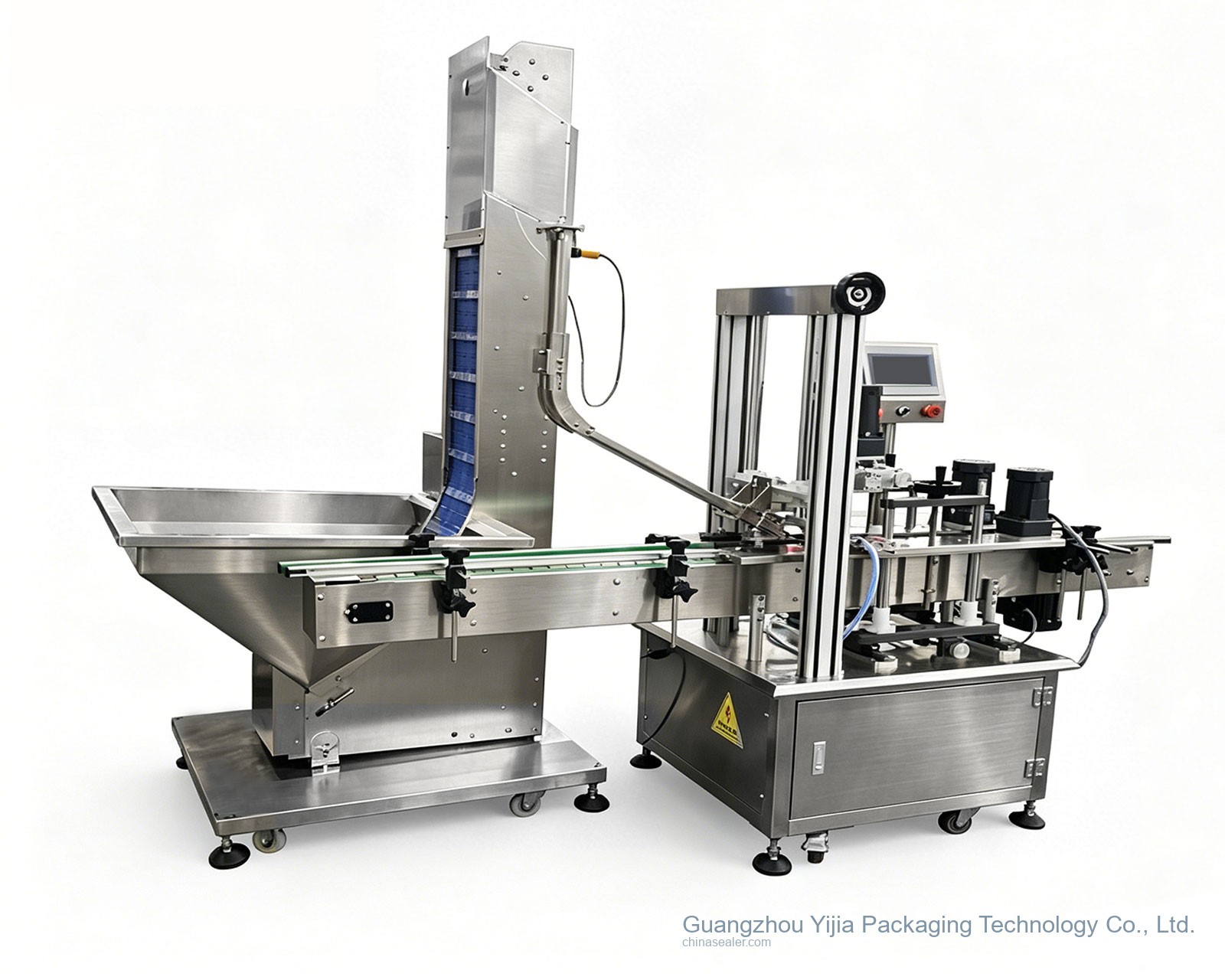 Automatic Screw Capping Machine
Sample and container confirmation; Pail-mouth size, film heat-seal layer, and lid structure affect tooling and sealing parameters, so they must be confirmed first; Pail, Film Material...
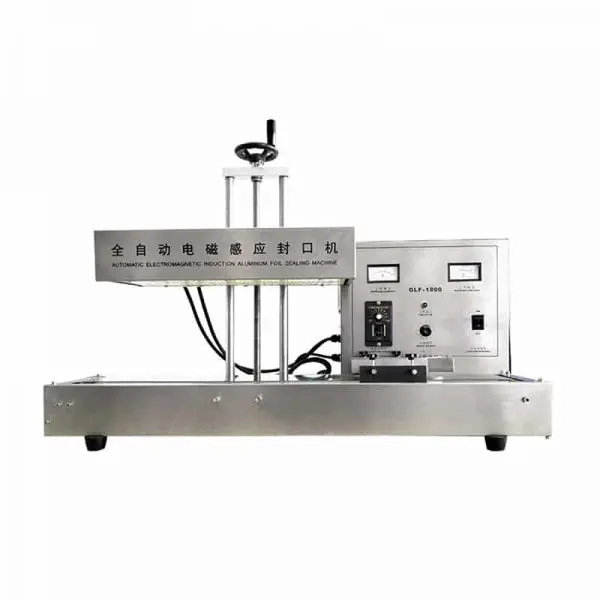 Benchtop Air-Cooled Induction Aluminum Foil Sealer
Sample and container confirmation; Pail-mouth size, film heat-seal layer, and lid structure affect tooling and sealing parameters, so they must be confirmed first; P...
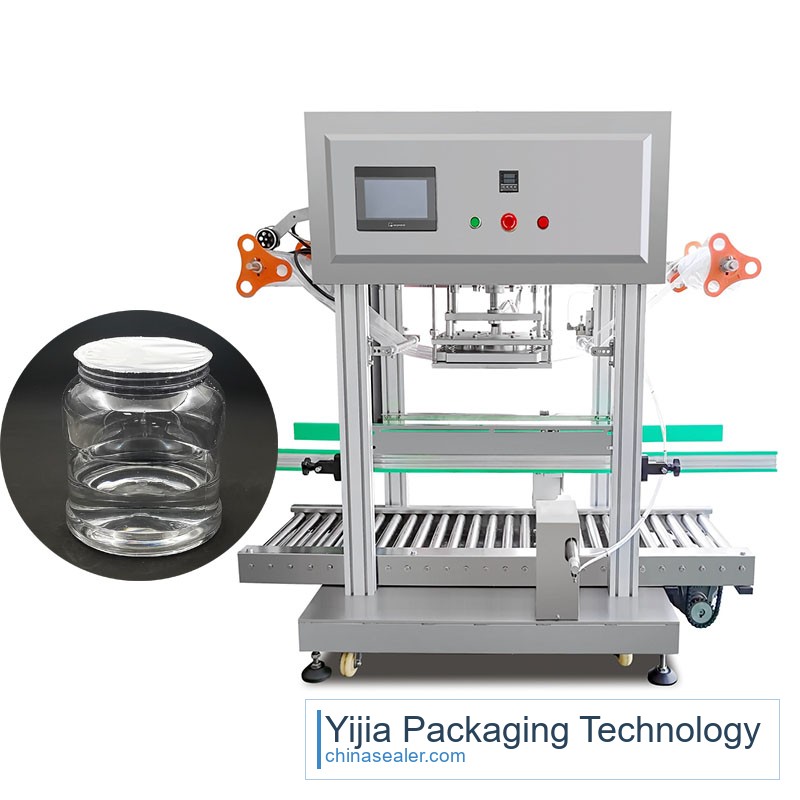 Bottle Inline Heat Press Sealer
Sample and container confirmation; Pail-mouth size, film heat-seal layer, and lid structure affect tooling and sealing parameters, so they must be confirmed first; Pail, Film Material...
Sample details
Photos and dimensions can first determine container positioning, mold direction, and whether sample testing is needed.
Pail photos and dimensions, including mouth diameter, height, and mouth flatness, help judge tooling and sealing method.Film material and liner affect sealing temperature, pressure, dwell time, and feeding method.
Film or aluminum foil liner samples are used to test heat sealing or induction sealing performance.The lid structure determines the capping method (press, screw, or place) and whether inline integration is needed.
Cap samples, such as outer cap, inner plug, and aluminum foil liner, are used to confirm cap pressing or capping solution.Capacity target determines single machine, semi-automatic, or continuous inline configuration, and also affects the quotation range.
Target output, such as pails per hour, and whether the line will be connected affect machine configuration and takt time.The state of the contents affects the filling method, contact materials, anti-drip, and safety configuration.
Material condition, such as viscosity, particles, and whether heating is needed, is used to select the filling pump and hopper.Photos and dimensions can first determine container positioning, mold direction, and whether sample testing is needed.
If the information is not complete, send available photos and dimensions first. We will judge the route first and then provide a confirmation checklist.Common selection mistakes
Common questions
Yes. First send photos of the drum, approximate dimensions, and target output. We will determine the approach and then advise which samples are needed.
Need drum samples, film or aluminum foil liner, lid samples, material description, target capacity, and whether inline. Incomplete info is also acceptable for initial discussion.
Production capacity determines whether the equipment is a stand-alone machine, semi-automatic, or fully automatic integrated line. Low speed allows manual or semi-automatic options; high speed requires automatic feeding, line conveying, and inspection.
The heat seal layer, thickness, and material of the film affect seal strength and sealing effect. Different container mouth materials require matching films; sample testing is mandatory.
Sealing effectiveness must be confirmed through sample testing, including adjustment of heat seal temperature, pressure, time, or induction power parameters, as well as leak testing.
If high capacity, high labor cost, or continuous production is required, an integrated line is recommended. For small batches or frequent changeovers, single machines offer more flexibility.