Solution topic
How to Select Wide-Mouth Pail Filling, Film Heat Sealing and Lid Pressing
Configure filling, large-diameter sealing, cap pressing or screw capping lines according to pail material, metering method, heat-seal film or aluminum foil gasket, and outer cap st
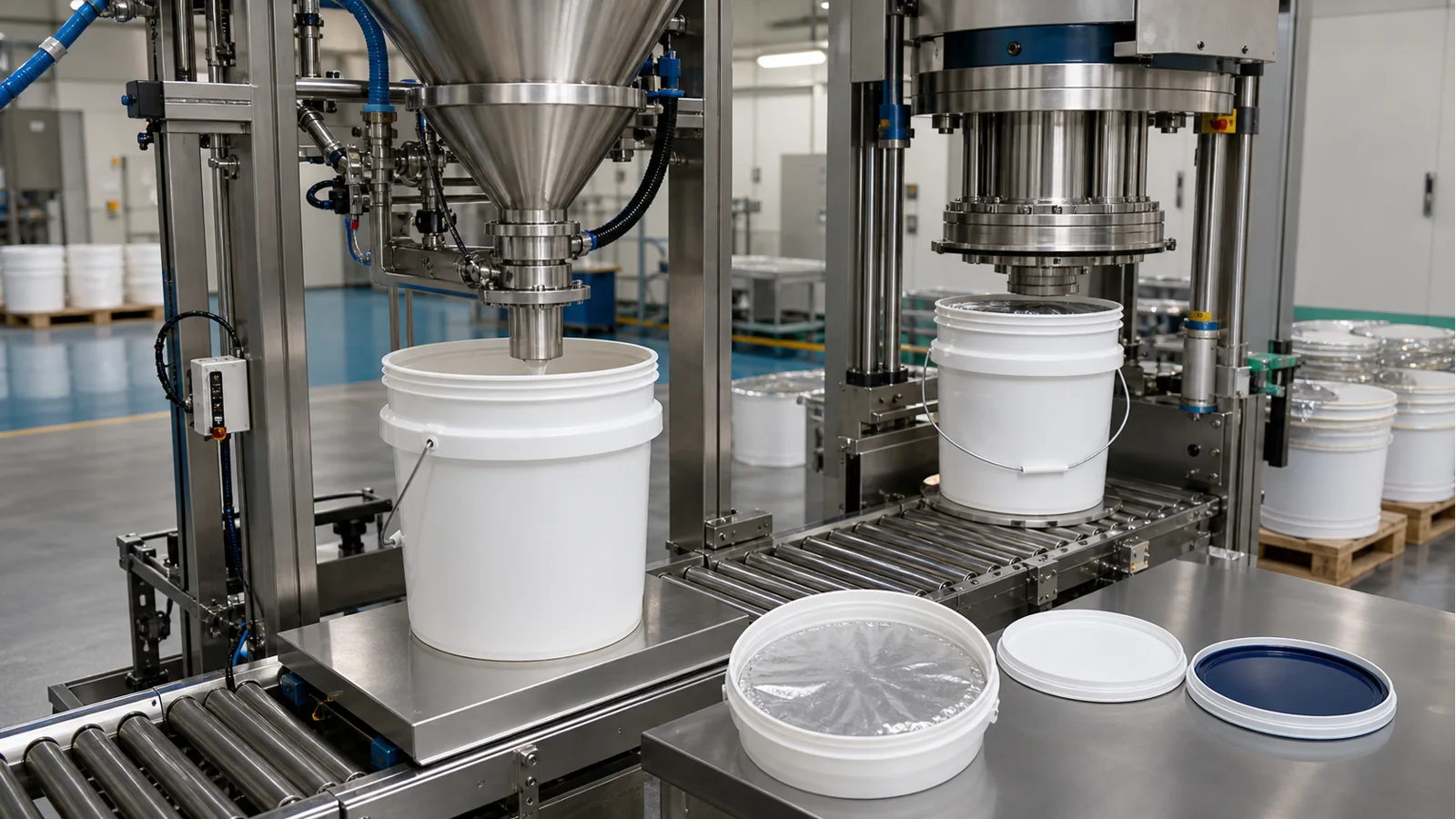
- Food sauces, pastes, and chemical liquids may use weighing or piston filling separately, and direct rim film sealing and cap inner gaskets are not the same sealing method. Please submit pail cap film samples, material status, safety data, target capacity, and on-site connection conditions.
Solution summary prepared for you
- For food and chemical pail line selection, split into three judgments: material determines piston or weighing filling, pail mouth film structure determines direct heat sealing or film sealing with cap pressing, and cap type determines sc...
- For direct film on the pail mouth, evaluate the large-diameter pail heat sealing machine. When aluminum foil inner seal is followed by outer cap pressing, evaluate the paper can/plastic pail aluminum foil sealing and cap pressing machine.
- Cap inner gasket induction and direct film on the pail mouth are not the same structure; if the project uses a gasket, the gasket, container material and pressing relationship must be checked separately.
Route comparison
- For packaging structures where aluminum foil or composite film is directly placed on the pail mouth and heat sealed.
- The film seal can be verified as an independent station and recorded separately from subsequent outer cap actions.
- Pail mouth flatness, film matching and post-filling cleanliness must be confirmed through official samples.
- When actually using cap inner gaskets, or when film sealing and outer cap pressing must be completed at the same station, compare other directions.
- Evaluate the large-diameter pail heat sealing machine; the contact surface is determined by actual pail film samples.
- For viscous pastes, first evaluate the servo piston liquid filling machine; for large pail projects, also evaluate weighing according to material and metering target.
- Verify the metering process and sealing process separately first, which can more clearly locate material or pail mouth problems.
- Material viscosity, particles, temperature, target fill volume and post-filling pail mouth condition all need trial material confirmation.
- Without representative material or safety data, the filling structure and contact parts should not be locked.
- Compare between servo piston liquid filling machine and weighing pail filling machine based on actual material.
- Used for aluminum foil inner sealing followed by outer cap pressing, or for screw-tightening threaded outer caps after the main sealing is completed and then connecting to conveying.
- Cap pressing or screw tightening can be arranged separately according to the outer cap structure, and then conveying can be combined after each single machine is stable.
- Pail cap film must be confirmed as a set, and full-load pail stability and cycle time of each station must be verified.
- When pail types change frequently, the main sealing is not yet stable, or on-site safety conditions are not clear, keep the single-machine approach first.
- Evaluate paper can/plastic pail aluminum foil sealing and cap pressing machine, automatic screw capping machine, and automatic feeding conveying sealing line according to the structure.
Associated Equipment / Consumables
 Large-Diameter Pail Heat Seal Sealer
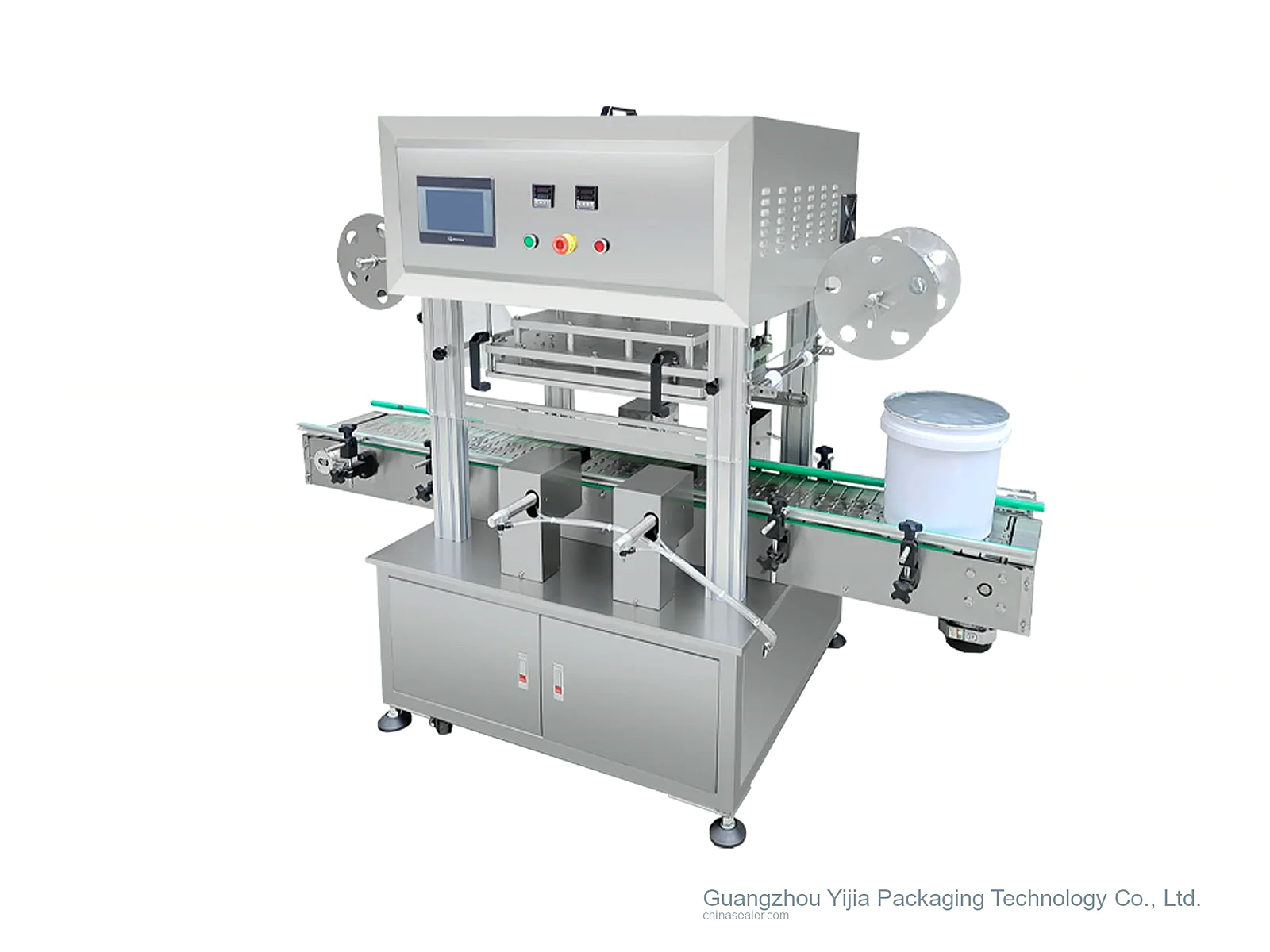
For heat sealing pre-cut film onto wide-mouth plastic, food or coating pails. The rim geometry, sealant layer, product contamination, film positioning and outer-lid method determine the line; confirm with production p...
 Servo Piston Liquid and Paste Filling Machine
Pail cap film and material documentation check; Food sauces, pastes and chemical liquids cannot share an unverified filling and sealing setting; project boundaries should...
 Paper Can and Plastic Pail Foil Heat Sealing and Capping Machine
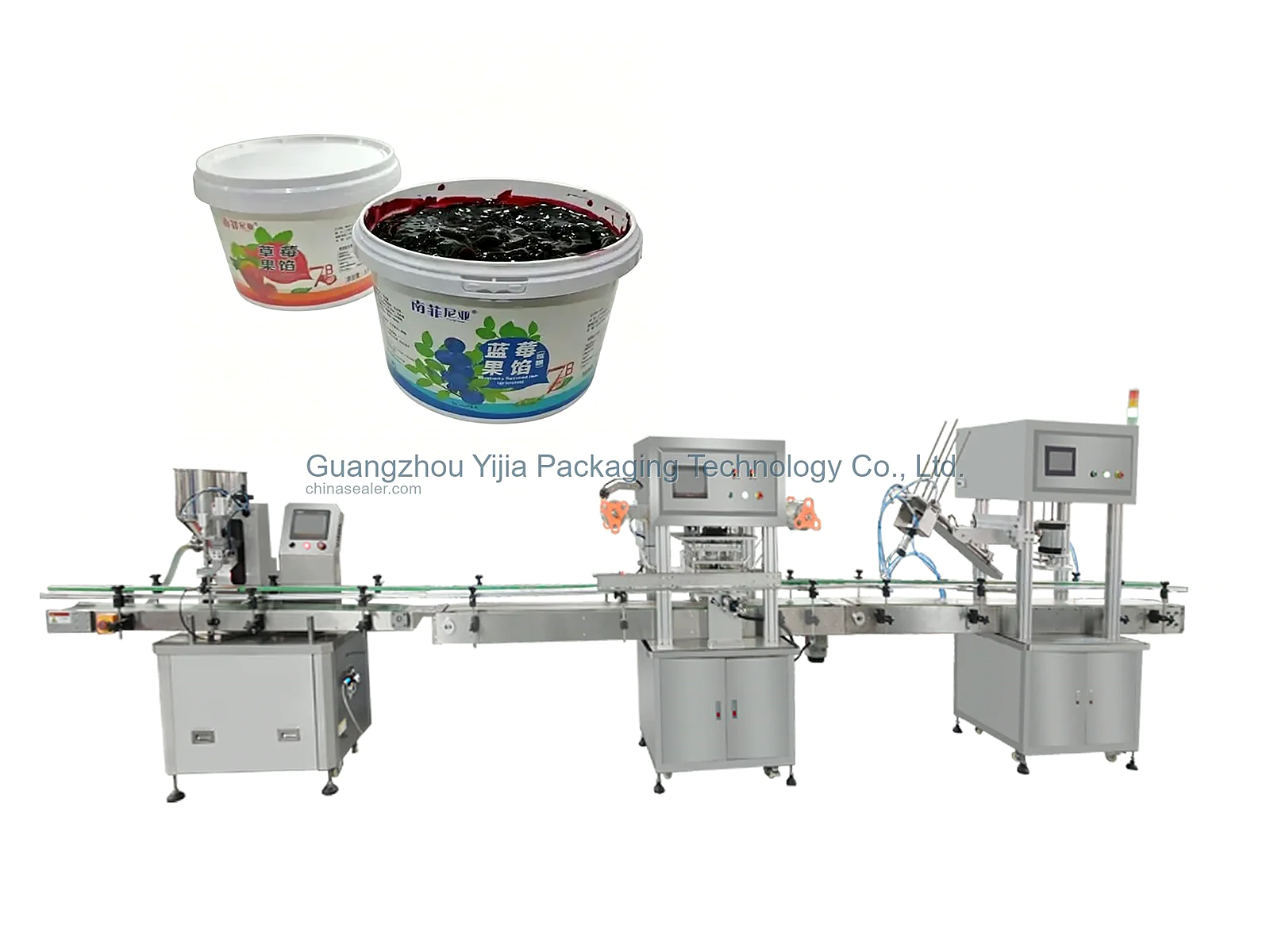
Outer cap screw tightening and pail body stability; For soft pails, high center of gravity or easily deformable full pails, first verify clamping and c...
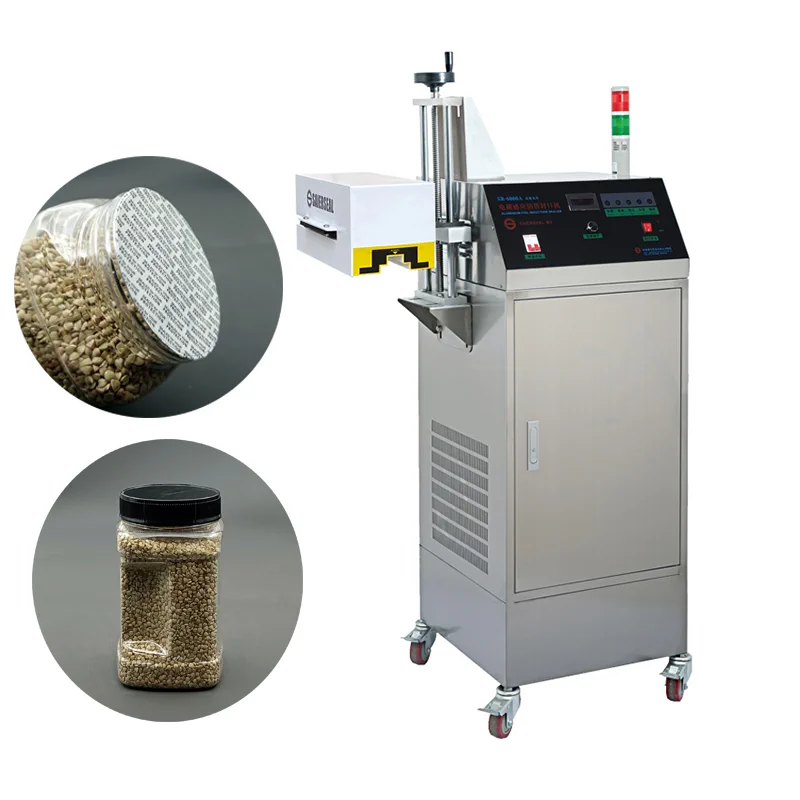 Water-Cooled Inline Induction Cap Sealer
Pail cap film and material documentation check; Food sauces, pastes and chemical liquids cannot share an unverified filling and sealing setting; project boundaries should be r...
Core process
First assemble the pail body, outer cap, sealing film or gasket into a sample set, and submit material condition, safety data, planned cycle time and on-site material in/out conditions.
For pastes and viscous liquids, first evaluate the servo piston liquid filling machine with actual material. For large pail projects, compare the weighing pail filling machine according to material and metering target.
When directly placing film on the pail mouth and heat sealing, evaluate the large-diameter pail heat sealing machine; the contact surface is confirmed with pail samples and official film.
When the project requires aluminum foil inner seal followed by outer cap pressing, evaluate the paper can/plastic pail aluminum foil sealing and cap pressing machine.
For threaded outer caps, evaluate the automatic screw capping machine according to cap type and pail body clamping, and record opening and transport requirements after tightening.
After filling, film sealing and outer cap actions are each stable, evaluate the automatic feeding conveying sealing line and necessary downstream coding according to the planned cycle time.
Sample details
Pail mouth contour, flatness and pail body stability are used to determine positioning, heat seal contact and screw capping clamping.
Please submit the main pail type, pail mouth and full pail body samples or clear documentation.Direct film lidding and cap inner gasket require different equipment actions and cannot be combined into one 'aluminum foil sealing' requirement.
Please provide the official film or gasket and state its actual position in the pail cap assembly.Threaded caps, press-on caps and snap-fit structures correspond to different cap feeding and closing actions.
Please submit actual samples of outer caps, inner plugs or snap-fit parts matching each pail body.The planned cycle time is used to configure pail loading/unloading, buffering, conveying and workstation integration.
Please specify the production cycle time, whether it is continuous operation, and existing upstream and downstream equipment.Viscosity, particles, temperature and risk characteristics jointly limit the filling method, contact parts and on-site configuration.
Please submit representative materials, process conditions and applicable safety data, and state whether temperature management is required.When documentation is insufficient, first judge the three main lines of material metering, pail mouth film sealing and outer cap closure, then list the sample supplement list.
You can first send pail lid film photos, material description, planned cycle time and site photos, then send samples based on the preliminary judgment.Common selection mistakes
Direct heat sealing film on the pail mouth and aluminum foil gasket inside the outer cap correspond to different heating and assembly relationships.
Residue of sauces, pastes or chemical liquids on the rim will change the heat seal contact; filling finish and cleaning need to be verified simultaneously.
The suitability of piston or weighing also depends on material flow, particles, temperature and metering target.
Pail wall deformation, center of gravity and cap structure will change screw capping and conveying; verify with full or equivalent samples.
The contact, environment and protection requirements of chemical liquids must be determined by project safety data and on-site conditions.
View detailed technical notes
First examine the product, pail rim, and outer cap separately
Large pail packaging involves metering, rim film sealing, and outer cap closure. Food sauces, pastes, and chemical liquids have different filling conditions, and direct film lidding and cap inner gaskets cannot be treated as the same sealing method.
Three types of judgments determine the equipment combination
Product flow and metering targets determine piston or weighing filling. Whether the pail rim is directly film-lidded determines the heat sealing process. Whether the outer cap is pressed or screw-threaded determines the subsequent capping equipment.
How to configure direct film lidding on the pail rim
When the pail rim is directly film-lidded and heat-sealed, evaluate a large-diameter pail heat sealing machine. The pail sample and formal film material must be tested together, and residual material on the rim after filling, pail body compression, and discharge status must be observed.
Filling method is determined by actual materials
For pastes and viscous liquids, first verify a servo piston liquid filling machine with representative materials. For large pail projects, a weighing-type pail filling machine can also be evaluated based on material and metering targets; do not conclude based only on pail capacity.
How to connect film sealing, cap pressing, and conveying
When aluminum foil inner sealing followed by outer cap pressing is required, evaluate a paper can/plastic pail aluminum foil sealing and cap pressing machine. For threaded outer caps, evaluate an automatic screw capping machine according to the cap type. After each single machine is stable, connect conveying according to the cycle time.
Complete pail cap and film samples should be available first
Please submit the pail body, outer cap, film material or gasket, and indicate their assembly sequence. Pail rim flatness, full-load deformation, and clamping position all affect film sealing and screw capping.
Test piston and weighing separately with materials
During material testing, record product flow, particles, temperature, metering results, and filling nozzle tail-off, and observe whether the pail rim remains clean and sealable.
Accept sealing and cap closure by item
Film seal appearance and seal inspection, outer cap pressing or screw tightening, and post-handling re-inspection should be recorded separately to avoid using a general 'sealed well' conclusion to cover multiple processes.
Also verify safety and space for the integrated line
After confirming the main process, plan pail feeding/discharging, buffering, conveying, and marking. For chemical material projects, environment, contact, and protection configurations are determined based on safety data and on-site requirements.
Common questions
Can the filling and sealing direction be determined with only a photo of the pail lid?
You can first distinguish between direct film lidding, film sealing followed by cap pressing, and threaded outer caps, but the filling method and sealing contact surface still require the pail lid film and actual material samples.
What should be prepared to finalize a solution for food or chemical pails?
Please submit the pail body, outer cap, sealing film or gasket, material condition and safety data, and specify the planned cycle time and on-site integration.
How does the planned cycle time affect large pail equipment?
Cycle time will change the number of pail loading/unloading, buffering, conveying and workstations. Whether piston or weighing, direct film lidding or cap pressing is still determined by the material and packaging materials.
Why must the pail mouth film be trial sealed?
The pail mouth material, flatness, residue and the film's heat seal layer work together; the film specification alone cannot confirm usable conditions.
How to accept large pail sealing and cap pressing?
The filling result, film seal appearance and seal inspection, outer cap closure, and handling recheck should be agreed separately, then documented with official samples.
When is it suitable to build a continuous large pail line?
Evaluate when the material and pail type are relatively stable, the cycle times of each single machine can match, and abnormal handling and on-site safety conditions are clarified.