Solution topic
How to Configure a Laundry-Detergent Filling and Capping Line
Laundry detergent is first filled into bottles at the quantitative station, and after the pump head or threaded cap is closed, determine whether liner inner sealing is needed. Bott
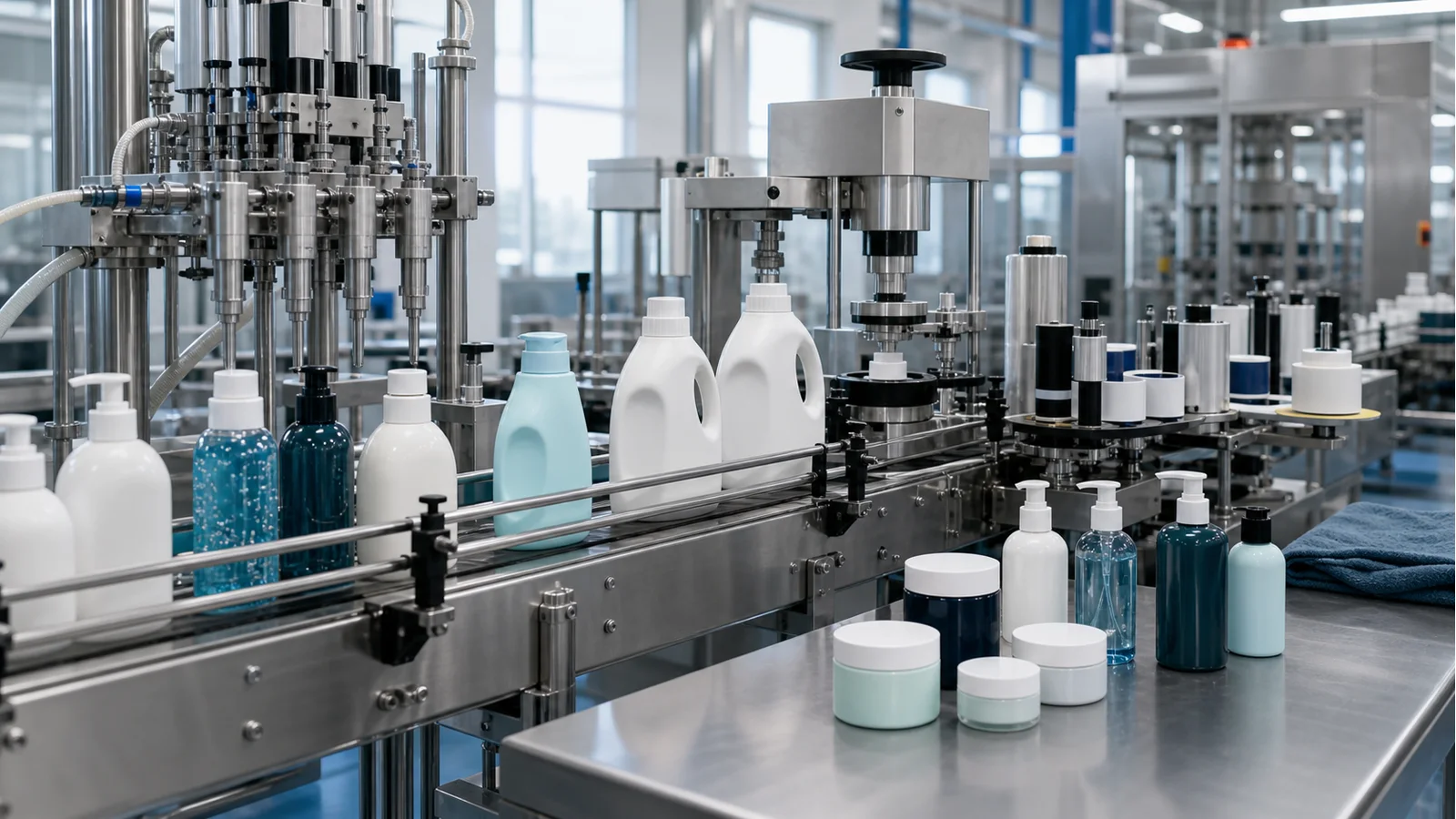
- Use viscosity, foam, wetted-part compatibility, bottle and closure plus cleaning/changeover to define filling, closing and downstream packing.
Solution summary prepared for you
- For the laundry detergent bottling line, first confirm foaming, wall adhesion, bottle rigidity, pump head or threaded cap, then arrange filling, closure, and optional inner sealing.
- The two liquid filling machines need to be compared with actual materials, and the automatic screw capping machine then closes the cap. Aluminum foil inner sealing, labeling, and carton downstream all have clear conditions.
- Submit laundry detergent, all caps, liners, and label samples to verify suck-back, screwing, trial sealing, and retail marking position at once.
Route comparison
- Suitable for the stage where the formula, bottle type, pump head or liner is still being confirmed and key sample verification needs to be completed first.
- Station-by-station verification facilitates comparison of the two filling machines and observation of pump head screwing, residual liquid at the bottle mouth, and liner trial sealing.
- Manual bottle feeding, cap placement and transfer account for a high proportion, and continuous output is affected by operator handling and material replenishment.
- When the bottles, materials, caps and orders are stable and continuous shipment is needed, it is not advisable to keep scattered manual stations for a long time.
- First trial-fill with the liquid quantitative filling machine and the liquid filling machine, then use the automatic screw capping machine to confirm the cap type. Inner sealing is added according to the cap and liner conditions.
- Suitable for production where the formal laundry detergent, container and cap type are finalized and continuous capping, coding and weight verification are required.
- Filling, capping, conditional inner sealing and bottle coding can be arranged along the bottle flow for unified connection.
- Foam control, bottle rigidity, pump head direction, liner compression, labeling surface and site interface must be determined in advance.
- When the bottle type changes frequently, pump head supply is not resolved, or actual material has not been trial-filled, it is not advisable to lock in a continuous line directly.
- Enter the automatic screw capping machine from the suitable liquid filling machine, then add induction inner sealing according to the cap and liner conditions, followed by labeling, batch coding and checkweighing.
- Suitable for projects where foaming, wall adhesion, pump head structure or pail containers make standard bottle filling actions difficult to stabilize.
- Filling contact parts, bottle support and cleaning boundary can be adjusted around obvious foaming, wall adhesion or special containers.
- Complete materials, containers and cleaning data are required, and re-trial is needed after formula or bottle type changes.
- When the standard liquid filling route can already handle the material and caps stably, there is no need to add custom items that cannot improve the current process.
- Still selecting between the liquid quantitative filling machine and the liquid filling machine based on actual material, then commissioning station by station with automatic capping and downstream.
Associated Equipment / Consumables
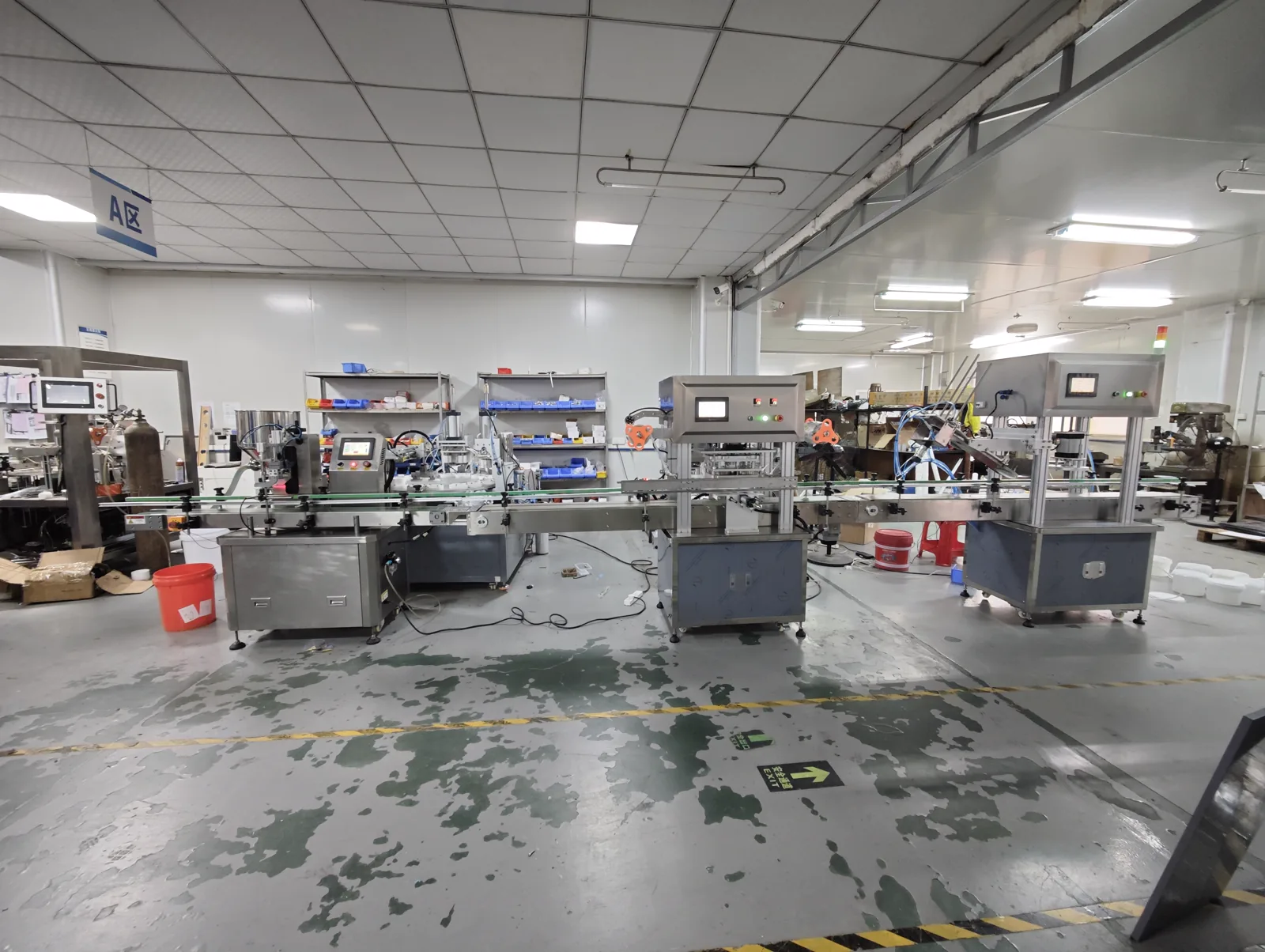 Bottle and Jar Filling, Capping and Sealing Line
This is a project-configured bottle and jar line, not one fixed standard machine. Select the filling path from flow, foam, particles, temperature and cleaning, then select cap feeding and closing from the neck, plug,...
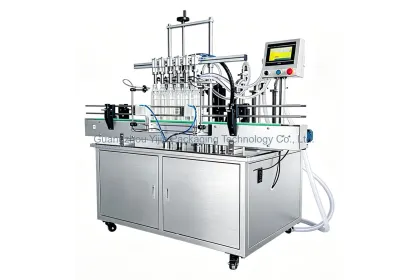 Liquid Quantitative Filling Machine
Laundry detergent actual material filling; The filling nozzle action, suck-back, and residual liquid at the bottle mouth must be observed with actual laundry detergent and finished...
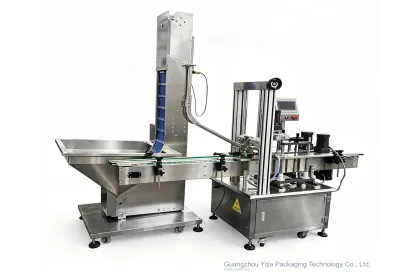 Automatic Screw Capping Machine
Laundry detergent actual material filling; The filling nozzle action, suck-back, and residual liquid at the bottle mouth must be observed with actual laundry detergent and finished bot...
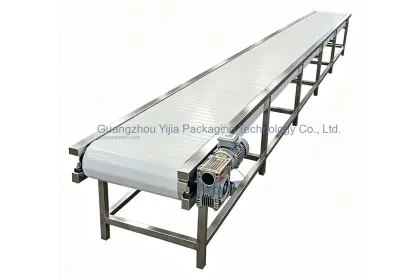 Food Packaging Conveyor and Buffer Line
Empty bottle direction and inlet; Automatic bottle unscrambling is not within the current fixed product range; a food-grade conveyor line can be used to connect to the existing...
Core process
Empty bottle supply must consider bottle rigidity, handle or pump head structure, and the inlet direction is determined by the workshop layout.
The liquid quantitative filling machine and the liquid filling machine are selected for trial filling based on the foaming, wall adhesion, and container mouth diameter of the laundry detergent.
The automatic screw capping machine adjusts clamping and screwing methods according to pump heads, threaded caps, or other cap types.
Only when the cap contains a suitable aluminum foil liner is the online induction aluminum foil sealing machine used for bottle mouth inner sealing.
The round/square bottle labeling machine applies the retail label, and the date and batch number coding machine handles variable traceability information.
The online checkweighing machine is used to recheck the finished product weight, and the food-grade conveyor line ensures stable passage through the inspection position.
For carton shipment, the case sealing and outer carton labeling line can be evaluated separately; downstream cooperation is quoted based on carton samples and labels.
Sample details
First specify the finished laundry detergent specifications, sales packaging, and transport sealing requirements, and list whether pump heads, handles, or pail containers are used.
Finished product photos, container type, sales channel, transport status, sealing requirements, and project stage.HDPE, PET, pump head bottles, and pails differ in rigidity and mouth structure, which changes filling positioning, clamping, and labeling.
All bottle and pail samples, bottle mouth and body dimensions, pump heads and caps, cap liners, and filled finished bottles.Record the viscosity, foam, wall adhesion, and cleaning method of the laundry detergent under working conditions, and provide label and coding consumables.
Actual material, material state, cleaning requirements, label rolls, coding content, and aluminum foil liners.Divide item by item from bottle feeding, quantitative filling into bottles, screw capping, optional inner sealing, to labeling, batch number, checkweighing, and carton downstream.
Planned stations, manual bottle and cap feeding methods, existing interfaces, inner sealing conditions, weight, and outer carton requirements.Only by placing the planned cycle time, bottle change cleaning, site layout, and power and air supply in the same layout can single machines and integrated lines be compared.
Production plan, workshop drawing, changeover frequency, cleaning schedule, utilities, budget stage, and delivery time.Common selection mistakes
The meal box main machine presses film through molds and cannot perform quantitative filling, cap supply, and screwing for laundry detergent bottles.
The premise for aluminum foil inner sealing is that there is a suitable liner inside the cap; not all pump heads or threaded caps have one.
Judging the filling method solely by the name 'laundry detergent' ignores the differences in foam, wall adhesion, and flow of different formulations.
Pump heads, threaded caps, and flip caps differ in direction, clamping, and screwing methods, so capping parts cannot be assumed universal.
Using an unverified output range to directly choose fully automatic or semi-automatic can easily ignore labor, cleaning, and changeover.
View detailed technical notes
Line breakdown by filling, capping, inner sealing and downstream packaging
Bottled laundry detergent should be confirmed section by section according to the container and material: first compare the liquid quantitative filling machine with the liquid filling machine, then use the automatic screw capping machine to handle pump heads or threaded caps. Only when the cap has a matching aluminum foil liner should an online induction foil sealing machine be added, and then arrange labeling, batch coding, weight checking and outer carton packing in the downstream section.
Compare the two liquid filling machines with actual material
The choice between the two liquid filling machines depends on the foaming, wall adhesion, suck-back and bottle mouth size of the laundry detergent, so the number of filling heads or the structure cannot be fixed in advance. The automatic screw capping machine must handle pump heads and ordinary caps separately. Induction inner sealing is an independent conditional station and must be verified through combined tests of the bottle mouth, cap and liner.
Main line and cooperative downstream boundary for laundry detergent
The main line equipment includes the liquid filling machine, automatic screw capping machine and, conditionally, the online induction foil sealing machine. The round/square bottle labeling machine, date and batch coding machine, online checkweigher and food-grade conveyor line are connected according to finished product requirements. Carton sealing and outer carton labeling are confirmed separately as a cooperative downstream process.
Foam and wall adhesion affect the end-of-fill action
Foam or wall adhesion at the bottle mouth of laundry detergent can affect the end-of-fill action and subsequent capping. Formal actual material and bottles should be used for trial filling, recording the filling nozzle height, suck-back, residual liquid at the bottle mouth and cleaning time, and then decide which liquid filling machine and line connection method to use.
Confirm pump head tightening and aluminum foil inner sealing separately
Pump head long tubes, threaded caps and flip caps have different requirements for cap feeding direction and clamping, so the automatic screw capping machine must be configured according to the cap sample. The online induction foil sealing machine only handles combinations with a matching aluminum foil liner; if the cap has no liner, this station cannot be used as a remedy.
Square bottle labeling, date and batch coding, and carton downstream
The suitability of the round/square bottle labeling machine depends on the bottle body labeling surface; bottles with handles or irregular shapes especially require actual samples. The date and batch coding machine is arranged according to the printable area. When shipping in cartons, evaluate the carton sealing and outer carton labeling line, and clarify that it is a separate cooperative downstream process.
Current weight verification is not equal to visual inspection
The food-grade conveyor line handles the connection of bottle flow, and the online checkweigher judges according to the agreed finished product weight range. The current configuration only includes the online checkweigher. If label appearance inspection is also required, a vision solution and corresponding rejection handling must be confirmed separately.
Exclude tray MAP and tube processes
Tray heat sealing, modified atmosphere packaging and tube tail sealing use different container positioning and do not belong to the bottled laundry detergent route. The formula state cannot be assumed only as 'low viscosity'; the actual laundry detergent should be compared on the two liquid filling machines.
Simultaneous trial production with bottles, materials, caps, labels and consumables
Formal trial production requires providing bottles, pump heads or threaded caps, aluminum foil liners, label rolls, coding content and actual laundry detergent. After completing filling, capping, trial sealing and labeling records, lock the consumable batch, change parts and line connection boundary.
Common questions
How to choose between the two liquid filling machines?
First compare the real-material performance of the liquid quantitative filling machine and the liquid filling machine, focusing on foam, wall adhesion, suck-back, and residual liquid at the bottle mouth, then determine the configuration.
Do all laundry detergent bottles need aluminum foil inner sealing?
It is not a fixed mandatory option. Only when the aluminum foil liner inside the cap matches the bottle mouth and the packaging solution requires inner sealing, an induction sealing station is arranged.
Can the automatic screw capping machine handle pump head caps?
It can be evaluated. The long tube, direction, and height of the pump head will change the cap feeding and screwing actions, so the complete pump head and bottle must be tested together.
Can square bottles with handles be labeled automatically?
Square bottles are within the applicable range of the round/square bottle labeling machine, but handles, ribs, and corners may affect adhesion, so confirmation with labels and actual bottles is still required.
How much space is needed for the entire laundry detergent line?
The site area cannot be answered with a general area. Please provide the workshop length and width, entrance and exit, maintenance access, and existing equipment positions, then complete the layout.
How to configure equipment step by step during the trial production stage?
First use the liquid filling equipment and automatic screw capping machine to verify the bottle, material, and cap. The liner inner sealing, labeling, coding, and checkweighing can be added step by step according to actual needs.