Solution topic
Powder Filling Machine Selection: Auger Metering and Three Packaging Exits
Starting with the powder metering main machine, compare heat or induction sealing for bottles, cans, and pails, automatic sealing for pre-made bags, and small cup filling with film
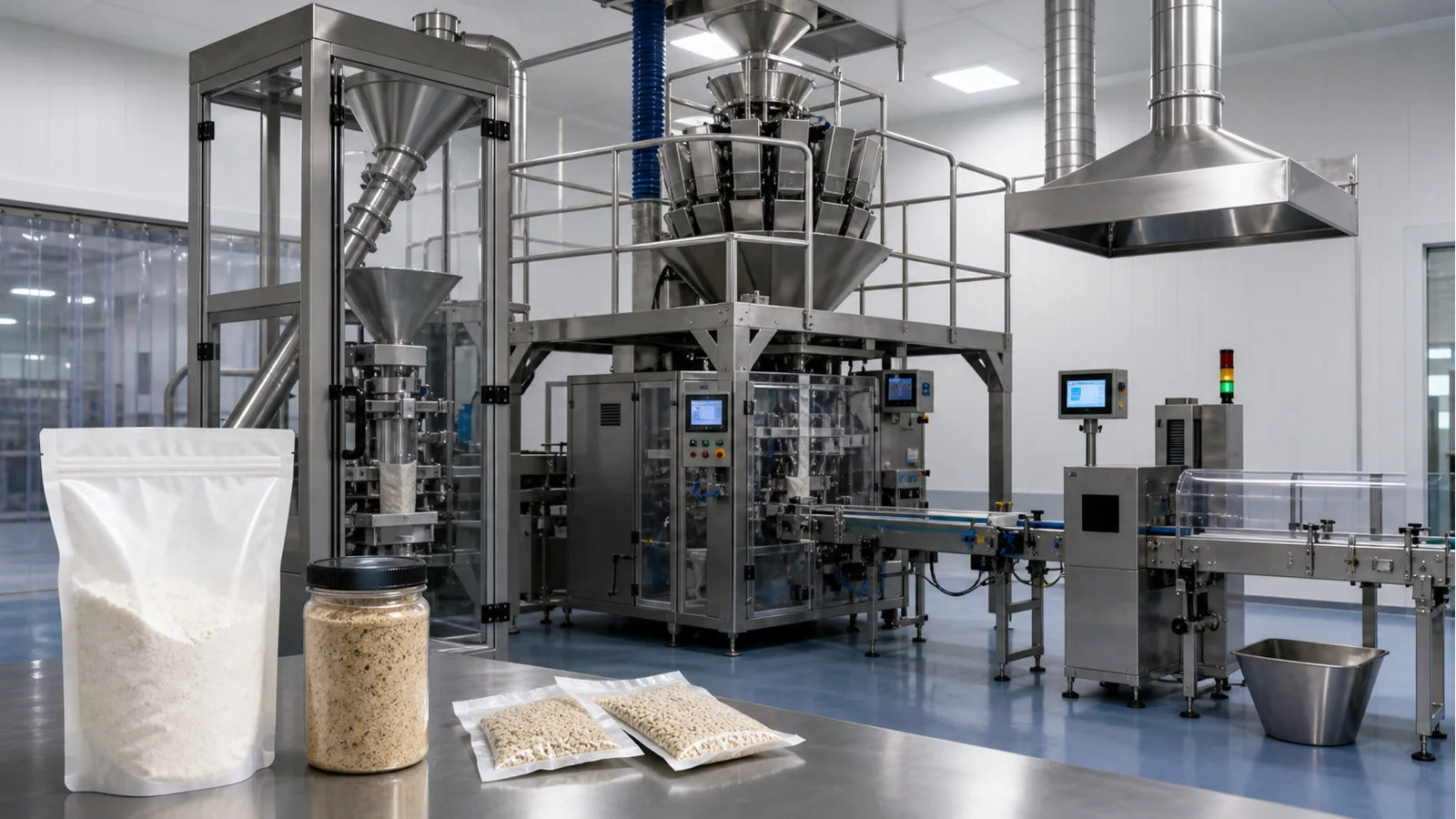
- The auger or other metering method must first adapt to powder flowability, then choose the sealing exit among bottles, cans, pails, pre-made bags, or small cups. Whether the same filling machine can switch containers depends on the discharge interface, support, and sealing equipment, not just parameter adjustments.
Solution summary prepared for you
- For powder lines, do actual material metering tests first, then choose the packaging output. Powder flow, dust, and cleaning conditions change screw or other metering configurations.
- For bottles, pails, and cans, choose heat sealing or induction sealing based on rim film or cap liner; pre-made bags and small cups require their own feeding, support, and heat-sealing structures.
- Whether the same powder filling main machine can change containers must check the discharge interface, positioning support, and sealing equipment; do not just adjust control parameters.
Route comparison
- Production where powder is filled into bottles, pails, or cans and requires direct heat-seal film or induction inner sealing after capping.
- Rigid containers are easy to position and label downstream; different sealing methods can be selected based on rim film or cap liner.
- Discharge nozzle, container support, rim residual powder, film or liner must be tested as a set; establish changeover records for multiple specifications.
- When packaging requires flexible bag feeding and opening, or automatic cup denesting and cup film sealing, choose the corresponding dedicated output.
- After the powder and granule filling machine, configure a bottle/pail/can sealing machine or a large-diameter pail heat-sealing machine; for cap liner structures, use an online induction aluminum foil sealing machine.
- Projects with stable bag type that want continuous processing of bag opening, powder filling, bag mouth arrangement, and heat sealing.
- The pre-made bag main machine can connect bag feeding, opening, powder filling, bag mouth arrangement, and heat sealing in sequence.
- Bag type, opening performance, dust, discharge port, and heat-seal layer must be verified together; automatic metering and conveying are configured per project.
- When packaging is rigid bottles/cans or requires automatic cup denesting, do not use pre-made bag feeding structures.
- Use single-lane or three-station pre-made bag filling and sealing machine series; metering method is determined by real powder trials.
- Production where powder is packaged in small cups requires automatic cup feeding, metering, film placement, heat sealing, and cup discharge integration.
- The small cup filling and sealing machine builds a dedicated cycle around cup stacking, denesting, cup holders, and lid film.
- Cup mouth powder drop, film positioning, support, and cup discharge state must be verified with actual samples; bottle/can clamping cannot be used.
- When containers cannot be stably stacked and denested, or packaging is actually bags and large pails, return to the corresponding output.
- Use a small cup filling and sealing machine and confirm metering and sealing stations together with powder, cups, and lid film.
Associated Equipment / Consumables
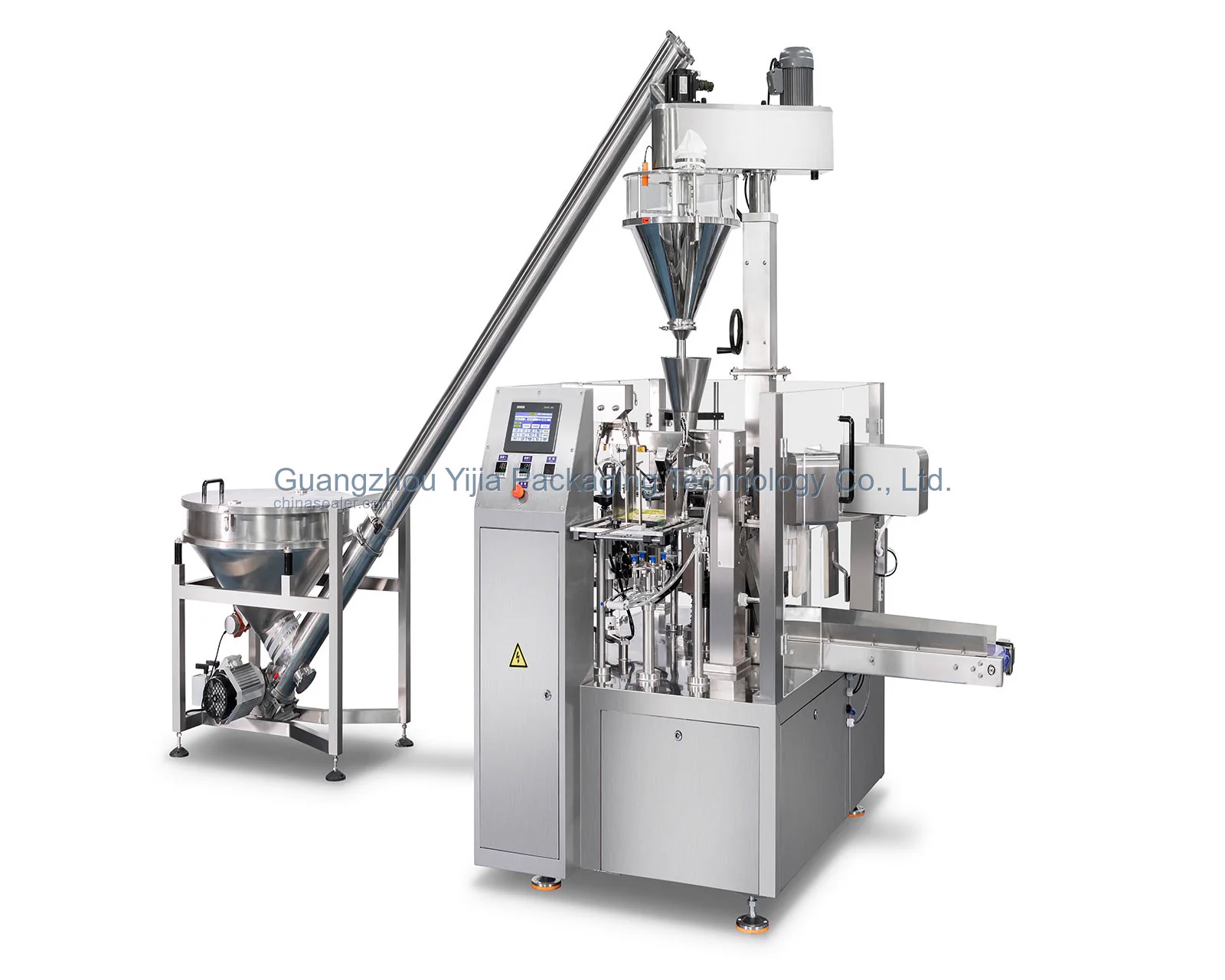 Single-Lane and Three-Station Premade Pouch Filling and Sealing Series
The series picks or accepts premade pouches, opens them, doses product, conditions the mouth and heat seals. Validate dimensions, spout or zipper, laminate and sealant, powder/liquid/particles, dose, mouth contaminati...
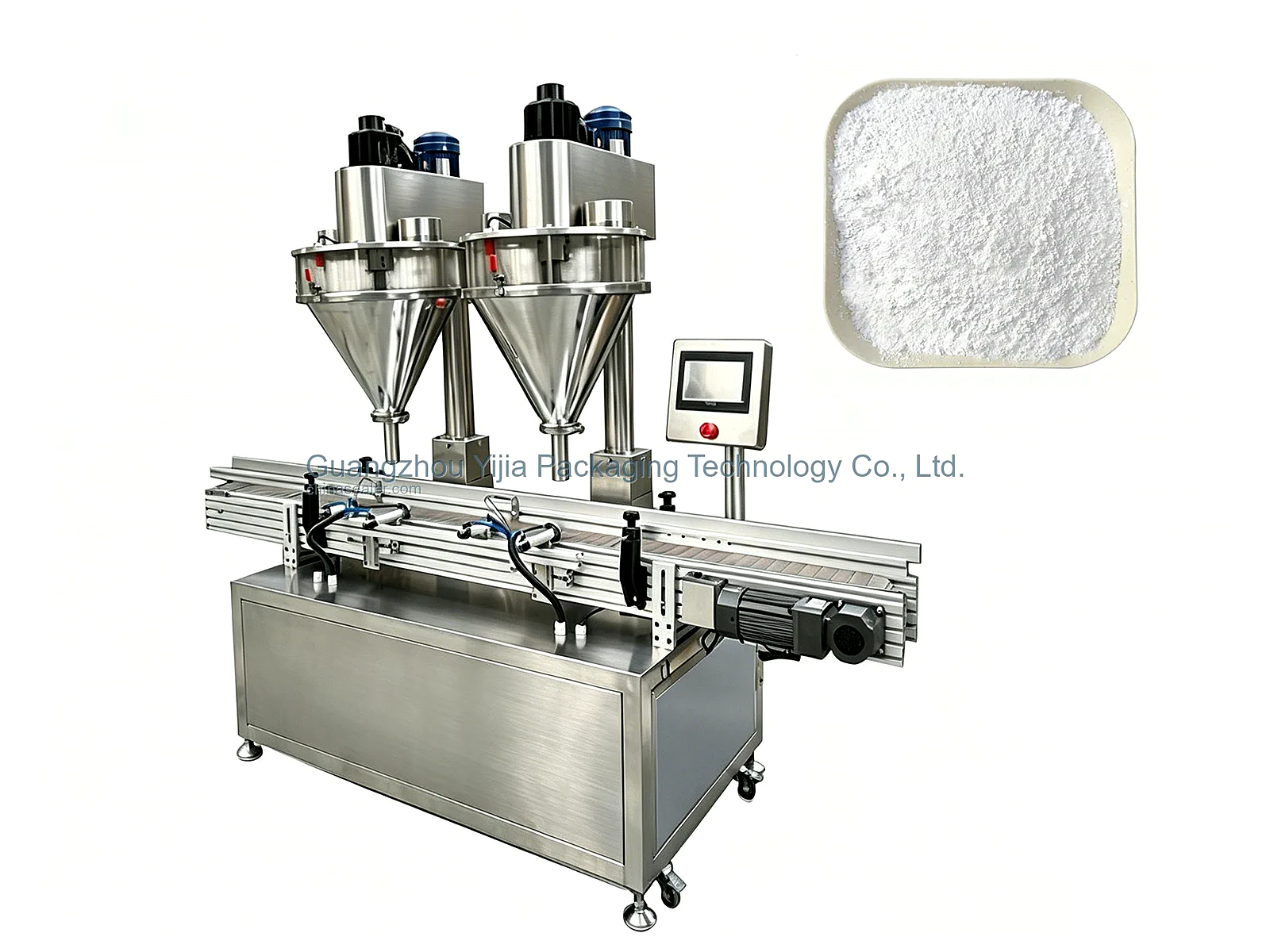 Powder and Granule Dosing Filling Machine
Powder filling main machine; Screw or other metering components are selected based on actual material; whether the equipment can change packaging output depends on the interf...
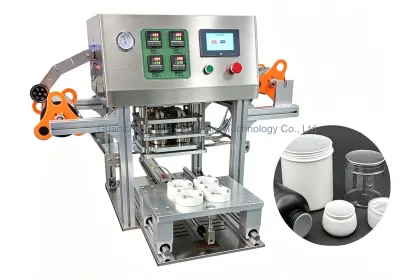 Bottle, Pail, Can Sealing Machine
Rigid container output; Container rim, standalone film, and cap liner correspond to different processes; do not choose a sealing machine only by container capacity; Heat sealing or i...
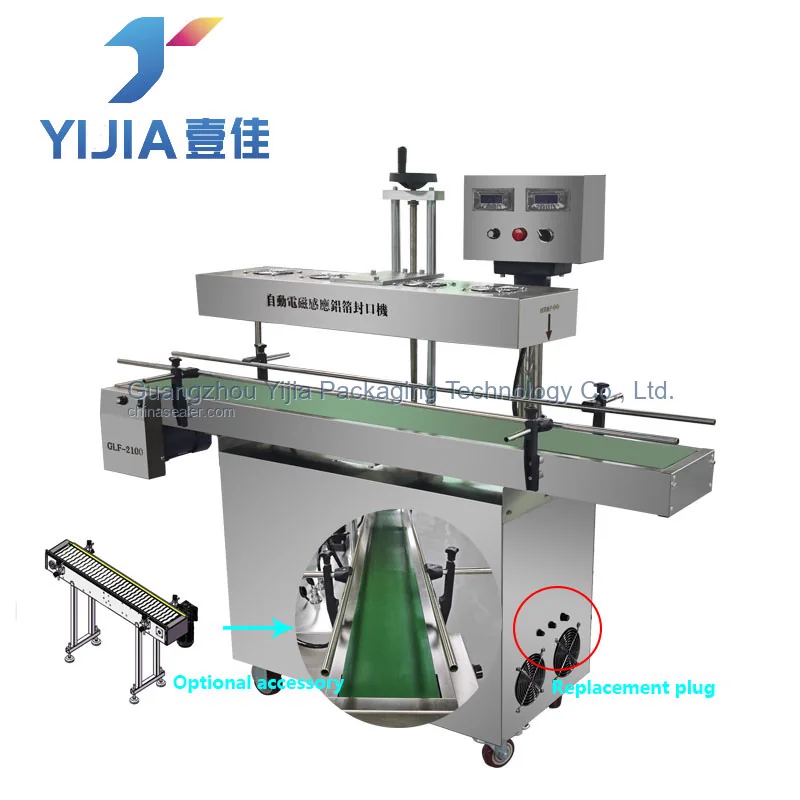 Inline Induction Foil Sealer
Powder filling main machine; Screw or other metering components are selected based on actual material; whether the equipment can change packaging output depends on the interface, support,...
Core process
First observe flow, bridging, dust, static, and cleaning conditions with real powder, then determine the metering mechanism, feeding method, and discharge interface.
The powder and granule filling machine serves as the common front end, testing metering, discharge, refilling, and container rim cleanliness with powder and target fill volume range.
Bottles, pails, and cans use rigid support. For direct film on the rim, evaluate a bottle/pail/can sealing machine or a large-diameter pail heat-sealing machine; for cap liners, use an online induction sealing machine after capping.
After bag type and powder are stable, single-lane or three-station pre-made bag filling and sealing machine series complete bag feeding, opening, powder filling, bag mouth arrangement, and heat sealing.
After cup type, powder, and lid film are stable, the small cup filling and sealing machine is debugged according to cup stacking, denesting, metering, film feeding, and sealing structures.
After packaging output is stable, the automatic feeding, conveying, and sealing line connects finished products; the round and square bottle labeling machine only handles compatible rigid containers, and the date and batch number inkjet coder is set according to each packaging surface.
Sample details
Actual material trials identify flow, bridging, dust, static, particle, and cleaning conditions and form the metering and feeding direction.
Submit production powder, fill volume range, batch variation, environmental conditions, and cleaning requirementsThe inlet size, rim, support, incoming orientation, and residual powder state after filling of each container change the interface.
Provide actual samples of bottles, pails, cans, pre-made bags, or small cups and note the planned packaging specificationsStandalone films, cap liners, bag materials, and cup films must match the corresponding containers; do not just submit material names.
Submit production samples of films, cap liners, pre-made bags, and cup films for each outputProduction batches, container change frequency, and manual feeding method are used to determine shared main machine, independent stations, and changeover parts scope.
Explain production scheduling, changeover frequency, personnel actions, and expected line sequence for each packagingLabel layout, batch number position, and finished product orientation are used to set up downstream; provide samples separately for each packaging output.
Provide label or batch number layout, site layout, conveying direction, and defective product handling methodCommon selection mistakes
Moisture absorption, particle size, and static changes in powder can alter discharge; the same material name does not mean the same metering conditions.
Bottles, cans, bags, and cups have different positioning, support, feeding, and sealing methods; control parameters are only part of the changeover.
Induction sealing with a cap liner requires the cap to press the liner first; direct film on the bottle mouth uses heat sealing with support.
Powder trapped in the bag mouth damages the seal edge; first control filling and bag mouth arrangement, then establish the heat-seal window.
Round and square bottle labeling machines are designed for compatible rigid containers; marking on bag surfaces and cup films must be confirmed separately according to the finished product orientation.
View detailed technical notes
Set Metering First, Then Choose Packaging Exit
A powder packaging line consists of a common metering and filling section followed by three different exits. The powder is first tested with actual material, then the packaging structure is chosen among bottles, cans, pails, pre-made bags, and small cups.
Powder Condition Establishes the Metering Baseline
Powder flow, bridging, dust, static, particle size, and cleaning conditions are used to determine whether auger or another metering direction is suitable. During material testing, also observe the drop point and residual powder on the container rim.
A Common Main Machine Does Not Mean Universal Exits
The powder granule filling machine handles the common front section. When changing packaging, the discharge nozzle, positioning, support, and incoming material method must be rechecked; simply modifying the fill volume setting is not enough. First-batch samples for each exit should be kept separately.
Rigid Containers Are Divided by Sealing Method
For bottles, cans, and pails, choose heat sealing when placing film directly on the rim; if the lid has a compatible liner, install the lid first and then use induction sealing. Large-diameter pails also require verification of full-pail support and pass-through status. Record rim residual powder and sealed samples separately for each container type.
Pre-made Bags: Focus on Managing Powder in the Seal
Pre-made bag equipment must reliably complete bag feeding, bag opening, filling, and bag mouth finishing. When powder enters the sealing area, first adjust the filling and bag mouth condition, then recheck heat sealing.
Small Cups Use Dedicated Support and Film Feeding
The small cup filling and sealing machine uses dedicated cup feeding and cup holders. The lid film is tested according to the cup mouth and heat seal layer. The cup exit cannot be directly replaced by bottle or can support.
Record Interfaces Item by Item When Changing Exits
When switching the same powder to a different packaging exit, record the interfaces, change parts, cleaning, and first-batch samples item by item. Only the validated metering section is shared.
Labeling and Coding Are Configured by Finished Product Orientation
After rigid containers are stable, evaluate the round/square bottle labeling machine. The date and batch coding machine should be set according to the readable surface of bottles, bags, or cups.
Complete Acceptance for Each of the Three Exits
Line acceptance starts with powder metering, then checks sealing components, finished product orientation, and downstream handover for each exit. Keep independent sample records for each packaging type.
Common questions
For powder filling equipment, should metering or packaging be selected first?
Validate metering and discharge with actual powder first, then decide on bottles, pails, cans, pre-made bags, or small cups. Packaging format should not be fixed before powder trials.
Can the same filling machine switch between three container types?
Not necessarily. Changing containers involves the discharge nozzle, positioning support, container feeding method, and sealing equipment, which need to be evaluated against each packaging sample.
For bottle, pail, and can output, how do you distinguish between heat sealing and induction sealing?
When film is placed directly on the rim, use heat sealing; when the cap has a compatible aluminum foil liner, use induction sealing after capping. Choose the sealing machine for bottles, pails, and cans based on the packaging structure.
When pre-made bags trap powder, what should be checked first?
Check whether powder enters the seal edge, whether the bag mouth can be opened and arranged, and whether the heat-seal layer of the laminated bag is compatible, then adjust the filling and heat-sealing stations.
Why does cup output need separate configuration?
Small cups require dedicated cup denesting, cup holders, film feeding, and sealing structures. The fact that powder metering works does not mean the bottle/can output can be directly changed to cup packaging.
When should downstream labeling and coding be determined?
Connect conveying after container orientation and main sealing are stable. Rigid bottles and cans can be evaluated for labeling, while bag surfaces and cup films should be configured with coding according to their respective marking methods.