Solution topic
How to Select a Powder or Granule Filling and Closing Line
For milk powder, seasoning powder, and chemical powder, select powder and granule filling, bottle/can/pail sealing, or pre-made bag sealing based on flowability, metering target, a
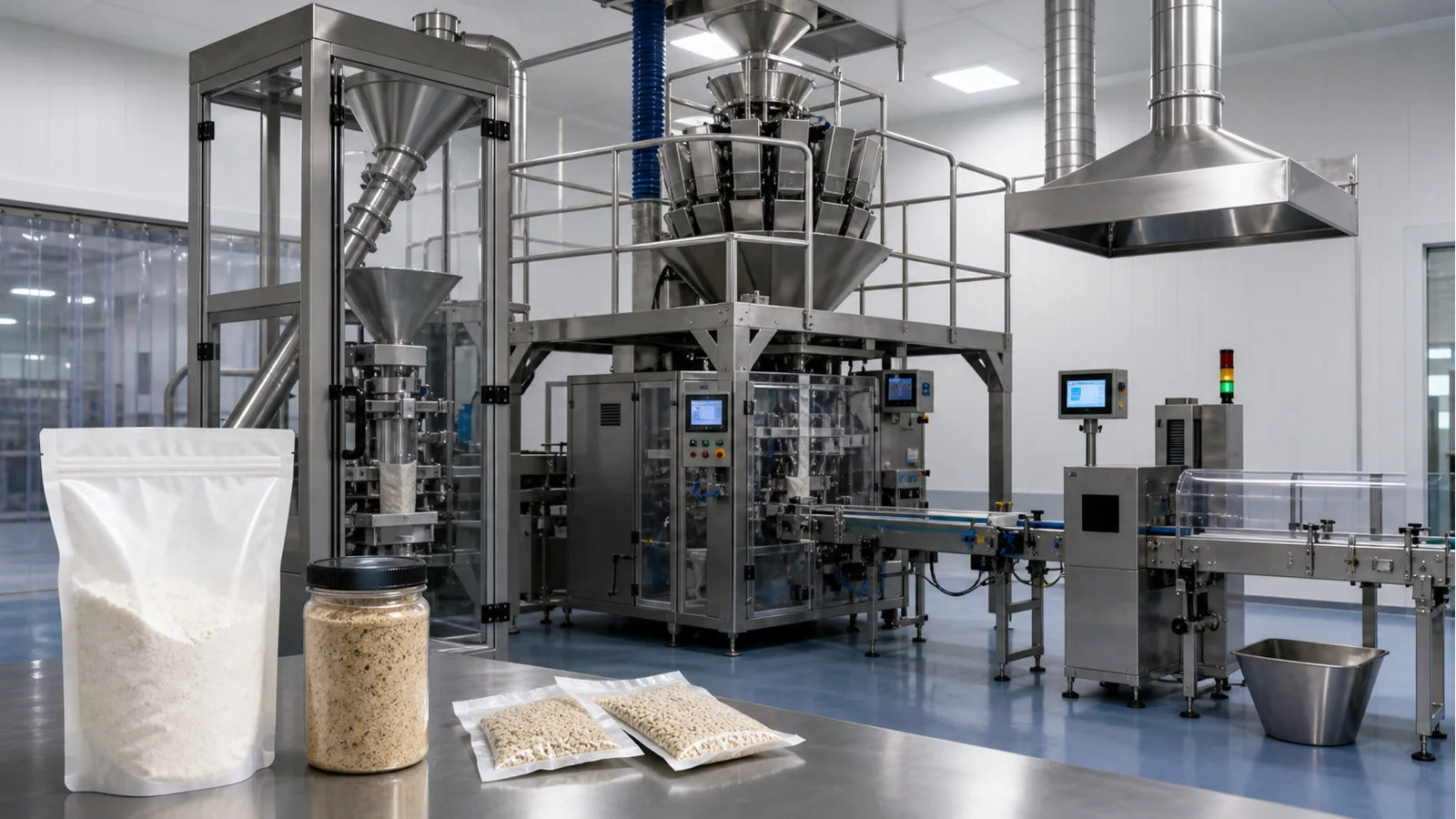
- Use flowability, dust, particle size, target weight and pack format to combine dosing with the correct downstream closing route.
Solution summary prepared for you
- For powder and granule packaging, first confirm flow, dust, bridging, and granule state with actual materials, then select metering and sealing equipment separately for bottles/cans/pails or pre-made bags.
- If information is incomplete, you can first provide powder videos, packaging photos, dimensions, and planned output. Containers, film materials, and lids still need to be submitted as a set before confirming the sealing structure.
- The powder granule filling machine handles metering and feeding, and the bottle/pail/can sealing machine handles container rim sealing. When aluminum foil inner sealing and outer lid pressing are needed, evaluate a combined sealing and p...
Route comparison
- When the material can feed stably and flowability, granule, and target fill volume information has been provided, a powder granule filling machine can be used for metering trials first.
- The metering process can independently observe feeding continuity, fill volume fluctuation, and dust, then bring the results into bottle/can or bag solutions.
- The equipment name alone cannot determine the metering form. Materials that bridge easily, cake, or contain irregular granules must be verified with actual materials.
- Without representative materials, or when production conditions differ significantly from the samples, it is not appropriate to directly lock in screw, weighing, or cup configurations.
- A powder granule filling machine can be evaluated, with the specific metering and feeding structure selected based on actual material test results.
- When powder uses bottle, can, or pail packaging and the rim, film material, lid, and sealing contact surface are clear, the corresponding sealing equipment can be evaluated.
- Heat sealing, induction sealing, press capping, or double seaming can be matched with the container structure separately, avoiding mixing different sealing principles into one route.
- Dust falling on the sealing area, uneven rims, or mismatched heat-seal layers will affect the result. Increasing temperature cannot replace packaging material matching.
- When the container and sealing materials are not finalized, or only the mouth diameter is provided without actual rim and lid samples, do not confirm tooling and sealing methods yet.
- You can compare suitable processes from bottle/pail/can sealing machines and determine tooling and sealing conditions based on complete sample sets.
- When paper cans or plastic pails require direct placement of aluminum foil film for inner sealing, followed by pressing an outer lid, a combined sealing and press capping process can be used.
- Inner sealing and outer lid can be processed continuously in the same packaging route, with clear station relationships, making it easy to verify with the same pail, film, and lid sample set.
- Pail mouth flatness, heat-seal layer, film feeding method, and outer lid placement all need to be checked. If any item is not matched, a single parameter cannot compensate.
- When aluminum foil material is pre-installed in a screw cap and relies on induction heating, the induction sealing route should be used instead of direct heat sealing film and press capping.
- A paper can/plastic pail aluminum foil film sealing and press capping machine can be evaluated and confirmed with complete pail, film, and lid trial samples.
Associated Equipment / Consumables
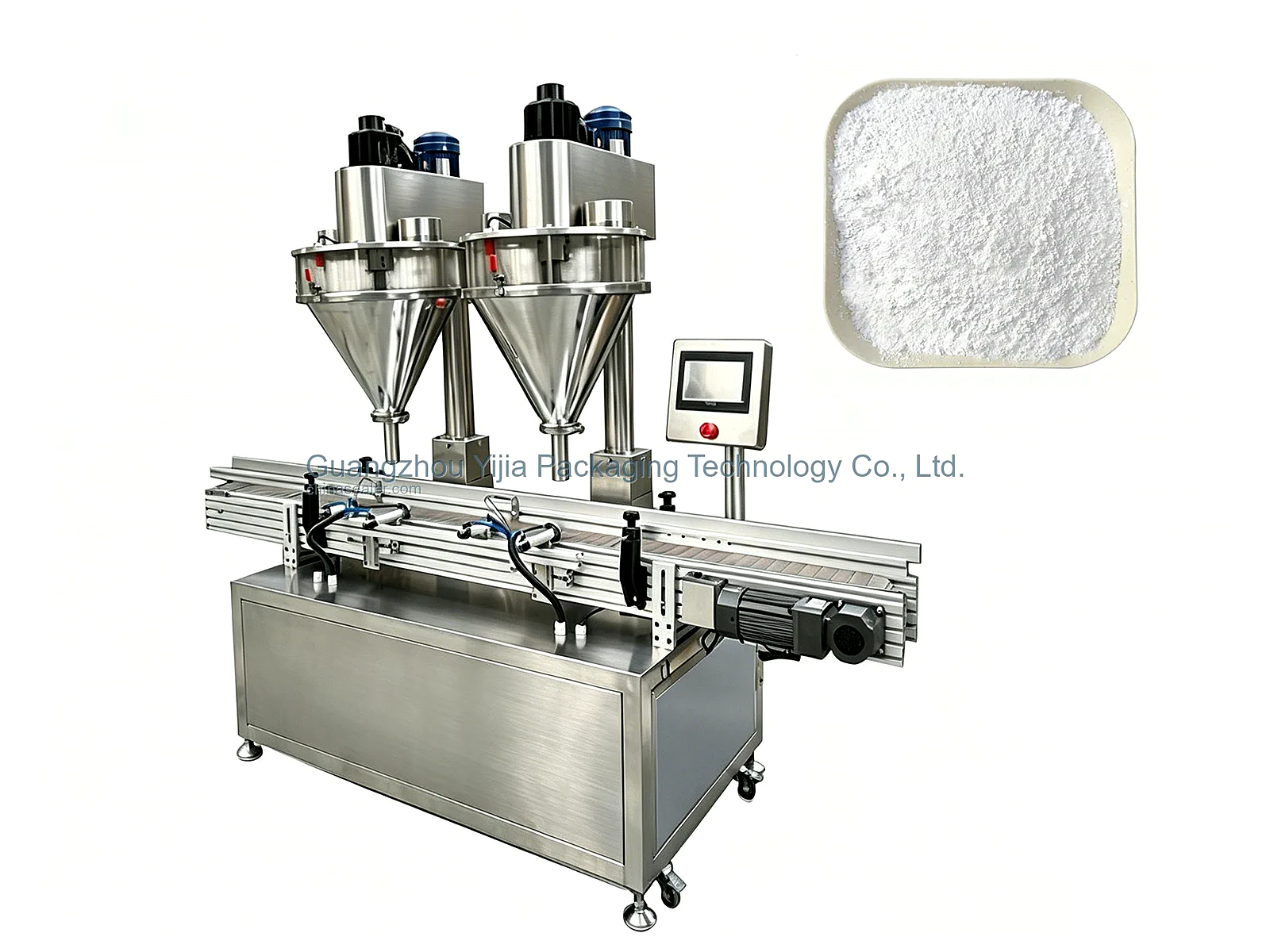 Powder and Granule Dosing Filling Machine
The machine doses powders or granules. Auger, volumetric and weighing systems are different routes. Select from flowability, bulk density, dust, particle size, static, fragility and tolerance, then validate accuracy,...
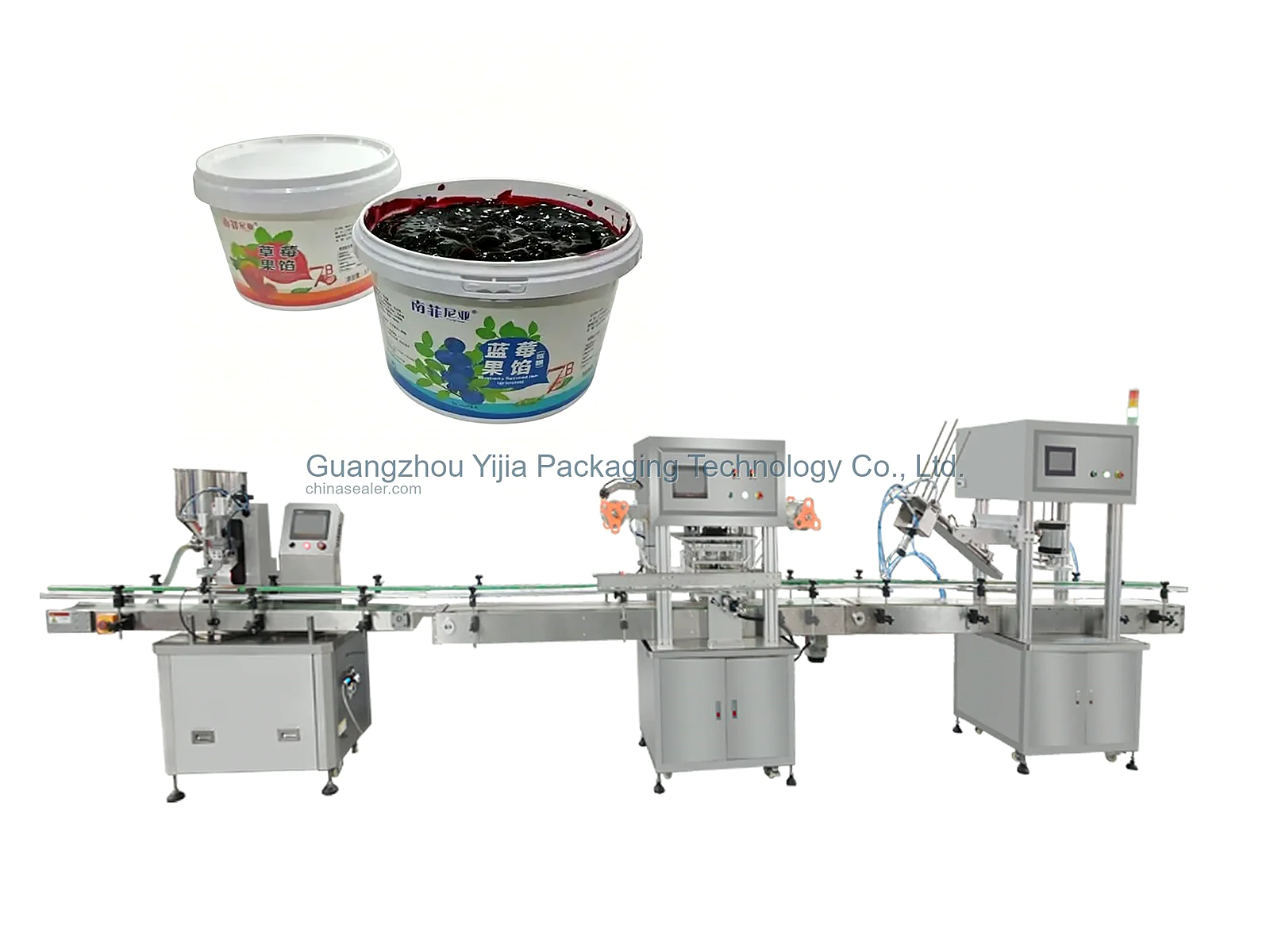 Paper Can and Plastic Pail Foil Heat Sealing and Capping Machine
Material and packaging sample verification; The trial sample list should state the target fill volume, allowable cleaning methods, common packaging spe...
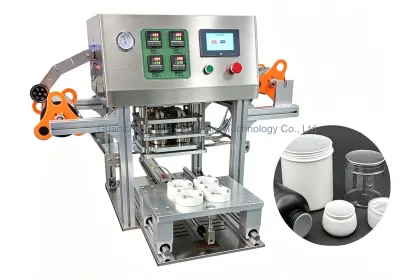 Bottle, Pail, Can Sealing Machine
Powder and granule metering; During the trial, record whether feeding is continuous, metering is stable, and whether dust enters the container rim. Necessary auxiliary structures are...
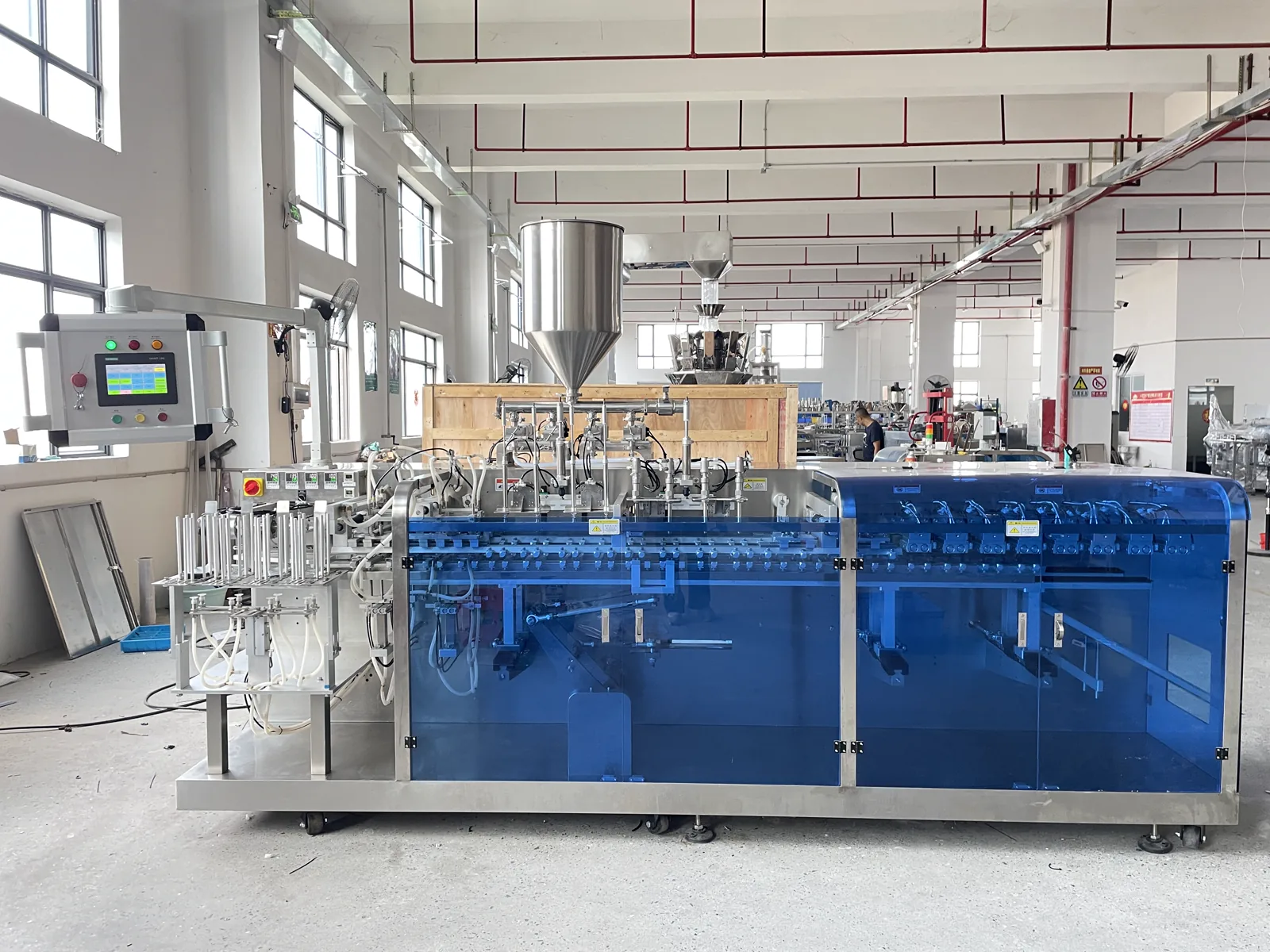 Four-Lane Premade Pouch Filling and Sealing Machine
Core process
First use representative powder to observe flow, dust, caking, and granule state, then verify the dimensions and rim structure of bottles, cans, pails, or bags. Both metering and sealing should be based on the same set of formal samples.
The powder granule filling machine first handles metering and feeding verification. Screw, weighing, or other metering methods should be selected based on the material state and fill volume target.
After powder enters the bottle, pail, or can, compare heat sealing film, induction inner sealing, press capping, or double seaming according to the rim, film material, and lid type. Different containers cannot share one sealing conclusion.
When paper cans or plastic pails require aluminum foil inner sealing and continued press capping of the outer lid, a combined sealing and capping machine can be evaluated. The pail mouth, film material, and outer lid must be verified as a set.
For bagged powder, the bag type, bag mouth size, bag opening, and bag feeding method must be verified separately, then evaluate a single-lane or three-station pre-made bag filling and sealing machine.
After the primary packaging is stable, verify checkweighing, coding, labeling, and changeover requirements. The cycle times of each station should be connected based on continuous running results with actual materials.
Sample details
The material state determines the metering and feeding direction, and also affects whether the sealing area needs dust protection or cleaning.
Submit representative powder, or provide a video showing flow, caking, and dust conditions, and state the target fill volume.Container packaging and bag packaging use different positioning, feeding, and sealing structures, so they should be separated at the beginning of the solution discussion.
Provide actual samples of bottles, cans, pails, or pre-made bags with key dimensions, and state the actual specification range used.Only complete sample sets can compare heat sealing, induction sealing, press capping, or double seaming, and check the dust impact on the sealing contact surface.
Submit sealing film, aluminum foil gasket, can lid, or pail lid together with the corresponding container as a set.Cycle time is used to arrange the number of metering heads, buffers, and conveying, so you should not only report a single overall line speed.
List the planned output for each packaging type, and whether feeding, checkweighing, coding, labeling, or case packing integration is needed.Powder changeover and cleaning affect contact parts, dust removal, and layout, so site boundaries need to be stated before quotation.
Provide available space, existing equipment interfaces, power and air supply conditions, as well as material change and cleaning methods.Common selection mistakes
If you confirm a screw or cup filler without testing the material, you may encounter discontinuous feeding, metering fluctuations, or cleaning difficulties. You should keep records of the trial phenomena and adjustments.
The trial should not only look at the appearance after sealing, but also observe whether the filling process contaminates the contact surfaces and check whether the cleaning measures are suitable for continuous production.
Use the actual container, film, and lid to form a sample set, and record the sealing appearance and the agreed seal inspection results.
If conveying, checkweighing, or case packing will be added later, you should check buffer positions and release conditions of each station in advance.
These conditions will change contact parts, tooling, cleaning paths, and downstream space. If added after the equipment is completed, the layout usually needs to be rechecked.
View detailed technical notes
First Match the Material with Packaging Samples as a Set
Milk powder, seasoning powder, pharmaceutical powder, or chemical powder differ significantly in flow and dust generation. When submitting requirements, in addition to representative powder materials, also provide actual bottles, cans, pails, or pre-made bags, film materials, and lids, and specify fill volume, cleaning method, and production rate.
Container Packaging and Bag Packaging Are Two Equipment Routes
For bottles, cans, and pails, continue comparing rim film sealing, induction inner sealing, press capping, or roll-on capping. For pre-made bags, focus on bag opening, bag feeding, product dropping, and bag mouth heat sealing. The positioning and sealing mechanisms for the two packaging types differ and cannot be replaced by the same machine configuration.
Metering Method Is Determined by Actual Material Discharge Performance
A powder and granule filling machine can serve as a starting point for metering trials, but the auger, weighing, or other structures still depend on flow, bridging, granules, and target fill weight. During trials, record dust and cleaning conditions simultaneously to avoid metering passing but contaminating the sealing area.
For Bottle, Pail, and Can Sealing, First Verify Rim and Lid Film
For container-packed powders, test the formal rim, film material, and lid as a complete set, then choose heat sealing, induction sealing, press capping, or roll-on capping. If dust may fall on contact surfaces, add pre-sealing cleaning or dust prevention arrangements.
Inner Sealing Followed by Outer Lid Pressing Needs Separate Confirmation
When paper cans or plastic pails require direct heat sealing of aluminum foil film and pressing of an outer lid, evaluate the paper can/plastic pail aluminum foil film sealing and press capping machine. Induction sealing with a pre-installed liner inside the lid is a different assembly and should not be confused.
Pre-made Bags Need Verification of Bag Feeding and Bag Mouth Cleanliness
For the bag packaging branch, evaluate single-lane or three-station pre-made bag filling and sealing machines. Bag type, bag mouth size, bag opening state, and product drop position all require sampling, especially observing whether dust enters the heat sealing area.
First Accept Metering, Then Connect Subsequent Stations
Metering trials should record fill weight results, discharge continuity, and material residue. Only after the main process is stable is it suitable to continue verifying conveying, checkweighing, and packaging rate.
Sealing Acceptance Should Cover Formal Production Conditions
Sealing inspection should not only look at the film surface or bag mouth just out of the machine, but also use formal packaging materials and recheck the seal, handling, and storage conditions according to the agreed method.
Changeover, Cleaning, and Marking Enter the Plan Early
When multiple powders and packaging specifications share a line, clarify contact part cleaning, mold changeover, label and batch number positions. Relevant space and operation steps should be confirmed together during the equipment layout stage.
Common questions
If the information is incomplete, can we still determine the equipment direction?
You can start by sending a video of the powder, packaging photos, key dimensions, and planned output. We can first distinguish between container packaging and bag packaging, then list which samples are still missing for metering, film material, and lid type.
What physical samples are the minimum required when submitting a request?
At minimum, prepare representative powder, actual containers or pre-made bags, and the corresponding sealing film and lids. Also specify the fill volume, cleaning requirements, and planned production rate.
Why is powder metering testing necessary first?
Flow, bridging, caking, granules, and dust will change the feeding method. Two powders with the same fill volume may also require different metering and auxiliary structures.
Can bottle/can sealing and pre-made bag sealing share the same equipment?
Conclusions cannot be shared directly. Bottles, cans, and pails need to match the rim, film material, and lid type, while pre-made bags require verification of bag opening, bag feeding, filling position, and heat sealing of the bag mouth.
How do you check whether the sealing is suitable for actual production?
Use the actual powder and packaging materials for continuous trials, observe sealing area contamination, film surface or bag mouth appearance, and check sealing and post-transport condition according to the method agreed by both parties.
When is it necessary to integrate downstream processes such as checkweighing and coding?
Plan the integrated line when the product needs continuous flow and the cycle times of each station can match. If prototyping or specifications are not yet stable, you can first verify the metering and sealing machines separately.