Solution topic
How to Package Salad and Fresh-Cut Produce Trays
Explains the applicable differences among tabletop multi-compartment meal box sealing machines, tray MAP sealing machines, and automatic pre-cut film equipment for salad boxes, and
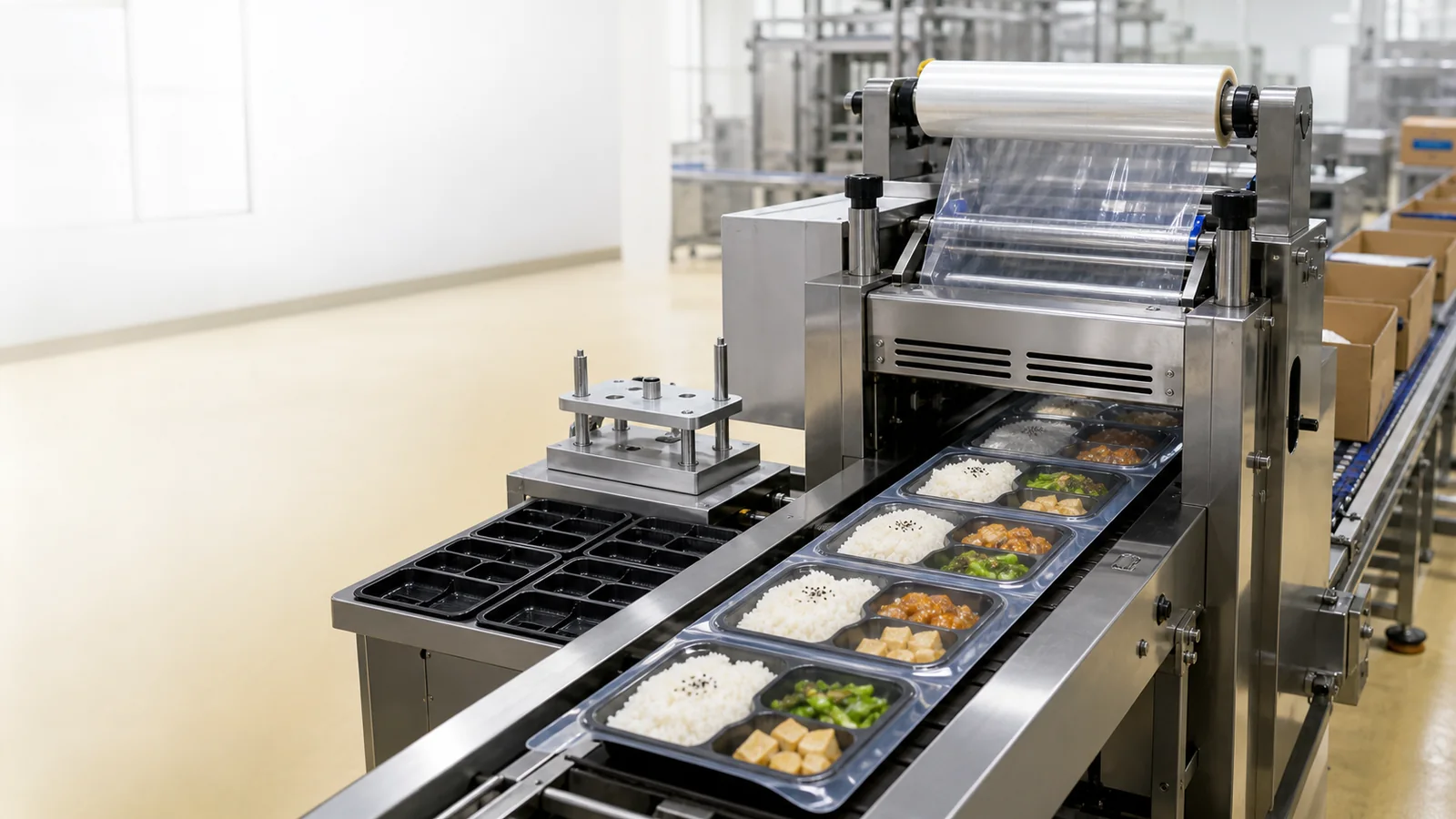
- Compare stretch overwrapping, standard heat sealing and a validated MAP route from respiration, condensation, rim and film, then add labelling, coding and inspection.
Solution summary prepared for you
- For salad box sealing, first check rim cleanliness, box-film pairing, and shelf life requirements, then distinguish between multi-compartment heat sealing, MAP, or pre-cut film routes.
- When MAP is not required, the tabletop multi-compartment meal box sealing machine can be evaluated. Trays with clear MAP requirements use the box-type MAP sealing machine, and pre-cut film automatic placement is handled by the dedicated...
- Trial sealing with empty boxes, filled boxes, and formal film samples can simultaneously check divider rib avoidance, leaf edge pinching, film registration, and sealing appearance.
Route comparison
- Suitable for short-distance display, easy open-and-eat access, and salad packaging where product regulations allow snap-on lids.
- Transparent snap-on lids allow direct viewing of salad ingredients and are easy to open and close, suitable for packaging emphasizing on-site display.
- The leak resistance and tamper-evident capability of the snap-on lid structure need separate validation and cannot replace an explicitly required heat seal edge.
- When sauce is prone to spillage, gas flushing is required, or sales regulations require film sealing, a transparent snap-on lid alone is not suitable.
- First verify lid locking and transport condition. If film sealing, batch coding, or weight verification is also needed, add the corresponding equipment.
- Suitable for salad boxes that do not require MAP but value neat seal edges, reduced contact, and refrigerated display appearance.
- Tray film sealing creates a continuous seal edge and provides a unified area for date information and branded film surface.
- Leafy greens, sauce, or seasonings entering the seal edge can weaken the seal, and box rim ribs may also affect tooling compression.
- When contents cannot stay below the rim, the box deforms, or the film and box are not adapted, do not purchase directly as a continuous heat sealing solution.
- Multi-compartment salad boxes can use a tabletop multi-compartment meal box sealing machine. Automatic pre-cut film separation and placement are done by an automatic pre-cut film pick-and-place tray sealing machine.
- Applicable to projects with defined refrigerated sales conditions and readiness to confirm MAP effectiveness through box-film and finished product trials.
- MAP replaces the gas inside the box before sealing, facilitating a complete set of trials around the defined preservation goal.
- Any change in salad recipe, moisture and sauce state, gas scheme, film material, or cold chain can affect the result.
- If there is no preservation validation plan, or the product only needs ordinary heat sealing, the MAP route is not necessary.
- Once MAP requirements are clear, choose a tray MAP sealing machine and simultaneously confirm the gas source, film barrier properties, and post-seal inspection.
Associated Equipment / Consumables
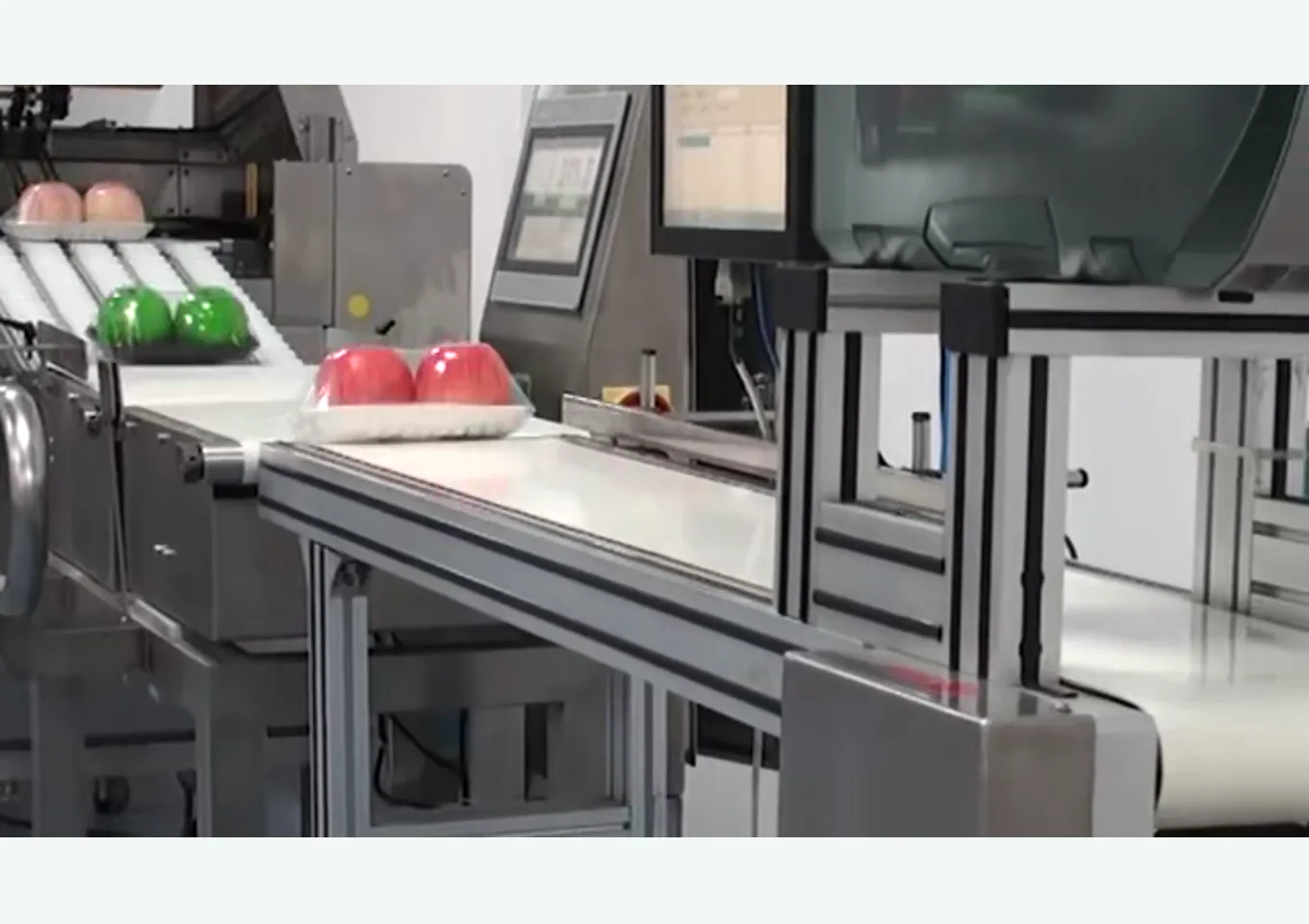 Fresh-Food Tray Wrapping, Weighing and Labelling Line
The line connects tray infeed, stretch-film overwrapping, weighing, label-data generation and application. Confirm tray rigidity, product protrusion or purge, film stretch and cling, weight range, label layout, barcod...
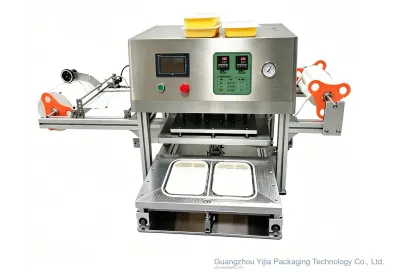 Tabletop Multi-Compartment Meal Tray Sealer
Desktop Multi-Compartment Lunch Box Sealer: Box film sealing; Tabletop multi-compartment meal box sealing machine, box-type MAP sealing machine, and automatic pre-cut sheet film pick-and-place tray sealing machine can...
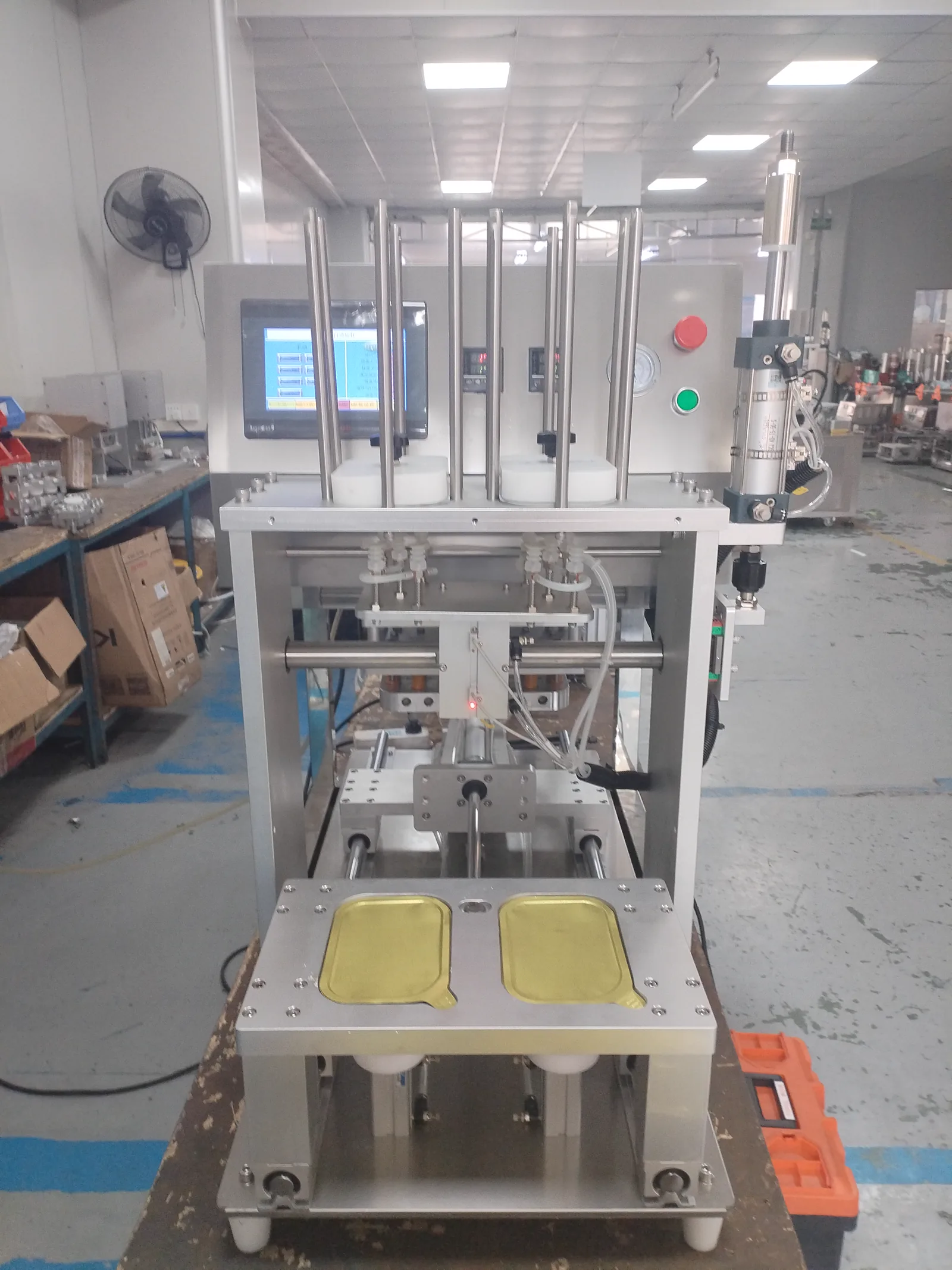 Automatic Pre-Cut Lid Pick-and-Place Tray Sealer
Automatic pre-cut film pick-and-place tray sealing machine: Box film sealing; Tabletop multi-compartment meal box sealing machine, box-type MAP sealing machine, and automatic pre-cut sheet film pick-and-place tray sea...
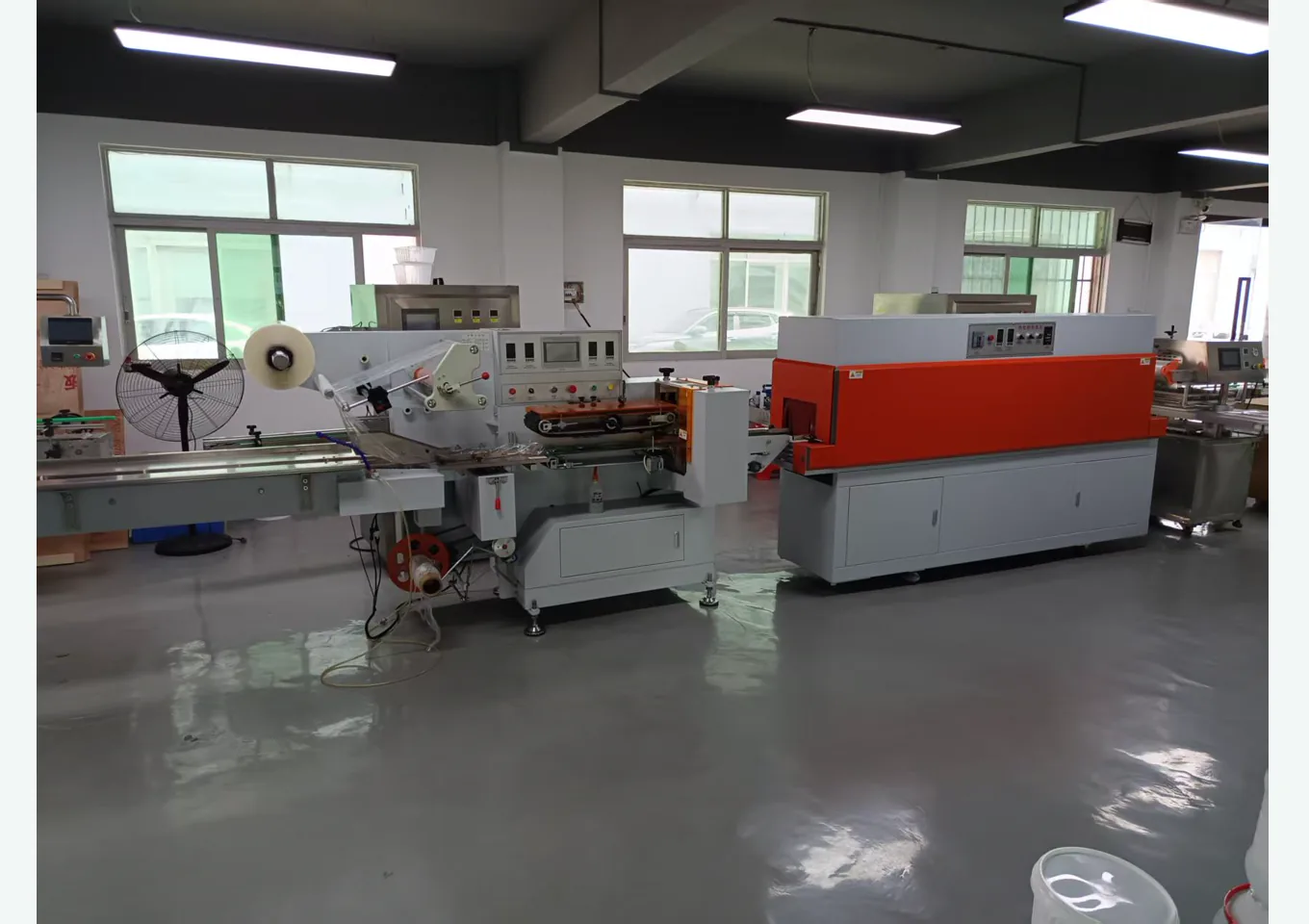 590-Series Shrink Flow-Wrapping Line
Core process
The food-grade conveying line is used to smoothly deliver salad boxes to the sealing position; the feeding method is determined by the on-site manual boundary.
Multi-compartment boxes without MAP, trays requiring MAP, and box types using pre-cut film enter the corresponding sealing main machine.
Film and box material should be trial sealed first, and sealing rings and change parts should be prepared according to the confirmed machine model and specifications.
The date/batch coding machine is used for traceability information. Outer box marking is handled by the downstream packaging solution.
The online checkweighing and visual inspection system can simultaneously handle weight and defined sealing edge appearance rechecks.
After finished product collection, if carton delivery is required, connect the case sealing and outer box labeling line.
Sample details
First describe the salad ingredients, whether sauce is included, sales display, and refrigerated transport method, then state whether the sealing is for protection, sealing, or modified atmosphere.
Finished salad photos, ingredients and sauce condition, sales packaging, refrigerated transport conditions, shelf life goal.Box material, shape, divider ribs, and rim flatness determine the mold contour. Dimensional stability across different supply batches should also be checked.
Empty boxes and filled boxes of each specification, box rim dimensions, divider rib positions, and nesting state.Roll film and pre-cut film have different feeding methods, and MAP film also involves barrier requirements. All films must be actually sealed with the salad box material.
Film samples and structure description, box material, whether MAP is used, rim contamination pattern, easy-peel and display requirements.List box placement, sealing, date marking, sealing edge recheck, finished product conveying, and case packing separately, and clarify which actions are performed manually.
Sealing process, manual involvement points, coding content, weight and visual inspection items, and downstream packaging method.Equipment size and automation level should be determined based on target takt time, box change frequency, cleaning arrangements, workshop flow, and utilities.
Production plan, layout drawing, conveying direction, changeover list, cleaning requirements, air supply conditions, and procurement milestones.Common selection mistakes
Providing only the name 'salad box' does not show whether the box rim contour, divider ribs, and film material can be sealed stably.
Cup or capsule equipment has different container sizes and positioning structures and cannot replace large-mouth tray sealing.
Refrigerated distribution does not automatically equate to modified atmosphere, and ordinary heat sealing cannot be assumed to be sufficient by default.
Different films have different heat seal layers and compatibility with box materials; copying settings from another film can easily cause wrinkling or weak sealing.
Without pre-dividing shared and dedicated change parts for multiple box types, on-site adjustments become uncontrollable.
View detailed technical notes
Choose the machine by box rim and film feeding method first
Sealing a salad box is not just about its length and width. Multi-compartment dividers, rim cleanliness, roll film or pre-cut film type, and whether MAP is required are the key factors in choosing equipment and tooling.
Preservation requirements determine whether to enter the MAP branch
Same-day display, refrigerated distribution, and MAP preservation correspond to different validation scopes. First fix the sales packaging and cold chain conditions, then decide whether ordinary heat sealing is sufficient or whether gas flushing and barrier film are needed.
Three main lines: multi-compartment heat sealing, MAP, and pre-cut film
For multi-compartment boxes without MAP, the tabletop multi-compartment meal box sealing machine is the main choice. When gas flushing is required, use a tray MAP sealing machine. For pre-cut film with automatic pick-and-place, choose an automatic pre-cut film pick-and-place tray sealing machine. Downstream, add conveying, coding, and inspection as needed.
The three main machine types differ in film feeding and process
All three main machines seal trays, but film feeding and process differ. Multi-compartment tooling must avoid dividers, MAP equipment must handle gas flushing, and pre-cut film equipment must also handle sheet separation and positioning, so trial sealing must be done with the actual box and film.
Different container positioning means equipment cannot be forced into use
Cup, capsule, or bottle equipment with different container positioning cannot be used for salad trays just because they also have a 'sealing' action.
Cup or capsule equipment does not replace tray main machines
Small-diameter cup sealing and salad box tooling are different
Eliminate mismatched machine types by box rim and lid film
Decide the sealing process before comparing equipment
Expand from trial sealing equipment to continuous production
At the early project stage, you can first use a tabletop multi-compartment meal box sealing machine to validate the box film and seal edge. If MAP is later confirmed, switch to the tray MAP route. If pre-cut film is fixed and automatic pick-and-place is desired, evaluate a dedicated tray sealing machine. Whether to go continuous inline should be determined by stable orders and complete cycle time.
Common questions
What samples should be prepared for trial sealing of salad boxes?
Prepare at least empty boxes, finished boxes with salad, and the actual sealing film. If samples cannot be sent temporarily, provide the box rim dimension drawing and clear photos first.
Which equipment should be evaluated first during the sampling stage?
The tabletop multi-compartment meal box sealing machine can be evaluated first, but the box type, film material, and manual placement/removal method still need to be considered; it cannot be determined solely by 'sampling'.
Can modified atmosphere correspond to a fixed shelf life?
There is no fixed number of days. The gas scheme, vegetable and sauce condition, film barrier properties, and cold chain conditions jointly determine the result, which should be confirmed through finished product testing.
What conditions are used to select the lid film for salad boxes?
Transparent film, easy-peel film, aluminum foil film, MAP film, or pre-cut film can be compared; the final choice is determined by box material, display, opening, and MAP requirements.
Can batch coding and conveying be added to the sealing line?
The date/batch coding machine and food-grade conveying line can be integrated according to the layout. If there are special requirements for box surface labeling, the labeling position and mechanism should be checked separately.
How to confirm change parts for special salad boxes?
For special box types, the actual box or complete dimensions must be obtained first, and after confirming the sealing edge contour, positioning, and change parts, the manufacturing and delivery arrangement can be evaluated.