Solution topic
MAP, Pre-cut Film and Roll Film Heat Sealing Solutions for Sandwich Trays
For PP and PET trays and cold-chain display trays, compare tray MAP sealing machines, automatic pre-cut film tray sealing machines, roll film tray sealing machines, and finished pr
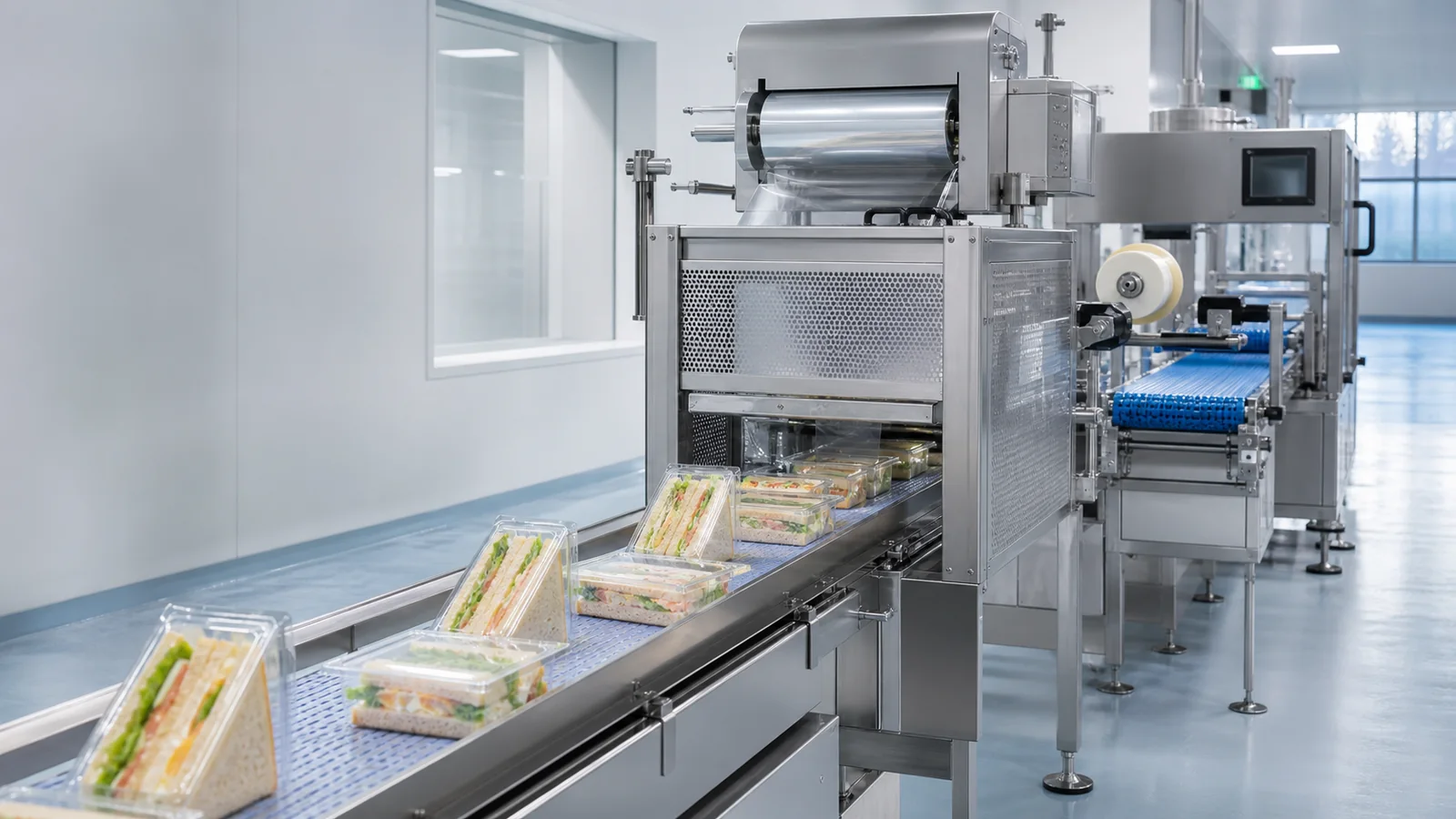
- When using transparent trays for cold-chain display, determine whether MAP is needed based on preservation goals, then choose between pre-cut film and roll film based on tray rim, changeover, and feeding methods, avoiding treating appearance needs as sealing conclusions.
Solution summary prepared for you
- For sandwich tray line selection, first clarify MAP, pre-cut sheet film, or roll-fed film heat sealing, then check tray opening, product height, sauce, and refrigerated display.
- Tray MAP sealing machines are for projects with clear gas replacement; automatic pre-cut sheet film pick-and-place tray sealing machines and tabletop roll-fed film tray sealing machines handle the two film feeding routes respectively.
- Submit trays, formal film, and packed sandwiches to verify seal edge, anti-fog display, sheet film alignment, date coding, and visual inspection simultaneously.
Route comparison
- Suitable for sandwiches sold in-store, short-distance turnover, and where content display is important, and packaging standards allow snap-on lids.
- Transparent snap-on lids facilitate display of fillings and ingredients, and opening is intuitive, suitable for packaging emphasizing store display.
- The sealing, touch protection, and cold-chain performance of snap-on lids require finished product testing and cannot be considered as film sealing.
- When there is obvious sauce leakage, gas flushing, or sales regulations require film sealing, ordinary snap-on lids alone are not suitable.
- First verify lid locking and transport. If further edge sealing or batch coding is needed, add tray sealing and date coding equipment.
- Suitable for trays that do not require gas flushing but desire a complete sealing edge, touch protection, and cold-chain display appearance.
- Pre-cut film or roll film heat sealing creates a continuous sealing edge and provides a more uniform display and marking area.
- Film sheet separation or roll film trimming, tray rim flatness, product height, and sauce contamination on edges affect the finished product.
- When tray type is undecided, film material is not matched, or sandwiches protrude above the sealing edge, do not proceed directly to continuous heat sealing.
- For pre-cut film, choose an automatic pre-cut film pick-and-place tray sealing machine; for roll film, use a benchtop roll film tray sealing machine. Ordinary multi-compartment trays can be evaluated with a benchtop main unit.
- Suitable for projects where cold-chain sales conditions and gas flushing requirements are clear, and finished product preservation validation is planned.
- The MAP route replaces gas during tray sealing and allows packaging validation around defined cold-chain preservation goals.
- Any change in sandwich ingredients, moisture and sauces, gas plan, film material, or cold chain may affect results.
- When the product only needs ordinary heat sealing, or there is no preservation validation plan, a full MAP route is not necessary.
- Use a tray MAP sealing machine and simultaneously confirm gas conditions, barrier film, tray rigidity, and post-seal integrity inspection.
Associated Equipment / Consumables
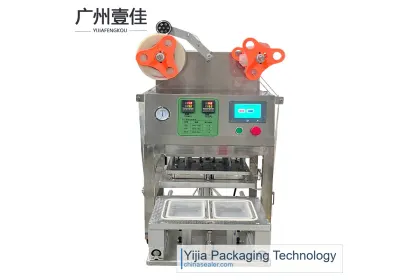 Benchtop Roll-Film Tray Sealing Machine
A benchtop roll-film sealer for manually loaded cups, bowls and trays. Trial the rim and ribs, lidding seal layer, tooling fit, trimming, peel and leak result as one system. Compare MAP or continuous filling-sealing e...
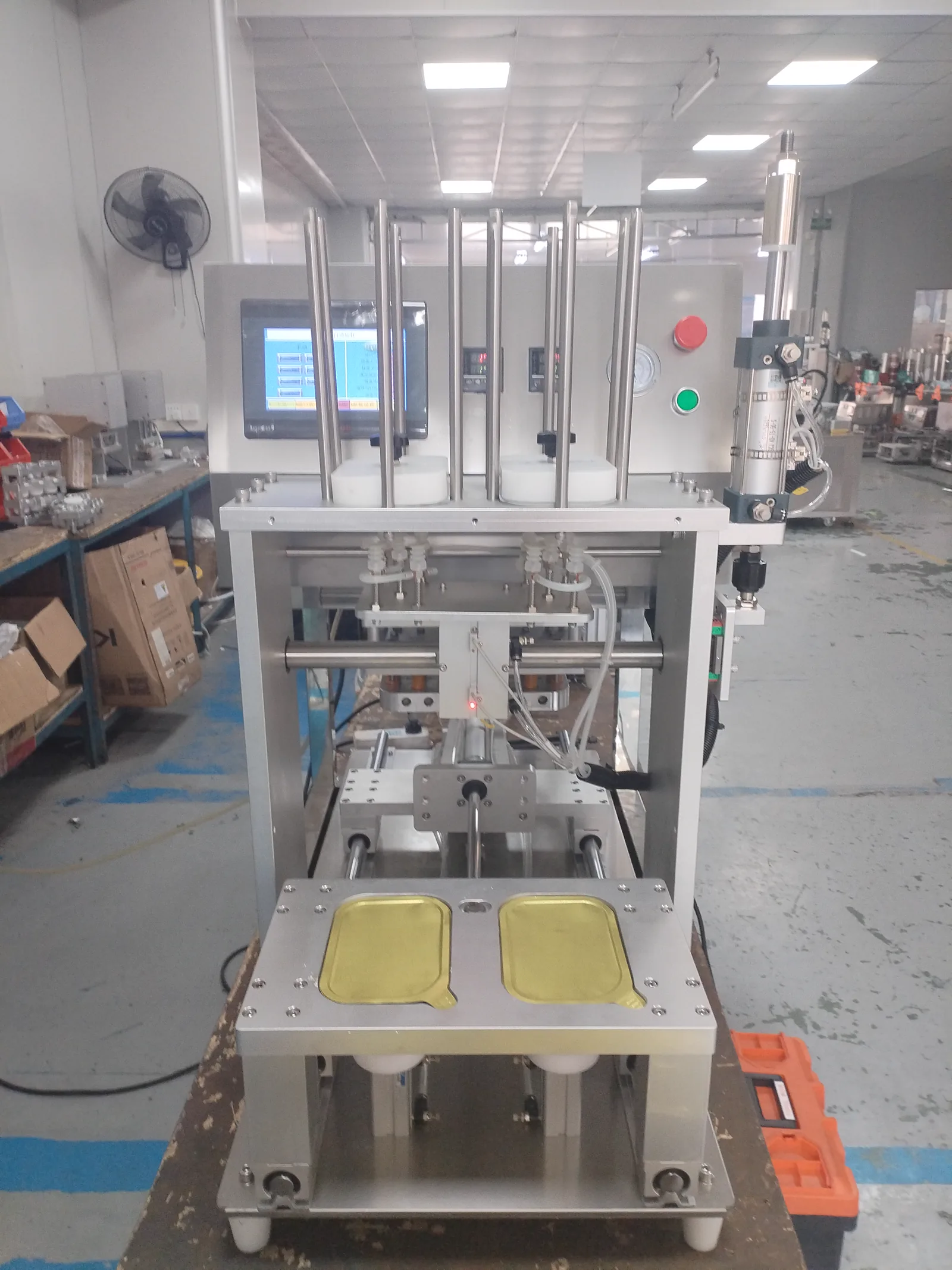 Automatic Pre-Cut Lid Pick-and-Place Tray Sealer
Automatic pre-cut film pick-and-place tray sealing machine: Finished product, tray, and film material; Sandwich height, sauce on the edge, and refrigeration conditions all change the seal, so do not replace actual pac...
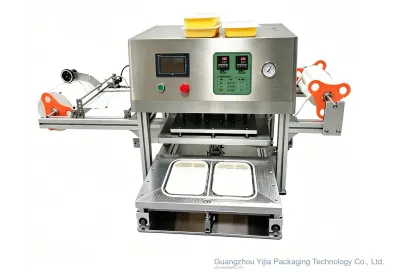 Tabletop Multi-Compartment Meal Tray Sealer
Desktop Multi-Compartment Lunch Box Sealer: MAP, sheet film, or roll film main machine; A tabletop multi-compartment meal tray sealing machine can handle corresponding regular tray types, but it cannot replace a defin...
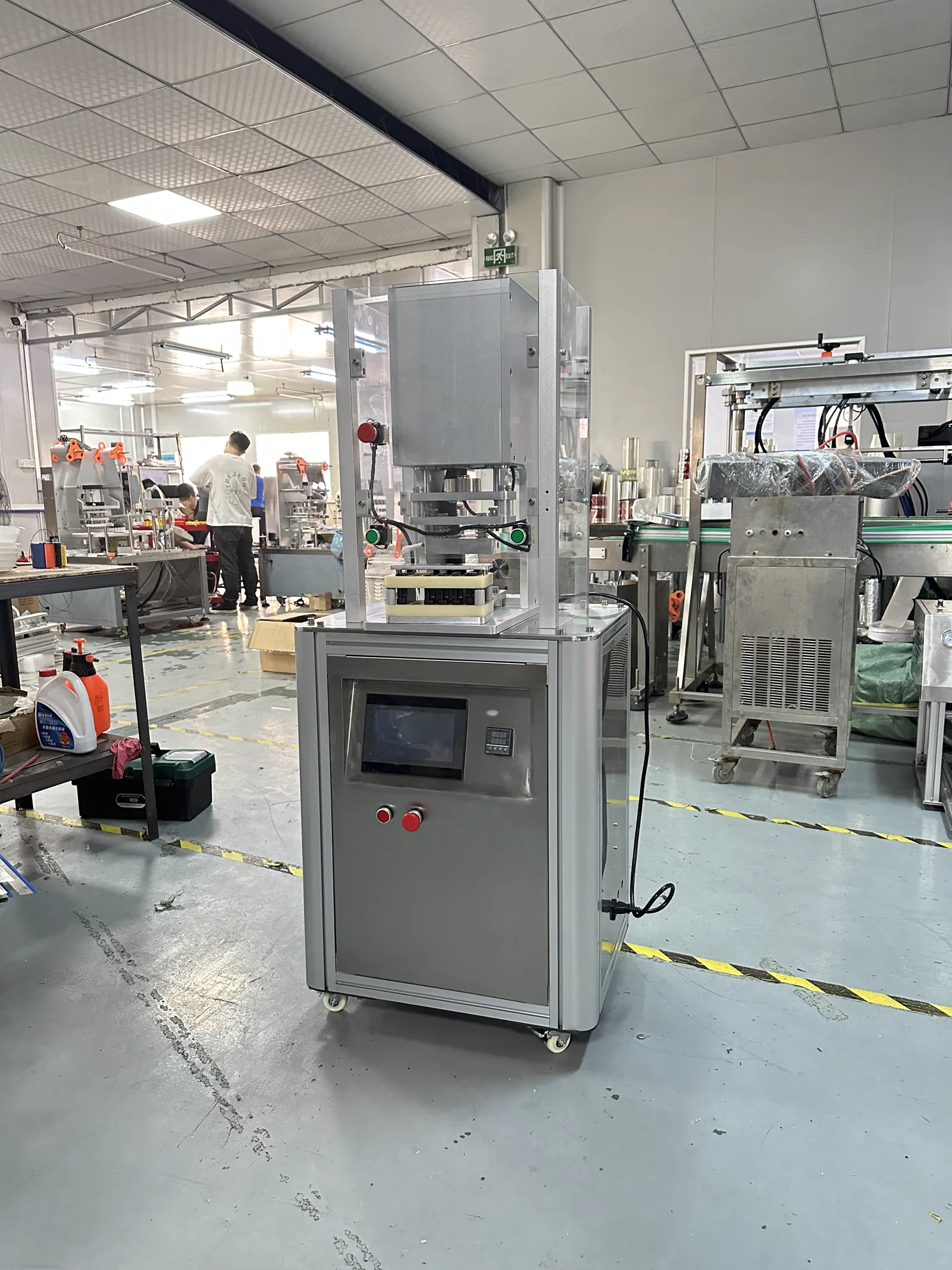 Servo Multi-Cavity Cup, Tray and Container Sealing Machine
Core process
First distinguish the three goals of short-term display, ordinary heat sealing, and MAP preservation, then use sandwich, tray, and film as a complete set for trial sealing.
Tray MAP, pre-cut sheet film, and roll-fed film heat sealing each have different film feeding and utilities; choose the main machine according to the packaging goal.
A date and batch inkjet coding machine can handle traceability information suitable for film surfaces or label areas; ingredient labels are confirmed separately according to the application surface.
Inline checkweighing and vision inspection systems can verify according to agreed weight and seal edge rules; food metal detection machines are selected based on risk.
The primary packaging must first be determined as tray, transparent snap-on lid, or outer bag, to avoid putting equipment for different containers into the same solution.
Trays can be placed manually, or automatic feeding can be evaluated based on stable orders and food-grade conveyor interfaces.
Sample details
Specify whether the sandwich is for in-store fresh sale, convenience store refrigerated, or delivery, and state the display, tamper-evidence, sealing, or MAP goals.
Product photos, sales channel, refrigerated transport, target packaging performance, and project stage.Measure tray length, width, height, rim, and dividers, and record the highest point after sandwich placement and any tray deformation.
Empty trays, packed finished products, rim dimensions, tray material, product height, and a list of different specifications.Distinguish pre-cut sheet film, roll-fed film, anti-fog film, and MAP barrier film, and check whether sauce and crumbs contaminate the rim.
Formal film samples, film feeding form, anti-fog and easy-peel requirements, sauce condition, and MAP conditions.List the process and manual positions for tray feeding, sealing, date marking, weight and seal edge verification, finished product conveying, and case packing.
Main machine process, manual boundaries, coding content, inspection items, food-grade conveying, and carton requirements.Planned production rate, tray change frequency, refrigerated turnover, workshop direction, and utilities together determine single machine or line.
Production plan, layout drawing, changeover list, cold chain connection, utilities, budget, and delivery time.Common selection mistakes
Sandwich weight cannot explain the tray opening contour, product height, film material, or seal edge area, so it cannot independently determine the equipment.
Transparent display film may fog in refrigerated environments; looking clear at first does not mean it will remain transparent in actual display.
Tray heat sealing, MAP, and outer bag packaging each have independent feeding, closing actions, and packaging material requirements.
Ordinary sealing film and MAP trays may look similar, but the gas, barrier film, and cold chain verification scope differ.
Even if all are called sandwiches, they may use different trays, films, placement heights, and film feeding methods.
View detailed technical notes
First Distinguish Short-Term Display, Heat Sealing, and MAP
Short-term display in stores, cold-chain distribution, and MAP preservation are different goals. When sandwiches only need protection from touch or ordinary sealing, first compare snap-on lids, pre-cut film, and roll film heat sealing. Only when the product plan clearly specifies gas flushing should you move to the tray MAP route.
Film Supply and Goals Differ Across Four Packaging Types
Transparent snap-on lids highlight product display, pre-cut film suits automatic sheet separation and positioning of fixed film sheets, roll film is used for continuous film supply and heat sealing, and MAP also requires gas handling and barrier film. First determine the retail packaging and cold chain, then compare equipment; do not generalize with a single 'tray sealing' term.
Three Main Routes: MAP, Pre-cut Film, and Roll Film
Tray MAP sealing machines, automatic pre-cut film pick-and-place tray sealing machines, and benchtop roll film tray sealing machines correspond to three main routes; benchtop multi-compartment meal tray sealing machines can be used for corresponding ordinary tray types. After sealing, add date/batch coding, checkweighing and vision, metal detection, food-grade conveying, and outer carton downstream as needed.
Filled Trays Matter More Than Empty Tray Dimensions
Sandwich thickness, placement orientation, sauces, and crumbs affect tray rim cleanliness and sealing edges; tray material, rim ribs, and film heat-seal layer determine tooling and sealing. Official sample trays should include the filled state, not just empty tray dimensions.
Configure Date Coding, Inspection, and Shipping Downstream Separately
Date/batch inkjet coders can be positioned on suitable film areas. Inline checkweighing and vision inspection systems verify according to agreed weight and sealing edge defect rules; food metal detectors are selected based on risk plans. When cartons or shrink wrap outer packaging are needed, evaluate carton sealing and outer carton labeling lines or L-type shrink wrap packaging lines separately.
Compare Routes by Preservation, Packaging Materials, and Cold Chain
Ordinary heat sealing focuses on tray-film sealing; MAP also requires verification of gas and barrier properties; transparent snap-on lids lean toward opening/closing and display; outer bags belong to a different flexible packaging process. When comparing, focus on preservation goals, packaging materials, labor, and cold chain, not just appearance.
Trial Seal Before Integrating Lines When Samples Are Undecided
When tray type, film material, and sandwich height are not yet stable, single-machine trial sealing is more appropriate than configuring a complex integrated line. Once the primary packaging, preservation goals, inspection items, and downstream takt time are clear, decide on automatic tray feeding, MAP, vision, or case packing scope.
Common questions
Does a sandwich tray always need MAP?
Not necessarily. For same-day sales or short-distance delivery, you can first evaluate ordinary heat sealing or transparent snap-on lids; only enter MAP when the preservation goal is clear.
MAP evaluation includes preservation goals, barrier film, and cold chain conditions
Photos can be used for initial assessment, but a formal quote should include tray dimensions, film type, product height, target capacity, and whether MAP is needed.
Can the equipment direction be judged with only photos?
You can first look at photos to get a general direction. Formal selection still requires tray dimensions, sandwich height, film material, refrigeration conditions, and planned production rate.
Can one tray sealing machine handle multiple tray types?
Yes, but each tray and film combination must be sealed as samples together. First divide shared tooling and dedicated change parts, then evaluate the adjustment work.
Do sauces and crumbs affect the seal edge?
Yes. Sauce, grease, or crumbs on the rim can cause weak seals, so keep the sealing edge clean during loading and trial sealing.
Can we communicate before all materials are ready?
You can communicate first. Please provide at least product and packaging photos, sales method, and approximate production plan; tray and film samples can be sent later.