Solution topic
Two-Piece Plastic Cap Assembly Line: Bowl Feeding, Rotary Press-Fit and Inspection
Build a two-piece plastic cap assembly line from outer-cap and insert samples: dual bowl feeding, rotary press-fit, missing/reversed-part inspection, and optional finished-cap appl
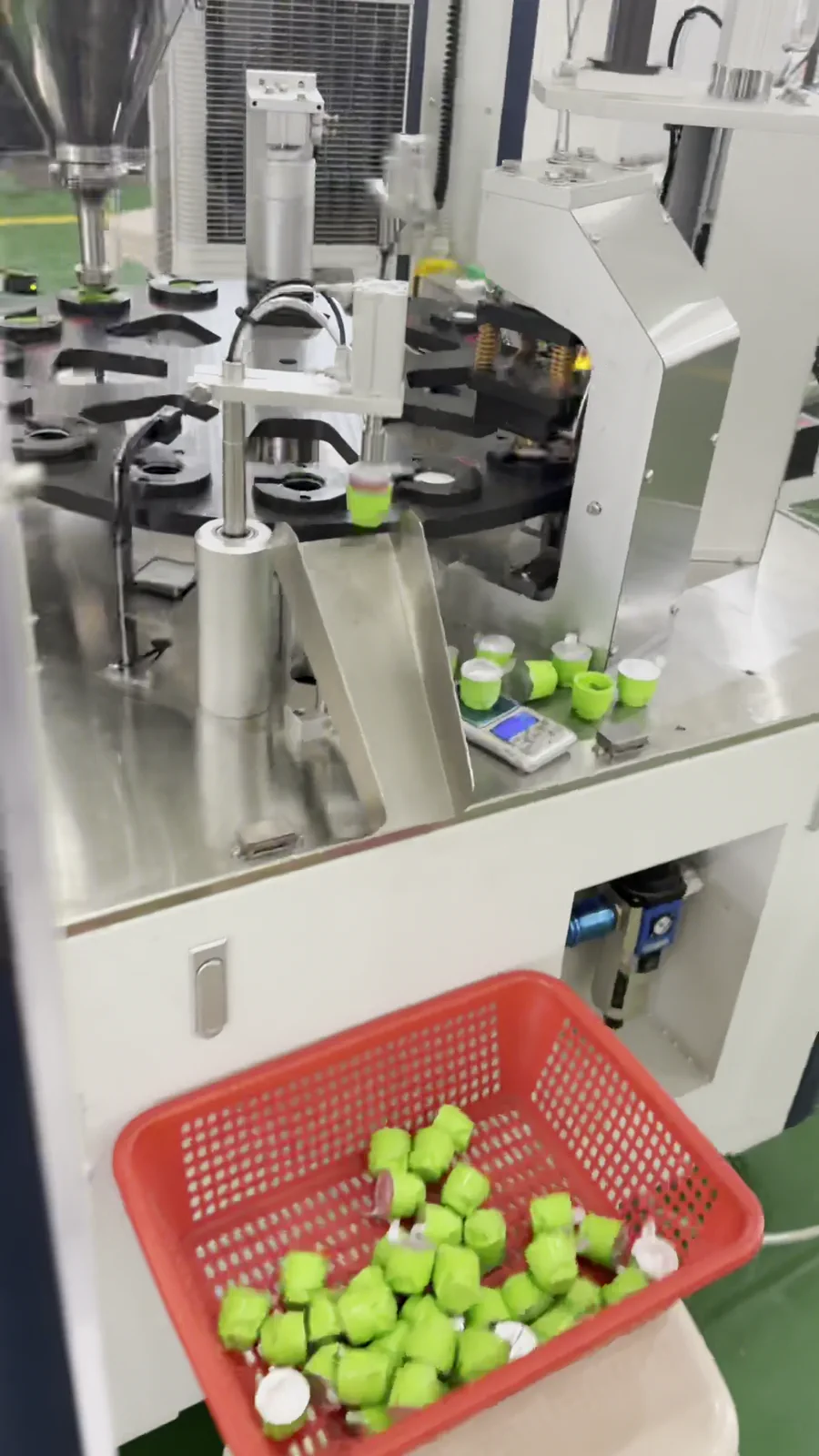
- Define how the outer cap and insert orient, engage, and pass acceptance before configuring the dual-bowl assembly machine; add finished-cap feeding and capping only when the closure must continue onto a bottle or cup.
Solution summary prepared for you
- A two-piece closure assembly machine joins the outer cap and insert; applying the finished closure to a bottle or cup is a downstream cap feeding and capping operation.
- The two components usually need separate sample-tooled bowl tracks because orientation, center of gravity, material, and cosmetic limits differ.
- A stable route is bulk feed → orientation → rotary locating → assembly and press-fit → missing/reversed/incomplete checks → collection or cap application.
Route comparison
- Sample batches are still small, and the main goal is to first confirm assembly orientation, pressing position, and trial assembly of the finished product.
- It allows observation of part tolerances, deformation, scratches, and snap-fit condition before automatic feeding.
- Manual handling cannot prove vibratory bowl feeding stability, nor represent automatic cycle time.
- When the project already has sufficient stable parts and clearly requires dual-lane automatic feeding, the manual station should not be the final solution.
- Sample assembly validation can be done first, then proceed to the CA310 dual-vibratory-bowl route.
- Projects where outer lid and inner part batches are stable, and parts need to be oriented and fed separately and assembled and pressed at turntable stations.
- The CA310 organizes dual vibratory bowls, turntable indexing, assembly, pressing, and trial assembly of finished lids into one customized machine.
- Tracks, fixtures, pressing heads, and cycle times all depend on real lid parts and cannot be frozen based on generic dimensions.
- When parts are still frequently modified, or surface, deformation, and snap-fit standards are not yet determined, the final configuration should be confirmed after sample finalization.
- Focus on evaluating the YJ-CA310, and provide outer lid, inner part, and matching bottle neck or cup body.
- Projects where, after lid part assembly, the finished lid needs to be placed onto bottles or cups in another process.
- Lid part assembly and finished lid placement, pressing, or screw capping can be accepted separately, making boundaries clearer.
- General-purpose screw capping or pressing equipment cannot replace the two-piece lid part assembly inside the CA310.
- When the customer only needs to place finished lids onto bottles without internal lid part assembly, the CA310 should not be selected.
- The CA310 completes lid part assembly; downstream bottle placement needs should be compared with screw capping and pressing equipment.
Associated Equipment / Consumables
Two-Piece Plastic Cap Assembly MachineThis machine assembles the closure components themselves; it is not a standard capper that applies a finished cap to a bottle or cup. Available video verifies two vibratory bowls, linear tracks, rotary indexing, compo...
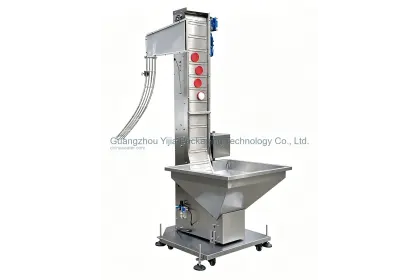 Cap Feeding and Sorting System
Cap sorting, conveying, and feeding for Screw caps, press-on caps, inner plugs, special-shaped caps
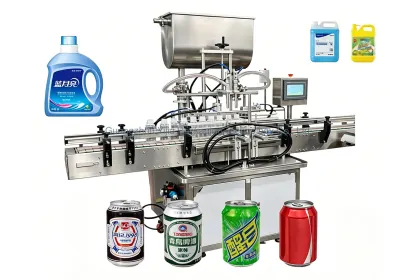 Liquid Filling Machine
Quantitative filling of materials for Bottles, pails, cans, flexible pouches
Core process
Sample details
The outer lid and inner part must be measured and trial-assembled as a set to confirm dual-vibratory-bowl feeding, assembly orientation, and pressing contact position.
Provide outer lid and inner part physical samples and complete dimension drawingsThe final bottle neck or cup body is used to verify that the assembled lid can be smoothly inserted, snapped, and retained; checking only the two loose parts is not sufficient.
Provide matching bottle neck or cup body physical samples as the base for trial assembly of finished productPart material, surface treatment, and acceptable scratch range affect the feeding contact surface and finished product appearance judgment; sample comparison is needed.
Specify part material, surface treatment, and allowable scratch standardsSnap-fit, pressing, or pull-off items should specify inspection actions and qualified samples, serving as the basis for pressing station debugging and finished product confirmation.
Define finished product acceptance methods related to snap-fit, pressing, or pull-offUse missing part, reversed, misaligned, deformed, and damaged samples to define rejection boundaries, so that inspection positions and manual recheck methods can be arranged.
List judgment samples for missing parts, reversed parts, misalignment, deformation, and damageCapacity, space, utilities, and finished product collection direction are used to verify overall machine layout, operation and replenishment, and downstream connection.
Specify target capacity, site space, power and air supply, and finished product collection methodCommon selection mistakes
View detailed technical notes
Customer's real question
Our shaker cup lid consists of an outer lid and an inner part. We want to automatically orient and feed each part separately, then complete assembly and pressing. How can we confirm that the two parts will not be reversed, missing, scratched, or crushed, and allow the finished lid to be trial-fitted on the matching bottle neck or cup body?
First determine the packaging route
The CA310 uses two vibratory bowls to orient the outer lid and inner part separately, then completes positioning, assembly, pressing, and trial assembly of the finished lid at turntable stations. The solution must be built around the two lid parts and the matching bottle neck or cup body samples.
Manual pre-assembly and pressing station
Suitable for: sample batches are still small, and the main goal is to first confirm assembly orientation, pressing position, and trial assembly of the finished lid. Advantages: it allows observation of part tolerances, deformation, scratches, and snap-fit condition before automatic feeding. Limitations: manual handling cannot prove vibratory bowl feeding stability, nor represent automatic cycle time. Not recommended: when the project already has sufficient stable parts and clearly requires dual-lane automatic feeding, the manual station should not be the final solution. Equipment direction: sample assembly validation can be done first, then proceed to the CA310 dual-vibratory-bowl route.
Dual-vibratory-bowl turntable automatic assembly route
Suitable for: projects where outer lid and inner part batches are stable, and parts need to be oriented and fed separately and assembled and pressed at turntable stations. Advantages: the CA310 organizes dual vibratory bowls, turntable indexing, assembly, pressing, and trial assembly of finished lids into one customized machine. Limitations: tracks, fixtures, pressing heads, and cycle times all depend on real lid parts and cannot be frozen based on generic dimensions. Not recommended: when parts are still frequently modified, or surface, deformation, and snap-fit standards are not yet determined, the final configuration should be confirmed after sample finalization. Equipment direction: focus on evaluating the YJ-CA310, and provide outer lid, inner part, and matching bottle neck or cup body.
Downstream route for placing finished lids onto bottles
Suitable for: projects where, after lid part assembly, the finished lid needs to be placed onto bottles or cups in another process. Advantages: lid part assembly and finished lid placement, pressing, or screw capping can be accepted separately, making boundaries clearer. Limitations: general-purpose screw capping or pressing equipment cannot replace the two-piece lid part assembly inside the CA310. Not recommended: when the customer only needs to place finished lids onto bottles without internal lid part assembly, the CA310 should not be selected. Equipment direction: the CA310 completes lid part assembly; downstream bottle placement needs should be compared with screw capping and pressing equipment.
Recommended equipment route - Step 1: Confirm the two lid parts and trial assembly base
First confirm part orientation, tolerances, allowable deformation, and trial assembly methods for the finished product.
Recommended equipment route - Step 2: Dual-lane oriented feeding
The outer lid and inner part need to be separately verified for separation, orientation, and continuous feeding stability.
Recommended equipment route: Step 3: Turntable assembly and press-fitting
Complete positioning, assembly, and pressing of the two parts at the indexing station, and control damage risk according to samples.
Recommended equipment route: Step 4: Finished product inspection and collection interface
Only after acceptance criteria are clearly defined should missing-part, orientation, or position screening and collection interfaces be added per project.
Common questions
Is closure assembly the same as press capping a bottle?
No. Closure assembly joins the outer cap and insert into a finished closure; capping applies that finished closure to a bottle or cup. They may be separate machines or an integrated project.
Why are two bowl feeders normally used?
The two components differ in geometry, orientation, center of gravity, material, and cosmetic limits, so separate sample-tooled feeding is easier to validate.
Is “shaker cup lid machine” the formal machine identity?
It is one known application. The broader machine entity is a two-piece plastic cap assembly and press-fit machine for compatible outer-cap and insert structures.
How are missing, reversed, or incomplete assemblies prevented?
Create representative defect samples and acceptance limits before selecting sensors or vision, and validate mistake-proofing in bowls, tracks, fixtures, and pressing.
Can one machine change among many closure formats?
It depends on common geometry and feeding behavior. Bowl tracks, linear tracks, rotary fixtures, and pressing tooling may require a complete format set.
What is the minimum inquiry information?
Send outer cap, insert, and matching-container photos or samples, drawings, materials, engagement and cosmetic criteria, target cycle, and whether finished-cap application is required.