Solution topic
Shampoo Bottle Filling Line: From Bottle Unscrambling and Filling to Coding and Case Packing
Describes the configuration sequence of bottle unscrambling, lotion filling, cap feeding and screw capping, labeling and coding, online inspection, case sealing, and outer case lab
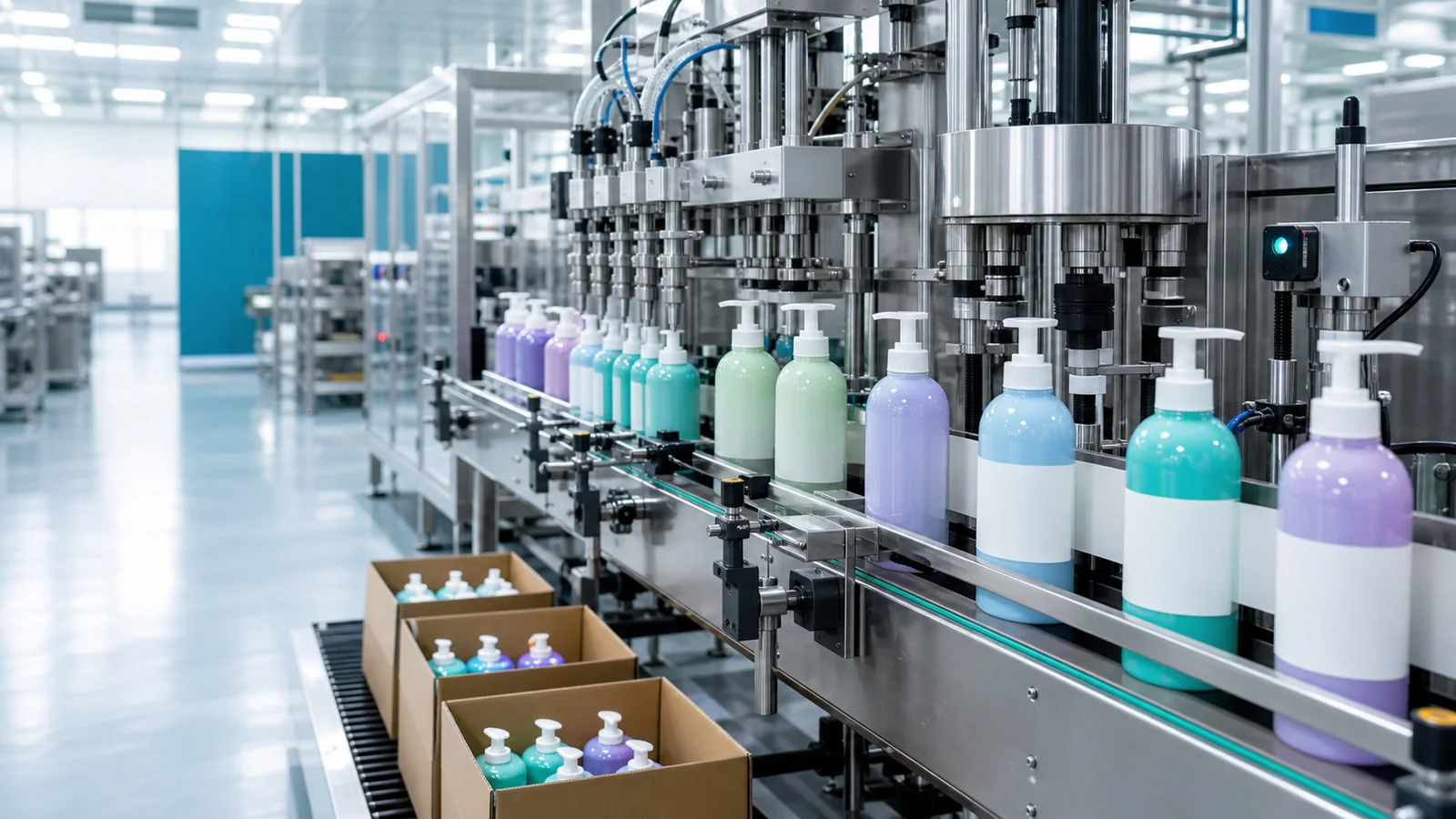
- Material viscosity determines the filling method; bottle type, pump head, or flip cap determines the cap feeding and screw capping structure; label position and outer case specifications determine the downstream section. The current equipment route covers automatic bottle unscrambling, inspection, case sealing, and outer case labeling; the product packing...
Solution summary prepared for you
- A shampoo bottle filling line first uses viscosity, bottle standing, cap type, and labels as the baseline, then decides the scope of single machine trials, automatic unscrambling and cap feeding, and continuous conveying.
- The equipment chain consists of a daily chemical lotion filling machine, automatic screw capping machine, automatic bottle unscrambling and cap feeding system, food-grade conveyor line, labeling and coding and checkweighing vision equipm...
- When submitting requirements, provide actual shampoo, bottle caps and labels, target speed, inspection rules, outer case samples, and on-site direction, and separately state who completes product case packing.
Route comparison
- Suitable for the stage when shampoo formula, pump heads, or labels are still being adjusted and filling and capping processes need to be confirmed first.
- First use a daily chemical lotion filling machine and automatic screw capping machine to complete actual material and packaging material verification, making it easier to adjust filling nozzles and capping structure within a smaller scope.
- Manual bottle and cap loading affects continuous speed, and single machine results cannot directly represent the automatic unscrambling, cap feeding, and inspection line.
- When the main cap is stable and the order requires continuous automatic bottle and cap feeding, long-term reliance on manual transfer is not advisable.
- Configure single machine stations around the daily chemical lotion filling machine and automatic screw capping machine. Labeling and coding can be independently verified after bottle orientation is stable.
- Suitable for projects where the main cap has been signed off and there is a desire to reduce manual bottle and cap loading and continuously connect filling and screw capping.
- An automatic bottle unscrambler, cap feeding and capping system, and food-grade conveyor line can reduce cap handling and establish uniform bottle spacing for continuous filling and screw capping.
- Irregular bottles and pump head caps still need separate testing, and equipment speed must be determined by the entire bottle line rather than a single main machine.
- When bottle types change frequently, standing is unstable, or caps are not yet frozen, the automatic unscrambling and cap feeding configuration should not be locked directly.
- Plan the standard bottle line in the order of automatic unscrambling, daily chemical lotion filling, cap feeding and capping, automatic screw capping, and food-grade conveying.
- Suitable for orders requiring two-level traceability of bottles and cases, with case packing responsibility and already-cased incoming conditions clearly defined.
- Bottle labels, individual bottle batch numbers, and inspection results can be checked before case sealing. Already-cased products then complete box flap sealing and outer case identification.
- Inspection rules, outer case dimensions, and case packing incoming material status must be clear. The listed equipment is not responsible for automatically loading individual bottles into cartons.
- When individual bottle marking, inspection targets, or case specifications are not yet determined, the full downstream section should not be frozen at once.
- On the single bottle side, use a round/square bottle labeling machine, date/batch inkjet coder, and online checkweighing vision system. On the carton side, use a case sealing and outer case labeling line.
Associated Equipment / Consumables
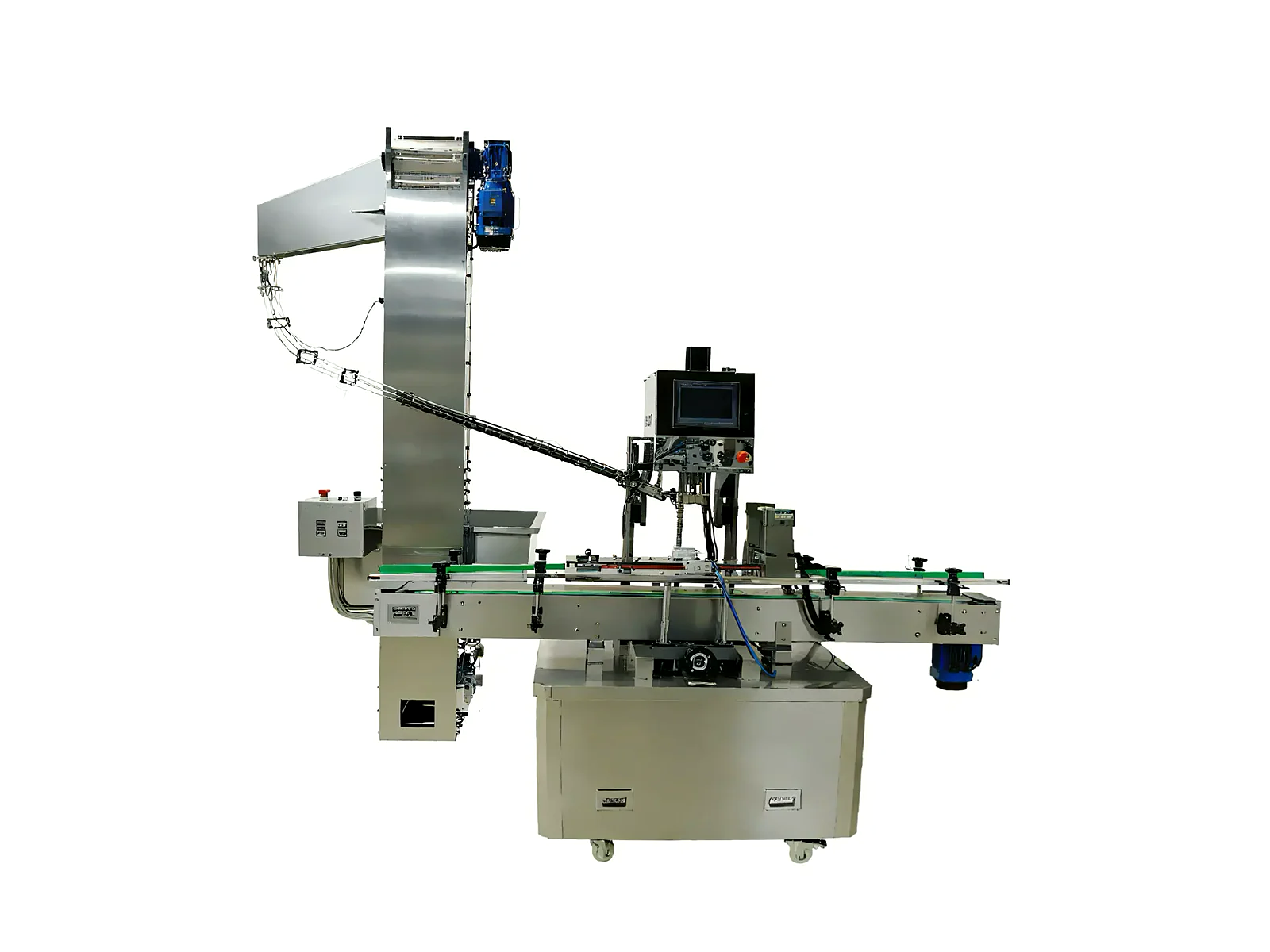 Automatic Screw Capping and Press-On Capping Machine
The system can sort and place closures, tighten threaded caps, or press on snap caps and inner plugs. Validate the cap thread, torque or press height, container anti-rotation, cap orientation, exception handling and c...
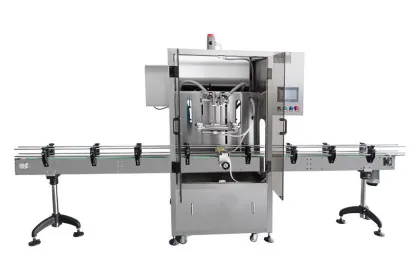 Servo Piston Liquid and Paste Filling Machine
Confirm actual materials and complete packaging materials; Pump head caps, flip caps, and regular screw caps have different capping and tightening actions, and cannot be...
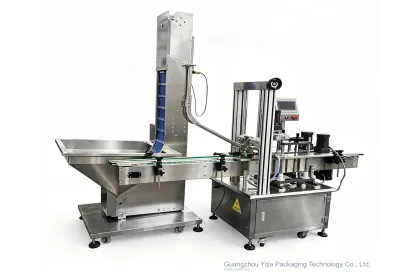 Automatic Screw Capping Machine
Lotion quantitative filling; The number of heads and speed are determined after bottle type, fill volume, and shampoo flow state are stable, and fixed capacity is not directly applied;...
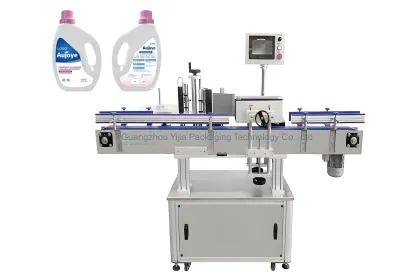 Round-Bottle and Front/Back Labelling Machine
Single bottle marking and quality inspection; Label position, printing content, inspection targets, and abnormal handling must be written into the acceptance documents se...
Core process
First use actual bottles, caps, and shampoo to verify standing, conveying, filling finish, and capping actions, and include label and outer case samples as the baseline.
Use a daily chemical lotion filling machine for quantitative filling of viscous materials. Nozzle height, suck-back finish, and contact part cleaning are determined by actual material tests.
The automatic screw capping machine is configured with clamping or pressing structures according to the formal cap type. For continuous production, connect the cap feeding and capping system to avoid manual cap placement becoming a bottleneck.
After the main bottle can stand stably and pass orientation tests, the automatic unscrambler feeds it into the food-grade conveyor line, coordinated with filling and screw capping speed.
A round/square bottle labeling machine completes bottle body marking, a date/batch inkjet coder selects the printing surface based on stable bottle orientation, and an online checkweigher and vision inspection system check according to the weight and appearance conditions confirmed by the project.
How finished products are loaded into cartons should be defined separately according to case specifications. Already-cased products can enter the case sealing and outer case labeling line to complete box flap sealing and outer case identification.
Sample details
First explain shampoo flow, foaming, stringiness, and cleaning conditions, and use actual materials to determine filling structure and finish action.
Representative shampoo, planned fill volume, production temperature, changeover frequency, and cleaning requirementsTest the bottle body, pump head, or flip cap as a set of samples to confirm standing, conveying, capping, pressing, and opening requirements.
Main actual bottles, complete caps, key bottle mouth dimensions, assembly direction, and opening standardsLabel layout and printing area affect sensing, bottle holding, and trigger positions. Provide the actual material rather than just reporting length and width.
Label roll samples, application position, printing content, bottle body seams, and reading requirementsList the delivery boundaries for unscrambling, filling, cap feeding and screw capping, labeling and coding, and inspection, then check station connections based on bottle spacing.
Target speed, shift arrangement, automation scope, inspection targets, and abnormal handling methodsExplain how bottles are packed into cases, the in-case arrangement, and the feeding orientation of already-cased products to confirm the case sealing and outer case labeling interfaces.
Actual carton samples, case packing responsibility, case specifications, outer case labels, on-site direction, and available spaceCommon selection mistakes
Pump heads, flip caps, and regular screw caps have different cap feeding, positioning, and tightening actions. Providing only the bottle leaves the capping solution without a basis.
Shampoo's viscosity, foaming, and stringiness affect the filling nozzle, suck-back, and rim cleanliness, and cannot be directly inferred from similar liquids.
Soft bottles, irregular bottles, or high-center-of-gravity bottles may become unstable at the unscrambling and conveying transition. A single machine running does not mean automatic bottle feeding is established.
Labels, coding, and vision inspection use different criteria. Without a defined inspection target, the online system cannot form an acceptable judgment.
Case sealing equipment handles cartons with products already packed. If the case packing action and in-case arrangement are not defined, the downstream speed and interfaces will be distorted.
View detailed technical notes
First separate the bottle filling core from the downstream section
This shampoo route starts with actual materials and cap samples, first solving filling finish and capping, then deciding whether to add automatic bottle unscrambling and cap feeding, online marking inspection, and case sealing stations after casing.
Materials and cap type together determine the main machine
Shampoo viscosity, foaming, and stringiness affect metering and bottle mouth cleanliness. Pump heads, flip caps, or screw caps change the capping and tightening actions, so both types of samples must be verified together.
Validate Filling and Capping in Single-Machine Stage
A daily chemical lotion filling machine and automatic screw capping machine are suitable for actual material trial runs first, focusing on recording fill volume, stringiness, bottle mouth residue, cap closure status, and changeover cleaning. This stage allows quick correction of caps and filling nozzles, but manual transfer results do not represent automatic unscrambling and cap feeding, and the whole line nominal speed is not the conclusion.
Verify Bottle and Cap Feeding First in Continuous Production
Once the main bottle can stand stably and the cap design is finalized, you can add an automatic bottle unscrambler, cap feeding and placing system, and food-grade conveying line, connecting filling and screw capping at a uniform bottle pitch. Also check bottle separation, buffering, abnormal stop recovery, and cap supply section by section; any unstable specification should retain a manual feeding boundary.
Labeling and Inspection Each Have Their Own Acceptance Targets
The round/square bottle labeling machine, date/batch inkjet coder, and online checkweighing and vision system handle labeling, traceability, and rule-based judgment respectively; the three cannot be replaced by a vague 'post-inspection section'. Only after that can the packed cartons enter the case sealing and outer case labeling line, and the single-bottle packing method still needs separate explanation.
Real Bottles and Caps Are the Baseline for the Line
Bottle body softness/hardness, center of gravity, and bottom surface affect unscrambling and conveying. The bottle mouth, cap inner structure, and assembly direction determine cap feeding and tightening. Complete samples should run through the entire line test.
Filling Finish Is Based on Actual Material Performance
Whether the filling nozzle needs suck-back or other anti-drip treatment should be decided based on the actual shampoo material and bottle mouth cleanliness results; contact parts and cleaning responsibilities should be written into the plan at the same time.
Cap Feeding and Screw Capping Designed Around the Official Cap Type
Automatic cap feeding cannot eliminate cap type differences. Pump head length, flip-cap direction, and thread fit may all change the cap supply, pick-up, and pressing structure, and each needs separate sample approval.
Confirm Bottle Body Labeling and Inspection Step by Step
Before labeling, determine the applicable labeling surface and bottle body seam. For coding, choose a stable area on the bottle body or cap; the inspection system should establish rules based on clear defects and abnormal handling.
Determine Actual Speed Based on the Slowest Station
The overall line speed is limited by unscrambling, filling, cap feeding and screw capping, labeling and coding, and inspection together. Continuous line recording should be done with the main specification, and capacity should be based on line test results, not just calculated from individual machine nominal speeds.
Common questions
How can a comparable equipment list be formed for a shampoo bottle filling line?
The scope cannot be determined by equipment name alone. Actual materials, bottle caps, labels, whether bottle unscrambling and cap feeding are needed, inspection scope, case specifications, and on-site layout all change the configuration. A boundary list should be formed before comparing equipment combinations.
How can it be determined whether a bottle filling line can achieve the planned speed?
First provide the target speed and representative bottle samples, then test each station for unscrambling, filling, capping, screw capping, labeling, and inspection. The overall line capacity is confirmed based on the slowest station and agreed operating conditions.
Can a solution be made before samples arrive?
The route can be preliminarily judged based on photos, dimensions, and cap type, but filling nozzles, bottle clamping, capping, and tightening results still need to be confirmed with actual bottles, caps, and shampoo.
Do all shampoo bottles need induction foil inner sealing?
Only consider it when there is an induction liner inside the cap that matches the bottle mouth and the project actually requires inner sealing. It cannot replace screw capping and should not be added to every shampoo line by default.
Can labeling, coding, or inspection be added in stages?
Conveyor length, trigger positions, and signal interfaces can be reserved. Adding equipment later still requires rechecking bottle orientation, speed, and inspection logic; it cannot be simply spliced based on empty space.
Does the case sealing line also handle automatic case packing?
No. The existing downstream section handles case sealing and outer case labeling for already-cased products. How bottles are arranged and loaded into cartons needs separate confirmation based on case specifications, dividers, and manual or independent case packing solutions.