Solution topic
Shampoo Bottle Filling Line: Pump, Flip-Top and Square Bottle Positioning Are the Key Integration Challenges
For shampoo, conditioner, and body wash, configure the filling, capping, and labeling line according to viscosity, PET or HDPE bottles, pump or flip-top caps, and label position.

- The viscosity of shampoo and conditioner affects filling; pumps, screw caps, or flip-tops determine the cap feeding and capping method; and round and square bottles affect labeling positioning. Material, cap and label samples, changeover specifications, inner seal requirements, capacity, and layout must be provided.
Solution summary prepared for you
- Shampoo and conditioner should first be verified with a servo piston liquid filling machine for viscosity, foaming, and filling nozzle cut-off.
- Pump heads, flip-top caps, and ordinary screw caps should be sampled separately with an automatic screw capping machine; cap application and positioning cannot be unified by cap diameter.
- The round and square bottle labeling machine should use final labels to confirm support and label placement; round bottle circumferential and square bottle layout should be recorded separately.
Route comparison
- Suitable for bottled projects using shampoo, conditioner, or body wash samples to confirm viscosity, foaming, and fill volume.
- The servo piston liquid filling machine can establish records for filling nozzle, cut-off, and bottle neck cleanliness based on the product.
- Different formulations and temperatures should be tested separately; product name cannot replace viscosity and foaming behavior.
- When representative product is unavailable or bottle type is not yet determined, it is not advisable to fix the filling nozzle and positioning.
- Complete sample filling with a servo piston liquid filling machine, then connect with the corresponding capping station.
- Suitable for projects where pump heads, flip-top caps, or screw caps are already matched with bottles and cap application and tightening need separate verification.
- The automatic screw capping machine can adjust positioning according to actual cap types; the cap feeding system is added when cap samples are suitable for sorting.
- Pump head length, cap orientation, bottle stability, and changeover must all be verified; cap diameter alone is not sufficient.
- When cap types are still changing or cannot be stably sorted automatically, retain manual cap application and single-machine capping first.
- The automatic screw capping machine handles various cap samples; connect the cap feeding system after sorting conditions are met.
- Suitable for projects where the label layout is already determined and there may be a need for matching cap inner aluminum foil liners and automatic conveying.
- The round and square bottle labeling machine, in-line induction sealing machine, and conveying can be verified step by step according to each product's conditions.
- Label surface, liner matching, machine cycle time, and site conditions must all be clarified; downstream modules are not a fixed combination.
- When there is no cap inner liner or the main machine process is not yet stable, induction sealing or automatic conveying should not be added first.
- Use the round and square bottle labeling machine for final labels, induction equipment for matching liners, and evaluate conveying after cycle times are clear.
Associated Equipment / Consumables
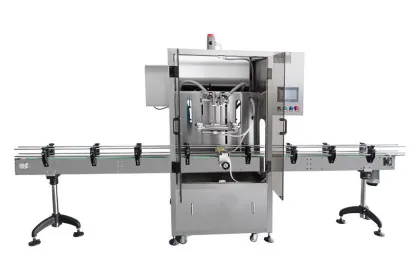 Servo Piston Liquid and Paste Filling Machine
The machine meters flowable liquids or viscous products within a trial-proven range; it is not universal for every liquid. Use the actual product and minimum/maximum container and dose to validate foam, stringing, par...
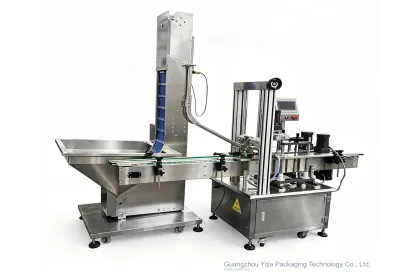 Automatic Screw Capping Machine
First verify liquid filling for daily chemicals; During trial filling, observe bottle neck residue and foam; if product or temperature changes, return to the corresponding sample and r...
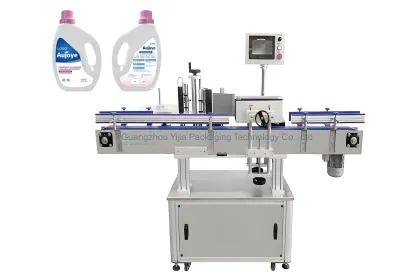 Round-Bottle and Front/Back Labelling Machine
Verify labeling for round and square bottles separately; Square bottle layout and round bottle circumferential positioning differ; multi-label or changeover requirements...
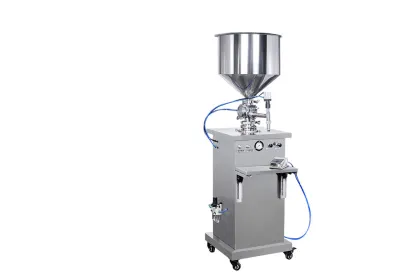 Daily Chemical Lotion Filling Machine
Prepare product, bottle, cap, and label as a complete set; Different product and packaging combinations should be numbered separately to avoid using one round bottle screw cap to...
Core process
Submit hair care product, PET or HDPE bottles, pump heads/flip-top caps/screw caps, and labels, and specify inner sealing, changeover, output, and site.
Use actual shampoo or conditioner samples to confirm viscosity, foaming, fill volume, and filling nozzle cut-off on the servo piston liquid filling machine.
The automatic screw capping machine verifies manual or automatic cap application, positioning, and tightening for each cap type; cap diameter alone is not sufficient.
The round and square bottle labeling machine confirms bottle support and positioning based on bottle body support, label size, and labeling surface.
When the screw cap contains a matching aluminum foil liner and remains correctly engaged, an in-line induction aluminum foil sealing machine can be sampled.
After cap types are suitable for automatic sorting and filling, capping, and labeling cycle times are clear, evaluate the cap feeding system and automatic conveying integration.
Sample details
Product conditions are used to verify piston filling and cut-off, and also help check for residue on the bottle neck.
Provide shampoo, conditioner, or body wash samples, and specify viscosity, foaming, fill volume, temperature, and cleaning requirements.Bottle type affects filling positioning, capping stability, and labeling support; multiple specifications should be sampled separately.
Submit all round, square, or special-shaped bottles, and specify finish diameter, height, support surface, and main specifications.Cap samples are used for capping and cap feeding tests; pump head length and flip-top cap orientation must remain in final condition.
Provide physical samples of each cap type, and specify manual or automatic cap application requirements, orientation, and changeover frequency.The bottle-label combination is used to configure labeling positioning and check coordination with cap orientation.
Send final labels, and specify circumferential position for round bottles or labeling surface for square bottles, start/end positions, and multi-label requirements.The cap liner determines whether induction sealing is evaluated, while traceability position is used for downstream layout planning.
Specify whether an aluminum foil liner is used inside the cap, and provide matching cap material and date/lot code position.This information is used to determine the cycle time between cap feeding, conveying, and main machines; the entire line is not inferred directly from total output.
List target output, production sequence, changeover frequency, and site space for each product-cap combination.Common selection mistakes
Trial-fill with each actual product and record fill volume, foam, and cut-off behavior.
Test each cap type with its corresponding bottle as a set, and record manual or automatic cap application method.
Use representative batch cap samples to verify cap feeding, and retain a manual option for unsuitable cap types.
Trial-label with final labels and record change parts and label layout positions clearly.
First confirm the cap-liner combination, then conduct induction sample testing when conditions are met.
View detailed technical notes
Integration Challenges Come from Materials, Cap Types and Bottle Bodies
Hair care products are not just about placing three machines together. Viscosity and foaming, pump orientation, and round and square bottle positioning must each be verified separately.
Material Samples First Determine Filling Nozzle Action
The servo piston liquid filling machine is tested with actual shampoo or conditioner samples to check fill volume, foam, flow cutoff, and liquid residue on the bottle rim.
Pumps and Flip-Tops Cannot Be Compared by Cap Diameter Alone
The automatic screw capping machine requires paired samples of caps and bottles. Pump length, flip-top direction, and thread fit are recorded separately. Bottle support after filling and the capping method must also be checked simultaneously.
Cap Feeding System Depends on Cap Sorting Performance
Only after the cap type can be consistently oriented should the cap feeding and capping system be evaluated. For highly directional pumps, actual test conclusions should be retained. If cap samples cannot be sorted stably, the manual capping operation position should be clearly defined.
Round Bottle Labeling Focuses on Circumferential Position
When the round and square bottle labeling machine handles round bottles, the label start and end, bottle rotation, and cap relative orientation must be checked. Official labels, filled bottles, and first articles after changeover should all be included in trial labeling records.
Square Bottle Labeling Focuses on Support and Layout
The label surface and corners of square bottles change the support and positioning. Official labels and filled bottles should both be included in changeover trial labeling.
Induction Sealing Is Added Only When the Cap Inner Liner Matches
The inline induction foil sealing machine is only used for caps with matching inner liners and must be verified on correctly closed cap-bottle combinations.
Conveying Integration Comes After Individual Machine Processes
After the filling, capping, and labeling cycles are stable, the automatic feeding and conveying integration can be evaluated together with cap feeding and on-site orientation.
Changeover Checklist Based on Material, Bottle, Cap, and Label Combinations
Each shampoo or conditioner material should be mapped to the bottle, cap, label, inner seal, and cleaning steps, providing a clear basis for on-site changeovers.
Equipment Layout Must Reserve Space for Manual Backup
When pumps or flip-tops require manual capping, an operation position should be reserved between the main machines and the conveyor, rather than forcing a fully automatic layout.
Common questions
Can pump heads, flip-top caps, and screw caps share a capping machine?
Each can be evaluated separately with an automatic screw capping machine, but cap feeding, orientation positioning, and tightening method must be verified with actual samples of each cap type.
Can pump heads always be automatically fed and applied?
Not necessarily. Pump head length and orientation may affect sorting, so test with representative batch samples before configuring the cap feeding system.
Does shampoo foaming affect filling?
It affects filling and cut-off performance, so use actual product to observe foam, filling nozzle cut-off, and bottle neck cleanliness.
How to prepare samples for labeling round and square bottles?
Please provide filled bottles, final labels, label placement, and layout orientation separately, and test each with the same labeling machine.
When do shampoo/conditioner bottles need induction inner sealing?
Only evaluate in-line induction sealing when the screw cap contains a matching aluminum foil liner and correctly engages with the bottle finish.
When should automatic conveying be added to the solution?
After filling, capping, and labeling sample processes are stable and cap types and cycle times are clear, evaluate automatic integration with the site layout.