Solution topic
Magnetic pump, servo piston, and explosion-proof solvent filling routes for small-dose liquids
List magnetic pump small-dose filling, servo piston filling, and explosion-proof solvent filling as three independent directions, and subsequently connect them to bottle heat seali
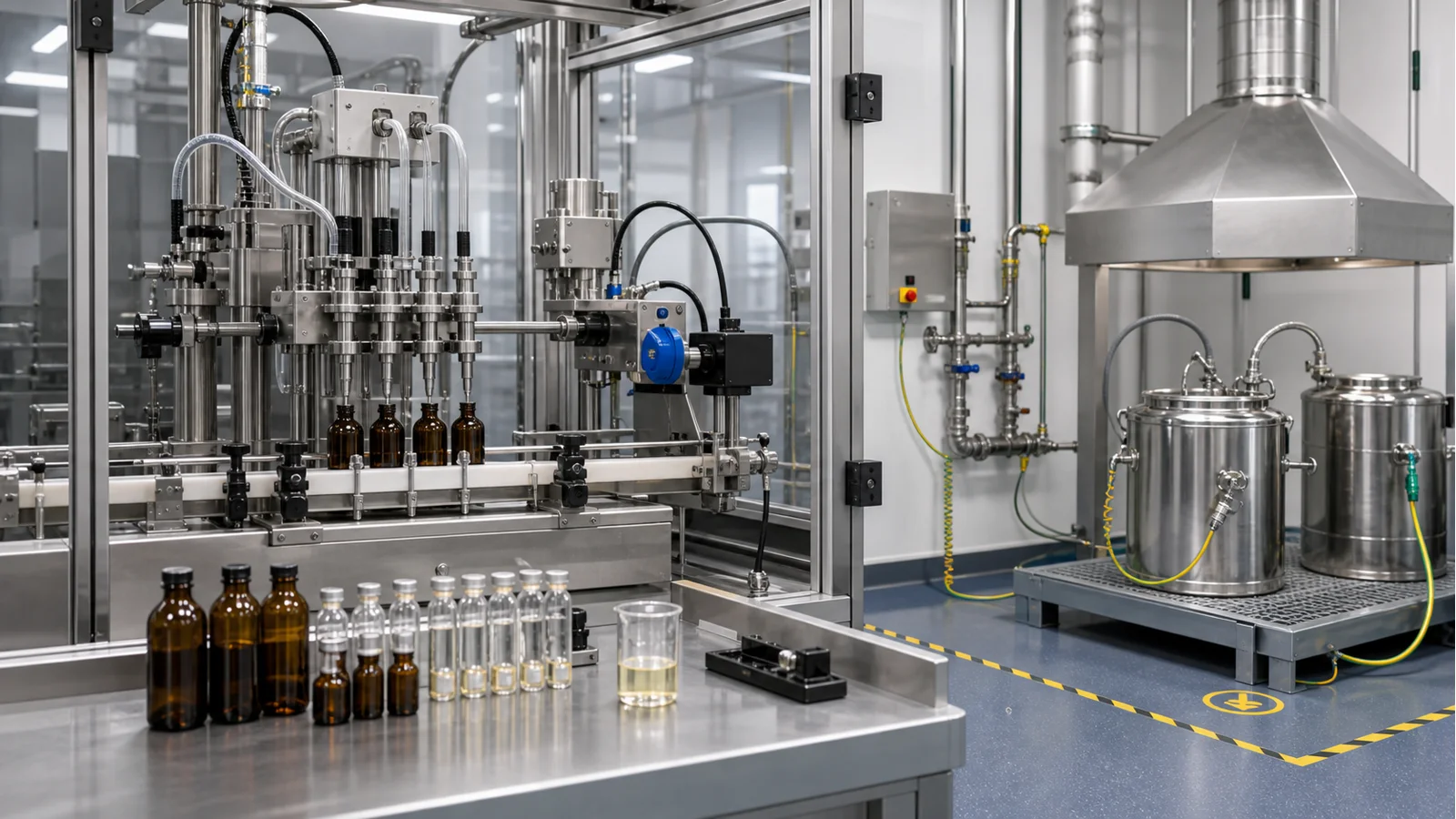
- Even for small bottles, ordinary essence, reagents, and flammable solvents cannot share unverified equipment assumptions. First split lines by material risk and metering method, then handle bottle mouth sealing and labeling.
Solution summary prepared for you
- Small-dose liquids are first classified by material state and risk. Magnetic pump, servo piston, and explosion-proof solvent filling are three independent directions.
- Magnetic pump small-dose filling machines require verification of sample liquid flow, liquid path compatibility, bottle mouth position, and cleaning requirements.
- Servo piston liquid filling machines require sample liquid to check metering, bubbles, sediment, cut-off, and wetted part disassembly/cleaning.
Route comparison
- Suitable for projects where material data supports magnetic pump evaluation and representative sample liquid, small bottles, and cleaning requirements can be provided.
- The magnetic pump metering direction can be tested separately around small bottles and sample liquid. Liquid path, bottle mouth position, and cleaning requirements are easy to observe item by item.
- Material flow, particles, bubbles, corrosiveness, and liquid path compatibility can all change test results. Do not draw conclusions directly from fill volume size.
- If sample liquid tests show flow or metering performance unsuitable for magnetic pump structure, or wetted parts/cleaning requirements cannot be met, switch to other metering methods.
- Magnetic pump small-dose filling machine with anti-drip anti-stringing filling nozzle assembly selected based on sample liquid. Complete metering and cut-off tests first.
- Suitable for small bottle projects that need to compare servo piston metering and are willing to verify bubbles, cut-off, and cleaning with sample liquid.
- The servo piston route can be tested as another quantitative structure. Piston action, wetted parts, and filling finish can be adjusted for the sample liquid.
- Bubbles, sediment, wetted part seals, and disassembly/cleaning affect operation and changeover arrangements. The same configuration cannot be used directly for liquids with different properties.
- If material compatibility, safety requirements, or cleaning methods do not support the existing piston wetted structure, redesign or choose an adaptive path.
- Servo piston liquid filling machine is tested with actual fill volume and bottle type. Whether anti-drip assembly is configured depends on cut-off and bottle mouth condition.
- Suitable for small bottle filling projects where flammability risk has been identified and material and site data are ready for professional review.
- Explosion-proof solvent filling machine can be an equipment direction for flammable material projects, facilitating simultaneous discussion of equipment needs and site review.
- The product name itself cannot prove site conditions are applicable. Wetted materials, control type, and supporting engineering must still be checked item by item by professionals.
- Without material safety data, area classification, or professional review, equipment selection should not be considered a basis for starting flammable solvent production.
- Flammable solvent projects can evaluate explosion-proof solvent filling machines, but final configuration must be supported by material documents, area, electrical, grounding, and ventilation conditions.
Associated Equipment / Consumables
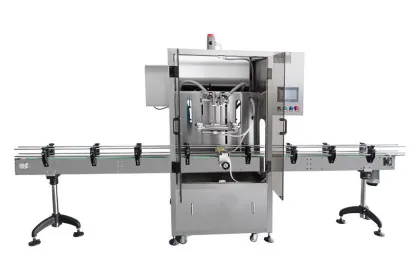 Servo Piston Liquid and Paste Filling Machine
The machine meters flowable liquids or viscous products within a trial-proven range; it is not universal for every liquid. Use the actual product and minimum/maximum container and dose to validate foam, stringing, par...
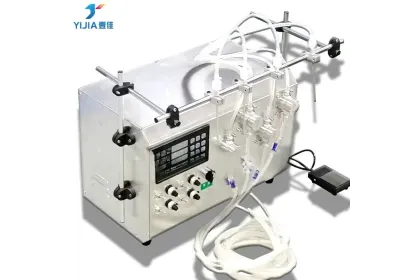 Magnetic pump small-dose filling machine
Filling main machine classification; The three main machines are independent evaluation directions. Selection is based on sample liquid, metering requirements, and safety revi...
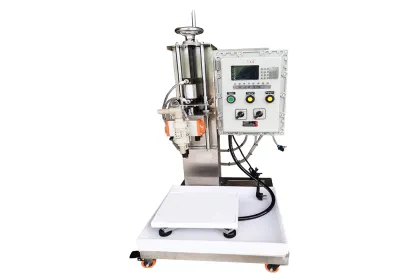 Solvent Filling Machine for Explosion-Risk Project Assessment
Filling main machine classification; The three main machines are independent evaluation directions. Selection is based on sample liquid, metering requirem...
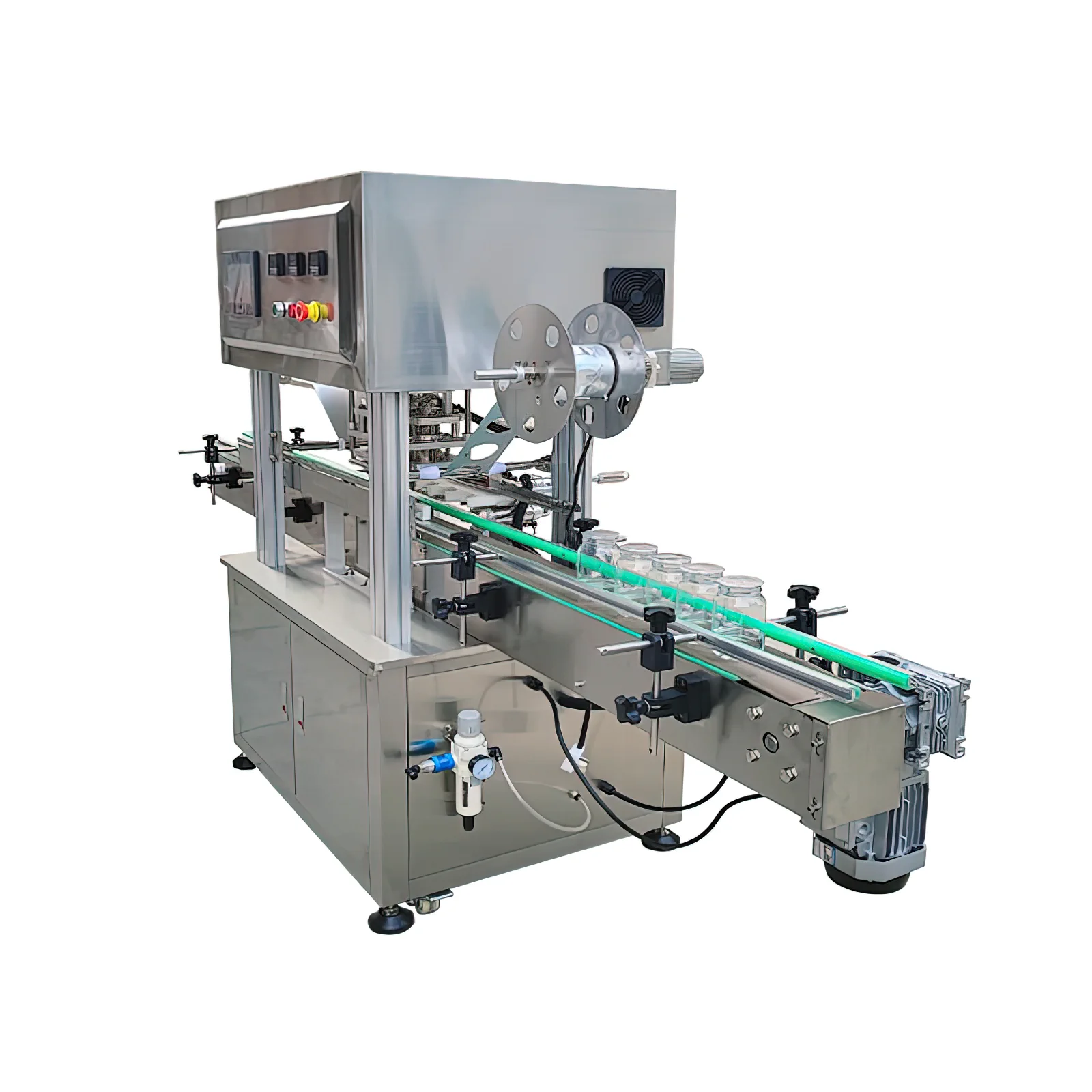 Inline Heat-Press Bottle Sealing Machine
Material risk and container confirmation; First classify by ordinary liquid, materials requiring piston metering, and flammable solvents, then verify liquid path compatibility...
Core process
Sample details
Material flow, bubbles, particles, corrosiveness, and flammability risks change metering, wetted parts, cleaning, and safety boundaries.
Please provide sample liquid, material name, use, flow video, and available composition or material safety data.Bottle mouth and cap determine nozzle positioning, heat sealing film, reagent tube foil, or screw capping action. Must be verified as a complete set.
Please send small bottles, reagent tubes, caps, and sealing materials, and indicate mouth diameter, bottle height, and target closure method.Fill volume span and planned cycle time affect metering structure, number of stations, and changeover frequency, and also relate to sample test combinations.
Please list each specification's fill volume, production plan, changeover sequence, and whether single machine or continuous operation is planned.For flammable or corrosive materials, site boundaries must be clarified before equipment discussion. Machine model names cannot replace professional review.
Please provide site requirements such as area, electrical, grounding, ventilation, cleaning, and waste liquid disposal, for professional verification.The sequence of downstream stations is determined by bottle mouth closure, label layout, and batch number position. The site must also accommodate changeover and cleaning.
Please specify which processes are needed: screw capping, heat sealing, reagent tube foil, labeling, or coding, and provide layout dimensions.Common selection mistakes
View detailed technical notes
Classify by material first, not bottle size
Even for small bottles, ordinary serum, reagents, and flammable solvents differ in metering, wetted parts, cleaning, and site conditions. Unreviewed equipment assumptions cannot be shared.
Small-dose projects split into two selections
First check sample liquid state, corrosiveness, and flammability risks, then compare magnetic pump and servo piston metering. Flammable solvents go through a professional review line. After filling direction is determined, bottle mouth branches into heat sealing, reagent tube foil, or screw capping.
Magnetic pump direction: verify liquid path first
Magnetic pump small-dose filling machines require representative sample liquid to check flow, liquid path compatibility, bottle mouth positioning, and cleaning. Anti-drip anti-stringing filling nozzle assemblies can be evaluated based on cut-off performance. Record bubbles, particles, and liquid path state after changeover. If the sample liquid does not support this structure, switch to other metering schemes. Do not apply ordinary liquid test results directly to different materials.
Servo piston direction: focus on actual material metering
Servo piston liquid filling machine, as another metering structure, should be tested with actual fill volume and small bottle samples to observe bubbles, sediment, cut-off, and wetted part disassembly/cleaning. When switching liquids, wetted parts and cleaning conditions must be re-confirmed, and residual liquid at the bottle mouth and re-trial after changeover should be recorded.
Flammable solvents must pass professional review first
Explosion-proof solvent filling machine is only an equipment direction for flammable projects. Material safety data, area classification, electrical type, grounding, ventilation, and supporting engineering must still be reviewed by professionals. The machine model name cannot replace these prerequisites.
Prepare material and container data together
Record sample liquid risks, bottle mouth structure, and cleaning methods together to avoid discovering after the metering structure is selected that the liquid-contact or sealing process does not match.
Filling machine is not one-size-fits-all by fill volume
Magnetic pump, servo piston, and explosion-proof solvent filling are three independent directions; each line must be verified with the corresponding sample liquid and on-site conditions.
Bottle mouth sealing follows packaging material structure
Inline heat sealing machines for bottles handle matching direct membranes, reagent tube aluminum foil sealers target corresponding tube mouths, and automatic screw cappers are used for compatible caps.
Labels and batch numbers avoid small bottle curved surface interference
Round and square bottle labeling machines adjust to small bottle labeling surfaces and label sizes, and collaborative date batch inkjet coders arrange batch numbers based on available surfaces.
Line separation extends to material change cleaning
Each material line separately retains liquid-contact parts, cleaning, and sample records. For flammable solvent lines, also incorporate on-site professional review results into equipment configuration.
Common questions
Should all small-dose liquids use a magnetic pump?
No. The choice of magnetic pump depends on flow, cleanliness, and liquid path compatibility. If a different metering structure is needed, compare the servo piston option with samples.
Can one filling machine handle multiple fill volumes?
Multiple specifications can be evaluated, but each fill volume, bottle mouth positioning, nozzle, liquid path, and changeover steps must be checked individually. Large spans may require different components.
How to evaluate corrosive liquids?
First provide the composition and material safety data. The wetted materials, seals, and suitable machine model will be determined by sample compatibility and professional requirements.
How to connect sealing and labeling after filling?
It can be connected to an automatic screw capper, bottle heat sealing, or reagent tube foil sealing based on the bottle mouth structure, then labeling and coding equipment complete the marking.
Can we inquire without a sample liquid?
You can first judge the direction using the material name, flow video, bottle photos, and planned fill volume. Configuration involving wetted parts and sealing still requires sample submission later.
How to initially classify when viscosity data is incomplete?
First describe the material's use, flow, bubbles, particles, corrosiveness, and flammability. We will then classify into magnetic pump, servo piston, or safety review direction, and arrange testing.