Solution topic
Process boundaries between standard tray heat sealing, automatic pre-cut film lidding, and MAP gas flushing packaging
Place hand-press or tabletop heat sealing, automatic pre-cut film sealing, and tray-type gas flushing packaging in the same decision framework, and explain the connection points fo
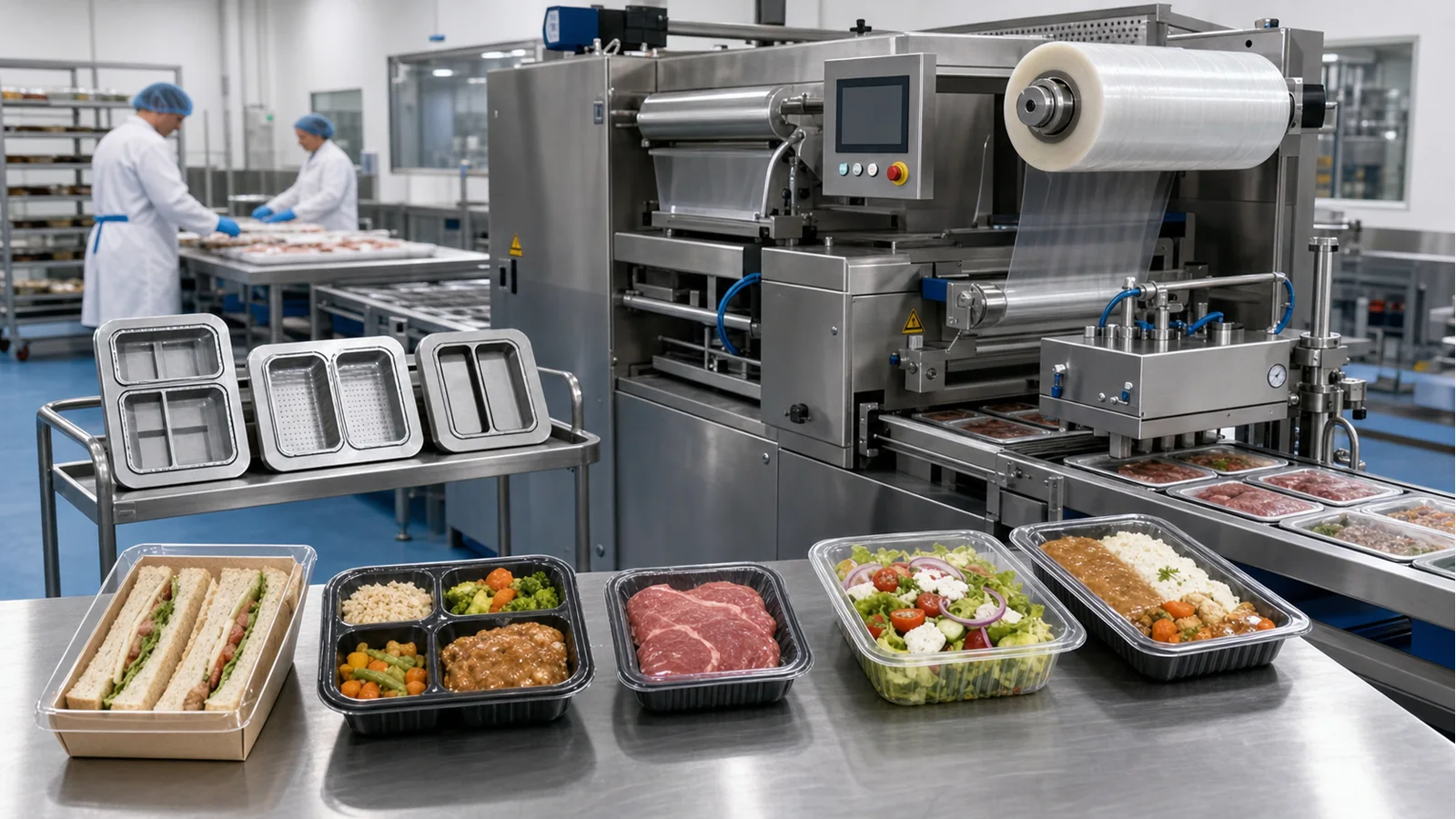
- When ordinary meal trays only need a reliable seal edge, gas flushing should not be added by default. Only when freshness indicators, barrier film, and gas supply conditions are clear should you compare the configuration scope of MAP and automatic pre-cut film lines.
Solution summary prepared for you
- Meal box projects should first be divided into three process routes: ordinary heat sealing, automatic pre-cut sheet film, and tray-type modified atmosphere. Equipment names come after box, material, and film confirmation.
- Hand-press and tabletop equipment suit trial sealing or small batches. Automatic pre-cut sheet film main machines serve stable sheet film. Tray-type modified atmosphere sealing machines only handle clear gas replacement needs.
- Empty box, filled photos, formal film material, preservation goals, and production arrangement are the most useful information for judging the sealing main machine, molds, and downstream inspection.
Route comparison
- Suitable for projects where the tray type still needs trial sealing, batch sizes are small, and the core requirement is to reliably seal the film to the tray rim.
- Hand-press cup and tray sealers and tabletop multi-compartment meal tray sealers make it easy to observe pressing, film peeling, and mold changes, making them suitable as a starting point for standard heat sealing.
- Manual placement determines the actual cycle time. Standard heat sealing also does not provide gas replacement, and product trapped at the tray mouth still needs separate control.
- When automatic pick-and-place of pre-cut film is needed, or the packaging goal clearly includes gas replacement, do not stay on this route.
- For small-batch trials, a hand-press cup and tray sealer can be chosen; for compartment trays, evaluate a tabletop multi-compartment meal tray sealer.
- Suitable for production where pre-cut film dimensions are stable, trays can be repeatedly positioned, and manual film placement is to be reduced.
- An automatic pre-cut film pick-and-place tray sealer combines film sheet separation, pick-and-place, positioning, and heat sealing into one cycle.
- Film sheet sticking, warping, or tray position fluctuations can interfere with pick-and-place, and changing specifications requires rechecking positioning and sealing.
- When tray types or film sheet sizes are still frequently changed, and sheet separation trials have not been completed, do not finalize the automatic film pick-up configuration.
- When the film sheet and tray are finalized, use an automatic pre-cut film pick-and-place tray sealer for continuous trials.
- Suitable for tray foods that have defined freshness evaluation, are prepared to use barrier packaging materials, and are willing to confirm the effect through finished product trials.
- A tray-type gas flushing sealer can integrate gas replacement and film sealing into the same process, making it convenient to produce validation samples according to the established plan.
- Packaging performance depends not only on equipment but is also jointly affected by food, tray, lidding film, gas, and subsequent cold chain conditions.
- When the project only requires standard sealing, or gas replacement and finished product validation methods have not been proposed, there is no need to add gas flushing technology.
- When there is a clear gas flushing goal, choose a tray-type gas flushing sealer and simultaneously determine the barrier film and gas supply plan.
- Suitable for batch projects where trays, film, and filling state are stable, and continuous conveying and finished product rechecking are indeed needed.
- Food-grade conveying lines can connect to a stable tray sealing main machine, with weight, vision, or metal foreign object inspection added later according to tasks.
- Tray pitch, conveying posture, inspection rules, rejection direction, and site layout must all be clarified before line integration.
- When the main packaging process is not yet stable, or orders are insufficient to support continuous tray feeding, keep manual placement and removal for easier adjustment.
- Use the validated sealing main machine as the core, connect a food-grade conveying line, and configure finished product inspection as needed.
Associated Equipment / Consumables
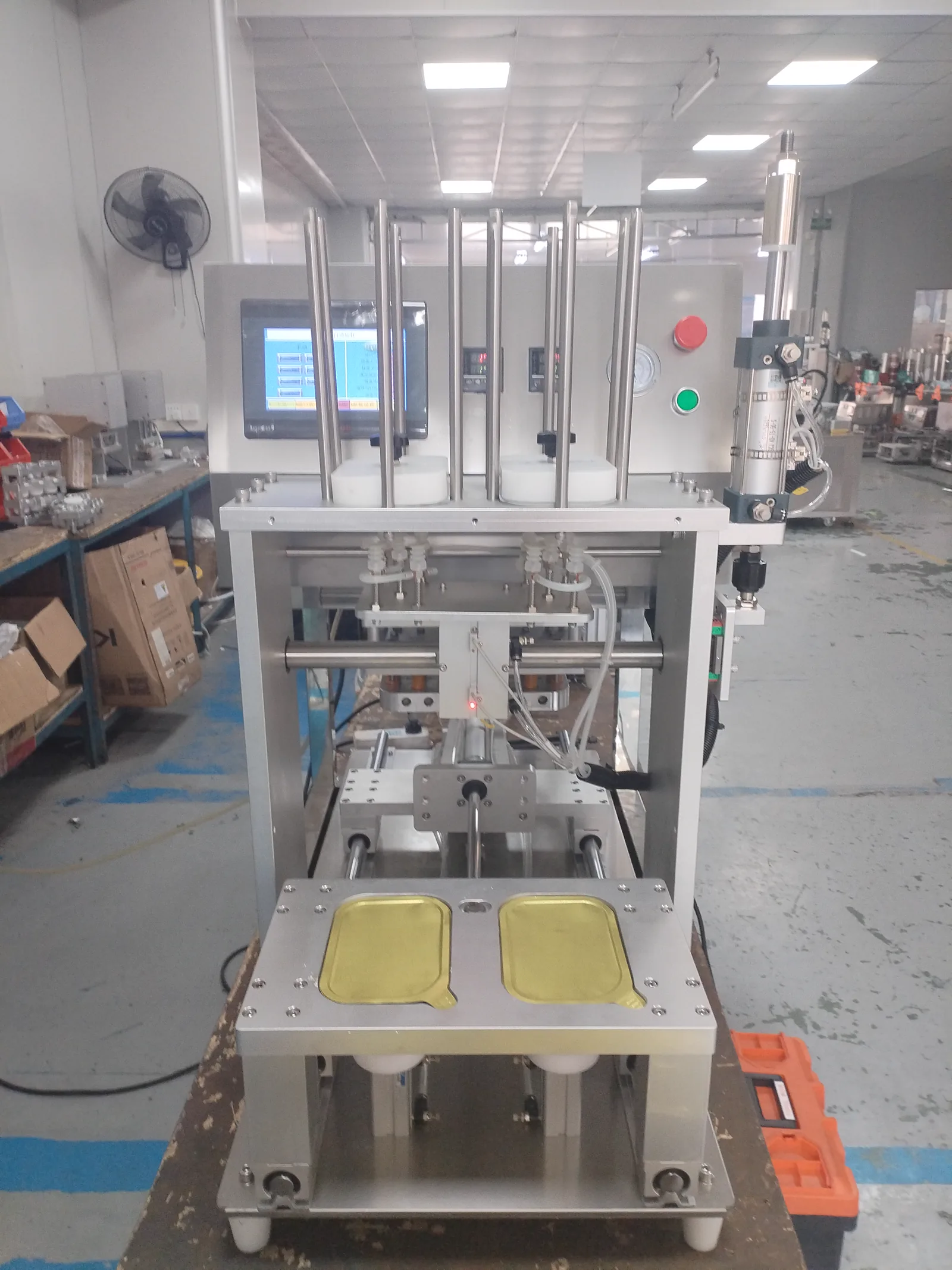 Automatic Pre-Cut Lid Pick-and-Place Tray Sealer
Automatic pre-cut film pick-and-place tray sealing machine: Joint confirmation of box, material, and film; Box depth and compartment count relate to positioning, while content contamination on the edge changes sealing...
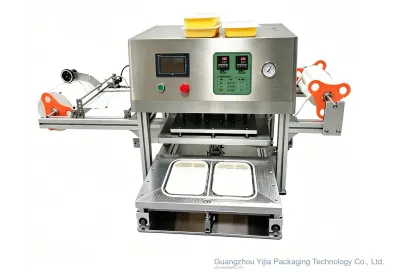 Tabletop Multi-Compartment Meal Tray Sealer
Desktop Multi-Compartment Lunch Box Sealer: Ordinary heat sealing main machine types; A tabletop roll-film tray sealing machine suits the roll film heat sealing branch, while a pre-cut sheet film main machine must ver...
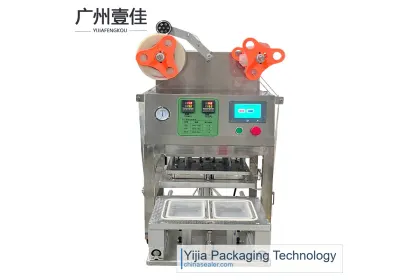 Benchtop Roll-Film Tray Sealing Machine
Joint confirmation of box, material, and film; Box depth and compartment count relate to positioning, while content contamination on the edge changes sealing results. All three...
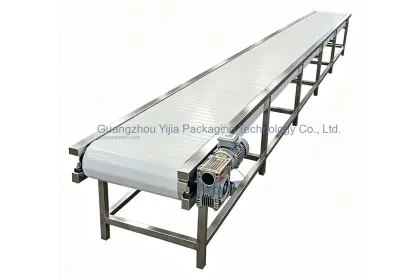 Food Packaging Conveyor and Buffer Line
Conveying and finished product inspection; Online checkweighing and vision inspection systems are optional collaborative equipment. Judgment rules and rejection actions should...
Core process
Trial seal the empty box, filled box, and formal film together, observing rim deformation, filling contamination, and sealing edge.
Small batches can start with a hand-press or tabletop main machine. After sheet film is stable, compare automatic film picking with continuous sealing.
First match the heat sealing layer of the film with the box material, then check sealing edge width, peel feel, and printed pattern position.
Only when gas replacement requirements are proposed should tray-type modified atmosphere sealing machine trials begin, and barrier film and gas conditions should be prepared simultaneously.
Continuous production can connect a food-grade conveying line. Weight, sealing edge appearance, or metal foreign objects are configured separately according to actual inspection tasks.
Date batch numbers can be printed on a suitable film surface. Box collection, case packing, and outer packaging labels are arranged according to delivery method.
Sample details
Specify whether it is cooked food, fruit cut, clean vegetables, or other food, and state the sales temperature, opening method, and packaging performance to be verified.
Finished product photos, content status, sales and cold chain conditions, sealing edge and preservation requirements.Box opening shape, compartment count, rim width, box depth, and rigidity jointly affect mold positioning. If drawings are missing, measure first and send samples.
Empty box and filled box, key box opening dimensions, material, rim close-up photos, and formal film material.Manual placement and removal, automatic sheet film picking, or continuous conveying correspond to different main machine boundaries. Production arrangements should be explained together with box change frequency.
Planned output, production shifts, manual stations, box type list, and future line integration direction.Printing, weight, metal foreign objects, and sealing edge visual inspection must each specify their targets to reserve correct stations and signals.
Batch number style, inspection items, judgment methods, disposition of non-conforming products, and available workshop space.Formal box and film trials first confirm ordinary sealing. If modified atmosphere is selected, add finished product verification for gas, barrier properties, and cold chain conditions.
Boxes, films, contents, or substitutes that can be tested, and acceptance items for ordinary heat sealing or modified atmosphere.Common selection mistakes
Judging the solution only by the name 'meal box sealing machine' will miss conditions that truly affect sealing, such as box rim rigidity, film feeding method, and filling contamination.
Modified atmosphere also involves food targets, gas usage, barrier packaging materials, and cold chain verification, and cannot be a default option on an ordinary heat sealing main machine.
If the box type and film type are still changing, directly building a continuous line will cause repeated modifications to film picking, positioning, mold changes, and downstream integration.
Soup, grease, or particles falling on the rim will change trial sealing results. Test samples must represent the actual filling state.
If the main machine layout does not reserve space for conveying, printing, and finished product inspection, adding equipment after stable production can cause space conflicts.
View detailed technical notes
First separate standard heat sealing from gas flushing
For tray packaging, first clarify whether the goal is to seal the tray mouth or replace the gas inside the tray. The former can be handled by standard heat sealing equipment, with machine selection based on tray type and film feeding method. The latter requires integrating food targets, barrier film, gas supply, and cold chain validation.
Standard seal edges depend on the real filled state
Rim warping, oil or water trapped in the seal area, and incompatible heat seal layers can all cause gaps in the seal edge or abnormal film peeling. Empty trays can only be used for initial assessment; before confirming the main machine, trial sealing must be done with filled trays and the actual film material.
Small-batch heat sealing also has different film feeding methods
Hand-press cup and tray sealing machines are suitable for manual trials; tabletop multi-compartment meal tray sealers handle compatible compartment trays; tabletop roll-fed tray sealers use a roll film path. All three fall within standard heat sealing and cannot replace gas flushing validation.
Film automation starts with stable sheet separation
Once pre-cut film is fixed, an automatic pre-cut film pick-and-place tray sealer can be used to verify sheet separation, gripping, film placement position, and continuous sealing. If the film sheets tend to stick or tray positions drift, the automatic pick-and-place stage needs adjustment first; do not only look at the appearance after sealing.
Freshness results are jointly validated by product and packaging materials
Whether to adopt gas flushing packaging should be decided based on clear gas replacement and finished product evaluation requirements. A tray-type gas flushing sealer handles the corresponding process, but food formulation, packaging material barrier properties, and cold chain conditions still need to be jointly validated by the project team.
Add printing and inspection tasks one by one
Date and batch inkjet coders can be configured in coordination with the film surface and production method. Food metal detectors, online checkweighers, and vision inspection systems each correspond to different inspection tasks. The amount of equipment is determined by actual control points, not by bundling under a 'complete line' name.
Expand equipment according to packaging material maturity
When the tray type is still under development, hand-press or tabletop equipment can be used first to confirm the seal edge. After the film sheets and orders stabilize, move to automatic pick-and-place. Only when the freshness solution proposes gas replacement should you enter tray-type gas flushing. This expansion order preserves the basis for judgment at each trial.
Use key samples to complete route judgment first
First communication does not need to wait for a complete set of drawings. Photos of empty trays and rims, filled state, film material, planned production method, and freshness goals are enough to initially divide the route; mold dimensions and line integration interfaces can be completed later with actual samples.
Common questions
Can we evaluate without drawings of the box?
You can send an inquiry first. Please take photos of the empty box, the filled box, and the film material, and measure the box opening, box depth, and sealing edge position. Mold judgment can be completed after receiving samples.
Should pre-cooked dishes use ordinary heat sealing or modified atmosphere?
For immediate supply or when only reliable sealing is required, ordinary heat sealing can be verified first. Only when preservation indicators, barrier film, gas, and cold chain conditions are all clear should modified atmosphere testing proceed.
Can multiple-compartment meal boxes share the same sealing main machine?
The mold change range can be checked. If different compartment counts cause changes in shape, force, or sealing edge position, molds and post-sealing inspection must be confirmed separately.
Does the sealing film need to be purchased with the machine?
It is not required that the equipment supplier supplies the film. Customer-owned film can be trial sealed, and a formal film can be selected based on box material, opening method, and modified atmosphere requirements.
Do we need to configure checkweighing, metal detection, and vision inspection?
Weight, metal foreign objects, and sealing edge appearance are different inspection tasks. The seller should first provide risk control requirements, then decide whether to integrate corresponding equipment.
Can we start with a single machine and later connect it into a continuous line?
It can be reserved, but future box feeding, conveying direction, inspection, and collection methods must be explained in advance, otherwise layout adjustments may be needed during upgrade.