Check applicable objects first
Bottles, jars, and similar rigid containers that can be stably conveyed and positioned; bottle mouth, body, bottom, and arrangement confirmed per actual sample
Multi-head servo liquid metering
Multi-head servo metering for filling liquids or pastes into bottles and jars; can be integrated with bottle feeding, sealing, and inspection per project.
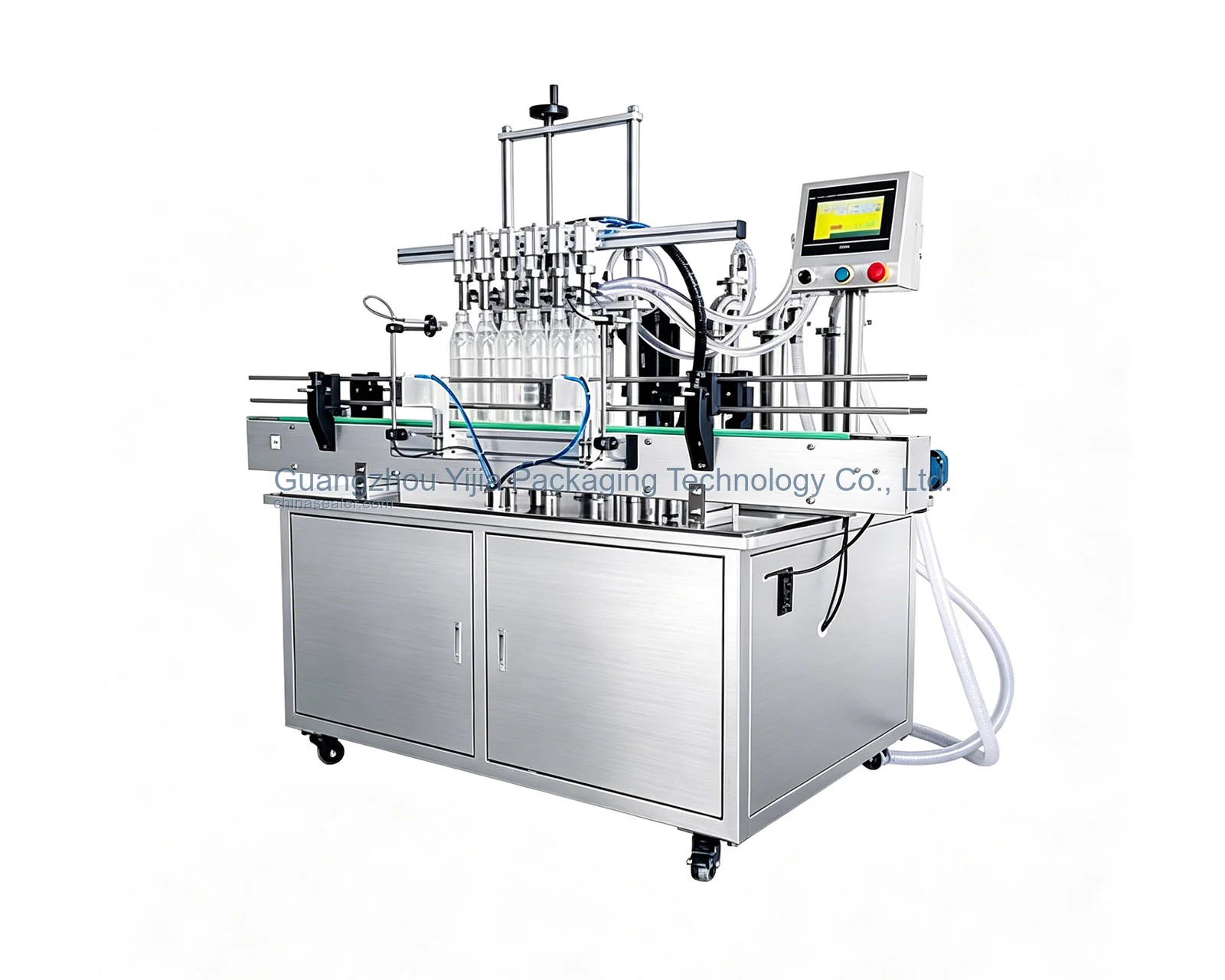
Actual equipment photos from the factory. Confirm the final configuration with the containers, product, sample trials and agreed equipment scope.

First see actual working conditions
Please provide container, product, fill volume range, allowable tolerance, drip prevention, cleaning, target speed, and upstream/downstream interfaces.
Bottles, jars, and similar rigid containers that can be stably conveyed and positioned; bottle mouth, body, bottom, and arrangement confirmed per actual sample
Container body and optional caps or sealing materials; filling nozzle size and bottle mouth clearance confirmed per actual sample; bottle feeding and positioning, product supply, multi-head servo metering filling, drip prevention, bottle discharge, and optional sealing stations
Optional bottle unscrambling, suck-back drip prevention, heated stirring, screw capping, sealing, inspection, labeling, and downstream conveying.
Please provide container, product, fill volume range, allowable tolerance, drip prevention, cleaning, target speed, and upstream/downstream interfaces.
First see actual working conditions
The more complete the samples, packaging materials, and site information, the easier to determine equipment route, changeover scope, and line integration boundaries.
First see actual working conditions
Confirmed based on filling head count, single fill volume, product response, container positioning, drip prevention, and upstream/downstream speed. Actual capacity is confirmed by project trials.
Multi-head servo automatic filling; bottle feeding, cap unscrambling and screw capping, sealing, inspection, labeling, and downstream conveying are optional per project
Bottles, jars, and similar rigid containers that can be stably conveyed and positioned; bottle mouth, body, bottom, and arrangement confirmed per actual sample
Liquids, pastes, or products with small particles; viscosity, temperature, foaming, stringing, corrosiveness, and cleaning conditions must be specified
Container body and optional caps or sealing materials; filling nozzle size and bottle mouth clearance confirmed per actual sample
Bottle feeding and positioning, product supply, multi-head servo metering filling, drip prevention, bottle discharge, and optional sealing stations
Adjust guides, positioning, filling head spacing, metering program, and liquid-contact parts per container, bottle mouth, and fill range
Confirm equipment dimensions, power, air supply, maintenance space, and upstream/downstream interfaces based on product supply, servo metering, filling heads, cleaning, drip prevention, and optional sealing/inspection
Confirm bottle mouth, positioning, product response, drip prevention, and cleaning risks.
Select metering and filling head configuration based on fill volume range, speed, and product supply.
Check bottle feeding, positioning, head consistency, bottle discharge, and exception handling.
Check metering, speed, drip prevention, cleaning, and changeover.
Common configuration routes
Do not select from the machine name alone. Compare liquid flow, metering principle, head count, feeding, drip control and line balance and confirm the boundary with actual samples.
Suitable for projects with moderate speed, many specifications, or product validation phase.
Through multi-head parallel processing, product supply and container speed must be simultaneously ensured.
Optional bottle unscrambling, screw capping, sealing, inspection, and labeling, unified line control.
Multi-head servo liquid metering
First see actual working conditions
Not necessarily. Product supply, metering time, container positioning, and upstream/downstream speed may limit actual capacity; requires whole-line calculation.
It can be evaluated, but pumps, valves, filling nozzles, programs, and cleaning may need adjustment or replacement; separate product trials required.
Send samples and requirements
Send actual product or pack samples, critical dimensions, liquid flow, metering principle, head count, feeding, drip control and line balance, target cycle, layout and acceptance criteria. Photos, videos or drawings can be reviewed first.