Solution topic
How to Select a Sauce or Paste Filler: Rotary Lobe, Piston or Multi-Head Servo
Compare rotary lobe, piston and multi-head servo filling by viscosity, particles, temperature, shear, dose tolerance, drip/string control, piping, cleaning, container and real-prod
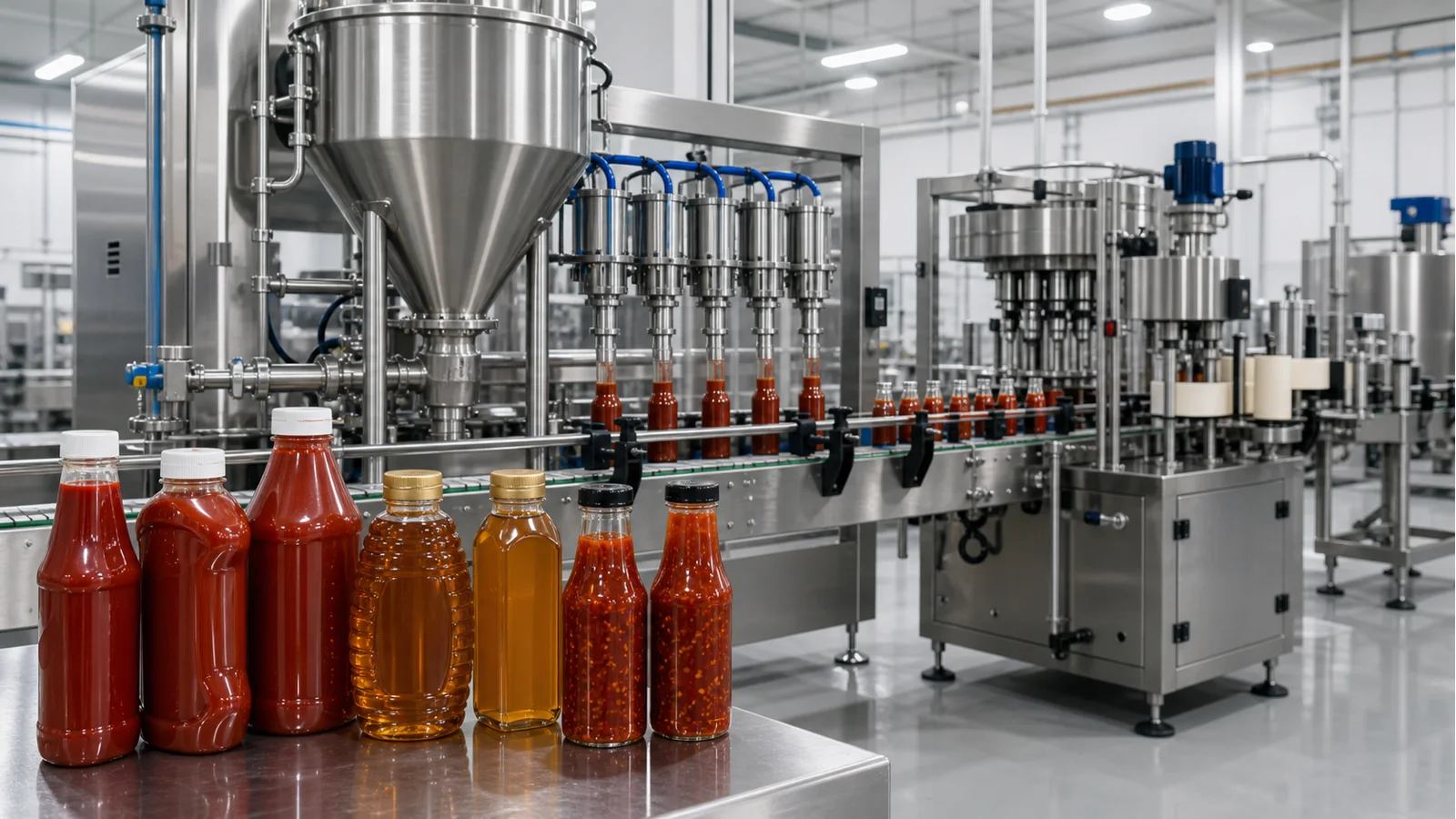
- Compare routes by viscosity, particles, temperature, shear, dose, drip and string control, cleaning and cycle rather than the product name alone.
Solution summary prepared for you
- For sauce and paste filling, first compare rotor pump, paste, and piston routes based on viscosity, particles, stratification, and stringiness at production temperature.
- The multi-head servo liquid filling line is a continuous expansion after sample and project configuration; the number of heads, changeover, and cleaning scope are confirmed by material testing and interfaces.
- The bottled downstream can connect automatic screw capping machines and inline induction aluminum foil sealing machines according to cap type; weight and appearance items are executed separately by the collaborative inspection system.
Route comparison
- For sauce and paste projects that need to compare particle passage, viscous feeding or gentle conveying.
- Rotor pump sauce filling machines and paste filling machines can verify pumping and metering actions separately around the same batch of actual materials.
- Pump body, valve path, feeding, particles and cleaning conditions must all be verified with actual materials. Names cannot replace trial materials.
- When materials and containers have not yet formed a representative sample set, first divide directions and do not fix pump type or feeding structure.
- Rotor pump sauce filling machines and paste filling machines are configured according to actual materials. Supporting feeding and nozzle components are confirmed based on sample results.
- For bottle, cup and pail packaging where materials can be metered by piston method and where material cut-off, dripping and bottle mouth residue need to be observed.
- Sauce piston filling machines can verify metering and tail-off performance together with anti-drip anti-stringing filling nozzle assemblies.
- Particles, separation, stringing and temperature changes will change actual action. Nozzle assemblies also need to be configured according to samples.
- When particle passage or material conveying state does not match the piston route, return to comparing rotor pump or paste main machines.
- Sauce piston filling machines use formal containers and actual materials for trial filling, then determine whether heated hoppers, jacketed material pails and filling nozzles are needed.
- For projects where the main material, bottle type and fill volume are already stable and continuous multi-head filling with downstream connection is needed.
- Multi-head servo liquid filling lines can verify each filling station, conveying bottle spacing and filling tail-off in one integrated test.
- Number of heads, operating range, cleaning changeover and optional downstream sections must all be evaluated through samples, materials and project interfaces.
- When materials are still under development or packaging changes frequently, first complete single-machine material trials and finalize the main specification samples.
- Multi-head servo liquid filling lines are evaluated according to formal actual materials, bottle samples and site conditions. Trial filling and integrated acceptance records are retained.
- For the downstream of bottled sauces that need lid closing, inner aluminum foil sealing, and re-checking of agreed weight or visible appearance.
- Automatic screw capping machines, online induction foil sealing machines and collaborative online checkweighing and visual inspection systems can be tested section by section according to process.
- Cap type, liner, bottle mouth material, weight rules and defect samples are all indispensable. Inspection cannot replace special sealing judgment.
- When packaging has no induction liner in the cap or no inspection items are defined, the corresponding equipment can be removed and necessary interfaces retained.
- The automatic screw capping machine is first verified with a complete set of caps. The online induction foil sealing machine then performs trial sealing. The collaborative system only executes agreed items.
Associated Equipment / Consumables
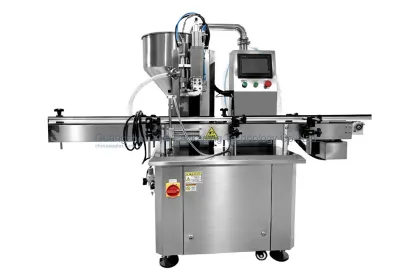 Paste Filling Machine
Paste Filling Machine is configured for Quantitative filling on Bottles, pails, cans, flexible pouches.
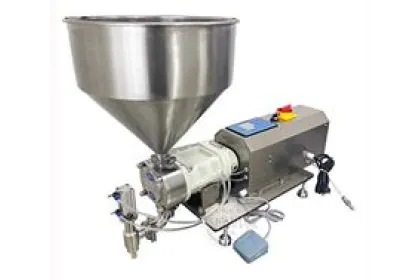 Rotary Lobe Pump Sauce Filling Machine
Material flow and particle verification; The same sauce may show different supply and finishing states after temperature and batch changes; first use actual material to judge pu...
 Piston Sauce Filling Machine
Material flow and particle verification; The same sauce may show different supply and finishing states after temperature and batch changes; first use actual material to judge pumping, dos...
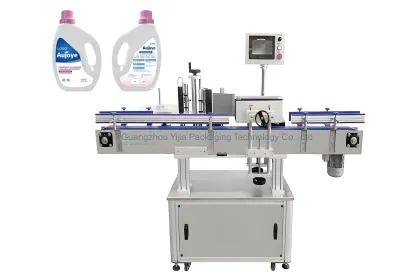 Round-Bottle and Front/Back Labelling Machine
Container positioning and changeover; Rim, bottom, and container rigidity change the filling nozzle clearance and conveying support; each main specification requires phys...
Core process
Sample details
Actual material state is used to compare pumping and piston dosing, and to determine test methods for supply, break-off, and contact parts.
Please provide representative material, explaining production temperature, viscosity changes, particles/fibers, oil-water separation, stringiness, and cleaning methods.Actual container samples affect filling nozzle clearance, holding positioning, change parts, and the risk of material falling on the rim.
Please prepare main bottles, cups, pails, or pouches, indicating rim, bottom, container rigidity, and fill volumes for each specification.Caps and liners should be tested in the actual assembly order; labeling and inspection are only configured for customer processes that are already defined.
Please provide caps, liners, label layouts, and finished product requirements, and mark screw capping, induction inner sealing, and inspection items.These conditions are used to determine single-machine or multi-head continuous operation, and to coordinate supply, conveying, and downstream stop logic.
Please explain the production schedule for main specifications, manual feeding, cleaning and changeover, site dimensions, and upstream/downstream equipment interfaces.Joint testing sequentially checks supply, dosing, filling finishing, bottle mouth cleanliness, closing and inner sealing, and agreed inspection results.
Please prepare sufficient actual material, container caps and liners, qualified finished products, and acceptable defect samples, and confirm on-site utility conditions.Common selection mistakes
The viscosity, particles, temperature, and stratification state of sauces with the same name may still differ; the equipment route should return to representative actual material.
Particles involve the pump body and channels, while stringiness involves the filling nozzle, break-off action, and bottle mouth cleanliness; both need separate samples.
Warm-state supply should be based on the material's changes under production conditions and cleaning requirements; do not add heating components just because the material is viscous.
When bottle type, rim, cap liner, and fill volume are still changing, the number of heads, change parts, and downstream interfaces lack a stable basis.
Filling dosing, bottle mouth cleanliness, screw capping, aluminum foil inner sealing, and appearance weight are different results and should be verified with their respective samples.
View detailed technical notes
Sauce name cannot replace actual material condition
The choice of rotor pump, piston and paste main machine depends on viscosity, particles, separation, stringing and cleaning at production temperature, not just on the name tomato sauce or seasoning sauce.
Container rim runs through filling and downstream processes
Small-mouth bottles, wide-mouth bottles, cups, pails and bags have different positioning methods. The gap between the filling nozzle and the rim, material tail-off and finished product transfer must all be verified with actual samples.
Rotor pump sauce filling machines are for projects that need to compare particle passage and material conveying, while paste filling machines focus on feeding and metering of viscous materials. Both routes start with formal actual materials, containers and cleaning methods. Test records cover pump path, drop point, bottle mouth residue and emptying after product change. Results cannot be preset based on food names.
Sauce piston filling machines need representative materials to verify metering action, particle passage, material cut-off and stringing. Anti-drip anti-stringing filling nozzle assemblies are configured according to samples. Heated hoppers and jacketed material pails only enter the project when there is a real need at production temperature. After changes in container diameter, fill volume and cleaning conditions, related components are retested.
Multi-head servo liquid filling lines are used for continuous expansion after the main material and packaging are stable. Formal evaluation covers all filling stations, bottle spacing, feeding, changeover, cleaning and front/back end interfaces, and uses continuous actual-material samples to confirm the usable range. Screw capping, inner sealing and inspection are optional downstream items selected per project and cannot be written as built-in stations of the main machine.
Heating and stirring come from material testing
Only when the material needs to maintain flow or uniformity at production temperature, evaluate heating, jacketing or stirring. Temperature conditions, dwell time, cleaning and discharge are checked together.
Bottled downstream arranged by cap and liner structure
The automatic screw capping machine first completes lid closing that matches the bottle mouth. When the lid has an applicable liner, it then enters the online induction foil sealing machine. Label or batch number requirements are arranged separately according to formal artwork.
Early information is used to divide test routes
Material photos, temperature state, particle and stringing descriptions, and container drawings can support initial routing, but pump type, nozzle, feeding and continuous operation are finalized by formal samples.
Same batch samples run through filling to inspection
Feeding, metering, filling tail-off, bottle mouth cleanliness, screw capping and inner sealing, and collaborative inspection use records from the same batch of materials and containers. After specification changes, re-verify using the same method.
Common questions
How do the rotor pump and piston routes compare?
First check the sauce's particles, viscosity, stringiness, and dosing requirements, then compare the sample performance of the rotor pump sauce filling machine and the sauce piston filling machine using the same batch of actual material.
Can thick paste naturally enter the filling machine?
Observe the discharge using the material in production state. If flow changes with temperature, then evaluate the insulated hopper and jacketed tank, stirring, or corresponding feed connection.
Can we communicate first without an actual material sample?
You can first submit material photos, temperature state, particle and stringiness descriptions to divide the direction; the pump type, filling nozzle, and operating range are still determined by formal material testing.
Does sauce filling always require aluminum foil inner sealing?
No. Only when the cap liner, bottle mouth material, and packaging process match does induction inner sealing apply; other containers are handled separately according to their actual closing method.
When should the multi-head servo filling line be evaluated?
When the material, bottle type, fill volume, and upstream/downstream stations are stable and continuous multi-head operation is needed, then evaluate, and confirm the number of heads and interfaces with inline samples.
How to handle sauce falling on the bottle mouth?
First check the filling drop point, material break-off, stringiness, and container positioning, then use the anti-drip anti-stringing filling nozzle assembly and corresponding finishing actions to make samples.