Solution topic
Cup, Bowl, Box and Tray Sealing Machine Selection Guide
To select a cup, bowl, box or tray sealing machine, first confirm the container rim, film material, lid structure, feeding method and target capacity, then decide on benchtop, semi
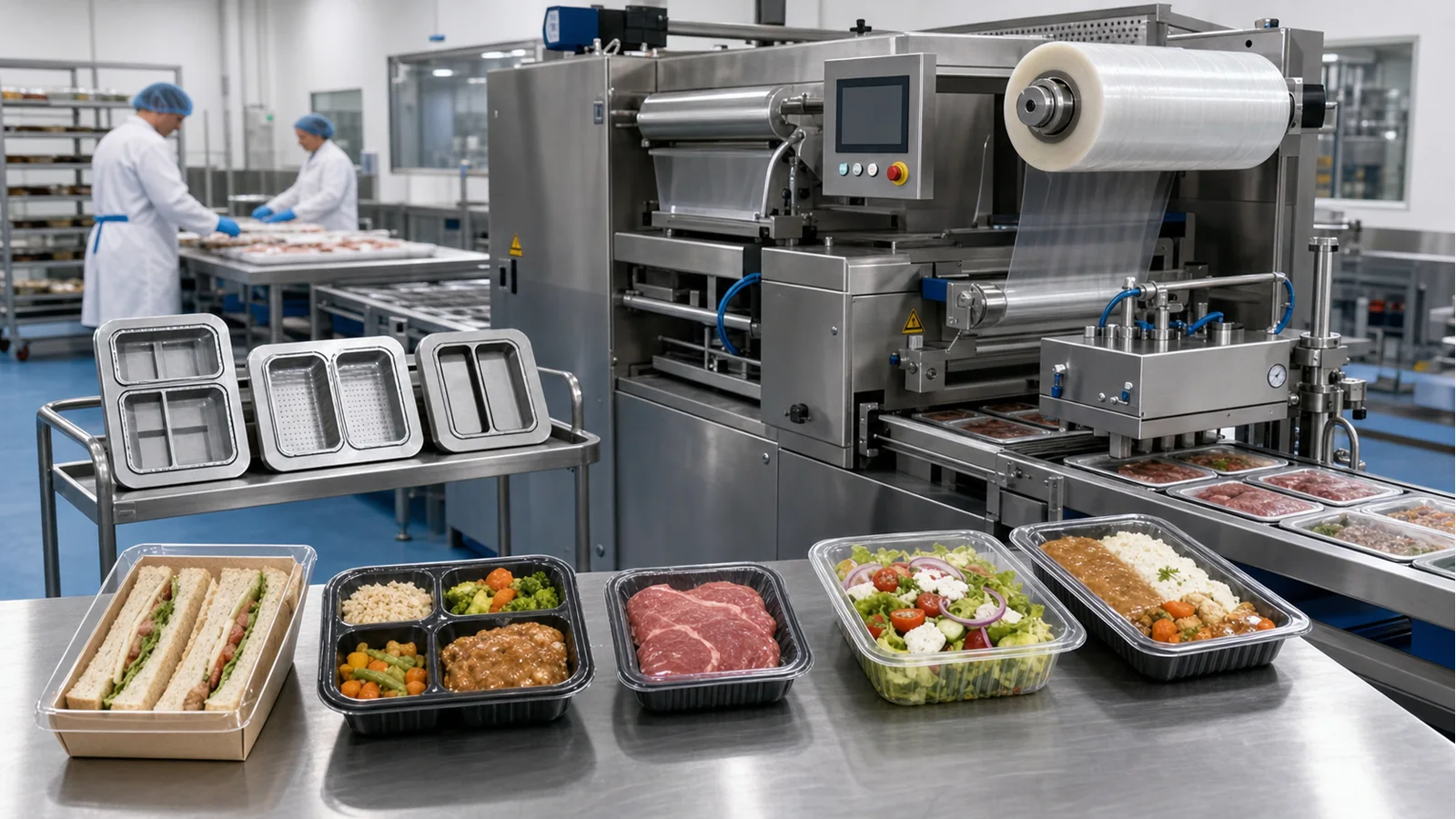
- Based on the rim, film material, production capacity and feeding method of cups, bowls, boxes and trays, determine whether a benchtop, semi-automatic or continuous sealing solution is suitable.
- Cup / Bowl / Box / Tray Sealing
Choose Container First, Not Machine First
The first step for cup, bowl, box and tray sealing is not the machine name, but the cup rim, box rim, tray edge, material, thickness and stacking condition. Without container confirmation, molds, cup/box dropping, sealing pressure and film material cannot be accurately determined.
Cups, Bowls, Boxes and Trays Do Not Share the Same Mold
The same sealing machine can cover multiple specifications by changing molds, but each specification requires confirmation of rim size, depth, cavity count, cutting shape and placement method. For multi-specification projects, prioritize common specifications in advance.
Equipment Combinations Suitable for This Packaging Route
Cups, bowls, boxes, and trays do not use the same tooling route. Our premade tray sealers, desktop multi-compartment meal box sealers, small-diameter cup sealers, and chamber MAP sealers can handle standard film sealing, low-speed trials, small cup sealing, and MAP packaging respectively. First check the rim, box depth, film material, and freshness target. Do not mix in bottle filling or capping equipment for this route.
Film and Container Materials Must Match
PP, PET, CPET, paper cups, aluminum boxes and composite trays correspond to different film materials and heat-sealing windows. It is meaningless to only check sealing; also test easy-peel, temperature resistance, cold chain, transport and leakage.
Manual Cup Placement or Automatic Cup/Box Dropping
If the project starts with manual cup, bowl or box placement, single machine and semi-automatic solutions can be confirmed first; for continuous production, confirm whether containers can be stacked stably, whether they stick easily, whether orientation is fixed, target capacity and site space, then decide whether automatic cup/box dropping, conveying and multi-station sealing are needed.
MAP Trays Must Be Evaluated Separately
MAP trays are not just ordinary heat sealing with an extra parameter. They involve vacuum, gas flushing ratio, film barrier, tray rigidity, leak detection and cold chain. It is suitable to collect sample information separately before quoting.
Small Batches Can Start with Benchtop or Semi-Automatic
When budget is limited or specifications are unstable, first use a benchtop, drawer-type or semi-automatic sealing machine to verify containers and film, then add automatic cup dropping, conveying, coding, labeling and leak detection according to order volume.
How to Provide Inquiry Information
It is recommended to upload container photos or videos, rim dimension drawings, container material, film samples, target quantity per hour, whether automatic cup/box dropping is needed, whether MAP is required, site voltage, air source and available space.
Confirm Samples and Capacity Limits First
If sample size, film material, product condition, and target capacity are not confirmed yet, start with small-batch validation or a single-machine trial. This keeps the investment more controlled, but it requires more manual handling and is not suitable for promising a continuous production rhythm immediately.
Route comparison
- Suitable when cup/bowl/tray sealing is still confirming tray type, film material, preservation effect or single-store small batch trial production.
- Low investment, easy mold change and testing; can use actual tray, film and product to confirm seal strength, appearance and leakage.
- Manual tray loading/unloading and cycle stability are limited; long-term batch production affected by manual coordination.
- Not recommended to stay with standalone prototyping if stable orders exist, long continuous daily production, or need to connect upstream/downstream conveyors.
- First use benchtop or semi-automatic tray/cup sealing equipment to confirm samples, then upgrade to multi-station or line solution based on tray type, cavity count and speed.
- Suitable when cup/bowl/tray sealing specifications are basically determined, requiring more stable cycle time than a single machine, but manual loading and unloading are still acceptable.
- Balances speed, changeover, and cost, suitable for orders with relatively stable specifications such as meal boxes, trays, cups, and bowls.
- Need to confirm mold cavity count, tray dimensions, film width, and manual cycle time; changeover costs increase if specifications vary greatly.
- Not recommended to lock multi-station molds if container sizes change frequently, or film and tray types are not yet determined.
- Select multi-station tray sealing, cup sealing, or filling-sealing combination equipment based on tray type; prioritize equipment by mold cavity count and target speed.
- Suitable when cup/bowl/tray sealing requires extended shelf life, improved appearance stability, or has entered stable mass production.
- Can integrate loading, vacuum/gas flushing, sealing, coding, inspection, and conveying, offering better capacity and consistency.
- Must confirm food properties, preservation goals, gas ratio, packaging materials, and site space in advance; solution communication cycle is longer.
- Not recommended to start a full MAP line when product is still in trial sales, packaging specifications are undetermined, or budget only covers sample verification.
- Select tray MAP, continuous sealing, conveying, and inspection combination based on product preservation goals; recommend equipment in order of loading, sealing, inspection, and downstream collection.
Core process
Model cups, bowls, boxes and trays based on actual dimensions; rim deformation, thickness and stacking condition affect cup/box dropping and sealing pressure.
Small batches can use manual cup/box placement; continuous production requires checking whether containers can be separated stably, orientation is fixed, and sufficient buffer space is available on site.
If the customer only needs a sealing stand-alone machine, this step can be done manually or by upstream equipment; the key is that the sealing edge must not be contaminated by oil, water, debris or liquid.
The film must match the container material; for printed film, also confirm eye mark, pattern orientation, cutting position and waste film recycling method.
The same main machine also requires mold change according to container size; it cannot be assumed that all cups, bowls, boxes and trays share one set of molds.
Common downstream for meal boxes and trays includes leak detection, weighing, labeling, cold chain handling and outer carton packing; configure step by step based on actual order stages.
Associated Equipment / Consumables
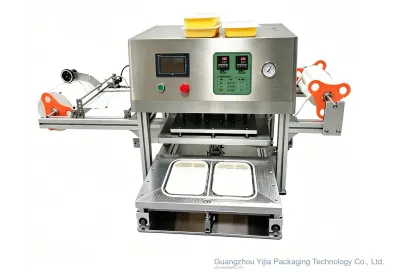 Desktop Multi-Compartment Lunch Box Sealer
Container Confirmation; Model cups, bowls, boxes and trays based on actual dimensions; rim deformation, thickness and stacking condition affect cup/box dropping and sealing...
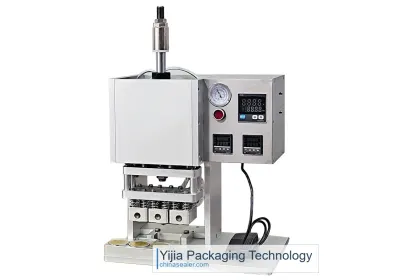 Small-Diameter Cup Sealer SGP-03
Container Confirmation; Model cups, bowls, boxes and trays based on actual dimensions; rim deformation, thickness and stacking condition affect cup/box dropping and sealing pressure;...
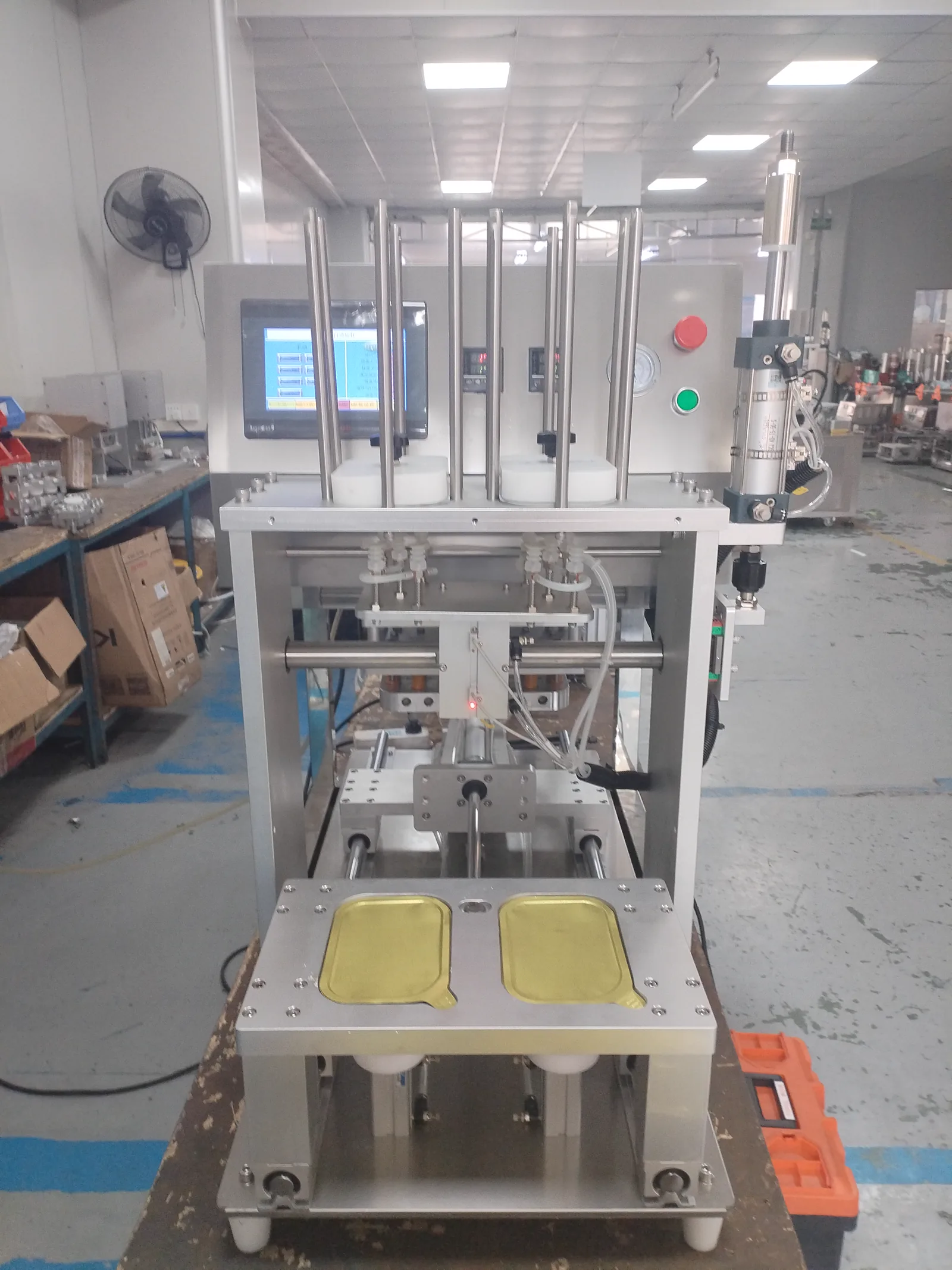 Automatic pre-cut film pick-and-place tray sealing machine
Film Feeding and Registration; The film must match the container material; for printed film, also confirm eye mark, pattern orientation, cutting position and...
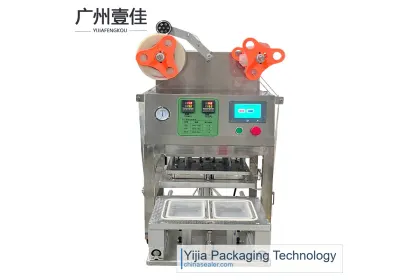 Bench-top Rollstock Tray Sealer
Film Feeding and Registration; The film must match the container material; for printed film, also confirm eye mark, pattern orientation, cutting position and waste film recycling metho...
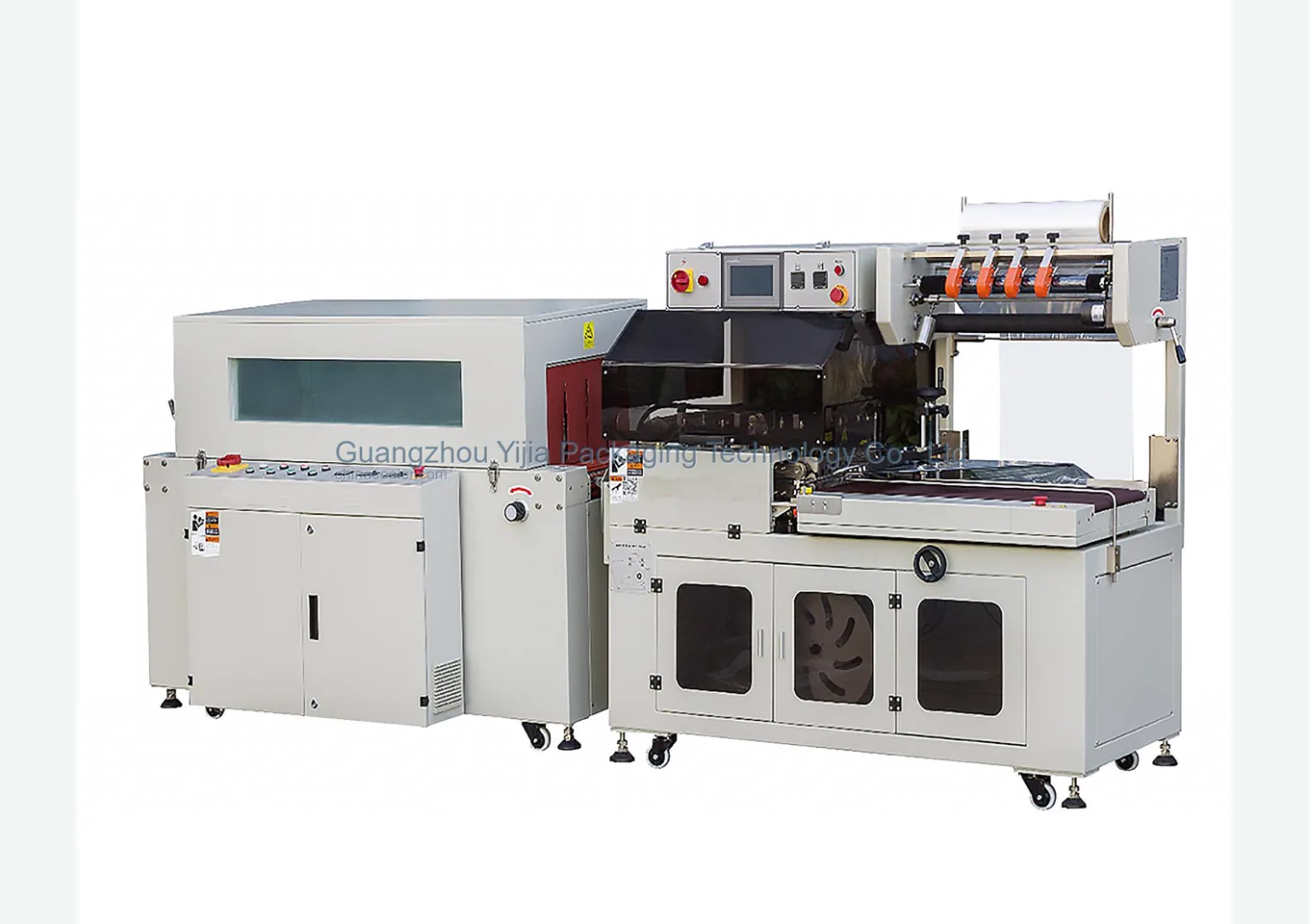 L-type heat shrink sealing and cutting wrapping line
Output and Downstream; Common downstream for meal boxes and trays includes leak detection, weighing, labeling, cold chain handling and outer carton packing; config...
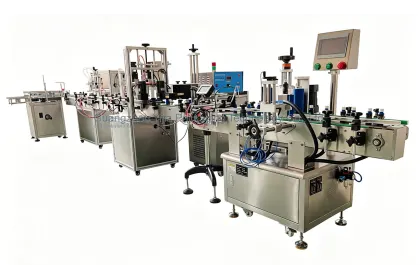 Automatic Feeding Conveying Sealing Line
Output and Downstream; Common downstream for meal boxes and trays includes leak detection, weighing, labeling, cold chain handling and outer carton packing; configure step by...
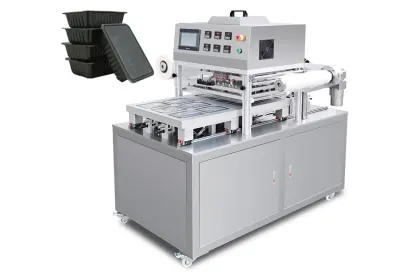 Tray MAP Sealer
Container Confirmation; Model cups, bowls, boxes and trays based on actual dimensions; rim deformation, thickness and stacking condition affect cup/box dropping and sealing pressure; Cup Diameter / Bo...
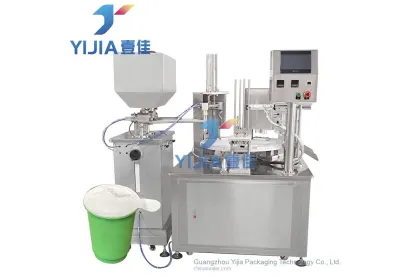 Coffee Capsule Filling and Sealing Machine
Container Confirmation; Model cups, bowls, boxes and trays based on actual dimensions; rim deformation, thickness and stacking condition affect cup/box dropping and sealing...
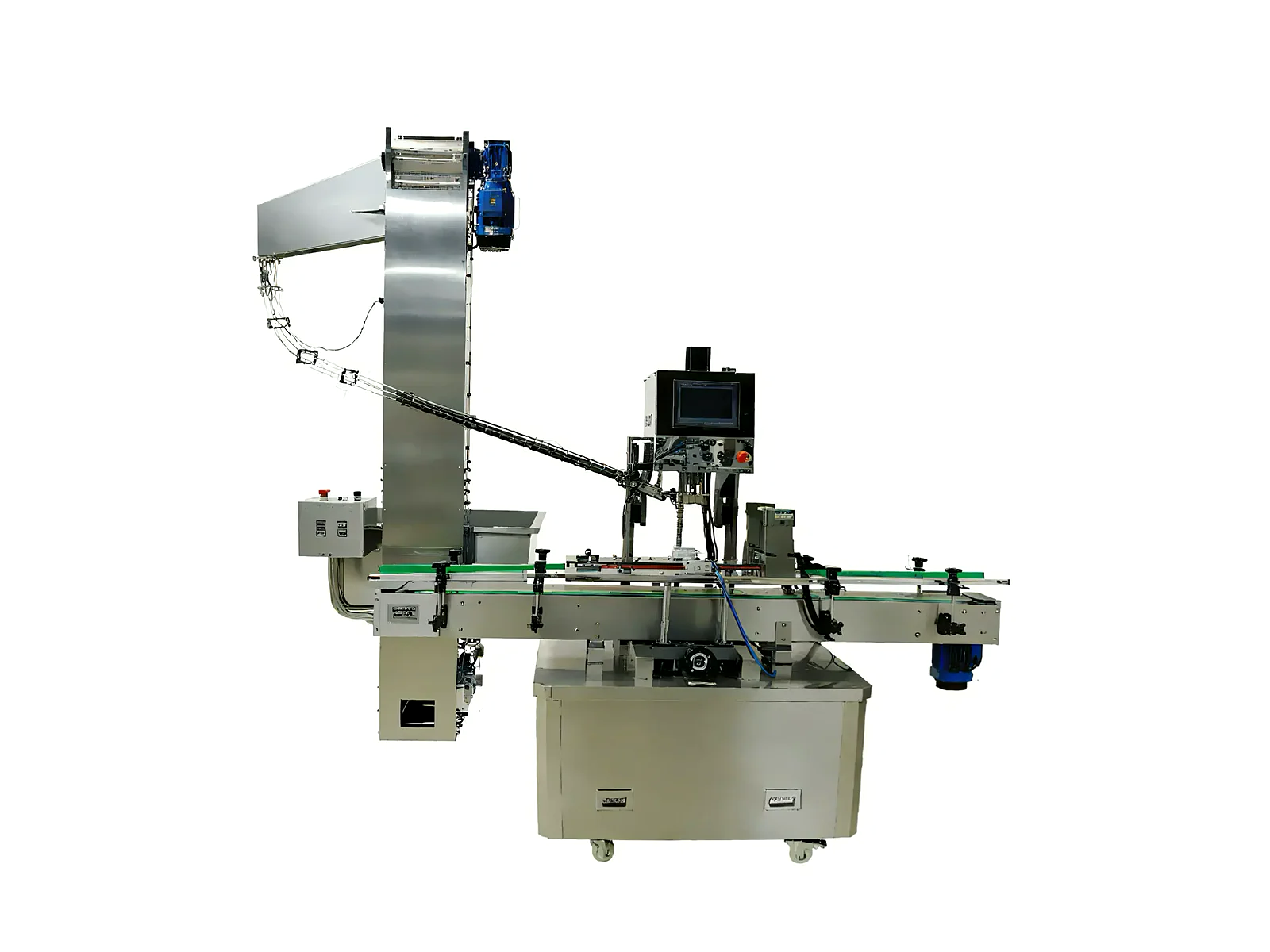 Automatic Screw Capping and Press Capping Machine
Container Confirmation; Model cups, bowls, boxes and trays based on actual dimensions; rim deformation, thickness and stacking condition affect cup/box dropping and s...
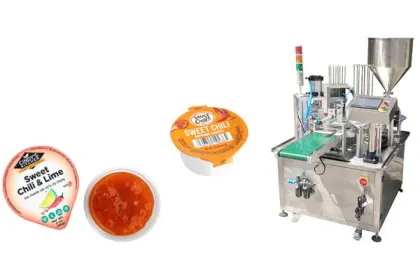 Small Cup Filling and Sealing Machine
Container Confirmation; Model cups, bowls, boxes and trays based on actual dimensions; rim deformation, thickness and stacking condition affect cup/box dropping and sealing press...
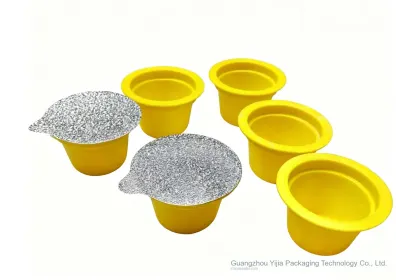 Small Cup Sealing Film and Easy-Tear Film Consumables
Film Feeding and Registration; The film must match the container material; for printed film, also confirm eye mark, pattern orientation, cutting position and wast...
Sample details
Share the product name, container photos or dimensions, including mouth size, height, volume and whether it deforms easily.
Product name, viscosity, whether it contains particles or foamConfirm film, foil liner, lid, label or pouch material, thickness and sealing requirements.
Physical container or photos, diameter or length/width/height, rim or cap structure, and whether samples are availableShare the hourly target, manual or automatic loading preference, and whether conveyors, filling, labeling or carton packing should be connected.
Film or cap samples, product condition, whether it is hot-filled, contains particles, foams easily, and consumable specificationsUse the sample details to confirm machine model, tooling, optional functions, lead time and quotation range.
Target Capacity (boxes/hour)Send sample photos, key dimensions, film or caps, target output and line-integration needs so we can confirm the machine, tooling and quotation range.
Sample photos, dimensions, film or caps, target output, line integrationCommon selection mistakes
Cup, box and tray sealing focuses on rim, film, mold and cup/box dropping; should not start from cap, torque or round bottle positioning.
Even for the same meal box, different length, width, height, rim width, material and cavity count can lead to completely different machines and molds.
Sealing tight, peeling easily, no leakage during transport, no edge lifting after refrigeration or heating – all require testing with actual film and actual containers.
Oil, water, debris, liquid and soft box deformation can cause unstable sealing; process design should include avoidance, cleaning or manual inspection.
Multiple specifications can share the main machine, but molds, cutting dies and positioning parts usually need to be configured per specification; list common specifications clearly in the quotation.
Common questions
It is possible to share one main machine, but it depends on size range, rim shape, film material, cavity count and mold change method. Cannot promise full compatibility without samples.
A preliminary range can be provided based on photos and dimensions, but a formal proposal requires actual containers and film. At least provide rim size, material, stacking photos and target quantity.
Rollstock film is suitable for continuous production and print registration; pre-cut film is suitable for some semi-automatic scenarios. The choice depends on film cost, pattern orientation, cutting edge and operator habits.
Yes. If the customer already has manual filling or upstream equipment, focus on confirming cup/box placement, film feeding, sealing, cutting, product collection and downstream space.
No. MAP requires confirmation of vacuum, gas flushing ratio, film barrier, tray rigidity, shelf life, leak detection and cold chain conditions, usually requiring separate testing.
First use a benchtop, drawer-type or semi-automatic machine to verify containers and film; after orders stabilize, add automatic cup/box dropping, conveying, coding, labeling and leak detection.
Confirm voltage, plug, air source, English interface, manual, spare parts, wooden case packaging, film procurement method and whether remote debugging video is needed.