Solution topic
How to Link Electronics Moisture-Bag Sealing to Case Packing
Compare pre-made bag automatic sealing, bagged continuous sealing, and optional vacuum sealing for electronic components, explaining configuration boundaries for date coding, label
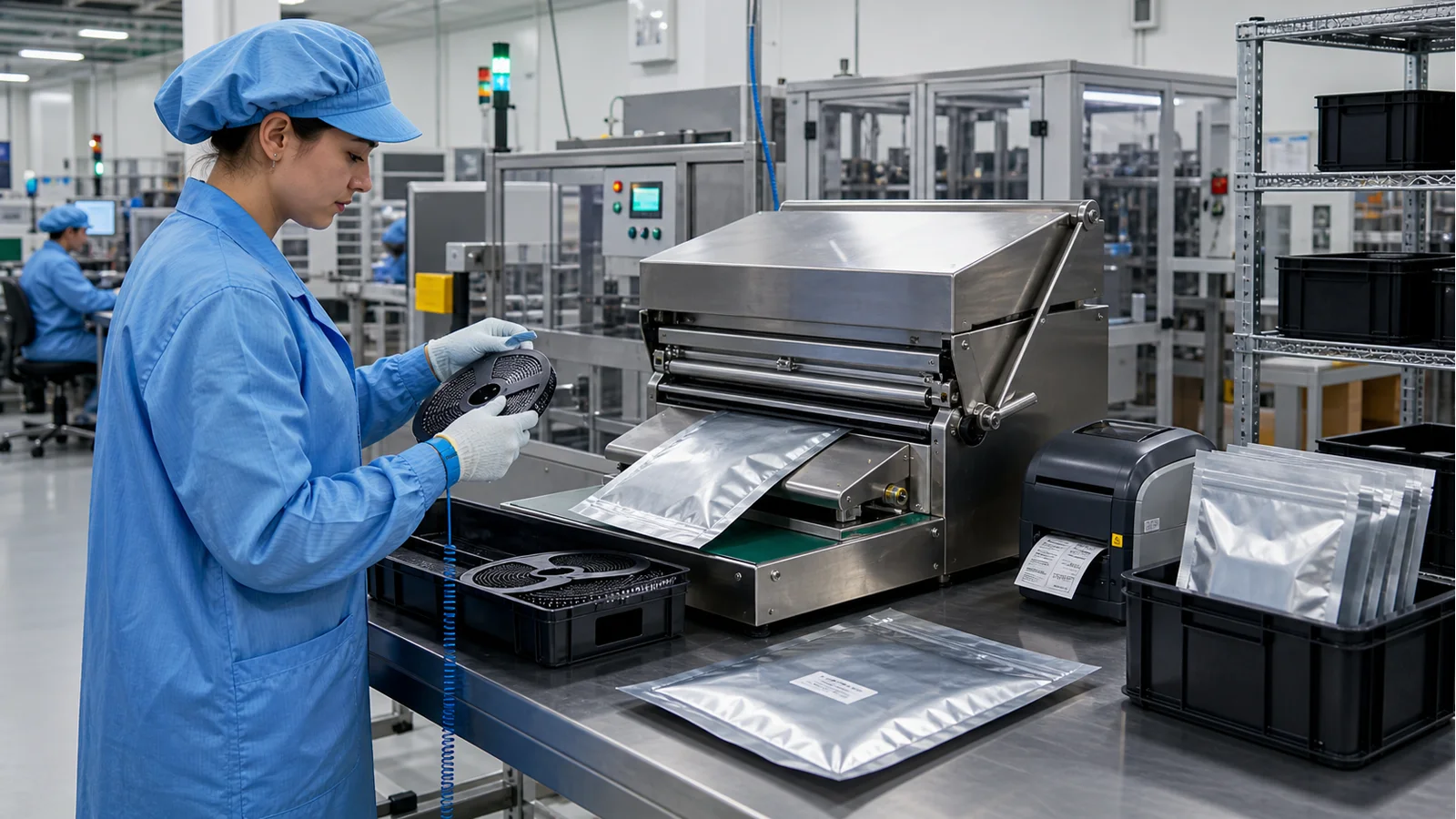
- Stabilise the inner bag using continuous sealing, external evacuation or pouch automation, then define labelling and case handling without hiding manual steps.
Solution summary prepared for you
- For electronic component moisture-proof bags, first select equipment based on the bagging method. If bags are already manually filled, a continuous bag sealing machine can be used; if automatic bag picking and opening are needed, evaluat...
- Vacuum is an independent packaging process; when clearly required, use a continuous inline bag vacuum sealing machine. Regular heat sealing equipment cannot replace vacuum route validation.
- After the inner bags pass packaging tests, set up date, label, and outer carton stations. Bagged components are first manually cartoned, then processed by the case sealing and outer carton labeling line.
Route comparison
- Components and accessories have been manually placed into moisture-proof bags, and only continuous bag mouth heat sealing is needed.
- Already-bagged components can directly enter continuous heat sealing; the equipment focuses on bag mouth passage, sealing edges, and conveying state.
- Component loading and bag mouth preparation are done by upstream manual work; the equipment does not perform automatic bag picking or opening.
- When the project requires automatic bag picking, opening, and component loading, first evaluate the pre-made bag automatic route and loading boundary.
- Use a continuous bag sealing machine, and confirm the bag mouth direction and heat sealing conditions with moisture-proof bag samples containing components.
- For packaging where the bag type and process are relatively stable, and automatic bag picking, opening, and sealing are planned.
- Pre-made bag equipment can build continuous stations around bag magazine, bag picking, opening, optional filling interface, and heat sealing.
- Component shape, inner tray, and electrostatic protection requirements need to be verified; it cannot be assumed that a general filling mechanism will automatically place them.
- When component specifications change frequently and manual fine placement is still relied upon, manual bagging and continuous heat sealing can be retained first.
- Evaluate a single-lane or three-station pre-made bag filling and sealing machine series; the component loading method is confirmed separately for each project.
- Projects that have defined a vacuum packaging process and can provide complete samples of components, inner trays, and vacuum bags.
- A continuous inline bag vacuum sealing machine treats evacuation and sealing as separate processes, making it easy to test samples according to the vacuum process.
- Component tolerance, bag shrinkage, accessory movement, and seal edge condition must all be included in the test; they cannot be judged directly from the bag material name.
- When the packaging standard does not require vacuum, the regular heat sealing route can be validated first.
- When the packaging requirement clearly specifies vacuum, use a continuous inline bag vacuum sealing machine for component and bag material validation.
Associated Equipment / Consumables
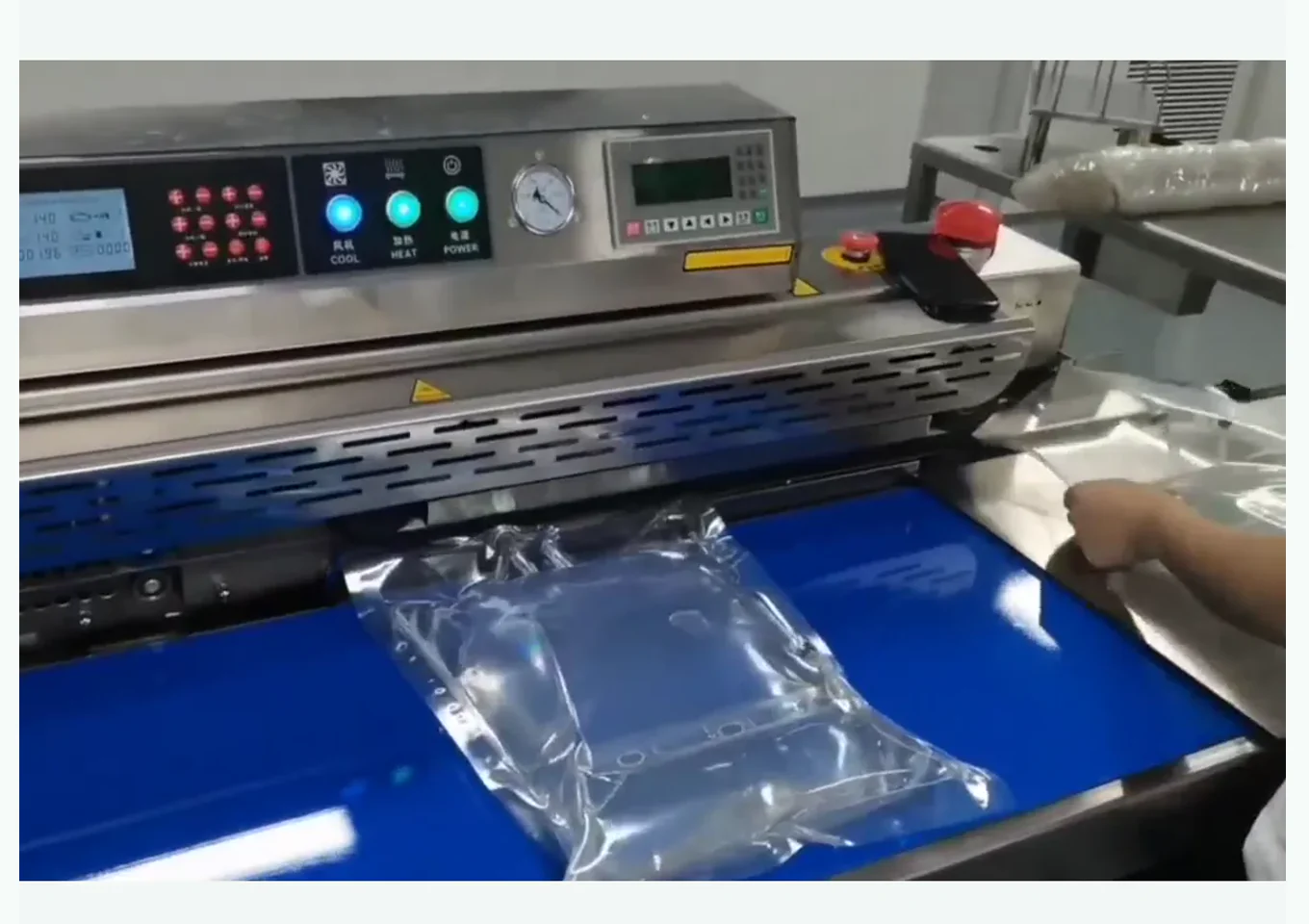 Continuous External-Vacuum Bag Sealing Machine
The machine conveys, externally evacuates and heat-seals prefilled bags. Confirm barrier structure, mouth flatness, product dust or liquid migration, headspace and sealant layer, then validate evacuation time, pack sh...
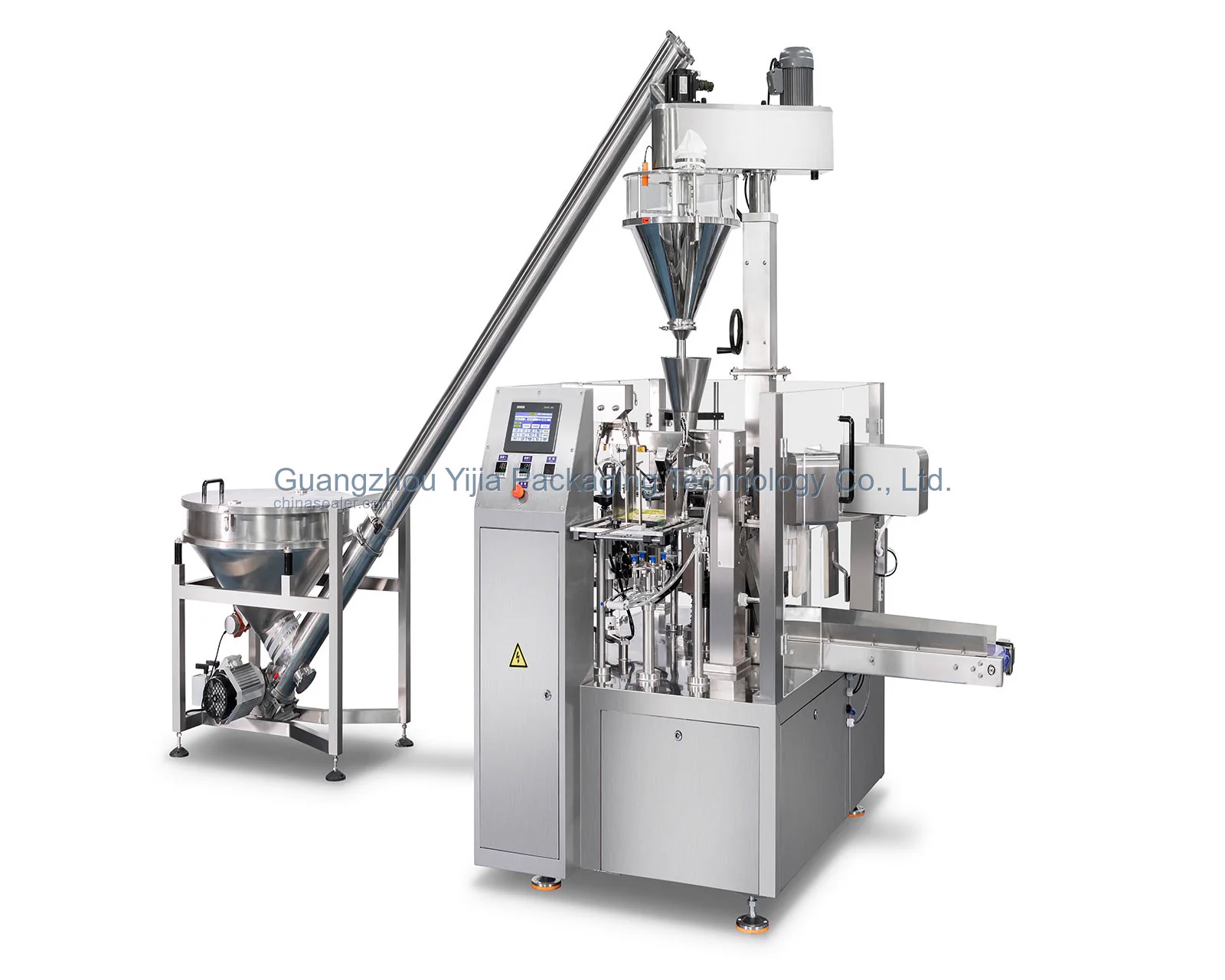 Single-Lane and Three-Station Premade Pouch Filling and Sealing Series
Regular inner bag heat sealing; The two types of equipment have different bag loading methods; first fix the component loading steps, then match...
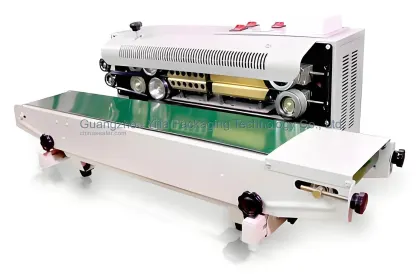 Continuous Bag Sealing Machine
Regular inner bag heat sealing; The two types of equipment have different bag loading methods; first fix the component loading steps, then match the sealing main machine and production...
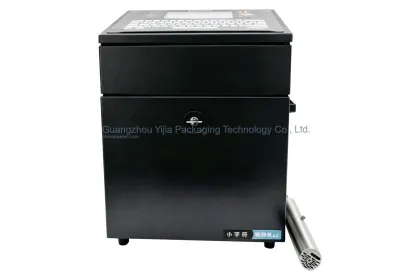 Date & Batch Inkjet Printer
Traceability marking and outer carton sealing; Bagged components are first manually placed into cartons, and then the case sealing and outer carton labeling line receives the completed car...
Core process
First assemble electronic components, accessories, and production moisture-proof bags into a complete sample, and verify the bag mouth direction, heat seal layer, and available seal edge.
Use a continuous bag sealing machine when bags are already manually filled; evaluate the pre-made bag filling and sealing machine series when automatic bag picking and opening are needed.
Only when the packaging process explicitly requires vacuum should a continuous inline bag vacuum sealing machine be used for bag material and component testing.
After the inner bags pass inspection, marking is done by a date batch coding machine or labeling equipment, and after manual cartoning, the case sealing and outer carton labeling line is connected.
Component shape, sharp edges, electrostatic protection method, and arrangement inside the bag will change the bagging and sealing state; samples close to shipping condition should be submitted.
Inner bag sealing, manual cartoning, and outer carton sealing are three continuous segments. For each segment, first clarify the handover state, then arrange the batch number and label correspondence.
Sample details
Component shape, inner tray, and arrangement inside the bag affect whether the bag mouth channel and seal edge will catch foreign matter.
Provide actual samples of components, inner trays, and desiccant accessories, and show the planned bagging directionThe heat seal layer, folded edges, dimensions, and seal edge width of the bag material are used to establish regular heat sealing or vacuum test conditions.
Submit production moisture-proof bag samples and material descriptions, and indicate the bag mouth and available sealing areaManual bagging and automatic bag picking correspond to different main machines, while vacuum packaging requires a separate evacuation process.
Explain how components are placed into bags, whether vacuum is required, and the planned production paceThe traceability information on inner bags and outer cartons must have corresponding rules, and printing and labeling positions should avoid sealing and friction areas.
Provide inner bag batch numbers, label content, outer carton label layout, and barcode scanning or visual inspection requirementsThe outer carton station starts after manual cartoning is completed, requiring carton dimensions, sealing direction, and carton entry/exit conditions.
Submit a carton sample filled with bagged components, site layout, and upstream/downstream handover methodsCommon selection mistakes
Aluminum foil laminated bags, shielding bags, and other moisture-proof bags have different heat seal layers and surface treatments, so sealing must be tested with production bag samples.
Regular continuous heat sealing, pre-made bag automatic sealing, and vacuum sealing correspond to different operation methods; vacuum requirements should be clarified before selecting the machine.
The case sealing and outer carton labeling line receives cartons that have been manually packed; the manual handover between inner bag sealing and outer carton processing must be clearly defined.
Already-bagged bags and packaging that requires automatic bag picking and opening use different main machines, and bag change validation should also be done separately.
Batch numbers, inner bag labels, and outer carton labels serve different traceability levels; the content correspondence should be established before setting equipment positions.
View detailed technical notes
Confirm segment by segment from inner bag to outer carton
Electronic component moisture-proof packaging should be selected segment by segment according to inner bag operations, vacuum requirements, traceability marking, and outer carton processing; a single 'packaging machine' cannot cover the entire process.
First Distinguish Bagging Method and Vacuum Process
When components have been manually placed into bags, a continuous bag sealing machine handles the bag mouth heat sealing. When automatic bag picking and opening are needed, evaluate a pre-made bag filling and sealing machine. If the packaging process also has vacuum requirements, switch to a continuous inline vacuum sealing equipment.
Manual Bagging Uses Continuous Heat Sealing
The continuous bag sealing machine receives sorted, bagged products. Samples should include actual components and accessories to observe bag mouth passage, heat seal layer, folded edges, and sealing area. Component bagging and placement are still done manually in the previous step.
Pre-made Bag Route: First Confirm Component Loading Boundaries
The single-lane or three-station pre-made bag filling and sealing machine series is suitable for routes requiring bag picking, opening, and heat sealing. How electronic components enter the bag must be confirmed separately based on shape, inner tray, and electrostatic protection; liquid or powder filling methods cannot be directly applied.
Vacuum Packaging Requires Dedicated Equipment Verification
Vacuum packaging requires a continuous flow bag vacuum sealing machine, tested with actual components, inner trays, and bag materials. Observe bag shrinkage, component displacement, accessory condition, and seal edges, then complete acceptance according to packaging standards.
Bag Material Structure and Component Arrangement Require Joint Trial
Mass production moisture-proof bags must be trial-sealed with real components. The bag material's heat seal layer, bag mouth folded edges, printed areas, and available sealing width jointly limit equipment passage and process settings.
Select Conventional Heat Sealing and Vacuum Equipment Separately
The conventional route is chosen between continuous bag sealing machines and pre-made bag filling and sealing machines. Whether to vacuum is confirmed separately; when clearly needed, switch to a continuous flow bag vacuum sealing machine.
Inner Bag Marking First Establishes Traceability Relationship
Date batch inkjet coders or labeling equipment are set according to inner bag surface and traceability content. Marking positions must avoid heat seal edges, folded areas, and conveying friction surfaces, and establish batch correspondence with outer carton labels.
Outer Carton Equipment Starts After Manual Boxing
Sealed and qualified bagged components are manually packed into cartons, then enter the carton sealing and outer carton labeling line. The line handles carton sealing and outer labels; boxing is still done manually.
Common questions
Does the moisture-proof bag have to use an aluminum foil laminated structure?
The bag material must be determined together by component protection, storage and transport conditions, and packaging validation. Aluminum foil laminated bags, shielding bags, or other structures should be tested for heat sealing using production samples.
What equipment should be selected when the packaging requires vacuum?
A continuous inline bag vacuum sealing machine is required, and it must first be confirmed that the components, accessories, and bag material can be packaged according to the established vacuum process. A regular heat sealing route does not replace this test.
How should inner bag sealing be arranged for multiple specifications and small batches?
After manual bagging, a continuous bag sealing machine can be used, making it easy to test different bag samples separately. When automatic bag picking, opening, and sealing are needed, then evaluate a pre-made bag filling and sealing machine.
How are bagged components handled after entering the outer carton?
After the inner bags pass inspection, they are manually placed into cartons, and then a case sealing and outer carton labeling line is used. Automatic cartoning is not part of this equipment combination.
What should be checked first when inner bag heat sealing results are unstable?
First check the heat seal layer of the bag material, the flatness of the seal edge, and whether components or accessories are caught in the bag mouth, then test according to the agreed packaging method. Process conditions are obtained from actual bag samples.
What information should be submitted to determine the entire packaging process?
Please prepare components and inner trays, moisture-proof bags, bagging method, vacuum requirements, production pace, internal and external labeling rules, and carton samples after manual cartoning.