Solution topic
How to Configure a Fresh-Meat Tray Packaging, Weighing and Labelling Line
With the tray MAP sealing machine as the core, compare roll-fed and pre-cut film tray sealing equipment, then connect a chain plate continuous line and online checkweigher. Fresh m
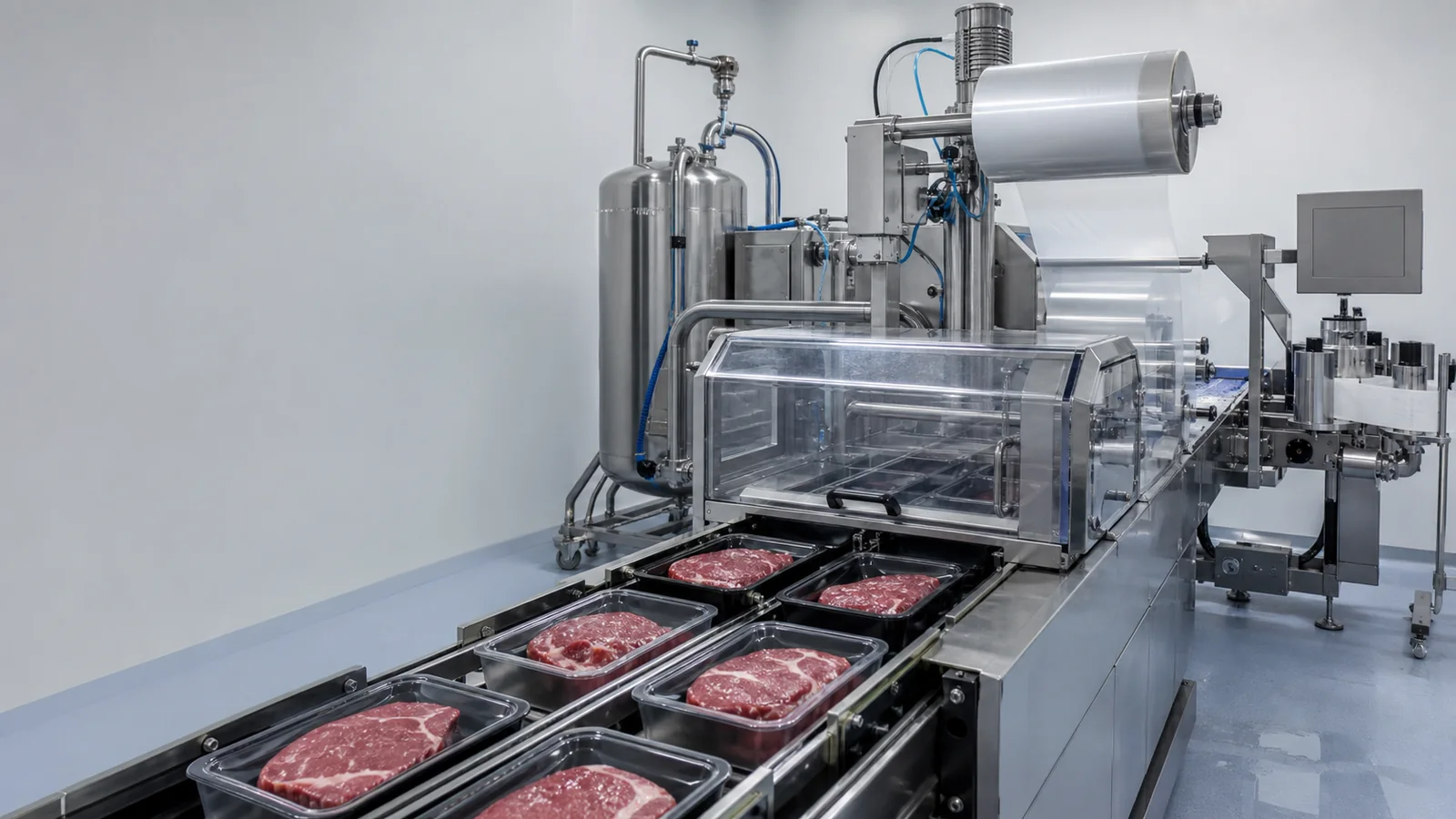
- Choose overwrapping, heat sealing or MAP from preservation, tray rim, barrier film, purge and retail-label requirements, then add weighing, labelling and inspection.
Solution summary prepared for you
- The fresh meat tray MAP route centers on the tray MAP sealing machine; tray, barrier film, gas, and leak methods must be verified as a set.
- When MAP is not used, evaluate the tabletop roll film tray sealing machine and automatic pre-cut sheet film pick-and-place tray sealing machine separately according to roll film or pre-cut sheet film.
- The chain plate cup/tray continuous sealing line is used for stable tray transfer; after sealing, the inline checkweigher executes the agreed weight rules.
Route comparison
- Suitable for fresh meat trays that already have gas, barrier film, and finished product inspection methods and require gas flushing and sealing.
- The tray MAP sealing machine can place gas treatment and tray sealing in the same station, making it easy to record samples according to the process.
- If any of tray rim, film, gas, and leak determination is missing, a complete MAP trial cannot be formed.
- When the product only requires ordinary edge sealing, or the MAP process is not yet defined, first use the ordinary film branch or continue verification.
- The tray MAP sealing machine is configured according to formal fresh meat trays, barrier film, and process conditions; finished products are inspected by special methods.
- Suitable for tray products that do not use MAP or need to compare roll film and pre-cut sheet film supply methods.
- The two film supply routes can be trialed separately with formal packaging materials to identify film feeding, sheet separation, or placement issues.
- Film width, sheet film stacking, rim contamination, and tray deformation all change edge sealing; loaded sample trays are still needed.
- When MAP gas flushing and barrier requirements are already defined, ordinary film sealing equipment cannot replace the MAP main unit.
- Roll film uses a tabletop roll film tray sealing machine; pre-cut sheet film uses an automatic pre-cut sheet film pick-and-place tray sealing machine and is evaluated with actual samples.
- Suitable for projects where trays, film, and production schedules are stable, and continuous transfer and finished product weight rules are required.
- Chain plate stations and inline checkweighing can be connected along the sealed tray posture, facilitating continuous tray output and abnormal diversion.
- Tray spacing, cleaning, film sealing stability, and checkweighing samples must be verified online; labeling is not automatically included.
- When the main tray is not finalized, on-site cleaning conditions are unclear, or weight rules are not yet established, interfaces should be reserved first.
- The chain plate cup/tray continuous sealing line (optional filling) is evaluated according to project scope; after sealing, the inline checkweigher executes the agreed rules.
Associated Equipment / Consumables
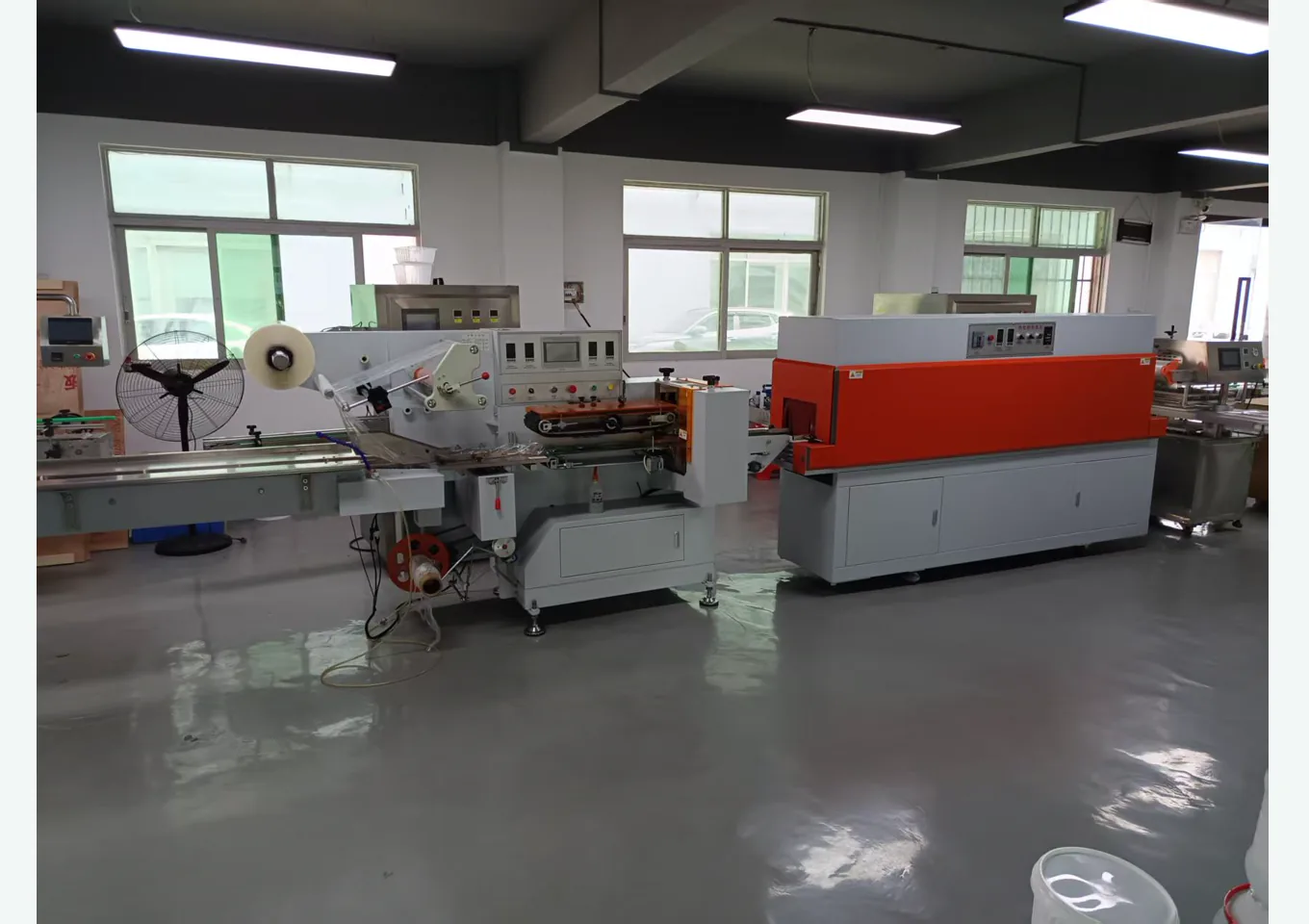 590-Series Shrink Flow-Wrapping Line
The line forms rollstock around single or grouped products, makes longitudinal and end seals, shrinks the film and cools the discharge. Confirm dimensions, orientation, spacing, heat tolerance, film width and shrink r...
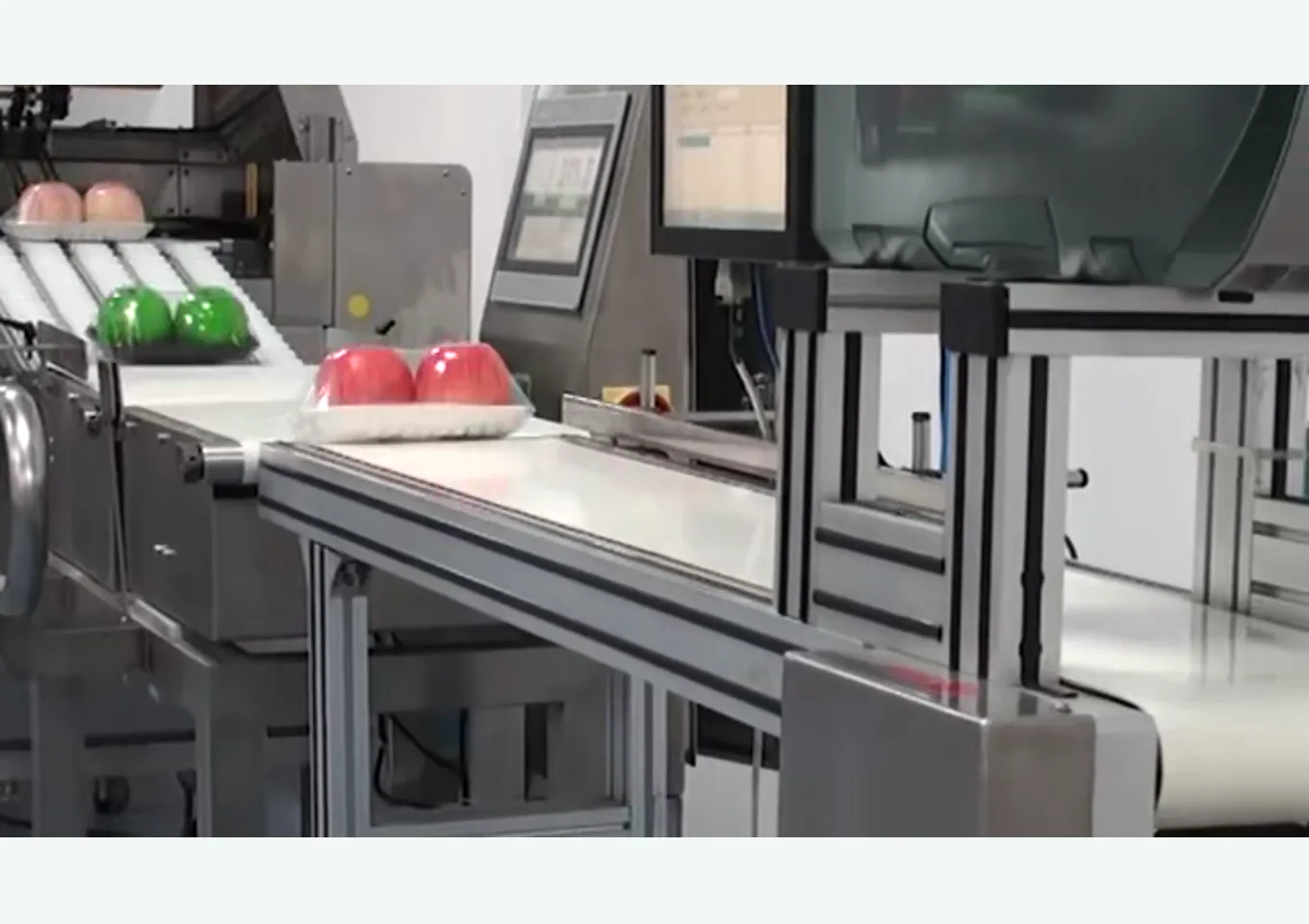 Fresh-Food Tray Wrapping, Weighing and Labelling Line
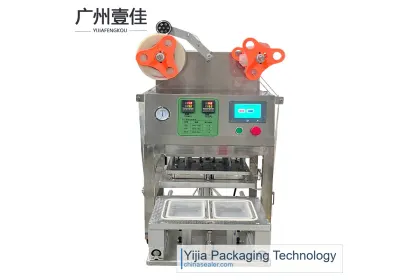 Benchtop Roll-Film Tray Sealing Machine
Confirm fresh meat tray and film as a set; Each main tray and corresponding film roll or sheet film are paired with a number; ordinary heat sealing and MAP cannot share unteste...
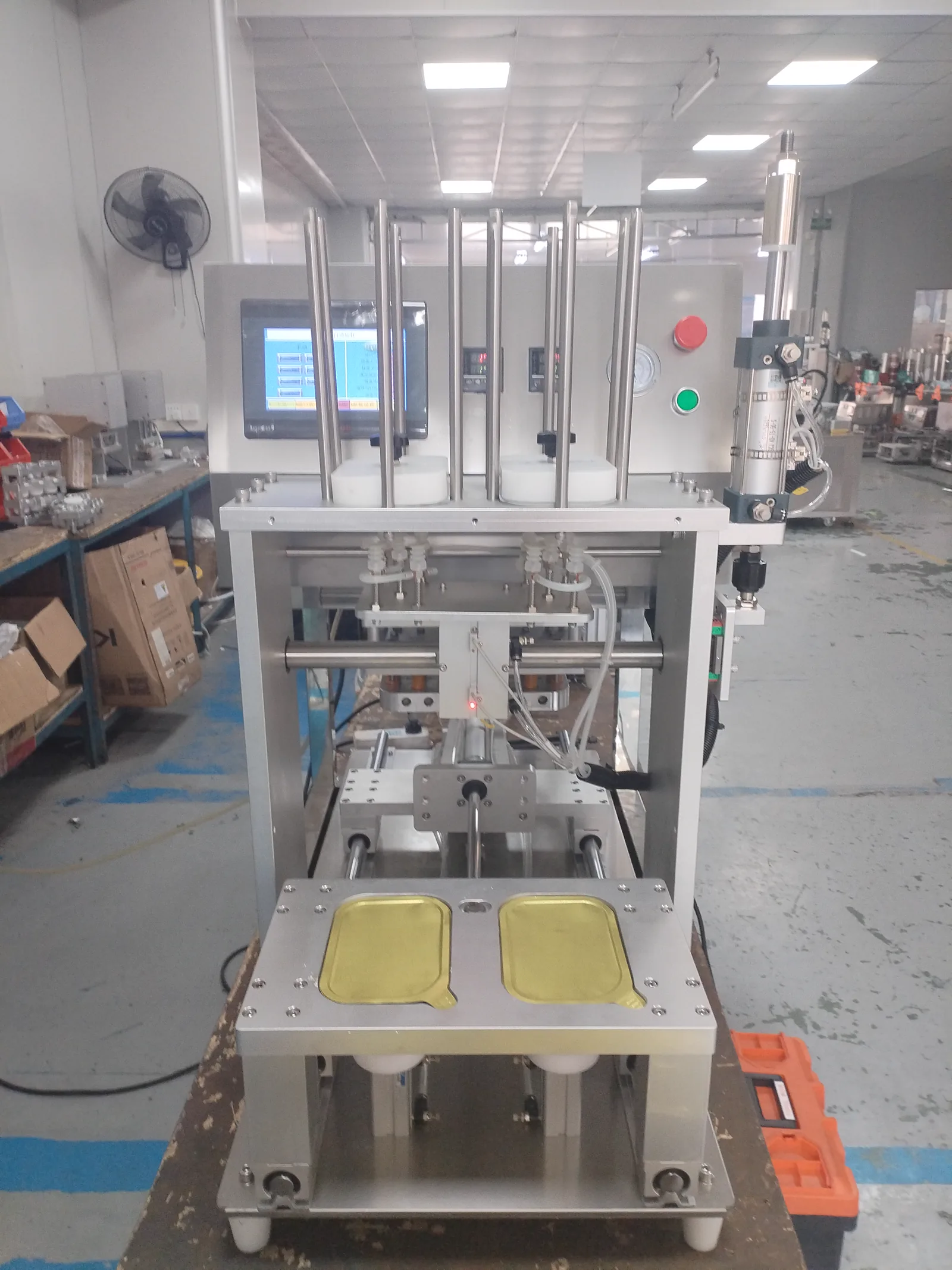 Automatic Pre-Cut Lid Pick-and-Place Tray Sealer
Confirm fresh meat tray and film as a set; Each main tray and corresponding film roll or sheet film are paired with a number; ordinary heat sealing and MAP cannot shar...
Core process
Use trays loaded with actual fresh meat to check rim, film heat seal side, condensation, and handling condition, then make molds and trial seal samples.
When the process has defined gas and barrier requirements, use a tray MAP sealing machine; otherwise choose the ordinary sealing branch with roll film or pre-cut sheet film.
When continuous connection is needed, use fresh meat trays to verify chain plate load capacity, product spacing, hygiene cleaning, and tray entry/exit posture.
The form of chilled fresh meat, marinated meat, or portioned meat changes loading height, rim contamination, and conveying condition after film sealing.
Tray rim and film layer determine the sealing foundation; MAP also requires gas conditions, barrier requirements, and finished product inspection methods.
Sealed fresh meat trays maintain stable spacing before entering weight inspection; judgment only targets the agreed finished product specification.
Sample details
Loading height, condensation, rim contamination, and tray body rigidity together change mold fit and continuous conveying.
Please provide the main tray, fresh meat sample after loading, rim dimensions, tray material, and stacking condition.MAP and ordinary heat sealing have different film requirements; roll film and sheet film feeding mechanisms cannot be mixed.
Please prepare barrier film, ordinary roll film, or pre-cut sheet film, and specify heat seal side, film width, printing direction, and film supply form.Equipment selection only implements clearly defined process conditions; do not infer gas or freshness results from meat name.
Please have the process side provide gas conditions, freshness target, leak inspection, and finished product determination after refrigerated handling.The continuous line must accommodate film splicing, mold changes, abnormal tray removal, and hygiene cleaning; do not only calculate straight-line length.
Please list tray planned takt time, shifts, entry/exit direction, cleaning method, site, and whether a chain plate continuous workstation is needed.Inline checkweighing and labeling are different functions; label adhesion also requires separate trials considering condensation and tray surface.
Please provide finished product weight specifications, inspection samples, abnormal diversion method, and whether separate labeling equipment is planned.Common selection mistakes
First, the process side should define MAP requirements, then use a tray MAP sealing machine to conduct trials with the corresponding tray and film.
Roll film and pre-cut sheet film also involve different feeding actions; keep formal packaging material samples for each.
Molds, edge sealing, and chain plate transfer must cover the actual posture and cleanliness of loaded trays.
Inline checkweighing, sealing appearance, and MAP inspection should each establish samples and abnormal handling procedures.
This line first completes film sealing, continuous transfer, and weight verification; labeling needs are addressed in a separate equipment plan.
View detailed technical notes
Fresh Meat Trays: First Distinguish Ordinary Film Sealing from MAP
Ordinary edge sealing and gas flushing are not the same process. Only after the gas, barrier film, and finished product inspection methods are defined should a tray MAP sealing machine be adopted.
Tray Film and Fresh Meat Condition Both Participate in Testing
The tray rim, film heat-seal surface, filling height, condensation, and fresh meat residue together affect the seal; samples must come from the actual packaging combination.
Ordinary Film Sealing Branches into Roll Film and Pre-cut Film
A benchtop roll-fed tray sealing machine handles roll film feeding and edge trimming, while an automatic pre-cut film tray sealing machine handles sheet film separation, orientation, and film placement. Both machines require filled trays to observe sealing edges, tray body stress, and sample condition after handling.
MAP Equipment Executes an Already Defined Process
A tray MAP sealing machine is configured around the actual tray, barrier film, and gas conditions. Fresh meat preservation results, gas selection, and leak determination are defined by the process owner; machine trial running only verifies the corresponding actions and finished product records.
Chain Plate Continuous Line Focuses on Tray Orientation and Cleanliness
A chain plate continuous cup/tray sealing line (optional filling) requires checking tray load capacity, pitch, film supply, and sanitation cleaning. The optional filling range is confirmed separately per actual project and cannot be treated as a fixed configuration.
Online Checkweighing Only Handles Weight Rules
Sealed fresh meat trays are rechecked by an online checkweigher for the agreed weight; rejection diversion or machine stop methods follow the quality plan. This station does not judge MAP gas or seal edge integrity.
Labeling Needs Are Separated from the Main Equipment Combination
If finished products also need weight labels or brand labels, suitable equipment should be selected separately based on the tray labeling surface, condensation, and data content. The film sealing and checkweighing route does not treat bottle labeling equipment as a standard station.
Use the Same Batch of Trays Throughout the Integrated Line Validation
MAP or ordinary film sealing, chain plate transfer, and weight recheck are recorded along the same batch of tray numbers. After changing tray type or film, reseal and verify continuous handover.
Common questions
When does fresh meat tray packaging need MAP?
Only enter the MAP route when the product process has already specified gas flushing, barrier film, and finished product inspection requirements. For ordinary edge sealing needs, roll film or pre-cut sheet film heat sealing can be used.
Can MAP equipment determine gas conditions on its own?
No. Gas conditions and fresh meat freshness determination are given by the product process requirements. The equipment performs trials according to the confirmed trays, films, and methods.
How to choose between roll film and pre-cut sheet film?
Roll film focuses on film width, film feeding, and edge trimming; pre-cut sheet film focuses on sheet separation, orientation, and film placement position. Use formal packaging materials to verify separately.
Can fresh meat trays be directly connected to a chain plate continuous line?
It can be evaluated, but first check tray load capacity, spacing, rim cleanliness, conveying posture, and on-site hygiene operations, then determine the continuous workstations.
What does the inline checkweigher check after sealing?
The inline checkweigher works according to the agreed finished product weight rules and does not judge film sealing, gas condition, or leak results.
Is a labeling station included in this equipment route?
This equipment combination focuses on film sealing, continuous transfer, and weight verification. If labels are needed, select equipment compatible with the refrigerated tray and adhesion surface for separate trial labeling.