Solution topic
Pet Food Can Filling Machine Selection: Wet Food Seaming, Dry Food Screw Capping, and Heat Sealing Film
For pet wet food, dry food, and freeze-dried can filling, compare metal can seaming, plastic jar screw capping, and aluminum foil heat sealing routes, covering the configuration re
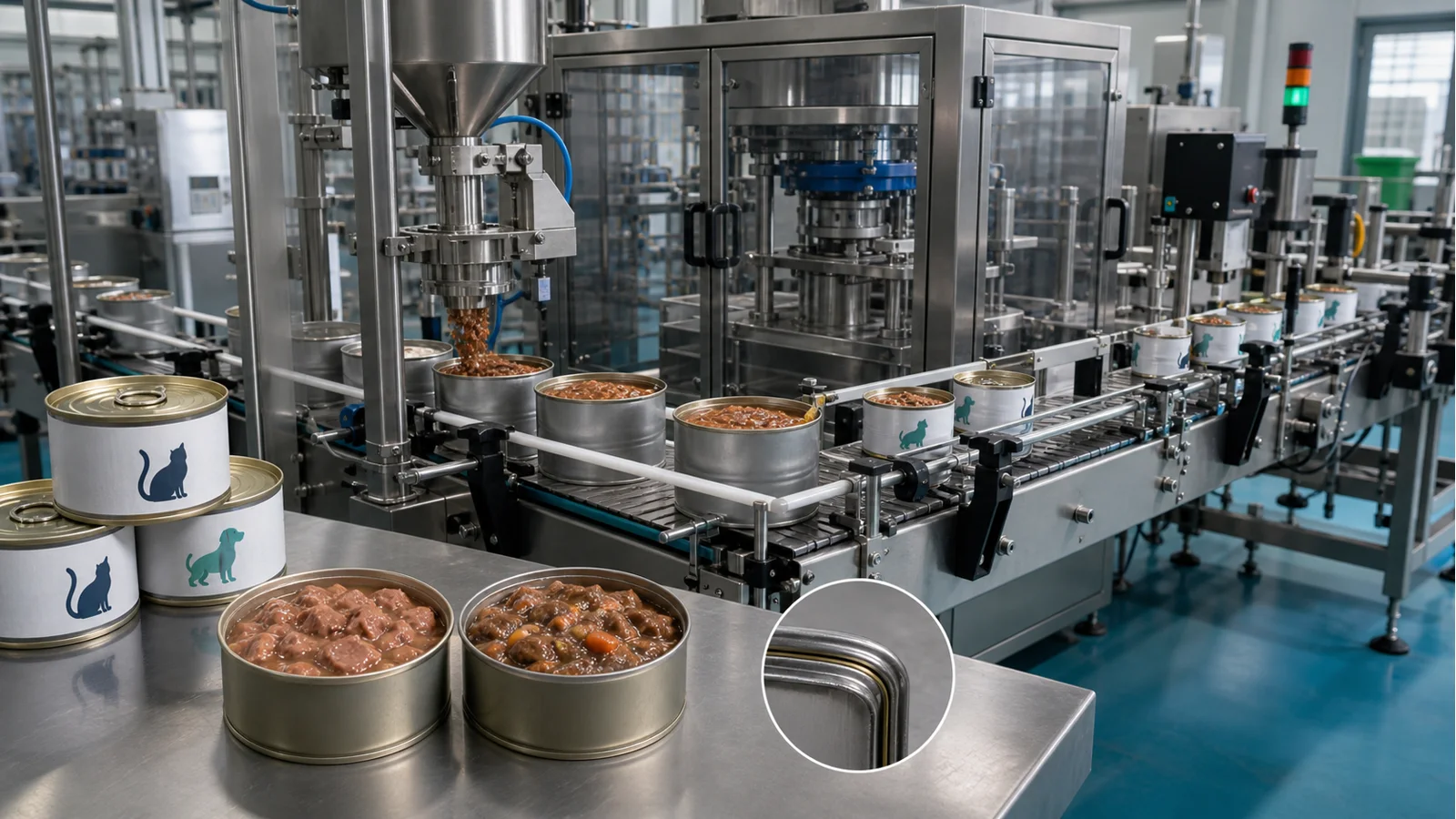
- The viscosity and particles of wet food, and the dust and metering method of dry food, first determine the filling machine; metal can seaming, plastic jar screw capping, and paper-plastic can aluminum foil heat sealing cannot replace each other. Labeling, coding, and inspection should be configured after the main seal is verified.
Solution summary prepared for you
- Pet food canning first divides wet and dry food, then metal cans, threaded plastic cans, and heat sealing film paper-plastic cans; the three primary sealing methods are not interchangeable.
- Wet food can use a piston filling machine for sauces; dry food depends on a powder/granule filling machine. Then connect to an in-line automatic can seamer, automatic screw capping machine, or large-diameter heat sealing machine respecti...
- After providing contents, can body, lid or film, target fill volume, and quality rules, configure labeling, coding, and in-line checkweighing vision downstream.
Route comparison
- Suitable for projects that have confirmed metal cans and double seaming lids and need to fill wet food or sauce-like products that can pass through a piston structure.
- A piston filling machine for sauces can test with wet food flow and particle state, while an in-line automatic can seamer performs double seaming for metal can lids.
- Lid structure, seaming rolls, and content particles need complete verification; after double seaming, sealing must still be checked by the project method.
- When packaging uses threaded plastic cans or independent aluminum foil heat sealing film, a metal can double seaming machine should not be selected.
- Build the metal can route in the order of wet food actual filling, can mouth cleanliness inspection, and in-line automatic double seaming.
- Suitable for orders of granular or powdered pet food using threaded plastic cans and requiring a resealable outer cap.
- A powder/granule filling machine handles dry food metering, and an automatic screw capping machine completes closure according to the threads and lid type of the plastic wide-mouth jar.
- Dust, particle breakage, rim residue, and thread engagement all need actual testing; results from a wet food line cannot be extrapolated.
- If dry food still has bridging or unstable metering, or the container actually uses a double seaming lid, the screw capping route should not be frozen first.
- Arrange dry food metering, rim dedusting or inspection, and automatic screw capping as continuous stations, then add labeling as needed.
- Suitable for projects where paper or plastic wide-mouth cans use an independent aluminum foil film as the primary closure and formal film samples have been provided.
- A large-diameter heat sealing machine can verify aluminum foil film covering and pressing on paper or plastic can rims, without mixing double seaming structures.
- Rim flatness, film heat seal layer, and contamination state change the seal; how the outer cap closes must be defined separately per order.
- When metal cans require double seaming, or screw caps already serve as the primary seal without an independent film requirement, do not add a heat sealing film station.
- Perform heat sealing with the formal can-film combination; after primary sealing passes, connect labeling, coding, and in-line checkweighing vision systems.
Associated Equipment / Consumables
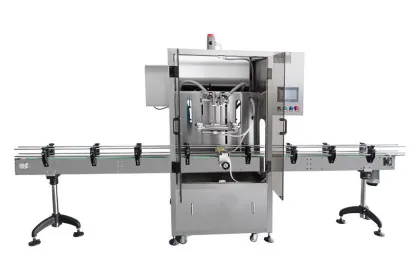 Servo Piston Liquid and Paste Filling Machine
The machine meters flowable liquids or viscous products within a trial-proven range; it is not universal for every liquid. Use the actual product and minimum/maximum container and dose to validate foam, stringing, par...
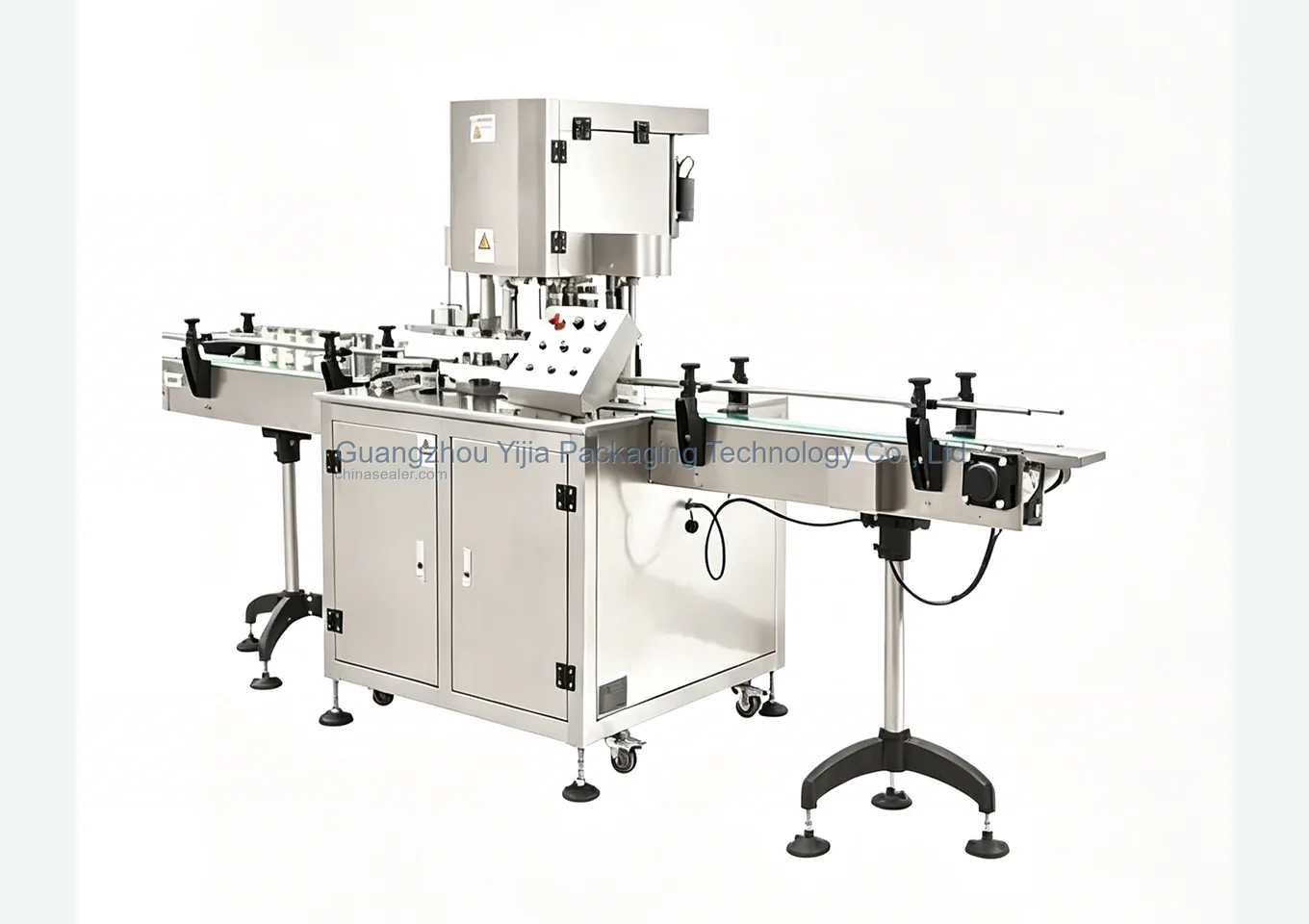 Inline Automatic Can Seaming Machine
Wet and dry food metering branch; The two types of contents use different metering structures; they cannot share filling assumptions just because both are pet food; Piston filling...
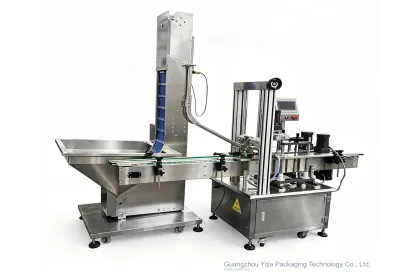 Automatic Screw Capping Machine
Metal can double seaming primary sealing; Double seaming quality must be judged by the inspection method agreed in the project; appearance alone cannot replace seal verification; In-li...
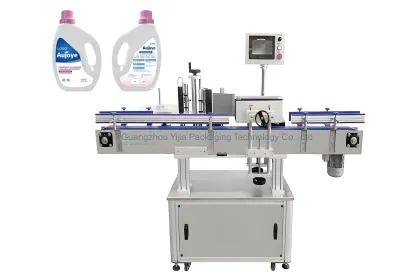 Round-Bottle and Front/Back Labelling Machine
Can body labeling and quality downstream; Label layout, coding position, inspection objects, and exception handling must be signed off separately; Round/square bottle lab...
Core process
For wet food, first confirm viscosity, particles, and can mouth contamination risk; for dry food, check particle size, dust, and bulk state, then choose piston filling for sauces or powder/granule filling.
Metal cans are double seamed with the can body and lid using an in-line automatic can seamer. Can diameter, lid type, and seaming profile must be confirmed with complete samples.
Plastic wide-mouth jars with threaded outer caps are closed by an automatic screw capping machine. Rim cleanliness, thread engagement, and cap inner structure all affect the result.
For paper or plastic cans using an independent aluminum foil film over the rim, a large-diameter drum heat sealing machine can test the film, press, and verify peel state.
First determine primary sealing with the can body, lid, and contents, then arrange labeling, coding, and in-line checkweighing vision inspection to avoid downstream masking sealing issues.
Submit filled can samples to jointly verify filling drop point, rim cleanliness, can lid or film fit, and finished product orientation during conveying.
Sample details
Specify whether it is wet food meat sauce, semi-fluid with particles, or dry food granules or powder, so the metering structure can be selected first.
Representative contents, flow or particle size state, fill volume, dust, and cleaning requirementsConfirm whether it is a metal can, plastic threaded can, or paper-plastic can, and submit the rim and bottom structure for positioning.
Empty and filled cans, material identification, rim dimensions, can body seams, and standing stateDouble seaming lids, screw caps, and heat-sealed aluminum foil film must be provided as a complete set with the corresponding can body; diameter alone cannot replace them.
Formal can lids, gaskets, or film materials, assembly direction, opening requirements, and sealing samplesList the delivery scope of metering, primary sealing, labeling and coding, and inspection, then verify the complete station cycle time with the main can.
Target cycle time, shifts, automation scope, inspection objects, and exception handling rulesWhen information is incomplete, provide photos and material descriptions first to determine the equipment branch; formal tooling and acceptance conclusions await sample completion.
Existing photos, key dimensions, packaging goals, project stage, and expected sample shipping timeCommon selection mistakes
Wet and dry food have different metering and cleaning challenges. Choosing a filling machine only by the can leaves material flow out of the solution.
Metal can double seaming depends on the lid curl structure, plastic can screw capping depends on threads, and paper-plastic can heat sealing film depends on a flat rim. They are not interchangeable.
Wet food on the can mouth can affect double seaming, cap gaskets, or heat sealing film contact. Filling drop point and cleaning inspection need to be verified together.
Purchasing tooling before the lid type and film are frozen may later change seaming rolls, capping chucks, or heat sealing contact surfaces.
Labeling, coding, and inspection work after primary sealing and cannot compensate for unstable double seaming, screw capping, or heat sealing film.
View detailed technical notes
First Separate the Filling Content and Container Material
Pet food canning is not a one-size-fits-all line. Wet and dry food first determine the metering structure, then metal cans, threaded plastic cans, or paper-plastic cans determine the primary sealing: double seaming, screw capping, or heat sealing film.
Wet and Dry Food Cannot Share the Same Metering Assumptions
Piston filling machines for sauces handle wet food that can pass through the actual valve path, while powder and granule filling machines are for dry food. Granules, dust, and cleaning boundaries must be confirmed with samples.
The Core of the Metal Can Route Is Seaming
Metal cans and seaming lids form a mechanical folded-edge structure, so an online automatic can seamer should be used for trial seaming, and acceptance should follow the agreed cross-section or sealing method. For wet food filling, also observe particle passage and residual material at the can mouth; seaming rolls, can diameter, and lid must not be matched only by nominal dimensions.
Dry Food Plastic Jars Are Organized Around Screw Capping
If plastic wide-mouth jars use screw caps, an automatic screw capping machine completes the closure. For dry food, first verify metering and dust with a powder and granule filling machine, then simultaneously observe bottle body support, residual material at the jar mouth, and thread fit; do not apply the wet food metal can route.
Heat-Sealed Film Is the Third Type of Jar Mouth Structure
When paper cans or plastic jars use a separate aluminum foil seal, a large-diameter heat sealing machine performs trial sealing according to the rim and film material. This process differs from induction sealing with a cap liner. The sealing contact surface, film heat-seal layer, and content contamination must be recorded; if an outer lid action exists, it is defined separately.
Filling and Sealing Affect Each Other Through the Rim
Whether wet or dry food, the filling drop point should avoid the main sealing contact surface. The cleanliness of the jar mouth must be recorded during continuous trial runs.
Labeling and Inspection Are Placed After Sealing
Body labeling and date coding are arranged after the main seal is stable; online checkweighing and vision systems inspect according to clear weight, lid, or appearance rules.
Complete Samples Are More Valuable Than General Parameters
When discussing the solution, provide the contents, container body, lid or film, main fill volume, target speed, and inspection requirements at the same time, so the three routes can be accurately separated.
Before Sample Confirmation, Only Directional Solutions Are Provided
When formal samples are not yet determined, the equipment branch can be judged first; seaming, screw capping, heat-sealed film effects, and production capacity remain as test confirmation items.
Common questions
How do you build an effective list for pet food canning equipment?
The equipment scope depends on the metering of wet or dry food, the can material and lid type, the primary sealing method, the labeling and inspection range, and the line integration conditions. First break down the route based on actual can samples, then form a comparable list.
How should the target canning speed be confirmed?
Use the main can and contents to test metering, can mouth cleaning, double seaming or screw capping, and downstream conveying at each station, and determine the acceptable cycle time from a complete run.
Can a solution be made without can and lid samples?
Preliminary branches can be given based on photos, dimensions, materials, and content descriptions, but seaming rolls, capping chucks, heat sealing dies, and final sealing results must be verified with actual samples.
Which is more suitable: double seaming, screw capping, or heat sealing film?
They cannot be simply compared. Metal can double seaming, plastic can screw capping, and paper-plastic can heat sealing film are different primary sealing logics. First select the correct process based on container structure, then verify the target packaging.
Can the same labeling machine handle both metal and plastic cans?
It can be evaluated, but metal and plastic surfaces, can body seams, and curvature affect can holding and label adhesion, so formal labels need to be test-applied separately.
Can pet food canning be integrated in stages?
Metering and primary sealing sample verification can be done first, then coding, labeling, and checkweighing vision equipment can be added based on stable orders. During layout, reserve spacing and signal interfaces.