Solution topic
Pizza Tray Sealing: Multi-Compartment Heat Sealing, MAP and Pre-Cut Film Routes
Ordinary food trays can be edge-sealed on a multi-compartment tabletop machine. When gas replacement inside the tray is needed, use a tray MAP solution; pre-cut film trays are hand
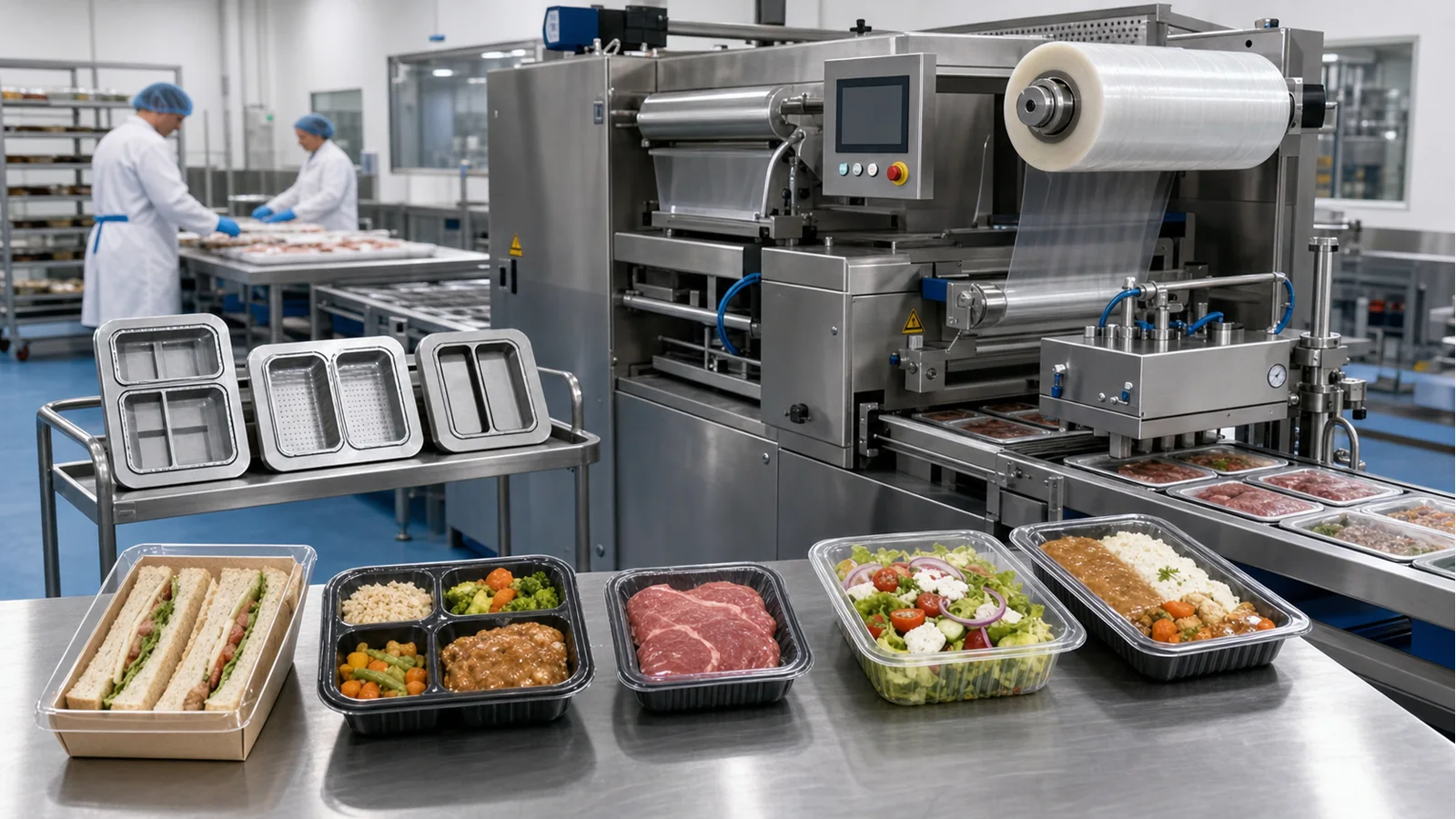
- Whether pizza trays, fresh-cut fruit trays, or cooked food trays need gas replacement determines the sealing structure. A flat tray rim, the heat-seal layer of the film, and the risk of contents contaminating the edge should also be checked during tray trials.
Solution summary prepared for you
- For pizza or deli trays, first confirm the box mouth, film material, content height, and whether MAP is needed, then choose multi-compartment heat sealing, MAP, or pre-cut sheet film equipment.
- For conventional meal boxes, consider a tabletop multi-compartment meal box sealing machine. For gas flushing requirements, look at a tray-type MAP sealing machine; for automatic sheet film pick-and-place, a dedicated tray sealing machin...
- After providing the box body, lidding film, filled box, and sales packaging requirements, the mold, sealing edge, sheet film registration, coding, and inspection positions can be verified.
Route comparison
- Suitable for pizza or cooked food products that value easy opening and content display, and where packaging regulations allow snap-on lid structures.
- Transparent snap-on lids or blister trays are convenient for direct food display, and the packaging structure is relatively intuitive.
- The sealing and compression resistance of a snap-on lid alone need physical verification and cannot replace film sealing with clear requirements.
- When there are clear requirements for leak prevention, gas replacement, or long-distance distribution, ordinary snap-on lids alone should not be relied upon.
- First confirm the lid structure. If sealing, date coding, or outer case handling is also needed, add tray sealing and downstream equipment separately.
- Suitable for pizza and cooked food trays that require continuous edge sealing, uniform film surface, and convenient subsequent coding.
- After heat sealing, the tray surface is neat, the film surface can be coded, and the risk of loose lids is reduced.
- Tray material, rim rib positions, the heat-seal layer of the film, and content edge contamination all affect the sealing result.
- When the tray rim is deformed, contents protrude above the sealing edge, or the tray and film are not yet matched, direct continuous sealing should not be performed.
- Ordinary food trays are heat-sealed by a tabletop multi-compartment tray sealing machine. When pre-cut film is used, switch to an automatic pre-cut film pick-and-place tray sealing machine.
- Suitable for tray projects that have already specified gas replacement and refrigerated display requirements and are willing to verify with product and packaging materials.
- The MAP route can perform gas replacement during sealing, but shelf life performance still depends on the food, film, and cold chain.
- The tray and film barrier properties, gas scheme, seal acceptance criteria, and cold chain transport conditions must be determined simultaneously.
- When the product only needs conventional heat sealing or the MAP target is not yet defined, MAP equipment should not be locked in first.
- Once MAP requirements are clear, use a tray MAP sealing machine and determine gas supply, barrier film, and post-sealing inspection according to the project.
Associated Equipment / Consumables
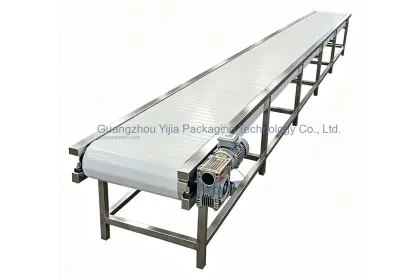 Food Packaging Conveyor and Buffer Line
The line conveys, spaces, buffers, turns and changes height between packaging operations. It is not a generic belt purchased by length. Validate contact risk, base and centre of gravity, wet or shedding packs, upstrea...
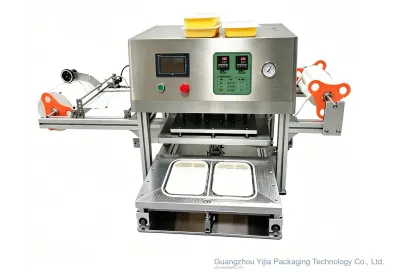 Tabletop Multi-Compartment Meal Tray Sealer
Desktop Multi-Compartment Lunch Box Sealer: Empty box supply; Box feeding rhythm should follow the sealing cycle to avoid boxes squeezing each other or accumulating before the mold; Food-grade conveyor line
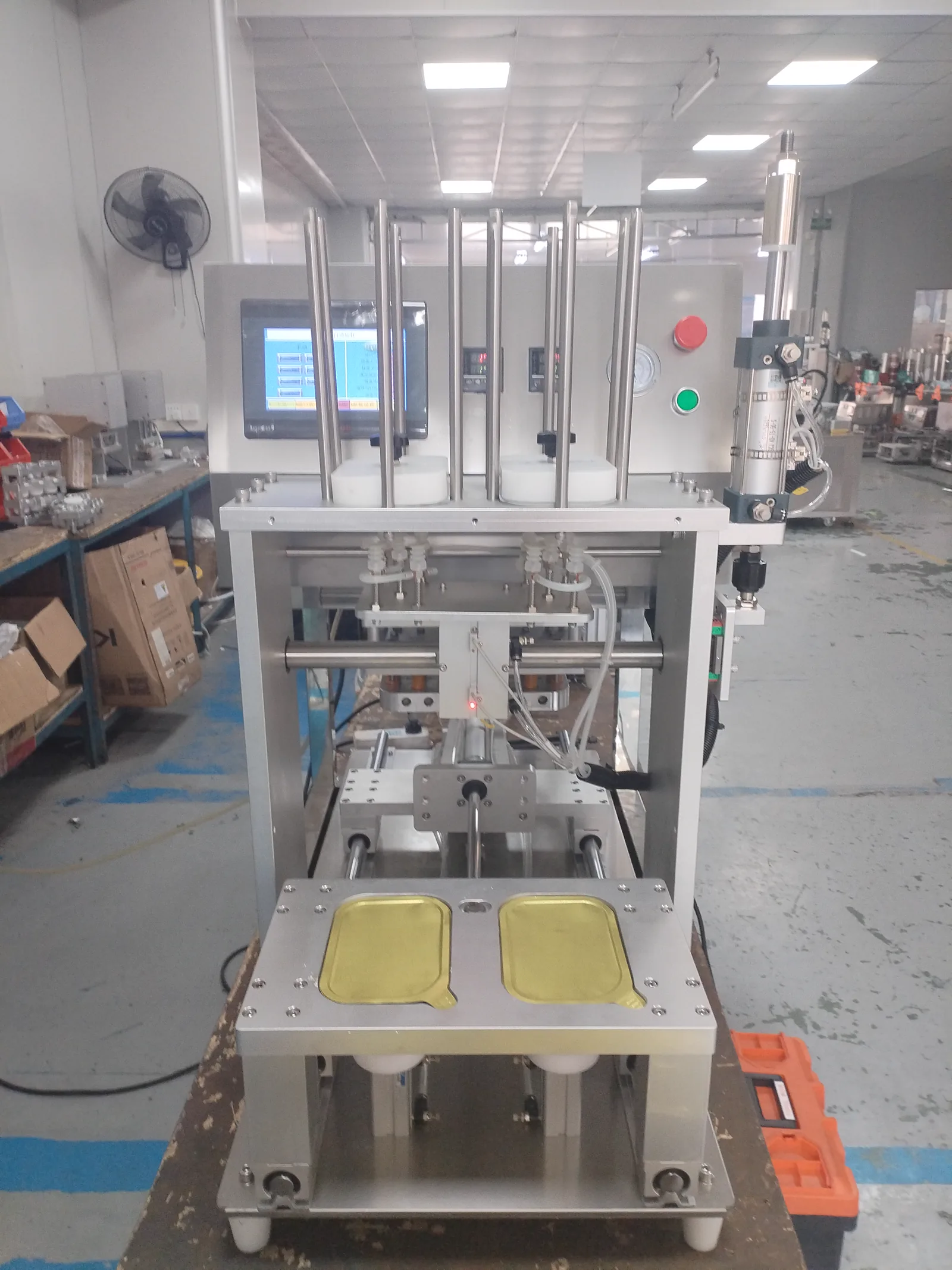 Automatic Pre-Cut Lid Pick-and-Place Tray Sealer
Automatic pre-cut film pick-and-place tray sealing machine: Tray sealing main machine; Choose one according to the process: tabletop multi-compartment meal box sealing machine, tray-type MAP sealing machine, or automa...
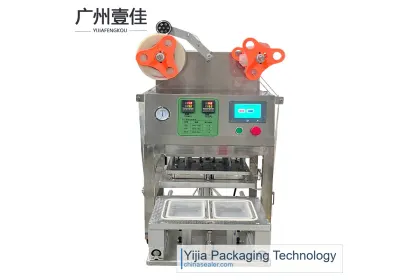 Benchtop Roll-Film Tray Sealing Machine
Tray sealing main machine; Choose one according to the process: tabletop multi-compartment meal box sealing machine, tray-type MAP sealing machine, or automatic pre-cut sheet f...
Core process
Empty boxes can be delivered to the sealing station by a food-grade conveyor line; manual placement should also follow a unified entry direction.
Conventional heat sealing, MAP, and pre-cut sheet film correspond to different core equipment; do not select based only on box shape.
A date/batch inkjet coder can write traceability information on suitable film surfaces or label areas after sealing.
The labeling method on retail box surfaces needs separate confirmation. Outer cartons can be handled by the case sealing and outer carton labeling line.
The in-line checkweighing and vision inspection system can verify defined weight and sealing edge defects.
When carton shipment is needed, verify the case packing method, case sealing action, and outer carton label position.
Sealing film, sealing rings, cleaning consumables, and coding consumables must all be verified with formal box samples.
Sample details
Specify whether the product is pizza, fresh-cut fruit, or deli food, and describe sales methods such as in-store fresh preparation, cold chain delivery, or supermarket display.
Product photos in boxes, sales channels, cold chain and transport conditions, sealing or MAP goals.Box mouth shape, ribs, flatness, and content height affect mold force and sealing edge continuity; measure with actual boxes.
Empty boxes, filled boxes, box mouth dimensions, rim structure, list of different specifications.For lidding film, check heat seal layer, thickness, roll or sheet form. Sauce, grease, or debris on the rim should also be included in trial sealing.
Formal film samples, box material description, content status, rim contamination, MAP requirements.List each station from box placement, sealing, coding, checkweighing or visual inspection to case packing, to clarify the main machine and downstream options.
Manual box placement method, intended sealing process, coding content, inspection items, case packing arrangement.Target cycle time, available workshop space, box type changeover, and utilities jointly affect equipment layout and quotation scope.
Target cycle time, site dimensions, conveying direction, utilities, box changeover frequency, and delivery schedule.Common selection mistakes
Pizza tray boxes rely on sealing between the box mouth and film; screw capping equipment cannot perform this process.
Treating MAP as the default for all food boxes ignores actual sales cycles and packaging material conditions.
A single action of the sealing machine cannot represent the full line output; placing boxes, removing boxes, coding, and inspection all take time.
If multiple box types lack corresponding molds and changeover plans, temporary adjustments will affect sealing edges and production scheduling.
If speed and spacing are not coordinated among sealing, coding, checkweighing, and case packing sections, boxes can accumulate at the interfaces.
View detailed technical notes
First distinguish between ordinary heat sealing and MAP
After pizza, fresh-cut fruit, or cooked food is packed into trays, first determine whether only edge sealing is needed or gas replacement is required. A flat tray rim, the heat-seal layer of the film, and whether the contents touch the edge all need to be confirmed through sample trials after loading to set the sealing parameters.
The three tray sealing routes each have their boundaries
Conventional multi-compartment trays can be handled by a tabletop multi-compartment tray sealing machine. When MAP is specified, use a tray MAP sealing machine. If pre-cut film is used and automatic film separation, placement, and sealing are desired, choose an automatic pre-cut film pick-and-place tray sealing machine. The tooling, film supply, and utilities of the three routes differ and cannot be substituted based on unverified general speeds.
Arrange identification and inspection after the main machine
After the main machine is determined, the date/batch inkjet coder handles post-sealing identification, and inline checkweighing and vision inspection systems can recheck according to agreed weight and sealing edge standards. Food-grade conveying lines, food metal detectors, and case sealing and outer case labeling lines are selected separately based on production and delivery needs.
Single machine action cannot represent real output
Sampling or store use does not mean only one automation level is possible, and continuous production cannot be judged by a single speed figure. Manual tray loading, sealing cycle, tray removal, mold change, and downstream waiting should all be compared in the same takt time table.
MAP is determined by shelf life goals and packaging materials together
Whether MAP is suitable must be judged by the product recipe, sales packaging, cold storage conditions, tray and film barrier properties, and the target. The tray MAP sealing machine provides the gas replacement process, but the specific shelf life still needs to be confirmed through complete packaging and storage and transport trials. Ordinary heat sealing projects also do not need to force MAP just to be 'more advanced'.
Multiple tray types need separate mold confirmation
Different pizza trays, fresh-cut fruit trays, or cooked food trays need to have their rim contours and rib positions checked separately. The changeover plan should state which molds to change, how to position the film, and how to recheck the seal edge after adjustment. Changeover time should be evaluated after the plan is confirmed.
Exclude bottle, cup, and capsule equipment
Bottle screw capping, small cup filling and sealing, and coffee capsule equipment have different container positioning methods and should not replace the pizza tray sealing main machine. Even if they are all food packaging, the sealing process of the tray rim and lid film must be the starting point for machine selection.
Post-sealing coding, recheck, and carton downstream
After sealing, date/batch coding can be arranged first, then weight or seal edge appearance recheck can be added according to acceptance requirements. When carton shipment is needed, case sealing and outer case labeling lines are evaluated as a separate downstream process. Equipment is connected by food-grade conveying lines according to the layout.
Choose lid film and consumables according to tray material
Transparent film, easy-tear film, aluminum foil film, and MAP film have different roles in display, opening, and barrier. All films should be trial-sealed with the actual tray material, and inkjet adhesion, sealing rings, and changeover parts should also be checked for compatibility.
Common questions
Does a pizza tray box always require modified atmosphere packaging?
Not necessarily. Only consider a tray-type MAP sealing machine if the retail packaging explicitly requires gas flushing. For ordinary sealing, first verify the heat sealing route.
How to distinguish transparent film, easy-peel film, and MAP film?
First match the heat seal layer of the film with the box material, then choose transparent film, easy-peel film, aluminum foil film, or MAP film based on display, opening, and gas barrier requirements.
Is there a unified minimum order quantity for equipment and sealing film?
The equipment scope is determined by project conditions. The purchase volume of sealing film is determined by film specifications and supply conditions, and cannot be answered with a universal quantity.
Can date marking be connected after sealing?
Yes. A date/batch inkjet coder can be connected after sealing, and outer carton marking is arranged according to the case packing plan. Before line integration, check the conveying direction and signals.
How long does it take to change pizza box specifications?
It depends on the box type, mold structure, and adjustment items. Only after providing all box samples can the changeover actions and required parts be evaluated.
Are the utilities for ordinary heat sealing and MAP equipment the same?
Utilities are determined by machine type and process. The MAP branch also needs to check the gas supply plan, while ordinary heat sealing equipment is based on final equipment documentation.