Solution topic
How to Choose Sandwich Box Sealing and Packaging Solution? Start With Fresh-keeping Target, Box Structure and Serving Method
For sandwich box sealing packaging solution, first confirm container, material, film, cap type, capacity, and on-site line integration needs. The equipment route includes sample and container confirmation, main sealing equipment, post-sealing marking and inspection. Submit sample photos, dimensions, and target capacity to facilitate equipment matching and quotation.
- For sandwich packaging, first confirm chilled storage condition, freshness target, display method, and meal output, then decide between tray sealing, MAP freshness packaging, or bag packaging.
- How to Choose a Sealing and Packaging Solution for Sandwich Boxes
Real customer question
We make sandwiches and are looking for sealing packaging equipment, but don't know which sealing method to choose. What information do we need to understand first?
First determine the packaging route
For sandwich packaging, first confirm chilled storage condition, freshness target, display method, and meal output, then decide between tray sealing, MAP freshness packaging, or bag packaging.
Ordinary heat sealing route
Suitable for: Sandwiches for same-day sale or short-distance delivery, no shelf-life extension needed, only dust and contamination protection. Advantages: Simple equipment, low film cost, quick changeover. Limitations: Box mouth dimensions and film compatibility must be confirmed; sealing effect requires sample testing. Not recommended: When extended shelf life or refrigerated transport over 3 days is needed, evaluate MAP route. Equipment direction: Tabletop multi-compartment tray sealer or preformed tray sealer, custom mold per box type.
MAP M A P Fresh-keeping Sealing Route
Suitable for: sandwiches requiring a shelf life of 3-7 days, such as refrigerated retail and convenience store distribution. Advantages: reduces oxidation through gas flushing, extending shelf life. Limitations: requires testing of gas ratios and film barrier properties; higher equipment investment. Not recommended: for same-day sale or short-shelf-life products, MAP cost is not justified. Equipment direction: tray MAP sealer, can use roll film or pre-cut film, mold required per tray shape.
Rotary Multi-Station Sealing Route
Suitable for: High capacity (over 1200 boxes per hour), projects requiring automatic box feeding, sealing, and output in a line. Advantages: Continuous production, reduced labor, suitable for large-volume orders. Limitations: Higher mold cost, longer changeover time, suitable for single-specification high volume. Not recommended: For multi-specification small batch production, frequent changeover is uneconomical. Equipment direction: Rotary multi-station sealing machine, can be integrated with filling, coding, and conveying.
Recommended equipment route: Sample and container confirmation
Use actual samples to confirm box opening size, film compatibility, and sealing parameter range.
Recommended Equipment Route: Main Sealing Equipment
Choose standard heat sealing or MAP sealing according to shelf-life target and capacity.
Recommended Equipment Route: Downstream Marking and Inspection
Print production date and batch number; labeling helps traceability and product display.
Route comparison
- For sandwiches sold the same day or delivered short distances, dust and contamination protection may be enough without shelf-life extension.
- simple equipment, low film cost and quick changeover.
- Confirm box opening size and film compatibility; sealing result needs sample testing.
- When shelf life needs to be extended or chilled transport exceeds 3 days, a MAP route is recommended.
- Desktop multi-compartment lunch box sealer or premade tray sealing machine, with tooling customized by box type.
- Suitable for sandwiches that need a 3-7 day freshness target, such as chilled retail or convenience-store delivery.
- reduce oxidation through gas flushing and extend freshness life.
- Gas ratio and film barrier performance need testing, and equipment investment is higher.
- For same-day sales or short freshness requirements, the cost of MAP is usually not worthwhile.
- Tray MAP sealing machine, with roll film or pre-cut film options, requires tooling according to tray shape.
- Suitable for projects above 1,200 boxes per hour that require automatic box dropping, sealing, and discharge integration.
- continuous production with less labor, suitable for large-volume orders.
- Tooling cost is higher and changeover takes longer, so it suits large batches with one main specification.
- frequent changeover is not cost-effective for small batches with many specifications.
- Rotary multi-station sealing machine, connectable with filling, coding, and conveyor line.
Core process
Associated Equipment / Consumables
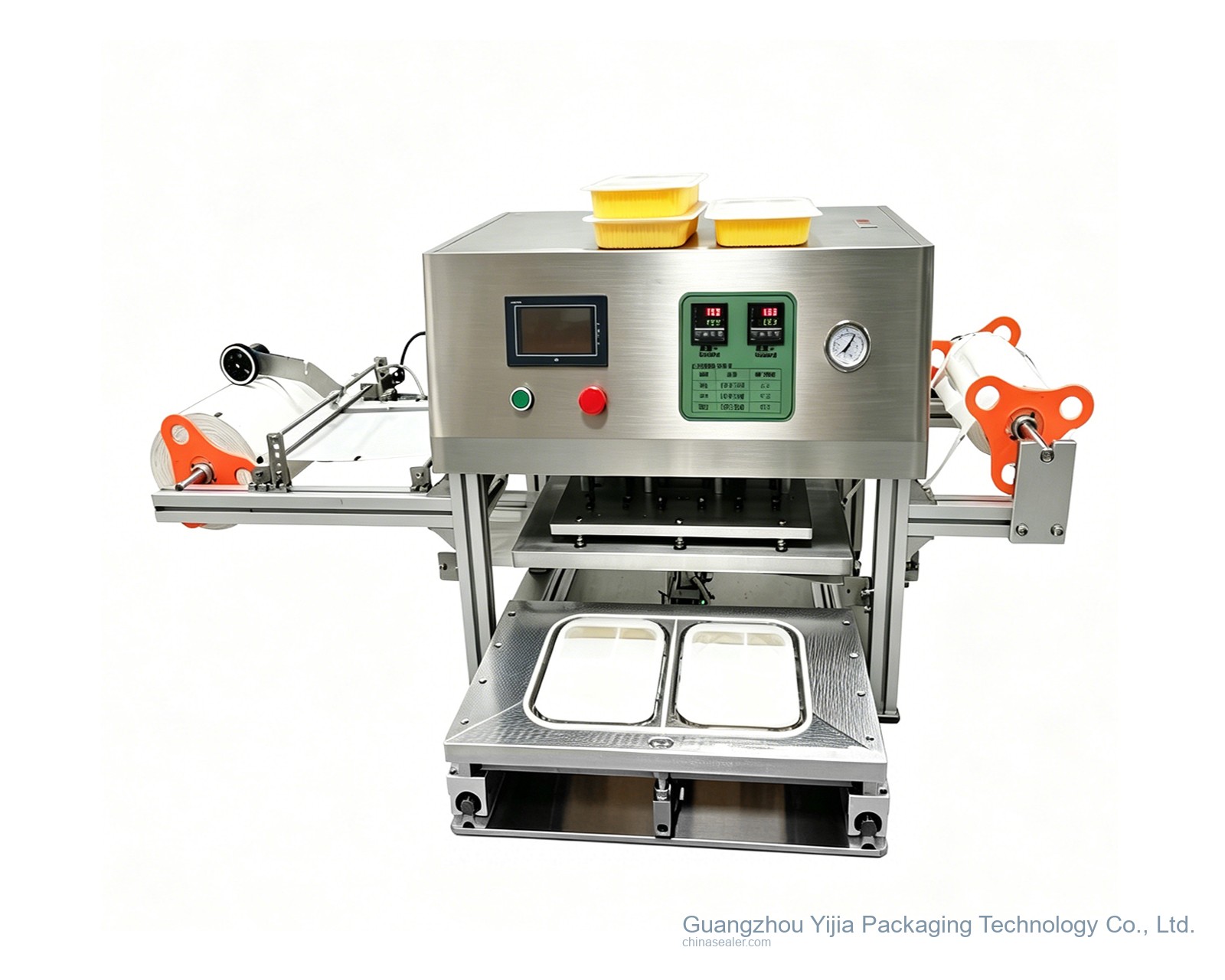 Desktop Multi-Compartment Lunch Box Sealer
Sample and container confirmation; Use actual samples to confirm box opening size, film compatibility, and sealing parameter range; Sandwich Tray Samples and Sealing Film Sa...
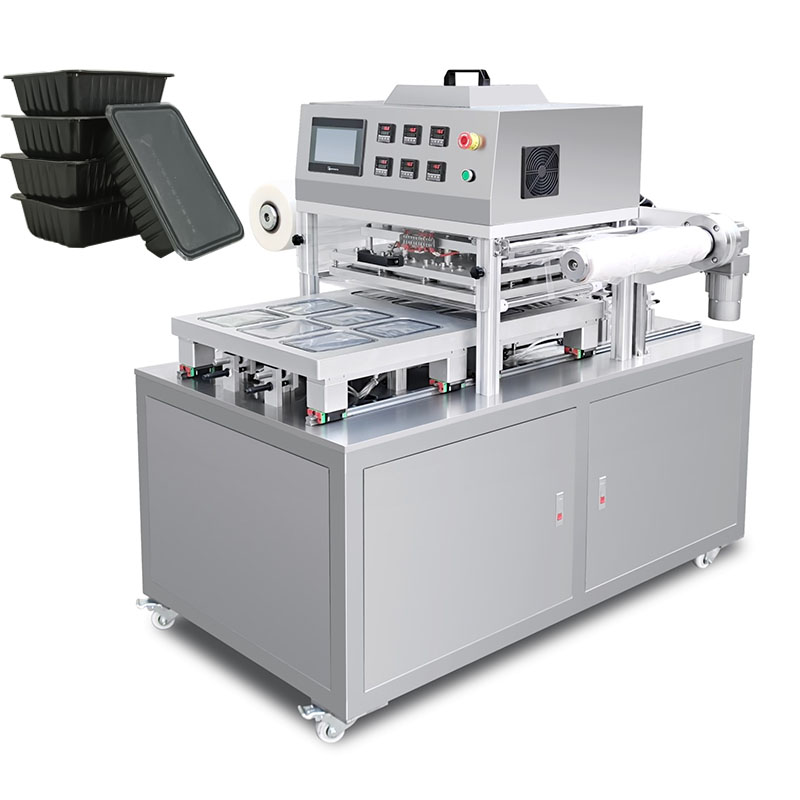 Tray MAP Sealer
Sample and container confirmation; Use actual samples to confirm box opening size, film compatibility, and sealing parameter range; Sandwich Tray Samples and Sealing Film Samples
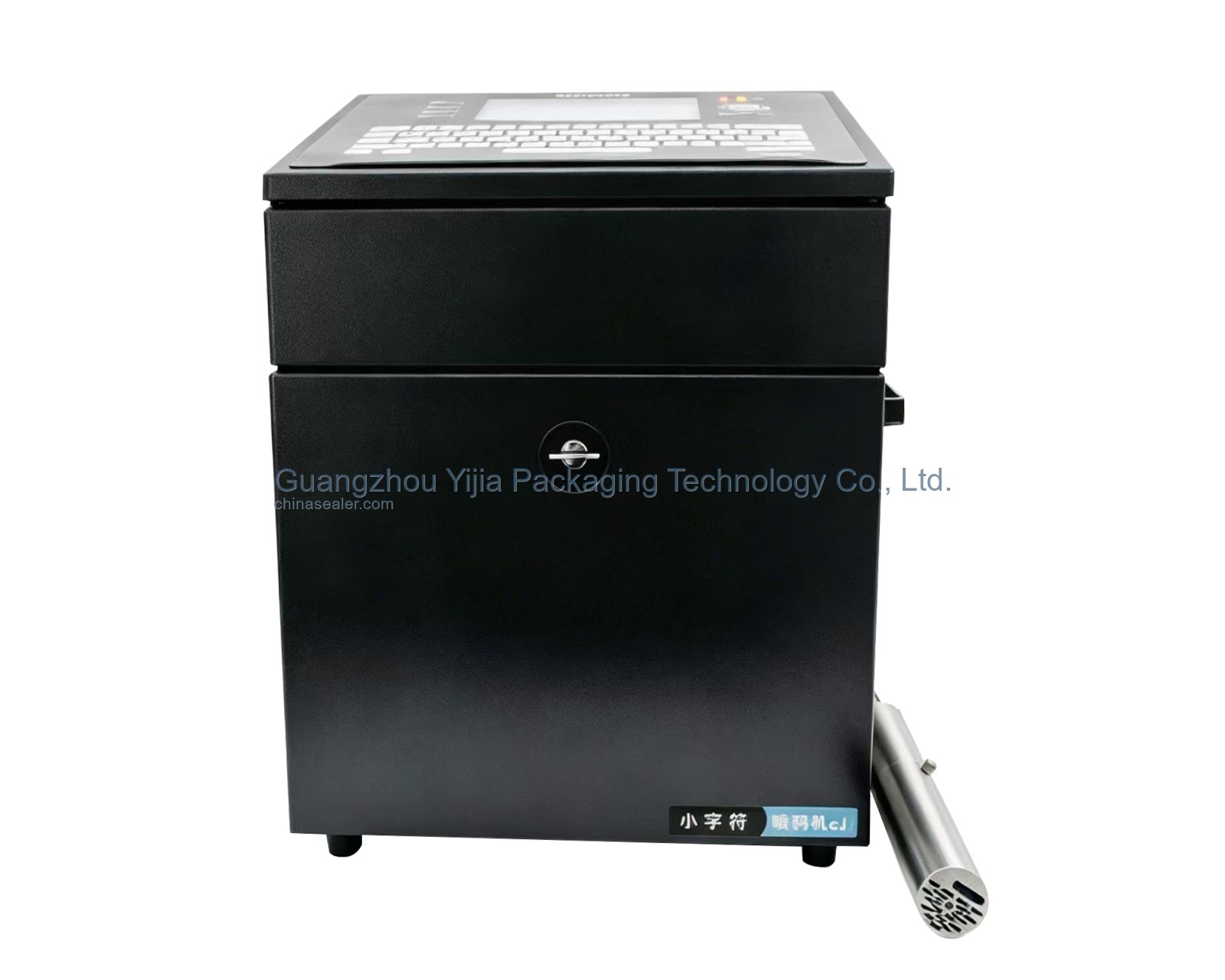 Date & Batch Inkjet Printer
Downstream Marking and Inspection; Print production date and batch number; labeling helps traceability and product display; Date/Batch Coding Machine and Round/Square Bottle Labeling Machine
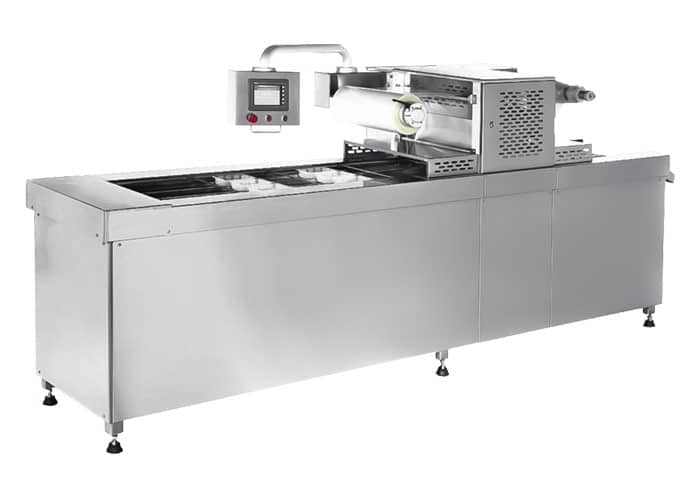 Preformed Tray Sealing Machine
Sample and container confirmation; Use actual samples to confirm box opening size, film compatibility, and sealing parameter range; Sandwich Tray Samples and Sealing Film Samples
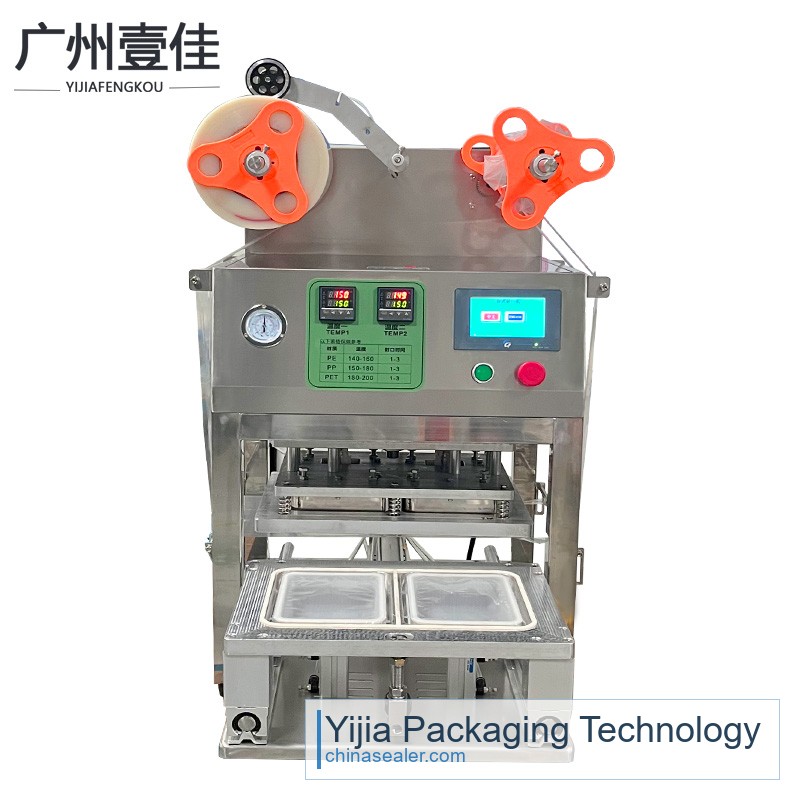 Bench-top Rollstock Tray Sealer
Sample and container confirmation; Use actual samples to confirm box opening size, film compatibility, and sealing parameter range; Sandwich Tray Samples and Sealing Film Samples
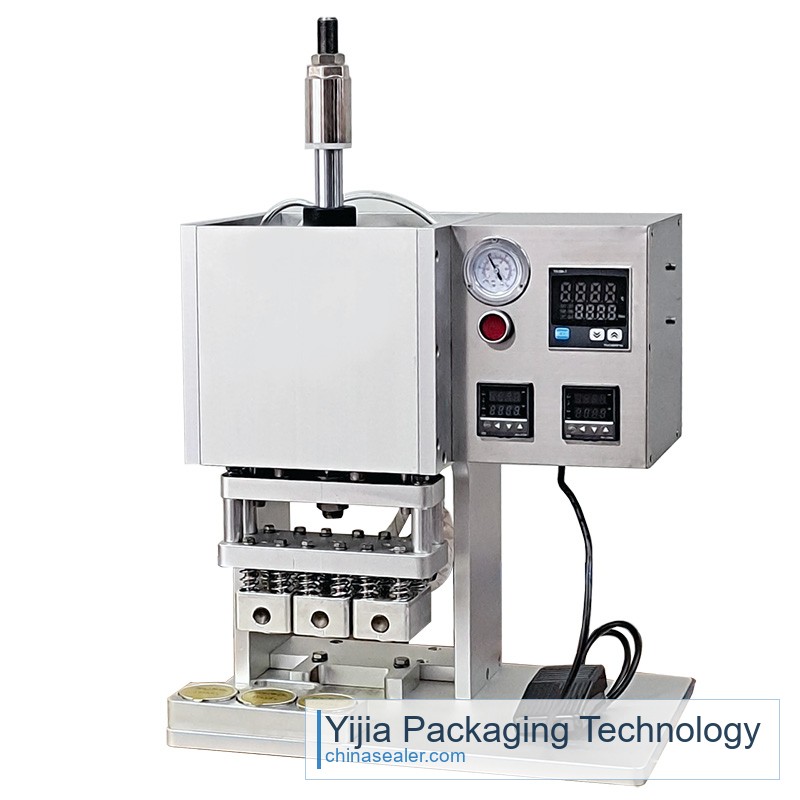 Small-Diameter Cup Sealer SGP-03
Sample and container confirmation; Use actual samples to confirm box opening size, film compatibility, and sealing parameter range; Sandwich Tray Samples and Sealing Film Samples
Sample details
Photos and dimensions can first determine container positioning, mold direction, and whether sample testing is needed.
Sandwich tray samples or photos and dimensions, including length, width, height, and rim width, are needed to confirm tooling and sealing range.Film material and liner affect sealing temperature, pressure, dwell time, and feeding method.
Film samples or specifications, including roll film or pre-cut film, material, and thickness, are used for sealing-parameter testing.Capacity target determines single machine, semi-automatic, or continuous inline configuration, and also affects the quotation range.
Target output, such as boxes per hour and daily production hours, affects station count and line-connection method.Incomplete information can still be submitted; we will first determine the packaging direction and then list items that need to be confirmed.
Freshness target, such as same-day sale, 3-day chilled storage, or 7-day chilled storage, determines whether MAP is needed.Site conditions affect electrical control, pneumatics, conveyor length, and safety protection configuration.
Site space photo or layout sketch helps judge equipment placement and line feasibility.Common selection mistakes
Common questions
Yes. First send photos of the tray, approximate dimensions, preservation goals, and capacity. We will determine the approach and then list the additional samples needed.
Tray samples or dimensions, film samples, target output, freshness requirements, and site-space information are needed.
Target output changes the number of stations and line integration method; low volume uses benchtop, high volume requires evaluation of rotary or automatic line.
Different films produce different sealing temperature, pressure, and seal results. Parameters must be tested against the box rim.
Use real containers and film for sealing tests to check seal uniformity and peel strength.
If filling is upstream, or coding, labeling, and checkweighing are needed downstream, and output is high, a line-integrated solution should be evaluated.