Solution topic
Tube Sealer or Filling-Sealing Line? Choose by Incoming Tube, Material and Coding Requirement
Compare tail sealing and coding standalone machines, semi-automatic and fully automatic filling-sealing equipment based on whether the incoming tubes are empty or pre-filled, and e
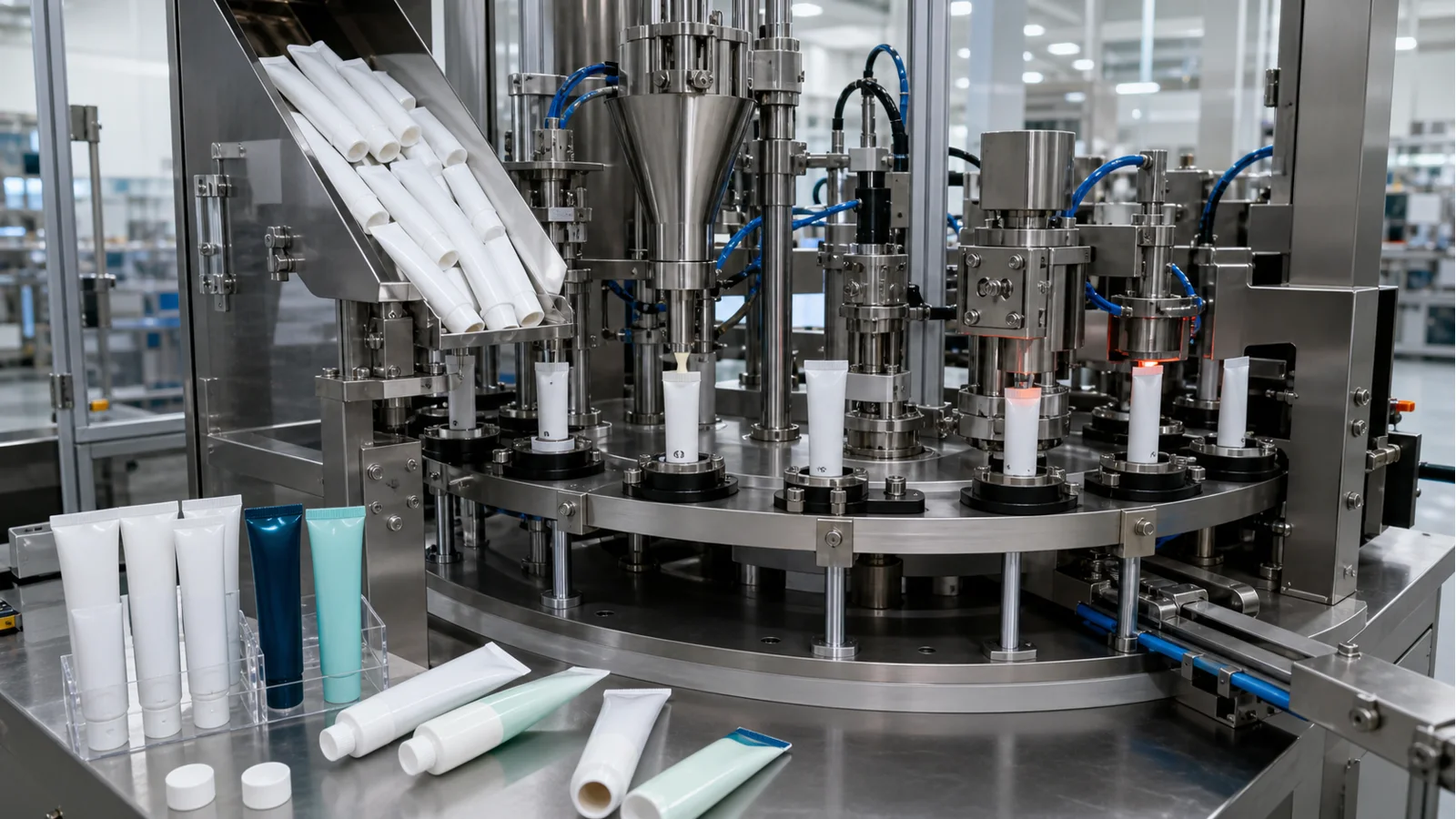
- Pre-filled tubes only need tail sealing and coding, while empty tubes require tube feeding, quantitative filling, and tail sealing. Semi-automatic equipment suits small batches with multiple specifications; special caps or special tube bodies require separate positioning verification.
Solution summary prepared for you
- Pre-filled tubes only need a tube tail sealing and coding machine. Empty tubes choose a semi-automatic or fully automatic tube filling and tail sealing machine based on order and labor organization.
- Tube material, diameter, contents, and tail allowance together determine filling and tail sealing samples. Do not select a machine only by the name plastic tube or aluminum-plastic tube.
- Special caps and continuous conveying are independent extensions. Date characters are verified separately by tail seal embossing or additional inkjet coding position.
Route comparison
- Suitable for multi-specification tubes that have already been filled upstream and need independent tail sealing, batch coding, and edge trimming.
- The tail sealing standalone machine retains the original filling process and only handles the tail and batch code of already-filled tubes.
- Does not include volumetric filling before tube feeding. Incoming fill volume, closing, and tail area condition are the responsibility of the upstream.
- When the project starts from empty tubes and there is no other filling equipment, configuring only a tail sealing and coding machine lacks the content filling process.
- Use a tube tail sealing and coding machine, and verify tail cleanliness, sealing, coding, and edge trimming with actual pre-filled tubes.
- Suitable for paste, lotion, or other tested materials that need continuous filling and tail sealing from empty tubes.
- The filling and tail sealing main machine organizes empty tube feeding, volumetric filling, and tail sealing into one process, making it easy to accept against the same finished sample.
- Contents, tube material, diameter, tail sealing, and cleaning all require sampling. Fully automatic main machines also need clear changeover and abnormal recovery procedures.
- When tubes are already filled upstream and only lack tail sealing and coding, do not duplicate the filling main machine.
- For multi-specification or manual-assisted projects, use a semi-automatic tube filling and tail sealing machine. For stable continuous orders, evaluate a fully automatic tube filling and tail sealing machine.
- Suitable for projects with special cap or tube body orientation, and where the main tail sealing route and downstream character requirements are already defined.
- Special fixtures and cap feeding designs can establish orientation and assembly samples around flip caps, nozzle caps, or pump heads.
- Special caps require complete verification of cap and tube body. Conveying and additional inkjet coding cannot replace filling or tail sealing acceptance.
- When standard caps can be handled stably within the established main machine and no special cap feeding positioning is needed, do not add a special cap station.
- Use a special cap tube sealing solution based on the cap type. After the main process is stable, evaluate the automatic feeding, conveying, and sealing line and the date/batch inkjet coder.
Associated Equipment / Consumables
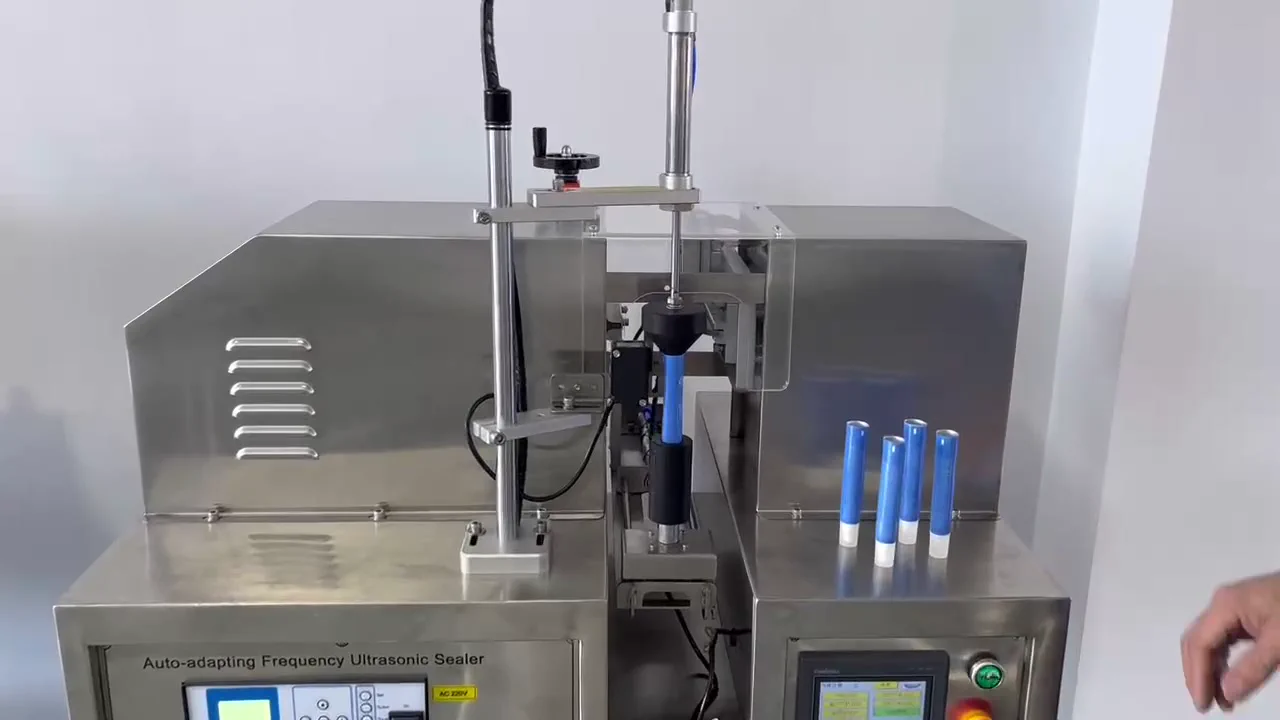 Ultrasonic Tube Sealing Machine
Ultrasonic end sealing for filled plastic or laminate tubes, with optional registration, batch coding and trimming.
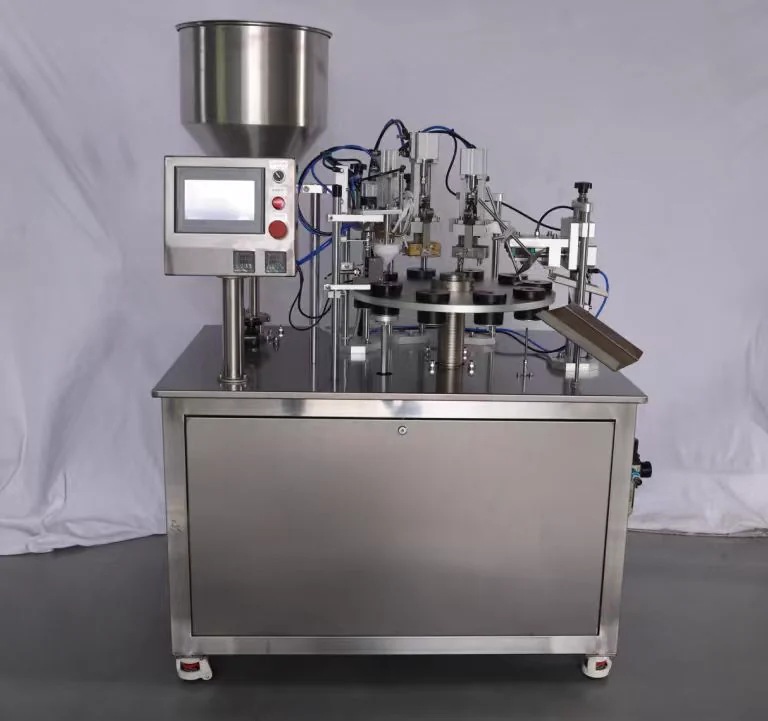 Automatic Tube Filling and Sealing Machine
Continuous stations for empty-tube loading, orientation or eye-mark positioning, dosing, filling, tail sealing, optional trimming or embossing and discharge.
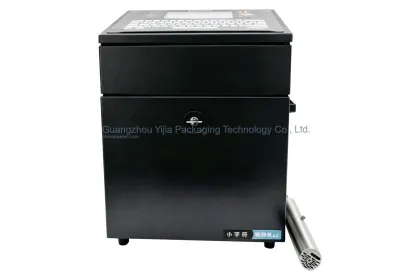 Date & Batch Inkjet Printer
Print date, batch and traceability information on bottles, bags, cartons, labels, cans and outer cases.
Core process
First distinguish whether the incoming tube is empty or already filled, then record the tube material, dimensions, tail allowance, cap type, and contents condition.
When upstream filling is complete, the tube tail sealing and coding machine only handles tail sealing, corresponding coding, and edge trimming, and checks whether contents enter the tail area.
For empty tube projects, first use a semi-automatic tube filling and tail sealing machine to verify manual tube feeding, filling, and tail sealing. After multi-specification operation is stable, evaluate a continuous main machine.
Special tube bodies or special caps use dedicated solutions to verify cap feeding, tube orientation, and clamping. Head actions and tail sealing are accepted separately.
After the main tube process is stable, an automatic feeding, conveying, and sealing line can be used to connect input and output, covering start/stop, missing tube, fallen tube, and recovery.
If tail seal coding cannot cover the required content, a date/batch inkjet coder can add characters on the tube body or outer packaging, with adhesion and readability tests.
Sample details
Whether the tube is pre-filled determines if the equipment needs tube feeding and volumetric filling. The tube material determines the tail sealing contact conditions.
Empty or pre-filled condition, tube diameter and length, layer material, tail allowance, and multiple actual samplesContents change feeding, closing, and tail area cleanliness. Pre-filled tubes also require explaining the upstream handover condition.
Production contents, viscosity, temperature, particles, target fill volume, cleaning, and stop conditionsCap type and tube shoulder orientation affect tube feeding, positioning, and special cap stations. Providing only tail dimensions is insufficient.
Standard or special cap samples, tube shoulder orientation, cap application condition, and final display surfaceCoding may be done simultaneously with tail sealing or on the tube body. The layout must be determined before edge trimming and clamping.
Batch/date content, embossing or printing method, character position, orientation, and adhesion requirementsShift orders and specification changes affect the operation arrangement of semi-automatic, fully automatic, and conveying interfaces.
Orders for each specification, changeover frequency, labor configuration, site layout, and upstream/downstream handoverCommon selection mistakes
If a pre-filled tube is selected for a filling and tail sealing integrated machine, it will duplicate the upstream filling action and may not be able to directly accept the ready-filled tube.
Plastic and aluminum-plastic tubes have different layer structures and thicknesses, so tail sealing and edge trimming parameters cannot be carried over from one tube type to another.
If characters fall on the trim line, clamping area, or bending position, they may be difficult to read on the finished product even if they can be printed.
Looking only at the tail seal pattern cannot determine product packaging requirements. Tests must be selected based on the tube and contents.
Special cap handling addresses the tube head, while tail sealing addresses the other end. The positioning, action, and acceptance targets are different.
View detailed technical notes
Incoming tube condition is the first dividing line
When selecting a tube machine, first determine whether the tube enters the equipment empty or already filled. This incoming difference determines whether an integrated tube feeding, filling, and tail sealing process is needed.
Pre-filled tubes: tail-end processing only
For pre-filled tubes, only the tail needs to be fed into the tail sealing and coding machine. The upstream process must supply full tubes with correct fill volume, clean tail area, and clear orientation.
Empty tubes: add filling process
Empty tube projects require filling and tail sealing. Semi-automatic equipment suits manual tube feeding and product removal, while fully automatic main machines require verification of continuous tube supply, filling, and fault recovery. Use the same batch of tubes and contents to compare tail sealing samples.
Test with actual contents and tube materials together
The actual contents determine feeding, cut-off, and tail cleanliness. The tube layer structure determines heat sealing. Both should be tested on the same tube sample, covering startup, continuous filling, stoppage, and finished product after edge trimming.
Finalize tail layout before tooling
Tail coding characters, sealing edges, and trimming all share the tail space. After the layout is determined, design the pressing head, code dies, and cutter positions, and verify trim allowance, character orientation, and clamping marks using finished tubes.
Special caps and tail sealing are separate
Special cap solutions handle cap feeding and positioning at the tube head, which is separate from tail sealing. Flip-top caps, pointed spouts, or pump caps should be trial-assembled with the tubes as a set, and retain assembly boundary samples.
Start the conveying line from a stable station
Once the main process is stable, the automatic feeding, conveying, and sealing line can be organized for tube supply and output. Continuous acceptance covers tube tipping, missing tubes, stoppages, and changeovers.
Additional coding: based on final visible surface
If the date content exceeds the tail sealing embossing range, a separate date/batch inkjet coder can be added. The tube surface, clamping, and consumer reading direction together determine the position.
Changeover records cover the entire tube
For each specification, retain samples of tube material, contents, cap type, filling, tail seal, characters, and trim. When changing tubes or materials, re-verify from the affected stations.
Common questions
How do you determine the configuration scope for the two types of tube equipment?
Confirm each item based on the incoming tube condition, tube material, filling range, tail sealing and coding, special caps, and line integration scope. Finalize the configuration after confirming with actual samples.
Which equipment should be selected when the product is already filled?
Use a tube tail sealing and coding machine. The upstream must still provide tubes with correct fill volume and clean tails.
Can the filling and tail sealing equipment also do batch coding?
It can be embossed at the tail sealing station, or a separate date/batch inkjet coder can be used. The method depends on the character content, tube material, and readable position.
How do you define the acceptance method for tube tail sealing?
Choose peel, leak, or other packaging tests based on the tube material and product requirements, and cover samples with tail area product entrapment, edge trimming, and stop-and-restart conditions.
Can other packaging stations be connected after tail sealing?
An automatic feeding, conveying, and sealing line can be evaluated. If labeling or case packing is within the delivery scope, corresponding equipment must be configured separately and interfaces confirmed.
Can we discuss the solution without tube samples for now?
Photos and dimensions can initially determine the incoming tube condition and tube type. Mold, filling, and tail sealing configurations still require actual samples of the tube, contents, and cap.