Solution topic
Cup, Bowl and Tray Lidding: Rollstock, Pre-Cut Lids, Easy Peel and Print Registration
Choose cup, bowl and tray lidding by container resin and rim, sealant layer, barrier and contact documents, thickness, width, core, unwind direction, eye mark, pre-cut size, peel a
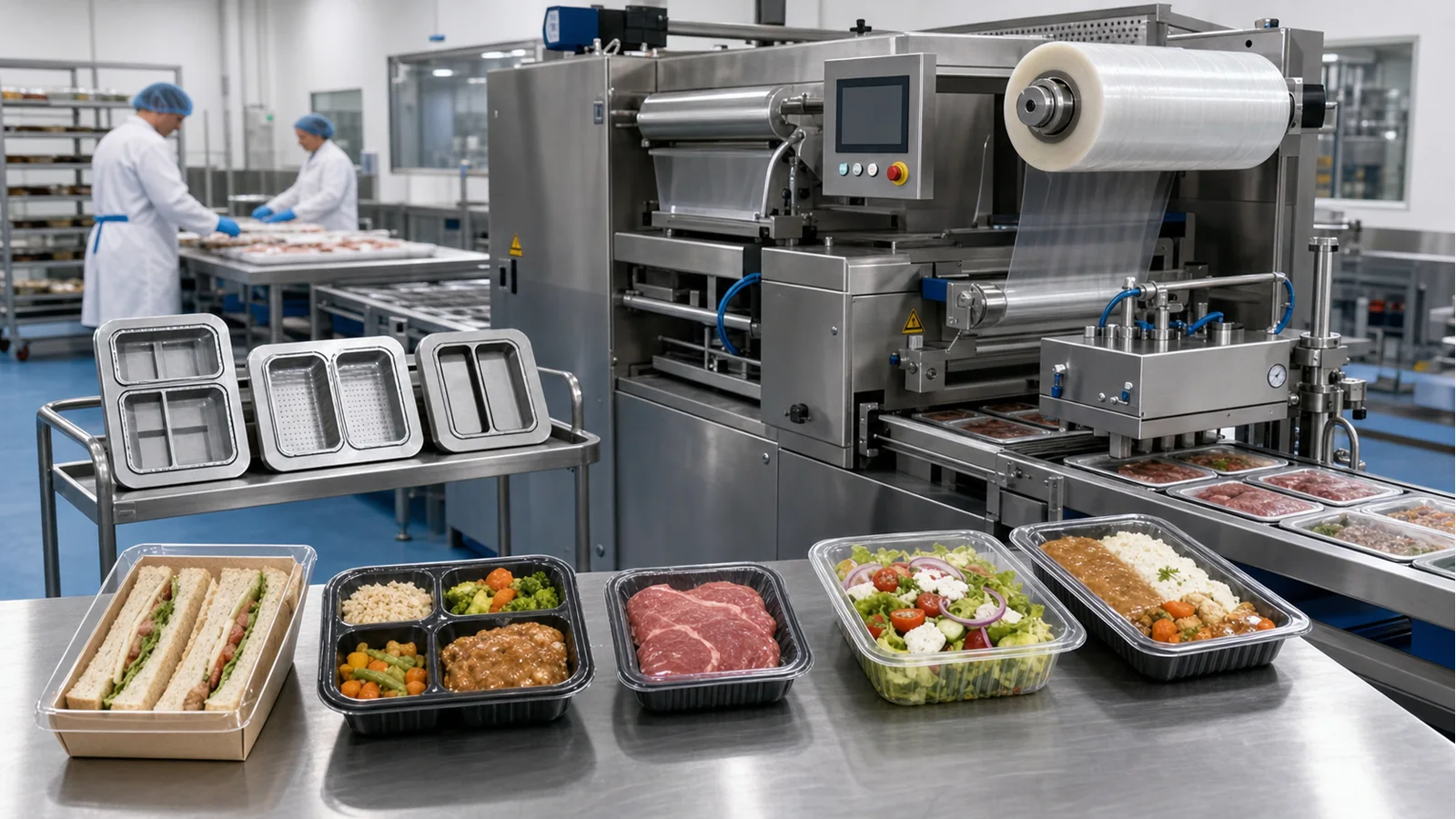
- Match container resin and rim to the sealant layer first, then choose material and sealer by film feeding, unwind direction, eye mark, lid separation, peel and seal requirements.
Solution summary prepared for you
- For cups, bowls, boxes, and trays, first divide by film feeding method: precut lidding film requires single-sheet placement and positioning, while roll film requires continuous feeding, sealing, and cutting.
- For small-batch precut film, evaluate a small-diameter cup sealing machine or an automatic precut sheet tray sealing machine. For roll film, evaluate a tabletop roll film machine or a continuous tray line.
- Shared roll and precut film machines are not a default capability; they must be confirmed with containers, films, and changeover processes. Gas replacement requires a separate tray-type modified atmosphere sealing machine.
Route comparison
- Suitable for irregular or multi-compartment rims, sampling small batches, or containers where formed film sheets are desired to control display boundaries.
- Precut film is supplied according to the rim contour and does not require cutting along the box edge after sealing, making it suitable for initial single-sheet positioning and appearance sampling.
- Sheet size tolerance, separation static, placement direction, and mold positioning all affect coverage boundaries. Verify with each batch of film samples.
- When container specifications are single and long-duration continuous high-speed feeding is required, single-sheet placement may not match the production organization.
- For small cups, evaluate the small-diameter cup sealing machine SGP-03; for trays, choose an automatic precut sheet pick-and-place tray sealing machine. Confirm the film placement method according to rhythm.
- Suitable for cups, bowls, boxes, or trays with regular rims, stable box-film specifications, and continuous feeding requirements.
- Roll film can be continuously unwound, positioned, heat sealed, and cut. Once containers and film rolls are stable, it is easy to integrate into continuous production.
- Must confirm film width, roll diameter, winding direction, tension, pattern registration, and cutting results. Changing box types usually also involves mold and film feeding adjustments.
- When rims are severely warped, multi-compartment ribs cause incomplete cutting, or film roll and container specifications change frequently, compare precut film first.
- For small batches, use a tabletop roll film tray sealing machine. When orders are stable and station integration is needed, evaluate a chain-plate cup/box/tray continuous sealing line.
- Suitable for projects with a controllable number of specifications, acceptable changeover frequency, and willingness to verify roll film and precut film conditions separately.
- Compatibility design can share part of the frame or control around confirmed specifications, but each film type retains its corresponding feeding, positioning, and mold.
- Compatibility scope, changeover steps, and rhythm in both modes must be verified separately. Modified atmosphere function cannot be replaced by ordinary heat sealing components.
- When the main product is fixed long-term and pursues continuous cycle time, or when the structural differences between the two film types are too large, it is not advisable to sacrifice operational clarity for a shared machine.
- Evaluate roll film and precut film changeover parts with actual samples. If gas replacement is also required, configure a tray-type modified atmosphere sealing machine and corresponding food-grade changeover parts.
Associated Equipment / Consumables
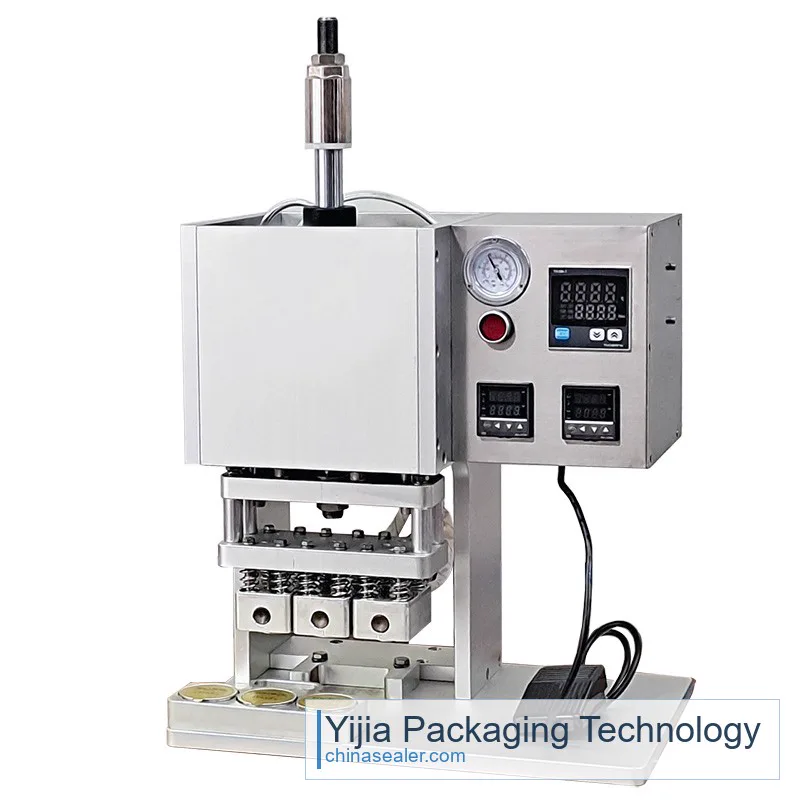 Small-Diameter Cup Sealer SGP-03
Small-Diameter Cup Sealer SGP-03 - actual samples, packaging material and output target for SGP-03
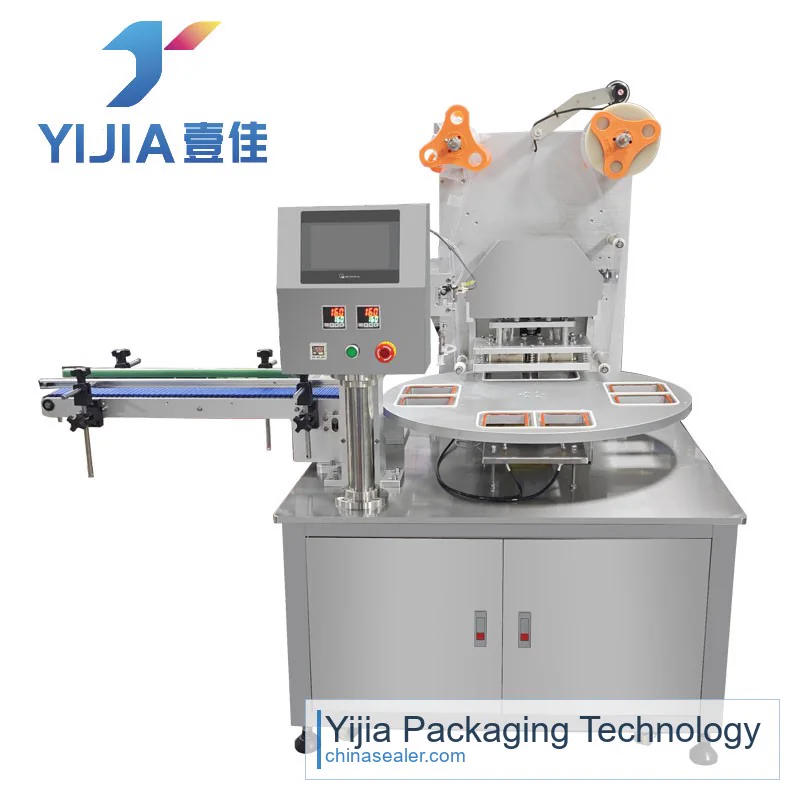 Automatic Small-Cup Filling and Sealing Machine
Precut lidding film placement and heat sealing; Manual single-sheet placement and automatic sheet separation have different rhythms and positioning methods. The configu...
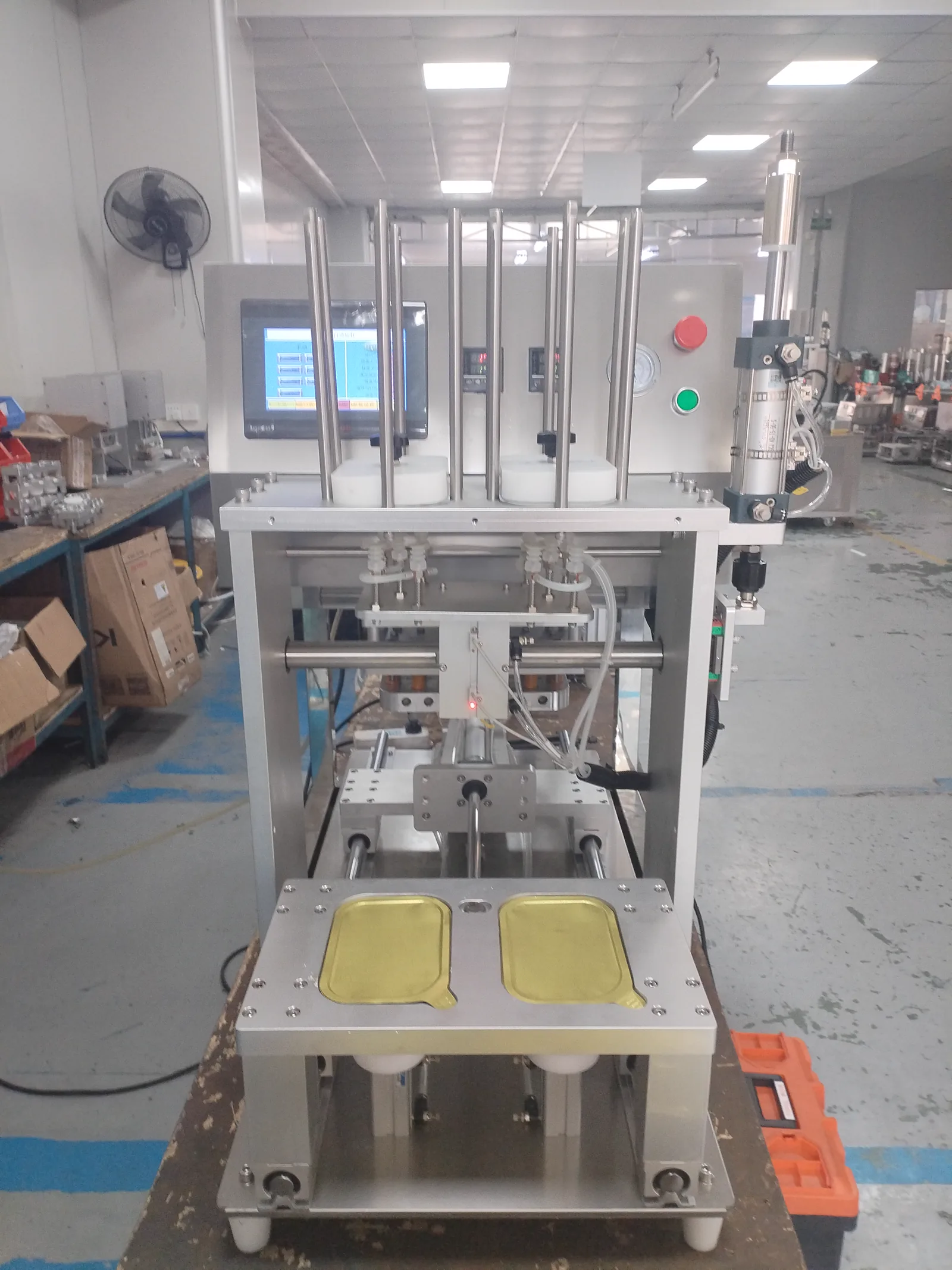 Automatic Pre-Cut Lid Pick-and-Place Tray Sealer
Automatic pre-cut film pick-and-place tray sealing machine: Box-film combination and rim confirmation; Only when the rim material is compatible with the film's heat-seal layer can subsequent mold and feeding structure...
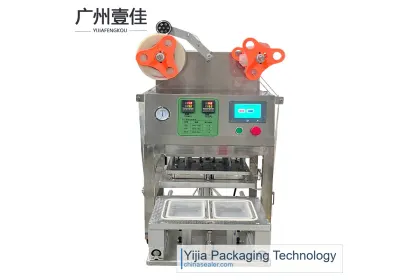 Benchtop Roll-Film Tray Sealing Machine
Box-film combination and rim confirmation; Only when the rim material is compatible with the film's heat-seal layer can subsequent mold and feeding structures be verified; Cont...
Core process
First check the container and film as a packaging set, measure the rim, and observe whether it is flat, has ribs, or multi-compartment dividers.
For small-batch precut film sampling, evaluate from a small-diameter cup sealing machine or an automatic precut sheet pick-and-place tray sealing machine.
After container and roll film specifications are stable, a tabletop roll film tray sealing machine can be used. For continuous orders, evaluate a chain-plate cup/box/tray sealing line.
Choose a tray-type modified atmosphere sealing machine only when the project clearly requires gas replacement. For multi-specification shared machines, verify changeover parts, cleaning, and film change actions item by item.
Record the top view, side view, and filling state of the box opening together to confirm film placement space and upper mold downstroke clearance.
The compatibility design must specify which specifications use roll film and which use precut film, and which parts need to be changed and cleaned for each switch.
Sample details
The rim contour is the basis for mold and film coverage. Irregular, multi-compartment, and ribbed shapes require clear top and cross-section information.
Container samples, length, width, height, number of compartments, rim width, and cross-section photosFor roll film and precut film, in addition to the heat-seal layer, separately verify feeding dimensions, winding direction, or sheet tolerance.
Production film samples, material structure, thickness, easy-peel requirements, and roll or precut formatConcentrated production periods, manual film placement, and changeover frequency affect the choice between tabletop, automatic sheet separation, or continuous feeding.
Shift schedule, peak rhythm, main specifications, and each changeover planWhether the contents are fluid, oily, or prone to edge sticking will change sealing surface cleaning and handling requirements.
Content samples, filling height, splashing or edge sticking, and cleaning methodWhen gas replacement is required, provide the packaging process, gas conditions, and acceptance method, not just write 'freshness'.
Whether modified atmosphere is needed, gas replacement conditions, packaging inspection, and target storage and transport environmentSite space will limit roll film replacement, mold lifting, cleaning, and maintenance. Reserve operating space during the layout stage.
Equipment direction, available dimensions, power and air supply, infeed and outfeed heights, and cleaning requirementsCommon selection mistakes
The same equipment name may still use either roll film unwinding or precut sheet separation structures. Without film feeding information, the main machine cannot be determined.
Roll film requires unwinding, positioning, and cutting; precut film requires single-sheet pickup and positioning. The two sets of actions cannot be interchanged with a single parameter.
Ribs, irregular outer edges, or warping of multi-compartment boxes may make the sealing surface discontinuous and also affect roll film trimming.
Each container may require dedicated molds and support parts. The more specifications, the more mold changes, storage, cleaning, and error-proofing work.
Easy-peel film, laminated film, or aluminum foil film may use different heat-seal layers. Similar appearance and thickness do not allow sharing the same sealing conditions.
A continuous roll film line requires stable containers, film, and feeding rhythm. When orders are scattered and changeovers are frequent, the equipment advantage may not be realized.
View detailed technical notes
Film Supply Method Determines Equipment Action
The difference between roll film and precut lid film is not just whether the film is pre-cut; they correspond to two sets of actions: continuous unwinding and cutting versus single-sheet pickup and positioning. First look at the container rim and production method to determine the equipment.
Start by Dividing Routes Based on Real Box-Film Combinations
When the rim is regular and the box film specification is stable, roll film is convenient for continuous feeding. For irregular shapes, multi-compartment, or small batch trials, precut film can be used first. Both require trial sealing with the container, film material, and filling state as a complete set.
Precut Film: Verify Separation and Positioning First
The small-diameter cup sealing machine SGP-03 can be used for corresponding small cup precut film projects. The automatic precut film pick-and-place tray sealing machine adds film sheet separating and placing actions. Film orientation, static electricity, and positioning tolerance should all be checked during trial operation.
Roll Film: From Benchtop Verification to Continuous Production
The benchtop roll film tray sealing machine is suitable for first verifying unwinding, tension, pressing, and cutting, and recording film width, roll direction, and tray positioning. After the box type, film roll, and order are stable, then evaluate the chain-plate continuous cup/box tray sealing line to connect upstream and downstream stations. The continuous solution still needs to confirm tray travel with filled samples.
Compatibility Design Must Specify Changeover List
If one machine is expected to cover both film supply forms, the unwinding and cutting components for roll film, the separating and positioning parts for precut film, their respective molds, and cleaning and changeover procedures should be clearly defined. Compatibility only holds for containers and films listed and individually trial-sealed; it cannot be extended to other cups and boxes. The cycle times of both modes should also be recorded separately.
Gas Flush Requirement Is Not Equal to Film Type Selection
Gas flushing is another packaging process that requires a tray gas-flush sealing machine and confirmation of gas conditions, tray film barrier, and acceptance methods. A regular heat sealing route cannot automatically gain gas-flush capability.
Molds and Contact Parts Managed by Specification
Molds support and press according to the rim contour. Roll film additionally has unwinding and film cutting parts; precut film additionally has separating or manual positioning. Food-grade sealing rings, cleaning consumables, and changeover parts should also be managed by specification.
Completed Samples Must Cover Appearance and Sealing
During trial operation, observe the film surface, cut edge, container deformation, rim film trapping, and peeling state, and check sealing according to the agreed method. When abnormalities occur, investigate item by item from packaging materials, molds, and filling actions.
Use Specification Table to Lock Equipment Boundaries
After submitting the main and backup containers, two types of film samples, production cycle time, and on-site conditions, then determine the precut, roll film, compatible, or gas-flush configuration, and write each changeover boundary into the acceptance documentation.
Common questions
Which seals more firmly: roll film or precut lidding film?
The seal strength depends on the heat-seal compatibility between the box and film, cleanliness of the rim, mold fit, and process conditions. The roll film or precut format itself does not directly determine the result.
Can roll film be used for multi-compartment meal boxes?
It can be evaluated, but ribs, bridges between compartments, and the outer contour will affect pressing and cutting. Use actual multi-compartment box samples to confirm whether the roll film route is suitable.
Is precut film more suitable for small-batch production?
Precut film with manual placement or automatic precut sheet feeding equipment is convenient for sampling, but the choice should also consider the concentrated production rhythm per shift and the frequency of specification changes.
Must the sealing film be supplied by the equipment manufacturer?
Customer-supplied film can be used. Production roll film or sheets must be submitted for trial sealing with the containers to confirm easy-peel and sealing requirements.
Where should you check when there is partial seal leakage?
First check rim contamination, deformation, the film's heat-seal layer, mold fit, and feeding positioning, then retest under the signed sample conditions. Avoid simply increasing temperature or pressure.
Can one machine handle multiple cup and box sizes?
Validated specifications can be switched by changing molds and feeding or positioning parts. The number of compatible sizes and changeover time depend on actual differences and cannot be generalized in advance.