Solution topic
Multi-compartment lunch box equipment upgrade: tabletop sealing, automatic film picking and continuous stations
Introduces the upgrade path for multi-compartment lunch boxes from tabletop heat sealing and automatic pre-cut film to rotary or chain-plate continuous sealing lines, and explains
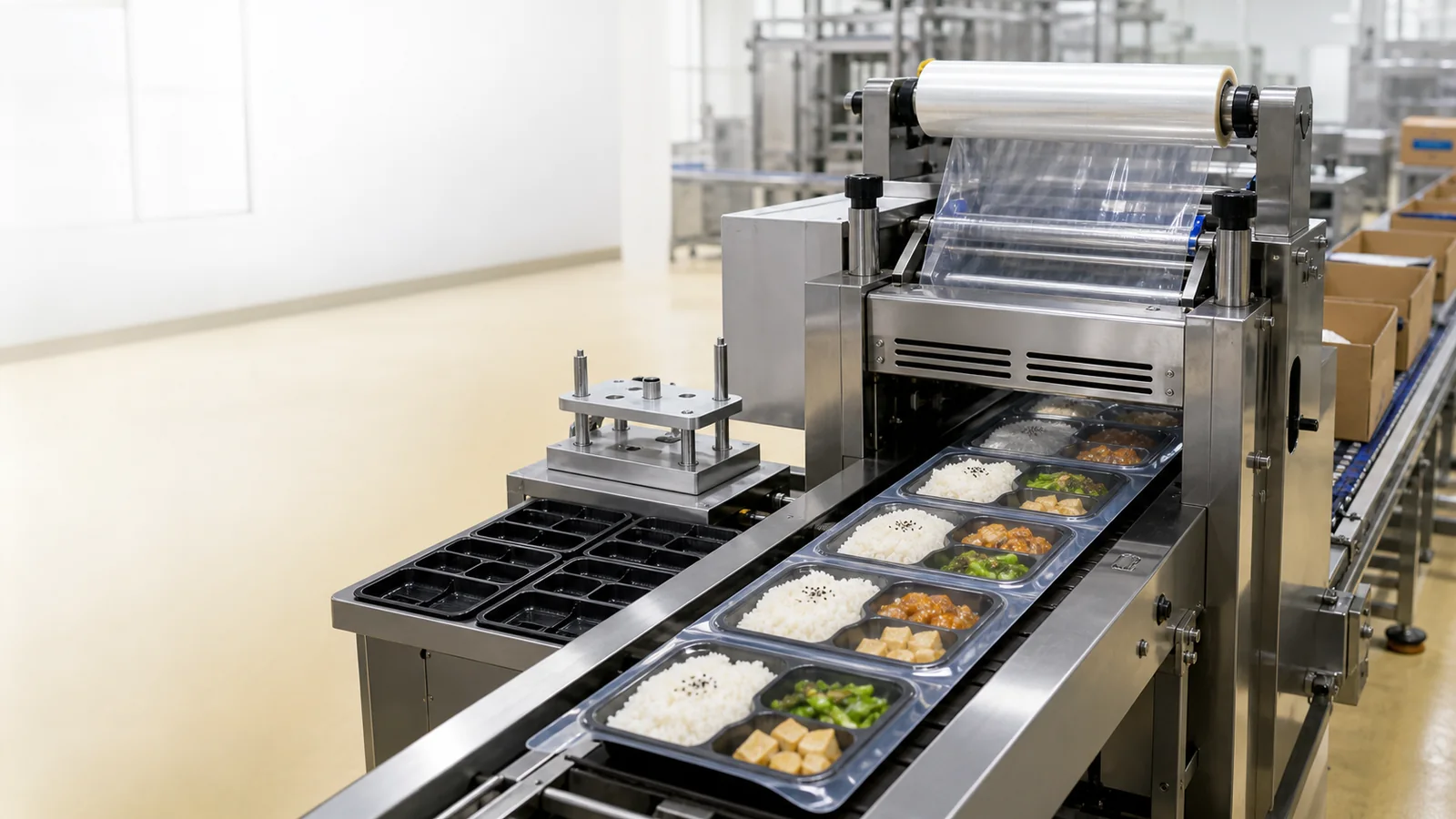
- First use tabletop equipment to verify the lunch box outer rim, partition ribs and film material, then upgrade to automatic film pick-and-place or a chain-plate continuous line based on order stability. If modified atmosphere is needed, confirm the fresh-keeping process separately; do not treat vacuum or modified atmosphere as a default configuration.
Solution summary prepared for you
- For multi-compartment lunch boxes, first verify the outer rim and compartment ribs with actual boxes and film. Manual trial production can start with a benchtop sealing machine; after pre-cut film is stable, evaluate automatic pickup and...
- After box type and orders are stable, compare the turntable vacuum tray sealing machine and the chain plate continuous sealing line. Vacuum function is confirmed separately according to packaging process.
- Modified atmosphere is not a default configuration for multi-compartment lunch boxes. When fresh-keeping goals are clear, use a tray-type modified atmosphere sealing machine and accept with gas conditions, film, and finished product test...
Route comparison
- Projects with many box types, in sample verification stage, or planning small-batch production with manual operation.
- Manual box and film placement facilitates observation of each box-film combination, suitable for establishing tooling, sealing, and opening baselines first.
- Box loading, film placement, and box removal are done manually; continuous production capacity must also be evaluated with operation arrangements.
- When pre-cut film and box type are stable and continuous automatic pickup and placement is needed, can switch to automatic film equipment.
- Use a benchtop multi-compartment lunch box sealing machine. Small cup sealing film is only evaluated when film width, heat sealing layer, and film supply form match the lunch box; final trial sealing uses production lunch boxes and produ...
- Production where lunch box and pre-cut film specifications are stable and you want to incorporate film pickup and placement into the automatic cycle.
- The equipment automatically completes film separation, pickup, and positioning, reducing repetitive manual film placement actions.
- Pre-cut film size, warpage, static, printing direction, and heat sealing layer must pass continuous pickup and trial sealing.
- When film batch differences are not yet evaluated or lunch boxes are still frequently changed, keep manual sampling for easier troubleshooting.
- Use an automatic pre-cut film pickup and placement tray sealing machine, configuring film supply box, pickup parts, and sealing tooling according to actual lunch box and film samples.
- Projects where the lunch box orientation, film material and production schedule are already stable and require continuous positioned sealing and downstream integration.
- Turntable carriers or chain plate conveying can continuously connect lunch box positioning, sealing, and discharge, and reserve interfaces for optional stations.
- Carriers, tooling, feeding, changeover, and on-site interfaces need complete verification; modified atmosphere projects additionally use a tray-type modified atmosphere sealing machine for confirmation.
- When orders and box types are not yet stable, or manual handover methods are still being adjusted, it is not advisable to fix the continuous station layout first.
- Choose the turntable vacuum tray sealing machine or the chain plate cup and tray continuous sealing line based on lunch box orientation; vacuum and filling functions are optional.
Associated Equipment / Consumables
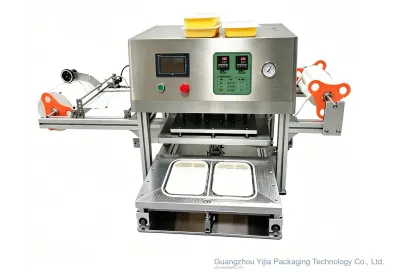 Tabletop Multi-Compartment Meal Tray Sealer
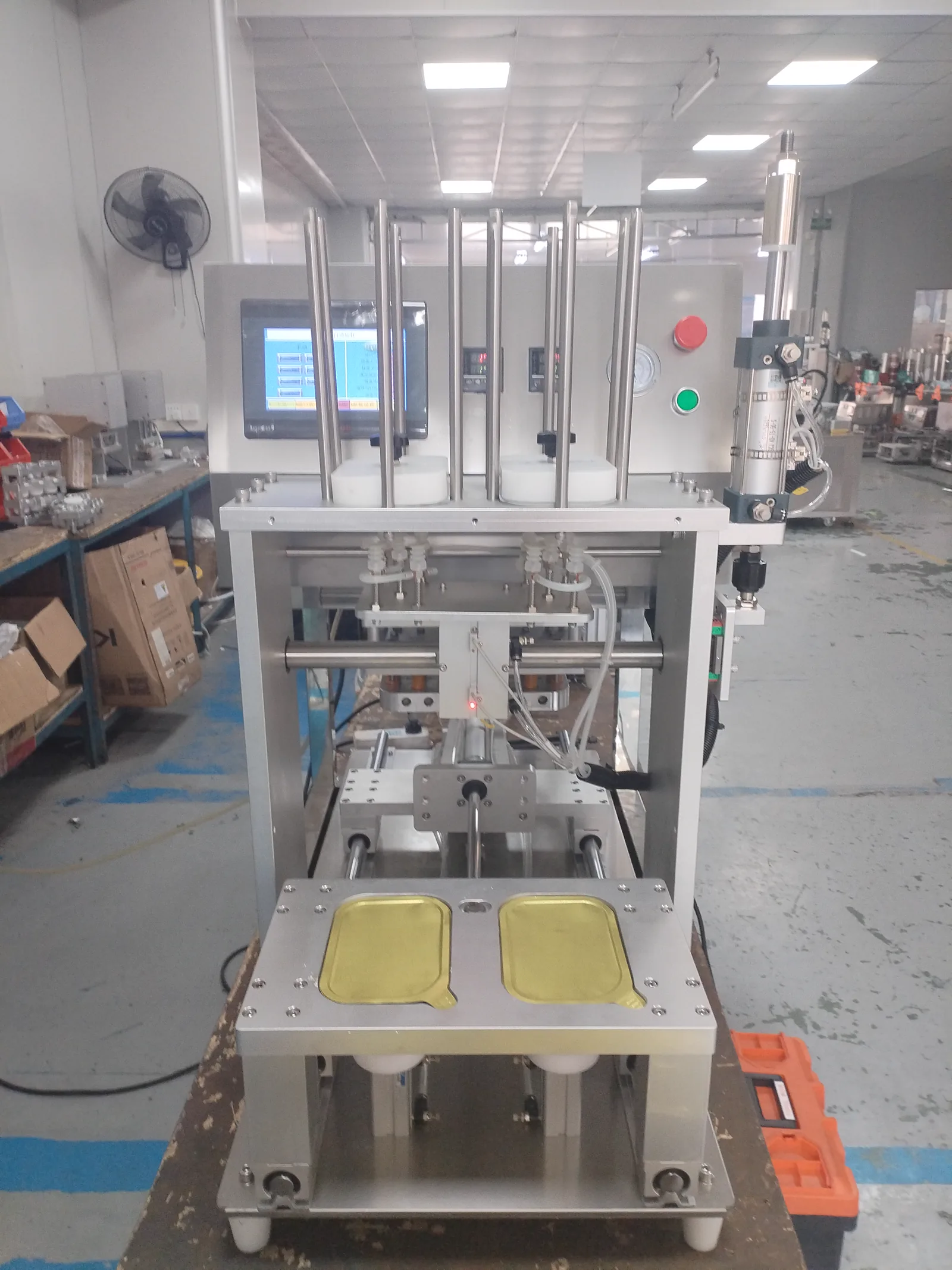 Automatic Pre-Cut Lid Pick-and-Place Tray Sealer
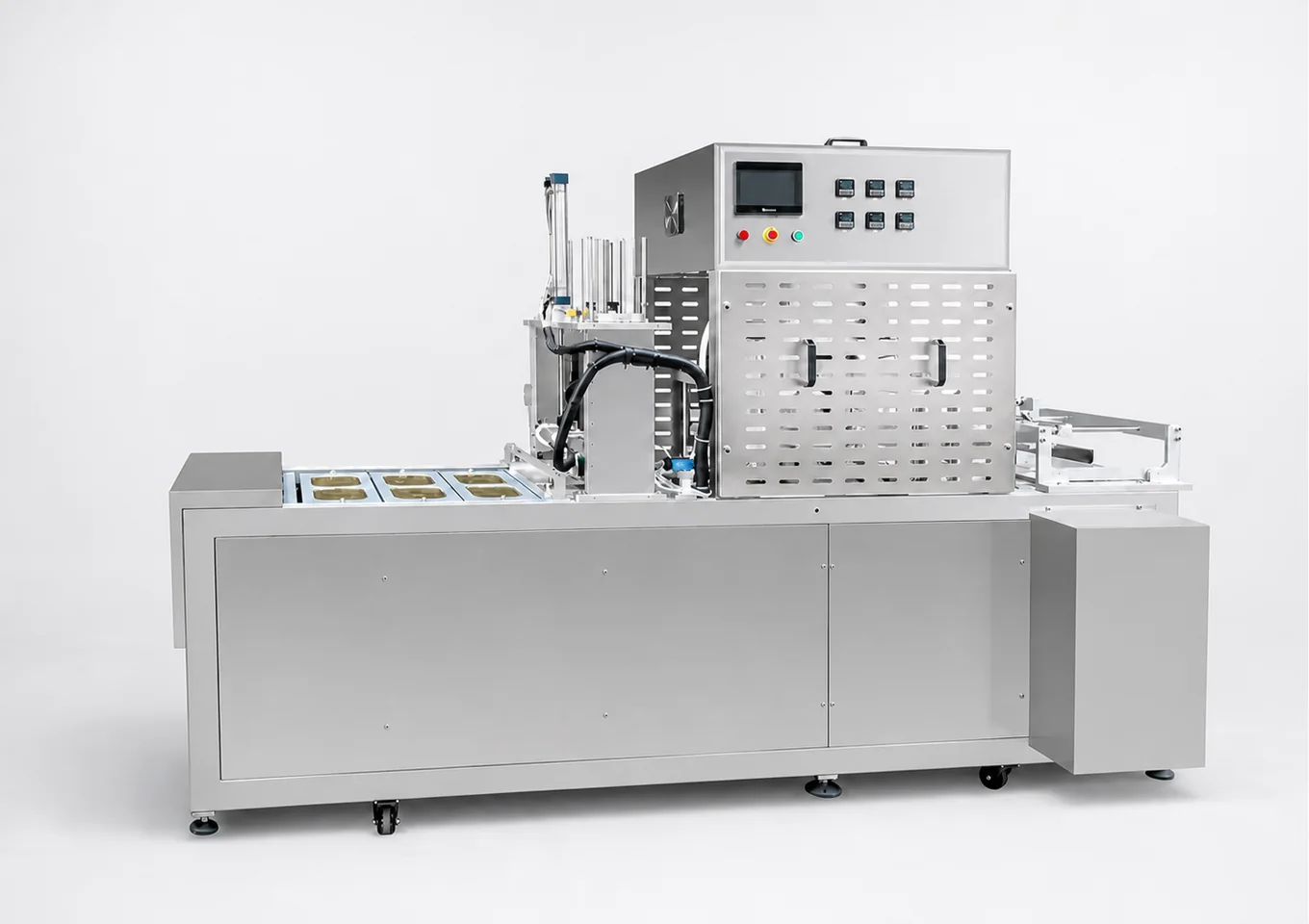 Chain Conveyor Cup and Tray Filling Sealing Line
Benchtop sealing verification; Small cup sealing film is only evaluated when film width, heat sealing layer, and film supply form match the lunch box; final trial seal...
 Product-Contact Seals, Cleaning Consumables and Change Parts
Baseline of lunch boxes and film materials; Box photos can be used for preliminary judgment, but tooling and sealing conditions are determined by actual bo...
Core process
First use production lunch boxes and lid film to verify the outer rim, compartment ribs, box support, and easy-tear direction, forming a trial baseline shared by subsequent equipment.
The benchtop multi-compartment lunch box sealing machine accepts manually placed lunch boxes and lid film for fixed-specification trial production and sealing window verification.
After pre-cut film can be stably separated, picked up, and aligned, the automatic pre-cut film pickup and placement tray sealing machine can reduce manual film placement steps.
After the box type and production schedule are stable, compare the turntable vacuum tray sealing machine and the chain plate cup and tray continuous sealing line for feeding, positioning, and discharge methods.
When the fresh-keeping process explicitly uses gas replacement, use the tray-type modified atmosphere sealing machine and food-grade changeover parts for gas condition and packaging acceptance tests.
When upgrading from benchtop trials to automatic film pickup or continuous stations, keep the same box-film combination and acceptance methods, and verify handover status step by step.
Sample details
Full views and rim close-ups of lunch boxes are used to identify shape, compartment ribs, box depth, support positions, and areas that may deform.
Submit actual samples or clear photos of each lunch box, and mark the rim, compartment ribs, and key dimensionsLid film structure relates to heat sealing layer, separation method, printing positioning, and easy-tear direction; roll film and pre-cut film should be described separately.
Provide production lid film, material description, film supply form, printing direction, and easy-tear requirementsProduction schedule and box changeover frequency are used to compare the operating rhythm of manual benchtop, automatic film pickup, and continuous carriers.
Explain daily production batches, changeover frequency, manual configuration, and planned feeding and discharge methodsOil, particles, temperature, and fill height can change the rim condition; modified atmosphere projects also need to provide fresh-keeping process conditions.
Submit actual contents and packed samples, and indicate whether vacuum or gas replacement is neededRefrigeration, handling, opening, and cleaning requirements are used to develop inspection items for sealing samples and equipment delivery boundaries.
Explain finished product storage and transport conditions, easy-tear requirements, packaging test methods, cleaning procedures, and on-site spaceCommon selection mistakes
When lunch box outer contours are similar, compartment ribs, rim width, and box rigidity may still require different carriers or tooling.
Pre-cut film warpage, static, and printing direction can change separation and pickup; manual film placement passing does not mean automatic pickup will be stable.
Turntable and chain plate carriers, feeding, and discharge methods differ; choose based on lunch box orientation, changeover, and on-site handover.
Vacuum and modified atmosphere have independent process conditions; ordinary heat sealing needs cannot automatically expand to fresh-keeping functions.
Residual material on the box mouth and high contents can interfere with heat sealing; after filling or manual packing, rim inspection should be arranged.
View detailed technical notes
Start the upgrade sequence with box and film samples
For a multi-compartment lunch box equipment upgrade, first fix the actual box, film lidding and finished product acceptance methods, then move from tabletop trials to automatic film picking or continuous stations. Modified atmosphere packaging is evaluated separately only after the fresh-keeping process clearly defines its conditions.
Trial the mold with the box mouth and partition ribs together
The outer rim, partition ribs, box depth and rigidity together determine the tooling and fixtures. The lidding film must also be checked for the heat-seal layer, film supply form, easy-tear edge and printing direction; do not select a machine only by the lunch box name.
Establish a sealing baseline with tabletop equipment
A tabletop multi-compartment lunch box sealing machine suits manual box and film placement for sample validation and multi-specification production. Record the sealing edge, opening and box body compression state for each box and film combination.
Verify the pre-cut film state first for automatic film picking
After pre-cut film can be separated stably, an automatic pre-cut film pick-and-place tray sealing machine can handle film picking, placement and heat sealing. Static and warping must be observed in continuous cycles.
Choose continuous stations according to the lunch box orientation
After the lunch box and production schedule are stable, compare a rotary vacuum tray sealing machine with a chain-plate continuous sealing line. The feeding, fixtures, discharge and changeover of the continuous structure should be planned together.
Modified atmosphere as an independent fresh-keeping process
When the fresh-keeping goal requires gas replacement, a tray-type modified atmosphere sealing machine and food-grade changeover parts are tested with the actual box and film. Gas conditions, barrier film, cold chain and packaging acceptance together define the process boundary.
Create separate records for film materials and changeover parts
Roll film, pre-cut film and easy-tear film are each trial-sealed. For multi-box-type projects, record the changeover scope of molds, fixtures, sealing rings and cleaning consumables.
Use the same sample standard to accept the upgrade
Sample inspection covers the outer rim, partition ribs, easy-tear opening, box deformation and the state after refrigerated transport. After upgrading the equipment, use the same acceptance method to recheck the added stations.
Common questions
Can the equipment direction be determined from photos alone?
Provide photos of the lunch box from all directions, close-ups of the rim, and lid film information to determine the general direction: benchtop, automatic film pickup, or continuous stations. Tooling still needs to be confirmed with actual samples.
How to choose between benchtop sealing and automatic film pickup?
Benchtop equipment is suitable for manual box and film placement for trials and multi-specification production. When the box-film combination is stable and you want to reduce film placement operations, then evaluate automatic pickup and placement of pre-cut film.
When is a turntable or chain plate continuous line needed?
When you need to fix the lunch box orientation, feeding method, and continuous discharge, compare turntable and chain plate structures. For projects with frequent changeovers, first verify the scope of carrier and tooling changes.
Do all multi-compartment lunch boxes need modified atmosphere?
Only when the fresh-keeping process explicitly requires gas replacement, evaluate a tray-type modified atmosphere sealing machine, and simultaneously determine gas conditions, film barrier properties, and packaging acceptance methods.
How to accept multi-compartment lunch box sealing samples?
Check the sealing edges of the outer rim and compartment ribs, film position, easy-tear opening, and box compression state, then conduct refrigeration and handling tests according to the agreed methods.
What materials should be prepared for planning equipment upgrades?
Prepare lunch boxes of each specification, production lid film, contents state, packing method, production schedule, changeover frequency, cleaning requirements, and finished product acceptance methods.