Solution topic
Fresh Meat Tray Sealing: Boundaries of Standard Heat Sealing, Modified Atmosphere, and Post-Sealing Inspection
Compare standard heat sealing, tray sealing with gas flushing, and continuous tray routes for fresh meat trays, explaining configuration conditions for rim cleanliness, film, date
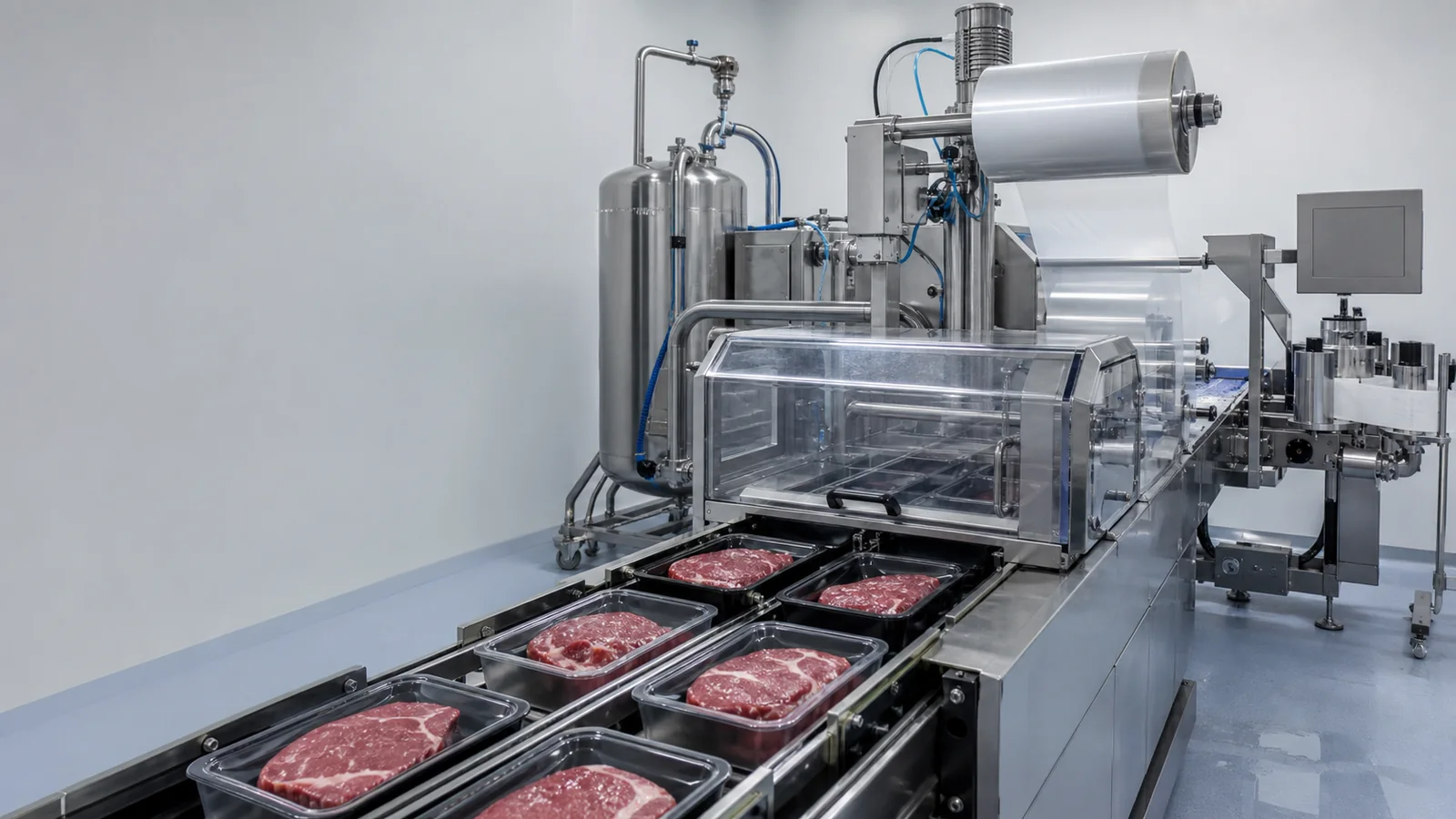
- Fresh meat condition, tray rim, and absorbent or contamination affect basic heat sealing; the modified atmosphere route also requires confirming gas process and barrier film. Checkweighing, vision, or metal detection must have defined inspection objectives and cannot be used as substitute proof of freshness.
Solution summary prepared for you
- Fresh meat trays are first divided into standard heat sealing and MAP process routes. Standard heat sealing handles tray-film sealing; MAP also requires gas displacement conditions, barrier film, and chilled food verification.
- MAP equipment cannot independently define chilled results. Fresh meat condition, barrier packaging, gas process, chilled process, and testing methods need to be confirmed as a set of conditions.
- Packed tray photos and dimensions can be used for initial machine selection; actual fresh meat, tray, and film samples are used to confirm molds, sealing process, and whether to enter the MAP route.
Route comparison
- No gas displacement is used, and sales packaging with fresh meat tray and sealing film heat sealing needs to be completed.
- The process focus is on tray positioning, film pickup and placement, and heat sealing; actual meat-packed samples can be used to establish sealing conditions first.
- Standard heat sealing only handles tray-film sealing; chilled packaging performance still needs to be verified with product, film, and storage and transport conditions.
- When the project clearly adopts gas displacement and barrier packaging, it should move to tray MAP sealing process testing.
- For pre-cut film, use an automatic pre-cut film pickup tray sealing machine; for multi-compartment trays, evaluate a tabletop multi-compartment meal tray sealing machine; for roll film samples, use a tabletop roll film tray sealing machine.
- Projects that have already defined the MAP process and plan to use barrier tray packaging for fresh meat chilled verification.
- The tray MAP sealing machine combines tray sealing and gas displacement processes, facilitating sample verification under defined MAP conditions.
- Equipment configuration cannot replace gas process, chilled process, or product testing; relevant conditions must be jointly confirmed by the project parties.
- When gas displacement conditions and packaging acceptance methods are not yet defined, process documentation and sample preparation should be completed first.
- Use a tray MAP sealing machine, and complete samples with actual trays, barrier film, and food process requirements.
- When tray specifications and sealing process are stable, and production needs to connect batch coding or clear abnormality inspection stations.
- A continuous line can connect stable tray supply and output pace; inkjet coding, metal detection, and checkweighing/vision stations can be arranged according to clear targets.
- Tray type changeover, filling pace, inspection rules, and rejection processes must be confirmed before line integration.
- When tray-film process has not passed sample testing, or inspection targets are unclear, it is not advisable to fix the entire line layout first.
- For sealing capacity upgrades, evaluate a chain plate cup-tray continuous sealing line, followed by a date batch coder and required inspection equipment.
Associated Equipment / Consumables
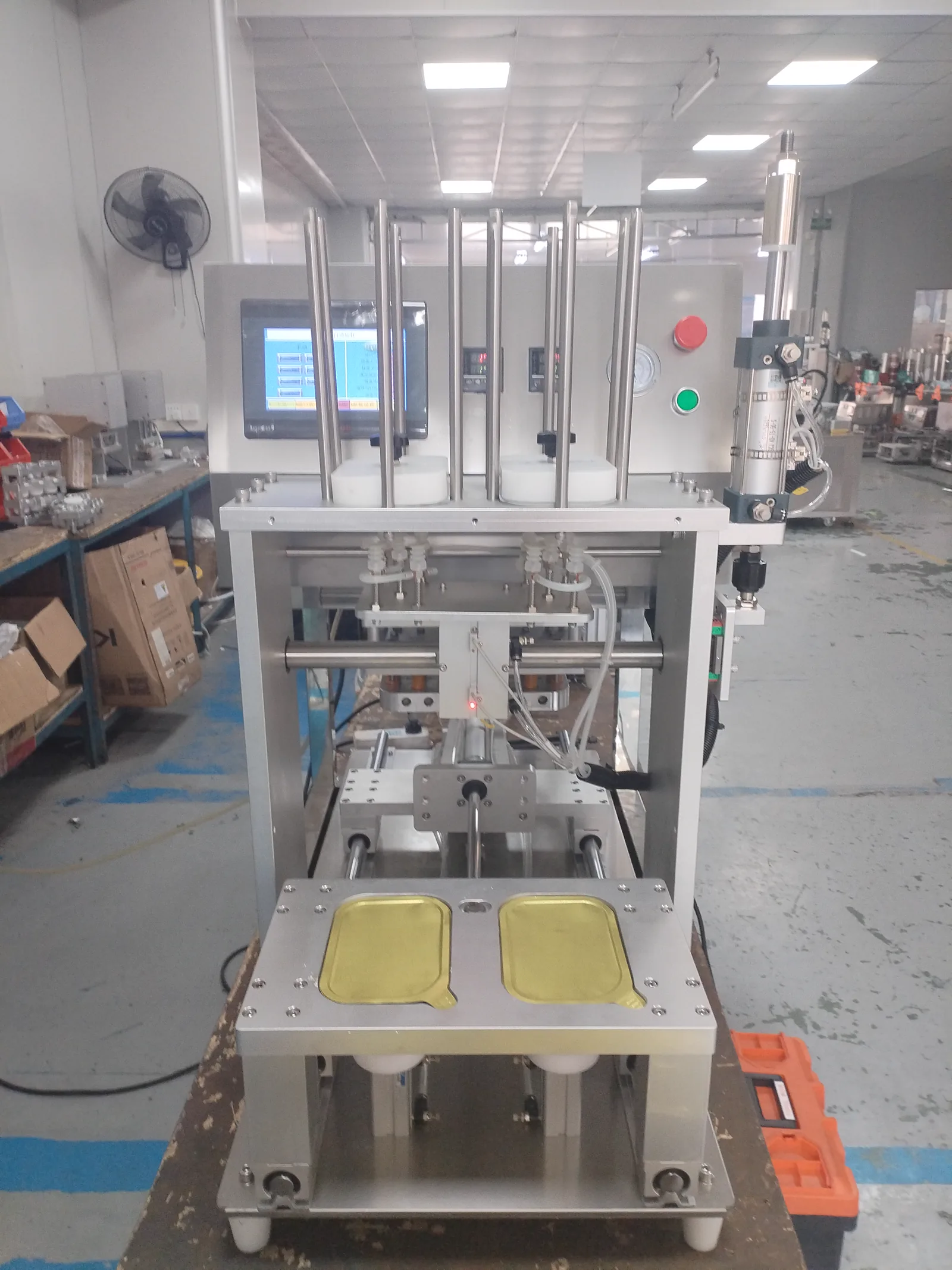 Automatic Pre-Cut Lid Pick-and-Place Tray Sealer
 Tabletop Multi-Compartment Meal Tray Sealer
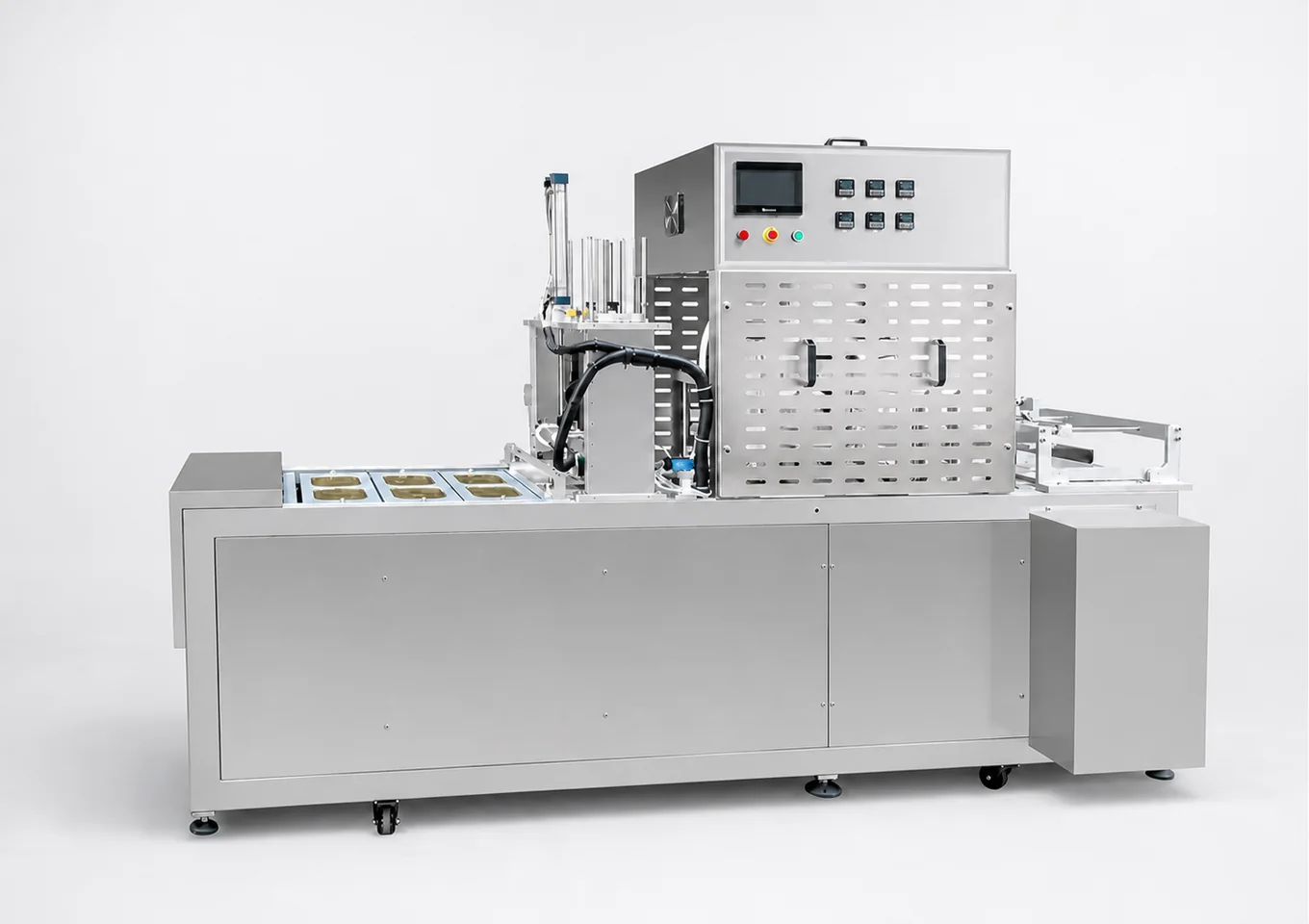 Chain Conveyor Cup and Tray Filling Sealing Line
Film material and coding area; Changing film material alters sealing conditions; the MAP route also requires re-verification of gas displacement and chilled packaging...
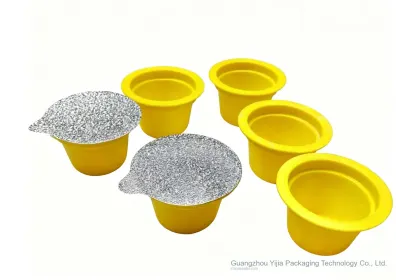 Cup Sealing Film and Easy-Peel Lidding Consumables
Core process
Use fresh meat, trays, and sealing film to create realistic samples, and first check rim flatness, contamination locations, and film heat seal layer.
The standard route can be verified on an automatic pre-cut film pickup tray sealing machine or a tabletop multi-compartment meal tray sealing machine; the MAP route uses a tray MAP sealing machine.
The date batch coder is used for batch identification; the food metal detector and online checkweighing and vision inspection systems are configured according to their respective abnormal targets.
First review top and side photos of the tray after meat packing, then check liquid seepage, absorbent material, tray rim contamination, and fill height.
Tray material, sealing film heat seal layer, easy-peel requirements, and MAP barrier needs should be specified as a set; label and batch code areas should also avoid the sealing edge.
First complete standard heat sealing tests with pre-cut film or roll film equipment. Once MAP requirements are clear, switch to a tray MAP sealing machine; for continuous production, evaluate a chain plate sealing line and downstream inspection.
Sample details
Tray rim, corners, and shape tolerances affect mold positioning, and contamination locations after meat packing should also be reviewed.
Submit empty trays and actual meat-packed trays, noting shape, depth, rim width, and multi-compartment rib positionsThe film heat seal layer and opening requirements are used to establish the standard heat sealing process; the MAP route also requires barrier material information.
Provide the planned production sealing film roll or pre-cut sheets, and specify easy-peel, barrier, and printing direction requirementsThe pace of tray supply, meat loading, sealing, and tray output affects the choice between tabletop, automatic film pickup, or continuous line.
Explain the production schedule for each tray type, changeover frequency, and how upstream and downstream stations connectThe MAP plan must have clear gas displacement conditions, chilled process, and packaging acceptance methods.
The food process team should provide MAP requirements, chilled conditions, and the planned product testing planInkjet coding, metal detection, checkweighing, or vision inspection each correspond to different targets; interfaces and rejection processes need to be planned in advance.
List batch code location, abnormalities to be inspected, judgment methods, rejection actions, and available conveying spaceCommon selection mistakes
MAP is only part of the packaging process; product condition, gas displacement, barrier film, chilled process, and food testing need to be jointly verified.
Rim deformation, juice, debris, or exposed absorbent material can interfere with sealing, and empty tray tests cannot cover these situations.
Standard film, easy-peel film, and MAP barrier film have different requirements; after changing materials, tray-film samples should be re-tested.
The sealing main machine, tray supply, and downstream inspection should be jointly debugged at the same production rate, while recording pauses due to tray changeover and cleaning.
Metal detection, checkweighing, and vision inspection handle different abnormalities; the project needs to define samples and judgment rules first.
View detailed technical notes
First Distinguish Sealing, Modified Atmosphere, and Inspection
Fresh meat trays require separate selection of standard heat sealing, MAP sealing, and downstream inspection, each with independent sample and acceptance conditions.
Sales Packaging Samples Determine the Testing Starting Point
The evaluation sequence starts with real packed tray samples. First check rim flatness, juice or debris contamination, then verify the film's heat-seal layer. If modified atmosphere is required, add gas replacement conditions, cold chain procedures, and food testing methods before selecting the main machine.
Standard Heat Sealing First Verifies Rim and Film
For standard heat sealing, depending on film form and tray structure, trials can be conducted on an automatic pre-cut film tray sealing machine, a tabletop multi-compartment meal tray sealing machine, or a tabletop roll-film tray sealing machine. This process only completes tray-film sealing; the packaging result is confirmed by the tray-film combination and test conditions.
Modified Atmosphere Route Requires Food Process Participation
For modified atmosphere process, use a tray sealing machine with gas flushing. The project should simultaneously provide barrier film, trays, actual fresh meat, and gas process requirements, and include gas replacement conditions, seal inspection, cold chain process, and food testing in the same validation plan.
Post-Sealing Inspections Each Correspond to Clear Objectives
Only after sealing is stable should post-sealing configuration proceed. The date/batch inkjet coder handles marking, the food metal detector finds agreed metal anomalies, and the online checkweigher and vision inspection system judge according to set weight and appearance rules. Inspection results are not equivalent to cold chain or modified atmosphere conclusions.
Meat-Filled Samples Determine Sealing Boundaries
Trays and film must be sent as a complete set of samples, and fresh meat filling height, absorbent material, and rim contamination must be reproduced. Tooling direction, sealing conditions, and opening checks are all determined from this set of real packaging samples.
Main Machine Selection Corresponds One-to-One with Process Route
The standard route selects equipment based on pre-cut film, roll film, or multi-compartment trays. The modified atmosphere route uses a dedicated tray sealing machine with gas flushing. The two routes should record sample conditions separately, avoiding mixing standard heat sealing and gas replacement in the same conclusion.
Define Post-Sealing Rules Before Continuous Upgrade
After tray specifications and process are stable, a continuous chain-type cup/tray sealing line can be evaluated. Inkjet coding, food metal detection, checkweighing, or vision inspection are optional according to project definition; conveying height, rejection position, and verification method are confirmed during layout.
Common questions
Can tray photos alone determine the sealing route?
Start by using the boxed product photos, tray dimensions, and film material information to distinguish between standard heat sealing and modified atmosphere packaging. Confirming MAP equipment also requires food processing and chilled packaging test requirements.
What materials should be prepared to confirm fresh meat tray equipment?
You need actual fresh meat tray samples, tray and film specifications, rim contamination status, target production rate, MAP process requirements, and downstream inspection items.
How do production rate and tray changeover frequency affect configuration?
Production rate changes the combination of manual tray loading, pre-cut film pickup and placement, roll film continuous sealing, and downstream conveying. Tray changeover frequency also needs to be included in equipment planning.
Why is it necessary to perform a tray-film trial seal for fresh meat trays?
The tray material and the heat seal layer of the film must be compatible, and MAP also requires attention to barrier properties. Actual meat-packed samples can simultaneously reveal rim juice and film positioning issues.
How are standard heat sealing and MAP accepted separately?
First, check the seal edge, opening, and packaging condition according to the agreed method. MAP and chilled performance are jointly verified by gas displacement conditions, barrier packaging materials, product process, and food testing.
When is it appropriate to add continuous sealing and downstream inspection?
Once the tray type and process are stable and the sealing rate is clear, you can evaluate continuous sealing and downstream coding and inspection. For multi-spec trial production, it is advisable to first conduct single-machine sample testing.