Solution topic
Non-standard container sealing route selection: heat sealing, induction, or film sealing with press capping
Starting from the rim of irregular containers, round bottle mouths, cap liners, and support positioning, compare heat sealing, induction foil sealing, and paper-plastic can film se
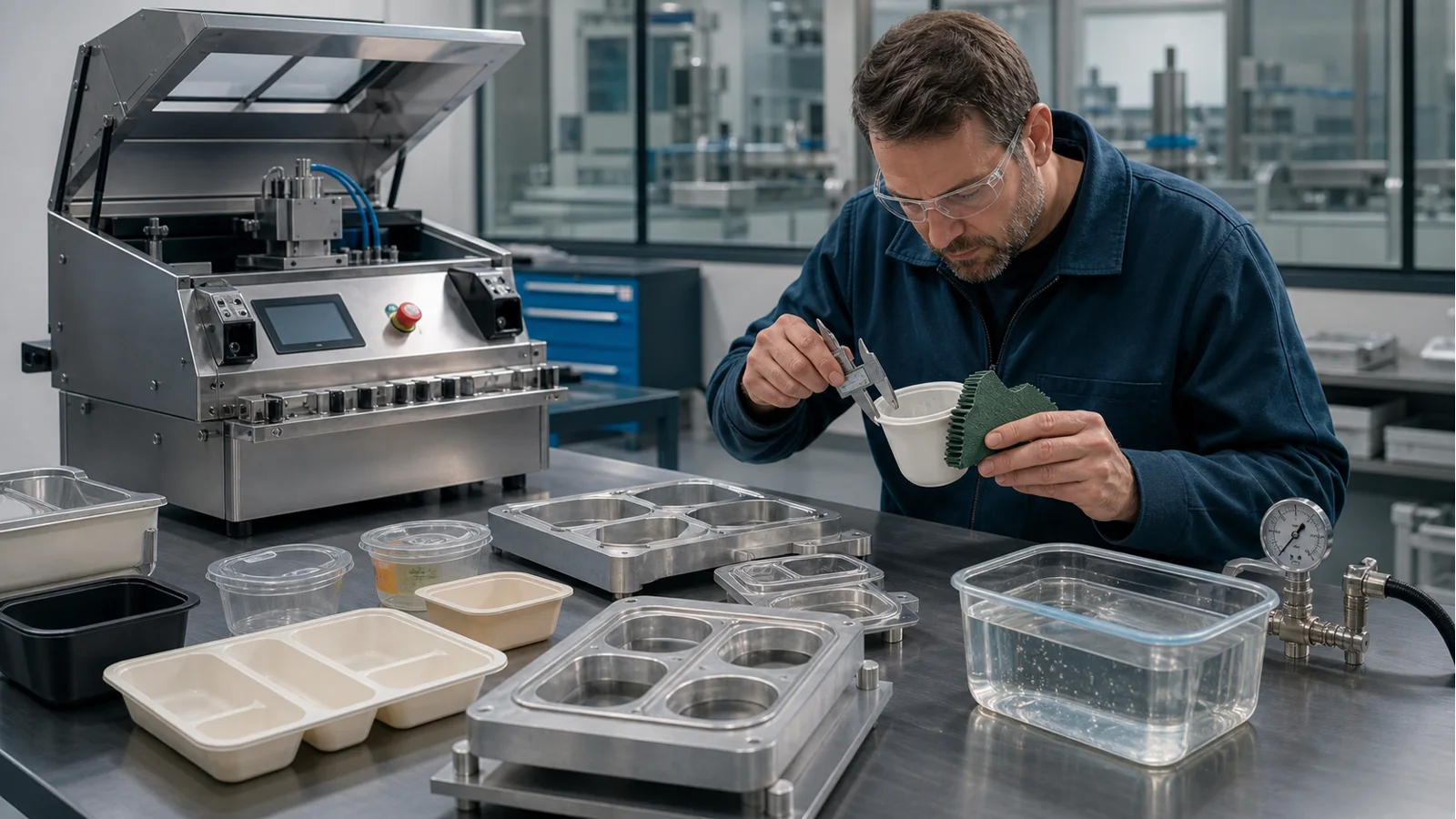
- Irregular appearance is not a process basis; what really needs to be confirmed is whether the mouth is flat, whether it is round, whether the cap has a liner, and how the container is clamped. If samples do not meet these prerequisites, custom fixtures cannot replace the sealing principle.
Solution summary prepared for you
- Irregular containers do not default to one sealing method. Flat rims can be tested with an in-line heat sealing machine for bottles, round mouths with cap liners can be tested with induction equipment, and paper-plastic cans with film se...
- Induction sealing depends on the round bottle mouth, cap liner, and fit condition, not the bottle body appearance. Square or oval bottle bodies can also be tested with actual samples if the mouth conditions are met.
- Non-standard projects usually determine the sealing principle first, then configure tooling and food-grade changeover parts. If the rim or sealing components do not meet the process prerequisites, adding tooling alone cannot solve the se...
Route comparison
- Containers with irregular body but flat rim and film that can be directly positioned for heat sealing.
- Film directly covers the flat rim, allowing sample verification of container support, film positioning, and heat sealing condition.
- The rim must form a continuously supportable sealing surface, and the film heat-seal layer must be compatible with the container material.
- When the rim is clearly uneven, easily deformed under pressure, or cannot stably hold the film, adjust the container and packaging material structure first.
- Use an in-line heat sealing machine for bottles, and configure positioning tooling or changeover parts according to the container shape.
- Irregular bottle body with round bottle mouth, aluminum foil composite liner in the cap, and stable pressing against the rim after capping.
- Induction equipment heats through the aluminum foil layer in the cap; with an irregular bottle body, testing can still focus on the round bottle mouth and liner fit.
- The bottle mouth should be a round structure suitable for induction, and the cap liner must match the bottle material and rim.
- When the bottle mouth itself is irregularly shaped, or the cap liner cannot evenly fit the rim, induction inner sealing is not used.
- Evaluate among benchtop air-cooled, water-cooled, or universal induction aluminum foil sealing machines based on station and continuous operation requirements.
- Packaging where paper or plastic cans are first film-sealed at the rim and then require an outer cap to be pressed.
- Direct film sealing and outer cap pressing can be combined in sequence, and paper-plastic cans can be stabilized with dedicated changeover parts.
- Can mouth, film, outer cap, and support structure must be sampled as a complete set; multiple specifications should be verified for changeover one by one.
- When the packaging uses an induction liner inside the cap, or there is no outer cap pressing step, return to the corresponding other routes.
- Use a paper can/plastic pail aluminum foil film sealing and press capping machine, and configure food-grade sealing rings, cleaning consumables, and changeover parts according to actual can samples.
Associated Equipment / Consumables
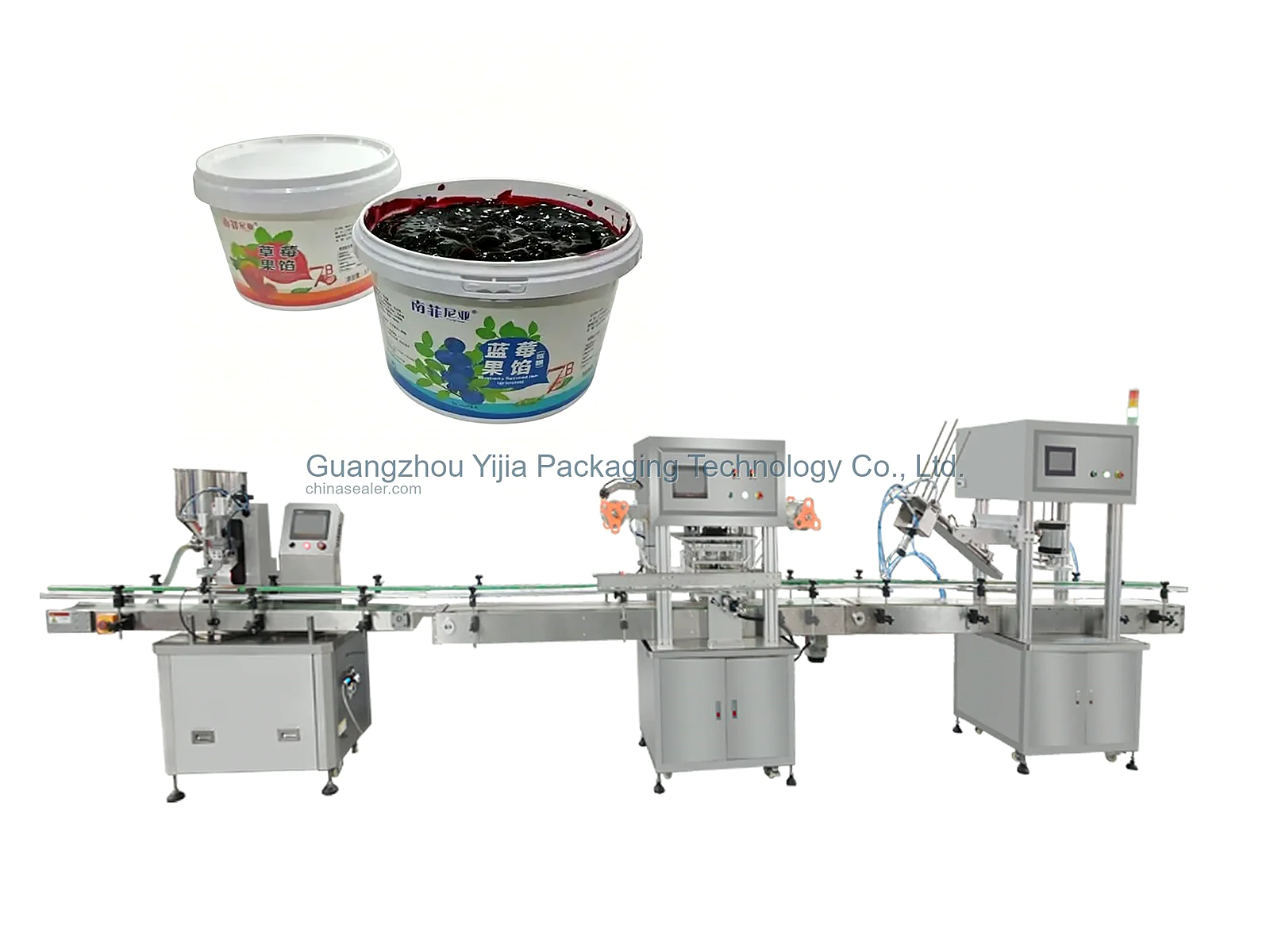 Paper Can and Plastic Pail Foil Heat Sealing and Capping Machine
The machine places foil directly on a paper can, plastic can or pail rim, heat-seals it, then presses the required closure. This differs from induction sealing a foil liner inside a tightened cap. Trial the container,...
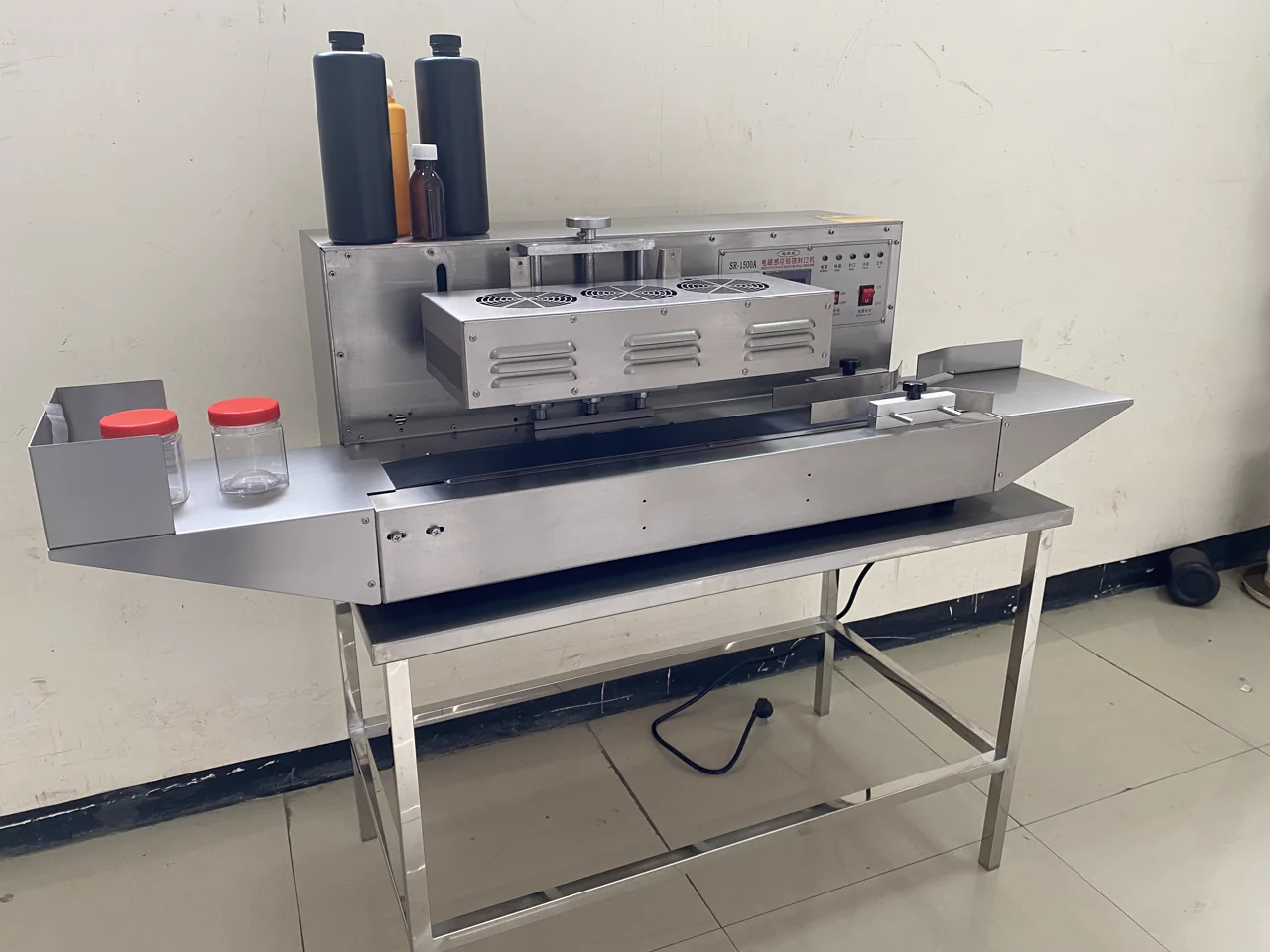 Benchtop Air-Cooled Induction Foil Sealer
Rim and support condition sampling; Irregular shape does not necessarily require a custom whole machine; first determine the sealing principle, then determine clamping and ch...
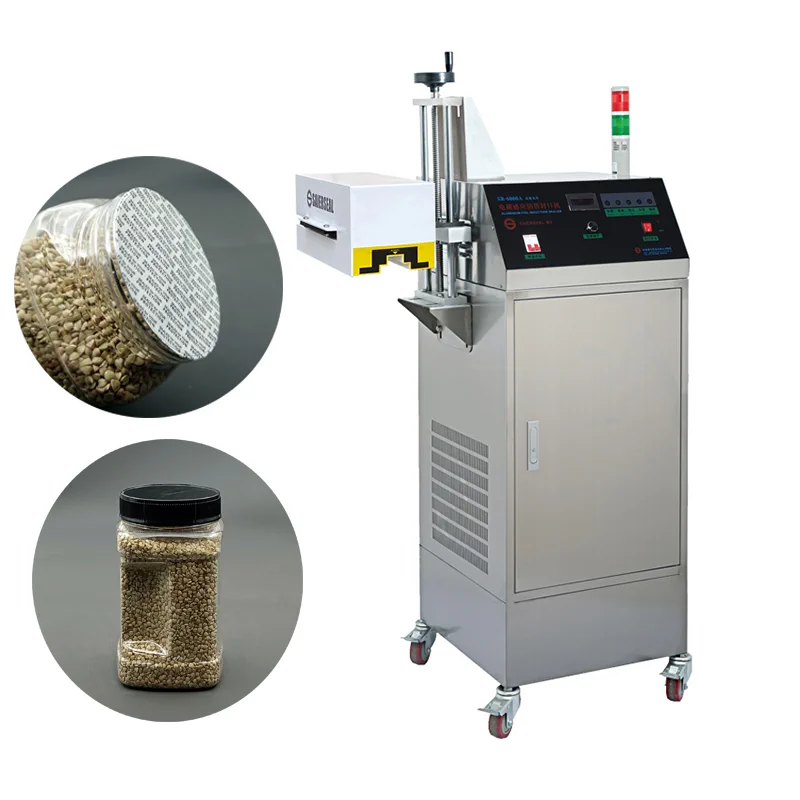 Water-Cooled Inline Induction Cap Sealer
Rim and support condition sampling; Irregular shape does not necessarily require a custom whole machine; first determine the sealing principle, then determine clamping and cha...
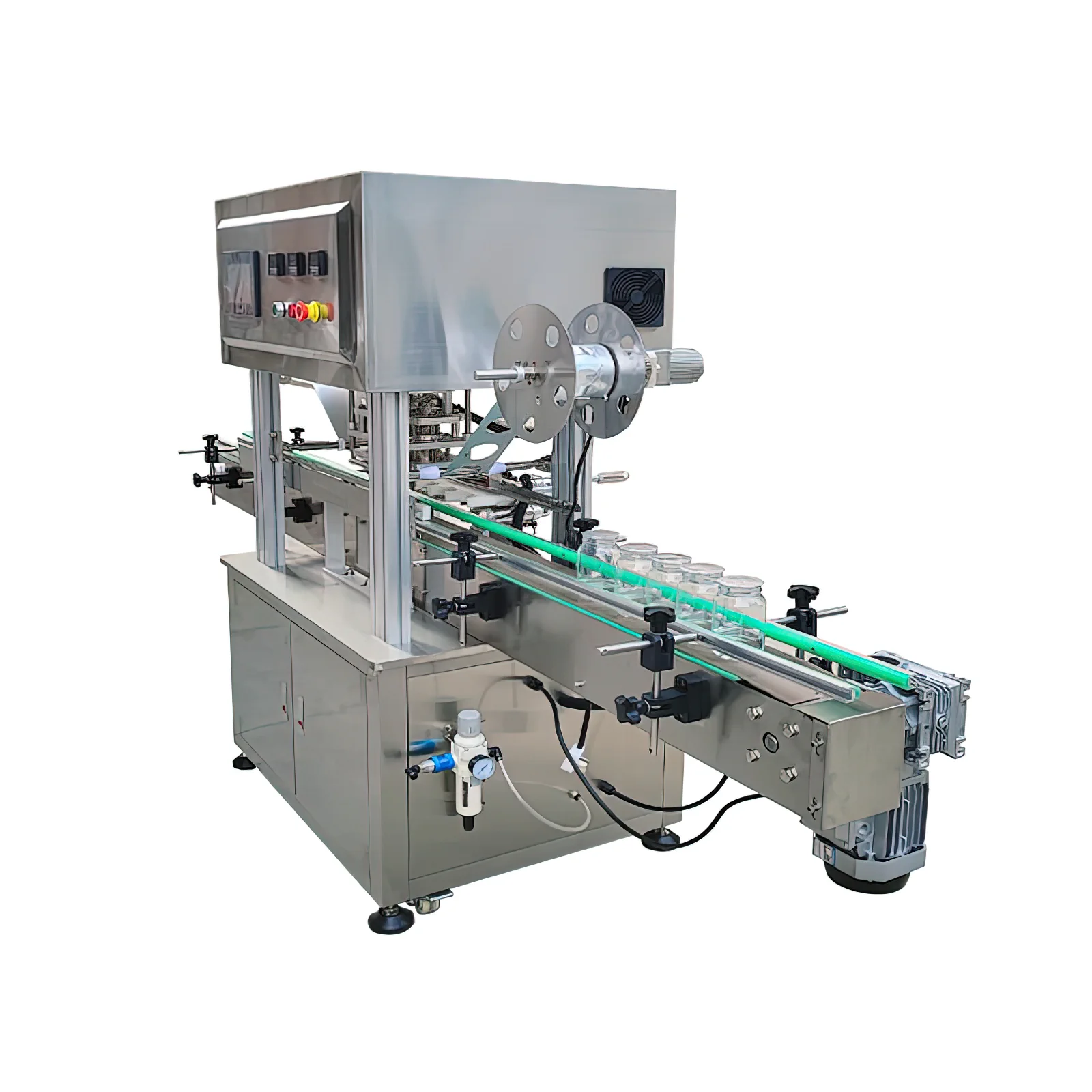 Inline Heat-Press Bottle Sealing Machine
Direct heat sealing film; The bottle body can be irregular, but the sealing contact surface must meet the sample conditions for direct heat sealing; In-line heat sealing machi...
Core process
First fix the posture of the container in actual conveying or station, then measure the rim and observe supportable positions to determine whether tooling can achieve stable repeated positioning.
When the rim is flat and the film can be pressed directly, use an in-line heat sealing machine for bottles to verify film positioning, support, and heat sealing condition.
When the round bottle mouth and cap liner fit stably, choose the equipment form among benchtop air-cooled, water-cooled, or universal induction aluminum foil sealing machines.
When paper or plastic cans require direct film sealing plus an outer cap, use an aluminum foil film sealing and press capping machine, and configure food-grade changeover parts according to actual samples.
Sample testing should cover empty containers, rim after filling, sealing components, and outer cap state to confirm that positioning can be reproduced.
After the main sealing is completed, if labeling is needed, evaluate a round/square bottle labeling machine based on the stable display surface of the irregular container; other downstream equipment should be confirmed according to actual needs.
Sample details
Full view of the container is used to identify center of gravity, lugs, handles, and clampable areas; close-up of the rim is used for initial routing of the sealing method.
Provide photos of the container from all directions, close-ups of the rim, and video of the standing state after fillingRim geometry and support conditions relate to film positioning, heat sealing support, or cap liner fit.
Measure rim shape, width, flatness, bottle mouth diameter, and dimensions available for tooling positioningDirect film, cap liner, and outer cap correspond to different equipment; providing only the container body is not sufficient.
Submit production film, liner, and outer cap, and explain the expected assembly sequenceMulti-specification changeover, production rhythm, and on-site handover methods are used to determine single-machine layout and number of tooling.
List production arrangements for each specification, changeover frequency, front and back conveying direction, and available spaceActual sampling should reproduce product content, rim contamination, and container stress, avoiding judgment based only on empty shells.
Provide samples after filling and packaging acceptance methods, and arrange heat sealing, induction, or press capping testsCommon selection mistakes
Irregular appearance is only a clue for clamping; sealing equipment is still determined by the rim, film or liner, and outer cap structure.
Tooling can stabilize the container position, but if the rim is uneven, the sealing component is wrong, or support is missing, tooling cannot replace process conditions.
Heat-sealed film and induction liner in the cap have different heat-seal layers and placement methods; they should be tested separately with production samples.
The same irregular container may show different center of gravity and rim contamination when empty and after filling; production state should be reproduced before line integration.
The degree of non-standardization should be broken down into rim, clamping, sealing components, and changeover actions, and judged item by item, not concluded only by appearance complexity.
When sauce, oil, or powder enters the sealing contact surface, it changes the fit of the heat-sealed film or cap liner.
View detailed technical notes
Check the sealing surface first, then the irregular appearance
The shape of a non-standard container only indicates that positioning may be more difficult; it does not directly determine the sealing equipment. What really matters is whether the rim is flat, whether the bottle mouth is round, whether the cap has a liner, and whether the container can be stably supported.
Three mouth conditions correspond to three routes
When the rim is flat and the film directly covers it, evaluate an inline heat sealing machine for bottles. When the round bottle mouth is paired with an aluminum foil liner inside the cap, evaluate induction equipment. For paper-plastic cans that require film sealing first and then an outer cap, use an aluminum foil film sealing and press capping machine.
Direct heat sealing requires a continuous flat rim
An inline heat sealing machine for bottles is suitable for packaging where the film can be placed directly on a flat rim. Irregular bottle bodies require positioning fixtures and support. Sample testing should check film position, container compression, and heat seal layer bonding; fixtures cannot compensate for a discontinuous sealing surface.
The induction route depends on the bottle mouth, not the bottle body
The induction route with a cap liner requires a round bottle mouth or compliance with corresponding induction conditions, and after capping the liner must lie flat against the rim. The choice between benchtop air-cooled, water-cooled, or universal induction foil sealers is then determined by container passage and sample testing.
Film sealing and press capping handle paper-plastic can combinations
For paper or plastic cans with a structure where the aluminum foil film is placed directly and then an outer cap is pressed, use a paper can/plastic pail aluminum foil film sealing and press capping machine. Food-grade sealing rings, cleaning consumables, and change parts are configured according to the actual combination of can, film, and cap.
Fixtures only solve positioning and support
During sampling, first reproduce the container's standing, clamping, and compression state in the equipment. Fixtures handle positioning and support, but the sealing result is still determined by the rim, film or liner, cap components, and process testing.
The main machine follows the verified sealing principle
Direct heat sealing, induction with cap liner, and film sealing with press capping cannot replace each other. First use a complete set of samples to determine one process, then select the corresponding main machine and change parts.
Food-grade change parts are configured according to actual samples
Food-grade sealing rings, cleaning consumables, and change parts should be configured according to contact position, cleaning method, and multi-specification changeover requirements. Each container requires recording of clamping points and changeover actions.
Labeling is an independent station after the main sealing
After the main sealing is stable, if body labels are needed for cans or bottles, a round/square bottle labeling machine can be used for sample evaluation. The label display area, container support, and application position must avoid sealing and clamping areas.
Common questions
How to determine the sealing principle for irregular containers first?
First check the rim and the sealing components. If the rim is flat, direct heat sealing can be evaluated; for a round mouth with an inner liner in the cap, induction sealing can be evaluated; for paper-plastic cans requiring film sealing plus an outer cap, use film sealing with press capping.
Can the same equipment switch between multiple irregular containers?
It can be evaluated, but each specification must be checked for positioning, rim, film or liner, and outer cap. Compatibility is confirmed by changeover testing with actual samples.
Can non-standard configuration be locked with only photos?
Photos and key dimensions can be used for initial routing, but tooling, changeover parts, and sealing process still require actual samples of containers and packaging materials for testing.
Which sealing components should be prepared for non-standard container samples?
Submit the film or cap liner intended for mass production. Material descriptions can assist in judgment, but final heat sealing or induction conditions come from testing complete sample sets.
How to accept the sealing condition of irregular mouths?
Observe rim continuity, film or liner fit, container compression, and opening state, then complete corresponding tests according to product packaging requirements.
When is non-standard equipment suitable for integration into a production line?
First complete single-machine sampling and multi-specification changeover testing. When line integration is needed, plan conveying based on the stable posture of the container and the handover conditions between front and back.