Solution topic
Irregular Cup Tray Sealing: Verify Rim Continuity First, Then Discuss Tooling and Modified Atmosphere
For non-standard irregular cups and trays, first confirm rim continuity and film with actual samples, then choose tabletop heat sealing, pre-cut film sealing, continuous line, or m
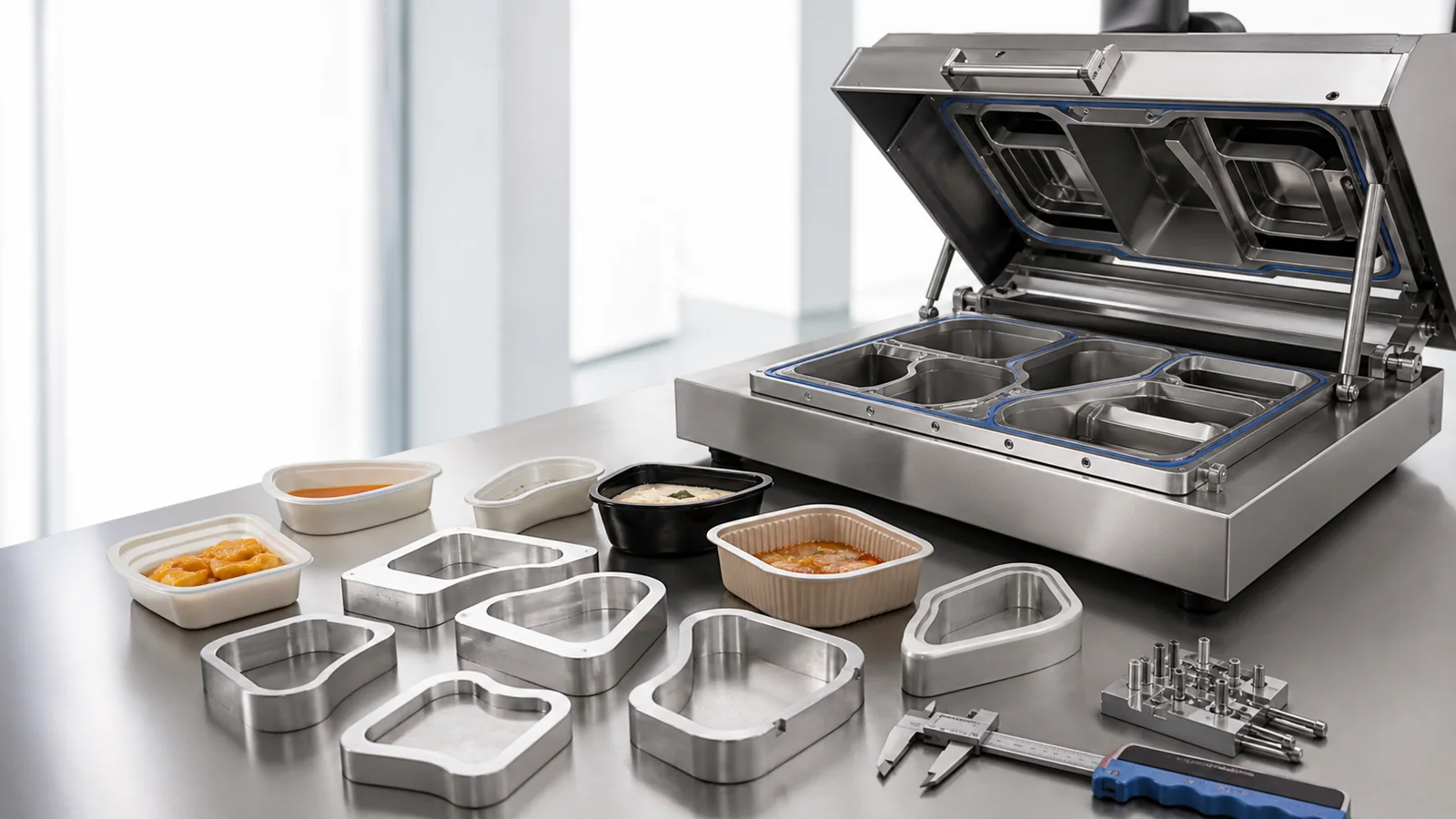
- Irregular cups, multi-compartment trays, and special trays can only be reliably evaluated for heat sealing when the rim has a continuous pressing surface. Modified atmosphere also requires confirming the barrier properties of the tray and film. Please provide container and film samples, rim drawings, contents, preservation goals, and capacity.
Solution summary prepared for you
- Whether irregular cup trays can be sealed depends first on whether corners, recesses, and multi-compartment outer edges together form a continuous sealable surface, then on tooling.
- Irregular multi-compartment trays can first use a tabletop multi-compartment tray sealing machine for tray and film samples, and the actual sealing results determine the next automation step.
- Pre-cut lidding film projects should simultaneously verify film size, pickup direction, and tray positioning; an automatic pre-cut film pickup and tray sealing machine can be evaluated.
Route comparison
- Suitable for prototyping or small-batch projects that need to verify whether irregular outer frames, compartment perimeters, and film can be continuously heat sealed.
- A tabletop multi-compartment tray sealing machine makes it easy to establish trial sealing results with actual trays and film, then refine tooling and changeover requirements.
- The tray rim must have a continuous sealing surface; each different contour should be checked for corresponding film and positioning conditions.
- When container corners lack effective sealing edges, or tray types are still frequently modified, it is not suitable to directly build continuous production configurations.
- First complete representative samples with a tabletop multi-compartment tray sealing machine; film and food-grade change parts are confirmed together with the tray type.
- Suitable for production arrangements that already use pre-cut lidding film and require the machine to place film onto trays in a fixed orientation.
- An automatic pre-cut film pickup and tray sealing machine can verify film pickup, placement, and heat sealing in continuous motion.
- Film contour, stacking separation, tray positioning, and irregular rim coverage must all be satisfied simultaneously; film changes also require rechecking.
- When film material is not yet finalized, or film orientation and tray types change frequently, use single-piece trial sealing to confirm basic compatibility first.
- Prepare sufficient tray and film samples to test automatic pickup and tray sealing machine, and record film placement and each irregular sealing edge.
- Suitable for projects that have already set modified atmosphere packaging goals and can provide matching trays, films, contents, and gas conditions.
- A tray-type MAP sealing machine combines the modified atmosphere step with sealing and can conduct real-sample testing around clear packaging requirements.
- Modified atmosphere results depend on the barrier properties of the tray and film and the continuous sealing edge, and cannot be determined by the equipment name alone.
- When the project only requires ordinary heat sealing, or existing packaging materials do not meet the required conditions, complete the basic sealing solution first.
- Use a tray-type MAP sealing machine for dedicated sample testing. After the basic process is stable and capacity is clear, discuss continuous line integration.
Associated Equipment / Consumables
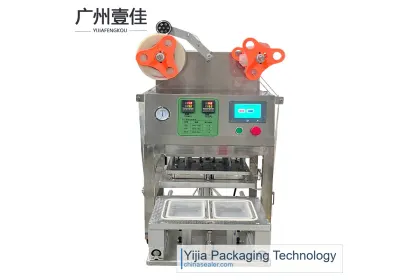 Benchtop Roll-Film Tray Sealing Machine
A benchtop roll-film sealer for manually loaded cups, bowls and trays. Trial the rim and ribs, lidding seal layer, tooling fit, trimming, peel and leak result as one system. Compare MAP or continuous filling-sealing e...
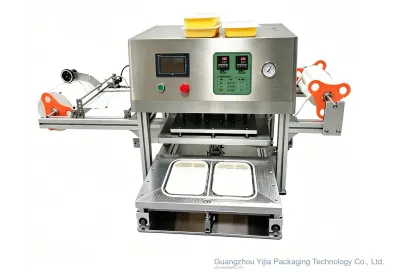 Tabletop Multi-Compartment Meal Tray Sealer
Desktop Multi-Compartment Lunch Box Sealer: Match film and change parts as a set; Film material changes affect trial sealing conditions; after tooling or seal replacement, recheck with actual samples of that specifica...
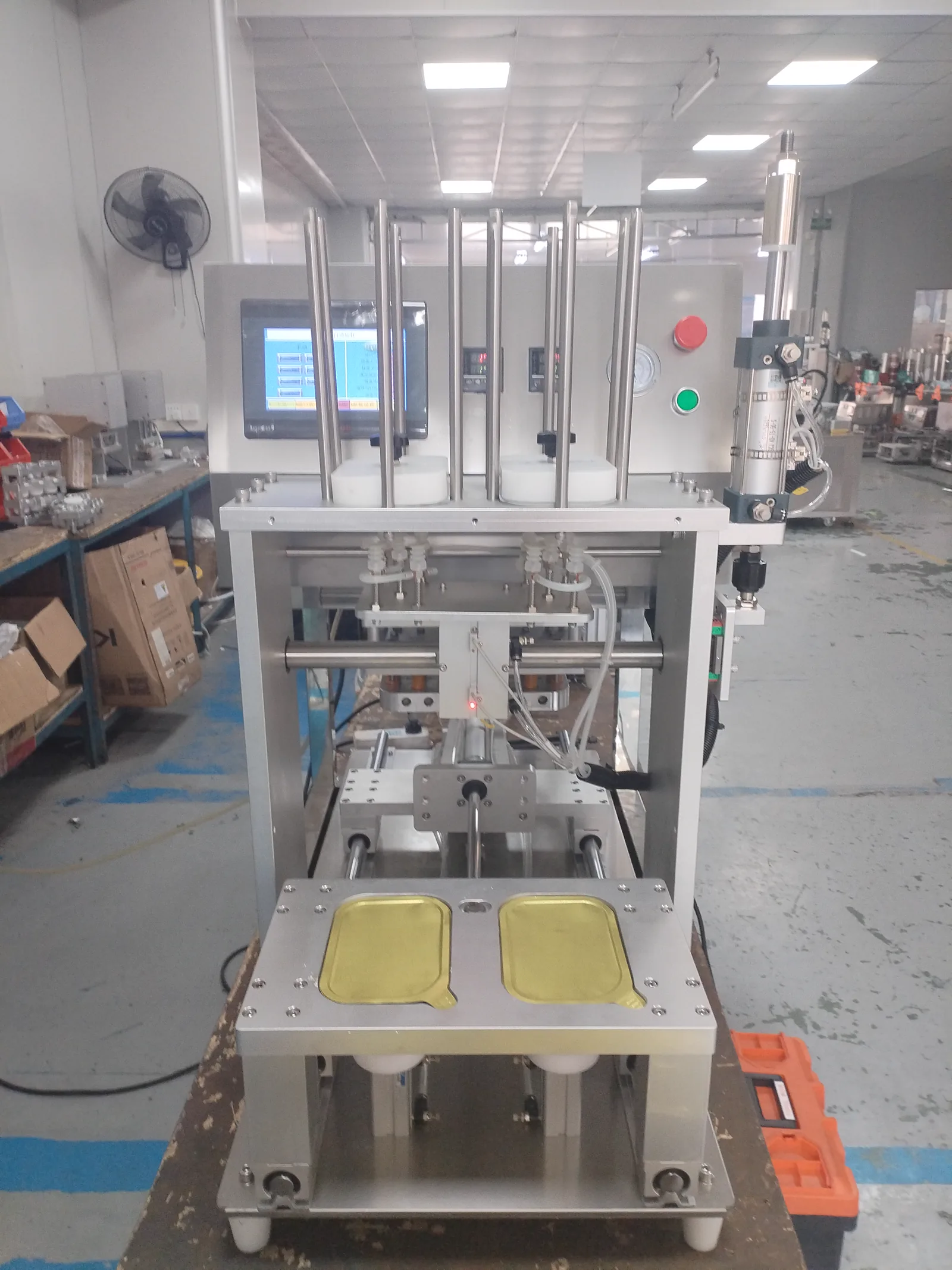 Automatic Pre-Cut Lid Pick-and-Place Tray Sealer
First check whether the irregular rim can be continuously pressed and sealed; Being able to fit the outer contour into tooling does not mean stable sealing; the area w...
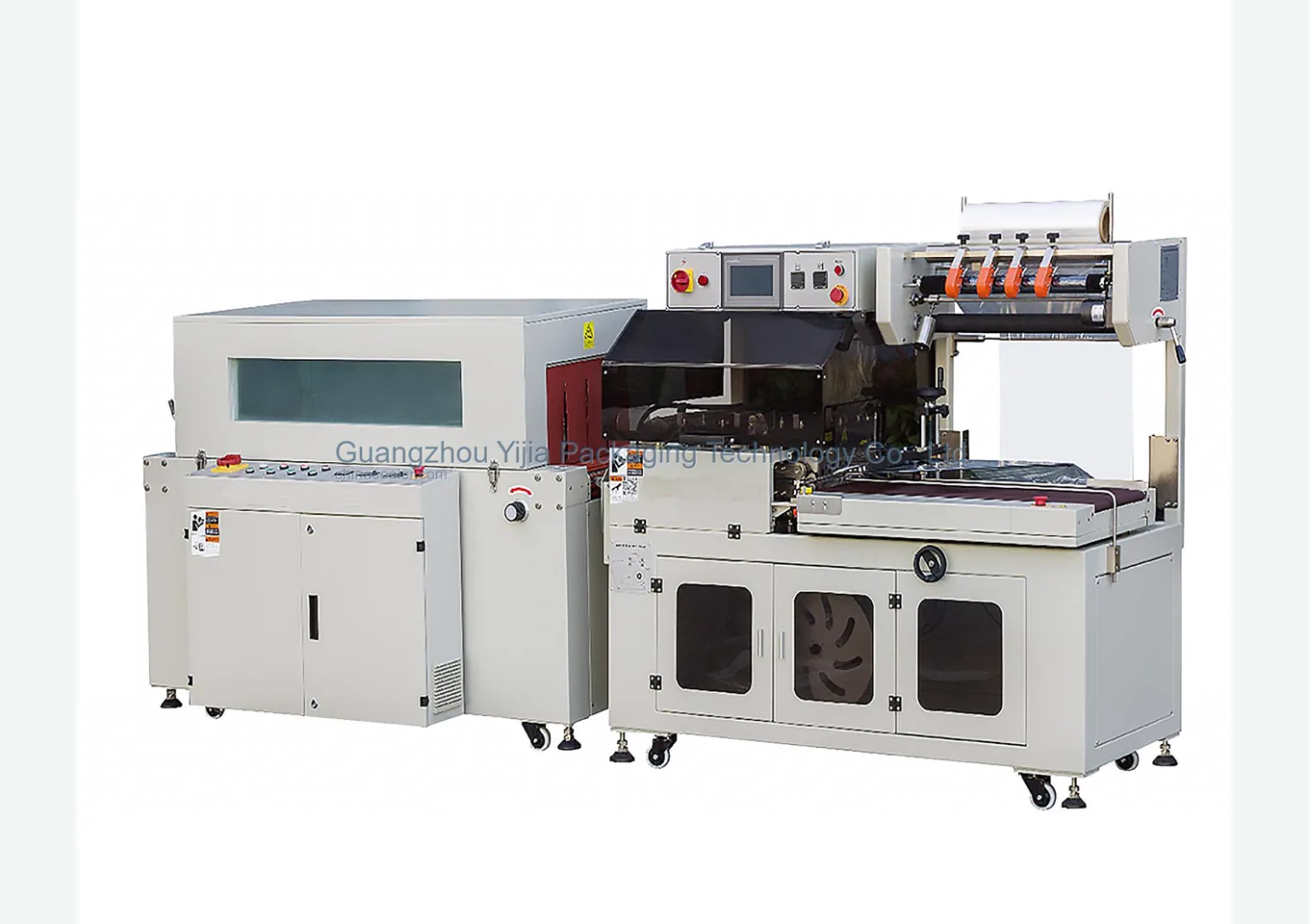 L-Sealer Shrink Wrapping Line
First check whether the irregular rim can be continuously pressed and sealed; Being able to fit the outer contour into tooling does not mean stable sealing; the area where film and rim c...
Core process
Use actual cups/trays, film, and contents to inspect the entire rim, including corners, recesses, and multi-compartment outer edges, to see if they form a continuous sealing surface.
A tabletop multi-compartment tray sealing machine can be used for representative tray and film samples, observing heat seal contact on outer edges and compartment perimeters cell by cell.
When using pre-cut lidding film, an automatic pre-cut film pickup and tray sealing machine can simultaneously check film pickup, orientation, and tray positioning.
When a project proposes a modified atmosphere goal, a tray-type modified atmosphere sealing machine requires dedicated sample validation with tray, film, and gas conditions.
Each rim type requires matching small cup sealing film or easy-peel film, as well as food-grade change parts that meet product contact requirements.
After representative tray types are trial sealed stably, evaluate a chain-plate continuous sealing line for cups/trays based on capacity, feeding direction, and changeover arrangement.
Sample details
This information is used to determine whether a continuous sealing surface exists and to define tooling support and container positioning scope.
Provide actual samples of each irregular cup tray, and clearly photograph corners, recesses, compartment edges, and the entire rim. Drawings can be submitted as well.Film material determines heat seal compatibility. Pre-cut film also requires checking contour, orientation, and positioning allowance during automatic pickup.
Send the film material you plan to use, noting whether it is roll film or pre-cut film, and which tray specification it matches.Contents may contaminate the sealing edge during feeding or filling; trial sealing conditions should cover containers after actual filling.
Specify whether the contents are liquid, paste, powder, or solid, and provide photos or actual samples of the rim condition after filling.The two processes require different validation items; determining the packaging goal first avoids mistakenly adding a modified atmosphere module to an ordinary heat sealing solution.
Clarify whether only heat sealing is needed or if modified atmosphere packaging is required. Modified atmosphere projects also need to specify tray and film conditions.The production mix determines whether to start with tabletop trial production, automatic pre-cut film pickup, or plan a continuous sealing line after the process is stable.
List all tray types, production volume for each, main specifications, changeover frequency, and planned manual or continuous tray feeding method.Common selection mistakes
Inspect the tray sample all around, mark the sealable areas, and design trial sealing tooling based on the actual rim.
Multi-angle photos can be used for initial communication, but actual trays and matching film should be provided before tooling confirmation.
Automatic pickup and placement trials must simultaneously observe film separation, orientation, tray positioning, and coverage position before heat sealing.
First clarify freshness and packaging requirements. If modified atmosphere is needed, conduct dedicated validation with contents, tray, and barrier film.
First stabilize trial sealing of the main tray type with tabletop equipment, then consider a chain-plate line based on changeover frequency and feeding method.
View detailed technical notes
Check the Full Sealing Edge for Irregular Containers First
Cup and tray shapes can be complex, but the film must be pressed onto a continuous rim. If corners, recesses, or multi-compartment dividers interrupt the contact surface, changing the machine name alone will not solve the sealing problem.
Send Container, Film, and Contents Together as Samples
Use actual containers to observe the rim and deformation under pressure, use production film to judge heat sealing compatibility, and use filled samples to reveal edge contamination. Only when all three conditions are combined can the result approach actual production.
Start with Tabletop Equipment for Multi-Compartment Irregular Trays
A tabletop multi-compartment tray sealing machine is suitable for initial representative samples. Check the outer rim and each compartment perimeter separately to confirm the film can fully cover and adhere along the effective rim.
Pre-Cut Film Requires Verification of Pickup and Orientation
When using pre-cut film, check not only the film dimensions but also automatic separation, pickup orientation, and placement. An automatic pre-cut film pickup and tray sealing machine must be tested with the actual film stack and trays.
Modified Atmosphere Is a Conditional Independent Branch
Only after clearly defining the modified atmosphere packaging goal should a tray-type MAP sealing machine be evaluated. The barrier properties of the tray and film, the contents, and the continuity of the irregular sealing edge must all be included in dedicated sample testing.
Consumables and Change Parts for Each Irregular Rim
Small cup sealing films, easy-peel films, and food-grade change parts should be mapped to each tray type. When switching to a different rim or film, the tooling contact and post-seal performance must be rechecked.
Continuous Production Is Built on Stable Trial Sealing
After the main tray types, films, and heat sealing process are stabilized, evaluate a chain conveyor continuous cup/tray sealing line based on capacity and tray feeding direction, avoiding bringing unresolved sealing edge issues to the full line.
List All Changeover Quantities When Submitting Requirements
Listing all cup and tray specifications, corresponding films, production share, and changeover frequency in one document can reveal tooling commonality and the switching arrangement for a continuous line.
Common questions
Can irregularly shaped cup trays always be sealed with custom tooling?
First check whether the entire rim provides a continuous, sealable edge. The shape can be positioned with tooling, but a broken rim cannot be turned into a sealing surface by tooling alone.
Which equipment should be tried first for multi-compartment trays?
Start with a tabletop multi-compartment tray sealing machine using actual trays and film to test sealing, checking the outer frame and each compartment edge, then decide whether automatic film pickup or continuous line integration is needed.
Why must pre-cut film be sent together with the tray?
The film contour, pickup direction, and placement accuracy must align with the irregular rim; a single film cannot verify the coverage position after automatic pickup and placement.
What additional conditions are needed for modified atmosphere packaging of irregular trays?
Please specify the modified atmosphere packaging goal and provide the tray, film material, and contents. Equipment evaluation must also verify packaging material barrier conditions and actual sealing edge continuity.
Can only one set of tooling be made when there are many specifications?
Only when the rims and positioning conditions are truly consistent can tooling be shared. All specifications should be overlaid and compared first, then determine which change parts can be shared and which must be independent.
When is it suitable to upgrade to a continuous sealing line?
When the main tray type, film material, and trial sealing process are stable, and production capacity and tray feeding method are clear, then evaluate a chain-plate continuous sealing line.