Solution topic
Heat Sealing, Induction Foil Sealing and Online Visual Positioning Inspection for Irregular Bottles and Pails
With the bottle online heat sealing machine and online checkweighing and visual inspection system as the core, add pail heat sealing, air-cooled induction sealing, or paper can/pla
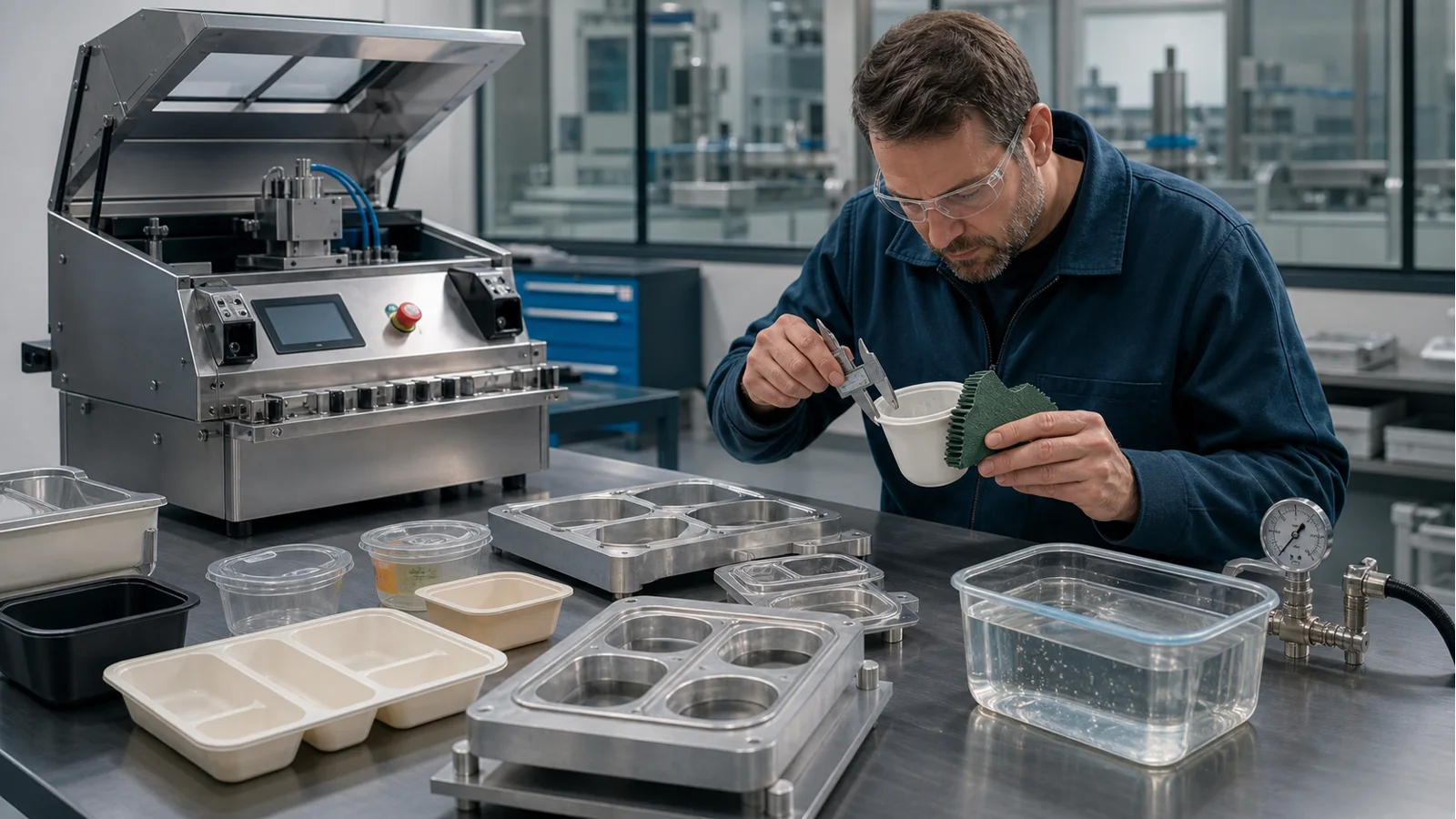
- Oval bottles, square bottles, pails with handles, or irregular trays have no unified clamping reference. The sealing head position, container support, and visual inspection angle must be designed around the actual product. Ordinary round bottle experience cannot be directly applied.
Solution summary prepared for you
- For irregular bottle and pail sealing, first choose the in-line heat sealing, pail heat sealing, or film sealing and cap pressing branch based on rim, support, film/lid, and actual conveying posture.
- After the cap liner structure passes complete cap trials, compare the benchtop air-cooled induction foil sealing machine and the induction foil sealing machine.
- Collaborative in-line checkweighing and vision inspection systems are configured based on the actual posture and defect samples of non-standard containers. Do not copy the angle from round bottle experience.
Route comparison
- For projects that can use direct film heat sealing and require continuous sealing around irregular bottle support positioning.
- The in-line heat sealing machine for bottles can verify bottle body support, rim positioning, and front/rear conveying in one trial.
- Rim, film material, bottom, and external interference all require multiple physical samples. Non-standard support and available range are confirmed per project.
- When the packaging actually uses cap liner induction, or the bottle body cannot yet be conveyed stably, switch to the corresponding branch for trial samples.
- The in-line heat sealing machine for bottles is configured according to formal irregular bottles, film material, and site interfaces. Complete support and sealing samples first.
- For large-caliber, handled, or protruding pails and cans that require direct heat sealing or film sealing followed by cap pressing.
- Pail heat sealing and paper can/plastic pail film sealing and cap pressing can be separated by rim and cap action to avoid sharing incorrect supports.
- Pail/can load, external interference, film material, cap samples, and cap pressing direction all need physical verification. Do not select based only on caliber.
- When the container and lid film combination is still changing, complete sample verification first. Do not fix tooling and continuous interfaces.
- The large-caliber pail heat sealing machine is configured according to pail film samples. The paper can/plastic pail foil sealing and cap pressing machine uses complete can film/lid combinations for trials.
- For projects where irregular bottle bodies have matching bottle mouths and cap aluminum foil liners, and need to inspect defined defects under actual posture.
- Induction inner sealing and vision/weight inspection can establish samples separately. Irregular bottle body positioning issues will not be mixed into bottle mouth process judgment.
- Closed cap state, bottle mouth liner, conveying posture, inspection angle, and defect samples all require formal packaging verification.
- When the cap liner combination is not suitable for induction or no inspection items are defined, cancel the corresponding station and retain special sealing sampling.
- The benchtop air-cooled induction foil sealing machine and the induction foil sealing machine are compared with cap sample sets. The collaborative in-line checkweighing and vision inspection system is configured according to actual posture.
Associated Equipment / Consumables
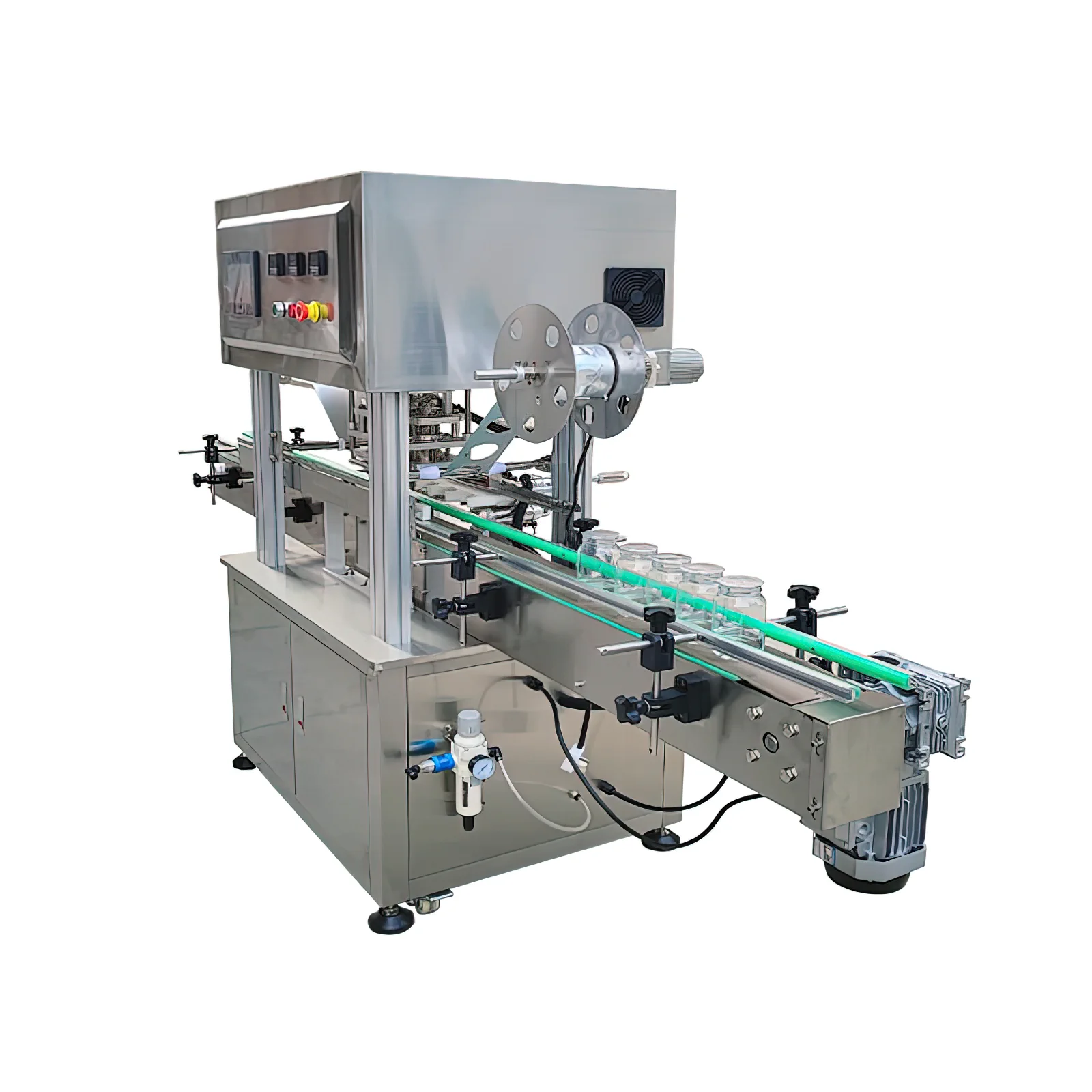 Inline Heat-Press Bottle Sealing Machine
Heat-seal foil or composite lidding directly to bottle and jar rims, with integration into an existing filling line configured per project. Test the container and seal layer before selecting positioning, film feed, se...
 Online Checkweigher and Vision Inspection System
Positioning and defect sample review; Collaborative in-line checkweighing and vision inspection systems are configured according to samples, inspection items, abnormal...
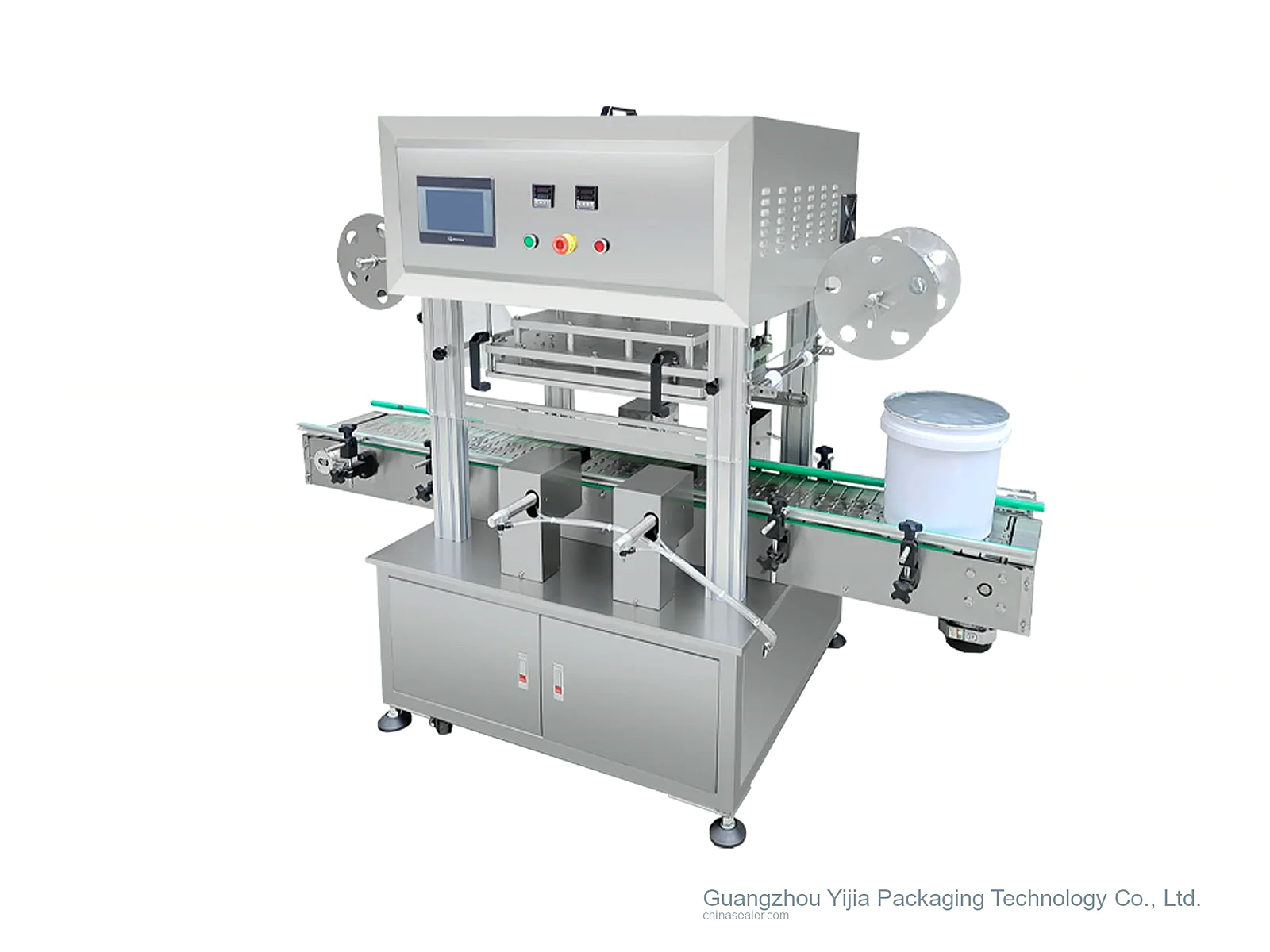 Large-Diameter Pail Heat Seal Sealer
Document irregular containers and rims; Use multiple samples of the same specification to observe tolerances and conveying posture, then determine the relative positions of suppor...
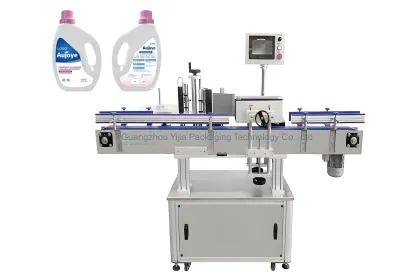 Round-Bottle and Front/Back Labelling Machine
Positioning and defect sample review; Collaborative in-line checkweighing and vision inspection systems are configured according to samples, inspection items, abnormal ac...
Core process
Oval bottles, square bottles, pails with handles, or irregular cans have no unified clamping reference. First record the bottom, center of gravity, protrusions, and opening plane.
In-line heat sealing for irregular bottles, large-caliber pail mouth heat sealing, and paper can/plastic pail film sealing and cap pressing use different supports and film/lid actions. Test by container branch.
Irregular containers establish vision angle and weight rules under actual conveying posture. Inspection targets only come from defined visible defects and weight samples.
Irregular bottle body does not change the adaptation principle of bottle mouth and cap liner. When closed cap samples meet the induction process, proceed to trial sealing.
Handles, protrusions, eccentric center of gravity, and soft bottle bodies change the entry direction, support position, and sealing head reachable space.
Direct heat sealing, film sealing with cap pressing, and induction inner sealing each use corresponding film/lid combinations. Do not select based only on irregular container name.
Sample details
Photos are used to identify support and interference positions. Formal design still requires multiple container samples to observe tolerances.
Please photograph the rim, bottom, handle, protrusions, and bottle body side, and describe the center of gravity and softness/hardness before and after filling.These dimensions are used to select the heat sealing head, pail/can support, and conveying support. Overall capacity alone is not sufficient.
Please indicate key dimensions: opening length/width or diameter, rim plane, container height, bottom, and clampable area.Direct film heat sealing and cap liner induction use different actions. Packaging sample sets should be numbered separately.
Please provide direct heat sealing film according to the process, or submit the complete combination of cap liner, outer cap, and bottle mouth.Production arrangement is used to compare single-machine trial sealing with continuous in-line branches, and to determine support changeover and stop-for-removal.
Please list the main containers, changeover order, manual loading/unloading, planned production rhythm, cleaning, and abnormal handling.The sealing main machine and collaborative inspection are accepted separately. Inspection results cannot replace heat sealing or induction sealing trials.
Please provide front and rear equipment height direction, control signals, normal and abnormal samples, weight rules, and visible items to be inspected.Common selection mistakes
First submit multiple main containers and film/lid combinations, then evaluate the fixture, sealing head, and conveying posture.
Use multiple containers for trial sealing, and use acceptable rim and finished samples as the basis for incoming materials.
Use a complete cap and liner combination for trial sealing, then choose a benchtop air-cooled or other compatible induction sealer.
Trial-feed the main container along the actual entry direction, then determine support, bottle spacing, and inspection angle.
First judge by sealing finished products separately, then provide real normal and abnormal samples to the collaborative system for evaluation.
View detailed technical notes
Irregular Appearance Is Not a Complete Equipment Condition
Oval, square, handles, and protrusions change support and conveying, but the sealing principle still returns to the rim, direct film material, or cap liner.
Separate Heat Sealing and Induction Sealing from Film Lidding and Press Capping First
Irregular bottles online heat sealing, pails and cans direct heat sealing, paper cans and plastic pails film lidding and press capping, and induction foil sealing inside caps use different film and cap actions, so samples must be taken separately for each.
Solve Support First for Irregular Bottle Online Heat Sealing
For the bottle online heat sealing machine, use the actual irregular bottles and film material. First determine the bottom, center of gravity, support, and the position of the rim relative to the sealing head, then perform continuous sealing. Multiple samples are used to observe tolerances and conveying posture. Support fixtures, operating range, and front and rear interfaces are confirmed according to the project; do not copy ordinary round bottle guiding.
Pails and Cans Are Divided by Rim and Cap Action
For large-diameter pail heat sealing machines, trial sealing is carried out around the pail mouth with direct film material. For paper can/plastic pail aluminum foil sealing and press capping machines, use the complete combination of can, film, and cap to verify the sequence of film sealing and cap pressing. Handles, protrusions, pail body load-bearing, and cap orientation are checked separately. Containers with similar names cannot share untested support.
The Induction Route Is Still Determined by the Bottle Mouth, Cap, and Liner
The benchtop air-cooled induction aluminum foil sealing machine or induction foil sealing machine is evaluated only when the actual bottle mouth, cap liner, and closed cap state match. Irregular bottle body involves conveying and positioning, but cannot replace the bottle mouth process judgment. Complete sample bottles are trial-sealed first, and then the actual posture is given to the collaborative inspection system to establish the viewing angle.
Tolerances Need Witnessing with Multiple Samples
A single container can only represent one state. The main batch should cover differences in rim, bottom, center of gravity, and shape, and then determine the clamping and changeover range.
Visual Inspection Uses Real Defect Samples
The collaborative online checkweighing and visual inspection system is evaluated according to the actual conveying posture, weight rules, and visible defect samples. Inspection items are defined by the customer's method.
Photos Support Routing but Cannot Replace Samples
Multi-angle photos and dimensions can initially identify sealing branches and obvious interference, but mold fixtures, film and cap adaptation, and inspection viewing angles are still confirmed with formal samples.
Sealing and Inspection Each Retain Finished Products
For each heat sealing, film lidding and press capping, or induction route, first produce sealed samples. The collaborative inspection then uses corresponding normal and abnormal samples to establish review records.
Common questions
Do irregular rims require dedicated support or tooling?
It depends on the rim contour, bottom, rigidity, and tolerances. For in-line heat sealing of bottles or heat sealing of pails/cans, multiple physical samples are needed to determine the support and contact method.
How should the first round of trials be arranged for multiple irregular containers?
First select the main specifications to complete sealing and conveying samples, then expand based on rim, support, and film/lid differences. You cannot use just one container to represent the entire batch.
Can a judgment be made with only drawings and photos?
You can first identify the sealing principle and obvious interference, but the fixture, tooling, sealing head position, and vision angle still need to be confirmed with actual containers.
Can induction foil sealing be used for all irregular bottles?
No. You should first confirm whether the bottle mouth material, cap liner, and closed cap state match. The bottle body shape is only part of the positioning and conveying conditions.
What items can be inspected after sealing irregular containers?
You can evaluate agreed weight, visible sealing condition, or defined defects according to the project. The inspection method and abnormal actions are verified with formal samples.
How should interfaces for continuous production be reserved for irregular containers?
First record the entry/exit direction, support, bottle spacing, sealing positioning, abnormal removal, and control signals, then arrange interfaces along the main specifications that pass the trial.