Solution topic
How to Configure a Sandwich Tray Sealing and Labelling Line
Standard sandwich boxes are sealed by multi-compartment tabletop equipment. Trays with freshness goals move to tray MAP main machines, while film-wrapped packaging uses automatic f
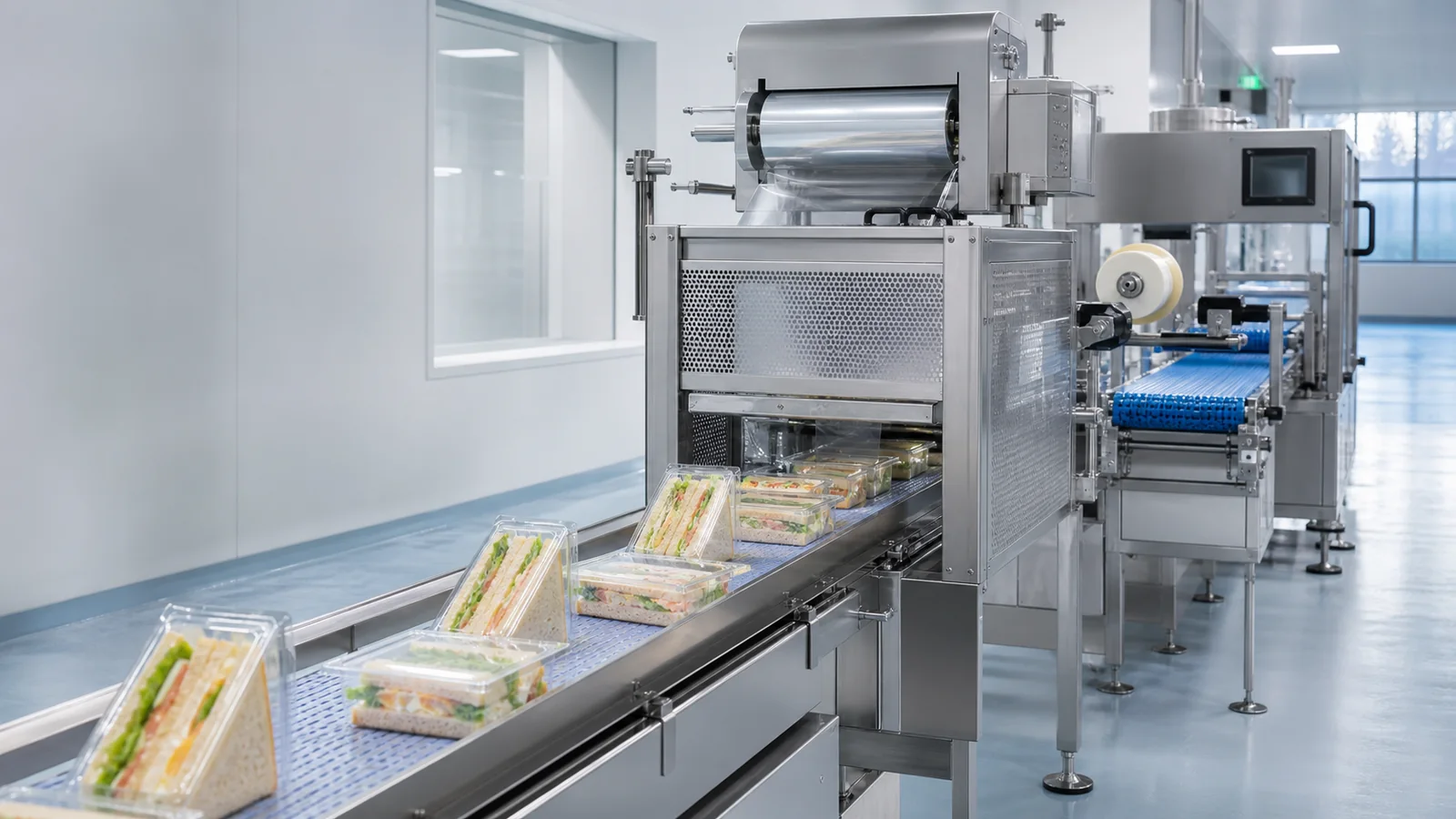
- Select overwrapping, heat sealing or MAP from chilled display, tray rim, film and opening experience, then connect weighing, labelling, coding and inspection.
Solution summary prepared for you
- For sandwich boxes, first distinguish standard heat sealing, tray modified atmosphere with clear objectives, and automatic pre-cut film, then evaluate label batch numbers based on the actual box surface.
- Tabletop multi-compartment meal box sealing machine is suitable for standard sealing edges; tray modified atmosphere sealing machine serves modified atmosphere needs. Automatic pre-cut film main machine handles film separation, placement...
- Packed finished products, tray material and rim, official lid film, cold chain and display objectives, and label layout are key inputs for determining the sandwich packaging route.
Route comparison
- Suitable for projects where sandwich boxes only need reliable standard sealing edges, production allows manual box placement and removal, and box-film sample testing is planned first.
- Tabletop multi-compartment meal box sealing machine is suitable for verifying standard heat sealing with real sandwich boxes; manual placement and removal facilitate observation of food entrapment and sealing edges.
- Tabletop heat sealing is still affected by box opening deformation, food residue, film matching, and manual placement, and does not include gas flushing.
- When the project clearly requires modified atmosphere, or pre-cut film must be automatically placed, switch to the corresponding dedicated main machine.
- Start standard sealing edges with a tabletop multi-compartment meal box sealing machine, configuring molds according to box type and official lid film.
- Applicable to sandwich projects that have clarified modified atmosphere, vacuum cycle, or automatic pre-cut film needs and can submit corresponding box-film finished products for verification.
- Tray modified atmosphere sealing machine handles clear modified atmosphere film sealing; rotary vacuum tray sealing machine and automatic pre-cut film main machine correspond to their respective cycles.
- Modified atmosphere performance must be verified jointly by product, barrier packaging, gas supply, and cold chain. Vacuum or pre-cut film equipment cannot replace this evaluation.
- When standard heat sealing already meets packaging goals, or modified atmosphere and pre-cut film conditions are not yet defined, do not add complex main processes.
- For modified atmosphere needs, choose a tray modified atmosphere sealing machine; for pre-cut film automation, evaluate with an automatic pre-cut film placement tray sealing machine.
- Suitable for stable production where sandwich boxes are already sealed and there are clear tasks for labeling, batch coding, weight, or appearance verification.
- Round/square bottle labeling machine, date/batch inkjet coder, and online checkweighing and vision inspection system can be evaluated separately for different downstream tasks.
- Box surface curves, transparent lids, reflective film, label adhesion, and conveying orientation all affect downstream equipment; collaborative equipment requires real box verification of suitability.
- When packaging layout and inspection standards are not yet determined, do not connect labeling, coding, and vision equipment into a fixed line.
- After the sealed product is stable, first verify box surface labeling and batch numbers, then add checkweighing or vision inspection according to rules.
Associated Equipment / Consumables
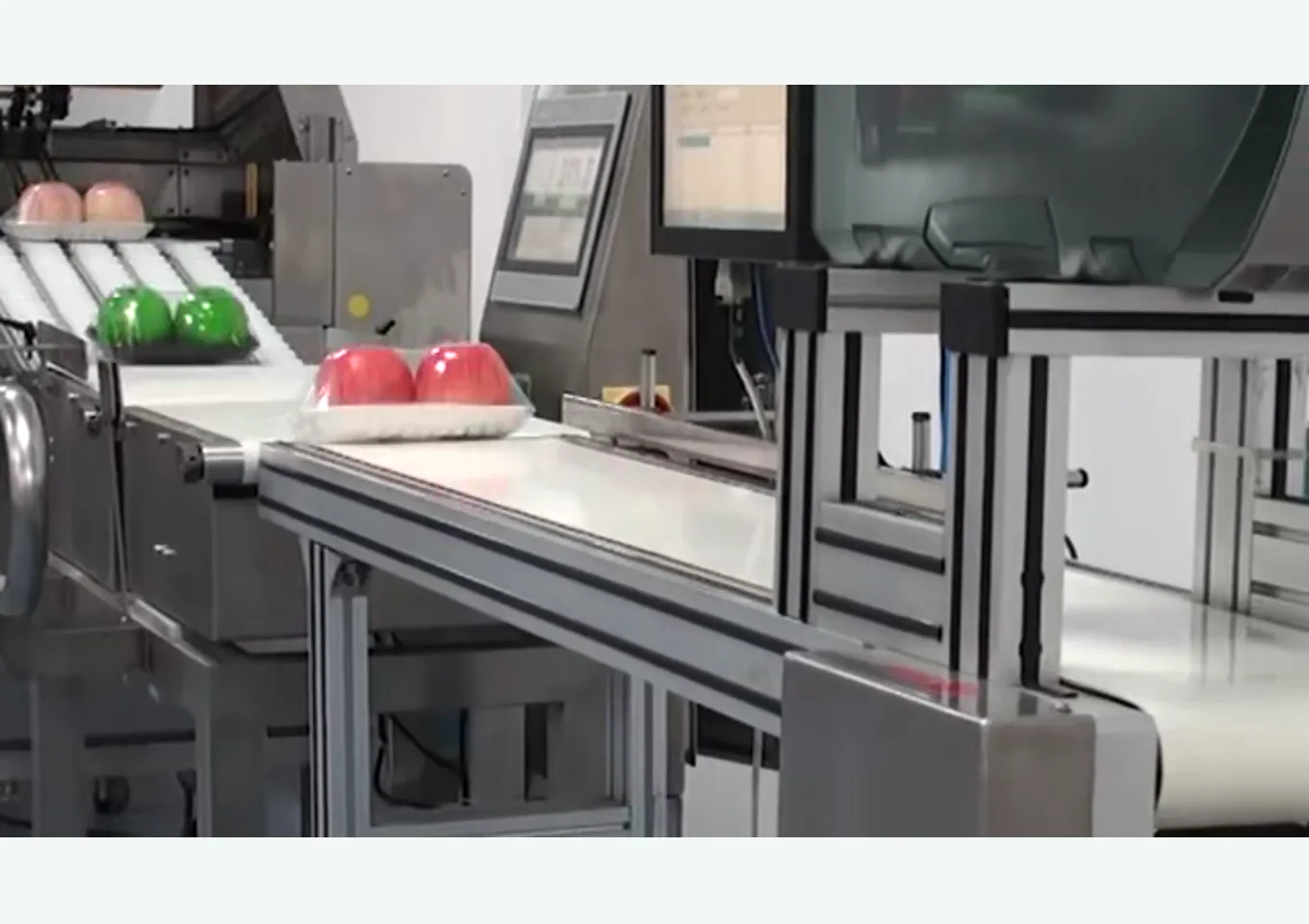 Fresh-Food Tray Wrapping, Weighing and Labelling Line
The line connects tray infeed, stretch-film overwrapping, weighing, label-data generation and application. Confirm tray rigidity, product protrusion or purge, film stretch and cling, weight range, label layout, barcod...
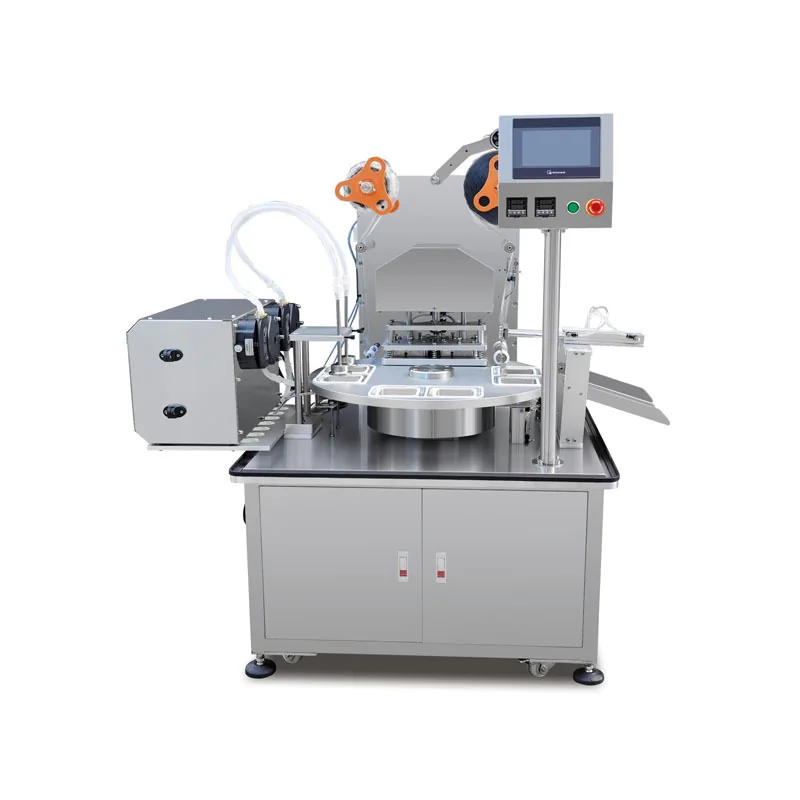 Rotary Turntable Vacuum Tray Sealing Machine
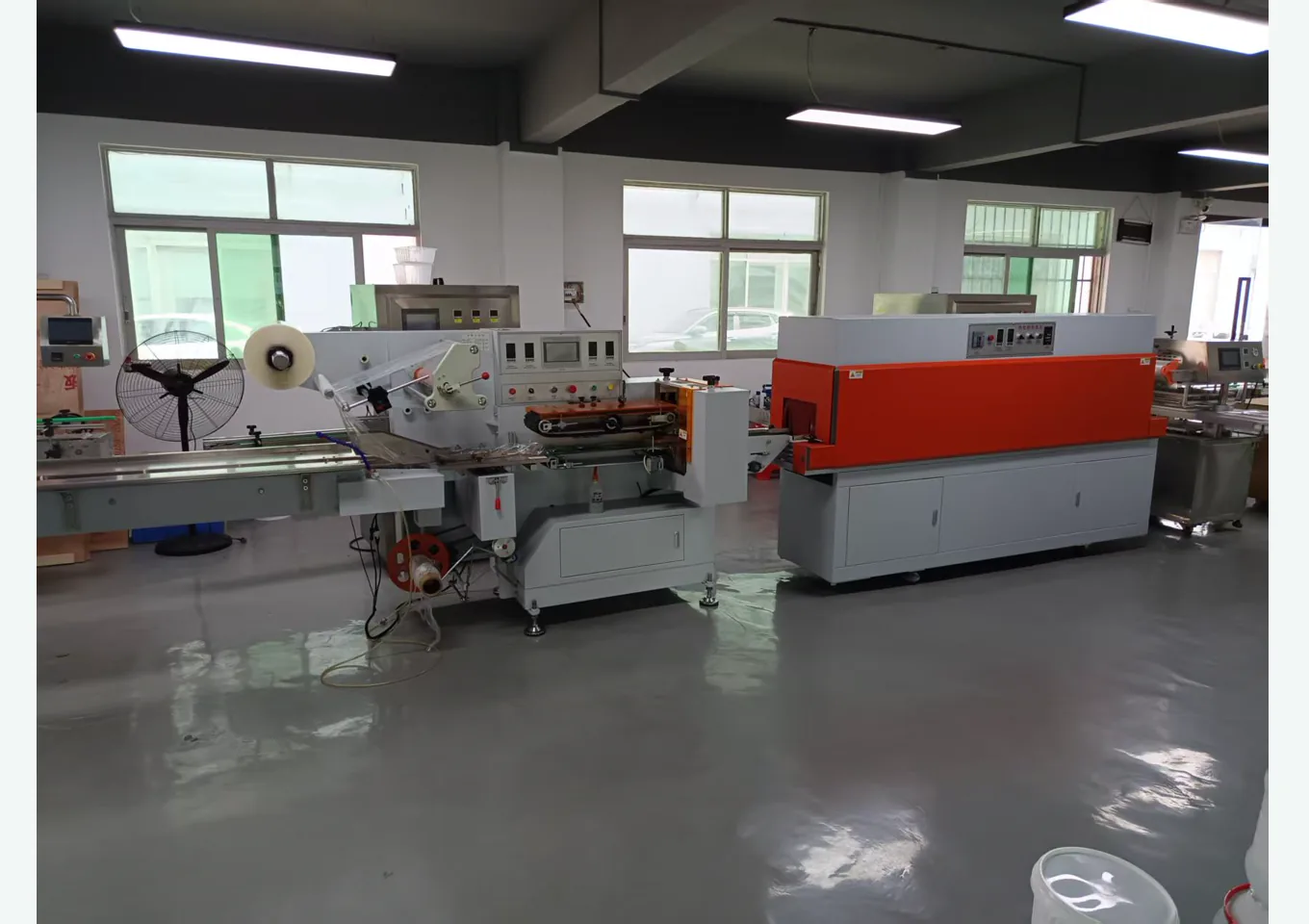 590-Series Shrink Flow-Wrapping Line
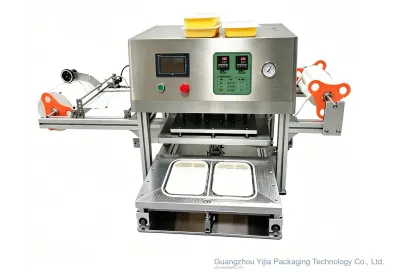 Tabletop Multi-Compartment Meal Tray Sealer
Core process
Test seal empty boxes, boxes filled with sandwiches, and official lid film together, observing the impact of breadcrumbs, sauce, and food height on the rim.
Standard sealing edges can be verified with a tabletop machine. Modified atmosphere, vacuum rotary, or automatic pre-cut film routes should be compared separately after objectives and packaging materials are clear.
Evaluate the round/square bottle labeling machine when the finished box has a suitable labeling surface; the date/batch inkjet coder is arranged separately based on layout and materials.
A continuous downstream section can use a food-grade conveyor line to stabilize box spacing; first ensure the sandwich box does not shift or lift at turns and connections.
When there are clear rules for weight, sealing edge appearance, or label defects, online checkweighing and vision inspection systems can be collaboratively evaluated.
The final equipment chain selects one main machine for standard heat sealing, modified atmosphere, or pre-cut film, then adds the truly needed conveying, identification, and inspection stations.
Sample details
First provide photos and physical samples of the packed sandwich; the rim, food height, and box deformation reflect sealing conditions better than the empty box appearance.
Empty boxes and packed finished products, length/width/height and box opening dimensions, paper or plastic tray material, single-compartment or multi-compartment structure.Roll film and pre-cut film use different feeding actions; heat-seal layer, print position, easy-peel or barrier requirements should also be submitted with samples.
Official film, film feeding format, film surface pattern, heat-seal layer, opening and display requirements, box-film matching samples.Planned output, manual box placement method, and box type changes determine the scope of tabletop, rotary, automatic pre-cut film, or continuous downstream equipment.
Production schedule, shifts, manual stations, box type list, changeover frequency, future conveying direction.If modified atmosphere is proposed, specify product evaluation, refrigerated transport, packaging barrier, and gas conditions; do not just write 'hope for longer freshness'.
Freshness and display goals, distribution and cold chain conditions, modified atmosphere packaging materials, gas supply plan, finished product verification method.Labels, date/batch numbers, weight, and sealing edge appearance are independent tasks; provide position, content, and acceptance criteria for each before arranging equipment.
Label artwork, printing content, labeling or printing area, inspection items, non-conforming product handling, workshop layout.Common selection mistakes
Paper trays, plastic trays, single-compartment and multi-compartment boxes have different rims and stress points; the mold cannot be determined by the name 'sandwich sealing machine' alone.
If the film heat-seal layer is incompatible with the tray, adjusting the main machine will not achieve a stable sealing edge; the official lid film must be tested with the box.
Modified atmosphere packaging also depends on the sandwich, tray, lid film, gas supply, and cold chain verification; it is not a unified upgrade after standard heat sealing.
Film surface, box side, and transparent lid have different conditions for label adhesion and positioning; do not wait until the sealing line is complete to find the labeling position.
If there is insufficient spacing and turning space between the sealing machine, labeling, and vision stations, the integrated line may cause lid lifting or positioning drift.
View detailed technical notes
The Packed Box Determines the Sealing Starting Point
For sandwich packaging, first consider the food height after packing, rim contamination, box rigidity, and lid film, then discuss standard heat sealing or modified atmosphere packaging. Labels and batch codes are post-sealing features and cannot replace the main process selection.
Standard Heat Sealing First Solves Rim Contamination
Standard sandwich boxes can be trial-sealed with a tabletop multi-compartment tray sealer. Box shape, compartment ribs, crumbs, or sauce can affect the sealing edge, so observe seal continuity, film surface, and opening performance.
The MAP Route Requires Complete Validation Conditions
Tray MAP sealing machines should only be used after gas replacement and finished product evaluation goals are clearly defined. Freshness results require packaging and storage tests combining the sandwich, tray, barrier lid film, gas, and cold chain conditions.
Film Automation and Vacuum Rotary Are Not Mixed
Automatic pre-cut film feeding and tray sealing machines handle film separation, placement, positioning, and heat sealing. Rotary vacuum tray sealers handle the rotary vacuum cycle for compatible trays. The two routes should be sampled separately according to the actual process.
Verify Usable Areas for Box Surface Marking First
Whether a round or square bottle labeling machine can be used for sandwich boxes depends on the actual labeling surface and conveying orientation. The date and batch inkjet coder, as an optional collaborative station, also needs testing for film surface, box surface, and ink adhesion.
Finished Product Inspection Requires Clear Defect Samples
Inline checkweighing and vision inspection systems can be configured collaboratively based on weight, seal edge, or label defect rules. Transparent lids and reflective film may affect visibility; the inspection target, samples, and rejection method must be defined before line integration.
Stabilize the Main Process Before Adding Downstream Stations
While box shapes and film materials are still changing, keep individual machines for quick adjustment. After standard heat sealing, MAP, or automatic film sealing is stable, use food-grade conveying lines to connect the marking and inspection stations that are truly needed.
Use Box, Film, and Layout Information for Quick Routing
For initial communication, provide empty boxes, packed box photos, formal film materials, cold display goals, and label sketches. This information is sufficient to determine the equipment direction; then supplement with actual samples, production schedules, and finished product inspection standards.
Common questions
How is the configuration of a sandwich box sealing machine determined?
The equipment scope depends on the box type, film material, standard heat sealing or modified atmosphere process, and whether automatic film feeding and downstream equipment are required. A clear configuration can only be determined after receiving actual samples.
Which sealing method is suitable for small-batch sandwiches?
You can start by evaluating a tabletop multi-compartment meal box sealing machine, using the official box film to verify manual placement and removal, sealing edges, and mold changes. Different box types still need to be confirmed separately.
Is labeling always necessary after sealing?
It depends on whether the brand and traceability layout require it. If complete printed information is already available, no additional labeling is needed. When variable batch numbers or product labels are required, verify the corresponding station.
How to choose the lid film for sandwich boxes?
First match the heat-seal layer of the lid film with the box material, then compare easy-peel, transparent display, printing, or barrier requirements, and test seal with boxes filled with the product.
What to check when the sealing edge of a sandwich box is not continuous?
Check whether the rim has trapped breadcrumbs, sauce, or grease, then verify the flatness of the box opening, the film heat-seal layer, and mold positioning, and re-test seal with the same batch of actual samples.
Do sealing, labeling, and inspection need to be integrated into one line?
Not necessarily. When the box type and film are still changing, a single machine is easier to adjust. After the packaging and orders are stable, connect the food-grade conveyor line and downstream equipment.