Solution topic
Explosion-proof filling, bottle mouth cleaning, and screw capping and coding for alcohol and solvent bottling lines
For the explosion-proof solvent filling machine, check bottle mouth cleaning, cap closing, weight, and date/label stations in sequence. Site area and material data must undergo eng
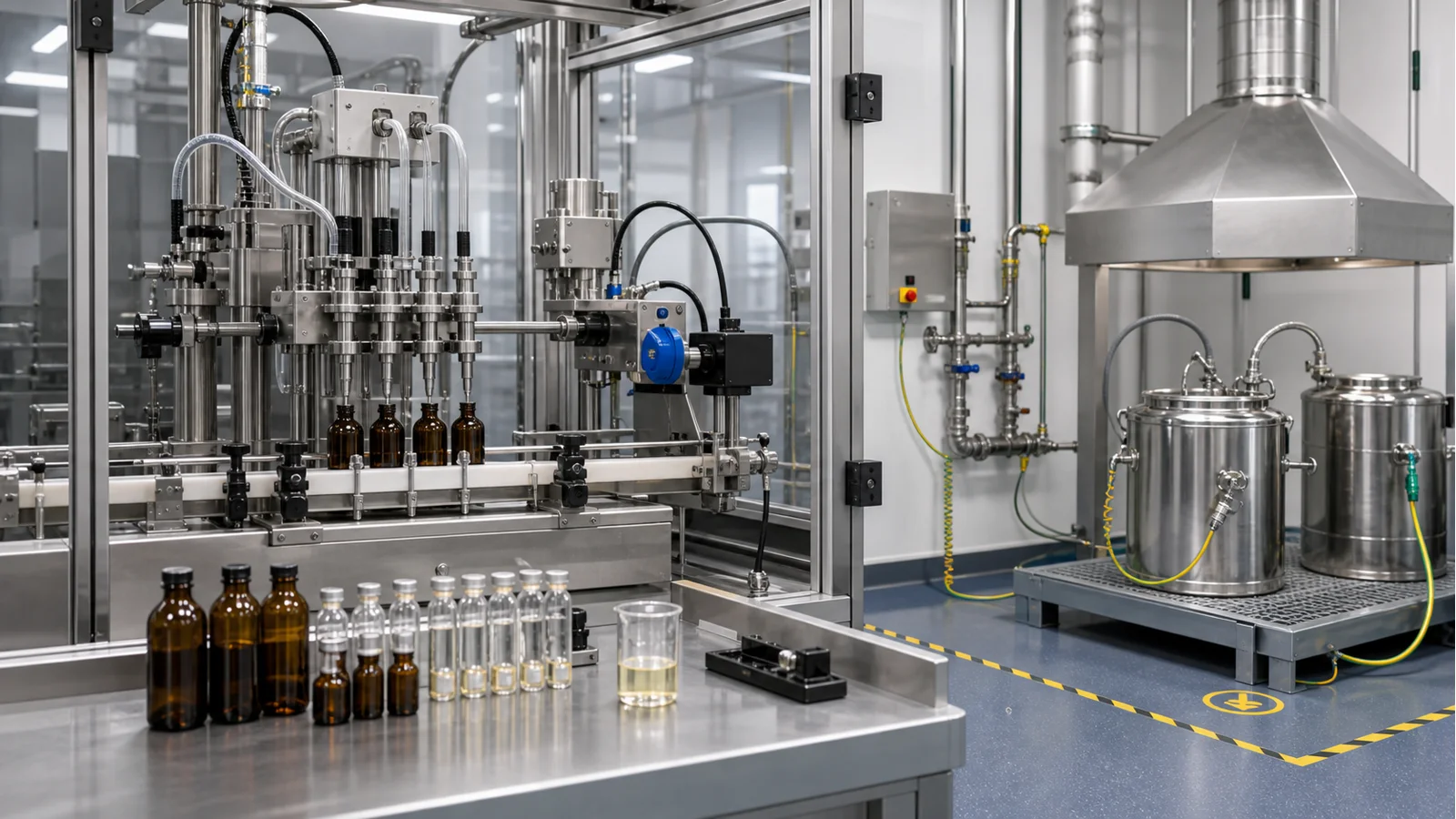
- Flammable liquid projects must have material, site area, grounding, and electrical conditions reviewed by actual engineering. The equipment name itself does not mean the whole line meets any explosion-proof or safety certification.
Solution summary prepared for you
- For alcohol and solvent bottling, first submit material safety and site area information; the explosion-proof solvent filling machine and all downstream stations must undergo the same engineering review.
- The bottle mouth cleaning and blowing module, automatic screw capping machine, inline checkweigher, labeling, and coding are on-demand stations; they do not automatically gain area suitability just by being connected to an explosion-proo...
- Material safety data, cap samples, site area and utilities, production arrangements, and label layout are the basis for forming a reviewable equipment chain.
Route comparison
- Suitable for projects where material and site data can undergo professional review and where actual bottles and liquid are prepared to verify metering and mouth condition.
- The explosion-proof solvent filling machine provides a direction for evaluating the main machine for flammable liquids, and can form project trials around actual material metering and bottle mouth condition.
- The equipment name does not prove explosion-proof level, area suitability, wetted material compatibility, or whole-line compliance; all conditions are pending project review.
- When material safety data, site area, or responsibility boundaries are unclear, no ordinary or explosion-proof product name should be used to finalize the design.
- After material and site review passes the corresponding stage, determine the specific scope of the explosion-proof solvent filling machine.
- Suitable for bottling projects where the cap combination has been confirmed with samples and the closing equipment scope has passed the corresponding engineering review.
- An automatic screw capper or automatic screw capping and pressing machine can reduce manual transfer after applicable conditions are confirmed and stably perform the corresponding closing action.
- Cap type, bottle body clamping, static, electrical, and control interfaces all need to be included in the whole-line review; testing only the tightening effect is not enough.
- When the cap is not finalized, or the area suitability of the closing equipment location has no conclusion, do not lock in the automatic cap feeding and screw capping solution.
- First verify the filling and cap combination, then choose an automatic screw capper or automatic screw capping and pressing machine.
- Suitable for alcohol or solvent bottle lines where finished products can be conveyed stably and where fill volume needs to be verified according to established rules.
- The inline checkweigher can perform the agreed weight judgment on sealed finished products, adding an independent verification point for filling data.
- Bottle weight, conveying stability, and the area all affect configuration; checkweighing cannot judge wetted material safety or leakage.
- When weight judgment is not yet defined, or the checkweighing section's site suitability has not been reviewed, it should not be a default equipment for the whole line.
- When there is a real need for finished product weight control, evaluate the inline checkweigher and handling actions based on the bottle weight range.
- Suitable for bottling projects where product labels and batch rules are determined and where identification equipment can be included in the same engineering review.
- The round/square bottle labeling machine handles bottle labels, and the date/batch inkjet coder can cooperate to add batch information as needed, making responsibilities easy to verify separately.
- Label material, bottle curvature, printing position, and equipment area suitability all need confirmation; downstream consumables are also within the review scope.
- When identification content is not determined, or there is no conclusion on downstream area and equipment suitability, do not fix the line layout first.
- After the bottle type and sealed product are stable, configure the labeling and date/batch stations according to the layout.
Associated Equipment / Consumables
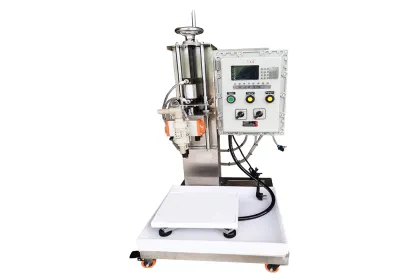 Solvent Filling Machine for Explosion-Risk Project Assessment
This direction covers alcohol, cleaners, fragrances or solvents that may present flammable-vapour risk. Qualified parties must assess the MSDS, flash point, volatility, corrosion, area classification, ventilation, sta...
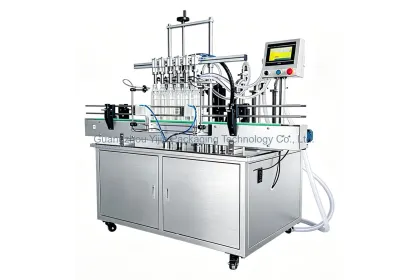 Liquid Quantitative Filling Machine
Material and site engineering review; The product name "explosion-proof" cannot replace project review, nor can it be used to infer that the entire filling, capping, and marking li...
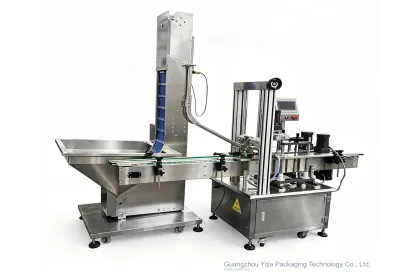 Automatic Screw Capping Machine
Material and site engineering review; The product name "explosion-proof" cannot replace project review, nor can it be used to infer that the entire filling, capping, and marking line m...
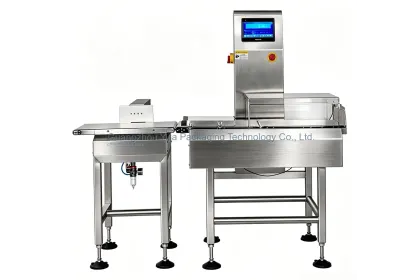 Inline Checkweigher
Material and site engineering review; The product name "explosion-proof" cannot replace project review, nor can it be used to infer that the entire filling, capping, and marking line meets a certa...
Core process
Material safety data, site area classification, utilities, and local requirements are first reviewed by the actual engineering team, then equipment configuration is decided.
The bottle mouth cleaning and blowing module is evaluated only when the process actually has empty bottle or mouth treatment needs; its air supply and residue handling are reviewed together.
The explosion-proof solvent filling machine undergoes project review; wetted parts, metering, control, and interlocking scope are determined per conclusions.
After filling, an automatic screw capping machine or automatic screw capping and press capping machine can be evaluated, but cap type, gripping, and control must also be included in the whole line safety design.
An inline checkweigher can be evaluated based on the finished product weight task; range, conveying state, and equipment area also require project confirmation.
The round and square bottle labeling machine and the date and batch coding machine are located in the closed finished product downstream; label layout and equipment area suitability are confirmed separately.
Sample details
Organize safety information such as composition, volatility, and corrosiveness, and have the project responsible party confirm missing items and applicable review basis.
Material safety data sheet, composition and concentration, working state, cleaning medium, supplier safety instructions.Bottles, caps, liners, and the mouth condition after filling affect metering, gripping, and capping; send samples as a set.
Actual samples of containers and caps, bottle mouth dimensions, container material, target fill volume, and finished samples after capping.Site information should be provided by the engineering party familiar with the site, covering area classification, ventilation, utilities, grounding, and equipment installation boundaries.
Site drawings, area information, power and air supply, ventilation and static control requirements, and applicable local codes.First list the necessity of bottle cleaning, filling, capping, checkweighing, labeling, and coding, then determine single machines or an inline line based on production arrangements.
Planned output, shifts, manual positions, required processes, upstream/downstream interfaces, and boundaries for stoppage and abnormal handling.Engineering review conclusions should precede equipment locking, and clarify which configurations still require sample, site, or third-party confirmation.
Review conclusions, equipment responsibility boundaries, sample test plan, acceptance items, unconfirmed matters, and quotation scope.Common selection mistakes
Alcohol or solvents cannot directly use ordinary liquid filling configurations just because the fill volume and viscosity are close to water-based products.
When material information is insufficient, wetted-part compatibility, site requirements, and equipment boundaries cannot be reliably determined; product names cannot fill these gaps.
The name or partial configuration of the equipment itself does not mean the installation area is suitable; site, electrical, ventilation, grounding, and interlocking must be reviewed as a whole.
Without verifying the cap, liner, and closed state, there is a risk of evaporation or leakage during transport, and downstream stations lack a stable finished product.
If labeling and batch coding stations are added last, they may enter an unreviewed area or change the line layout; they must be evaluated together with the equipment chain.
View detailed technical notes
Safety review comes before equipment selection
For alcohol, solvent, or volatile liquid projects, first handle material and site safety documentation. Product name, output, or automation level cannot replace the review conclusions of area classification, applicable standards, and the responsible engineering party.
The explosion-proof name is not proof of whole-line approval
The explosion-proof solvent filling machine is only the main equipment direction; the final wetted materials, metering method, electrical, pneumatic, grounding, static, and interlock scope must be determined according to the actual project. The name 'explosion-proof' itself does not represent a specific explosion-proof level or certification.
The bottle cleaning module must also state its usage conditions
The bottle mouth cleaning and blowing module is only included when the process requires treating empty bottles or bottle mouths. Its air source, cleaning target, residue handling, and area classification all need review; being upstream does not lower the requirements.
The cap station is reviewed with the whole line
Actual bottles, caps, and gaskets are used to verify the mouth condition after filling and the closing action of the automatic screw capper. An automatic screw capping and pressing machine can be evaluated as another closing structure, but no downstream equipment can be assumed suitable for explosion-proof areas by default.
Weight, label, and batch each have their own boundaries
The inline checkweigher only handles the agreed finished product weight judgment, the round/square bottle labeling machine handles labels, and the date/batch inkjet coder handles variable information. Each must be confirmed separately, and all must undergo site suitability review together.
Semi-automatic does not mean lower safety requirements
Semi-automatic or single machines can reduce the initial line integration scope, but they cannot exempt material compatibility, site area, electrical, and static reviews. Automation level can only be compared after safety boundaries are clear; it is not a substitute for safety measures.
Form an executable scope based on review conclusions
For first communication, you can first provide material name, container and cap components, and workshop overview, then complete safety documentation and engineering conditions. Only when review conclusions, unresolved items, and responsibility scope are clearly written can the equipment list and quotation have executable boundaries.
Common questions
Does an alcohol bottling project always require explosion-proof configuration?
Do not answer based only on the name "alcohol." Submit the material safety data sheet, concentration, and on-site area information, and let the responsible engineering party make the judgment based on applicable requirements.
Can we communicate first if the material safety data sheet is not yet available?
You can first organize the container, process, and site overview, but you cannot release the equipment based on that. When the material safety data sheet is missing, the formal configuration and responsibility boundaries still need to be completed.
After explosion-proof filling, can it be connected to capping and marking?
It can be evaluated in the overall engineering review. The automatic screw capping, labeling, coding, and checkweighing stations must each confirm area suitability; you cannot let only the filling machine undergo review.
Can different solvents or cleaning agents share equipment?
You cannot share one machine just because they are all solvents. Composition, contact compatibility, cleaning, sealing, and site requirements should be reviewed separately and verified with samples.
Why is an engineering review required first for solvent filling?
This type of project requires first determining the material and site boundaries, then reviewing the main machine and each downstream station. The configuration scope needs to be confirmed based on the data review results and responsibility boundaries.
Is it easier to meet safety requirements by starting with semi-automatic?
The degree of automation can be compared, but semi-automatic does not automatically reduce explosion-proof requirements. Whether manual or inline, the material, area, and equipment suitability must be confirmed first.