Solution topic
Particulate Ketchup Bottling Line: Rotary-Lobe Filling, Capping and Bottle Labelling
Configure particulate ketchup filling by particle size and integrity, viscosity, temperature, pump and piping, nozzle, drip/string control, rim cleaning, capping, labelling and tri
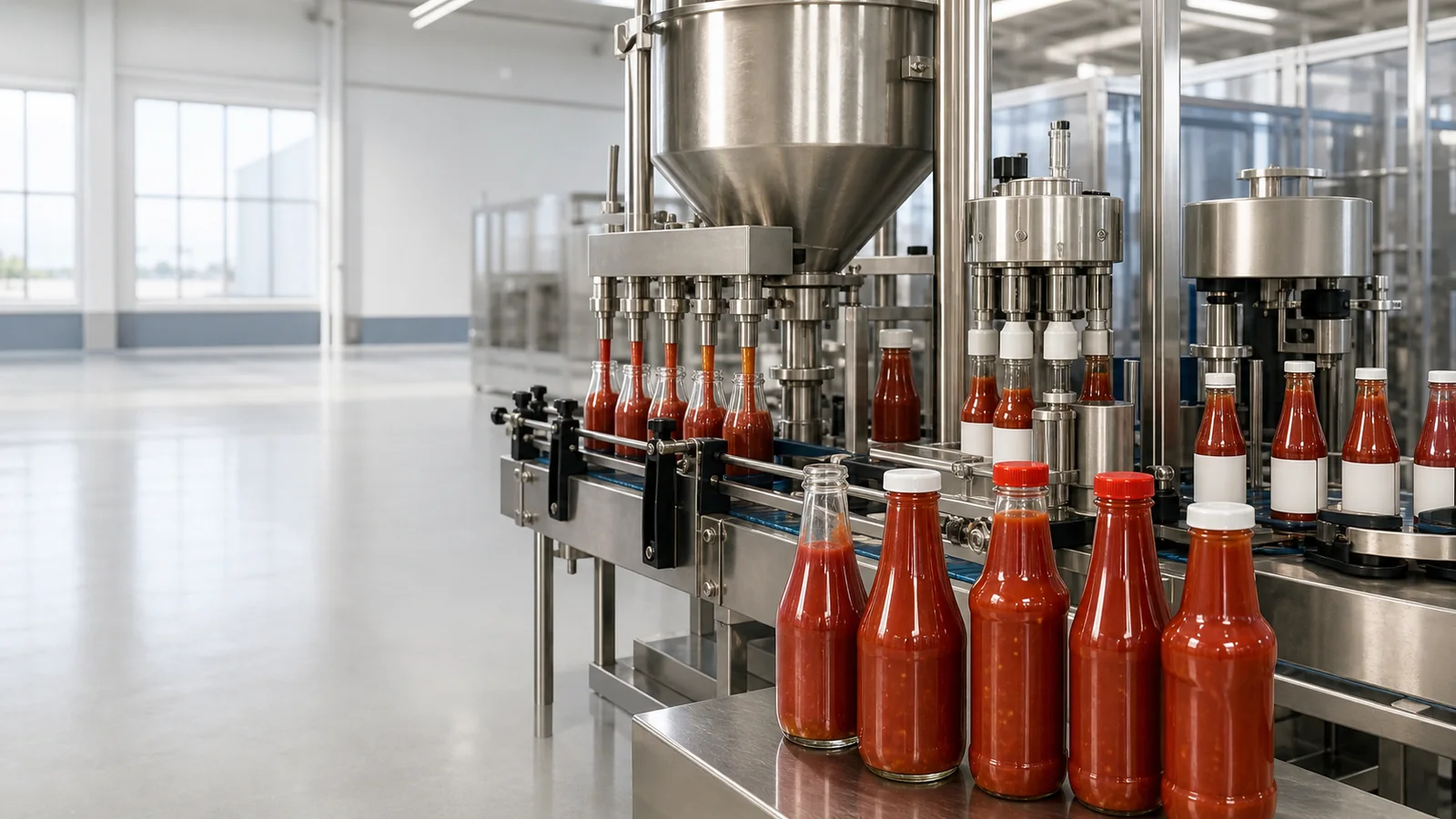
- Validate particle passage, clean bottle rims, closure sealing and label datum continuously with the same product and packaging samples.
Solution summary prepared for you
- For particle-containing ketchup, first compare rotor pump and piston metering with actual product, then arrange screw capping, optional inner sealing, and labeling according to caps, cap liners, and label surfaces.
- Rotor pump sauce filling machine is the main route for particle sauce; automatic screw capping machine handles caps; online induction aluminum foil sealing machine is only used for matching cap liners.
- Actual ketchup, particle state, all caps and liners, label layout, cleaning, and production arrangement are core materials for forming the bottling equipment chain.
Route comparison
- Suitable for bottling projects with seeds, spices, or other visible particles, and prepared to verify pumping and metering with real ketchup.
- Rotor pump sauce filling machine provides the main trial route for particle-containing ketchup, and can form sample records around particle passage, metering, cut-off, and cleaning.
- Particles, viscosity, settling, pumping, and cleaning all need verification; rotor pump name does not mean all particle sauces can pass directly.
- When representative actual product is lacking, or particle and channel adaptation is not confirmed, rotor pump and continuous stations should not be determined first.
- Trial fill actual product with rotor pump sauce filling machine, then connect automatic screw capping machine, and decide induction inner sealing based on cap liner.
- Suitable for ketchup packaging where after comparison with the same batch of actual product, piston metering or conditional insulation is confirmed to better match actual working conditions.
- Piston sauce filling machine provides another metering direction; insulated hoppers and jacketed tanks can be conditional modules according to supply state.
- Piston channel, particle passage, end cut-off, and disassembly cleaning still need testing. Insulation is also limited by product allowed state.
- When particles or sauce are not suitable for piston structure, or product does not need insulation, do not mechanically add corresponding main machine and modules.
- Simultaneously compare actual product with piston sauce filling machine; evaluate insulated supply only when product state needs to be maintained.
- Suitable for production where ketchup, bottle types, caps, and labels are stable and need continuous completion from filling to bottle labeling.
- Food-grade conveying line can connect stable rotor pump filling, automatic screw capping, conditional inner sealing, and bottle labeling, reducing manual bottle transfer.
- Bottle spacing, bottle body clamping, rim cleanliness, label surface, and changeover frequency all affect the line; date coding also needs separate layout verification.
- When actual product trial filling, cap liner, or labels are still changing, keep single machine debugging first and do not lock the whole line rhythm.
- After bottles, materials, and caps are finalized, use food-grade conveying line to sequentially connect filling, screw capping, optional inner sealing, and labeling.
Associated Equipment / Consumables
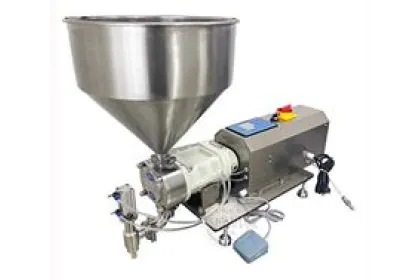 Rotary Lobe Pump Sauce Filling Machine
The machine meters and fills viscous sauces, condiments or products containing passable particles. Viscosity, particle size and integrity, temperature, shear sensitivity, foaming and stringing affect the pump, piping,...
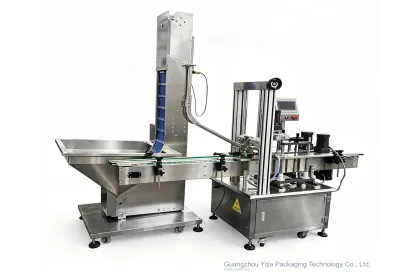 Automatic Screw Capping Machine
Collect sauce, caps, and labels as a complete set; Bottle stability after filling, bottle mouth residue, and adhesion surface cleanliness continuously affect filling, screw capping, in...
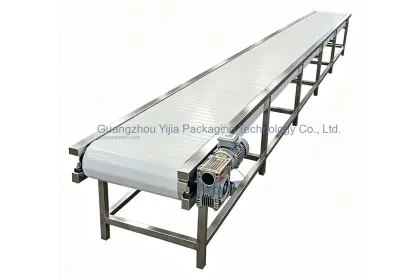 Food Packaging Conveyor and Buffer Line
Stable bottle line conveying connection; Food-grade conveying line itself does not perform automatic checkweighing. If weight verification is needed, define standards separatel...
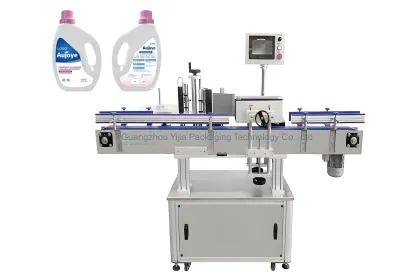 Round-Bottle and Front/Back Labelling Machine
Collect sauce, caps, and labels as a complete set; Bottle stability after filling, bottle mouth residue, and adhesion surface cleanliness continuously affect filling, scr...
Core process
Confirm actual product particles, viscosity, temperature, bottle mouth, caps, and label surface together to avoid different sample versions across stations.
For particle-containing projects, first trial rotor pump sauce filling machine, and compare metering, particle passage, and cleaning with piston sauce filling machine.
After filling, automatic screw capping machine handles adapted cap types; bottle mouth residue, thread, and bottle body clamping should be rechecked in continuous samples.
When the cap indeed has a matching aluminum foil liner, add an online induction aluminum foil sealing machine after screw capping. Packaging without liner does not enter this branch.
Round and square bottle labeling machine positions by bottle shape and label surface; date batch coding machine handles variable information in reserved area.
Food-grade conveying line can connect filling, screw capping, conditional inner sealing, and coding equipment after bottle type and process are stable.
Sample details
Record seeds, spices, fibers, settling, and working temperature in ketchup, and provide sufficient actual product for pumping and cleaning trials.
Actual product or flow video, particle size and shape, viscosity and temperature state, target fill volume, cleaning requirements.Round, square, glass, or plastic bottles have different mouth and body positioning; list all sales bottle types at once.
Samples of each bottle type, bottle mouth dimensions, bottle height and shape, stability after filling, labelable surface.Threaded caps, liners, and bottle mouths must be confirmed as a set; induction inner sealing is only set when the cap aluminum foil matches the bottle mouth.
Cap and liner samples, thread and closed state, whether inner sealing is required, and opening sample after sealing.Planned production rhythm is used to determine single machine or line, but does not replace particle passage, end cut-off, cleaning, and bottle change tests.
Production plan, shifts, manual stations, changeover frequency, acceptance of each process, and quotation boundaries.For existing line modification, provide conveying height, direction, and control interface; for new line, first arrange filling, screw capping, conditional inner sealing, labeling and coding.
Workshop drawing, existing equipment, food-grade conveying line interface, label and batch number samples, future expansion stations.Common selection mistakes
Particle size, shape, and settling affect the pumping channel; ordinary liquid thinking cannot represent the actual metering and cleaning performance of ketchup.
If the bottle mouth thread, cap, and liner are not matched, the fit after screw capping cannot support subsequent induction inner sealing.
Round bottle wrap-around, square bottle flat surface, and corners have different label guidance; bottle surface oil contamination also changes adhesion, so one layout cannot fit all.
If the single machine inlet/outlet, food-grade conveying line height, and bottle spacing are not checked in advance, later connection to screw capping and labeling will require modifications.
Ketchup may show flow changes under different working conditions; whether to configure an insulated hopper must be decided by product state and trials.
Induction inner sealing with cap liner and heat sealing with separate membrane use different packaging materials and actions; mixing them will lead to wrong downstream selection.
View detailed technical notes
Start bottle line selection with actual particle-containing product
Ketchup bottling is not just filling ordinary liquid into bottles and labeling. Actual product particles, viscosity, and temperature first determine filling trials; bottle mouth residue continues to affect screw capping, cap liner, and label surface.
Comparing Rotary Lobe Pump and Piston with the Same Batch of Actual Product
The rotary lobe pump sauce filling machine is the main trial equipment for projects with particles, but the pump type still needs to be confirmed through particle channel, metering, end-of-fill cutoff, and cleaning results. A piston sauce filling machine can be used as a comparison using the same batch of actual product.
Particle Characteristics Are More Specific Than Product Name
The presence of seeds or spices does not automatically determine a pump type. Particle size, shape, settling, and sauce viscosity determine the passing conditions. Trial filling should also observe whether particles accumulate in the product path and valve openings.
Insulated Product Supply Is a Conditional Module
Insulated hoppers and jacketed tanks are used when the product needs temperature maintenance, temporary storage, and stable supply. Whether to adopt them depends on the allowable temperature of the ketchup and on-site conditions; they should not be added by default just for 'stable filling'.
Control Bottle Mouth Residue Before Screw Capping
The automatic screw capping machine requires real caps and filled bottles to verify threads, gripping, and post-capping condition. If the bottle mouth is contaminated with ketchup, improve the filling end first; do not treat capping adjustment as a cleaning measure.
Keep the Same Version for the Whole Line Sample
For the solution sample, treat ketchup, bottles, caps, gaskets, and labels as a combination. If different versions of packaging materials are used at different stations, it is impossible to determine whether the problem comes from filling, closing, inner sealing, or labeling.
Filling Machine Model Determined by Comparative Test
The formal actual product enters the rotary lobe pump and piston routes separately. Record metering, particle passage, cutoff, and cleaning. The selection conclusion is written into the filling machine scope; other pump types should also be judged based on similar actual product test results.
Complete Screw Capping Verification with Filled Bottles
For cap screwing, check cap type, threads, bottle stability, and the bottle mouth edge after filling. Only when this station is stable can the aluminum foil gasket inside the cap maintain proper contact in the next step.
Induction Inner Sealing Only Serves the Gasket Inside the Cap
The inline induction aluminum foil sealing machine is used only when the cap is equipped with a matching gasket, and it is placed after the automatic screw capping machine. Standalone aluminum foil membranes are not part of the default process for this bottle filling line.
Labeling and Date/Batch Coding Are Accepted Separately
The round and square bottle labeling machine needs to be sampled according to bottle body shape, labeling surface, and label artwork. The date and batch inkjet coding machine is an optional collaborative downstream section; its printing content and area must not conflict with the label, bottle shoulder, or oily surfaces.
Common questions
How is the equipment scope for a tomato ketchup bottling line determined?
The configuration scope is determined by actual product pump trials, filling stations, cap closure, optional aluminum foil inner seal, labeling and coding, and conveying range. Samples must be submitted first.
How many bottles of ketchup can be filled per hour?
A one-size-fits-all value cannot be applied. Particles, viscosity, fill volume, bottle type, cleaning, and station integration all affect actual production rhythm and must be confirmed through continuous trials.
Can an evaluation be done before samples arrive?
Photos and product videos can help determine the direction initially, but rotor pump, piston, screw capping, and induction inner seal finalization all require formal actual product, bottles, and caps.
Is the cap liner the same as a separate aluminum foil membrane?
The aluminum foil liner inside the cap is induction sealed after the cap is screwed on. A separate aluminum foil membrane is a different process, and this ketchup bottle line does not include a heat sealing machine as default equipment.
What to do if product hangs on the bottle mouth after filling?
First use actual product to observe the filling end cut-off and adjust the main machine discharge and bottle position. After the bottle mouth is clean, proceed to screw capping and liner inner seal; do not rely only on downstream remedies.
Must filling, screw capping, and labeling be continuously connected?
It is not necessary to connect the line at once. For samples and multi-spec projects, single machines can be run first. After bottles, caps, labels, and orders are stable, use food-grade conveying lines to connect station by station.