Solution topic
How to choose ketchup bottling, filling, capping, and labeling packaging? First check the sauce state, bottle mouth, and sealing method.
Ketchup packaging is not just about the filling machine. First confirm the sauce viscosity, whether it contains particles, whether temperature retention is needed, bottle mouth diameter, cap structure, and target production capacity, then determine the filling, capping, sealing, and labeling route.
- Ketchup packaging is not just about the filling machine. First confirm the sauce viscosity, whether it contains particles, whether temperature retention is needed, bottle mouth diameter, cap structure, and target production capacity, then determine the filling, capping, sealing, and labeling route.
- How to choose ketchup bottling, filling, capping, and labeling packaging?
Customer's real question
I want to package ketchup in glass or PET bottles, requiring filling, capping, labeling, and possibly sealing film. How should I choose equipment?
First determine the packaging route
Ketchup packaging is not just about the filling machine. First confirm the sauce viscosity, whether it contains particles, whether temperature retention is needed, bottle mouth diameter, cap structure, and target production capacity, then determine the filling, capping, sealing, and labeling route.
Rotary lobe pump filling + capping + labeling route
Suitable for: Ketchup with particles or fibers, such as sauces with tomato seeds or chunks, requiring gentle conveying to avoid damaging particles. Advantages: The rotary lobe pump has low shear on the material, maintaining particle integrity; stable filling accuracy, suitable for medium to high viscosity sauces. Limitations: Need to confirm particle size and fill volume to prevent clogging; rotary lobe pump is more expensive than piston pump. Not recommended: If the ketchup is very smooth, particle-free, and low viscosity, the advantages of the rotary lobe pump are not obvious, and piston filling may be more economical. Equipment direction: Rotary lobe pump sauce filling machine, automatic capping machine, and round/square bottle labeling machine.
Piston filling + capping + aluminum foil induction sealing route
Suitable for: Particle-free or fine-particle ketchup with stable fill volume, requiring aluminum foil liner sealing to prevent leakage. Advantages: Piston filling has simple structure and easy maintenance; aluminum foil induction sealing provides tamper-evident and leak-proof protection. Limitations: Piston is sensitive to particles; large particles may jam the valve; induction sealing requires an aluminum foil liner inside the cap and a flat bottle mouth. Not recommended: If the ketchup contains large particles or fibers, piston filling is prone to clogging; rotary lobe pump should be prioritized. Equipment direction: Sauce piston filling machine, automatic capping machine, and inline induction foil sealer.
Premade pouch/spout pouch filling and sealing route
Suitable for: Small ketchup packages, such as single-serve pouches for catering or spout pouches for children, requiring portability and easy-tear opening. Advantages: Pouch packaging has low cost and flexible format; spout pouches can be repeatedly opened and closed, suitable for multiple uses. Limitations: Need to confirm pouch type, pouch mouth size, seal width, and spout structure; anti-drip measures needed during filling. Not recommended: If the product requires high transparency display or shelf appeal, bottling is more suitable than pouches. Equipment direction: Premade pouch filling and sealing machine or spout pouch filling and capping machine.
Recommended equipment route: Sample and container confirmation
Confirming viscosity, particles, bottle mouth diameter, cap structure, and film matching is the basis for subsequent equipment selection.
Recommended equipment route: Filling
Choose a rotary lobe pump (with particles) or piston (without particles) based on whether the ketchup contains particles, ensuring filling accuracy and anti-drip performance.
Recommended equipment route: Capping
Suitable for screw caps or press-on caps; confirm the capping head tooling and torque based on cap type and bottle mouth.
Recommended equipment route: Aluminum foil sealing (optional)
If the cap has an aluminum foil liner inside, induction sealing can provide leak-proof and tamper-evident effects.
Recommended equipment route: Labeling
Configure the labeling head according to the bottle shape (round/square) and label position to achieve precise labeling.
Route comparison
- Ketchup with particles or fibers, such as sauces with tomato seeds or chunks, requiring gentle conveying to avoid damaging particles.
- The rotary lobe pump has low shear on the material, maintaining particle integrity; stable filling accuracy, suitable for medium to high viscosity sauces.
- Need to confirm particle size and fill volume to prevent clogging; rotary lobe pump is more expensive than piston pump.
- If the ketchup is very smooth, particle-free, and low viscosity, the advantages of the rotary lobe pump are not obvious, and piston filling may be more economical.
- Rotary lobe pump sauce filling machine, automatic capping machine, and round/square bottle labeling machine
- Particle-free or fine-particle ketchup with stable fill volume, requiring aluminum foil liner sealing to prevent leakage.
- Piston filling has simple structure and easy maintenance; aluminum foil induction sealing provides tamper-evident and leak-proof protection.
- Piston is sensitive to particles; large particles may jam the valve; induction sealing requires an aluminum foil liner inside the cap and a flat bottle mouth.
- If the ketchup contains large particles or fibers, piston filling is prone to clogging; rotary lobe pump should be prioritized.
- Sauce piston filling machine, automatic capping machine, and inline induction foil sealer
- Small ketchup packages, such as single-serve pouches for catering or spout pouches for children, requiring portability and easy-tear opening.
- Pouch packaging has low cost and flexible format; spout pouches can be repeatedly opened and closed, suitable for multiple uses.
- Need to confirm pouch type, pouch mouth size, seal width, and spout structure; anti-drip measures needed during filling.
- If the product requires high transparency display or shelf appeal, bottling is more suitable than pouches.
- Premade pouch filling and sealing machine or spout pouch filling and capping machine
Core process
Confirming viscosity, particles, bottle mouth diameter, cap structure, and film matching is the basis for subsequent equipment selection.
Choose a rotary lobe pump (with particles) or piston (without particles) based on whether the ketchup contains particles, ensuring filling accuracy and anti-drip performance.
Suitable for screw caps or press-on caps; confirm the capping head tooling and torque based on cap type and bottle mouth.
If the cap has an aluminum foil liner inside, induction sealing can provide leak-proof and tamper-evident effects.
Configure the labeling head according to the bottle shape (round/square) and label position to achieve precise labeling.
Inline conveying, checkweighing, and inkjet coding traceability ensure product quality and compliance.
Associated Equipment / Consumables
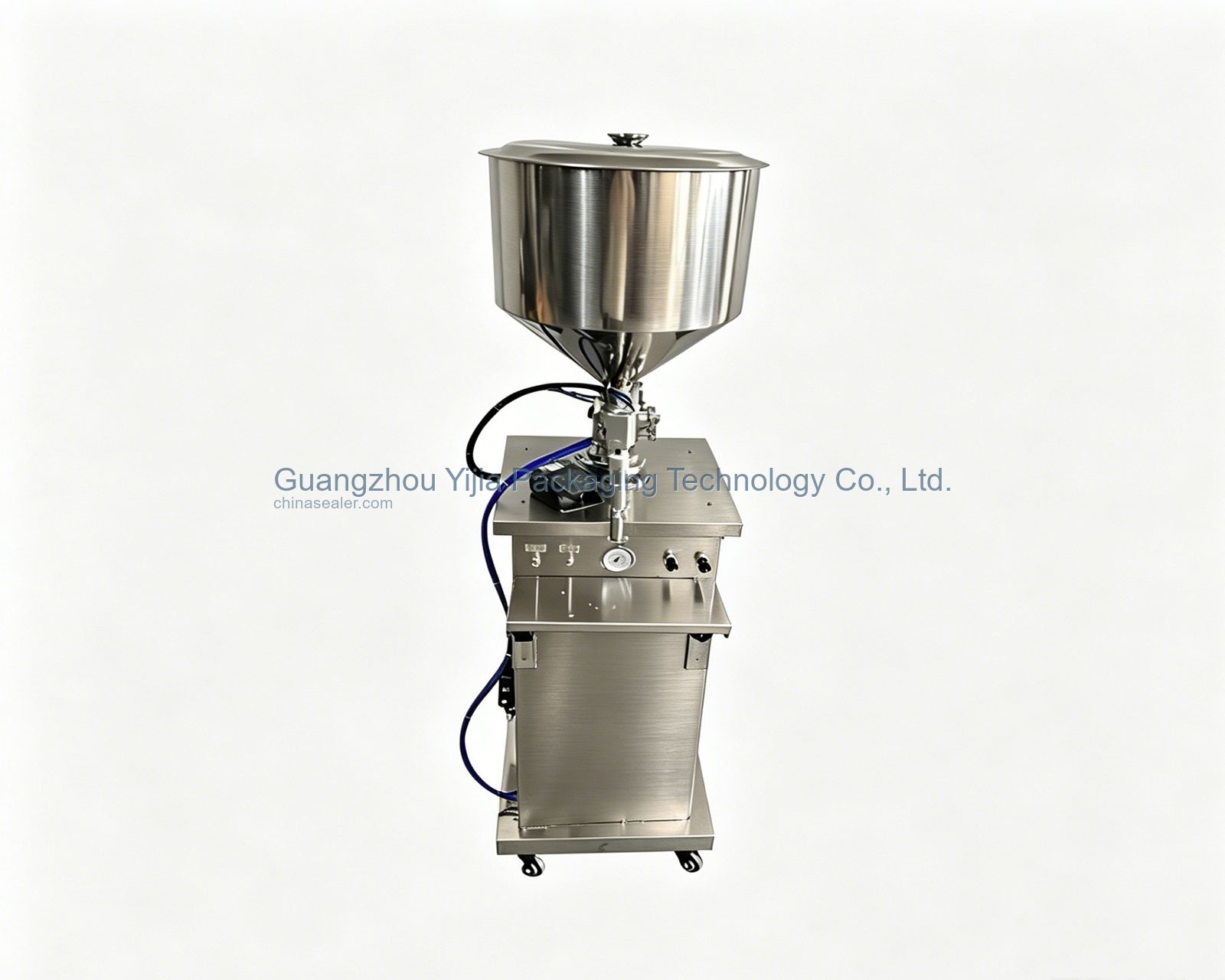 Sauce Piston Filling Machine
Filling; Choose a rotary lobe pump (with particles) or piston (without particles) based on whether the ketchup contains particles, ensuring filling accuracy and anti-drip performance; Rot...
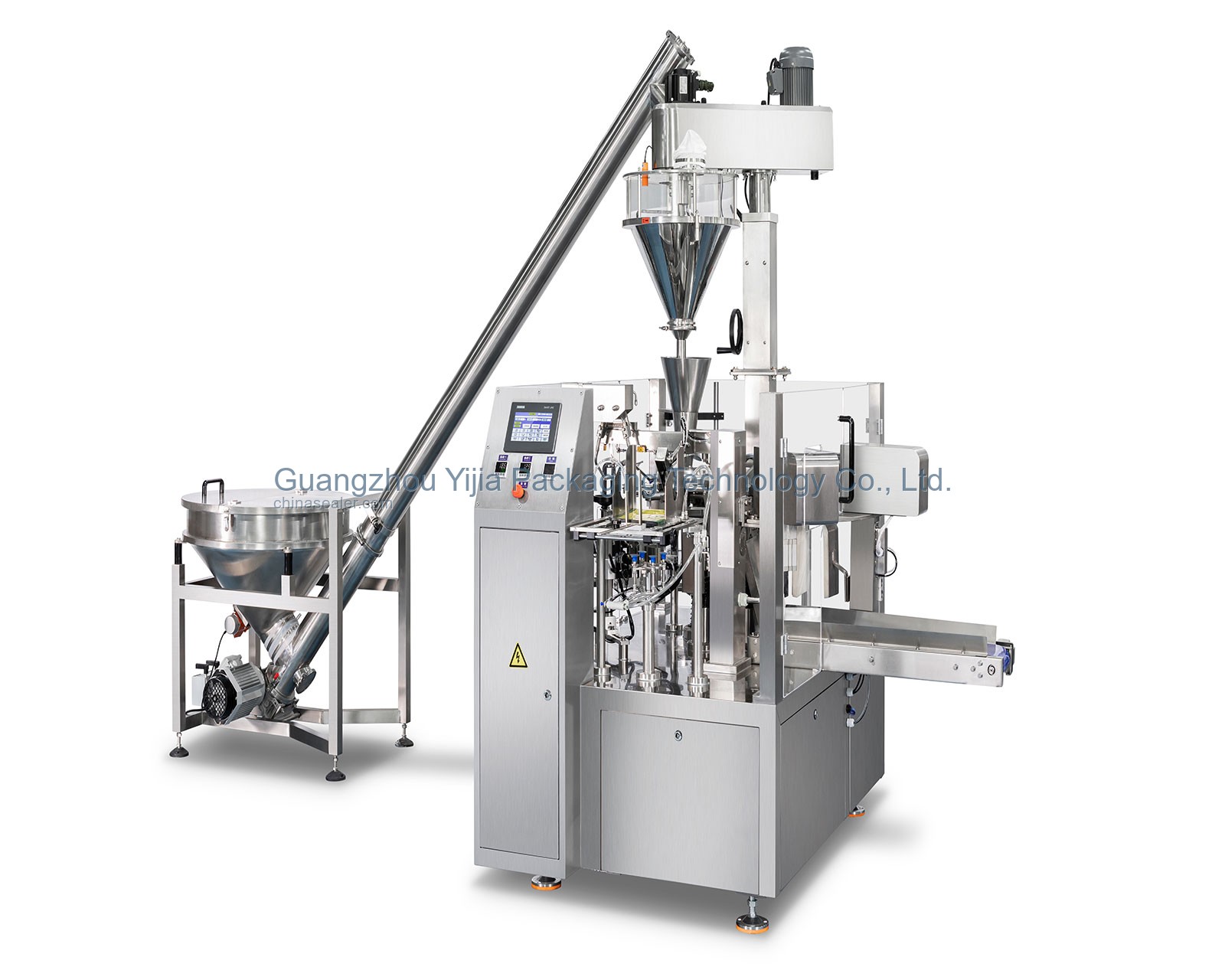 Premade Pouch Filling and Sealing Machine
Filling; Choose a rotary lobe pump (with particles) or piston (without particles) based on whether the ketchup contains particles, ensuring filling accuracy and anti-drip per...
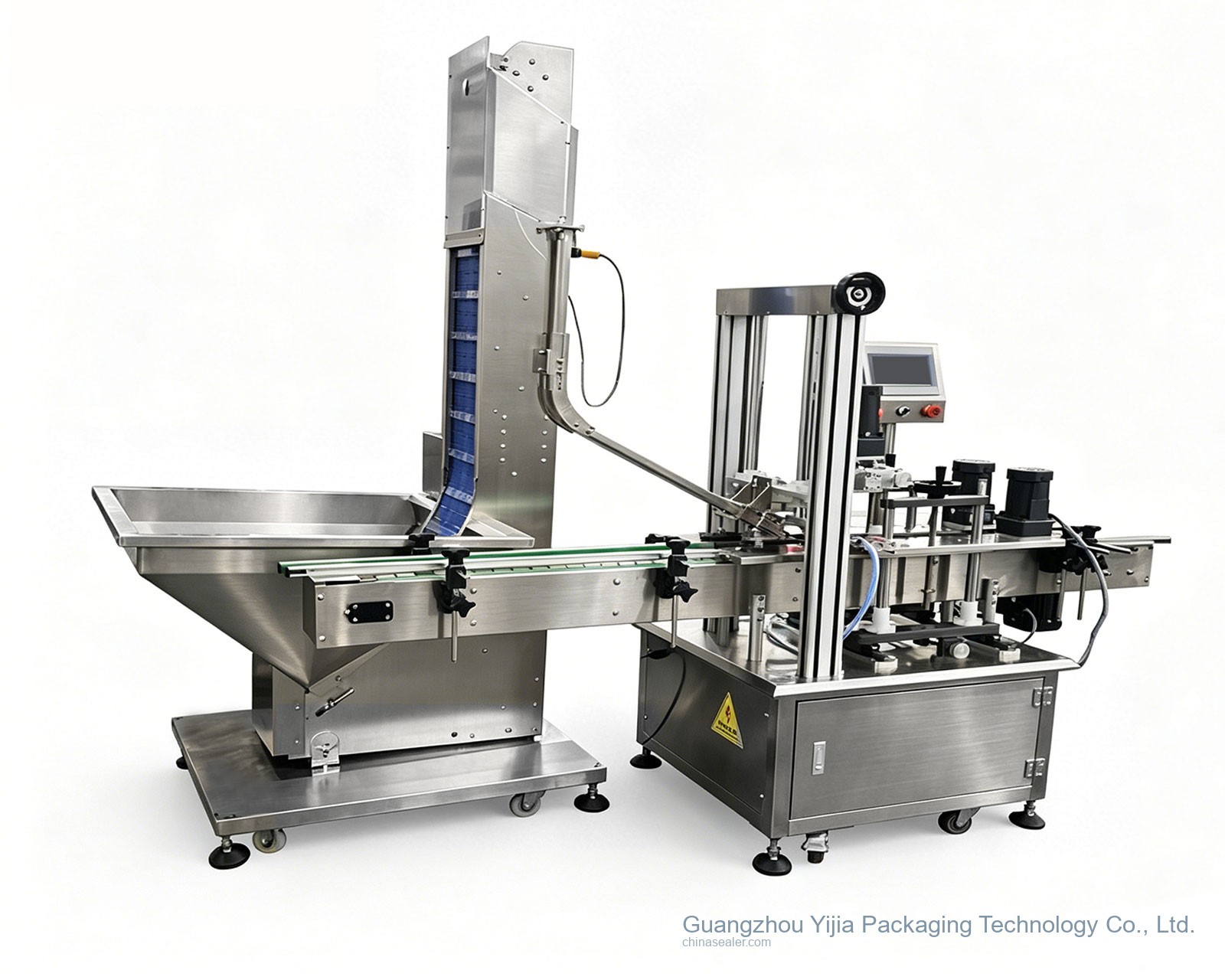 Automatic Screw Capping Machine
Capping; Suitable for screw caps or press-on caps; confirm the capping head tooling and torque based on cap type and bottle mouth; Automatic capping machine
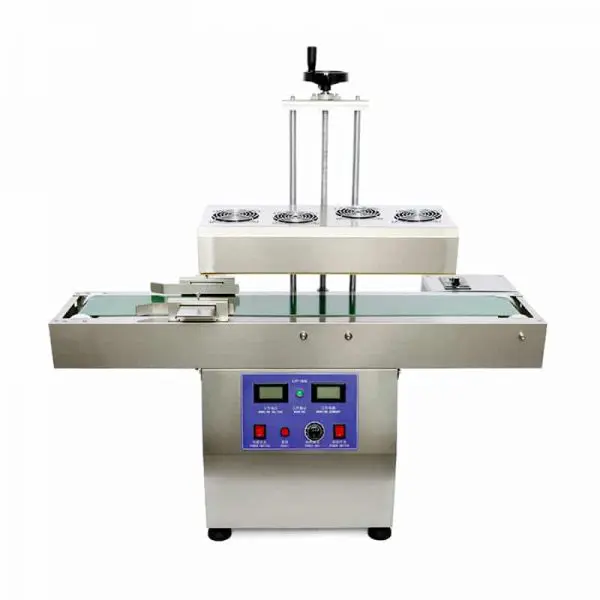 Inline Induction Foil Sealer
Capping; Suitable for screw caps or press-on caps; confirm the capping head tooling and torque based on cap type and bottle mouth; Automatic capping machine
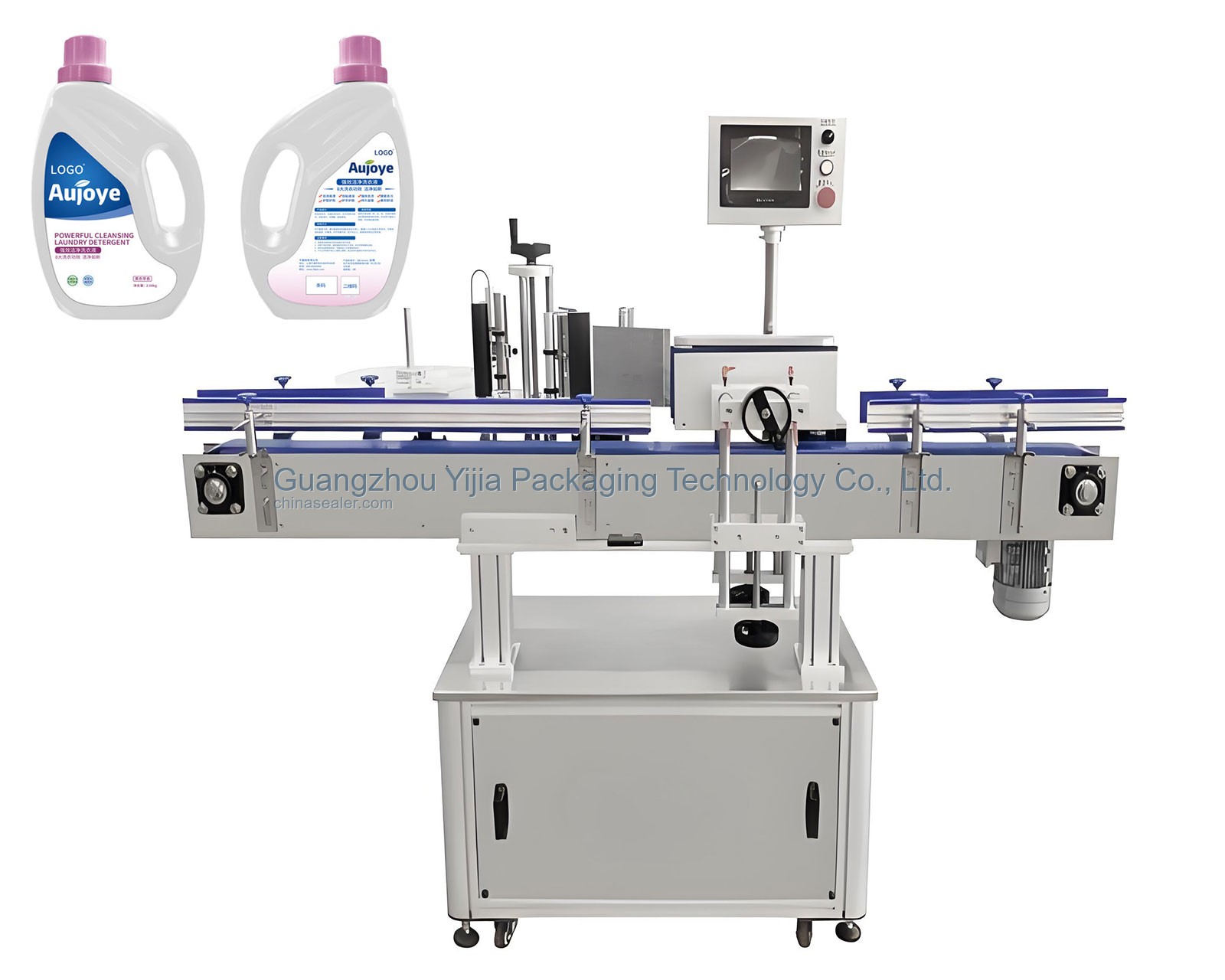 Round & Square Bottle Labeling Machine
Labeling; Configure the labeling head according to the bottle shape (round/square) and label position to achieve precise labeling; Round and square bottle labeling machine
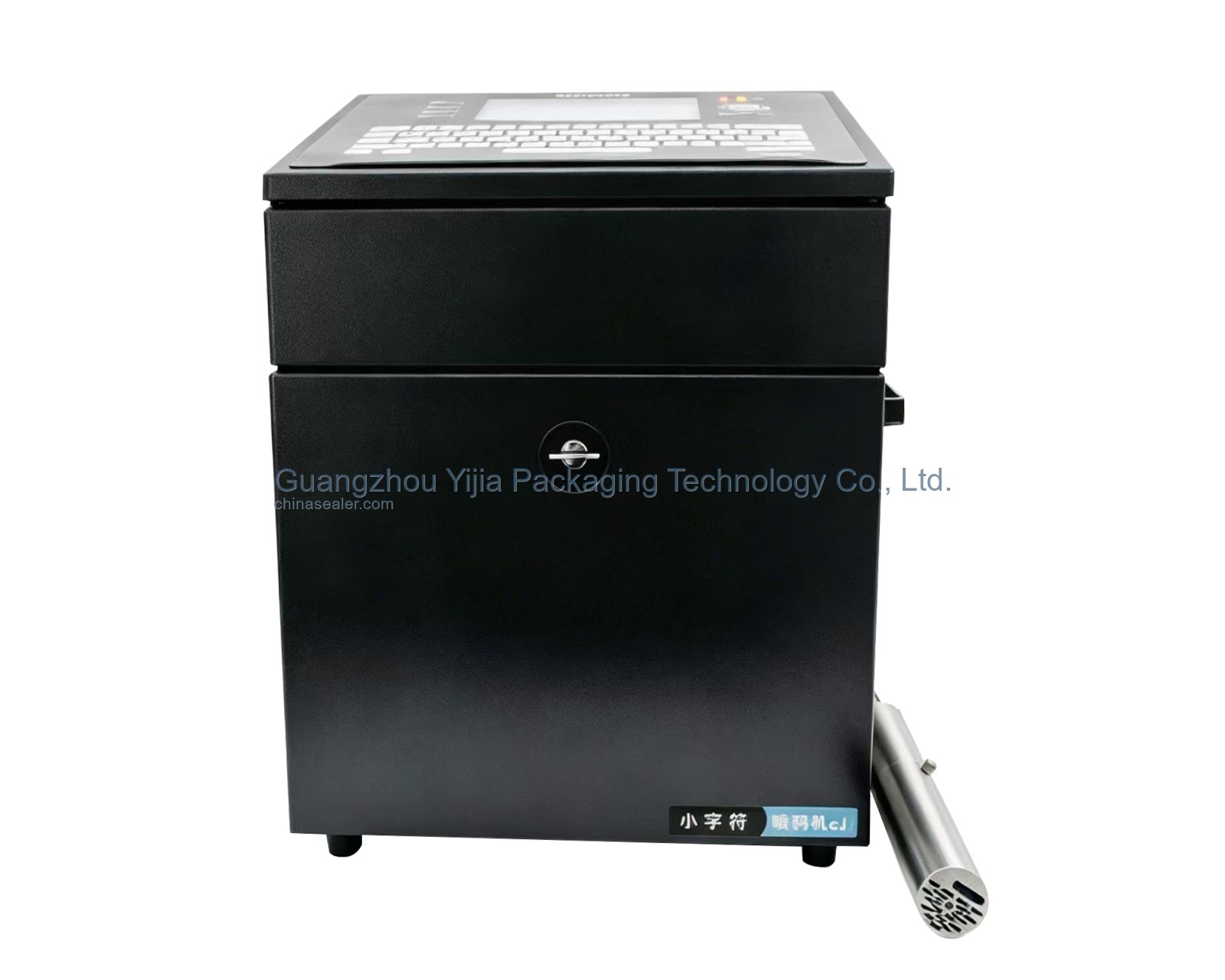 Date & Batch Inkjet Printer
Labeling; Configure the labeling head according to the bottle shape (round/square) and label position to achieve precise labeling; Round and square bottle labeling machine
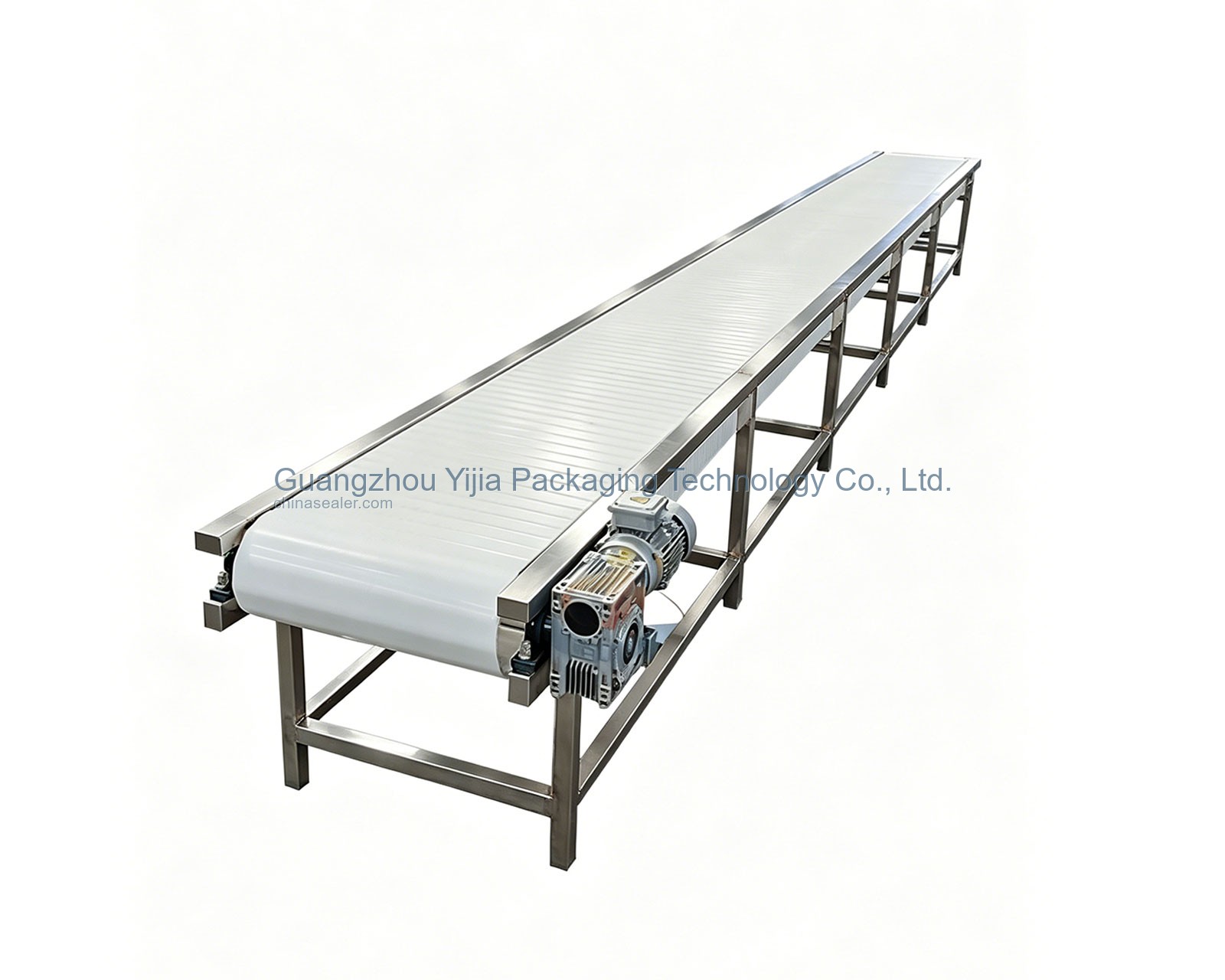 Food-grade conveyor line
Post-process inspection and conveying; Inline conveying, checkweighing, and inkjet coding traceability ensure product quality and compliance; Food-grade conveyor line, inline checkweigher, da...
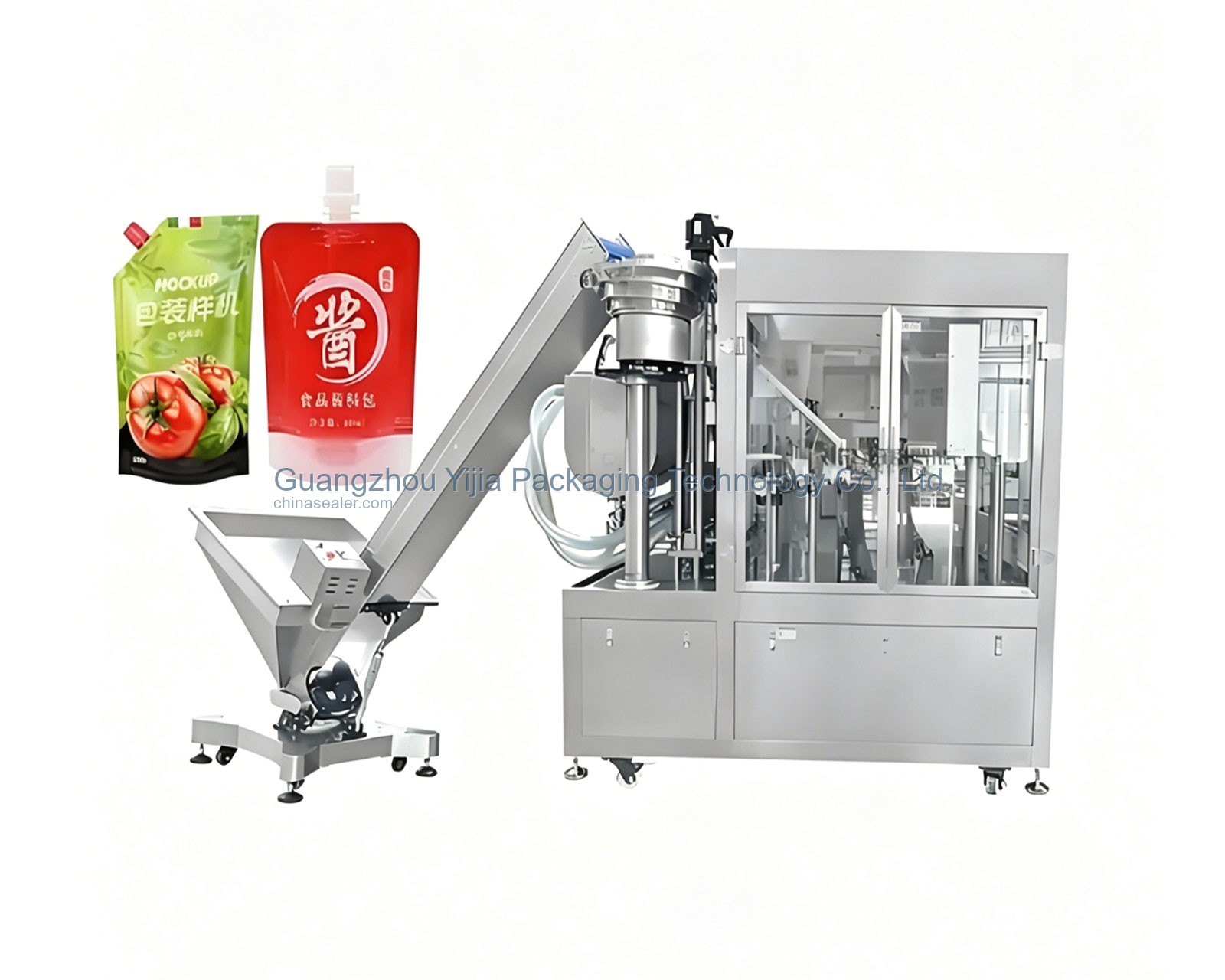 Spout Pouch Filling and Capping Machine
Filling; Choose a rotary lobe pump (with particles) or piston (without particles) based on whether the ketchup contains particles, ensuring filling accuracy and anti-drip perfo...
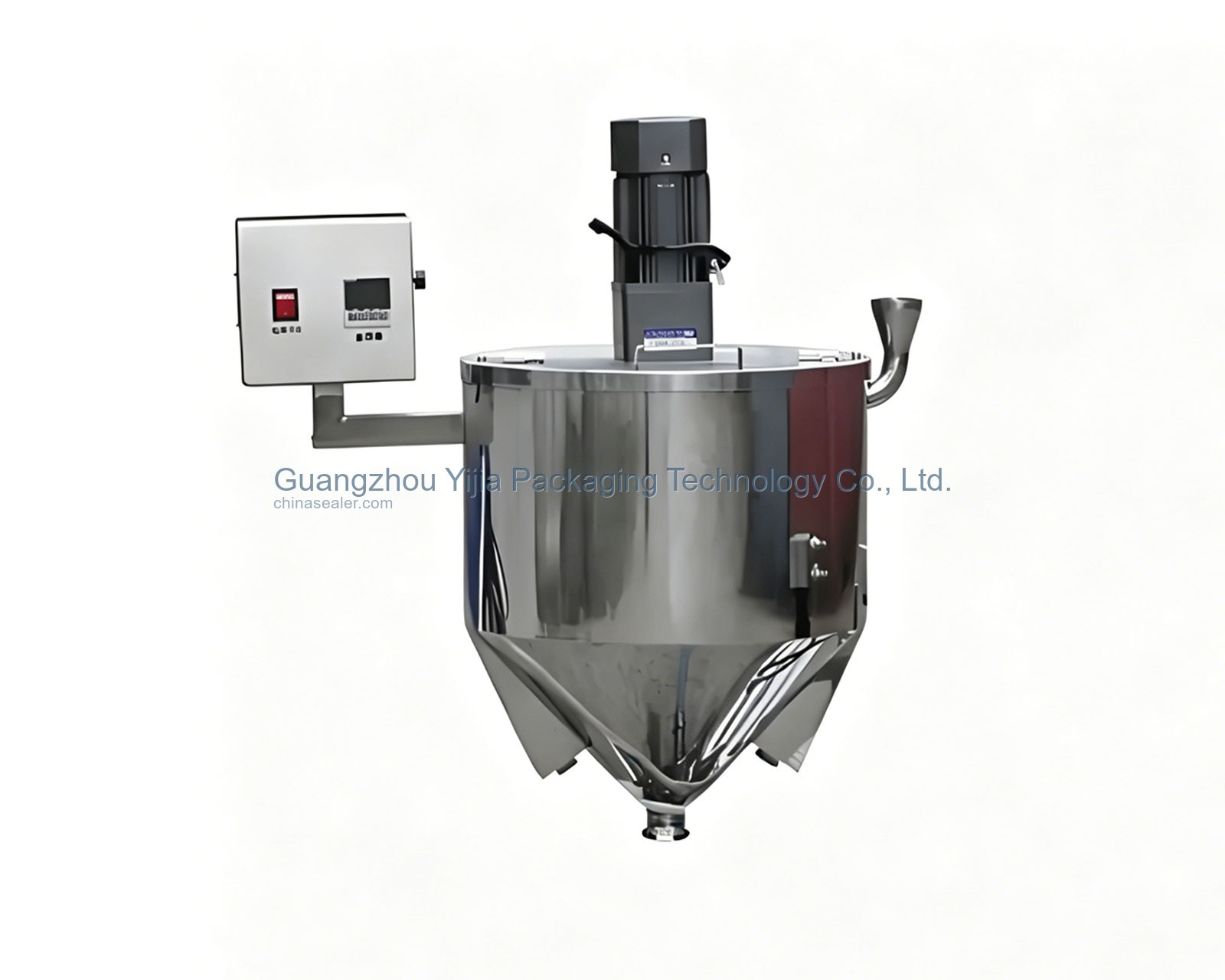 Heated Hopper and Jacketed Tank
Filling; Choose a rotary lobe pump (with particles) or piston (without particles) based on whether the ketchup contains particles, ensuring filling accuracy and anti-drip performance;...
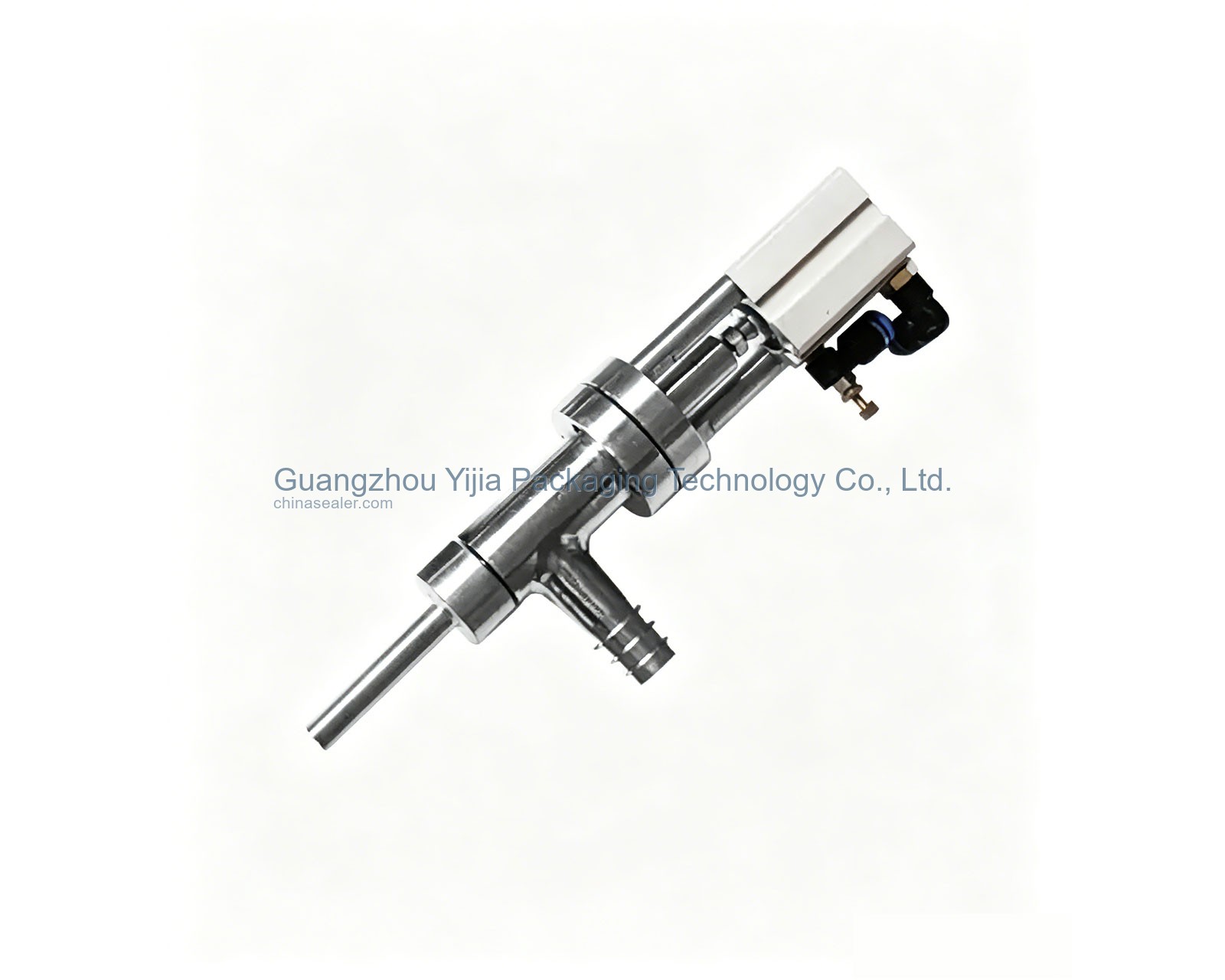 Anti-Drip Anti-Stringing Filling Nozzle Assembly
Filling; Choose a rotary lobe pump (with particles) or piston (without particles) based on whether the ketchup contains particles, ensuring filling accuracy and anti-d...
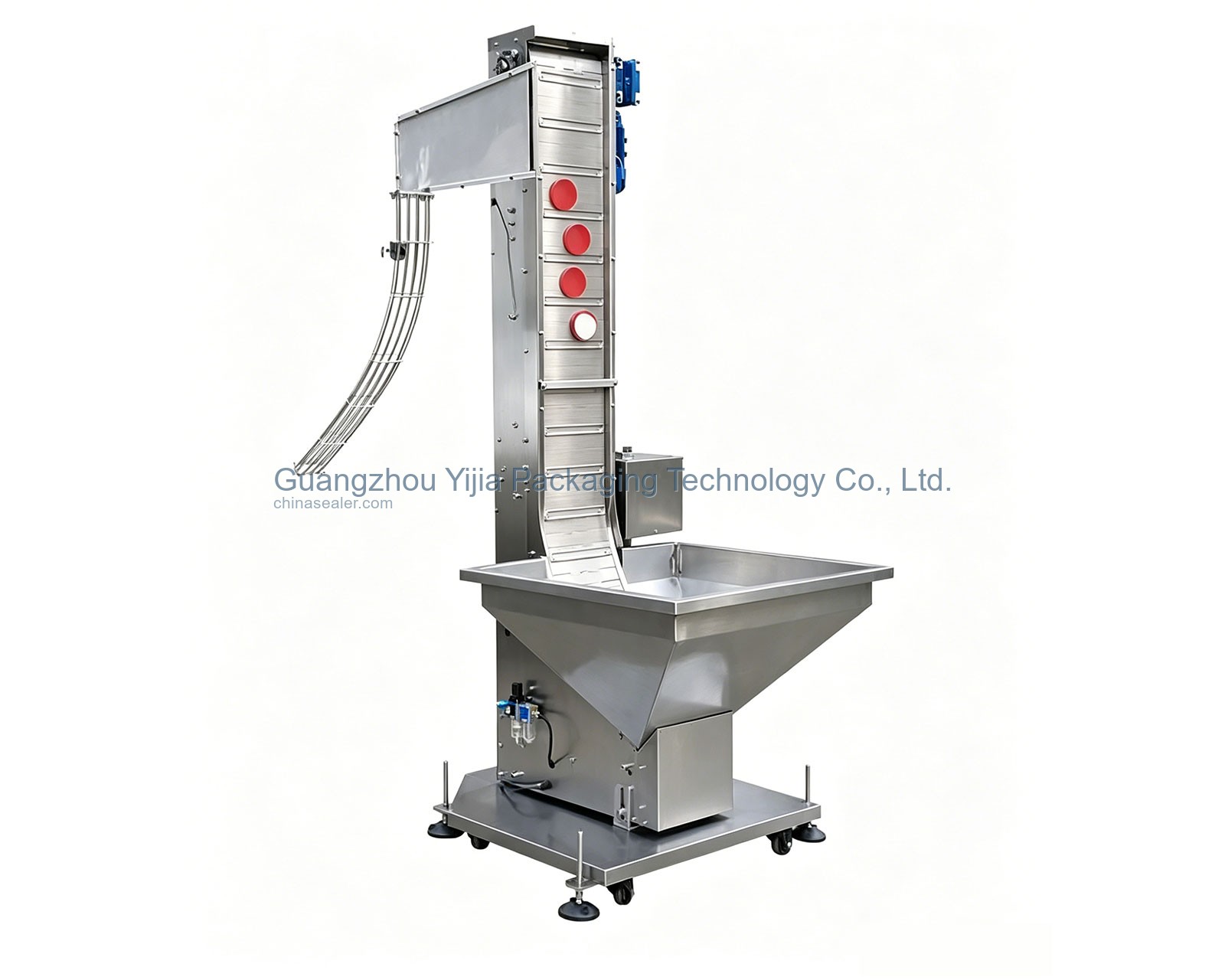 Cap Feeding and Sorting System
Capping; Suitable for screw caps or press-on caps; confirm the capping head tooling and torque based on cap type and bottle mouth; Automatic capping machine
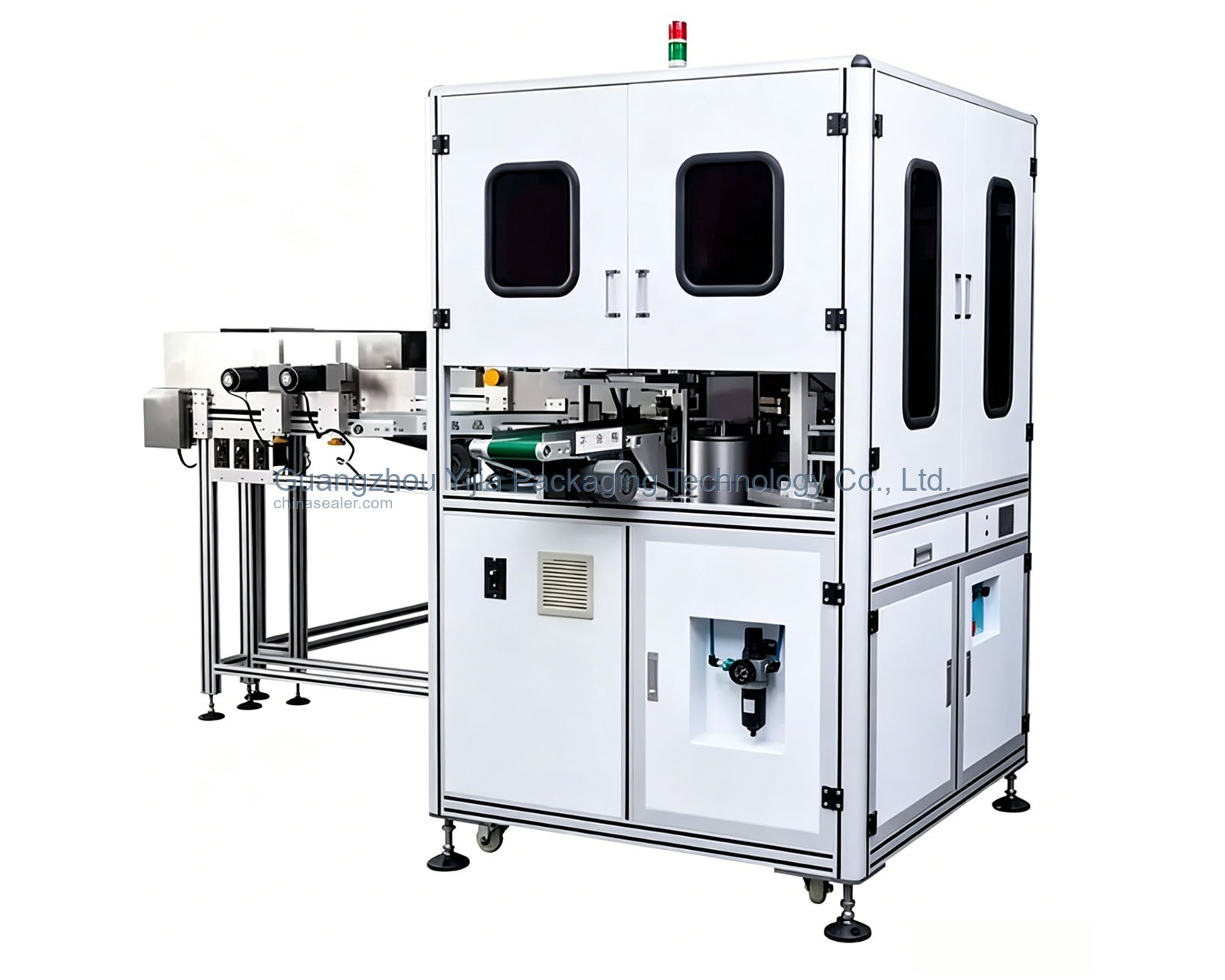 Online Checkweigher and Vision Inspection System
Labeling; Configure the labeling head according to the bottle shape (round/square) and label position to achieve precise labeling; Round and square bottle labeling mac...
Sample details
The state of the contents affects the filling method, contact materials, anti-drip, and safety configuration.
Ketchup sample or photo: confirm viscosity, particle size, and color, affecting filling valve selection and material.Line integration requirements affect equipment sequence, speed matching, and post-process inspection methods.
Bottle sample or dimension drawing: confirm bottle mouth diameter, bottle shape, and height, affecting filling nozzle, capping head, and labeling tooling.The cap structure determines the capping method (press, screw, cap feeding) and whether line integration is needed.
Cap sample: confirm cap type (screw cap/press-on cap), whether it has an aluminum foil liner, affecting capping machine and induction sealer configuration.Production capacity target determines single machine, semi-automatic, or continuous line configuration, and also affects the quotation range.
Target production capacity: number of bottles per hour or per day, determining single machine speed or line solution.On-site conditions affect electrical control, pneumatics, conveyor length, and safety protection configuration.
On-site space and layout drawing: if an existing line is present, provide dimensions and entry/exit directions for line integration design.Production capacity target determines single machine, semi-automatic, or continuous line configuration, and also affects the quotation range.
Even with incomplete information, you can first send existing photos, dimensions, and target production capacity. We will determine the route first, then supplement the confirmation checklist.Common selection mistakes
Ketchup bottling requires coordination of filling, capping, sealing, and labeling. Asking only about the filling machine cannot form a complete solution.
Using a piston filler for ketchup with particles can easily cause clogging; a rotary lobe pump should be prioritized.
Aluminum foil sealing requires close fit between the cap liner and bottle mouth; different cap types need individual testing.
Labeling machines for round and square bottles have different structures; irregular bottles may require custom fixtures.
Temperature changes affect ketchup viscosity; in winter or cold storage environments, an insulated hopper should be considered.
Common questions
For ketchup with particles, a rotary lobe pump filler is recommended; for particle-free ketchup, a piston filler can be used. Specific testing with samples is required to confirm.
If leak-proof and tamper-evident sealing is required, induction foil sealing is recommended, but the bottle cap must have an aluminum foil liner inside.
Yes, but changeover requires replacing the filling nozzle, capping head, and labeling tooling. It is recommended to determine the primary specification first.
The price depends on the number of filling heads, automation level, line configuration, and material requirements. It needs to be confirmed based on samples and production capacity.
An anti-drip filling nozzle assembly can be added, and the filling speed and suck-back parameters can be adjusted.
First send photos of the ketchup sample, bottle dimensions, cap sample, and target production capacity, and we can determine the direction.