Solution topic
How to Seal Multi-Compartment Meal Trays: Rim, Ribs, Film and Standard Heat Seal vs MAP
Explains the choice of benchtop heat sealing, automatic pre-cut film, rotary multi-station, and modified atmosphere sealing for multi-compartment and prepared meal boxes, with focu
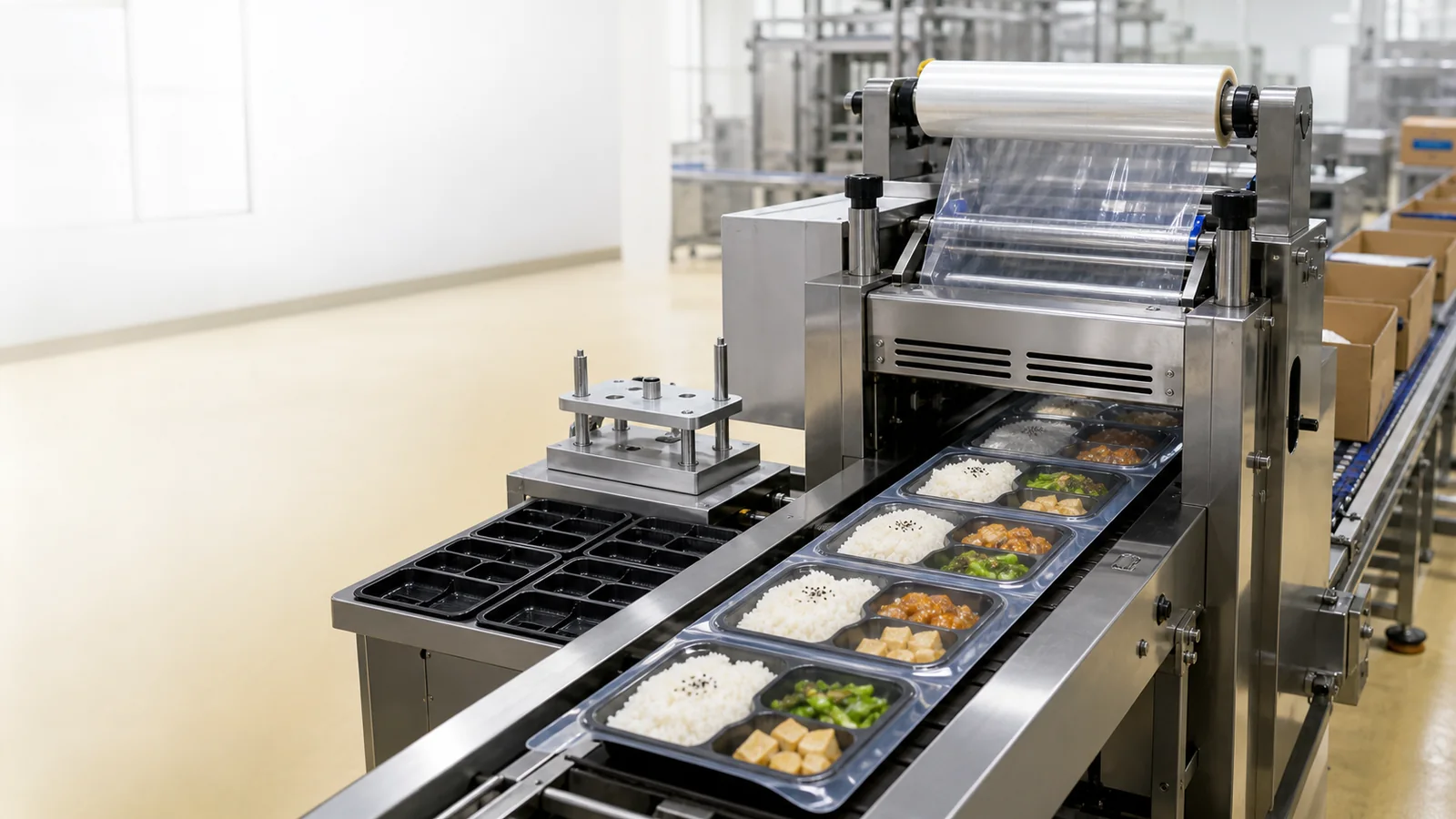
- Multi-compartment lunch boxes are not just about the outer profile. Whether divider ribs need simultaneous pressing, whether contents contaminate the rim, and how the film peels all affect the mold. Benchtop, rotary, and modified atmosphere routes correspond to different production goals.
Solution summary prepared for you
- For multi-compartment lunch box sealing, first clarify whether only the outer edge or also the compartment ribs are sealed, then use a tabletop multi-compartment lunch box sealing machine to establish box-film finished samples.
- After specifications stabilize, upgrade to pre-cut film automatic pick-and-place, rotary table, or chain plate continuous stations, but each compartment count still needs independent mold and first article acceptance.
- Modified atmosphere is only used when food process requires gas displacement, combined with multi-compartment space, barrier film, refrigerated products, and packaging tests.
Route comparison
- Suitable for multi-compartment lunch box samples, multi-specification small batch production, and projects still confirming outer edge and rib pressing.
- Tabletop manual cycle is convenient for observing outer edge and ribs one by one, suitable for establishing mold and film benchmarks for different lunch boxes.
- The manual box and film placement cycle needs to be recorded; finished samples only apply to the tested lunch box, contents, and film combination.
- When specifications and orders are stable and automatic film picking or continuous box feeding is needed, automatic stations can be further evaluated.
- Use a tabletop multi-compartment lunch box sealing machine, and use small cup sealing film and easy-tear film consumables to verify heat seal layer and opening direction.
- Suitable for projects with fixed main compartment count, clear box feeding direction and filling handoff, and needing to reduce manual film placement or increase station cycle.
- Automatic pre-cut film pick-and-place or rotary multi-station can incorporate repetitive actions into the cycle, suitable for upgrades after lunch box specifications stabilize.
- Film sheet stacking, lunch box positioning, mold ribs, and changeover still need to be tested per specification; automation does not correct rim contamination.
- When box type, ribs, and film material still change frequently, or tabletop samples have not yet produced repeatable results, keep segmented verification first.
- Choose automatic pre-cut film pick-and-place tray sealing machine according to film supply, or evaluate rotary vacuum tray sealing machine according to box feeding station.
- Suitable for projects where multi-compartment lunch boxes have clear gas displacement requirements and have barrier packaging materials and storage test conditions.
- Tray modified atmosphere sealing machine combines gas displacement with main sealing, convenient for making controlled samples according to multi-compartment boxes and food process.
- Shelf life and product condition are jointly confirmed by food, hygiene, packaging material, gas, and storage tests; equipment only executes the set packaging actions.
- When there is no gas displacement goal or packaging acceptance method, complete food process definition first.
- Use a tray modified atmosphere sealing machine, paired with actual lunch boxes, barrier film, gas conditions, refrigerated samples, and packaging acceptance methods.
Associated Equipment / Consumables
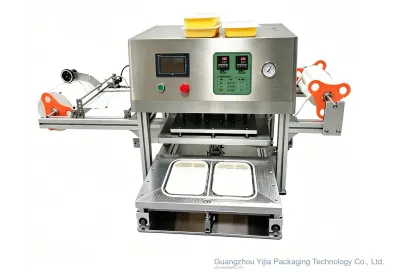 Tabletop Multi-Compartment Meal Tray Sealer
For heat sealing divided meal trays. Confirm the rim, divider ribs, tray resin, lidding film, peel target and operator cycle before tooling. Standard heat sealing closes the tray; it is not the same process as MAP gas...
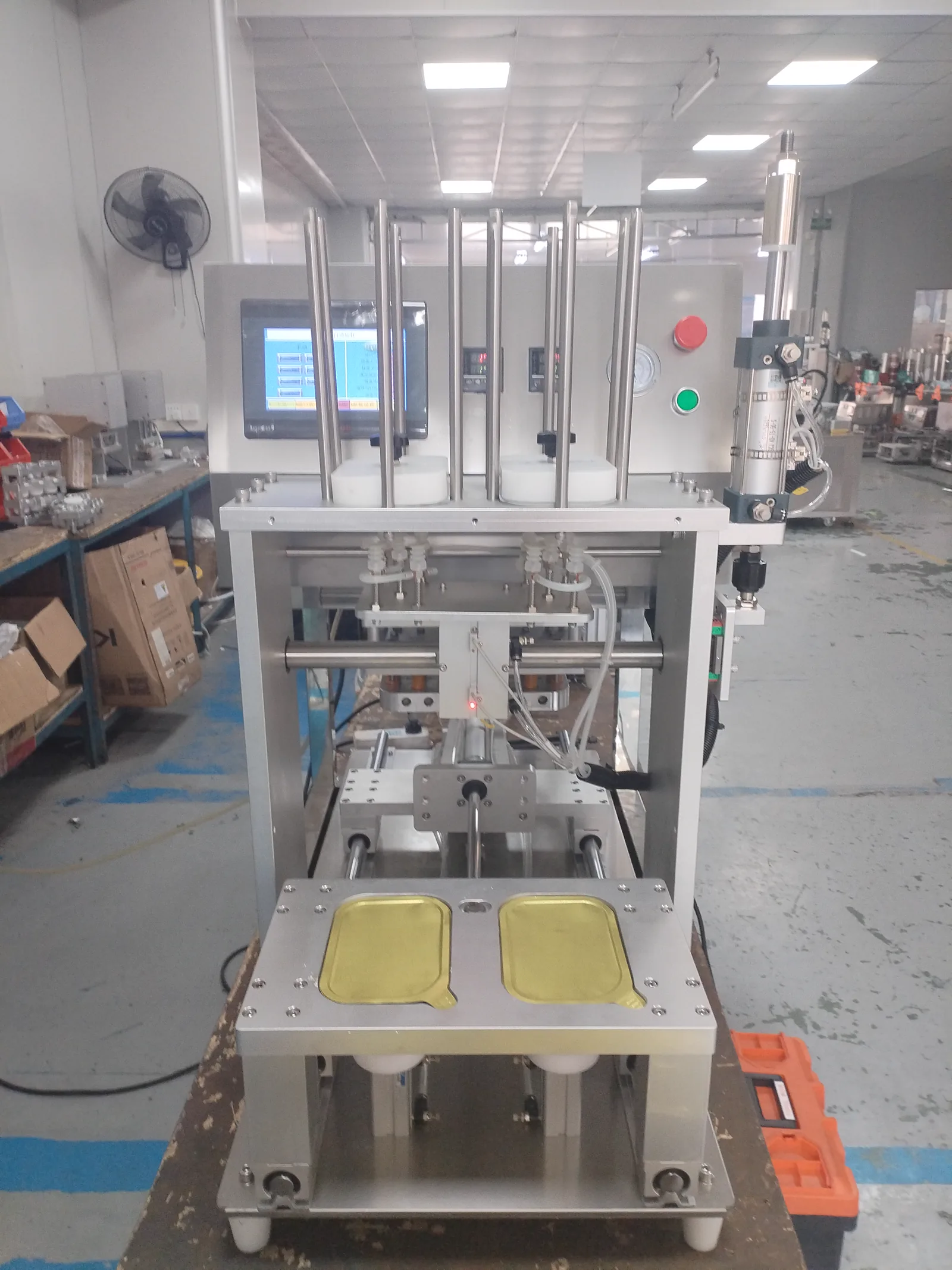 Automatic Pre-Cut Lid Pick-and-Place Tray Sealer
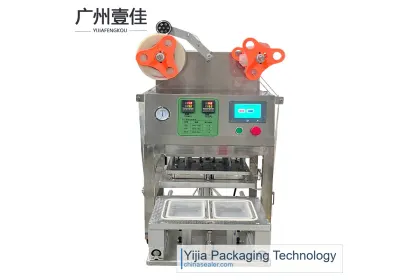 Benchtop Roll-Film Tray Sealing Machine
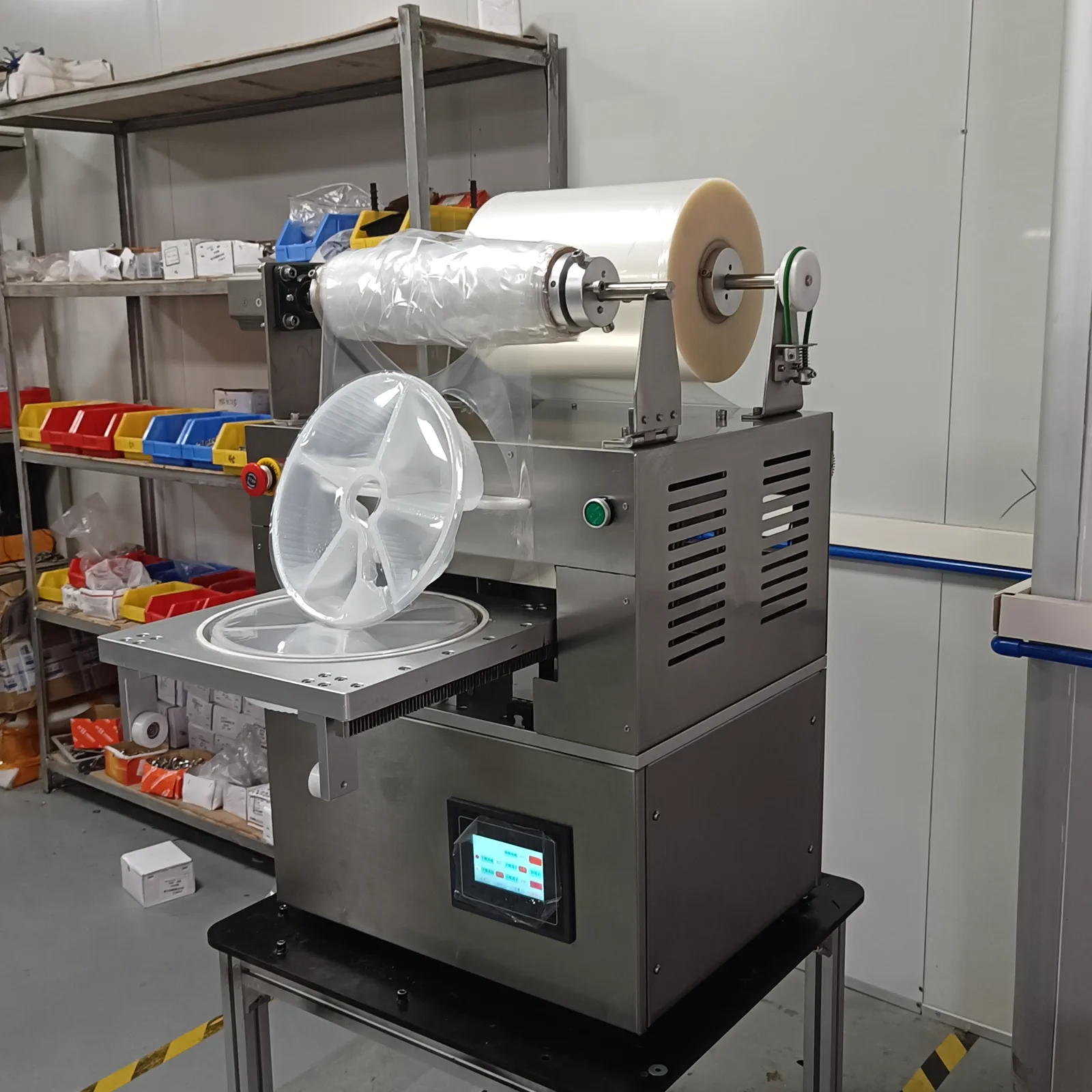 Benchtop Electric Meal-Tray Sealer
Tabletop compartment sealing sampling; Manual box and film placement helps identify which rib has insufficient pressure and also checks whether filling material enters the sealing a...
Core process
Mark the outer edge, each compartment rib, positioning surfaces, and non-pressable areas on the actual sample, and define the boundaries that need sealing.
Tabletop multi-compartment lunch box sealing machine is used to observe outer edge, ribs, and film fit one by one, first establishing qualified, boundary, and failed samples.
After pre-cut film size and stacking stabilize, an automatic pre-cut film pick-and-place tray sealing machine can incorporate film picking and placement into the cycle.
Roll film can first be verified on a tabletop roll film tray sealing machine for web feeding and cutting. After specifications stabilize, evaluate rotary or chain plate continuous stations.
Tray modified atmosphere sealing machine is only used when food process requires gas displacement, and is paired with barrier film, gas conditions, and packaging acceptance.
Establish an independent changeover kit for each specification, recording outer edge, ribs, mold, film material, filling condition, and first article reference samples.
Sample details
The contour, height, and tolerance of outer edge and ribs determine where the mold contacts and which areas need pressing.
Multiple lunch box samples, outer dimensions, compartment count, rib height, box depth, and warpage recordsRoll film and pre-cut film have different feeding actions; heat seal layer and easy-tear direction determine sealing and opening.
Production film material, structure thickness, roll direction or pre-cut dimensions, heat seal layer, and easy-tear requirementsContents determine contamination risk on outer edge and ribs, and also change filling temperature and box stress.
Real dishes, soup and grease condition, filling height, temperature, and pre-sealing cleaning methodOrder and changeover organization affects the handoff design between manual tabletop, automatic film picking, and continuous stations.
Main specifications, shift orders, changeover frequency, manual filling, and finished product receiving methodModified atmosphere and regular heat sealing have different documentation; site space also limits the direction of incoming and outgoing materials for multi-station.
Whether modified atmosphere, gas and acceptance method, site layout, electrical and air supply, and cleaning spaceCommon selection mistakes
Lunch boxes with the same outer contour may have different compartment counts and ribs; the machine name cannot indicate the mold contact surface.
Soup and grease entering the ribs or outer edge will separate the heat seal layer; increasing heat cannot eliminate upstream contamination.
Tabletop manual cycle, rotary table, and chain plate line have different box feeding, filling, and receiving; cannot only compare the main sealing action.
Modified atmosphere requires gas displacement, barrier packaging materials, and product storage testing; multi-compartment boxes also involve sampling from different spaces.
The mold includes rib pressing and container support besides the outer frame; changing compartment count by only replacing the outer frame will miss internal divisions.
View detailed technical notes
First define whether divider ribs are sealed
Sealing multi-compartment lunch boxes starts with one specific question: seal only the outer rim, or also bond each divider rib to the film. This choice changes the mold contact surface.
Check rim contamination with filled samples
Real dishes bring sauce, grease, or particles to the box rim and ribs. Filled boxes should be the main sealing input; empty boxes are only for initial positioning.
Establish the divider baseline on a benchtop machine first
A benchtop multi-compartment lunch box sealer makes it easy to inspect each seal edge one by one. After film, outer rim, ribs, and mold support form a repeatable sample, finalize the changeover record, covering both post-fill rim contamination and box removal.
Film supply automation does not replace main seal verification
Pre-cut film can be handled by an automatic pre-cut film pick-and-place tray sealer, while roll film requires first verifying film advance and cutting. Both film supply methods must not skip rib heat-seal tests, and retain samples of misalignment, missing film, and cutting defects separately.
Continuous stations start with stable box feeding
Once the lunch box specification is stable, consider a rotary vacuum tray sealer or a chain-plate cup/box continuous sealing line. Box feeding, filling, and take-off must be tested in the same cycle.
Modified atmosphere requirements are independent of compartment count
A tray-type modified atmosphere sealing machine is used for projects requiring gas replacement. Multi-compartment space, barrier film, gas conditions, and packaging acceptance are defined together by food technology.
Keep a separate changeover kit for each compartment count
The changeover kit for each compartment count should include boxes, molds, positioning parts, film, and finished samples. On restart, compare the first piece against the outer rim and inner ribs one by one.
Photos for initial assessment, real samples for finalization
When starting communication from photos, you can first mark the box outline and ribs. Before mold machining, actual boxes, tolerances, production film, and filled samples are still needed for verification.
Common questions
Can we discuss the direction first without an actual lunch box sample?
Photos and dimensions can identify the outer contour first, but the mold still needs to be confirmed together with actual multi-compartment lunch box samples, rib height, tolerance, and film material.
How to choose between tabletop and multi-station based on production organization?
The decision is based on manual box and film placement, number of ribs, changeover, filling, and complete cycle tests, not on a fixed quantity as the machine model conclusion.
Can roll film be used directly for multi-compartment lunch boxes?
Need to verify width, roll direction, heat seal layer, and trim margin. A generic film name cannot indicate compatibility with the box rim and ribs.
How to establish acceptance methods for compartment sealing?
Choose peel, leak, or other packaging tests according to product requirements, and record results for outer edge, ribs, and rim contamination separately.
Can different compartment counts be changed over on the same equipment?
Changeover can be evaluated, but the outer edge, number of compartments, ribs, and box depth must correspond to the mold and finished samples, not just shared by length and width.
What information is needed for solution communication?
First prepare lunch boxes, film material, contents, compartment sealing requirements, shift orders, and on-site direction. For modified atmosphere projects, add food process documentation.