Solution topic
Freeze-Dried Fruit Canning Moisture Protection: Aluminum Foil Inner Seal, Outer Lid and Labeling Combination
Explains the aluminum foil heat sealing and press capping, lid liner induction, and inline heat sealing routes for freeze-dried fruit paper cans or plastic pails, covering labeling
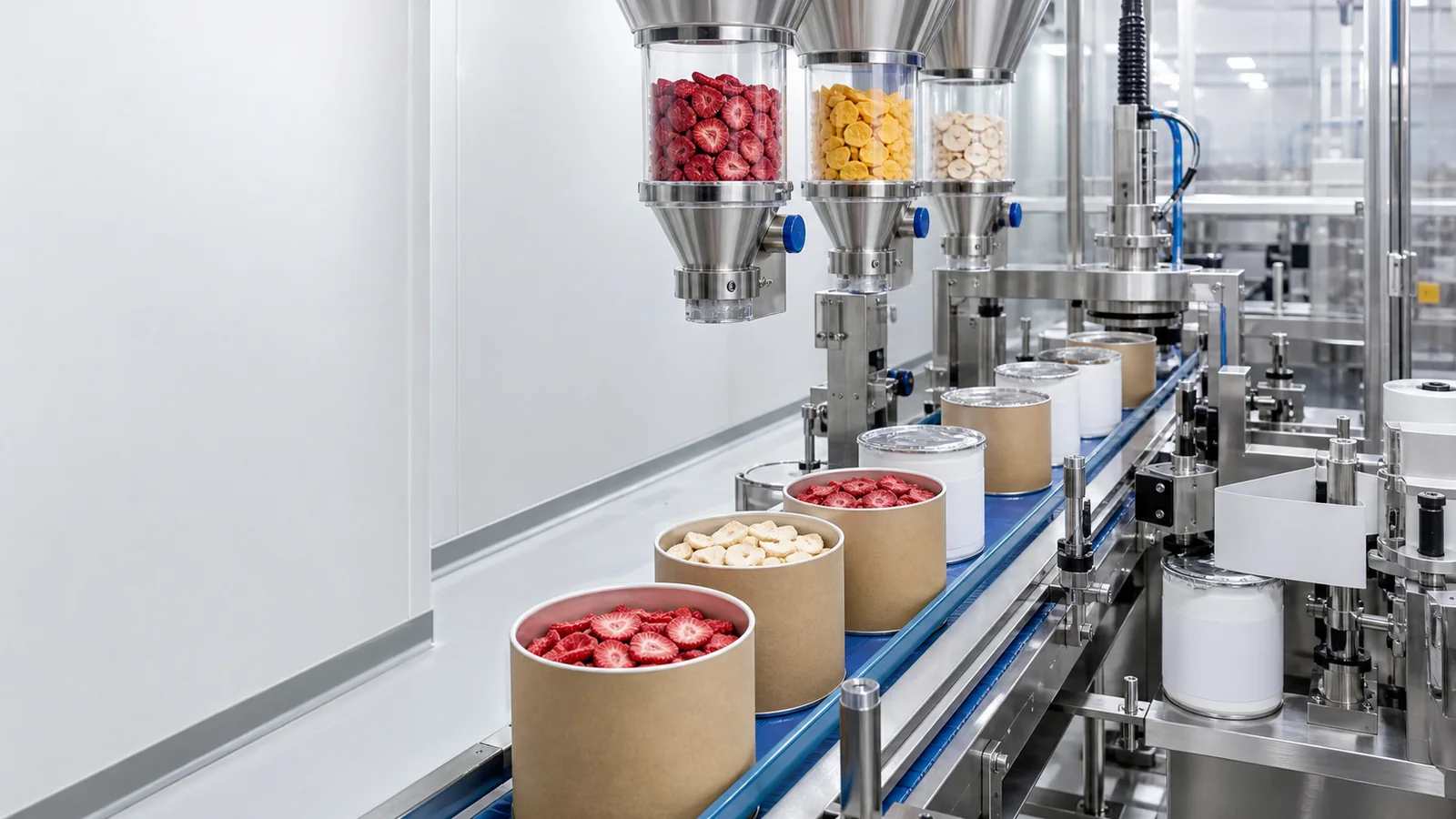
- The moisture-proof packaging of freeze-dried fruit focuses on the complete combination of can mouth, aluminum foil film or liner, and outer lid. Paper-plastic cans can be heat-sealed with film and then press-capped. When the liner inside the lid is uniformly pressed, induction sealing can be evaluated. The listed configuration does not include independent...
Solution summary prepared for you
- Freeze-dried fruit paper cans or plastic pails can use the aluminum foil film sealing and press capping machine for direct heat sealing and outer lid press fitting, provided the can rim, film, and lid are matched as a set.
- Threaded cans use online or bench induction foil sealing machines only after the lid liner is evenly pressed by the preceding lid application. The current combination does not include independent screw capping.
- Flat bare rims can also be evaluated with the bottle online heat sealing machine; after main seal verification, connect the round/square bottle labeling machine and date/batch inkjet coder.
Route comparison
- Suitable for paper cans or plastic pails with rims that can be directly covered with film and outer lids using verified press-fit structures.
- Aluminum foil film is placed directly on the flat rim and heat-sealed, then a matching outer lid is press-fitted; two consecutive actions can be completed in one machine.
- Rim cleanliness and flatness, film heat-seal layer, and outer lid press-fit structure all require real-sample verification; threaded screw capping is not included.
- When containers rely on threaded lid liners and require tightening before induction, switch to the corresponding induction route and solve screw capping separately.
- Use the paper can/plastic pail aluminum foil film sealing and press capping machine, configuring molds according to can rim, film, and press-fit outer lid.
- Suitable for plastic or glass cans where the threaded lid is already installed by the preceding process and the liner fully contacts the rim.
- Induction equipment can complete inner sealing after the lid has pressed the liner; online or bench forms can suit different small-batch and line arrangements.
- Container material, lid liner, bottle mouth contact, lid pressing, and induction passing orientation need confirmation; current equipment does not install lids.
- If there is no matching aluminum foil liner in the lid, the lid cannot continuously press the bottle mouth, or the can cannot pass stably, the induction solution cannot be directly established.
- For stable conveying, use the online induction foil sealing machine; for small batches, evaluate the bench air-cooled induction foil sealing machine. Screw capping is handled by the preceding process.
- Suitable for canned products with flat bare rims, clear direct film structure, and requiring post-seal labeling and date/batch coding.
- Flat bare rims can use online heat sealing for the main seal; after finished products are stable, place labels and date/batch codes in appropriate layouts.
- Direct film material, can rim, and heat-seal mold require samples. Labeling and coding are also affected by can body seams, curvature, and conveying orientation.
- If packaging requires the threaded lid to press the liner first, or the can body cannot be stably conveyed for labeling, solve the lid-can and positioning issues first.
- Configure the bottle online heat sealing machine, then connect the round/square bottle labeling machine and date/batch inkjet coder.
Associated Equipment / Consumables
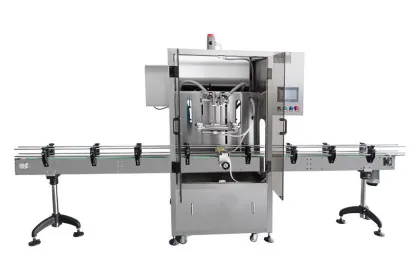 Servo Piston Liquid and Paste Filling Machine
The machine meters flowable liquids or viscous products within a trial-proven range; it is not universal for every liquid. Use the actual product and minimum/maximum container and dose to validate foam, stringing, par...
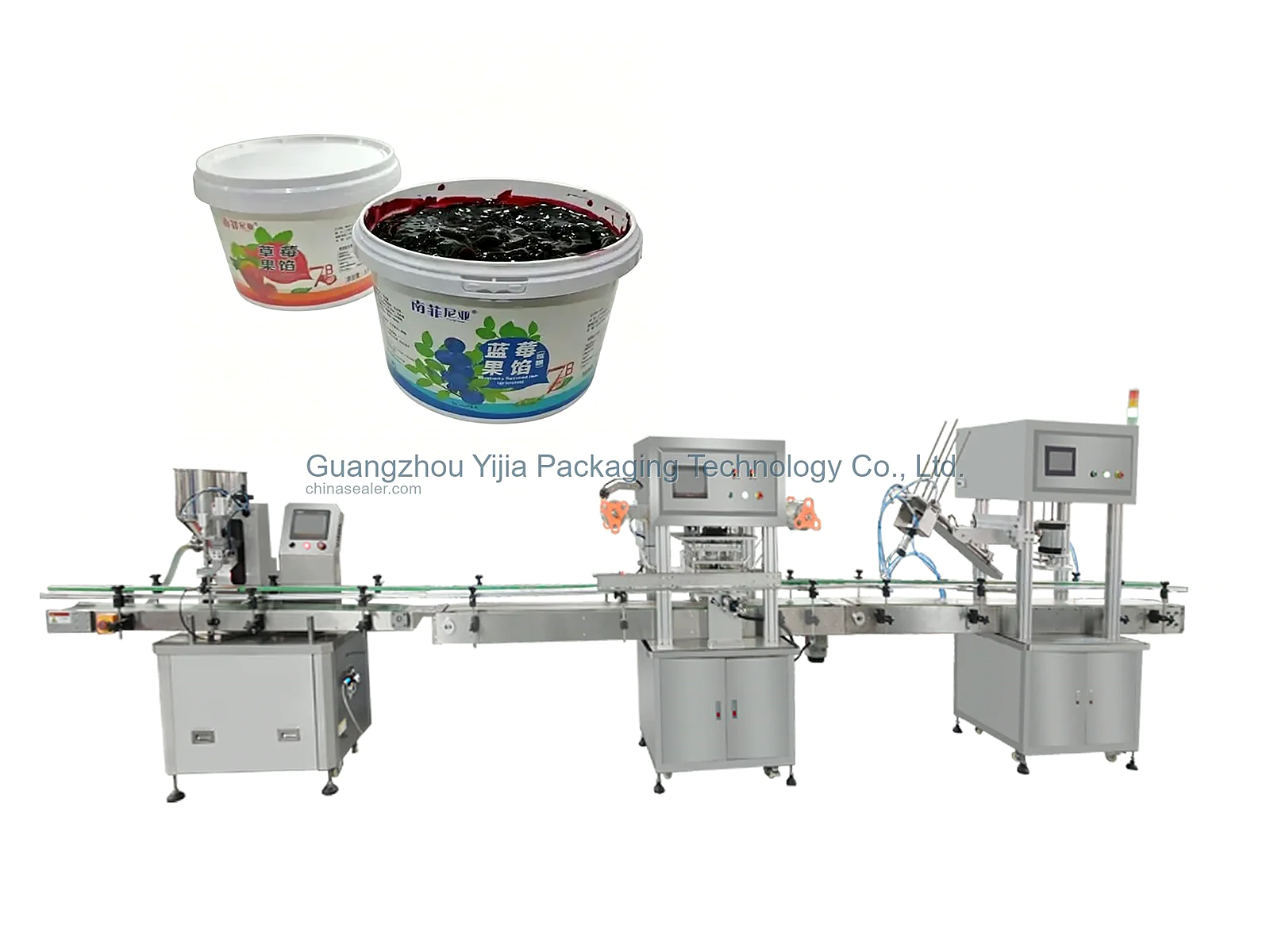 Paper Can and Plastic Pail Foil Heat Sealing and Capping Machine
Online heat sealing and finished marking; Labeling and coding are debugged after finished cans are stably conveyed; marking stations cannot compensate...
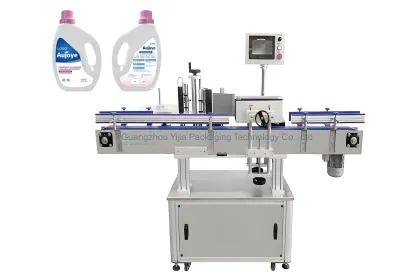 Round-Bottle and Front/Back Labelling Machine
Online heat sealing and finished marking; Labeling and coding are debugged after finished cans are stably conveyed; marking stations cannot compensate for sealing or pres...
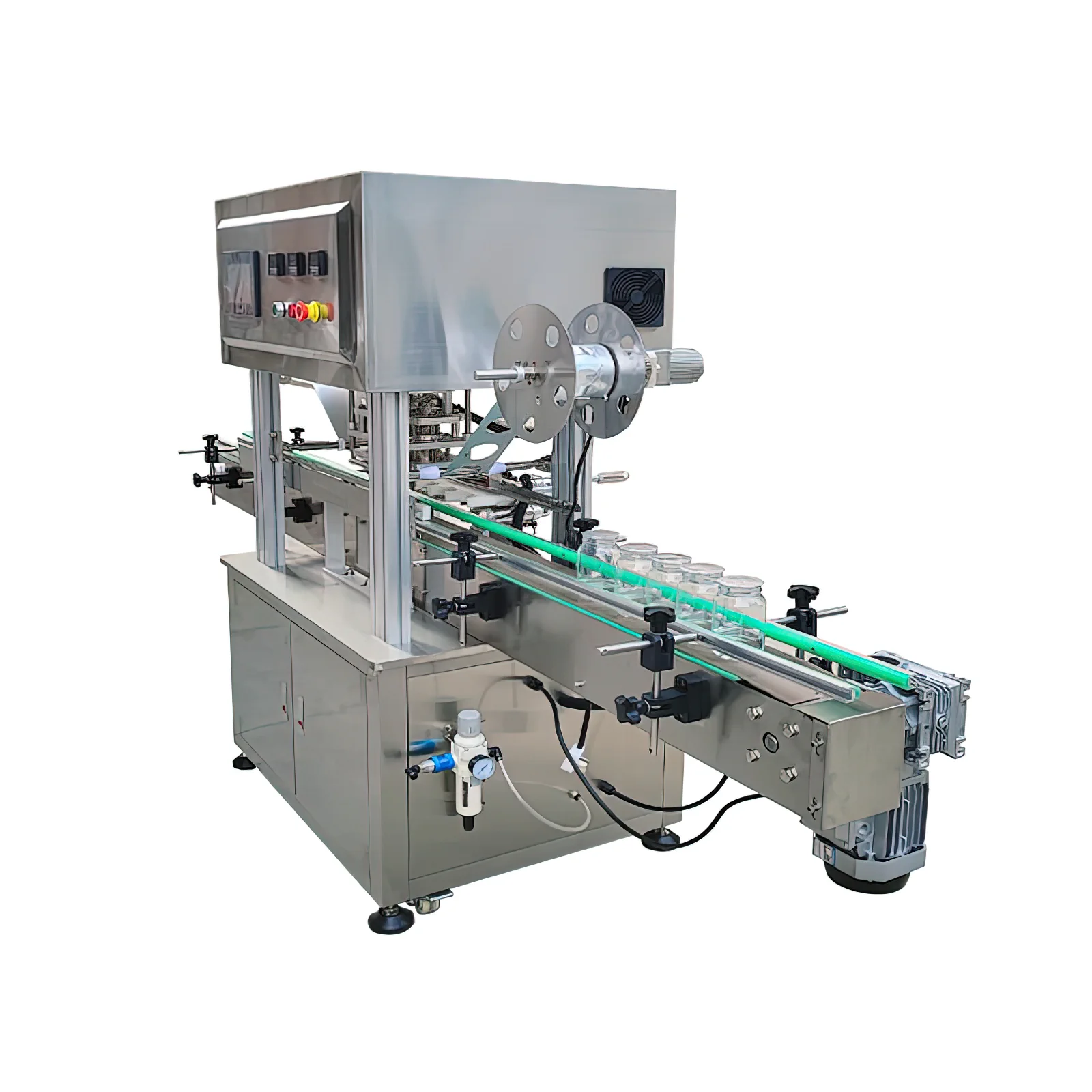 Inline Heat-Press Bottle Sealing Machine
Direct film sealing and outer lid press fitting; Film placement, heat sealing, and press capping are configured according to actual can rim, film, and outer lid samples, witho...
Core process
First use freeze-dried fruit, empty cans, sealing components, and outer lids to confirm rim clearance after filling and whether direct heat sealing or lid liner structure is used.
When the rim of paper cans or plastic pails can be directly heat-sealed with film and the outer lid uses a press-fit structure, use an integrated sealing and press capping machine.
When the threaded lid has a matching liner and is evenly pressed by the preceding process, choose online or bench induction equipment according to production method.
Another option for bare rims with direct film placement is the bottle online heat sealing machine. After the main seal passes, arrange body labeling and date/batch coding.
Record can rim cross-section, lid inner structure, film coverage, and can body labeling area separately, avoiding selection based only on the name 'snack can'.
Clearly define the responsibility boundaries of filling, film sealing, outer lid, labeling, and coding, especially which preceding station installs the threaded lid.
Sample details
Freeze-dried fruit block shape, debris, and filling height affect rim clearance, but the current configuration does not include solid metering feeding by default.
Freeze-dried fruit samples, filled cans, single-can quantity, and rim residue conditionThe rim and outer lid structure of paper, plastic, or glass cans distinguishes heat sealing with press capping from screw capping followed by induction.
Can material, diameter, height, rim cross-section, outer lid, and opening methodDirect film and lid liner have different heat-seal layers and dimensions; use sealing component samples prepared for mass production.
Aluminum foil film or lid liner, material structure, dimensions, and supply statusWhether the outer lid is applied by press capping, manual tightening, or other preceding processes changes the main machine selection and line starting point.
Lid installation method, whether independent screw capping is needed, shift pace, and manual arrangementLabel and batch position affect can body orientation, sensor triggering, and changeover.
Label rolls, application area, date/batch content, can passing orientation, and site layoutCommon selection mistakes
Although direct heat sealing film and induction liner inside the lid both contain aluminum foil, the packaging material structure and preconditions are different and cannot be processed with the same method.
Freeze-dried fruit debris may fall on the rim. Once trapped between heat-seal layers, subsequent press capping or labeling cannot restore the seal.
Induction equipment only processes the liner already pressed by the lid; it does not perform unscrambling, lid application, or tightening. Missing preceding steps makes the entire route incomplete.
The outer lid action of the paper/plastic can sealing and press capping machine is for verified press-fit structures and cannot be automatically extended to all threaded and snap-on lids.
Can body curvature, seams, and surface condition affect label wrinkling or edge lifting, and date position may conflict with label layout.
View detailed technical notes
First check whether the aluminum foil is on the bare rim or inside the lid
Moisture protection for freeze-dried fruit is not just adding a layer of aluminum foil; it requires a verified combination of can rim, aluminum foil film or liner, and outer lid. How the outer lid is installed determines whether to use heat sealing with press capping or screw capping followed by induction.
Outer Lid Structure Determines Station Sequence
Paper cans or plastic pails can have film heat-sealed directly on the bare rim, then press-fit a matching outer lid. Threaded cans require the preceding process to install the lid and press the liner, then enter induction equipment. The two routes cannot be interchanged.
Direct Film Sealing and Press Capping Suitable for Corresponding Paper-Plastic Cans
The paper can/plastic pail aluminum foil film sealing and press capping machine places the film on the can mouth and heat seals it, and handles the verified press-fit outer lid. Samples need to check film positioning, can mouth residue, lid pressing posture, and opening effect at the same time. This equipment is not equivalent to a screw capping machine; the lid type boundary should be clearly stated in the changeover and acceptance checklist.
Induction Inner Seal Receives Material from Pre-Capped State
The inline induction foil sealing machine is suitable for finished cans that pass through stably and continuously, while the benchtop air-cooled induction equipment can be used for another production arrangement. Both require that the liner inside the lid has been uniformly pressed tightly by the previous process.
Inline Heat Sealing Still Requires Control of Can Mouth Residue
A flat bare rim can also use an inline heat sealing machine for bottles. Regardless of which main sealing method is chosen, freeze-dried fruit debris must not remain on the rim, and the sealed film sample needs to be checked according to packaging requirements.
Marking Station Placed After Moisture-Proof Sealing
The round/square bottle labeling machine and date/batch coding machine should be configured after the main seal and outer lid are stable. The label layout should avoid the opening area, and the printing medium should be verified on the actual can body or label surface.
Filling and Screw Capping Are Independent Upstream Processes
The current combination does not include quantitative feeding of freeze-dried fruit and independent screw capping. If these upstream processes are needed for the project, material status, single-can quantity, and lid type should be provided, and equipment and line interface should be matched separately.
Complete Packaging Samples for Acceptance
The trial run should cover cans, lids, films, labels, and real freeze-dried fruit, record rim cleanliness, inner seal, outer lid, labeling, and date results, and manage changeover parts according to main and backup specifications.
Determine Main Sealing Branch First When Information Is Incomplete
Photos and dimensions can first distinguish direct heat sealing from induction sealing inside the lid. The final configuration is still confirmed by actual can, lid, film, and label samples, packaging tests, production takt time, and on-site conditions.
Common questions
What equipment is included in the post-filling section for freeze-dried fruit canning?
The current combination covers aluminum foil sealing, press capping or induction inner sealing of filled cans, as well as labeling and coding. Solid quantitative feeding and independent screw capping need separate confirmation.
How to choose between direct heat sealing and induction inner sealing?
Choose heat sealing when the film is placed directly on the bare rim. Choose induction when the liner inside the lid is already evenly pressed by the lid. The choice is based on the lid-film structure and trial sealing results.
Can small batches of freeze-dried fruit start with standalone machines?
Standalone machines can be used, but the rim condition after filling, the method of manual film placement or lid application, and the target shift pace must still be clarified.
Can paper cans and plastic cans share labeling equipment?
Round or square cans verified with samples can use the round/square bottle labeling machine. Irregular surfaces require separate confirmation of positioning and application method.
Can a solution be made without can samples?
Photos and dimensions are suitable for initial sorting, but sealing molds, liner contact, press capping, and label completion samples still require actual can, lid, film, and label samples.
Is the post-packaging section for freeze-dried fruit suitable for a line?
Sealing and marking can be connected after the pace is stable. If preceding screw capping, solid feeding, or metal can seaming is needed, plan them separately.