Solution topic
Freeze-Dried Fruit Canning: Direct Film Sealing, Induction Liner, or Press Capping
Compare direct heat sealing, induction aluminum foil liner, and film sealing with press capping based on the freeze-dried fruit can body, rim, film material, and cap type, and conf
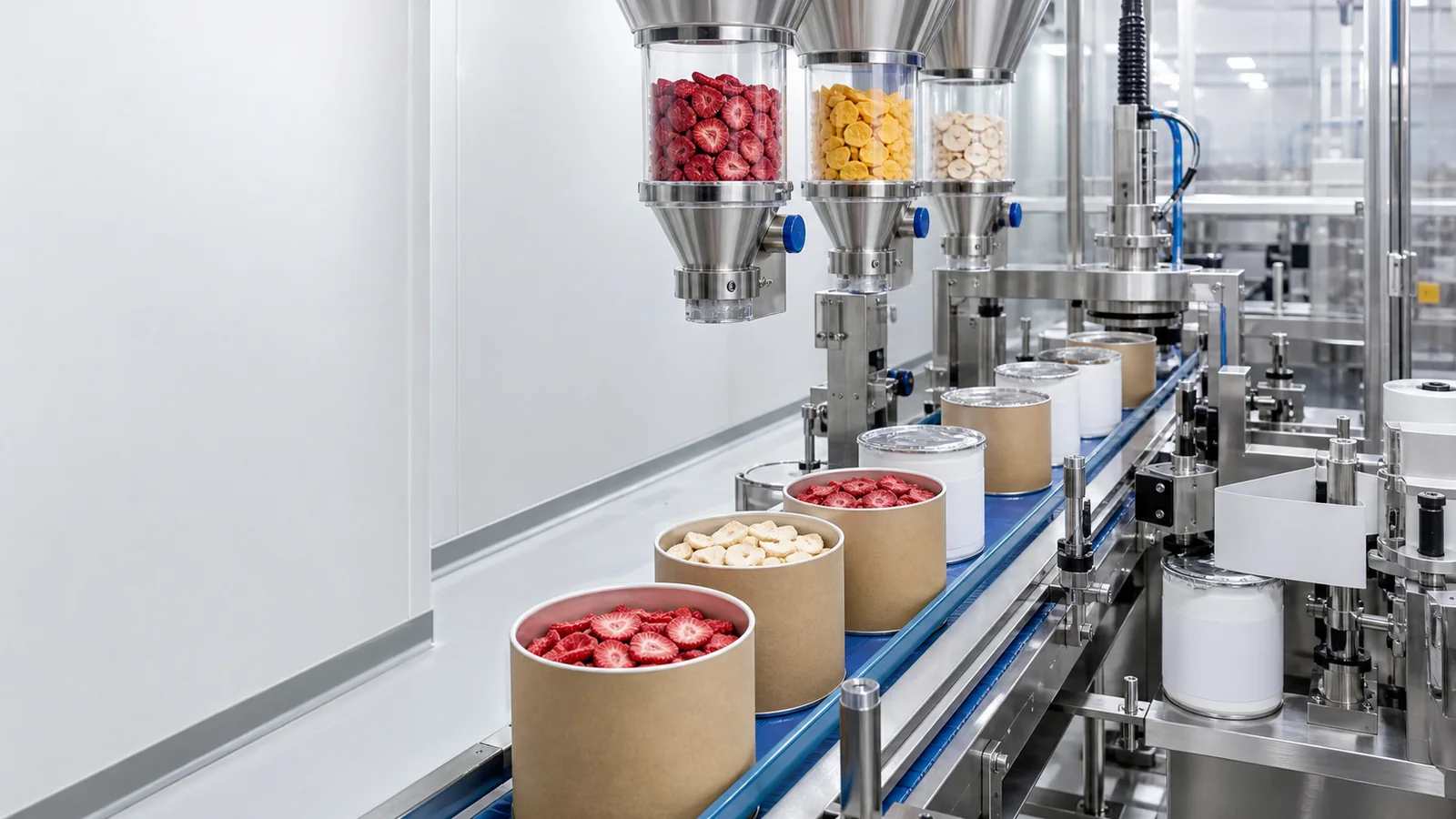
- Plastic cans, paper cans, metal cans, and glass cans have different rims and cap types. Direct heat-sealed film and aluminum foil liner inside a screw cap are two separate processes. Please provide can, cap, film, and freeze-dried samples, moisture-proof goals, filling method, label position, and capacity.
Solution summary prepared for you
- When aluminum foil film or composite film is placed directly on the mouth of freeze-dried fruit cans, first use an inline heat sealing machine for bottles to verify the rim and film material.
- When an aluminum foil liner is inside a matching screw cap and compatible with the container, an inline induction foil sealing machine can be used for sample testing.
- For paper or plastic cans that require inner film sealing before pressing an outer cap, a paper can/plastic pail aluminum foil film sealing and cap pressing machine can be evaluated.
Route comparison
- Suitable for packaging where aluminum foil film or composite film is placed directly on the can mouth and can form a heat seal match with the continuous rim.
- An inline heat sealing machine for bottles can establish direct contact heat sealing samples around the actual can and film.
- Rim flatness, film heat seal layer, freeze-dried debris, and filling condition must all be verified; material names cannot replace samples.
- When the aluminum foil is actually inside a screw cap, it should go to the induction branch, not be treated as a separate film for heat sealing.
- Use an inline heat sealing machine for bottles to verify direct film lidding, and configure contact parts according to actual can rim and film samples.
- Suitable for projects where the screw cap already has an aluminum foil liner and the cap, liner, container, and can mouth form a matching package.
- An inline induction foil sealing machine can perform induction sealing tests on the cap liner under correct capping conditions.
- Liner size, cap type, can body material, and capping condition must be checked as a set; direct film results cannot be used for this.
- If the package has no cap liner, or the liner does not match the container, adjust the packaging material structure first.
- Use an inline induction foil sealing machine for matching cap liners, and record the sealed can mouth and cap sample condition.
- Suitable for packaging processes where paper cans or plastic cans first complete direct film inner sealing and then require pressing an independent outer cap.
- A paper can/plastic pail aluminum foil film sealing and cap pressing machine can organize inner film heat sealing and outer cap action in sequence in the same equipment process.
- Can-film heat sealing and cap pressing must be verified separately; outer cap structure, filling condition, and changeover parts must also be checked item by item.
- If only cap liner induction is needed, or the package has no outer cap action, a combined film sealing and cap pressing machine is not necessary.
- Use a paper can/plastic pail aluminum foil film sealing and cap pressing machine for sample trials; after cap type adaptation, consider cap sorting and downstream marking.
Associated Equipment / Consumables
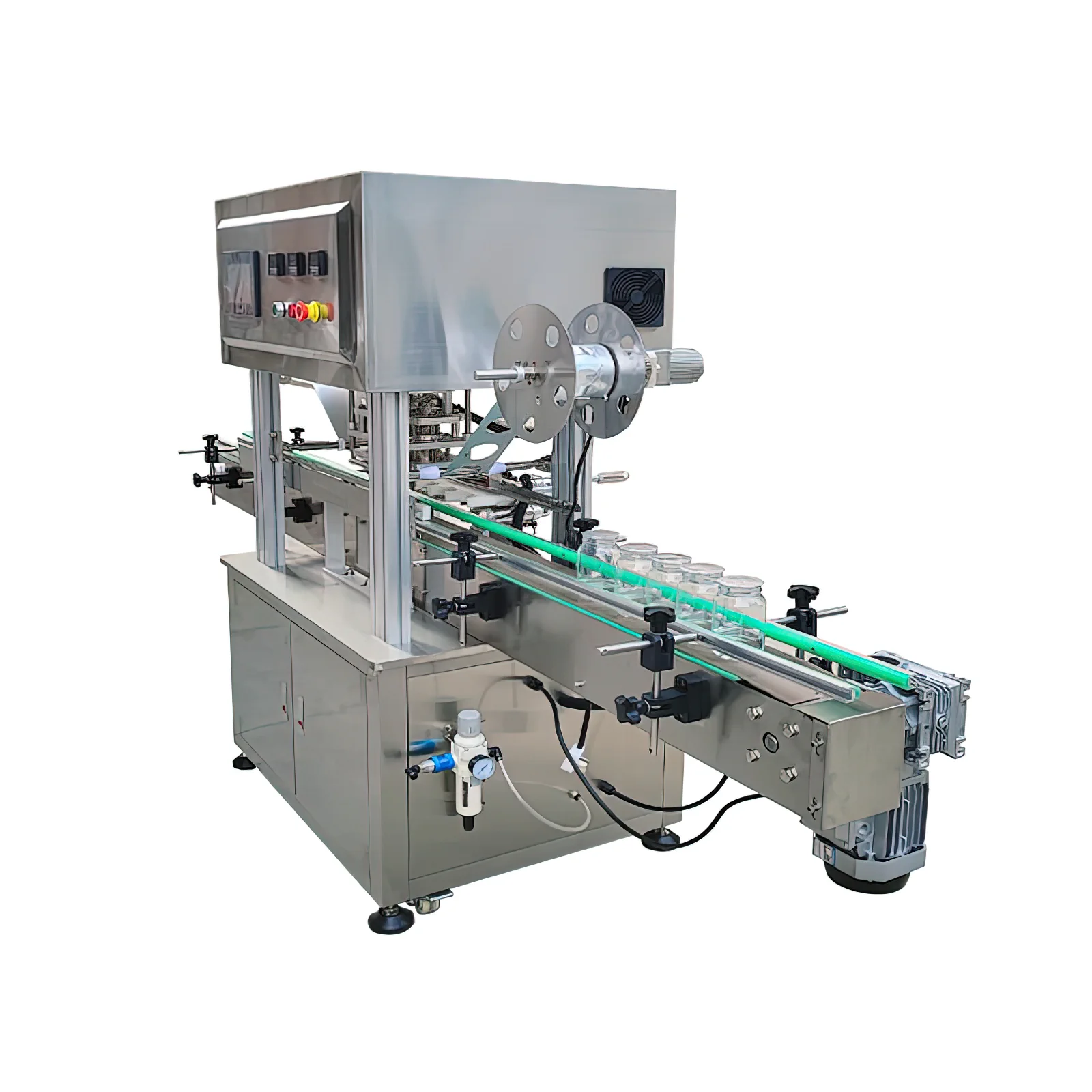 Inline Heat-Press Bottle Sealing Machine
Heat-seal foil or composite lidding directly to bottle and jar rims, with integration into an existing filling line configured per project. Test the container and seal layer before selecting positioning, film feed, se...
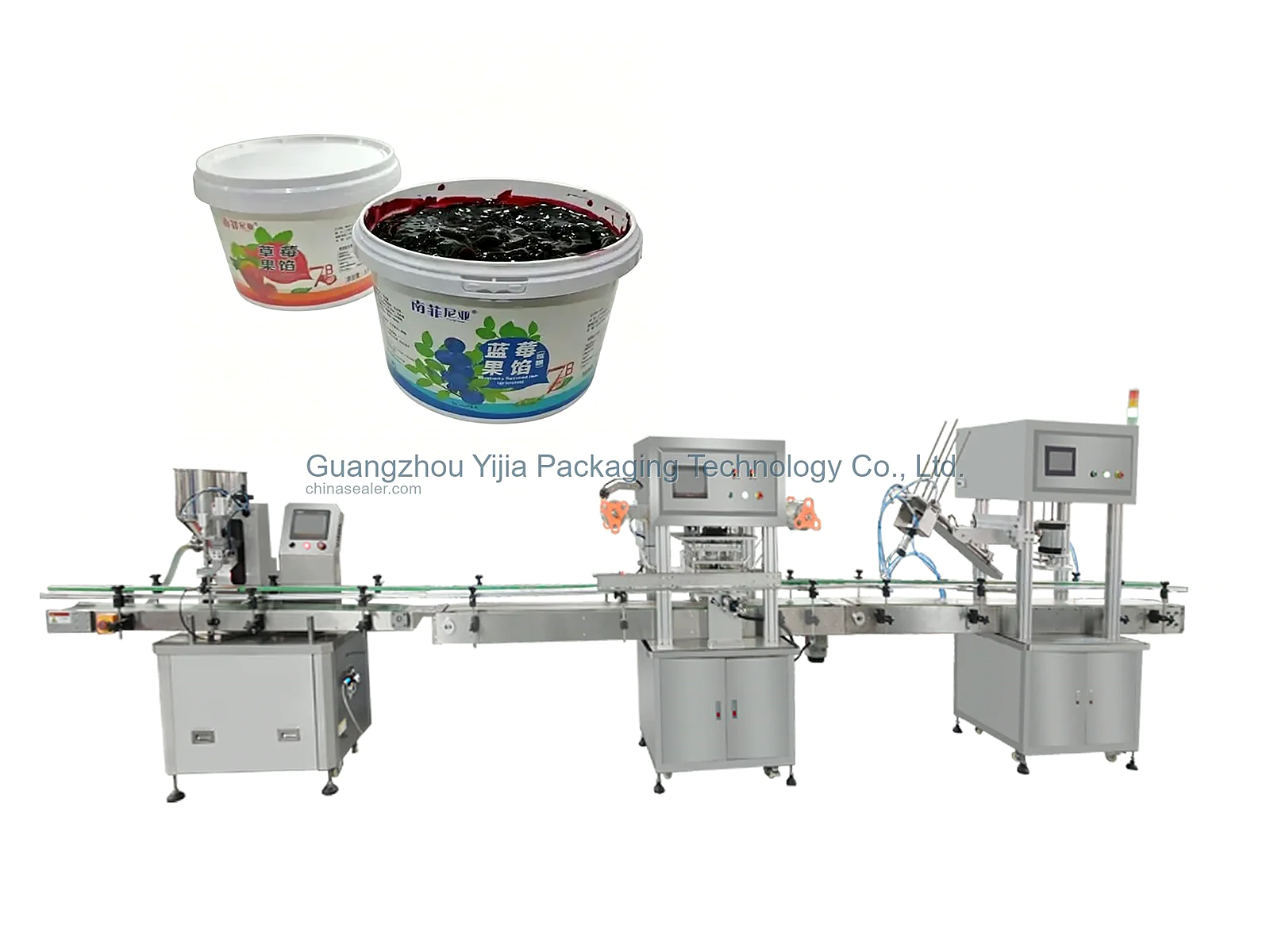 Paper Can and Plastic Pail Foil Heat Sealing and Capping Machine
Establish can, cap, and film samples with freeze-dried finished product; Samples should maintain formal filling condition to observe freeze-dried debri...
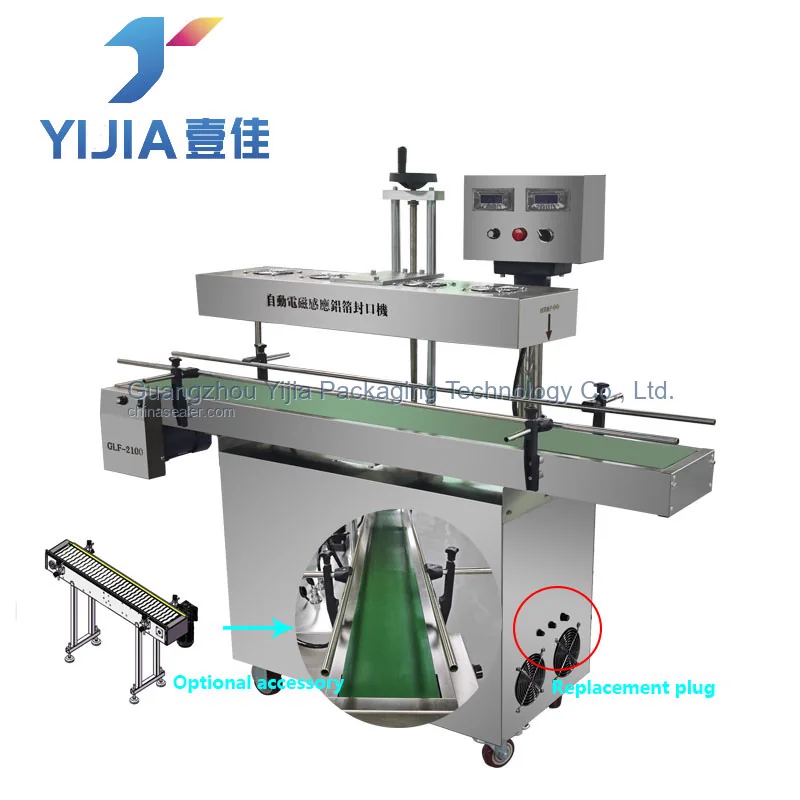 Inline Induction Foil Sealer
Continuous cap pressing when outer cap is needed after film sealing; Inner seal and outer cap must be checked separately; cap pressing action cannot compensate for mismatched film or disc...
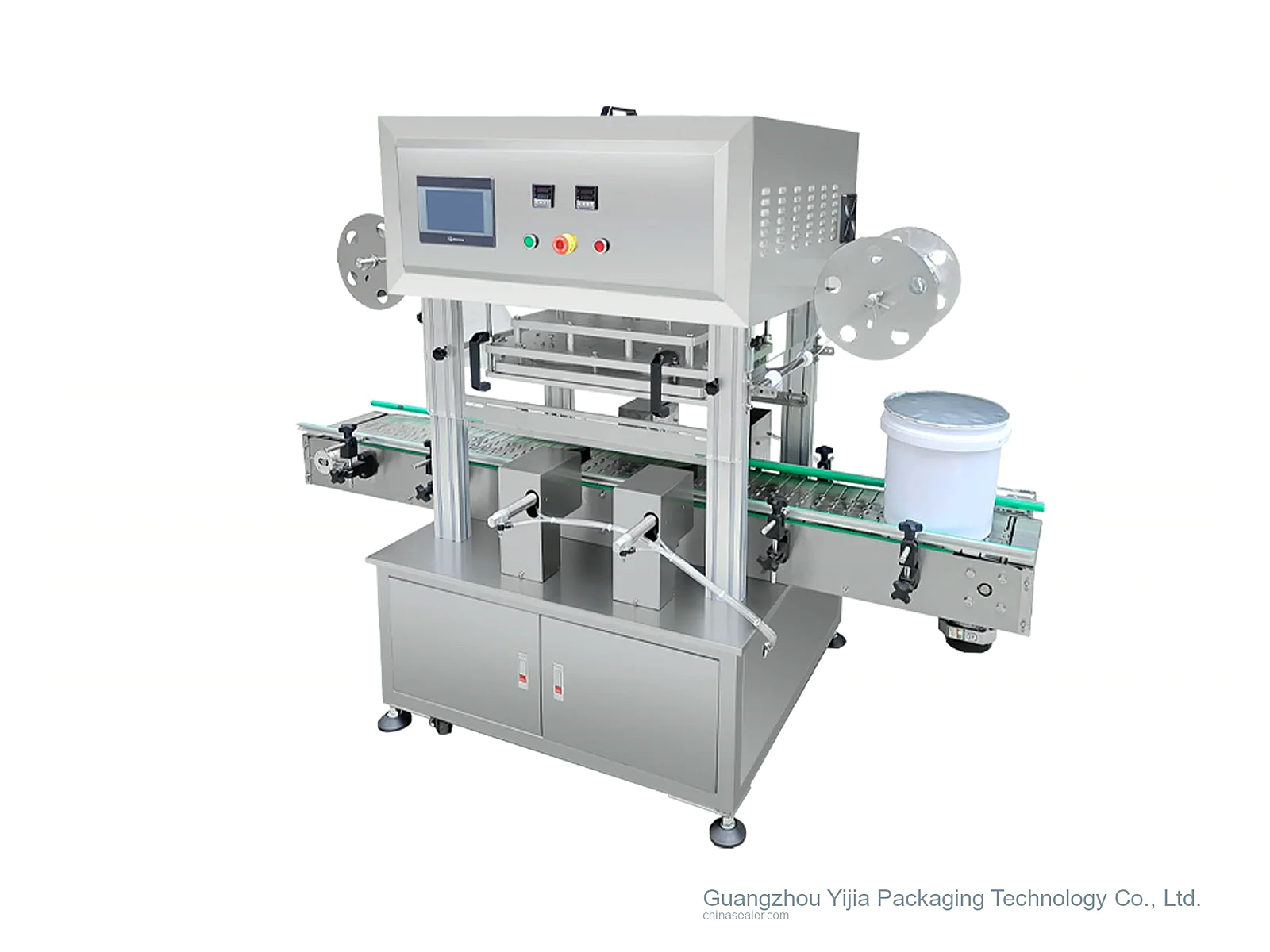 Large-Diameter Pail Heat Seal Sealer
Continuous cap pressing when outer cap is needed after film sealing; Inner seal and outer cap must be checked separately; cap pressing action cannot compensate for mismatched film...
Core process
Provide freeze-dried fruit, all can types, direct sealing film or cap liner, and outer caps, and describe filling method, moisture-proof goal, and label position.
When aluminum foil film or composite film is placed directly on the mouth of bottles or cans, an inline heat sealing machine for bottles can be used to verify film and rim compatibility.
When a matching aluminum foil liner is inside the screw cap and can maintain correct capping with the can mouth, an inline induction foil sealing machine can be evaluated.
For paper or plastic cans that require heat sealing an inner film first and then pressing an outer cap, a paper can/plastic pail aluminum foil film sealing and cap pressing machine can be tested.
After the cap type is suitable for automatic sorting, a cap sorting and placing system can supply caps. After sealing, connect labeling and date/batch coding according to the can body layout.
Put the moisture-proof goal, freeze-dried filling method, can-cap-film combination, capacity, and changeover sequence into one sample plan, and record the results of each process separately.
Sample details
Real product is used to observe the rim condition after filling and helps include moisture-proof checks in formal packaging samples.
Provide freeze-dried fruit samples, describe the filling action, fill volume, debris condition, and planned can mouth cleaning method.Can samples are critical for positioning and sealing contact; material names alone are insufficient to determine heat sealing or induction.
Submit actual plastic, paper, metal, or glass cans, indicating diameter, height, rim, and thread structure.The location of the aluminum foil determines the process branch; cap structure also affects cap sorting, capping, and outer cap actions.
Specify whether using direct sealing film or cap liner, and send the corresponding outer cap and all matching materials.These conditions are used to set sample inspection items and determine single machine or continuous connection and changeover scope.
Describe the packaging moisture-proof and handling requirements, target capacity, shifts, and production proportion of each can type.Downstream information is used to verify the order of cap sorting, labeling, and coding, and specification changeover.
Provide label size, date/batch code position, can orientation, and site layout, and indicate whether automatic cap sorting and placing is needed.Common selection mistakes
Disassemble and inspect the actual combination of can, film or liner, and cap, then determine the heat sealing, induction, or cap pressing process.
The solution documentation list should specify the aluminum foil location and provide corresponding can, cap, and film samples for each branch.
Use actual freeze-dried fruit for representative filling and check can mouth cleanliness before sealing.
For a combined film sealing and cap pressing project, record the inner seal film condition and outer cap position separately, not just the final appearance.
Provide representative cap samples in batch to test the cap sorting action, and include abnormal postures and changeover requirements in the inspection.
View detailed technical notes
First Clarify the Aluminum Foil Placement
Freeze-dried fruit canning can use a direct film on the can mouth or a threaded cap with an inner liner. These correspond to heat sealing and induction sealing, respectively, while pressing on an outer cap is a separate operation.
Sample Testing of Can, Cap, Film, and Freeze-Dried Product as a Set
Plastic, paper, metal, or glass is only the can body classification. Actual selection also depends on the rim, cap type, film material, debris, and the can mouth condition after filling.
Direct Film Sealing Follows the Inline Heat Sealing Route
When the film is placed directly on the rim, use an inline heat sealing machine for bottles to check full-circle contact. Rim continuity, the film's heat-seal layer, and the debris condition after filling must be verified together.
Cap Liner Follows the Inline Induction Sealing Route
After the aluminum foil liner is placed in a matching threaded cap and the cap is correctly applied, an inline induction foil sealing machine can provide the appropriate sample testing conditions. The can, cap, and liner must be tested as a set.
Film Sealing and Press Capping Must Be Checked as Two Separate Operations
A paper can/plastic pail aluminum foil film sealing and press capping machine can first heat seal the inner film and then handle the outer cap. During acceptance, check both the film and rim, as well as the cap position and samples after changeover.
Keep the Can Mouth Contact Area Clean After Filling
If freeze-dried debris remains on the rim, it will hinder contact of the film or liner. Sample testing should include the actual filling step and a pre-sealing inspection.
Cap Feeding, Labeling, and Batch Coding Follow the Can Type
When caps are suitable for automatic sorting, configure a cap feeding and capping system. Round bottle/square bottle labeling machines and date/batch inkjet coding machines are arranged according to the can body layout.
Moisture-Proof Goals Are Confirmed Through Complete Packaging Tests
Each can-cap-film combination should be retained for inspection under the agreed filling, handling, and storage conditions. Packaging results cannot be inferred from the sealing machine name alone.
Common questions
What equipment is used when placing film directly on the mouth of freeze-dried fruit cans?
Use an inline heat sealing machine for bottles to test seal with actual cans and film, focusing on rim continuity, film compatibility, and cleanliness of the can mouth after filling.
When is induction sealing used for aluminum foil liners?
Only evaluate an inline induction foil sealing machine when the liner is inside the screw cap and matches the cap, container material, and can rim.
How to combine film sealing with pressing an outer cap?
Paper or plastic cans can be tested with a combined film sealing and cap pressing machine, but the inner seal film and outer cap actions must still be checked separately with actual can, film, and cap samples.
Why should freeze-dried fruit samples also be sent?
Actual filling introduces debris, fill volume, and rim cleanliness variations that affect contact between the film or liner and the rim.
Can the cap sorting system adapt to all outer caps?
You cannot judge this way. Whether a cap type is suitable for automatic sorting must be verified with actual samples for orientation, posture, and cap feeding action before deciding to configure a cap sorting and placing system.
When should labels and date/batch codes be confirmed?
Once the can orientation and sealing process are clear, immediately determine the label layout and batch number area, then arrange labeling, coding, and changeover.