Solution topic
How to Configure a Honey Bottle Filling, Capping and Sealing Line
Honey is first kept in a heated hopper in a fillable state, then filled by the piston main machine and capped. When the cap has a matching liner, it proceeds to the induction foil
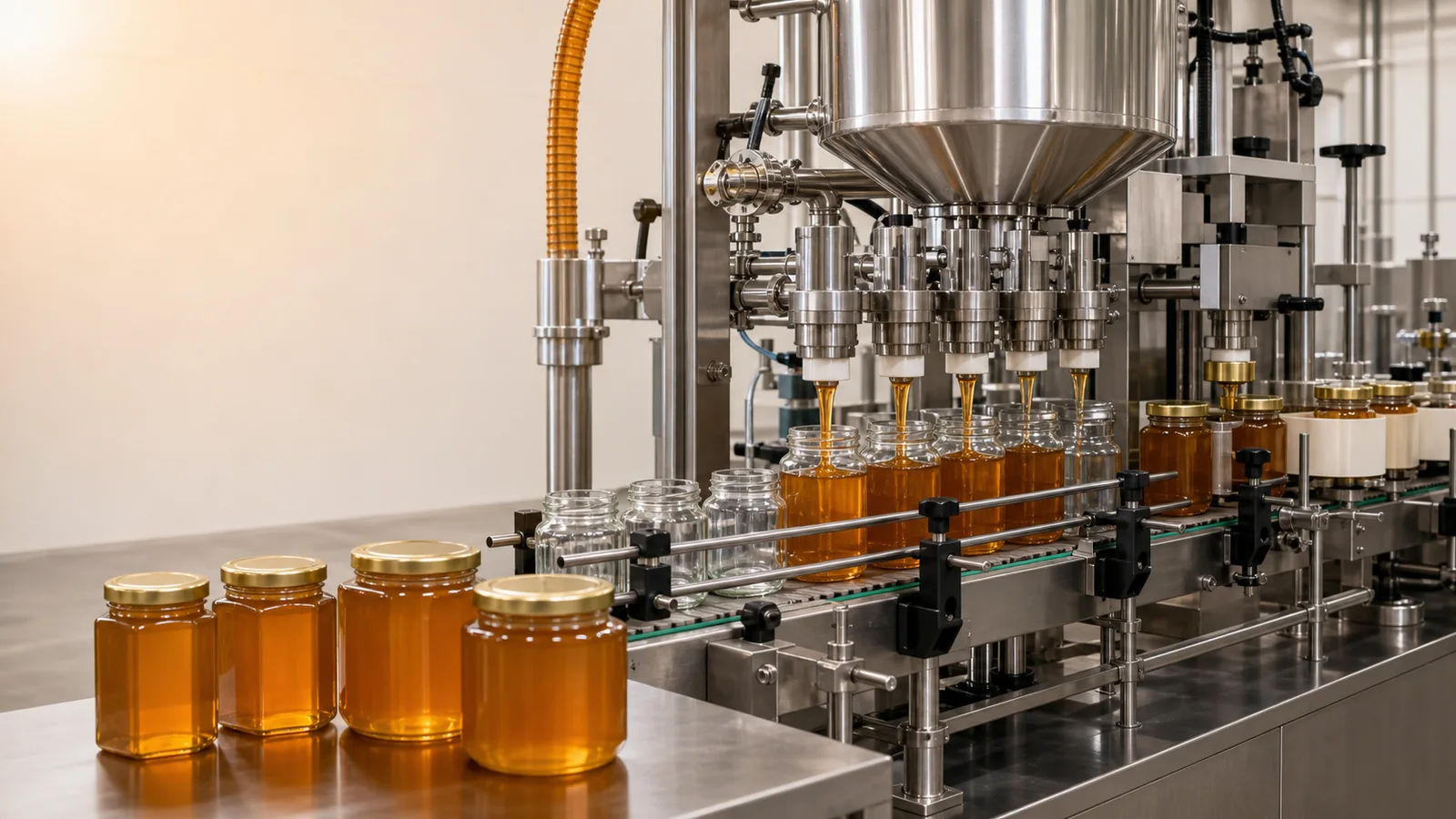
- Use honey temperature and viscosity plus bottle, cap and liner samples to define filling and closing, then add labelling, coding, checkweighing and case packing as required.
Solution summary prepared for you
- The conclusion is that honey bottling first verifies temperature-state flow and stringing, then determines whether heated hopper, piston filling, and anti-drip nozzle are used in combination.
- After filling, the automatic screw capper presses the cap liner. When the liner matches the bottle mouth, proceed to inline induction aluminum foil sealing, and finally check the bottle label.
- For glass, plastic, or wide-mouth bottles, submit actual bottles, cap liners, and honey samples. Fill volume, temperature, and sealing conditions cannot be applied with generic values.
Route comparison
- Suitable for projects where honey flow, stringing, or heat retention needs are not yet determined and actual material is needed to check filling finish.
- The combination boundaries of heated hopper, piston metering, and anti-stringing filling nozzle can be checked first, avoiding fixed temperatures.
- This stage mainly confirms supply and filling; screw capping, inner sealing, and labeling still need to be verified with complete cap and bottle samples.
- When honey, caps, and fill volume are stable and continuous delivery is required, do not stay at an independent sample station for long.
- Complete the first-stage material trial with a heated hopper and jacketed tank, sauce piston filling machine, and anti-drip components.
- Suitable for projects where threaded caps and bottle bodies are determined and honey needs to be stably closed after filling.
- The automatic screw capper can press the cap liner against the bottle mouth, establishing the necessary assembly state for subsequent induction inner sealing.
- Cap orientation, bottle clamping, and opening requirements must be accepted separately; do not replace them with general tightening parameters.
- When cap type, thread, or bottle stability is still changing, do not fix the screw capping structure prematurely.
- After piston filling, connect to an automatic screw capper and include bottle mouth residue and liner contact in the trial run records.
- Suitable for honey bottling where the cap has a matching foil liner and inner sealing and retail labeling are required.
- The online induction foil sealing machine completes conditional bottle mouth inner sealing, and the round/square bottle labeling machine then handles bottle body labeling.
- Liner material, bottle mouth cleanliness, and label adhesion surface all need sample verification; inner sealing and labeling cannot be selected only by mouth diameter.
- When the cap does not contain a suitable liner, or honey residue remains on the bottle mouth, the induction station should not be considered confirmed.
- Connect in the order of automatic screw capping, online induction inner sealing, and bottle labeling; necessary re-inspection items are agreed separately.
Associated Equipment / Consumables
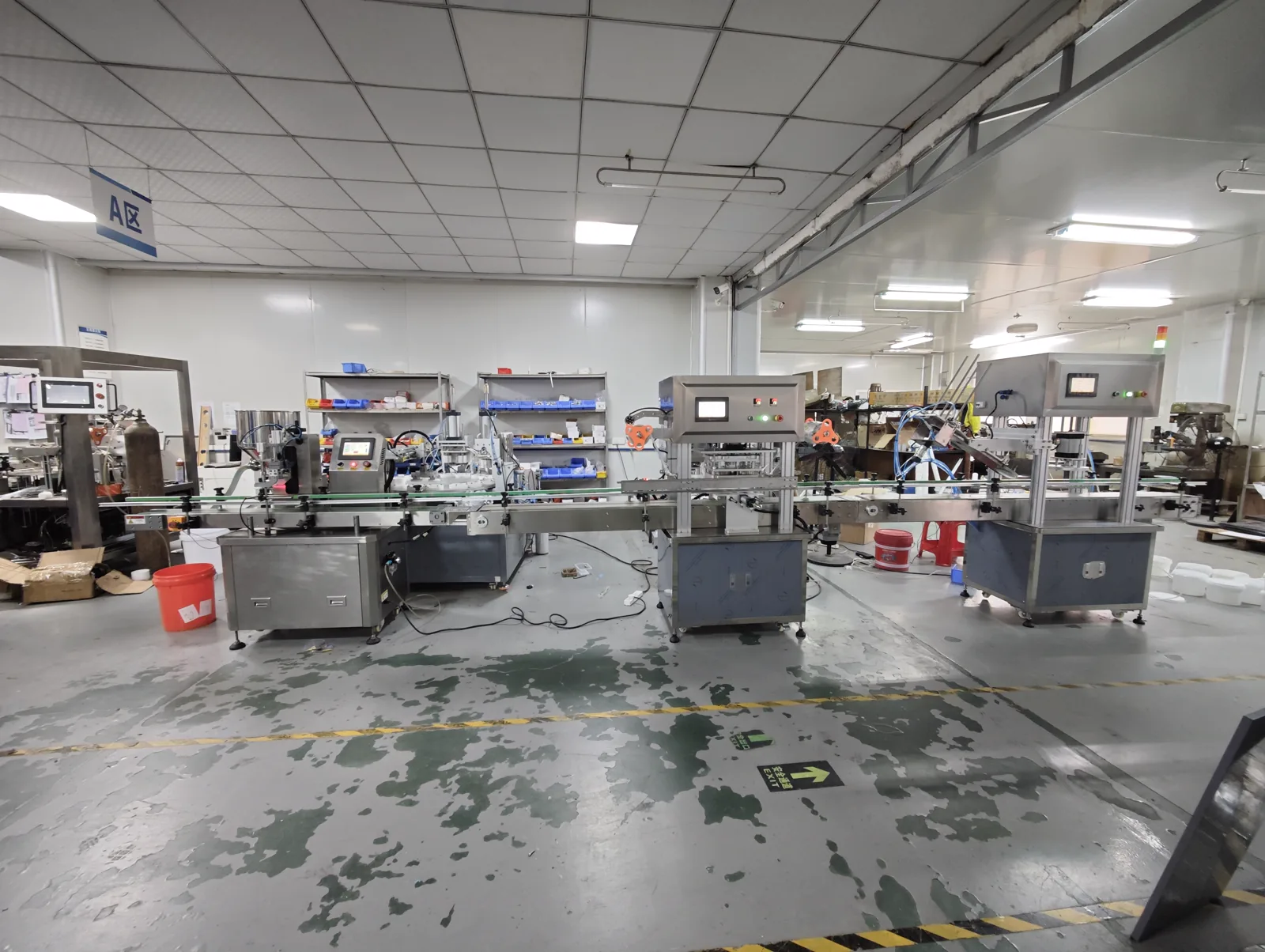 Bottle and Jar Filling, Capping and Sealing Line
This is a project-configured bottle and jar line, not one fixed standard machine. Select the filling path from flow, foam, particles, temperature and cleaning, then select cap feeding and closing from the neck, plug,...
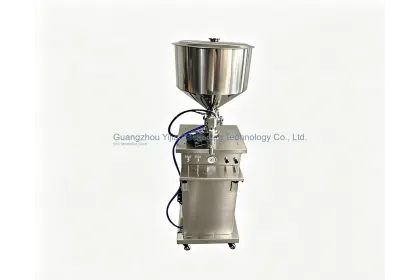 Piston Sauce Filling Machine
Honey state and feeding; Heating is not a default requirement. Specific temperature, stirring, and cleaning methods are determined by actual product trials; Honey heated hopper and jacket...
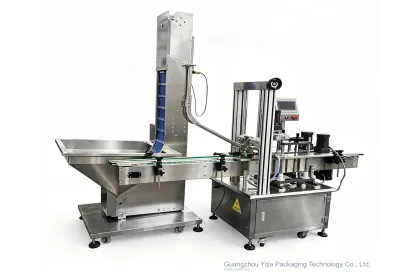 Automatic Screw Capping Machine
Induction aluminum foil inner sealing; Bottle mouth cleanliness, liner material, and cap closure state jointly determine whether trial sealing conditions are met; Inline induction alum...
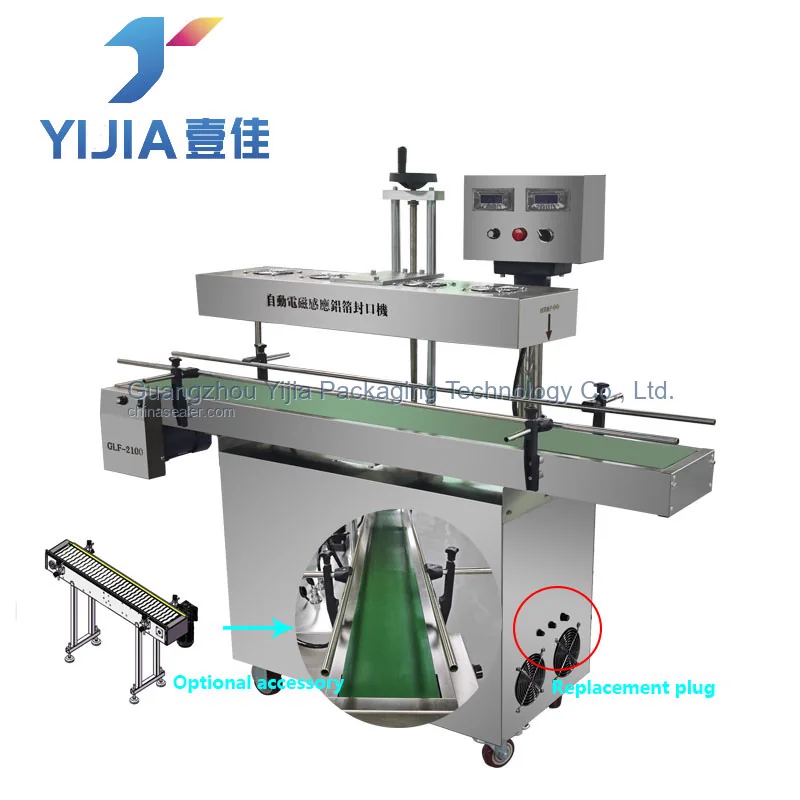 Inline Induction Foil Sealer
Induction aluminum foil inner sealing; Bottle mouth cleanliness, liner material, and cap closure state jointly determine whether trial sealing conditions are met; Inline induction aluminu...
Core process
Observe honey flow and stringing at site temperature, then decide whether a heated hopper and special filling nozzle are needed.
Use the main bottle type to verify metering, drop point, and filling cutoff to avoid honey adhering to the bottle mouth.
The automatic screw capper completes the target threaded cap closure, maintaining the required contact of the cap liner.
Only arrange inline induction sealing for bottles with matching aluminum foil liners in the cap.
After inner sealing is confirmed, arrange labeling and batch information. Layout is determined by the available area on the bottle body.
Select conveying and recheck equipment according to the order quality plan. Do not stack all inspections by default.
If outer carton handling is needed, confirm box specifications, arrangement, and label content separately.
Sample details
Describe the honey's flow, stringing, crystallization, and whether temperature management is needed in the actual environment, and provide samples representative of mass production.
Actual honey, planned production temperature, flow state, target fill volume, and cleaning requirementsGlass, plastic, or wide-mouth bottles with cap liners should be submitted as a complete set for checking gripping, capping, and induction inner sealing.
Actual bottle, threaded cap, inner plug or aluminum foil liner, key bottle mouth dimensionsCombine piston filling and anti-stringing components to define drip, bottle mouth residue, and cleaning acceptance methods to avoid subsequent sealing contamination.
Filling effect sample, allowable residue limit, fill volume, changeover, and cleaning methodClarify whether induction sealing with cap liner is used, as well as label position, layout, and batch information. Unspecified downstream processes are not fixed configurations.
Inner sealing requirements, label artwork, batch content, existing equipment, and downstream interfaceTarget cycle time, site direction, power and air supply, changeover frequency, and delivery documents jointly affect final configuration and should be confirmed before quotation.
Production schedule, site layout, power and air supply, delivery time, language, and spare parts requirementsCommon selection mistakes
Honey formulations and site temperatures vary, so flow behavior differs. Fixing temperature or heating method without observing the actual product amplifies deviations.
Honey stringing or dripping can contaminate the bottle mouth, affecting cap tightening and aluminum foil liner sealing.
If honey contains visible particles, first verify pass-through capability and cleaning method. Do not directly apply conclusions from particle-free samples.
Liner material, bottle mouth, cap type, and tightening state jointly affect sealing. Similar dimensions do not mean direct interchangeability.
Honey flow, bottle feeding, capping, induction inner sealing, labeling, and collection all affect final cycle time.
View detailed technical notes
Check Honey Flow at the Site First
Honey viscosity, stringing, and crystallization can vary with the environment. Whether to use a heated hopper should be determined by the actual product's behavior under planned production conditions, not by applying a fixed temperature.
Piston Filling Must Also Control Bottle Mouth Cleanliness
The sauce piston filling machine is responsible for metering honey into bottles. The filling nozzle position and finishing action should be adjusted using the main bottle type, and dripping, stringing, and rim adhesion should be observed.
Main Line Arranged Around Filling, Capping, and Inner Sealing
The core equipment for honey bottling includes a heated hopper and jacketed tank, sauce piston filling machine, automatic screw capper, and online induction foil sealing machine. Bottle labeling is handled after inner sealing is confirmed.
Screw Capping Establishes Contact for Foil Liner
The cap liner must first be pressed stably against the bottle mouth with the threaded cap before induction sealing. Cap type, bottle clamping, and opening requirements should all be confirmed with complete samples.
Label Position Checked Separately for Each Honey Bottle Type
Round, square, or wide-mouth bottles have different labelable surfaces. Label size, bottle seams, and batch information position should be sampled after the bottle mouth is sealed.
Inspection Stations Selected According to Quality Plan
Online checkweighing or other inspections are added only when the order specifies clear targets and judgment rules; inspection equipment should not be written as a fixed component of every honey bottle line.
Avoid Mixing Tray and Tube Equipment into Bottle Lines
Honey glass bottles, plastic bottles, and wide-mouth bottles use filling, screw capping, and cap liner induction logic. Tray film sealing or tube tail sealing are different packaging processes.
Prepare Caps, Liners, Labels, and Change Parts Together
Bottle caps, foil liners, inner plugs, labels, and common seals should be confirmed together with the main bottle sample to complete screw capping, inner sealing, and labeling verification in one pass.
Fixed Takt Time Must Be Confirmed After Material Trials
When honey samples, cap liners, and production environment are not yet determined, equipment direction can be provided first. Actual fill volume, sealing conditions, and continuous operation performance need to be confirmed through trial runs.
Common questions
Does honey filling always require heating?
Not necessarily. First observe how the honey flows, strings, and crystallizes in the planned production environment. Only configure a heated hopper and corresponding feed handling if the actual product truly requires it.
How does piston filling handle honey with particles?
Provide samples containing particles to verify pass-through capability, valve paths, and filling nozzles. Do not judge the suitability of standard piston configuration based solely on the name "honey".
Can glass bottles use induction aluminum foil inner sealing?
It depends on the bottle mouth, cap liner, and cap tightening condition. Both glass and plastic bottles should be confirmed by trial sealing with the complete packaging set.
Can one labeling machine handle multiple honey bottle types?
Compare bottle shape, attachable surface, label size, and positioning reference. If specifications vary greatly, change parts or a separate solution may be needed.
Is inline checkweighing mandatory for honey lines?
It is not a fixed requirement. Whether to configure it should be based on the quality plan, sales channels, and acceptance items. Inspection equipment cannot replace bottle mouth seal verification.
How to start small-batch honey production more safely?
First verify heating needs, piston filling, screw capping, and induction inner sealing with honey, the main bottle, and cap liner. Then expand to continuous conveying and coding based on order stability.