Solution topic
Non-Standard Container Sealing Sample Testing: From Sample Baseline to Custom Fixture Acceptance
Based on actual containers, rims, and films, explain the upgrade path from benchtop sealing sample testing, custom fixture verification, rotary multi-station, and modified atmosphe
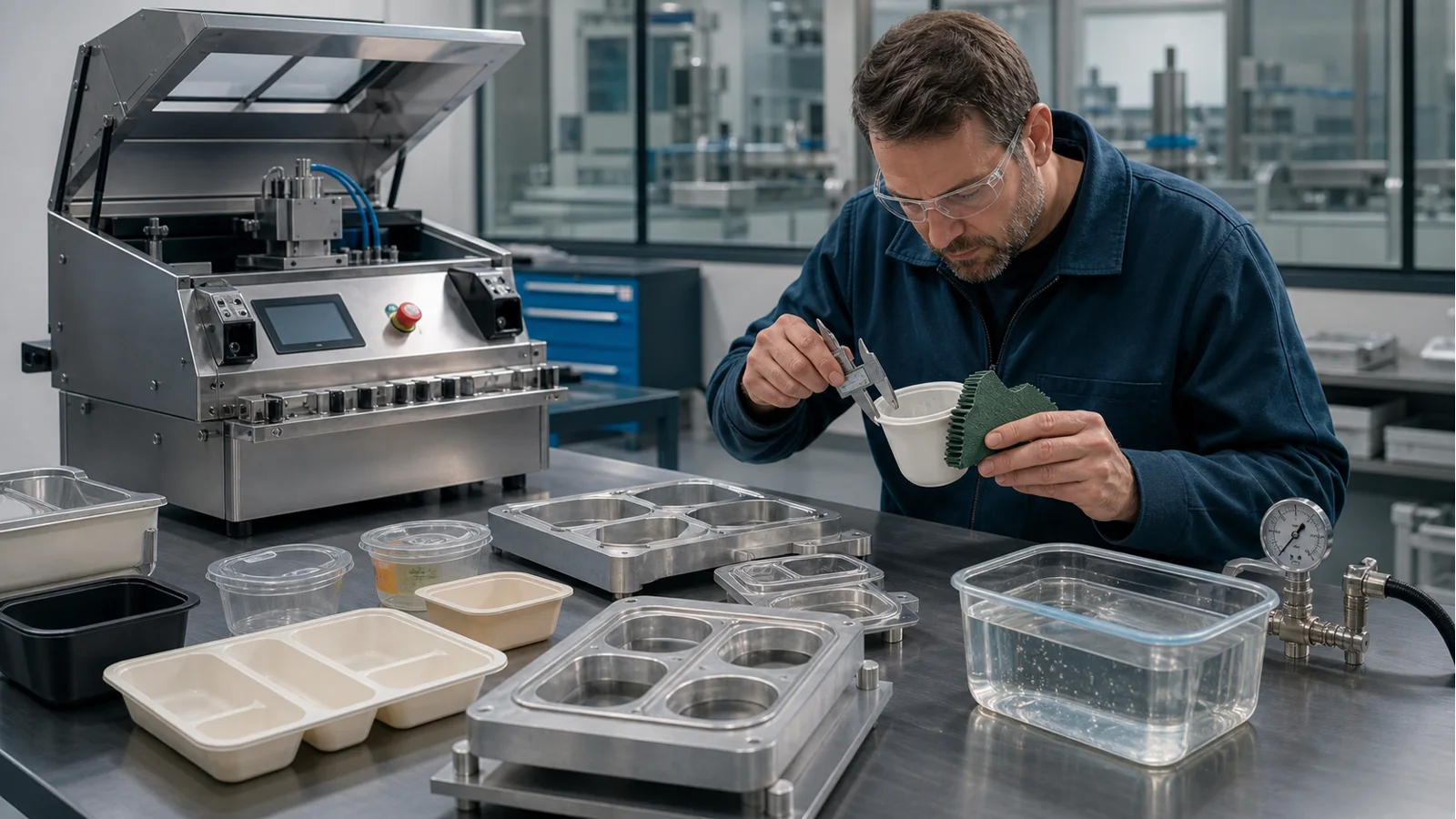
- For non-standard projects, first verify whether the container can be repeatedly positioned, whether the rim is flat, and whether the film can be heat-sealed stably. Appearance photos are not sufficient to determine mass production conditions. Only after single-machine samples pass should you evaluate rotary multi-station or modified atmosphere functions.
Solution summary prepared for you
- For non-standard container sealing, first find a repeatable positioning reference, then use the actual rim and film to establish a basic sample on the small-diameter cup sealing machine SGP-03 or benchtop multi-compartment meal box seali...
- After the basic sample passes, design dedicated support, restraint, and changeover parts for the rotary table vacuum tray sealing machine or roll film tray sealing machine.
- Automatic pre-cut film handling and MAP sealing are additional branches; they are verified separately only after film feeding or gas displacement processes are clear.
Route comparison
- Suitable for non-standard projects where rim, film, and clamping method are still being confirmed and repeatable finished samples are needed first.
- Manual clamping allows observing the rim, film, and support state each time, and establishes acceptable sealing samples with a simpler cycle.
- Benchtop samples only prove that the listed cup/film combination is feasible under current clamping; they do not automatically represent continuous feeding or mass-production tolerance.
- If even manual placement cannot achieve repeat positioning, or the film and rim are incompatible, first correct the container, packaging material, or fixture reference.
- For small-diameter containers, evaluate the small-diameter cup sealing machine SGP-03; for multi-compartment or tray containers, use the benchtop multi-compartment meal box sealing machine for basic testing.
- Suitable for projects where basic sealing samples have passed, container reference is stable, and repeat stations or roll film feeding are ready to be verified.
- Rotary table fixtures can distribute clamping positions to repeat stations, while roll film equipment adds continuous film feeding and cutting verification.
- Container tolerance, filling state, loading/unloading space, film roll, and changeover all need re-testing; do not simply copy benchtop sealing conditions.
- When the container is still being revised, incoming material variation is not yet quantified, or the single batch quantity is very small, it is not advisable to fix continuous fixtures too early.
- Select the rotary table vacuum tray sealing machine or benchtop roll film tray sealing machine according to samples, and configure dedicated support, restraint, and changeover parts.
- Suitable for projects where fixtures and basic sealing are stable, and automatic film sheet separation or gas displacement requirements are clearly stated.
- Automatic pre-cut film equipment can verify film sheet separation and placement, while MAP equipment executes the already defined gas displacement process.
- The packaging materials, actions, and acceptance of the two functions are different; both require separate sample approval beyond basic sealing.
- If pre-cut film still sticks or is unstable in orientation, or the MAP process is not yet defined, do not solidify the corresponding automatic configuration first.
- When automatic handling of pre-cut film is needed, configure the automatic pre-cut film handling tray sealing machine. When MAP is needed, configure the tray MAP sealing machine.
Associated Equipment / Consumables
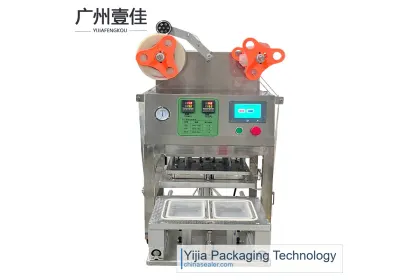 Benchtop Roll-Film Tray Sealing Machine
A benchtop roll-film sealer for manually loaded cups, bowls and trays. Trial the rim and ribs, lidding seal layer, tooling fit, trimming, peel and leak result as one system. Compare MAP or continuous filling-sealing e...
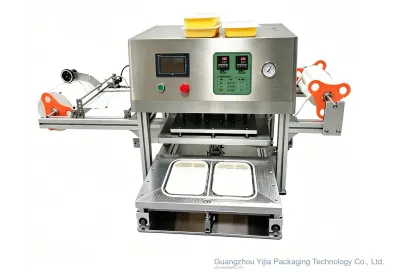 Tabletop Multi-Compartment Meal Tray Sealer
Desktop Multi-Compartment Lunch Box Sealer: Single-machine sealing feasibility test; Keep manual placement during the sampling stage to observe the cause of each misalignment, material pinching, and container deformat...
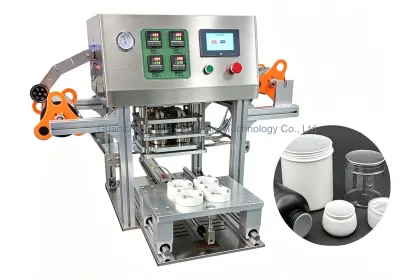 Bottle, Pail, Can Sealing Machine
Establish container positioning reference; Photos can only show appearance; warpage, tolerance, and clamping force need to be observed by repeatedly placing actual samples into the f...
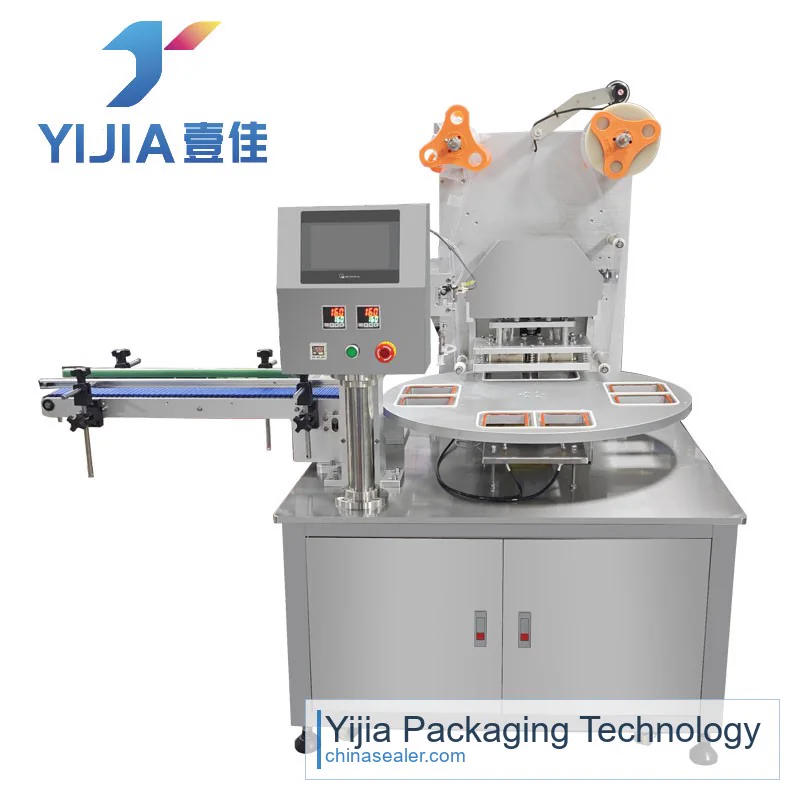 Automatic Small-Cup Filling and Sealing Machine
Establish container positioning reference; Photos can only show appearance; warpage, tolerance, and clamping force need to be observed by repeatedly placing actual samp...
Core process
First find a repeatable bottom, side, or positioning hole from actual samples, then measure the complete rim and allowable clamping area.
Use a small-diameter cup sealing machine or benchtop multi-compartment meal box sealing machine for basic heat sealing, first confirming that the container and film can form a repeatable finished sample.
After the basic sample passes, design support, restraint, and loading/unloading space for the target container, then compare the repeat positioning of rotary table or roll film stations.
When pre-cut film requires automatic sheet separation and placement, evaluate the automatic pre-cut film handling tray sealing machine. Only when MAP process is confirmed should the tray MAP sealing machine be tested.
The sampling package should include containers, contents, film, and expected finished samples, especially marking areas that cannot be clamped or heated.
Fixture acceptance records each positioning surface, support point, loading/unloading action, and acceptable tolerance, and uses multiple repeated clamping to verify deviation.
Sample details
Multi-angle photos help identify possible positioning surfaces, but the final fixture reference must be confirmed on actual samples.
Top, side, and bottom photos of the container, rim close-up, and filled stateA single dimension cannot reflect batch variation of non-standard containers; measure multiple samples and mark key tolerances.
Records of rim inner/outer dimensions, total height, bottom, warpage, and supply batch differencesThe film's heat seal layer, feeding form, and target opening method determine the sampling method and subsequent structure.
Mass-production film samples, material structure, thickness, roll or pre-cut form, and tear requirementsBenchtop manual cycle, rotary table, or special processes correspond to different maturity levels; target cycle time should be stated separately from current orders.
Shift cycle time, manual arrangement, specification quantity, future continuous production, and whether MAP is neededFixture acceptance requires both parties to agree in advance on clamping, appearance, sealing, and changeover results.
Acceptable finished samples, test methods, loading/unloading requirements, cleaning conditions, and on-site power and air supplyCommon selection mistakes
Even for the same special-shaped cup/box, the bottom, side, and rim may not have a common reference; reporting only the equipment name cannot determine how to support it.
Batch warpage of non-standard containers may be greater than a single sample; a fixture made from only one piece is likely to jam or wobble on mass-produced incoming materials.
Directly entering rotary table, roll film, or modified atmosphere solutions will bring basic problems such as film incompatibility and uneven rims to more complex equipment.
The mold pressing the film does not mean smooth loading and unloading. Jamming, pinching, misloading, and cleaning dead corners all affect actual use.
Modified atmosphere requires product process, gas conditions, barrier film, and independent acceptance; ordinary heat sealing samples cannot be directly regarded as MAP samples.
View detailed technical notes
First establish a repeatable sample reference
The first task of non-standard sealing sampling is not to draw the entire line, but to find a reference that allows the container to be repeatedly placed. Only when positioning, rim, and film are all stable at the same time does the finished sample have comparative value.
Photos Are Only for Early Assessment
Use multiple actual samples to observe bottom, side, and rim tolerances, then choose a benchtop machine with manual placement for heat sealing. Record each clamping and result during sampling; do not judge mass production from a single appearance photo.
Benchtop Sample Testing First Verifies Three Basic Conditions
The small-diameter cup sealing machine SGP-03 and the benchtop multi-compartment tray sealing machine can handle basic sample testing. At this stage, the focus is not on continuous speed but on identifying conditions for film compatibility, adequate support, and smooth loading and unloading.
Fixture Acceptance Covers the Complete Operating Cycle
Once basic sealing is repeatable, convert the locating surfaces, support points, and loading/unloading space into a dedicated fixture. Fixture acceptance must cover multiple clamping, sealing, removal, and cleaning cycles, not just the appearance of the first piece.
Add Continuous Motion Only After Samples Pass
The rotary vacuum tray sealing machine or the benchtop roll-fed film tray sealing machine is used for the next stage of repeated station and film supply testing. Equipment selection is based on the sample baseline and planned process, not on generalized capacity figures.
Special Functions Are Triggered by Clear Requirements
When pre-cut film requires mechanical separation and placement, use the automatic pre-cut film pick-and-place tray sealing machine. Only when modified atmosphere requirements are explicit should you verify gas and packaging conditions on the tray modified atmosphere sealing machine.
Make Completed Samples Traceable to Test Conditions
A qualified completed sample should record the container batch, film batch, fixture number, filling state, and test method. When containers or packaging materials change, re-verify according to the affected items.
Sample Conclusions Must Be Re-verified Under Mass Production Conditions
Passing sample testing only proves that the specified sample and process are feasible. Before mass production, verify supply tolerances, operating cycles, and target shifts. If results fluctuate, return to the baseline and fixture for troubleshooting.
Use an Acceptance Checklist to Define the Scope of Application
The final delivery should clearly list available containers, films, fixtures, changeover steps, and acceptance samples. New specifications beyond these ranges require retesting rather than direct application.
Common questions
Do non-standard containers always require custom molds?
Most non-standard containers require dedicated support or restraint. Whether a full mold needs to be rebuilt depends on whether the existing structure can stably support the rim, which should be determined by trial fitting with actual samples.
How many containers should be prepared for sampling?
The number of samples depends on container tolerance, film type, and the test conditions to be covered. At minimum, you need to be able to repeat clamping, and have qualified and abnormal comparisons; a fixed quantity cannot be applied.
Can small batch orders directly use benchtop equipment?
Yes. Benchtop equipment is suitable for first verifying manual positioning and heat sealing feasibility, but actual shift capacity still needs to be tested according to the full operating cycle.
Must the sealing film be provided by the equipment supplier?
You can use your own sealing film, but you should provide a batch prepared for mass production, and verify the heat seal layer, dimensions, and tear or barrier requirements.
How should non-standard sealing samples be judged as qualified?
Choose peel, leak, or other packaging tests according to product requirements, and retain finished samples. A smooth film surface alone cannot prove sealing function.
Can production be upgraded to continuous after samples pass?
After passing single-machine sampling, you can evaluate rotary table, roll film, automatic pre-cut film, or modified atmosphere equipment, but each new action requires re-verification of fixtures and cycle time.