Solution topic
Pet food can packaging: metal double seaming and aluminum foil lid pressing are two routes
Distinguish metal can double seaming for pet wet food, aluminum foil sealing with cap pressing for plastic or paper cans, and downstream labeling and coding; select equipment based
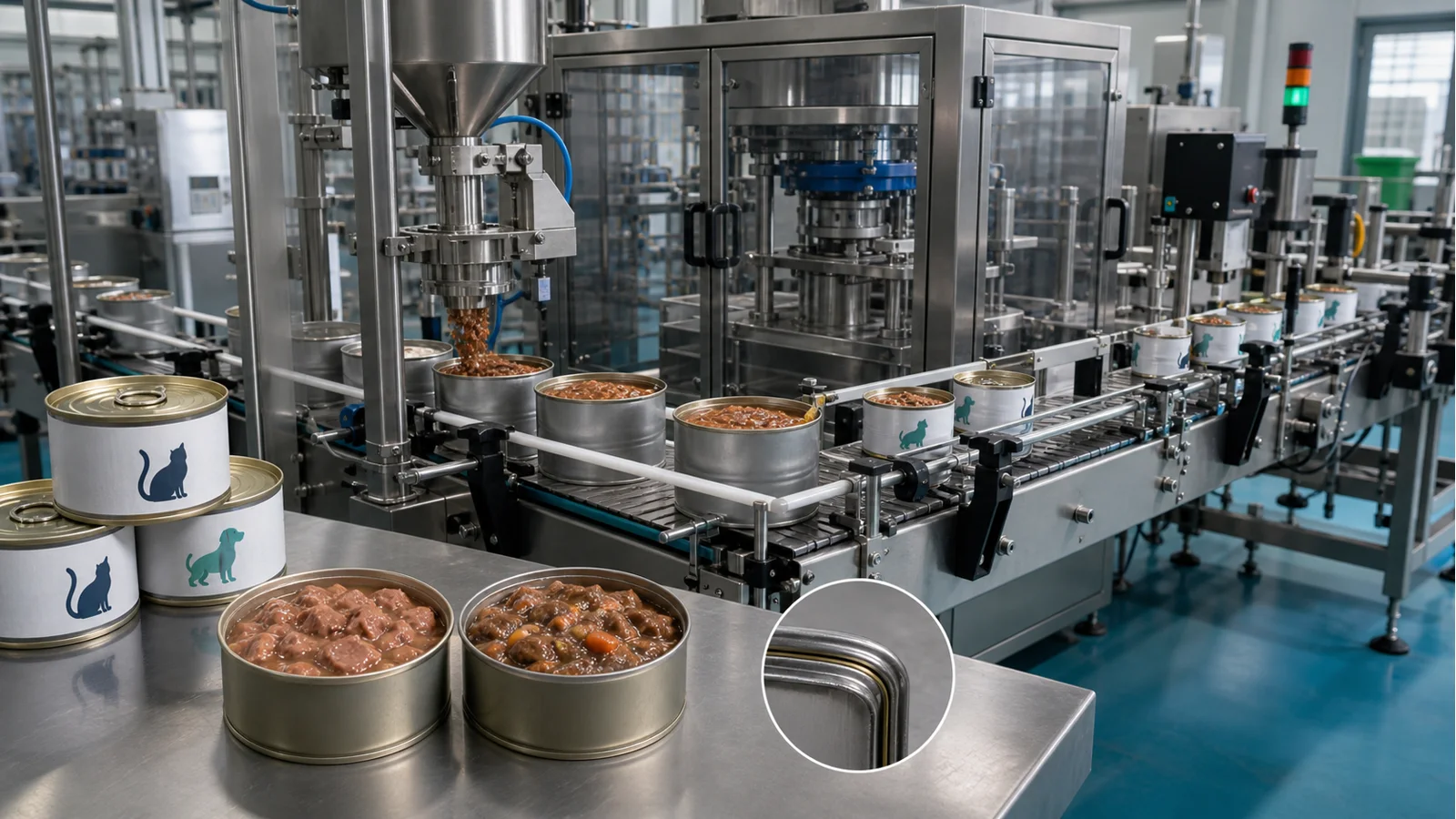
- Metal cans with easy-open lids require double seaming; plastic or paper cans with aluminum foil and overcap follow the heat sealing and cap pressing route; milk powder cans may also use lid liners. Please provide physical samples of can body material, can mouth, film/lid, and label, as well as contents and downstream inspection requirements.
Solution summary prepared for you
- For pet food cans, first divide the process by can body and lid structure: metal cans with easy-open lids evaluate double seaming; paper or plastic cans directly covered with film and then adding an outer cap evaluate heat sealing film w...
- Round/square bottle labeling machines, date/batch coding machines, and in-line checkweighers are post-sealing stations and should be configured after the primary sealing route and acceptance standards are clear.
- When information is insufficient, you can first submit photos of the can body, lid, sealing film, and label. After the initial direction judgment, complete equipment confirmation still requires full physical samples.
Route comparison
- Used for curl closing of tinplate or aluminum cans with easy-open lids; the can body and lid must be trial-tested as a set.
- The double seaming station directly corresponds to the metal can lid structure, making it easy to establish independent acceptance records around the curl condition.
- Can diameter, lid, and double seam structure must match. After changing cans or lids, related components need to be re-confirmed.
- When paper or plastic cans require direct heat sealing of film and then adding an outer cap, the metal double seaming direction is not used.
- An in-line automatic can seamer can be evaluated, with specific configuration based on matching metal can and easy-open lid samples.
- Used for packaging structures where paper or plastic cans are first heat sealed with aluminum foil film and then pressed with a plastic outer cap.
- Film sealing and outer cap compression can be arranged within the same equipment direction, reducing repeated handling between the two processes.
- Can mouth flatness, film heat seal layer, and outer cap structure must all be verified with official samples.
- When the lid already contains a matching aluminum foil gasket, first check whether it is induction inner sealing; do not treat it directly as can mouth film covering.
- A paper can/plastic pail aluminum foil film sealing and capping machine can be evaluated, with molds and cap pressing components determined based on actual can, lid, and film samples.
- After the main sealing is completed and the can body can be conveyed stably, can body labeling, batch number, and weight verification can be added.
- Placing marking and inspection after sealing allows separate verification of label positioning, print readability, and weight judgment.
- Label surface, coding content, and weight inspection rules must be clearly defined first; downstream equipment cannot replace primary sealing acceptance.
- When the can body sealing route or conveying orientation is not yet stable, it is not advisable to lock in downstream positioning structures prematurely.
- Evaluate round/square bottle labeling machines, date/batch coding machines, and in-line checkweighers as needed.
Associated Equipment / Consumables
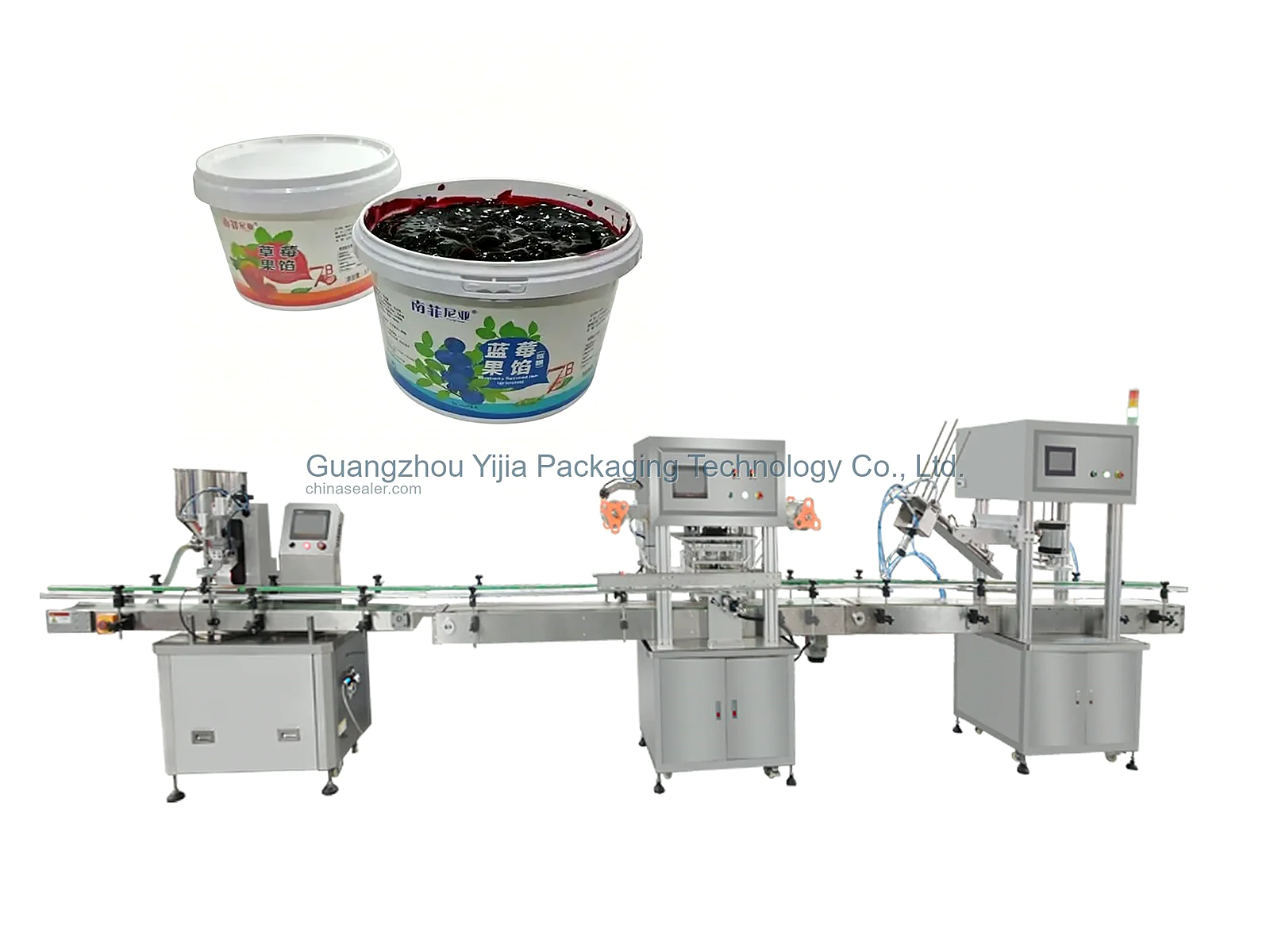 Paper Can and Plastic Pail Foil Heat Sealing and Capping Machine
The machine places foil directly on a paper can, plastic can or pail rim, heat-seals it, then presses the required closure. This differs from induction sealing a foil liner inside a tightened cap. Trial the container,...
 Round-Bottle and Front/Back Labelling Machine
Can body and complete packaging material verification; Double seaming rolls, heat-pressed contact surfaces, cap pressing heads, and labeling positioning all depend on phy...
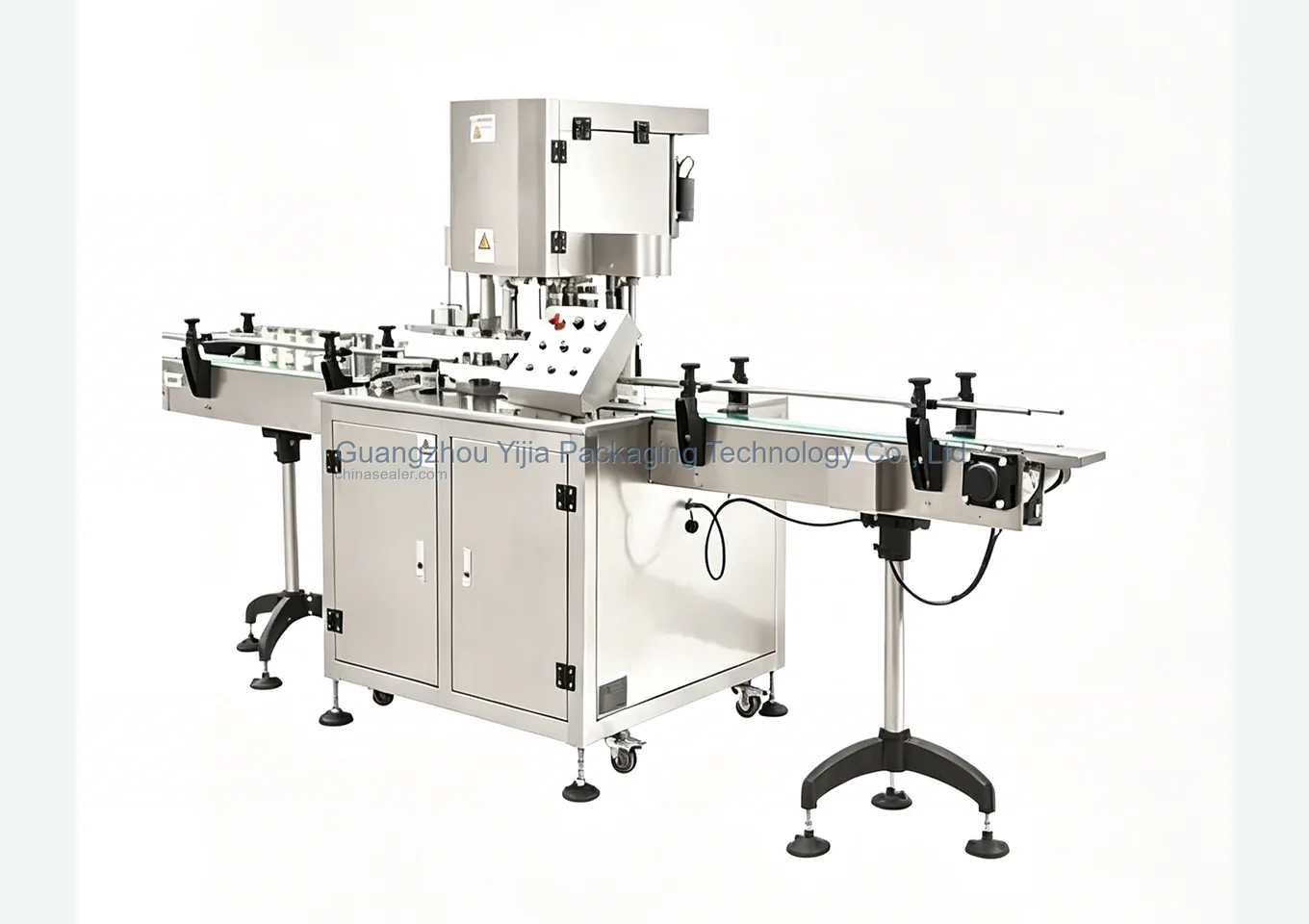 Inline Automatic Can Seaming Machine
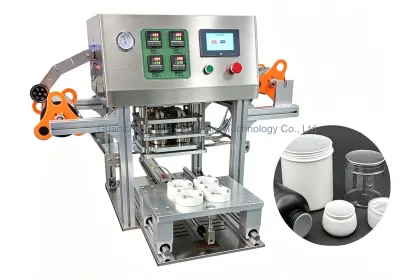 Bottle, Pail, Can Sealing Machine
Can body and complete packaging material verification; Double seaming rolls, heat-pressed contact surfaces, cap pressing heads, and labeling positioning all depend on physical sample...
Core process
First assemble the metal or paper-plastic can, matching lid, sealing film, and label into a complete sample set, and record the can mouth structure, surface condition, and marking position item by item.
When tinplate or aluminum cans are paired with easy-open lids, use an in-line automatic can seamer to evaluate the double seam structure and check the curl condition with the matching lid.
When paper or plastic cans require heat sealing aluminum foil film first and then pressing a plastic outer cap, evaluate the paper can/plastic pail aluminum foil film sealing and capping machine.
After the sealing process is confirmed, evaluate the round/square bottle labeling machine based on the round can diameter, can surface material, and label position.
Configure the date/batch coding machine after the batch number position is clear. Only evaluate the in-line checkweigher when the filling verification standard is clear.
First determine metal double seaming or film sealing with cap pressing based on the can body and lid/film structure, then discuss labeling, coding, checkweighing, and continuous conveying between stations.
Sample details
Can body material and can mouth structure are used to distinguish between double seaming, direct film covering, or inner gasket processes.
Please submit physical samples or clear photos of the can body, and indicate the can mouth, can height, and the positions that need sealing.Direct film covering and inner gaskets are different structures; the actual assembly relationship must be clearly stated.
Please provide physical samples of aluminum foil film, easy-tear film, or inner gaskets, along with the corresponding lids.The easy-open lid determines the double seaming match, while the plastic outer cap relates to the pressing or screwing action.
Please submit easy-open lids, press-on caps, or threaded outer caps that match each can body.The planned production rate is used to arrange single machines, conveying buffers, and downstream marking, not to replace the sealing process judgment.
Please specify the planned production rate, manual feeding method, and whether continuous conveying is required.Label surface, printing position, and weight rules will change downstream positioning and inspection configuration.
Please provide the official label, printing content position, and the weight or traceability judgments to be performed.Common selection mistakes
Metal cans with easy-open lids rely on the double seam structure, while paper-plastic cans directly covered with film rely on heat-pressed contact surfaces; the main machines and acceptance methods differ.
The lid must be checked as a set with the can mouth; without the can body, it is impossible to judge the double seaming, cap pressing, or gasket compression relationship.
Labeling is a downstream process; when the clamping and conveying state of the can body at the sealing station is not yet stable, label positioning may also change.
The processing cycle times for double seaming, cap pressing, labeling, and inspection differ; each station must be checked individually and buffering considered.
Checkweighing or coding equipment can only be configured after the judgment content, abnormality handling, and traceability position are clear.
View detailed technical notes
First distinguish the can body and lid/film structure
Pet food can equipment cannot be selected by product name alone. Before purchasing, confirm whether the can is metal or paper-plastic, whether it uses an easy-open lid or a sealing membrane, and whether there are additional plastic overcaps and labeling requirements.
The two main sealing routes cannot be mixed
For metal cans with easy-open lids, verify the double seam structure. For paper or plastic cans that first apply an aluminum foil seal and then press an overcap, verify heat sealing and cap pressing. Induction liner sealing inside the cap is a different assembly relationship and should be confirmed separately.
How to verify metal can double seaming
An automatic online can seamer is used for double seaming metal cans with matching lids. When selecting, check the can diameter, lid, and seam structure in the same sample set. After changing cans or lids, re-confirm the relevant parts and acceptance status.
How to seal film and press overcap on paper-plastic cans
For paper or plastic cans that are directly covered with aluminum foil and then an overcap, evaluate a paper can/plastic pail aluminum foil sealing and cap pressing machine. The flatness of the can rim, the heat seal layer of the film, and the overcap pressing must be tested together; do not provide only one type of packaging material.
Arrange labeling and inspection after sealing
After the can body is sealed and forms a stable conveying posture, evaluate a round/square bottle labeling machine based on label position, and configure a date/batch inkjet coder according to traceability requirements. Add an online checkweigher only when weight criteria are clearly defined.
Complete sample set determines equipment details
Please assemble a sample set including the can body, easy-open lid or overcap, sealing film, label, and contents information. The seaming rolls, heat sealing contact surfaces, capping heads, and labeling positioning are all based on these physical samples.
Conduct main sealing samples first
Test metal double seaming and paper-plastic can film sealing with cap pressing separately, and record appearance, seal, and leak inspection results according to the agreed method. Only after the main process is stable should continuous conveying evaluation begin.
Post-sealing identification must have clear rules
Label, batch number, and weight inspection require predefined positions and judgment methods. If rules are not yet determined, space can be reserved, but unconfirmed items should not be written as fixed configurations.
Common questions
When information is incomplete, can we still make a preliminary judgment on the sealing direction for pet food cans?
You can start by looking at photos of the can body, lid, and sealing film to initially distinguish between metal double seaming and paper-plastic can film sealing with cap pressing. Formal selection still requires complete physical samples.
Which physical samples must be submitted before confirming pet food can equipment?
Please prepare the can body, matching easy-open lid or outer cap, sealing film, label, product information, as well as the planned production rate and downstream inspection requirements.
How does the planned production rate change the equipment combination?
The production rate determines whether to add continuous conveying, automatic labeling, and downstream inspection, but it does not change the primary sealing process determined by the can body and lid/film structure.
Why must the film be trial-sealed together with the can body?
The heat seal layer, can mouth material, and flatness together affect the sealing condition; viewing the film specification alone cannot determine the usable process conditions.
How is the sealing condition of pet food cans accepted?
First agree on the appearance, sealing, and leak inspection methods for double seaming or film sealing, then use official can lids and film samples for trials and keep the results.
When is it necessary to connect sealing, labeling, and checkweighing into one line?
Only evaluate a continuous line when the primary sealing process is stable, the cycle times of each station can be linked, and traceability or weight rules are clear.