Solution topic
Pet-Food Can Line: Separate Metal-Can Seaming, Paper or Plastic Can Inner Sealing and Labelling
Choose metal-can seaming, direct heat-seal lidding, induction liners or screw capping from the can and closure, then connect filling, coding, labelling and checkweighing from the p
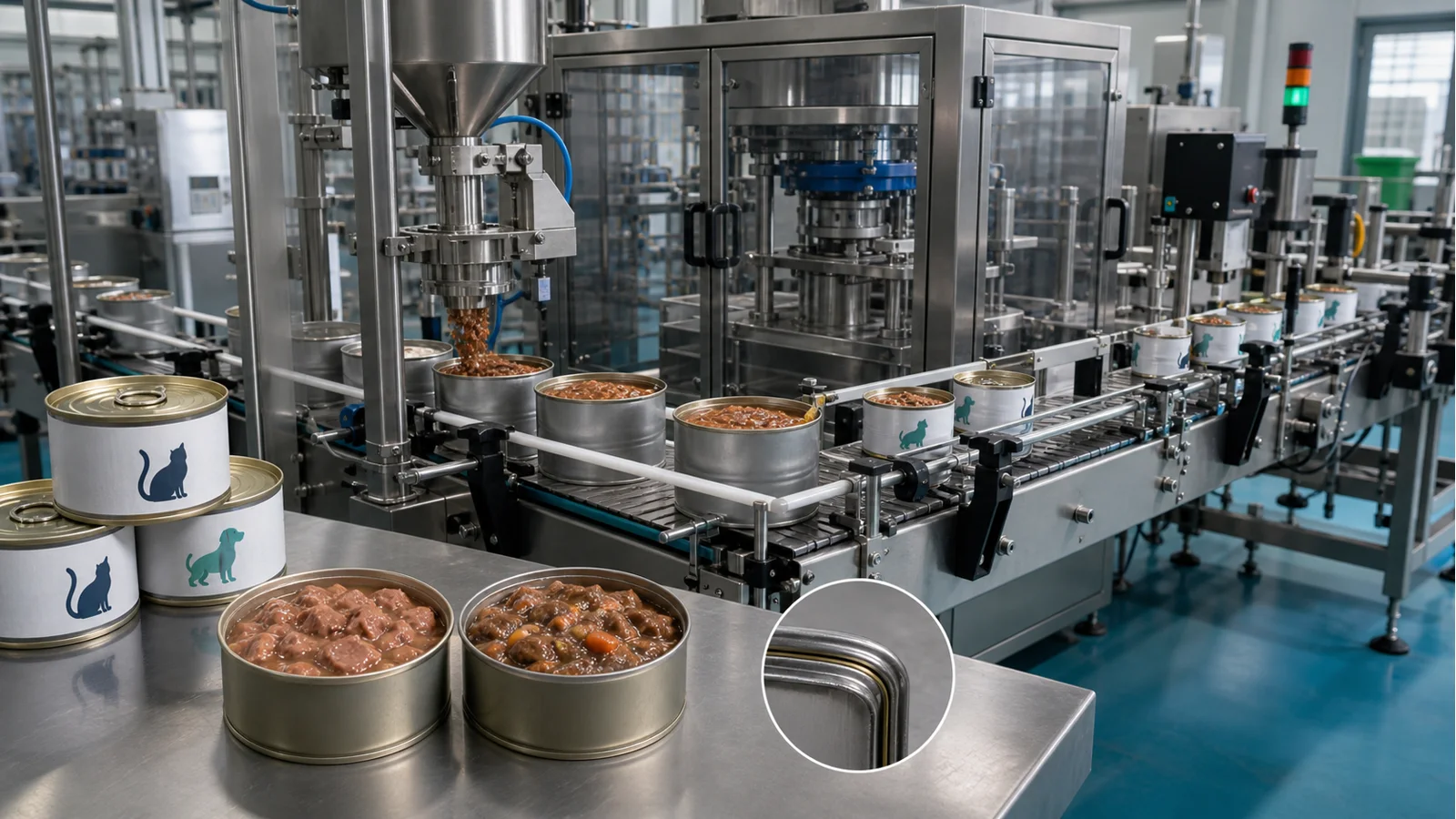
- Split the process by can material, closure and product. Seam metal cans, heat-press direct lids or induction-seal liners on compatible paper or plastic cans, then add coding, labelling and weighing.
Solution summary prepared for you
- For pet food cans, select the machine according to can material and lid type. Metal cans use seaming, paper-plastic cans with direct membrane use heat press capping, and threaded cans use screw capping.
- Induction inner sealing is only used for glass or plastic jars with a matching aluminum foil liner and stable lid application. It cannot replace seaming or direct membrane heat sealing.
- Labeling, coding, and checkweighing are added after main sealing verification. Checkweighing only works according to weight rules and does not indicate lid closing quality.
Route comparison
- Pet food uses metal can bodies and matching metal lids that can be conveyed stably, and is accepted according to the seaming structure.
- The automatic online can seamer completes positioning and seaming around the metal can body and lid. The closing principle matches the can type.
- Can body roundness, lid dimensions, seaming tooling, and rim cleanliness must be verified as a set. Optional lid placement inspection is confirmed separately.
- When packaging uses paper-plastic cans with direct membrane or threaded glass jars, choose the corresponding heat sealing or screw capping route.
- Use an automatic online can seamer and configure seaming components according to mass-production metal cans, lids, and seaming requirements.
- Packaging where membrane is placed directly on the rim of paper or plastic cans, and an outer lid is assembled after sealing.
- Direct aluminum foil heat sealing and outer lid assembly can be completed in sequence, suitable for paper cans and verifiable plastic can combinations.
- Membrane heat seal layer, can mouth support, filling residue, and outer lid pressing all need verification. Not applicable to metal curling.
- When the lid is a metal seaming lid, or the packaging uses a threaded lid with liner, switch to the corresponding process.
- Use a paper can/plastic pail foil sealing and lid pressing machine, and sample with can mouth, membrane, and outer lid together.
- Pet food uses glass jars or threaded plastic jars, lids can be assembled stably, and liners are configured as needed.
- Glass or threaded plastic jars can be screwed or pressed according to the lid type, and induction inner sealing can be added when liner conditions are met.
- Thread, lid type, bottle body clamping, liner, and opening requirements all need actual sample testing. Induction is not a fixed station.
- When metal cans require seaming, or paper-plastic cans use direct rim membrane, do not use the threaded can closing route.
- Choose an automatic screw capper or automatic screw capping/press capping machine according to the lid sample. When the lid has a compatible liner, evaluate a benchtop air-cooled induction foil sealing machine.
Associated Equipment / Consumables
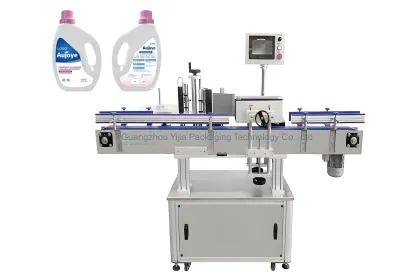 Round-Bottle and Front/Back Labelling Machine
The machine labels round containers by wraparound and square or flat containers on one or two panels, with optional coding, vision and rejection. Round rotation, square-bottle stabilisation and oriented irregular pack...
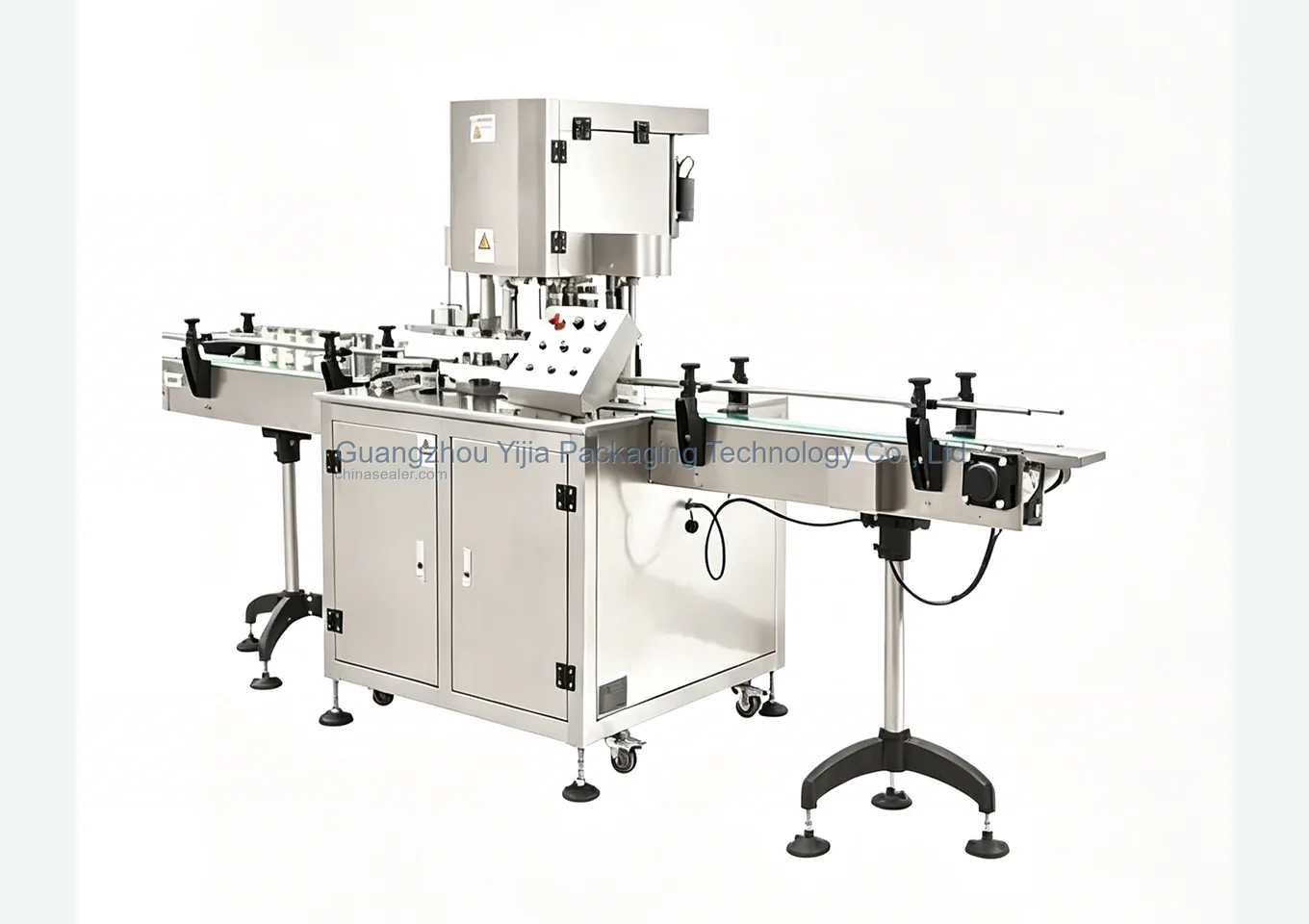 Inline Automatic Can Seaming Machine
Film sealing and lid pressing for paper-plastic cans; Direct membrane, outer lid, rim support, and residue after filling must be sampled as a set. This station is not equivalent t...
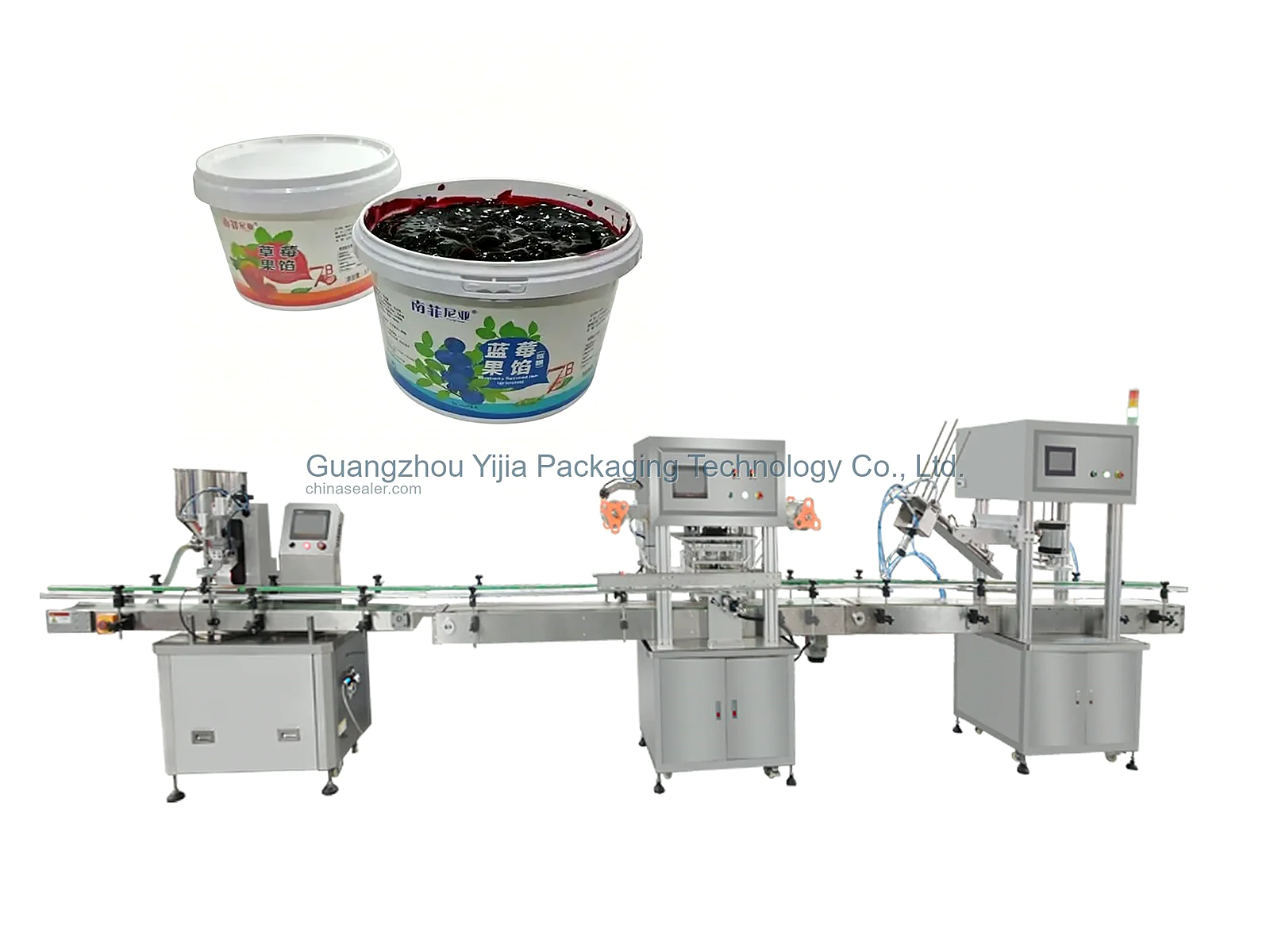 Paper Can and Plastic Pail Foil Heat Sealing and Capping Machine
Film sealing and lid pressing for paper-plastic cans; Direct membrane, outer lid, rim support, and residue after filling must be sampled as a set. This...
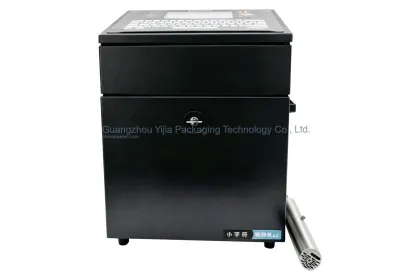 Date & Batch Inkjet Printer
Metal can seaming; Lid placement, seaming inspection, and rejection are modules configured per project. Seaming samples still need to be checked by the agreed method; Automatic online can...
Core process
First separate metal seaming, direct membrane press capping, and threaded cap screwing according to can body material and lid structure, then consider downstream marking.
When metal can body is paired with metal lid, the automatic online can seamer completes positioning and seaming according to the actual lid and curl structure.
When aluminum foil is placed directly on the rim of paper or plastic cans and an outer lid is required, use a foil sealing and lid pressing machine to complete heat sealing inner seal and lid pressing.
For glass or threaded plastic jars, first use an automatic screw capper or screw capping/press capping machine according to the lid type. When the lid has a compatible aluminum foil liner, evaluate benchtop air-cooled induction inner sealing.
After the main sealing process is stable, the round/square bottle labeling machine and date batch inkjet coder are set according to the can body surface, and the online checkweigher verifies according to the agreed weight rules.
Different can materials keep separate closing samples, label layouts, and weight anomaly handling records. When changing cans, return to the corresponding equipment and reconfirm.
Sample details
Can body material, shape, rim, height, and rigidity are used to judge seaming, heat sealing support, screw capping clamping, and labeling.
Submit actual samples and key dimensions of each specification of metal cans, paper cans, plastic cans, or glass jarsMetal can lids, outer lids, inner plugs, separate membranes, and lid liners correspond to different closing actions.
Provide complete lids, membranes, liners, and planned assembly sequenceWet food seepage, dust, granules, fill height, and rim residue change the pre-sealing state and conveying stability.
Submit actual pet food and filled can samples, and explain cleaning and rim inspection methodsLabel layout, batch number position, and can body seam must coordinate with clamping, seaming, or lid inspection areas.
Provide label rolls, date batch content, placement position, and can body display directionWeight rules, production schedule, can change frequency, and defective product process are used to configure checkweighing and downstream handover.
Explain finished product weight range, review rules, site layout, changeover plan, and defective product handlingCommon selection mistakes
The food name does not indicate the can material and lid type. The same pet food can use seaming, membrane press capping, or threaded caps.
Metal can seaming requires matching lids and seaming tooling. Can body roundness and rim condition also enter sample verification.
The separate membrane of paper-plastic cans is handled by heat sealing equipment, while the metal can lid curl is formed by a can seamer.
Only when the lid has a compatible liner does it enter induction testing. Ordinary threaded caps only need assembly according to the lid type.
The online checkweigher can only identify defined weight anomalies. Closing status still requires inspection with lid and finished product samples.
View detailed technical notes
Can Material and Lid Type Come Before Food Name
The closing equipment for pet food cans is determined by the can body material and lid structure. First separate metal seaming, paper-plastic direct membrane, and threaded cans, then configure downstream equipment.
Confirm the Process with Filled Can Samples
The sample set should include filled can bodies, complete lid components, and membrane or gasket. Rim residue, can body rigidity, and finished product center of gravity should also be reproduced with the samples.
Metal Cans Use Dedicated Seaming
Metal cans and matching lids are sealed using an automatic online can seamer. The seaming components, lid feeding method, and finished product inspection method are determined by the can-lid combination, and normal and abnormal seaming samples are retained.
Paper-Plastic Cans: Seal Film First, Then Press Cap
For paper or plastic cans, after directly laying the film, use an aluminum foil sealing and press capping machine to complete heat sealing and outer lid assembly. Record the changeover conditions for the can, film, and lid separately, and re-check the rim support and lid position after changing cans.
Threaded Cans: Induction Sealing Depends on Gasket
Glass jars and threaded plastic cans are screwed or pressed on according to the lid sample. When the lid has a matching gasket and the capping state is stable, add air-cooled induction inner sealing, and retain lid opening samples.
Labeling Station Follows Can Body Orientation
Labeling and coding are performed after the main closure is verified. The label surface and batch number avoid the can mouth and clamping areas. Finished product pass tests are conducted separately for different can materials.
Checkweighing Only Handles Weight Rules
The online checkweigher rechecks finished products according to the agreed weight rules. It does not judge metal seaming, membrane bonding, or threaded lid assembly results.
Save Samples Separately for Different Can Types
For each can type, retain samples of qualified closure, label batch number, and weight abnormality. After changing cans or lids, return to the corresponding station for re-debugging.
Check Pet Food Can Packaging Station by Station
Line acceptance is recorded station by station according to can entry, lid supply, main closure, labeling, checkweighing, and abnormal exit. Do not use one result to replace another process.
Common questions
How are metal pet food cans sealed?
Metal can bodies and matching metal lids are seamed on an automatic online can seamer. The lid and seaming curl structure need to be tuned with mass-production samples.
How are paper or plastic cans sealed with film and lids?
When aluminum foil is placed directly on the can opening and an outer lid is required, a paper can/plastic pail foil sealing and lid pressing machine can be used, with the membrane and outer lid verified as a set.
How to configure glass jars and threaded plastic jars?
First complete screw capping or press capping according to the lid type. Only when the lid has a compatible aluminum foil liner and the lid is applied stably, add induction inner sealing.
Can a seamer replace a screw capper?
No. Seaming handles the curl of metal can lids, while screw capping handles threaded caps. The lids, tooling, and acceptance methods are different.
At what stage should the can body marking be confirmed?
After the main sealing passes sample testing, set up labeling and coding. The label surface and batch number position should avoid clamping and sealing inspection areas.
Can checkweighing determine whether the lid is sealed properly?
The online checkweigher screens finished products according to the agreed weight rules. Seaming, membrane inner sealing, and screw capping status are still checked by their respective process methods.