Solution topic
Pet-Food Can Line: Filling, Metal-Can Seaming, Checkweighing and Labelling
Configure pet-food can filling, rim control, metal-can seaming, checkweighing, labelling and case packing by product particles and liquid, can, lid, seam standard and trials.
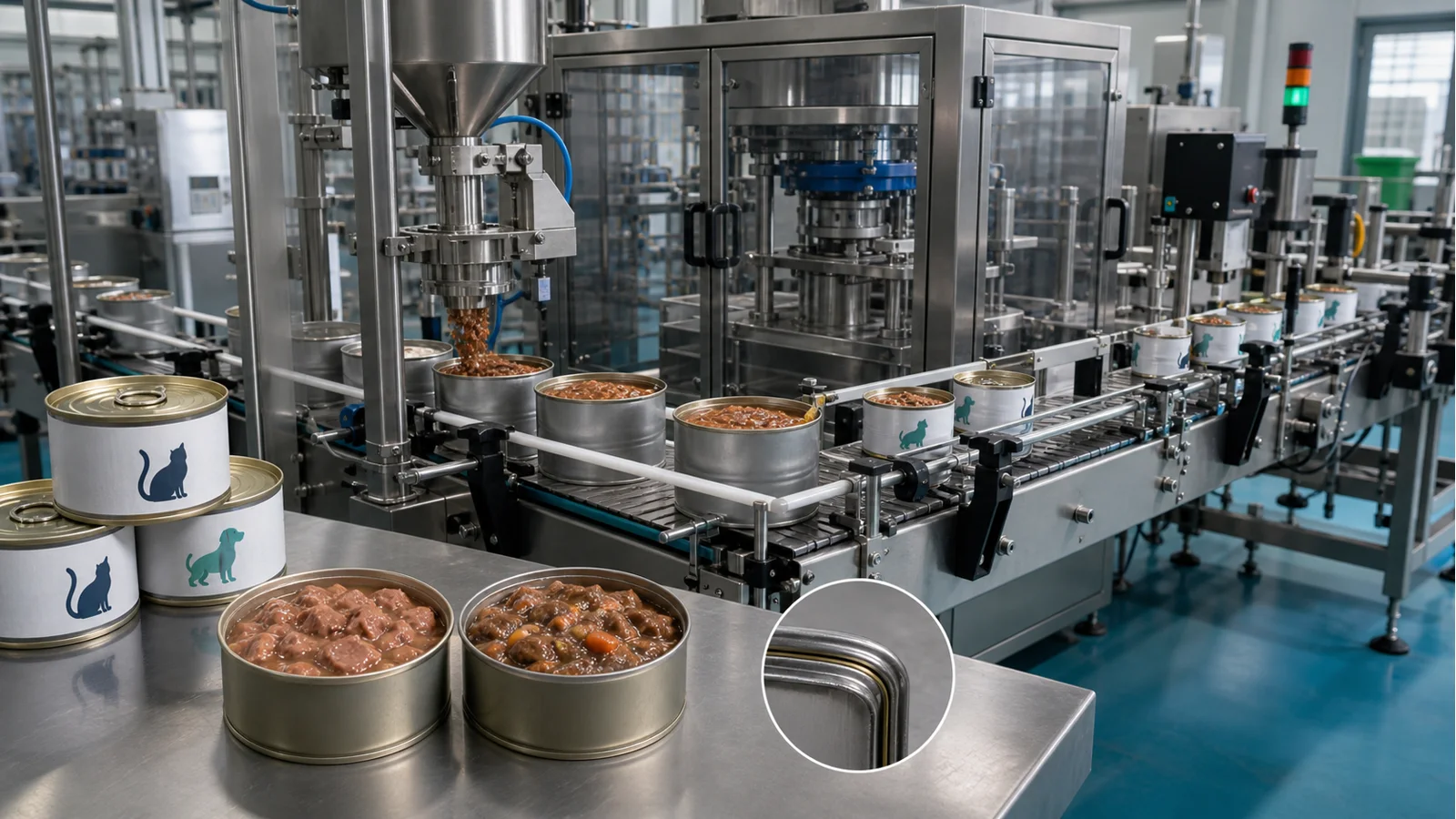
- Validate wet-product filling, clean rims, can-lid seaming and downstream weight and label checks separately against the can, lid and product.
Solution summary prepared for you
- For pet canning, first confirm the feeding task by wet food, meat paste, broth, or dry food. Paste piston and liquid quantitative filling do not cover unverified solid feeding.
- Metal cans use an online automatic can seamer for seaming, plastic threaded cans are evaluated with an automatic screw capping machine, and paper-plastic cans with aluminum foil film and lid structure use the film sealing and lid pressin...
- The round bottle square bottle labeling machine requires dynamic trial labeling with finished cans. The online checkweigher is configured only after weight judgment and reject handling rules are defined.
Route comparison
- Suitable for pet food metal can packaging that can be stably conveyed and has matching lids and defined seaming requirements.
- Once the metal can, lid, and seaming standards are defined, can positioning, lid feeding, seaming, and discharge can be linked into a continuous process.
- Can diameter, height, body rigidity, matching lid components, seaming standards, and post-filling rim condition must be defined. Optional lid feeding and reject modules are confirmed separately.
- When packaging uses plastic threaded cans or paper-plastic cans with film sealing and lid pressing, do not use metal can seaming equipment to replace the corresponding closing process.
- For wet food or meat paste, first evaluate a paste piston filling machine or liquid quantitative filling machine with actual samples. The seaming section uses an online automatic can seamer supplied according to lid and seaming requireme...
- Suitable for plastic threaded cans where the mouth and thread match and can be stably held after filling.
- Threaded lid closing action is independently verified, making it easy to configure the capping head, holding, and changeover parts according to plastic cans and lid samples.
- Can body rigidity, thread fit, lid orientation, screwing result, and conveying posture must be checked. Do not use empty cap specifications to replace finished product trial runs.
- When metal cans require seaming, or paper-plastic cans use an aluminum foil film with inner and outer lids, switch to the corresponding route.
- After filling is complete and the can mouth is clean, use an automatic screw capping machine custom-configured according to the threaded lid and can body samples.
- Suitable for projects where paper or plastic cans first seal an aluminum foil film and then press inner and outer lids, and also require can body labeling or weight check.
- Aluminum foil inner seal, inner and outer lid assembly, can body label, and weight check can each be verified according to their samples and rules.
- The rim, film material, and lid layers must match. Labeling requires dynamic trial labeling, and checkweighing requires defined weight ranges and reject handling methods.
- When the can body or lid film layers are undetermined, the labeling surface is unstable, or weight rules are not yet established, do not preset all downstream equipment as a fixed line.
- Paper-plastic cans use a paper can/plastic pail aluminum foil film sealing and lid pressing machine. After sealing is stable, evaluate the round bottle square bottle labeling machine and online checkweigher with finished cans.
Associated Equipment / Consumables
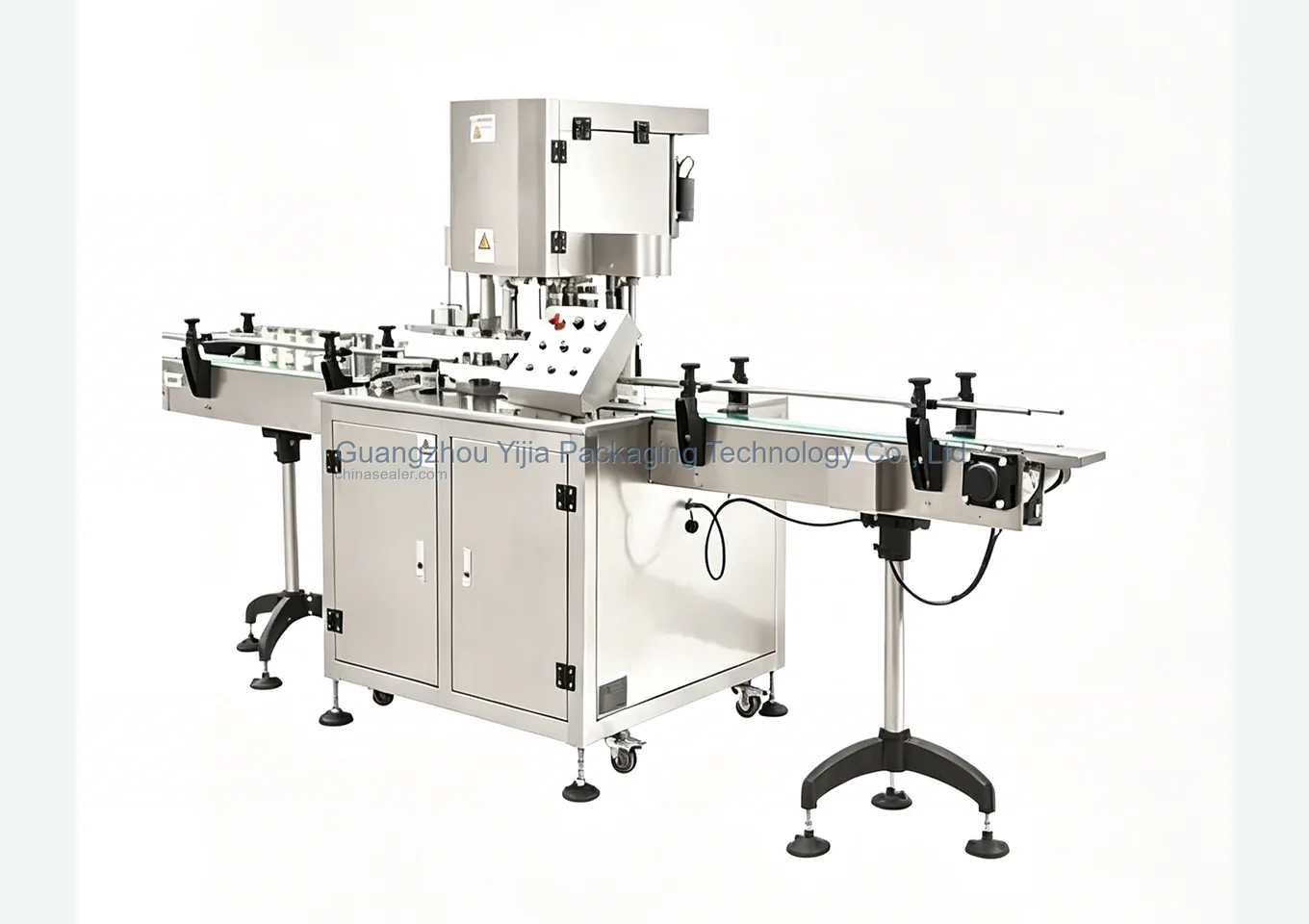 Inline Automatic Can Seaming Machine
For metal cans and matching lids, the machine positions each can, supports manual or optional automatic lid placement, presses and positions the lid, seams and discharges in continuous conveying. Can and lid dimension...
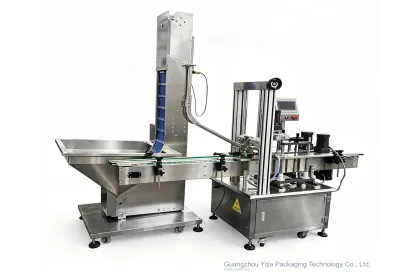 Automatic Screw Capping Machine
Verify plastic can screw capping; The automatic screw capping machine is custom-configured according to lid samples and only handles confirmed threaded closing tasks. It does not repla...
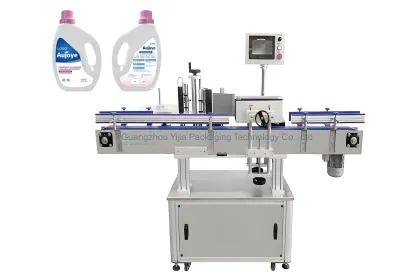 Round-Bottle and Front/Back Labelling Machine
Configure can body labeling and weight check; Labeling uses dynamic trial labeling with filled and closed finished cans. Checkweighing only executes defined weight judgme...
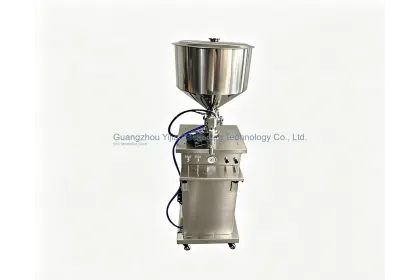 Piston Sauce Filling Machine
Determine the filling direction based on the content; Paste piston machines and liquid quantitative machines only cover their respective suitable materials. Dry food and freeze-dried feed...
Core process
First classify feeding tasks by wet food, meat paste, broth, or dry food state, then use actual samples to check particles, flow, and can mouth cleanliness after filling.
When metal cans use matching lids, configure positioning, lid feeding, and seaming based on can diameter, height, seaming structure, and post-filling rim condition.
Plastic cans with threaded lids are evaluated for screw capping based on the can mouth, thread, and finished can holding condition. Use actual samples to determine the capping head and changeover parts.
When paper or plastic cans require sealing the aluminum foil film first and then installing inner and outer lids, verify the film sealing and lid pressing action according to the rim, film material, and lid layer sequence.
After the main seal is verified with samples, arrange labeling according to the can body shape, and evaluate online checkweighing after weight rules and reject handling methods are defined.
Organize the content, can body, closing components, and downstream rules separately, and arrange filling, sealing, labeling, and inspection according to the actual process sequence.
Sample details
The content state is used to distinguish between paste piston, liquid quantitative, or separately confirmed solid feeding tasks, and to check for residue at the can mouth after filling.
Provide actual pet food samples and specify the state: wet food, particles, broth, dry food, or freeze-driedThe can body material and mouth structure are the basis for distinguishing seaming, screw capping, and film sealing with lid pressing, and also determine the equipment holding and conveying reference.
Submit actual metal, plastic, or paper can samples and note the can diameter, height, and mouth structureLids, threaded caps, aluminum foil films, and inner and outer lids should be provided as a set according to the finished product layers, for configuring seaming rolls, capping heads, or lid pressing tooling.
Prepare lids, lid films, gaskets, and seaming or closing acceptance requirementsLabeling and checkweighing are arranged after the main seal. The former depends on dynamic positioning of the can body, and the latter relies on defined weight ranges and handling actions.
Provide label artwork, application position, weight judgment range, and reject handling methodOperating arrangements are used to coordinate filling, closing, and downstream actions, and to verify multi-can-type changeover, cleaning, and site conveying conditions.
Specify shift output, can type changeover frequency, cleaning requirements, site dimensions, and can infeed/outfeed directionCommon selection mistakes
First classify the closing process by metal seaming, plastic threaded screw capping, or paper-plastic can film sealing with lid pressing, then confirm the corresponding equipment.
Use actual samples to verify piston filling for wet food and meat paste, liquid quantitative filling for broth and other liquid materials, and verify dry food feeding separately.
Metal can body, lid, seaming requirements, and post-filling rim condition should be tested as a set before determining the seaming rolls and can lift parts.
Verify screw capping and film sealing with lid pressing separately based on the lid film layers. Do not merge the stations just because both have an outer lid.
Labeling uses dynamic trial labeling with filled finished cans. Checkweighing first establishes weight judgment and reject handling before integrating into the post-sealing section.
View detailed technical notes
First Match the Contents with the Can Type
Pet food canning should specify both the content state and can structure. Wet food, meat paste, broth, and dry food use different feeding methods, and metal cans, plastic cans, and paper cans correspond to different closing actions.
Filling Equipment Only Covers Verified Materials
The sauce piston filling machine and the liquid quantitative filling machine are each verified with actual material samples. Dry food and freeze-dried feeding are not solved by default in these two types of equipment. After filling, also check whether the can mouth is suitable for entering the closing station.
Metal Can Seaming Is Matched to the Lid Standard
Metal can seaming requires the can body, lid, and seaming requirements to be confirmed as a complete set. The online automatic can seamer is supplied as a matched set; the seaming head, seaming rolls, can support, and lid feeding module are all configured based on project samples.
Plastic Threaded Cans Require Separate Screw Capping Verification
For plastic cans with threaded lids, evaluate an automatic screw capping machine. Can body clamping, thread fit, and capping results are tested with filled finished cans. Do not apply the paper can film sealing and lid pressing structure to this route. Thread changes also require re-verification of changeover parts.
Paper-Plastic Cans Confirm Film Sealing and Lid Pressing According to Lid Film Layers
When paper cans or plastic cans are first sealed with aluminum foil film and then fitted with an inner lid and outer lid, use a film sealing and lid pressing machine to verify the rim, film material, and lid layer sequence. Metal seaming and simple screw capping do not use this action.
Filling Test Extends to Can Mouth Inspection
The viscosity, particles, and broth ratio of wet food determine the feeding test. After filling, residual material on the can mouth also affects seaming, screw capping, or film contact surfaces. Equipment selection should be based on continuous sample conditions.
Three Types of Closing Equipment Cannot Replace Each Other
The online automatic can seamer, automatic screw capper, and paper-plastic can film sealing and lid pressing machine each serve different packaging structures. Similar process names do not mean that seaming heads, capping heads, and film sealing molds can be shared.
Labeling and Checkweighing Each Have Their Own Acceptance Rules
Can body labels are dynamically test-applied on finished filled and closed cans. The online checkweigher only performs defined weight judgments and reject actions; it is not a verification tool for seaming, leakage, or content quality.
Common questions
Can metal cans, plastic cans, and paper cans share sealing equipment?
Metal cans with matching lids use double seam closure; plastic threaded cans are evaluated for screw capping; paper or plastic cans with an aluminum foil seal and lid structure are evaluated for film sealing and lid pressing. First check the can mouth and lid film layers.
Can wet and dry pet food use the same filling method?
They cannot be directly shared. Wet food, meat paste, and broth can each be tested with a piston filler for paste or a liquid quantitative filler; dry food and freeze-dried food metering and feeding must be determined separately based on their state.
Is it necessary to send lid samples when evaluating an online can seamer?
The can body, lid, and seaming requirements must be provided together. The equipment supply configuration must be determined accordingly for the seaming head, seaming rolls, can lift, and lid feeding method.
How to distinguish between screw capping and film sealing with lid pressing for paper-plastic cans?
First check the packaging layers. A threaded lid closes by screwing action; an aluminum foil film sealed to the can mouth before installing inner and outer lids is film sealing and lid pressing. The tooling and actions differ between the two.
Under what conditions is can body labeling integrated?
The can body shape, labeling surface, and posture after filling must match the equipment. The labeling configuration is adopted only after dynamic trial labeling with finished cans passes.
What defects can an online checkweigher detect?
It outputs a judgment based on the defined weight range and executes the agreed alarm or reject handling. Seaming quality, leakage, and content condition are still confirmed by their respective acceptance methods.