Solution topic
Chilled Sandwich Trays: Configuration Differences Between Standard Heat Sealing and MAP Freshness Packaging
Compare standard heat pressing, roll-fed film sealing, and MAP freshness routes for chilled sandwich trays, and confirm equipment based on tray film, freshness goals, and capacity.
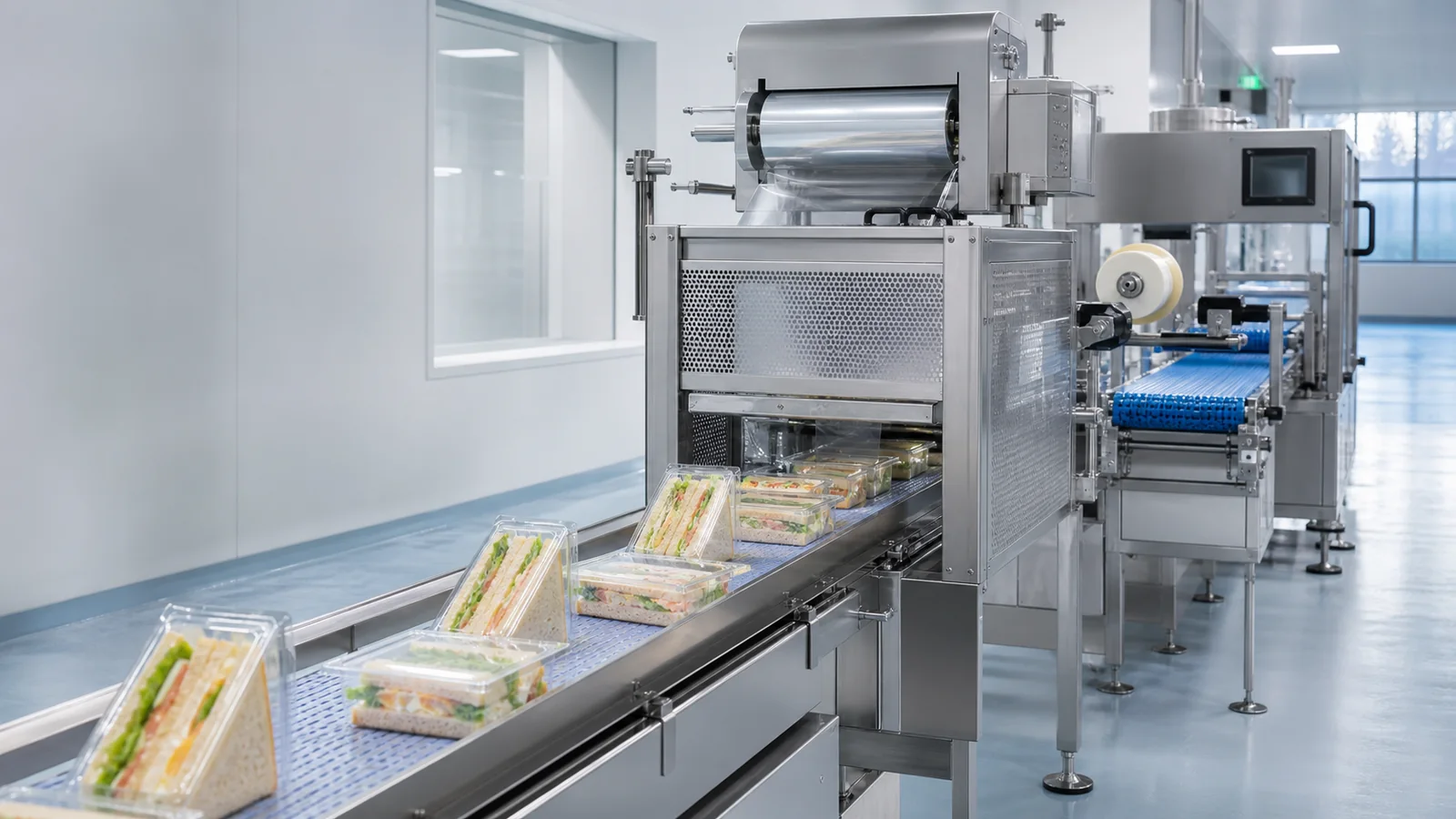
- Standard heat pressing only handles film lidding; MAP also requires checking tray barrier properties, film, and target gas conditions, while bagged products are a separate route. Please submit product and tray film samples, freshness goals, cold chain conditions, capacity, and label position.
Solution summary prepared for you
- For refrigerated sandwich trays, first clarify whether ordinary film lidding or modified atmosphere freshness is needed. The modified atmosphere route also requires joint verification of product, tray barrier, film, and target gas condit...
- Initial equipment selection can first look at tray dimensions, film form, and output. Formal configuration still requires trial sealing with trays loaded with sandwiches to check rim and loading effects.
- When modified atmosphere is not needed, a benchtop multi-compartment meal box sealing machine can be evaluated; for continuous roll film, a roll film tray sealing machine can be evaluated. When a modified atmosphere goal is clear, then e...
Route comparison
- When the product has a clear modified atmosphere freshness goal and actual sandwiches, trays, film, and cold chain conditions can be provided for verification, modified atmosphere sealing can be evaluated.
- Gas treatment and tray film sealing can be placed in the same sample process, recording packaging and refrigerated performance around the specific product.
- Results depend on tray and film barrier properties, product loading, and target gas conditions; shelf life needs to be confirmed through complete packaging and storage/transport tests.
- Without a clear freshness goal, packaging barrier conditions, or product samples, do not directly upgrade ordinary heat sealing to a modified atmosphere solution.
- A tray modified atmosphere sealing machine can be evaluated, and the process confirmed according to mutually agreed samples and refrigerated verification methods.
- When the project only requires film lidding and sealing of sandwich trays, without modified atmosphere treatment, and the box type and rim are determined, ordinary heat pressing can be evaluated.
- The process is relatively direct; tray positioning, film sealing, and manual handling can be verified first, suitable for isolating basic sealing issues.
- Ordinary heat sealing only solves film sealing; it cannot be used to infer modified atmosphere or refrigerated freshness effects. Multi-compartment boxes are also affected by the flatness of each compartment's rim.
- When the project explicitly requires modified atmosphere gas exchange, or tray and film are not yet matched, configuration should not be based only on ordinary heat sealing.
- A benchtop multi-compartment meal box sealing machine can be evaluated; tooling and sealing conditions are determined by formal tray and film samples.
- When packaging uses continuous roll-fed film and the film width, roll direction, tray positioning, and cutting method can be provided as actual samples, roll-fed film sealing can be evaluated.
- Roll film supply and sealing action can be continuously coordinated, suitable for verifying film feeding and edge cutting around fixed tray specifications.
- Different tray sizes may require changing tooling or film width, and loading height also affects sealing operation and film surface.
- When the project uses pre-cut film, or the roll film specifications and tray are not yet determined, the roll-fed film configuration should not be directly confirmed.
- A benchtop roll film tray sealing machine can be evaluated, and samples completed with actual roll film, trays, and loaded product.
Associated Equipment / Consumables
 Benchtop Roll-Film Tray Sealing Machine
Bench-top Rollstock Tray Sealer: Product, tray, and film verification; Also state ordinary heat sealing or modified atmosphere requirements, planned output, sales and refrigeration conditions, and downstream batch num...
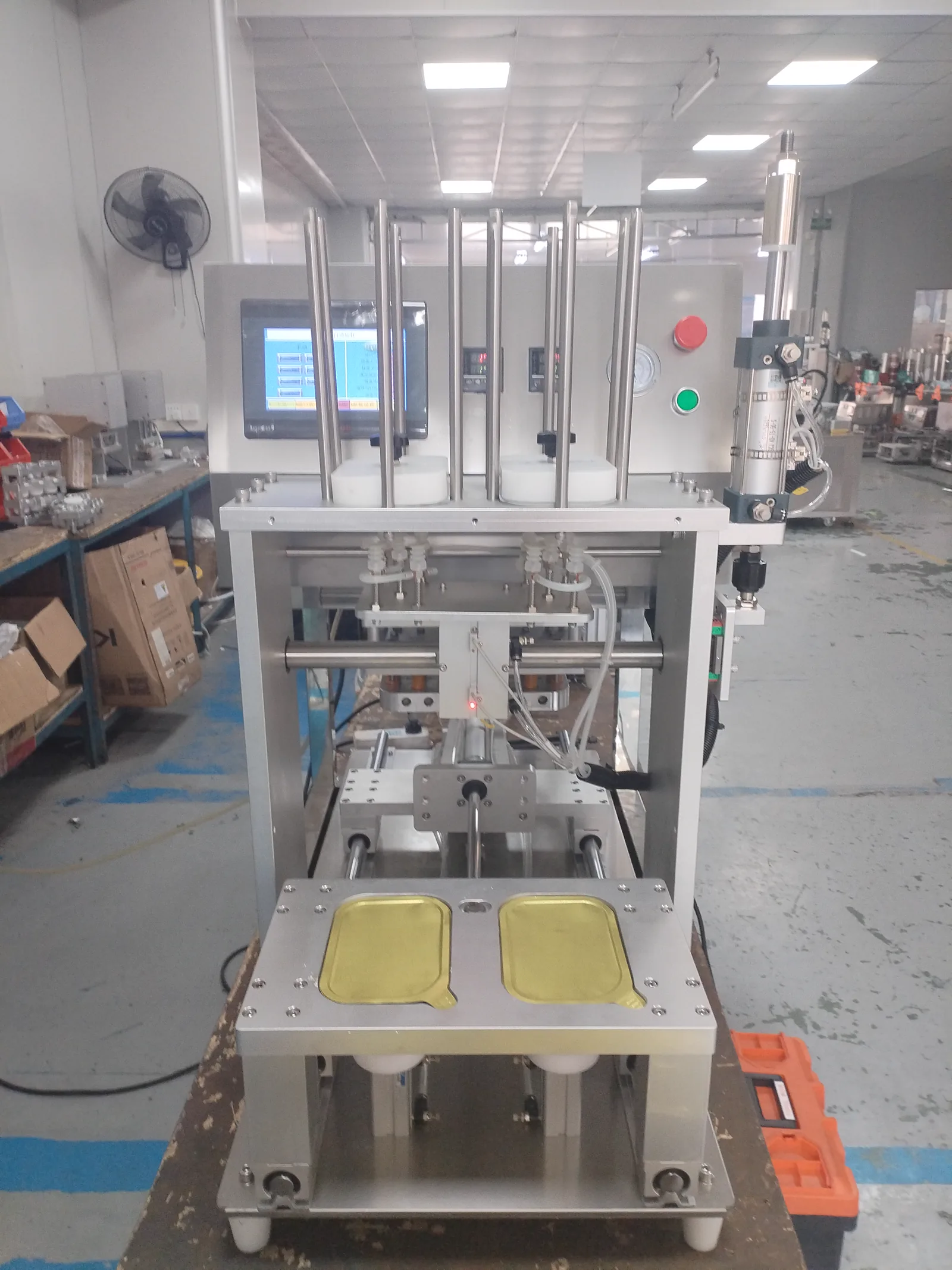 Automatic Pre-Cut Lid Pick-and-Place Tray Sealer
Product, tray, and film verification; Also state ordinary heat sealing or modified atmosphere requirements, planned output, sales and refrigeration conditions, and dow...
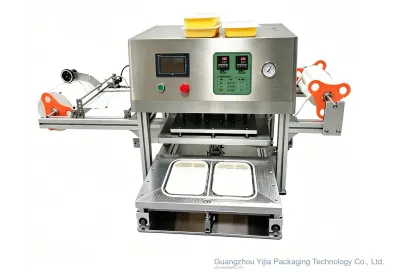 Tabletop Multi-Compartment Meal Tray Sealer
Modified atmosphere tray sealing; Modified atmosphere results are jointly affected by equipment, product, packaging material, and cold chain conditions. Samples should reco...
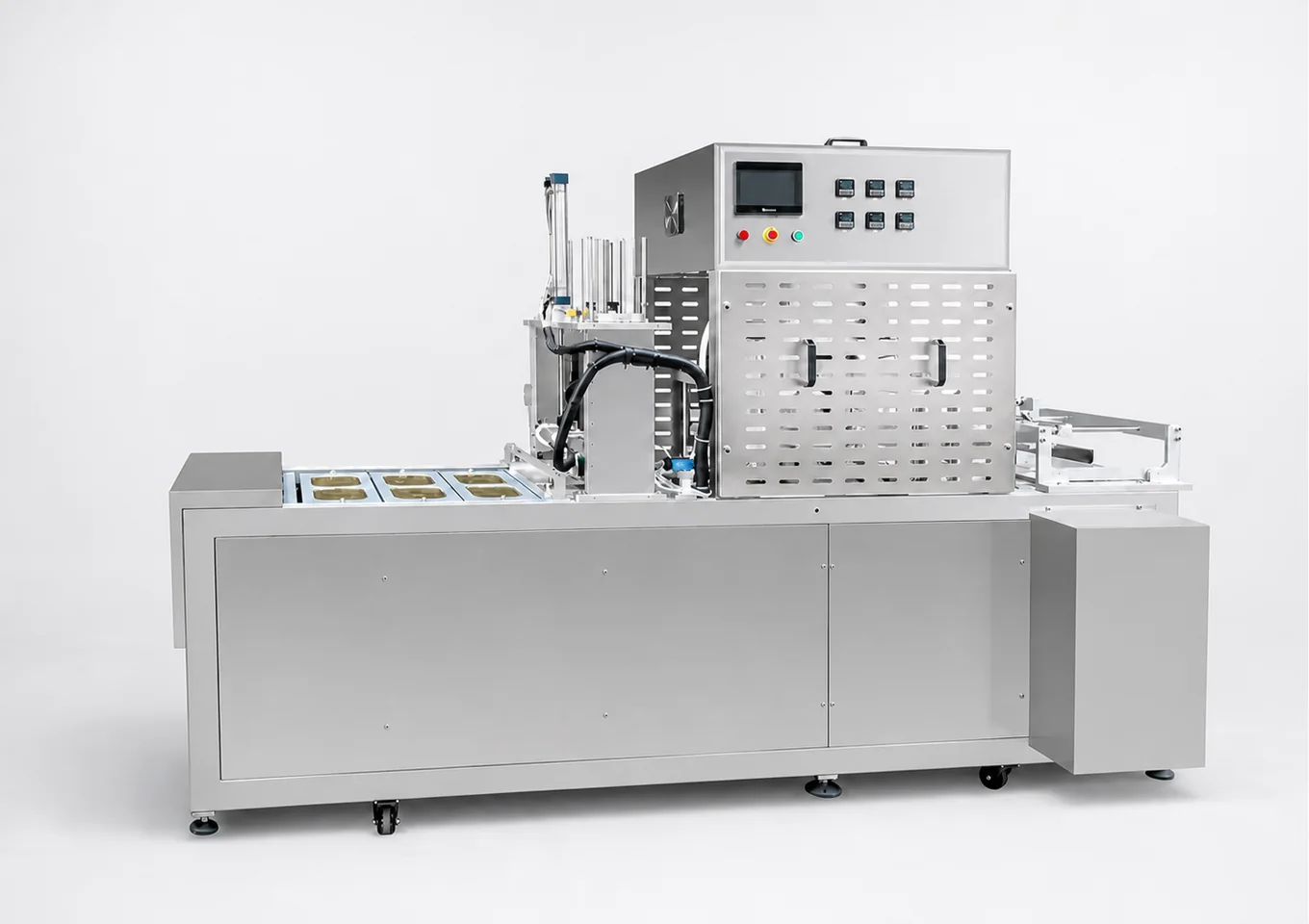 Chain Conveyor Cup and Tray Filling Sealing Line
Modified atmosphere tray sealing; Modified atmosphere results are jointly affected by equipment, product, packaging material, and cold chain conditions. Samples should...
Core process
First clarify the sandwich product state, cold chain, and freshness goals, then use trays loaded with actual product and formal film to check rim, loading height, and sealing contact surface.
When there is a clear modified atmosphere freshness goal, a tray modified atmosphere sealing machine can be evaluated, and sample tests should be conducted around product, tray, film, and target gas conditions.
When only tray film lidding is needed and modified atmosphere is not required, a benchtop multi-compartment meal box sealing machine can be evaluated based on box type, compartment count, and rim.
When continuous roll film is needed, a benchtop roll film tray sealing machine can be evaluated, focusing on film width, film feeding, tray positioning, and film cutting edges.
After sealing is stable, a date batch inkjet coder can be configured according to the refrigerated product's artwork and traceability requirements, and confirm whether printing is on the film or label.
If checkweighing, labeling, or continuous conveying is needed later, verify position, triggering, and exception rejection space according to actual cycle time after the main sealing sample passes.
Sample details
Only trays with product can reflect positioning, sealing contact surface, and handling conditions; empty trays are only suitable for preliminary tooling check.
Prepare finished sandwiches, tray samples, and dimensions; explain loading height and whether the rim is prone to oil or product entrapment.Film and tray materials together determine sealing conditions. Modified atmosphere projects also need to verify barrier requirements.
Provide film samples or complete specifications, explaining heat seal layer, roll film or pre-cut form, and roll direction.Equipment can execute packaging processes, but freshness results need to be verified under specific product, packaging material, and cold chain conditions.
State whether only ordinary heat sealing is needed, or modified atmosphere is required, and provide refrigeration, transportation, and observation conditions.Output is used to compare benchtop single machines with continuous solutions, and also determines whether buffering and downstream conveying are needed.
List the number of trays per hour or per shift, and the expectation of manual tray placement, turntable, or continuous stations.Downstream positions should avoid sealing edges and retain operating space for mold changes, sampling, and exception handling.
Submit batch number and label position, explaining available space, conveying direction, and whether checkweighing or labeling is needed.Common selection mistakes
When submitting requirements, explain the freshness goal and observation conditions; sample records should also distinguish sealing integrity from refrigerated performance, not just equipment action.
The actual sandwich, tray, and sealing film must be verified together to check positioning, sealing edges, and handling process.
First verify the actual tray placement, sealing, and removal cycle times, then decide whether a turntable, multi-station, or front/back end connection is needed.
Formal artwork and label samples can help avoid sealing edges, curved surfaces, and friction areas, reducing later rework.
List corresponding film and tooling for each specification, record changeover steps and adjustment positions during machine trials; one set of samples cannot represent all products.
View detailed technical notes
First Define Freshness Goals and Cold Chain Conditions
When packaging sandwiches in trays, first clarify whether only film lidding is needed or whether there is a modified atmosphere freshness goal, and provide refrigeration, transport, and observation conditions. Equipment selection cannot be separated from the specific product and packaging materials.
Standard Heat Sealing and MAP Are Not the Same Decision
Standard heat sealing handles tray film lidding. Modified atmosphere packaging also requires checking tray and film barrier properties, product loading, and target gas conditions. Bagged products belong to a separate form-fill-seal route.
MAP Route Requires Full Sample Validation
When there is a clear MAP goal, a tray MAP sealing machine can be evaluated, but actual sandwiches, trays, and films must be used, and sealing and chilled storage observation results must be recorded according to the agreed method.
For Standard Multi-Compartment Trays, First Verify Rim and Tooling
When MAP is not required, a tabletop multi-compartment meal tray sealing machine can be evaluated based on tray type and compartment count. The flatness of multi-compartment rims, product entrapment, and grease contamination must be checked in the loaded tray condition.
Roll-Fed Route Requires Checking Film Tracking and Trimming
A tabletop roll-fed film tray sealing machine is suitable for packaging where film width, roll direction, and tray positioning are already defined. When multiple tray types share the line, tooling and changeover must be checked separately.
Keep Date and Batch Codes Away from the Seal Edge
A date and batch inkjet coder should be configured downstream of the main sealing station. Test print on the official layout first, and check whether the code remains clear and durable after refrigeration and handling.
Select the Main Sealing Equipment by Route Based on the Goal
Standard film lidding, continuous roll-fed film, and MAP each have different packaging materials and sample conditions. First confirm the goal, then compare within the corresponding equipment range, and avoid adding configurations for processes that are not needed.
Connect Downstream Marking and Inspection After the Cycle Time Is Stable
Coding, labeling, or checkweighing should be based on the actual cycle time of the main sealing station. Space can be reserved during layout, but the final triggering and conveying relationship must be confirmed through continuous trial runs.
Common questions
What is the biggest difference between ordinary heat sealing and modified atmosphere sealing?
Ordinary heat sealing mainly completes tray film lidding. Modified atmosphere also needs to be verified in combination with the product, packaging material barrier properties, and target gas conditions; freshness cannot be judged by equipment name alone.
Can we choose the equipment direction first when information is incomplete?
You can first provide photos of the product and tray, dimensions, film material information, and planned output. We can first distinguish between ordinary heat sealing, modified atmosphere, or roll film routes, and then list the samples that need to be supplemented.
Why use trays loaded with sandwiches for sampling?
Actual loading affects tray positioning, rim cleanliness, and film surface condition. Empty trays cannot reflect problems caused by product entrapment, oil contamination, or product height.
Is it enough to provide only the film specification?
Specifications can be used for preliminary review, but sealing still requires formal film and tray samples. Modified atmosphere projects also need to consider barrier conditions and cold chain goals.
How to verify the tray sealing effect?
Use the formal product, tray, and film for continuous trial sealing, record the sealing appearance, and check packaging integrity and condition after refrigerated handling according to the agreed method.
When is it necessary to add coding or checkweighing in line?
Connect after the main sealing process and actual cycle time are stable. If traceability or weight check requirements are confirmed, reserve space and interfaces during the layout stage.