Solution topic
Shower Gel Bottle Filling, Screw Capping and Sealing Solution
Provide equipment selection recommendations for filling, screw capping, induction aluminum foil sealing, labeling, coding, and downstream line integration for bottled liquid daily
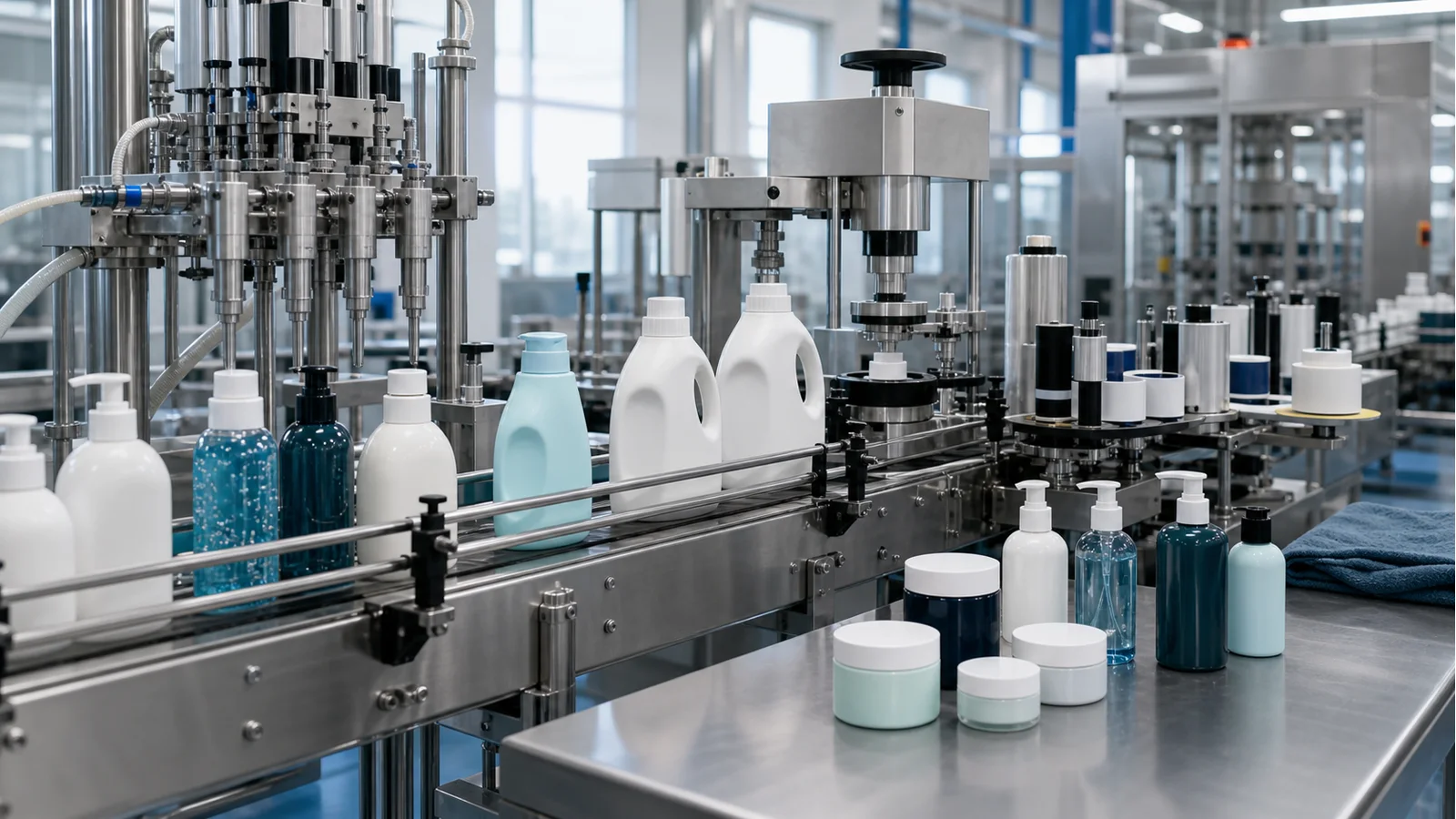
- Recommendations for filling, screw capping, induction sealing, labeling, coding, and downstream line integration for bottled liquid daily chemical products such as shower gel and shampoo
- Shower Gel Bottle Filling, Screw Capping and Sealing Line
Which Filling Method Suits Your Project
Shower gel is a medium-viscosity liquid. Piston or rotary pump fillers are recommended for stable metering and drip-free filling of viscous materials. If your capacity is below 1200 bottles/hour, single-head or dual-head filling is sufficient; for higher speeds, consider multi-head filling or inline configuration. Note: Do not choose fillers for sauces containing particles unless your shower gel contains abrasive granules.
Selection of Screw Capping and Induction Sealing
Shower gel bottles usually have screw caps or pump heads. An automatic screw capper with adjustable torque is recommended. If leak-proof and tamper-evident sealing is required, add an online induction aluminum foil sealer after capping to heat-seal the foil liner inside the cap to the bottle mouth. Note: Induction sealing only works with caps containing aluminum foil liners, and the bottle mouth must be flat. If your cap has no liner, this equipment is unnecessary.
Equipment Combinations Suitable for This Packaging Route
The shower gel route is close to shampoo, but foam, stringing, and pump-head structure need extra confirmation. Our liquid dosing fillers, automatic cappers, in-line induction foil sealers, labeling and coding units, conveyors, and checkweighers can be combined into a bottle line. Use samples to confirm filling consistency and bottle-mouth cleanliness before deciding on a continuous line.
Inline Labeling and Coding Methods
Both round and square bottles can use a round/square bottle labeler with adjustable labeling position. A coder can print production date, batch number, or QR code online. It is recommended to arrange labeling and coding after capping or induction sealing to avoid label contamination. If your labels require moisture resistance or refrigeration, inform the label material in advance.
Conveyor and Downstream Inspection
Food-grade conveyors can connect workstations; a buffer section is recommended to balance cycle times. If weight or metal detection is needed, add an online checkweigher or metal detector after labeling. Note: Inspection equipment is not mandatory; if filling accuracy is high and raw materials have no metal risk, it can be omitted for now.
Why Meal Tray Sealing Equipment Is Not Recommended
Shower gel is a bottled liquid requiring filling, screw capping, and induction sealing, not film sealing of cups, boxes, or trays. Tray sealers (e.g., desktop multi-compartment tray sealers, preformed tray sealers) are for solid or semi-solid foods like cooked food and salads, completely mismatched with your project. Do not choose such equipment.
Differences Between Low-Speed Small Batch and Continuous Production Equipment
If capacity is below 600 bottles/hour, choose desktop semi-automatic fillers and cappers for low investment and quick changeovers. For continuous production (e.g., above 1200 bottles/hour), recommend a fully automatic line including automatic bottle unscrambler, filling, capping, induction sealing, labeling, coding, and conveying. Note: Semi-automatic equipment suits prototyping and small batches but has high labor costs; fully automatic suits mass production but requires higher initial investment.
Preparation of Consumables and Change Parts
The formal solution requires you to provide bottle samples, cap samples, label rolls, and aluminum foil liner samples to configure filling nozzles, capping heads, sealing molds, and labeling fixtures. Different bottle shapes require corresponding molds; confirm change parts when purchasing. Consumables such as sealing film, labels, and ink should be tested with samples before bulk purchase.
Considerations for Full Line Integration
The integration between equipment needs to be designed according to your workshop layout and capacity cycle time. Provide a workshop floor plan. Conveyor length, number of buffer tables, and reject mechanism positions need on-site confirmation. If you have existing equipment, inform the model and interface for compatibility assessment.
Route comparison
- Suitable for shower gel bottle filling capping sealing line still confirming capacity, bottle type, cap, gasket, viscosity or sample testing.
- Convenient to first confirm filling accuracy, anti-drip, capping feel and sealing effect, with lower investment.
- Manual bottle loading/unloading and capping coordination is heavy, speed is limited, batch stability depends on operation rhythm.
- If the target capacity is already clear and continuous shipment is required, it is not recommended to use only semi-automatic stand-alone combination for long term.
- First use semi-automatic filling, capping or induction sealing equipment to verify key parameters, then decide whether to upgrade to inline.
- Suitable for shower gel bottle filling capping sealing line where bottle type and cap type are confirmed, requiring stable batch production.
- Filling, capping, aluminum foil induction sealing, labeling and coding can be sequentially linked, with more stable capacity.
- Need to confirm bottle stability, content viscosity, temperature, foam, cap structure and conveying space in advance.
- If bottle type changes frequently or content state is uncertain, it is not recommended to directly order a fully automatic line.
- Configure bottle supply, filling, capping, induction sealing, labeling and coding, and inspection equipment according to process; main equipment should match bottle type and target speed.
- Suitable for shower gel bottle filling capping sealing line containing particles, easy to foam, high viscosity, hot fill, corrosive or high hygiene level requirements.
- Can customize pump type, hopper, valve body, insulation, cleaning and anti-drip, reducing later rework.
- Higher cost and documentation requirements, need sample testing or clear physical property parameters.
- If it is only ordinary low-viscosity liquid and the capacity requirement is not high, it is not recommended to over-customize at the beginning.
- Select piston pump, rotor pump, insulated hopper, anti-drip filling nozzle, induction sealing and post-stage inspection combination according to material state.
Core process
Arrange empty bottles and feed them into the filling station
Choose piston or rotary pump based on viscosity
Adjustable torque, suitable for screw caps or pump heads
Only applicable to caps with aluminum foil liners
Label then code, position adjustable
Configure as needed, not mandatory
Associated Equipment / Consumables
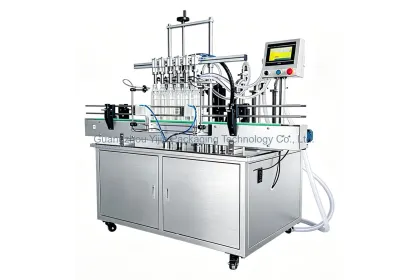 Liquid Quantitative Filling Machine
Bottle Unscrambling and Feeding; Arrange empty bottles and feed them into the filling station; Automatic Bottle Unscrambler; Food-Grade Conveyor
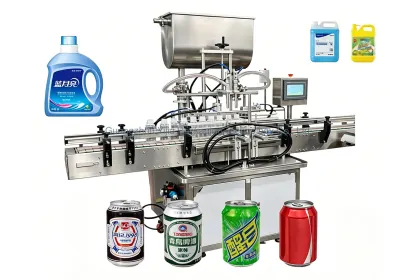 Liquid Filling Machine
Bottle Unscrambling and Feeding; Arrange empty bottles and feed them into the filling station; Automatic Bottle Unscrambler; Food-Grade Conveyor
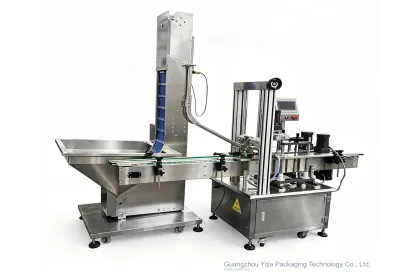 Automatic Screw Capping Machine
Screw Capping; Adjustable torque, suitable for screw caps or pump heads; Automatic Screw Capper; Cap Unscrambling and Feeding System
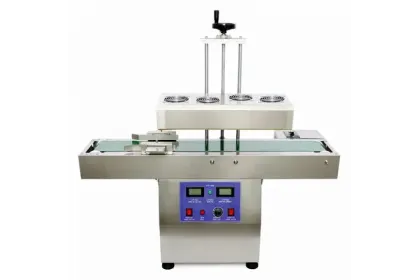 Inline Induction Foil Sealer
Screw Capping; Adjustable torque, suitable for screw caps or pump heads; Automatic Screw Capper; Cap Unscrambling and Feeding System
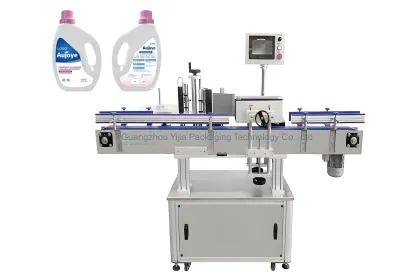 Round & Square Bottle Labeling Machine
Labeling and Coding; Label then code, position adjustable; Round/Square Bottle Labeler; Date and Batch Coder
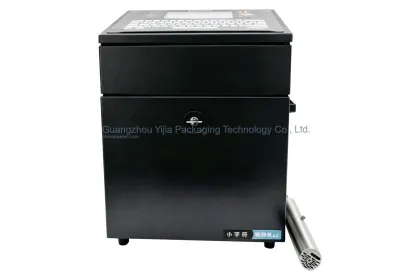 Date & Batch Inkjet Printer
Labeling and Coding; Label then code, position adjustable; Round/Square Bottle Labeler; Date and Batch Coder
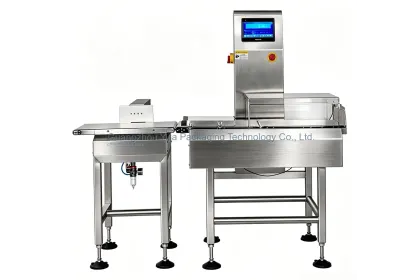 Inline Checkweigher
Labeling and Coding; Label then code, position adjustable; Round/Square Bottle Labeler; Date and Batch Coder
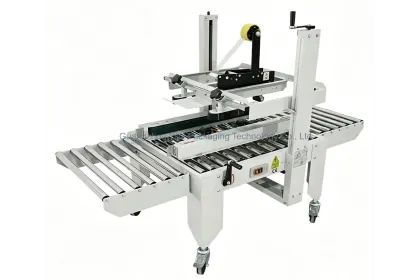 Carton Sealing and Outer Case Labeling Line
Labeling and Coding; Label then code, position adjustable; Round/Square Bottle Labeler; Date and Batch Coder
Sample details
Specify whether your product is shower gel, shampoo, or other daily chemical liquid.
Product name, viscosity, whether it contains particles or foamProvide bottle sample or bottle dimensions, neck diameter, and material (PET/HDPE/glass).
Bottle photo, neck diameter, height, base diameterDescribe material state (thin liquid/viscous/paste) and filling volume range.
Material viscosity, filling volume (ml), whether prone to foamingSpecify whether filling, screw capping, induction sealing, labeling, coding, inspection, etc. are required.
List of required processes, whether inlineSend sample photos, key dimensions, film or caps, target output and line-integration needs so we can confirm the machine, tooling and quotation range.
Sample photos, dimensions, film or caps, target output, line integrationCommon selection mistakes
Shower gel is bottled liquid, not cups/boxes/trays. Do not choose tray-sealing-machine or lunch-box-sealer.
Thin liquids and viscous pastes require different fillers; piston type suits viscous, magnetic pump suits thin. Provide viscosity data.
Capping heads and sealing molds need to be customized according to cap diameter and shape; without samples, accurate configuration is impossible.
Equipment speeds must match to avoid bottle jams or idle running. Provide target capacity for unified cycle time calculation.
Fillers are classified by material: liquid, paste, sauce, powder, etc. Shower gel should use liquid or paste filler, not powder filler.
Common questions
Piston or rotary pump fillers are recommended, suitable for medium-viscosity liquids with accurate metering and drip-free performance.
If the cap has an aluminum foil liner and leak-proof/tamper-evident sealing is required, add induction sealing; otherwise, it can be omitted.
Yes, a round/square bottle labeler adapts to different bottle shapes by changing fixtures, but samples are needed for confirmation.
No, semi-automatic desktop equipment is sufficient, with low investment and flexible changeovers.
Although shower gel is not food, the daily chemical industry usually requires hygienic conveying; food-grade stainless steel is recommended.
No, if filling accuracy is high and raw materials have no metal risk, it can be omitted for now and added later.