Solution topic
Alcohol and Solvent Filling: Explosion-Proof Boundaries Must Be Confirmed by MSDS and On-Site Conditions
Alcohol, cleaning agents, fragrances, and solvents must be evaluated for filling, capping, and marking based on MSDS and on-site explosion-proof requirements. Downstream equipment
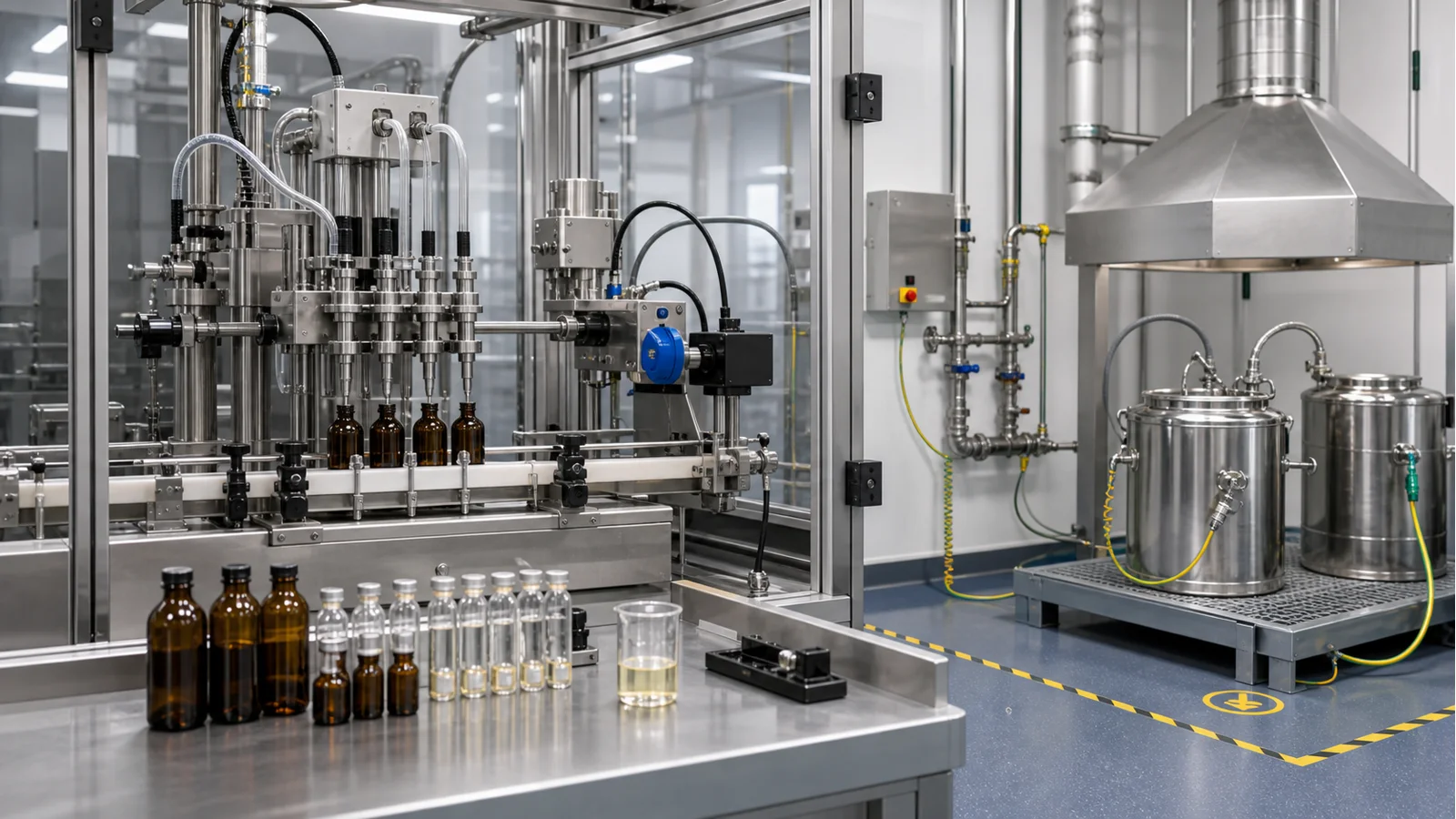
- Selection for flammable liquids cannot be based on name alone; flash point, volatility, corrosiveness, and on-site explosion-proof zoning will limit the filling and electrical solutions, and capping and labeling must also be included in the overall line assessment. MSDS, material and container cap samples, safety requirements, capacity, and layout are req...
Solution summary prepared for you
- For alcohol and solvent filling, first determine the boundaries based on MSDS, flash point, volatility, corrosiveness, and on-site explosion-proof zoning, then evaluate the explosion-proof solvent filling machine.
- Automatic screw capping machines, round and square bottle labeling machines, and date batch coding machines are all within the scope of the overall line safety assessment; you cannot check only the filling machine.
- The online checkweigher is configured only after weight standards, rejected product handling, and environmental suitability are clear; equipment solutions do not replace on-site professional safety review.
Route comparison
- Suitable for filling tasks where the MSDS, material characteristics, and on-site explosion-proof conditions are clear, and the project safety responsible party has confirmed the equipment boundary.
- First lock down safety and material conditions, then evaluate the explosion-proof solvent filling machine with actual materials and containers, reducing the risk of process scope misjudgment.
- Equipment suitability depends on the specific material, on-site zoning, electrical ventilation, and local requirements; sample trial filling cannot replace review.
- Do not finalize equipment when the MSDS is missing, on-site zoning is unclear, or material compatibility has not been checked.
- Evaluate the explosion-proof solvent filling machine within the confirmed safety boundary, checking specifications against site conditions item by item.
- Suitable for packaging that requires screw capping after filling and labeling and coding according to hazardous goods label and traceability requirements.
- Verify lid type and labeling tasks separately with actual samples, while including automatic screw capping, labeling, and coding in the overall line safety boundary.
- Lids, bottle mouths, label consumables, station positions, and equipment environmental suitability all need confirmation; you cannot verify only mechanical actions.
- Do not combine the line in advance when lid type or label requirements are not yet clear, or when the relevant stations have not been included in the on-site safety assessment.
- Evaluate the automatic screw capping machine based on lid samples, and use round and square bottle labeling machines and date batch coding machines for labeling.
- Suitable for projects that have established filling weight acceptance criteria, sampling, and rejected product handling rules, and need verification before and after sealing.
- The online checkweigher can map weight results to established handling actions, facilitating integration with filling and sealing records.
- Range, cycle time, rejection method, and equipment environmental suitability all need verification; checkweighing cannot replace filling metering or safety control.
- Do not configure an online checkweigher when weight standards are not clear or the equipment has not passed on-site suitability review.
- After establishing acceptance and rejected product procedures, evaluate the online checkweigher and include it in the overall line explosion-proof and safety review.
Associated Equipment / Consumables
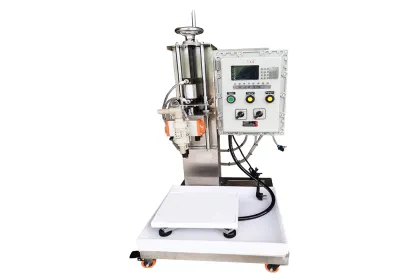 Solvent Filling Machine for Explosion-Risk Project Assessment
This direction covers alcohol, cleaners, fragrances or solvents that may present flammable-vapour risk. Qualified parties must assess the MSDS, flash point, volatility, corrosion, area classification, ventilation, sta...
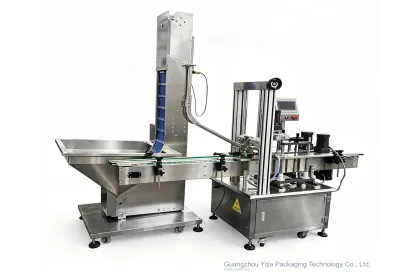 Automatic Screw Capping Machine
Explosion-proof solvent filling; Filling nozzles, seals, and tubing materials should be checked against the MSDS, and equipment specifications must fall within the project-confirmed ex...
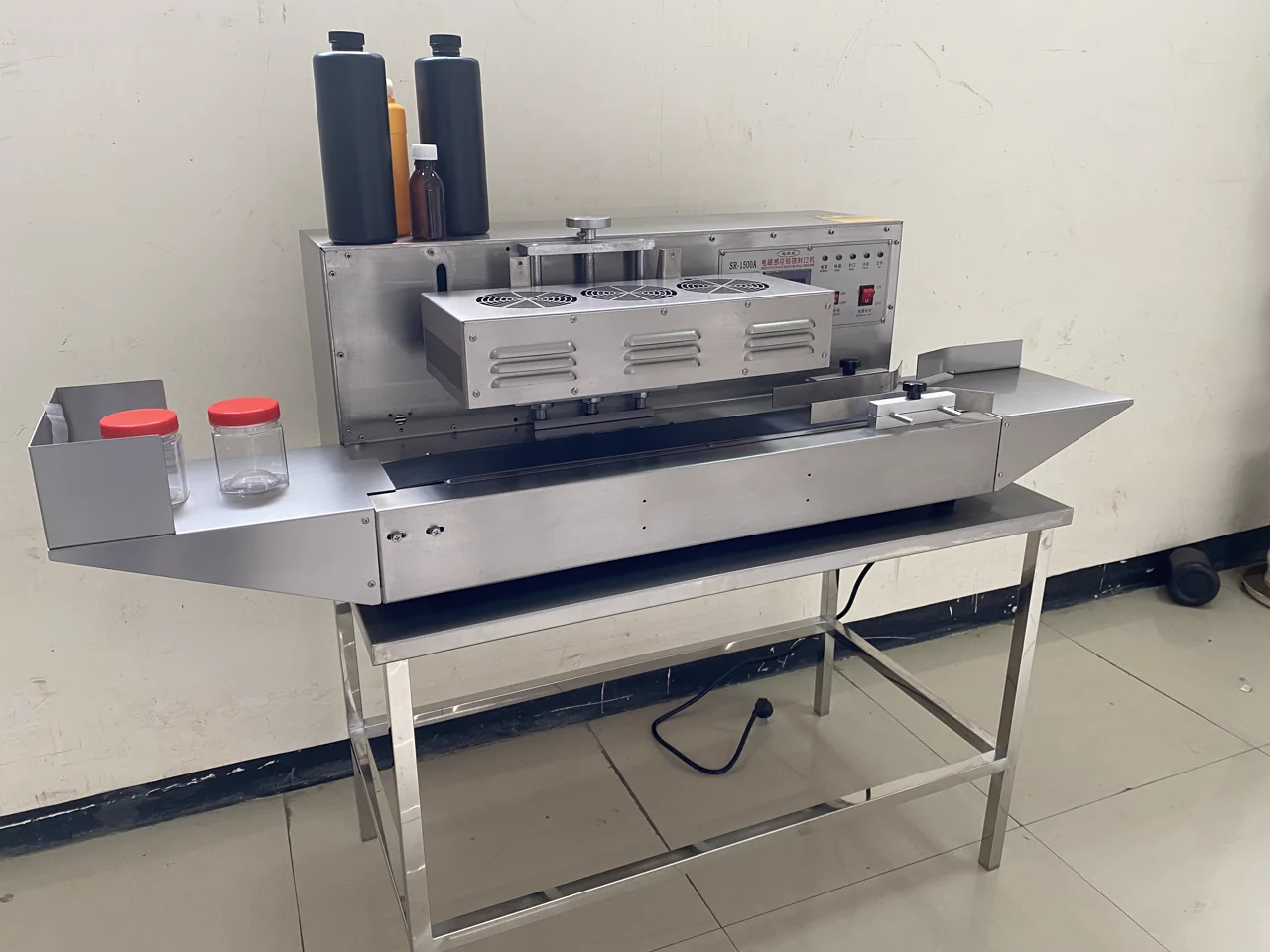 Benchtop Air-Cooled Induction Foil Sealer
Explosion-proof solvent filling; Filling nozzles, seals, and tubing materials should be checked against the MSDS, and equipment specifications must fall within the project-co...
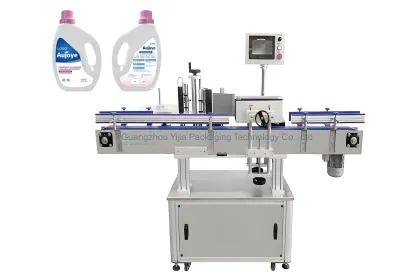 Round-Bottle and Front/Back Labelling Machine
Hazardous goods labels and batch numbers; Labeling equipment is also within the project safety boundary; label and character positions are confirmed using sealed real con...
Core process
First, the project safety responsible party should confirm the equipment suitability boundary based on the MSDS, flash point, volatility, corrosiveness, and on-site explosion-proof zoning.
After safety data and site conditions are confirmed, evaluate the process suitability of the explosion-proof solvent filling machine using the actual material, container, and fill volume.
After the lid type and bottle mouth are confirmed with actual samples, the automatic screw capping machine can be evaluated, and the capping station is included in the overall line explosion-proof and safety review.
Configure the round and square bottle labeling machine and date batch coding machine according to hazardous goods label content, bottle surface application, and traceability position.
After the project has established clear weight acceptance criteria and rejected product handling rules, the online checkweigher can be evaluated for verification before and after sealing.
Unify safety data, site conditions, and packaging tasks into one set of boundaries, then evaluate the station sequence for filling, capping, labeling, and checkweighing.
Sample details
This information is used by the project safety responsible party to determine explosion-proof and material boundaries, and is a prerequisite for equipment evaluation.
Provide MSDS, flash point, volatility, corrosiveness, concentration, and contact material requirementsSamples are used to verify the filling nozzle, container positioning, and screw capping action; material compatibility is still confirmed based on material data.
Submit bottle or pail, mouth size, lid, seals, and planned fill volumeSite conditions determine whether equipment specifications and stations can enter the corresponding area, and should be reviewed by a responsible professional party.
Provide explosion-proof zoning, ventilation, electrical, grounding, safety management, and available layout informationThis information is used to divide labeling, coding, and checkweighing tasks; do not treat downstream equipment as a fixed configuration.
Attach hazardous goods label, batch number location, weight acceptance criteria, and rejected product handling methodsEquipment sequence and line cycle time need to be evaluated together with safety zoning, material exposure control, and packaging actions.
Provide shift output, upstream and downstream processes, material flow direction, and on-site operator methodsCommon selection mistakes
Based on the MSDS and on-site zoning, the project safety responsible party should confirm equipment specifications and material suitability.
Create a complete station list and check equipment location, electrical conditions, drives, and operator actions item by item.
Have the project safety responsible party comprehensively confirm the process results together with the MSDS, equipment documentation, and site conditions.
First establish inspection standards, then verify the online checkweigher's environmental suitability, cycle time, and rejection method.
After jointly confirming label content, station position, and on-site zoning, evaluate the labeling and coding equipment.
View detailed technical notes
Starting alcohol solvent machine selection from the MSDS
Flash point, volatility, corrosiveness, and concentration define the material boundaries, and on-site explosion-proof zoning limits equipment conditions; you cannot select a machine based only on the product name.
On-Site Conditions and Material Data Jointly Define the Equipment
Explosion-proof zoning, ventilation, electrical, and operation methods should be confirmed by the project safety responsible party, then compared item by item with the MSDS and equipment documentation.
Explosion-Proof Solvent Filling Machines Require Item-by-Item Adaptation
After the safety boundary is defined, evaluate the contact materials and filling process results of the explosion-proof solvent filling machine using the actual materials, fill volumes, and containers.
The Capping Station Is Not Outside the Safety Scope
The drive, electrical components, and container clamping of the automatic screw capping machine are also in the production environment; cap sample testing and on-site safety review must be completed separately.
Labeling and Coding Are Also Included in Hazardous Area Assessment
The labeling machine for round and square bottles and the date/batch inkjet coder cannot be assumed to be in a general area just because they are downstream; their location is determined by the overall design.
Samples Are Used for Process Verification, Not Explosion-Proof Conclusions
Trial filling with materials can observe contact, dripping, and packaging actions, but whether the equipment can enter a specific zone must still be reviewed based on data and on-site conditions.
Cap and Label Data Are Submitted Together with the Containers
Submit containers, caps, seals, labels, and character samples together to verify capping, labeling, and traceability positioning separately.
Checkweighing Must Have Judgment and Handling Actions
The online checkweigher only has a clear purpose after the weight range, reject product flow, and recording method are defined, and environmental suitability must also be verified.
Adding or Removing Stations Changes the Entire Line Boundary
When adding or removing stations, re-check the layout, zoning, electrical, ventilation, and operator procedures.
Equipment Solutions Cannot Replace Project Safety Responsibility
Final selection, installation, and operating conditions should be confirmed by the project responsible party based on the MSDS, on-site zoning, local requirements, and professional review results.
Common questions
Can you select an explosion-proof filling machine based only on the material name?
No. At minimum, you need the MSDS, flash point, volatility and corrosion information, as well as the on-site explosion-proof zoning. Equipment direction can only be evaluated after these conditions are confirmed.
What information should be prepared first for an alcohol solvent project?
Please provide the MSDS, actual material, container and lid samples, fill volume and cycle time, on-site zoning, ventilation and electrical conditions, and project safety requirements.
Can an explosion-proof solvent filling machine be used directly on site?
The equipment name cannot answer this question. The party responsible for project safety needs to verify the equipment specifications against the on-site zoning, material, and local requirements.
Why should an automatic screw capping machine also be included in the safety assessment?
Screw capping, electrical, drive, and conveying are all part of the entire line environment; you cannot check only the filling machine. Lid samples are used for process trials, and safety boundaries are confirmed separately.
Can labeling and coding be placed in a regular area?
The station position must be determined based on the on-site explosion-proof zoning and overall safety design; it cannot be judged solely because it is located after the filling section.
When should the online checkweigher be evaluated?
Evaluate the online checkweigher only after the project has defined weight acceptance criteria, rejected product handling, and confirmed the equipment environment suitability.