Solution topic
Irregular-Bottle Capping, Induction Sealing and Labelling: Solve Standing, Orientation and Gripping First
Validate standing, orientation and gripping for irregular bottles, configure cap sorting and tightening from the closure, induction sealing from the liner, and labelling and inspec
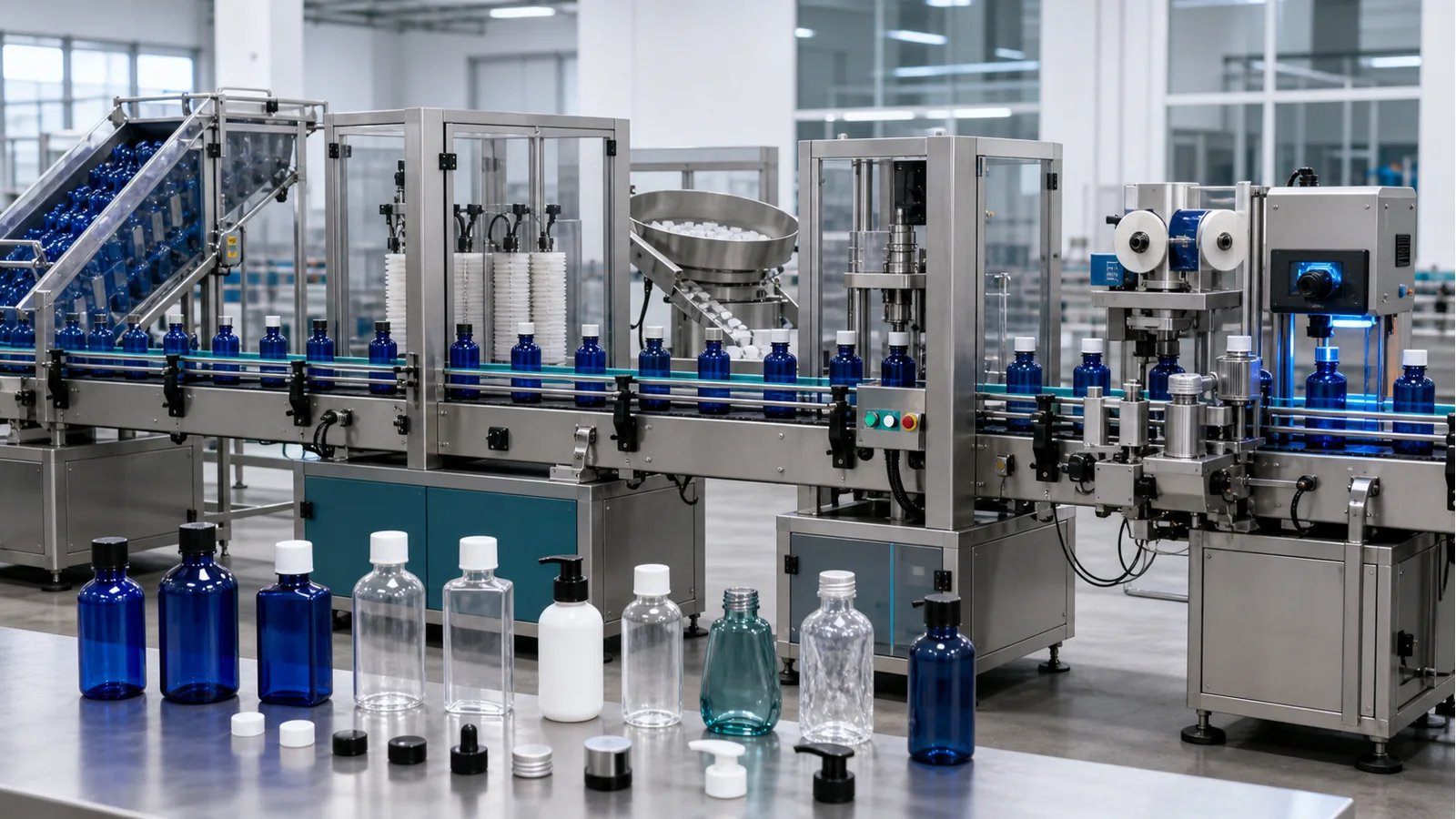
- Flat, square and asymmetric bottles use different datums. Stabilise conveying, then cap by closure, induction-seal by liner and label by the available panel.
Solution summary prepared for you
- For special-shaped bottle packaging, first solve standing, orientation, and bottle mouth cleaning, then use cap unscrambling and placement system and automatic screw capping machine for verified cap types.
- For direct film on the bottle mouth, choose an in-line heat sealing machine for bottles. After the cap liner is compressed by screw capping, choose an in-line induction aluminum foil sealing machine.
- If the bottle body has a stable flat surface, evaluate a labeling machine. For complex curved surfaces, compare a shrink sleeve labeling and shrinking machine. After the labeling solution is determined, arrange cap tilted/missing cap ins...
Route comparison
- Suitable for special-shaped bottles that can be stably oriented, have a cleanable and flat bottle mouth, and use direct film heat sealing.
- Cleaning the bottle mouth and stabilizing orientation first provides a consistent incoming state for bare mouth film placement, cap placement, and subsequent gripping.
- Cleaning method and foreign matter collection are confirmed according to product requirements; direct heat sealing also requires a flat rim and compatible film material.
- If the bottle mouth must be compressed by a threaded cap with liner, or the container is not suitable for direct film, switch to the screw capping and induction route.
- Use a bottle mouth cleaning and blowing module to treat specified areas. For bare mouth direct film, configure an in-line heat sealing machine for bottles.
- Suitable for special-shaped plastic or glass bottles with matching aluminum foil liners inside caps, caps that can be tightened stably, and requiring induction inner sealing.
- The cap unscrambling and placement system feeds caps in the correct orientation, the automatic screw capping machine compresses the matching liner, and then induction inner sealing can be performed continuously.
- Cap type, threads, liner, tightening state, container material, and conveying height must all be verified; do not treat the induction station as a capping device.
- If caps cannot be automatically oriented, liners cannot maintain continuous contact with the bottle mouth, or bottles cannot pass stably, first solve the cap and bottle packaging material issues.
- Configure in sequence: cap unscrambling and placement system, automatic screw capping machine, and in-line induction aluminum foil sealing machine, with guides and gripping set for special-shaped bottles.
- Suitable for downstream stages where screw capping and primary sealing are stable, and labeling on special-shaped curved surfaces and inspection of tilted or missing caps are needed.
- Labeling or shrink sleeve completes display information; cap tilted/missing cap inspection machine can screen for specified cap presence and orientation abnormalities downstream.
- Labeling reference, shrink sleeve shrinkage, camera field of view, and abnormal samples all need confirmation; inspection cannot prove capping torque or inner seal integrity.
- If bottle orientation is still unstable, or label artwork and cap good/bad samples are not yet determined, do not fix labeling and inspection stations prematurely.
- For stable flat surfaces, use a round/square bottle labeling machine. For complex curved surfaces, evaluate a shrink sleeve labeling and shrinking machine. Then configure a cap tilted/missing cap inspection machine.
Associated Equipment / Consumables
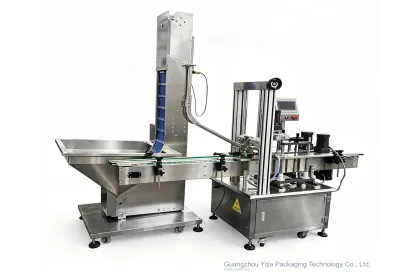 Automatic Screw Capping Machine
Direct heat sealing or screw capping branch; Heat sealing and screw capping are different paths; bottle mouth material, film, cap type, and upstream incoming state cannot be mixed; In-...
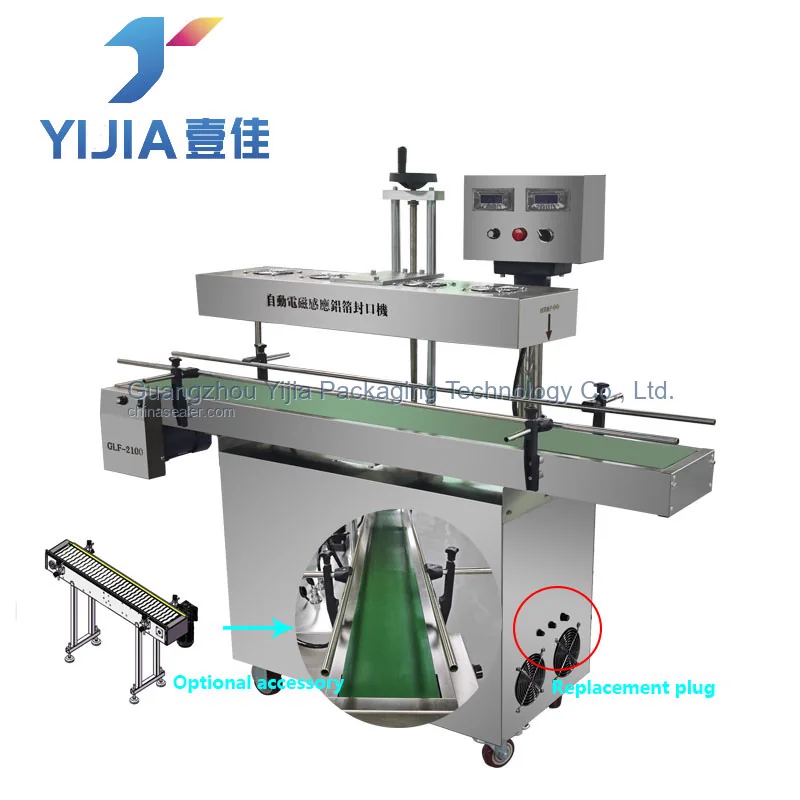 Inline Induction Foil Sealer
Direct heat sealing or screw capping branch; Heat sealing and screw capping are different paths; bottle mouth material, film, cap type, and upstream incoming state cannot be mixed; In-lin...
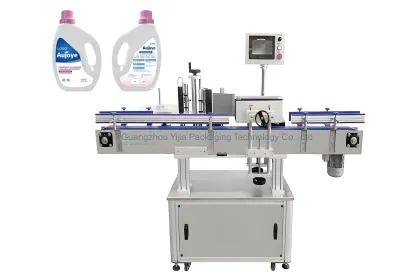 Round-Bottle and Front/Back Labelling Machine
Labeling and cap inspection; Labeling, shrink sleeve labeling, and cap inspection each require reference surfaces, trigger positions, and good/bad samples; they cannot be...
Core process
First make special-shaped bottles stand stably and orient by display face, then clean the bottle mouth. Caps enter downstream in the correct orientation through the unscrambling and placement system.
For bare, flat bottle mouths, evaluate in-line heat sealing when directly applying film. When threaded caps can be gripped stably, use an automatic screw capping machine for tightening.
When the cap contains a matching aluminum foil liner and is evenly compressed by the cap, finished bottles can enter the in-line induction aluminum foil sealing machine.
When there is a stable flat surface, evaluate a round/square bottle labeling machine. For curved or full-body decoration, compare a shrink sleeve labeling and shrinking machine, then inspect cap presence and tilt.
Provide bottles with actual contents, caps, liners, and labels to observe center of gravity, grippable areas, and bottle mouth contamination.
Mark the orientation reference of special-shaped bottles along the entire line, the gripping surfaces at each transfer, and the stop or divert actions after inspection abnormalities.
Sample details
Bottle center of gravity, bottom surface, and grippable areas determine conveying guides and orientation mechanisms; measurements must be taken in the liquid-filled state.
Actual special-shaped bottle samples, bottle mouth and body dimensions, filled liquid weight, bottom surface and display face photosCap type affects unscrambling direction, placement method, capping head, and liner compression state.
Actual cap samples, threads or other structures, tightening requirements, and cap linerDirect film heat sealing and induction after screw capping require different packaging materials and station sequences; the primary sealing structure should be clarified.
Close-up photos of bottle mouth, direct sealing film or aluminum foil liner, container material, and sealing acceptance methodLabels and shrink sleeves require actual artwork, materials, and bottle body reference; inspection also needs tilted cap and missing cap samples.
Labels or shrink sleeve film, application position, display direction, and representative good and bad samplesBottle pitch, changeover frequency, and on-site turns affect orientation retention and station connection.
Shift output, number of cap specifications, layout drawing, infeed/outfeed direction, and abnormal handling requirementsCommon selection mistakes
Empty special-shaped bottles may stand easily, but after filling, the center of gravity changes, exposing tipping, turning, and gripping instability.
Residual liquid or foreign matter on the bottle mouth can affect direct heat sealing film and get trapped between the liner and bottle mouth. Adding energy downstream cannot remedy contamination.
Threaded caps, pumps, or other special caps have different feeding orientations and gripping points. Changing the capping head does not automatically solve unscrambling and placement.
Induction sealing requires continuous contact between the cap liner and bottle mouth. Although special-shaped bottles do not directly touch the induction head, they must pass through stably at the correct height.
Complex curved surfaces may cause self-adhesive labels to bridge or wrinkle. Shrink sleeve labeling also involves film positioning and shrinkage conditions; the two are not simple substitutes.
View detailed technical notes
Solve mechanical positioning first for special-shaped bottles
The bottle mouth process for special-shaped bottles may be the same as for regular bottles; the real difficulty is often bottle standing, display face orientation, and gripping between stations. Once liquid-filled bottles run stably, screw capping, sealing, and labeling have a common baseline.
Bottle Mouth Structure Determines Heat Sealing or Induction Sealing
After cleaning the bottle mouth, direct film placement on the bare mouth can use heat sealing. For threaded caps with aluminum foil liners, first unscramble and place caps, tighten them, then perform induction inner sealing. The two paths require different packaging materials and upstream states.
Both Cleaning and Capping Require Stable Posture
The bottle mouth cleaning and blowing module and the cap feeding and placing system handle cleaning and cap orientation separately. For special-shaped bottles, orientation should be verified with liquid-filled bottles so that the bottle body still maintains the specified orientation when it reaches the capping position.
The Two Types of Aluminum Foil Inner Seals Must Not Be Mixed
An inline heat sealing machine is used for flat bottle mouths that can be directly film-sealed. If a cap liner is used, an automatic screw capping machine first tightens the cap, and then an inline induction foil sealing machine handles the inner seal.
Labeling or Sleeving Depends on the Bottle Body Curvature
A labeling machine for round and square bottles suits stable labeling surfaces verified by samples. A shrink sleeve labeling machine is used for another type of full-body sleeve identification. Both methods should be verified from the finished bottle orientation, curved surface, and layout.
Tilt Detection Does Not Replace Primary Seal Testing
A cap tilt and missing cap inspection machine can check for defined cap presence and posture abnormalities. Camera results cannot replace tightening status, torque, or aluminum foil seal acceptance; these items should be confirmed separately.
Whole-Line Sampling Focuses on Each Transfer Point
Bottles, caps, liners, labels, or sleeve films should be tested as a complete set, covering startup, shutdown, changeover, and abnormal products. Verifying only a single station does not prove that special-shaped bottles maintain orientation on the entire line.
Phased Construction Should Still Retain Orientation Reference
If only capping or sealing is implemented in the first phase, the bottle orientation reference and downstream space should still be reserved. When adding labeling, sleeving, or inspection, re-verify interfaces with current packaging samples.
Lock Down the Compatibility Range with Complete Samples
The final solution is based on samples of liquid-filled bottles running, caps placed and tightened, aluminum foil seals completed, and identification finished. Compatible bottle types, changeover parts, and abnormal handling should be written into the acceptance checklist.
Common questions
How to determine the equipment scope for a special-shaped bottle line?
The equipment scope depends on bottle orientation, cap type, inner sealing method, labeling solution, and inspection scope. It can only be determined after testing a complete set of samples.
Can individual machines be used first for small batches of special-shaped bottles?
You can start with individual machines and manual orientation, but even for small batches, you should use liquid-filled bottles to verify standing, gripping, screw capping, and labeling actions.
Can configuration be done without bottle samples?
Photos and dimensions can help determine the process branch initially. However, guides, capping heads, induction inner sealing, and labeling completion samples still require actual bottles, caps, films, and labels.
How to handle label wrinkling on special-shaped bottles?
First find repeatable locating surfaces and support areas on the bottle body, then adjust label shape, adhesive, and application action. For large curved surfaces, consider shrink sleeve labeling as an alternative.
Is induction sealing mandatory after screw capping?
Only configure induction sealing equipment when the cap contains a matching liner, the cap can be evenly tightened, and the project requires aluminum foil inner sealing. Acceptance is based on trial sealing results.
Are special-shaped bottles suitable for continuous line integration?
Yes, but before linking the line, confirm bottle orientation, guides, and buffering at each transfer point. If bottles are unstable standing, solve mechanical positioning first.