Solution topic
Tomato ketchup in bottles, pouches, and pails: the three packaging lines cannot be mixed
For tomato ketchup in bottles, pre-made pouches, and pails, select sauce filling, screw capping, or sealing and lid pressing equipment based on viscosity, particulates, and contain
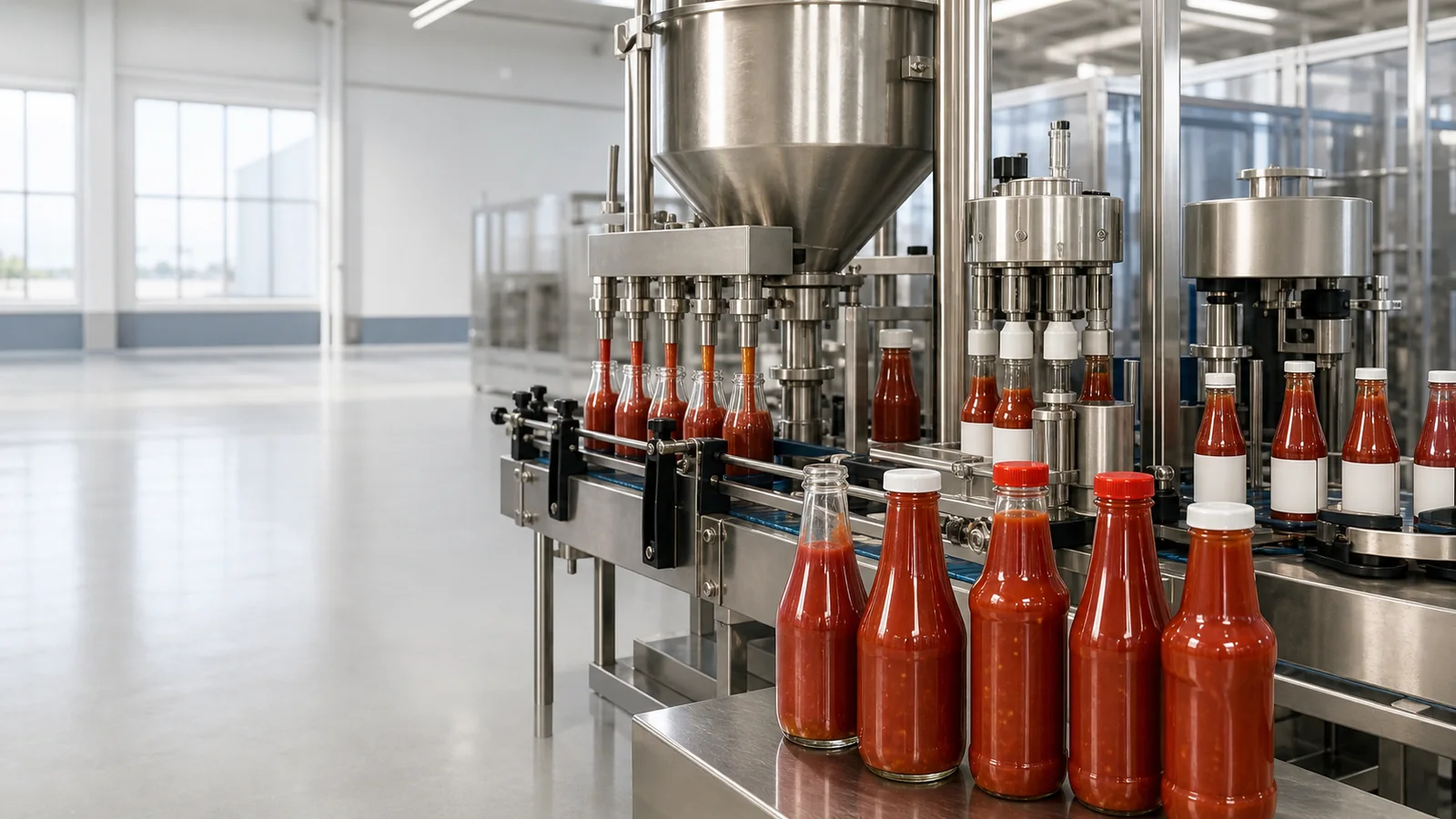
- For glass or PET bottles, the focus is on sauce filling and screw capping; pre-made pouches require matching bag feeding and sealing; large pails involve film sealing and lid pressing. Please provide ketchup viscosity and particulate conditions, packaging samples, fill volume range, temperature status, and target capacity.
Solution summary prepared for you
- First verify viscosity, particles, stringiness, and drip prevention at production temperature, then divide bottled, pre-made bag, and pail into three equipment routes.
- For bottles, the focus is on sauce filling, bottle mouth cleanliness, and screw capping. For bags, check bag opening, bag feeding, and bag mouth heat sealing. For pails, check film sealing and outer lid pressing.
- For pre-made bags, single-channel or three-station filling and sealing machines can be evaluated. For plastic pails with inner seal and lid pressing, the paper can/plastic pail aluminum foil sealing and lid pressing machine can be evalua...
Route comparison
- When production-state ketchup is provided, and viscosity, particles, temperature, fill volume, and packaging containers are specified, the piston filling machine for sauce can be evaluated.
- You can first independently verify feeding, metering, drip prevention, and particle passage, then bring the results into the bottle, bag, or pail branch respectively.
- Changes in material temperature and formulation will affect flow. A single cold-state sample cannot represent all production states.
- Without representative sauce or particle information, or when the packaging container is not yet determined, it is not appropriate to directly confirm the filling nozzle and station structure.
- The piston filling machine for sauce can be evaluated, and contact parts, filling nozzles, and auxiliary configurations are determined based on actual product and actual containers.
- When ketchup uses pre-made bags or spouted pouches, and the bag type, bag mouth, bag feeding method, and official film are specified, bag packaging equipment can be evaluated.
- Filling and bag mouth heat sealing can be continuously trialed around the same bag type, making it easy to observe drop position, material clamping, and sealing appearance.
- Bag stiffness, bag opening, and sauce contamination of the bag mouth affect operation. The positioning and sealing structures for bottles and pails cannot be reused.
- If the bag type is not finalized, or the actual product will significantly contaminate the heat sealing area without a corresponding solution, packaging trials should be completed first.
- The single-channel/three-station pre-made bag filling and sealing machine series can be evaluated. Specific stations are determined by bag samples and sauce trial filling.
- When ketchup is filled into plastic pails or food pails, using a separate aluminum foil inner seal and continuing to press the outer lid, the combined sealing and lid pressing process can be evaluated.
- Inner sealing and outer lid can be processed continuously in the same pail branch, and trial results should be recorded around the complete pail, film, and lid set.
- Pail mouth flatness, sauce contamination, film heat seal layer, and outer lid placement all need verification. Results from bottle screw capping cannot be substituted.
- If the packaging uses bottle screw caps, pre-made bags, or induction inner seals in pail lids, the evaluation should be changed to the corresponding branch.
- The paper can/plastic pail aluminum foil sealing and lid pressing machine can be evaluated, and complete testing should be completed with pails, films, lids, and actual product.
Associated Equipment / Consumables
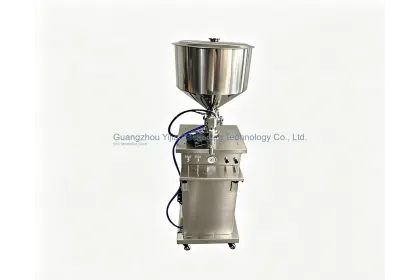 Piston Sauce Filling Machine
This machine meters sauces and pastes by piston stroke. Treat the actual product, container opening, dose, particles, temperature, stringing, drip control and cleaning as one trial set. Verify repeatability, particle...
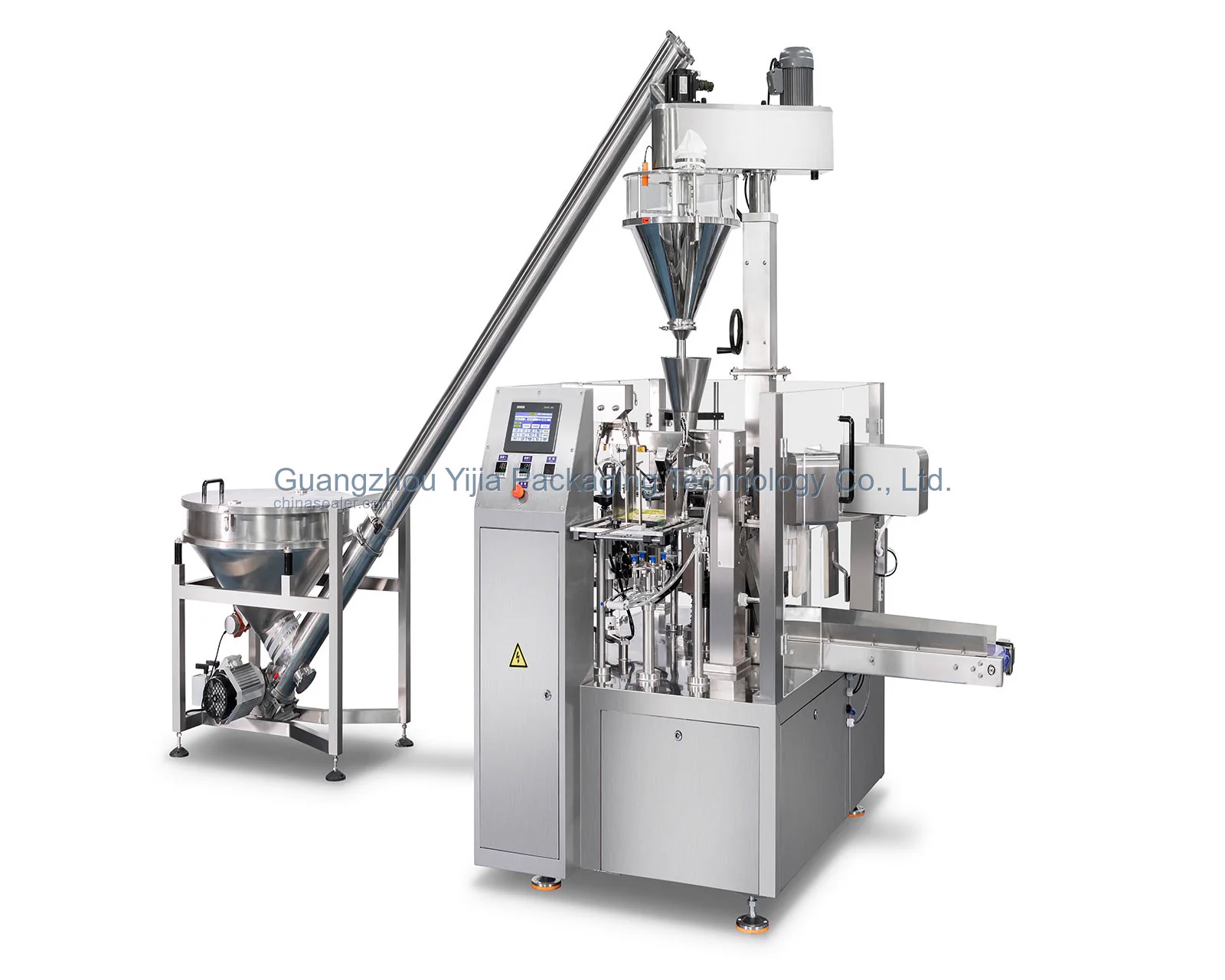 Single-Lane and Three-Station Premade Pouch Filling and Sealing Series
Pre-made bag filling and sealing branch; Observe whether the sauce contaminates the bag mouth, whether the bag body can be positioned stably, and...
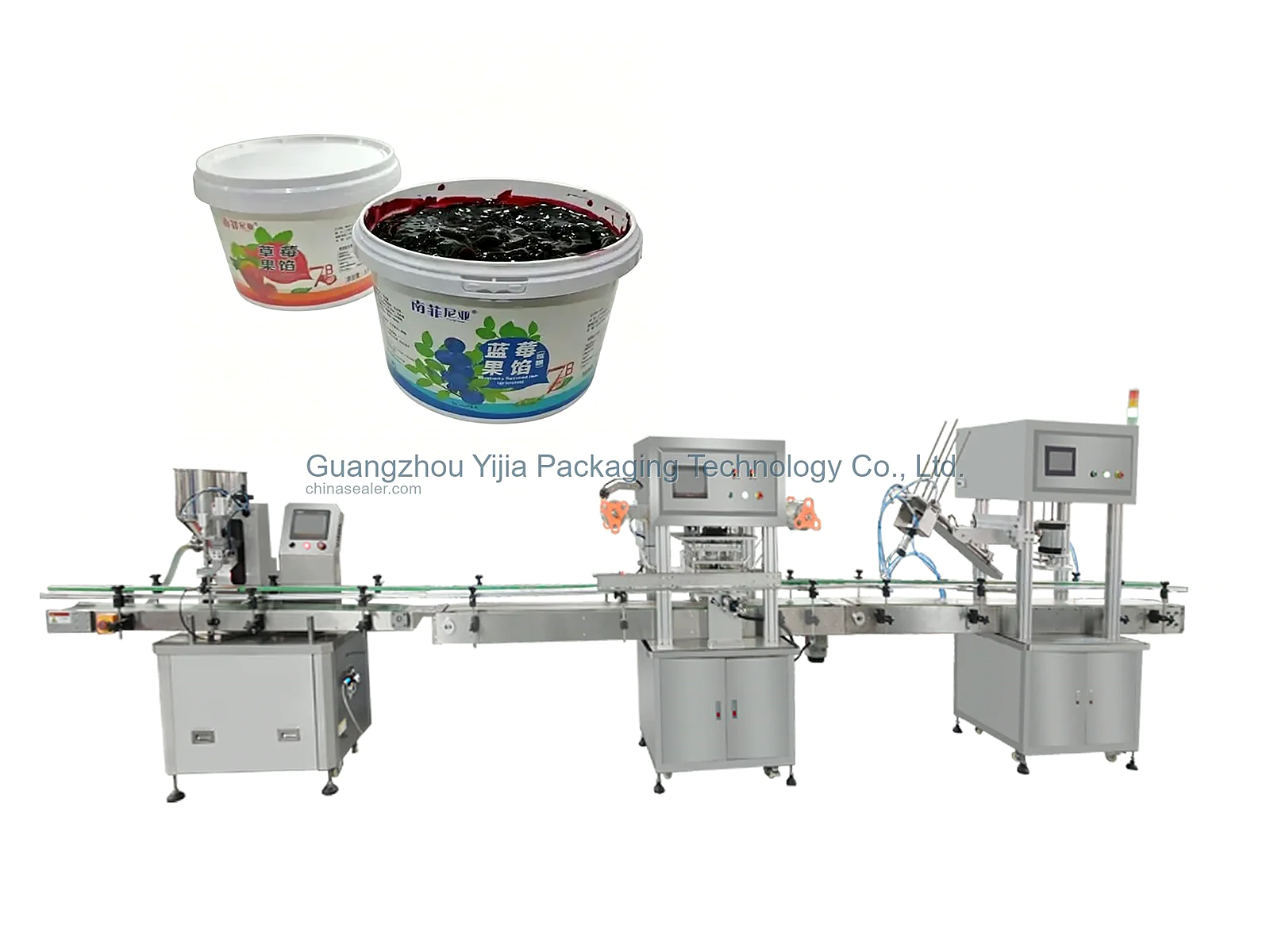 Paper Can and Plastic Pail Foil Heat Sealing and Capping Machine
Bottle screw capping and labeling; The bottle mouth must remain clean. For screw capping and labeling, record lid placement, bottle stability, label st...
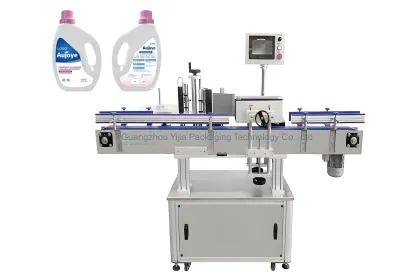 Round-Bottle and Front/Back Labelling Machine
Complete verification of sauce and three packaging types; List the fill volume, planned output, cleaning method, and downstream marking for each branch to avoid replacing...
Core process
First confirm viscosity, particles, stringiness, and temperature with production-state ketchup, then match bottles, pre-made bags, or large pails with lid and film materials. The three packaging types are separated from this point.
The piston filling machine for sauce can first verify feeding, metering, and finishing with actual product. Particle passage, drip prevention, and insulation needs are confirmed during trial filling.
For bagged products, evaluate single-channel or three-station pre-made bag filling and sealing machines based on bag type, bag mouth size, bag opening, and bag feeding method.
When plastic pails require an aluminum foil inner seal and continued pressing of the outer lid, the paper can/plastic pail aluminum foil sealing and lid pressing machine can be evaluated.
For glass or PET bottles, first verify the automatic screw capping machine with the actual cap type, then confirm positioning on the round or square bottle labeling machine with official labels.
After the main packaging process is stable, arrange coding, checkweighing, and conveying according to the actual takt of bottles, bags, or pails. Verify each of the three branches separately.
Sample details
This information is used to verify feeding, particle passage, and drip prevention, not just to judge whether the material can be delivered.
Prepare representative sauce, specifying viscosity, particles, filling temperature, stringiness, and cleaning requirements.The three packaging types use different positioning, feeding, and sealing mechanisms. The equipment scope should be listed separately.
Submit actual containers or bag samples with key dimensions, and indicate whether each packaging type will be produced in the same project.The complete packaging materials determine screw capping, bag mouth heat sealing, or pail mouth film sealing and lid pressing. A single sealing description cannot be shared.
For bottles, provide bottle caps; for bags, provide official bag materials; for pails, provide aluminum foil film and outer lids, and specify the assembly sequence.The takt times and changeovers of each branch are different. Quotations must be based on the actual production combination, not a single total capacity figure.
List the fill volume and output per hour or per shift for bottles, bags, and pails, as well as the stations to be linked.Only after the main packaging is stable is it suitable to confirm downstream integration. During the layout stage, reserve necessary positions first.
Provide available space, conveying direction, power and air supply, and cleaning conditions, and indicate whether labeling, coding, checkweighing, or metal detection is needed.Common selection mistakes
Record feeding, particle passage, metering, and finishing during trials. Evaluate insulation and drip prevention if necessary. Do not rely only on the material name.
For bottles, check screw capping; for bags, check bag feeding and heat sealing; for pails, check film sealing and lid pressing. Use official samples for each.
Conduct trials according to the actual assembly sequence, and record rim or bag mouth contamination, sealing appearance, and the agreed sealing inspection results.
After checking the filling, sealing, and downstream takt times separately, decide which stations need line integration and buffering.
The final configuration should be based on the main packaging trial takt time to avoid mismatches in height, triggering, or exception handling caused by adding equipment later.
View detailed technical notes
Conduct filling trials with production-state ketchup first
The viscosity, particulates, temperature, and stringiness of tomato ketchup affect feeding and finishing. Representative actual product is used to confirm the filling structure, drip prevention, and whether temperature-maintaining support is needed.
Separate bottles, pouches, and pails from the start of the solution
Glass or PET bottles focus on validating filling and screw capping. Pre-made pouches require handling bag opening, bag feeding, and heat sealing of the bag mouth. Large pails involve pail mouth film sealing and outer lid pressing.
For sauce piston filling, first check particulates and finishing
A piston filling machine for sauces can be used as a trial direction. Use actual containers to observe particulate passage, fill volume, stringiness, and rim contamination, then determine the filling nozzle and auxiliary configurations.
Independently validate the bag mouth on the pre-made pouch route
Single-lane or three-station pre-made pouch filling and sealing machines must be selected according to pouch type, bag opening, and bag feeding method. During trials, pay special attention to whether the sauce drop point contaminates the heat sealing area.
For pail inner sealing and lid pressing, use a complete set of pail film and lid
When plastic pails use a separate aluminum foil inner seal and continue with pressing the outer lid, evaluate the paper can/plastic pail aluminum foil sealing and lid pressing machine. Check the flatness and cleanliness of the pail mouth at the same time.
Coordinate bottle capping and labeling based on actual samples
First use bottle caps to confirm cap feeding and tightening on the automatic screw capping machine, then use formal labels to check positioning on the round/square bottle labeling machine. The continuous cycle of the two stations is determined by running actual bottle samples.
Do not infer filling configuration from the material name
Even for the same tomato ketchup, formulation, particulates, and temperature change the flow. Before selecting the filling structure, record actual material trials and keep the equipment range consistent with the actual trial filling results.
Each packaging type has its own closing process
For bottles, the cap type determines screw capping; for pouches, the pouch material determines heat sealing; for pails, the pail film and lid determine film sealing and lid pressing. Samples and acceptance records should also be saved by branch.
Connect downstream marking after the main packaging is stable
Reserve space for labeling, inkjet coding, checkweighing, or metal detection for each branch first; the final conveying and triggering relationships are confirmed after continuous trial running of the main process.
Common questions
Can bottled, bagged, and pail packaging share one ketchup packaging line?
It cannot be configured as a single line. The positioning, feeding, and sealing methods for the three packaging types are different. You should first select the branch, then evaluate which upstream and downstream sections can be shared.
Why is it necessary to provide actual product samples for ketchup filling?
Actual viscosity, particles, temperature, and stringiness determine the feeding, filling nozzle, and drip prevention. Text descriptions can only be used for preliminary judgment.
What should be checked for the pre-made bag route?
Focus on checking the bag type, bag opening and feeding, sauce drop position, bag mouth cleanliness, and heat sealing with the official film material. The screw capping structure for bottles is not applicable to bags.
When is film sealing and lid pressing used for pail ketchup?
When plastic pails or food pails use a separate aluminum foil inner seal and then press on an outer lid, the paper can/plastic pail aluminum foil sealing and lid pressing machine can be evaluated.
What output should be specified separately when submitting requirements?
Provide the fill volume, planned output, and changeover arrangements for bottles, bags, and pails separately, and indicate which stations need continuous line integration.
How to verify the sealing or screw capping effect?
Use production-state sauce and official packaging materials for continuous trials. Check the cleanliness of the container mouth, the appearance of sealing or capping, and record the sealing results according to the agreed method.