Solution topic
How to Select a Yogurt Cup Filling and Sealing Line
Compare automatic yogurt cup filling and sealing, small-batch benchtop sealing, and continuous cup-box tray routes, explaining the selection conditions for yogurt state, cup type,
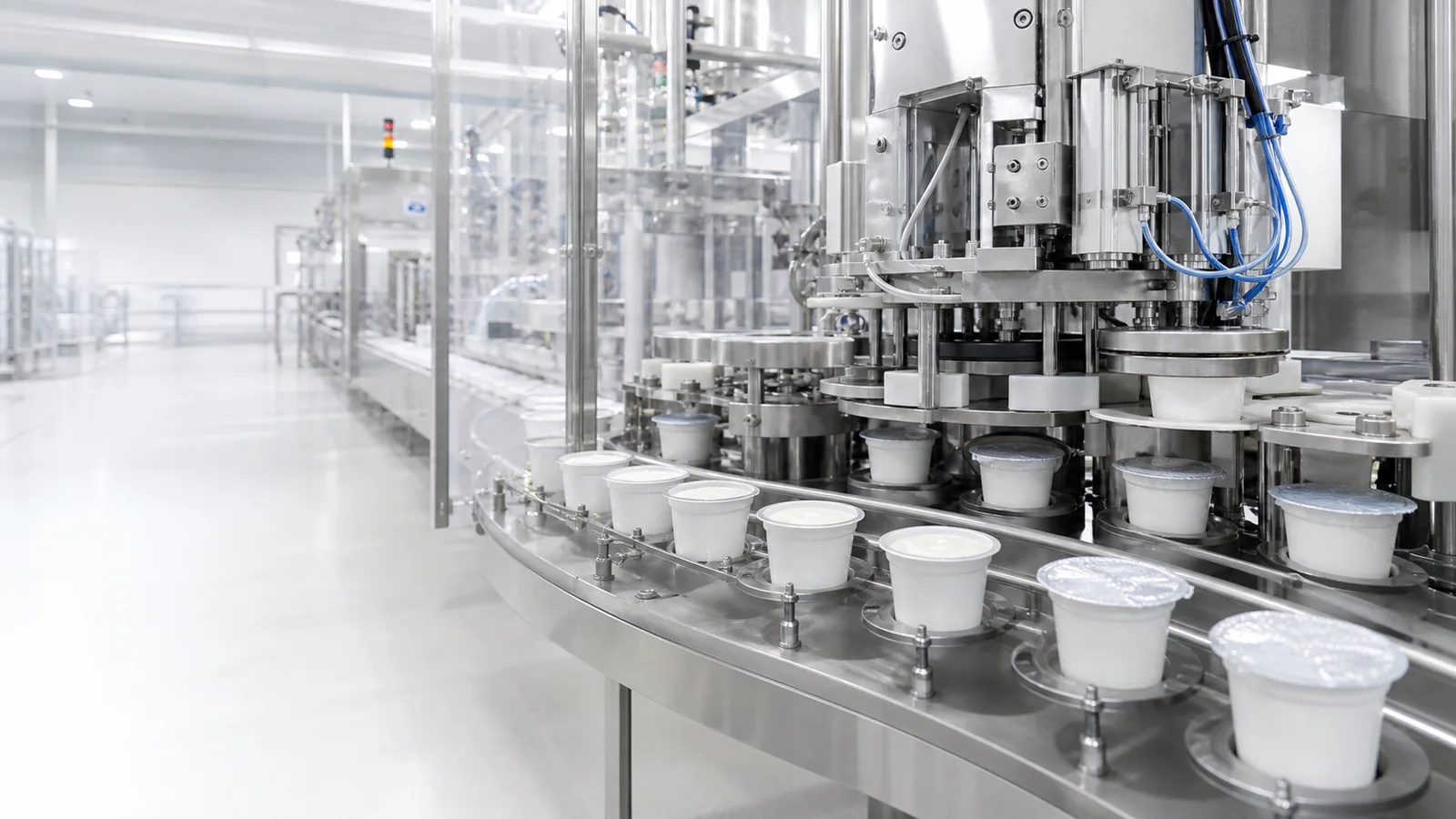
- Use yogurt condition, cup-lid samples, hygienic cleaning, leak criteria and downstream cold-chain packing to define the line.
Solution summary prepared for you
- For yogurt cups, first use a small-diameter cup sealing machine and production film to establish heat-seal samples; the benchtop route is suitable for small batches and multi-specification verification.
- After cup type and yogurt feeding are stabilized, the small-cup filling and sealing machine forms the main process of cup denesting, filling, film sealing, and discharge.
- When continuous orders and cup arrival direction are clear, evaluate the chain conveyor cup-tray continuous sealing line and clarify whether filling is included.
Route comparison
- Suitable for small-batch trial production, multiple cup types, or yogurt projects still confirming cup-film heat-seal and easy-peel conditions.
- Benchtop manual cup and film placement facilitates observation of cup rim, film layers, and easy-peel performance, and is also suitable for item-by-item testing of multiple specifications.
- Does not perform automatic yogurt filling, and the discharge and cycle time of manual cycles do not represent a continuous main machine.
- When the cup type, yogurt feeding, and orders are stabilized and continuous cup denesting and filling are needed, evaluate the integrated main machine.
- Use the small-diameter cup sealing machine SGP-03 and small-cup sealing film and easy-peel film consumables, and configure the mold according to the cup sample.
- Suitable for projects with stable cup type and formula that require continuous cup denesting, filling, cup-film main sealing, and discharge.
- The small-cup filling and sealing machine organizes cup denesting, yogurt filling, cup-film main sealing, and discharge into one continuous cycle.
- Cup type, material, filling nozzle, film, and cleaning all need verification; independent filling equipment must not duplicate dosing with the main machine.
- When yogurt feeding, cup rim cleanliness, or film finished samples are not yet repeatable, perform segmented tests first.
- Use a small-cup filling and sealing machine; when yogurt feeding is adapted through sample testing, evaluate the independent interface of a liquid filling machine.
- Suitable for projects with stable cup types, orders, and incoming cup direction, requiring continuous cup-box stations and handoffs with upstream and downstream sections.
- A chain conveyor continuous line can organize cup-tray feeding, sealing stations, and finished product collection in a unified direction, facilitating expansion of continuous production.
- Cup feeding direction, molds, film roll, manual supply, and abnormal recovery must all be tested; optional filling also requires verification with actual product.
- When orders are discontinuous, cup types change frequently, or incoming cup orientation is not yet fixed, first retain benchtop or integrated main machine verification.
- Evaluate chain conveyor cup-box/tray continuous sealing lines (optional filling) and clarify in the proposal whether a filling station is configured.
Associated Equipment / Consumables
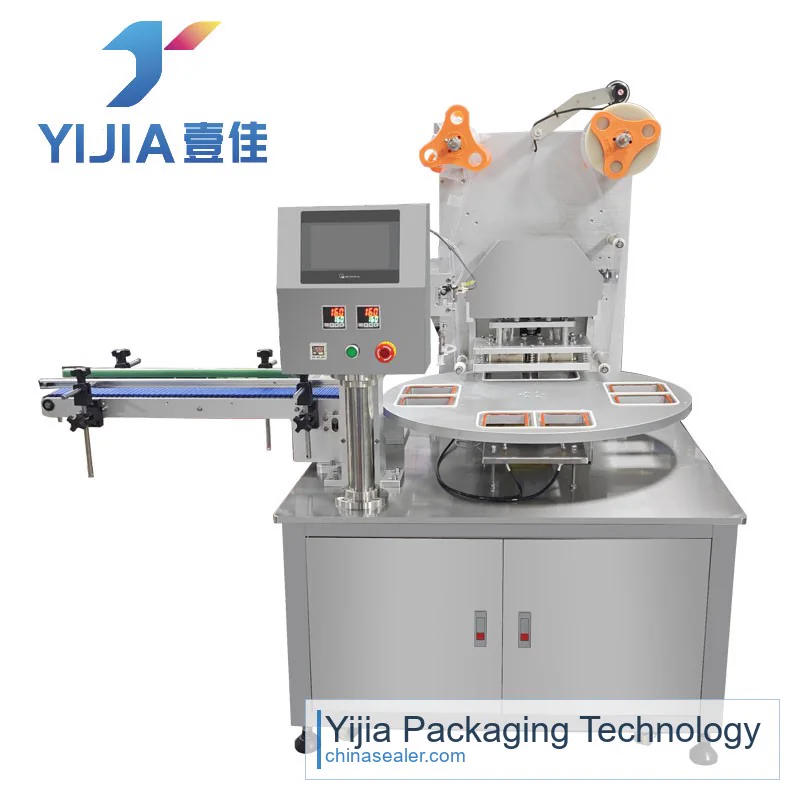 Automatic Small-Cup Filling and Sealing Machine
The machine denests cups, doses product, registers and heat-seals film, trims and discharges. Confirm cup stacking and rim, viscosity, particles, foaming or stringing, rollstock or pre-cut lids, peel and leak criteria...
 Coffee Capsule Filling and Sealing Machine
Establish cup-film material baseline; Photos can indicate the cup type, but mold contact, feeding, and cup rim contamination still require joint testing with actual cups, fi...
 Piston Sauce Filling Machine
Establish cup-film material baseline; Photos can indicate the cup type, but mold contact, feeding, and cup rim contamination still require joint testing with actual cups, film, and produc...
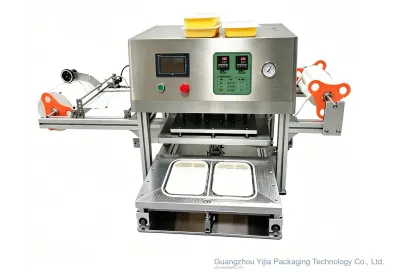 Tabletop Multi-Compartment Meal Tray Sealer
Integrated filling and sealing main machine; Use real yogurt to cover startup, continuous feeding, and stoppage, and record fill volume, dripping, cup rim residue, and film...
Core process
First use real cups, film, and yogurt to observe cup rim tolerance, heat-seal layer, material flow, fruit particles, bubbles, and dripping.
In the small-batch or multi-specification stage, use the small-diameter cup sealing machine SGP-03 for manual cup and film placement to first establish heat-seal and easy-peel finished samples.
After yogurt feeding and cup type are stabilized, the small-cup filling and sealing machine organizes cup denesting, filling, cup-film main sealing, and discharge in the same cycle.
A liquid filling machine can be used for feeding or independent filling tests adapted to the flow state, but it must not perform duplicate dosing on the same cup as the main machine.
After orders and cup arrival direction are stabilized, evaluate the chain conveyor cup/tray continuous sealing line and clarify whether a filling station is included.
Coffee capsules, meal trays, and modified atmosphere trays correspond to different containers and processes; do not substitute them for yogurt cup main machines just because they look similar.
Sample details
Cup rim dimensions, tolerances, wall thickness, and center of gravity when full change mold positioning, guides, and discharge.
Multiple production yogurt cups, diameter, cup height, material, tolerances, and filled stateFilm layers, roll direction, and easy-peel determine heat sealing and opening; printed film also needs registration direction verification.
Production cup film, material structure, thickness, roll direction, printing registration, and easy-peel requirementsYogurt flow, fruit particles, and bubbles change feeding, filling nozzle, material cutoff, and cup rim cleanliness.
Production yogurt, temperature, viscosity, fruit particle size, bubble state, fill volume, and cleaning requirementsThe incoming material state from the process determines whether the main machine only fills and seals or also needs independent feeding and upstream handover.
Upstream yogurt process, feeding method, existing filling, cleaning, and stoppage handlingOrder and specification changes involve changeover organization for manual benchtop, integrated main machine, or continuous line.
Main cup type, shift orders, number of specifications, changeover frequency, and labor configurationContinuous lines require unified cup arrival direction, equipment interfaces, and finished product collection, while retaining space for cleaning and abnormal operations.
Workshop layout, electrical and air supply, material inlet/outlet direction, cleaning access, and finished product collection methodCommon selection mistakes
Cups with similar outer diameters may have different rim widths, curvatures, and warpage; designing the mold from photos alone can miss tolerances.
The size and distribution of fruit particles change the filling nozzle passage, and bubbles and stringing can carry yogurt onto the cup rim.
Milk residue on the cup rim separates the heat-seal layers; increasing heat cannot eliminate filling drop point and material cutoff problems.
Benchtop manual film sealing, small-cup filling-sealing integrated machines, and chain conveyor continuous lines have different material handling actions; you cannot compare only the sealing moment.
Coffee capsule cups are designed around specific dimensions, cup feeding, powder, and film materials; a small appearance does not mean it can handle yogurt cups.
View detailed technical notes
First Clarify the Roles of the Three Main Machine Types
Yogurt cup equipment has three starting points: benchtop machines only verify cups and film, small-cup integrated machines both fill and seal, and chain conveyor continuous lines organize stable cup feeding and station handoffs.
Conduct Joint Trials with Actual Product and Cup Film
Yogurt flow, fruit pieces, air bubbles, and temperature determine the supply and cut-off of the product. The cup rim and film layers determine heat sealing, so the product and packaging materials should be verified together in the same trial.
Benchtop Route Only for Cup Film Verification
Small-diameter cup sealing machines are suitable for manual cup and film placement, first establishing heat sealing and easy-peel finished samples. They do not include automatic yogurt filling; during commissioning, use pre-filled cups with the target fill volume, and observe rim residue, mold support, and cup removal action.
Integrated Main Machine Handles Filling and Main Sealing
Small-cup filling and sealing machines connect cup denesting, volumetric filling, main cup film sealing, and cup discharge. Commissioning covers startup, stopping, dripping, and cup rim contamination; when changing over, recheck the filling nozzles, molds, and film roll direction.
Clarify Interfaces for Independent Filling
Liquid filling machines are only used as an independent supply or filling direction when the yogurt flow state is suitable; they must not duplicate dosing on the same cup as the integrated main machine. Both configurations must clearly define the product inlet interface and cleaning boundaries.
Clarify Whether the Continuous Line Includes Filling
Chain conveyor continuous cup, bowl, and tray sealing lines are suitable for upgrades after cup feeding direction and orders are stable. Optional filling must be clearly stated in the equipment scope and acceptance.
Exclude Coffee Capsule Specialized Machines
Coffee capsule filling and sealing machines are designed around special capsule cups and powder materials, and are not used for general changeover of yogurt cups. Similar appearance cannot replace actual container samples.
Changeover Package Connects Cup Film and Product
For each yogurt cup specification, save cup samples, film materials, product, molds, filling nozzles, and finished samples. When changing cups or recipes, re-verify from the affected stations.
Common questions
Can we discuss the direction first without a full set of samples?
Photos and dimensions can give an initial idea of the cup type, but the mold, feeding, and film sealing still require actual samples of the yogurt cup, film, and production materials.
What information should be submitted to prepare a main machine proposal?
You need to provide the cup and film, yogurt condition, target fill volume, order and changeover details, labor arrangement, cleaning, and on-site interfaces.
How should the degree of automation of the equipment be selected?
The choice of benchtop, integrated, or continuous line should be based on cup denesting, actual product filling, main sealing, manual replenishment, changeover, and full-cycle testing.
Why should cup samples and film samples be tested together?
The heat-seal layers of the cup material and film together determine the sealing conditions; roll direction, easy-peel, and cup rim tolerance also need to be tested with samples before the mold is finalized.
How should the main seal of yogurt cups be accepted?
Choose peel, leak, or other tests according to the product packaging requirements, and record samples of cup rim contamination, film sealing, and restart after stoppage.
When should a continuous cup-tray line be considered?
When the cup type, feeding, film material, and orders form a repeated cycle, evaluate the chain conveyor continuous line based on cup arrival direction and manual responsibilities.