Solution topic
Freeze-Dried Fruit Can Line: Separate Metal Seaming from Composite-Can Inner Sealing
Separate metal-can seaming from composite-can inner sealing, then configure filling, crumb control, optional nitrogen or evacuation, oxygen/leak checks, lidding, labelling and tria
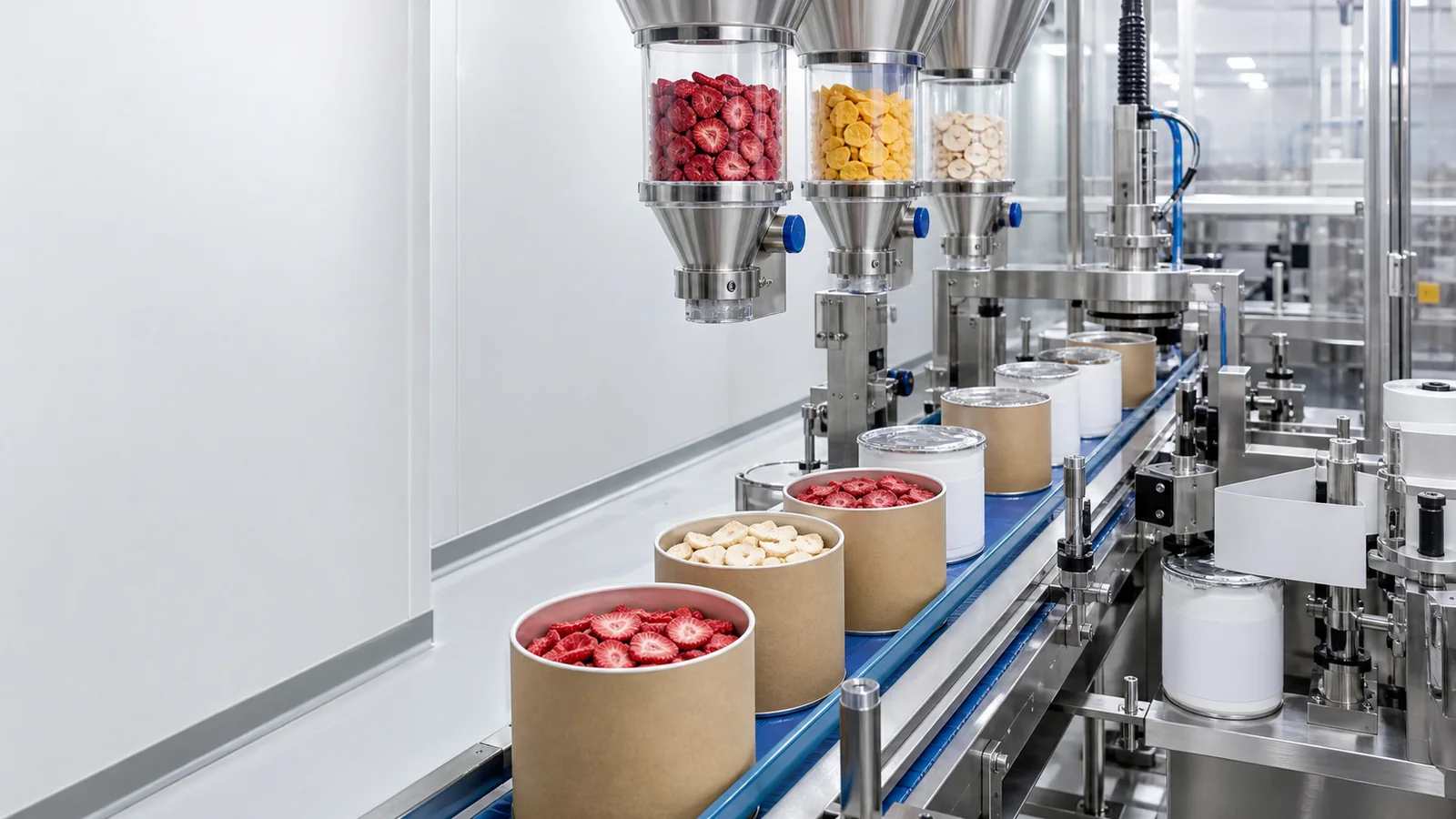
- Choose the primary closure from the can and lid first, then define nitrogen or evacuation, residual oxygen, leak and shelf-life validation as separate process requirements.
Solution summary prepared for you
- Metal cans for freeze-dried fruit and their lids are double seamed using an online automatic can seamer; paper or plastic cans that are directly sealed with film and pressed with an outer lid use a paper/plastic pail aluminum foil film s...
- For smaller bottles/cans with direct film lidding, an online heat sealing machine for bottles can be evaluated. Only when screw caps have matching aluminum foil gaskets should an online induction foil sealing machine be selected.
- Nitrogen filling is not an automatic conclusion attached to a particular sealing machine; the gas position, control, and acceptance method need to be confirmed separately from the main sealing route.
Route comparison
- Suitable for packaging where paper or plastic cans have a film directly heat sealed on the bare rim and then a plastic outer lid is pressed.
- A paper/plastic pail aluminum foil film sealing and capping machine can handle direct film sealing and outer lid pressing, making it convenient to use complete can-film-lid samples.
- The can mouth contact layer, film material, outer lid structure, and freeze-dried debris residue must all be checked; reconfirm tooling when changing can type.
- When metal cans use double seam lids, or screw caps already have aluminum foil gaskets, the corresponding double seaming or induction route should be used instead.
- Paper-plastic cans use a paper/plastic pail aluminum foil film sealing and capping machine; the nitrogen filling interface is verified separately according to the gas task.
- Suitable for packaging where freeze-dried fruit is filled into metal cans and sealed with a matching metal lid by double seaming.
- An online automatic can seamer is for double seaming metal can lids and can be integrated with filling and conveying stations after can-lid assembly samples are tested.
- The can body, lid, seaming rolls, and can support must match each other; the nitrogen filling position and double seaming process still need separate design and inspection.
- Paper cans, plastic cans, or small bottles/cans with direct film lidding do not use the metal double seaming process.
- Metal cans use an online automatic can seamer; double seaming and gas displacement are debugged separately based on sample cans and acceptance methods.
- Suitable for two alternative packaging types: smaller bottles and cans directly covered with film, or screw caps already containing matching aluminum foil gaskets.
- The two types of equipment correspond to exposed rim film and lid inner gasket respectively, allowing a clearer process boundary based on the actual packaging structure.
- Direct heat sealing requires checking the rim film material; induction inner sealing also requires checking screw cap tightness, container material, and gasket contact layer.
- When the film position and lid type are not yet clear, do not choose between heat sealing and induction equipment based solely on container mouth diameter.
- For direct film covering, use the online heat sealing machine for bottles; for lid inner gaskets, use the online induction foil sealing machine, and verify the leak-proof component combination.
Associated Equipment / Consumables
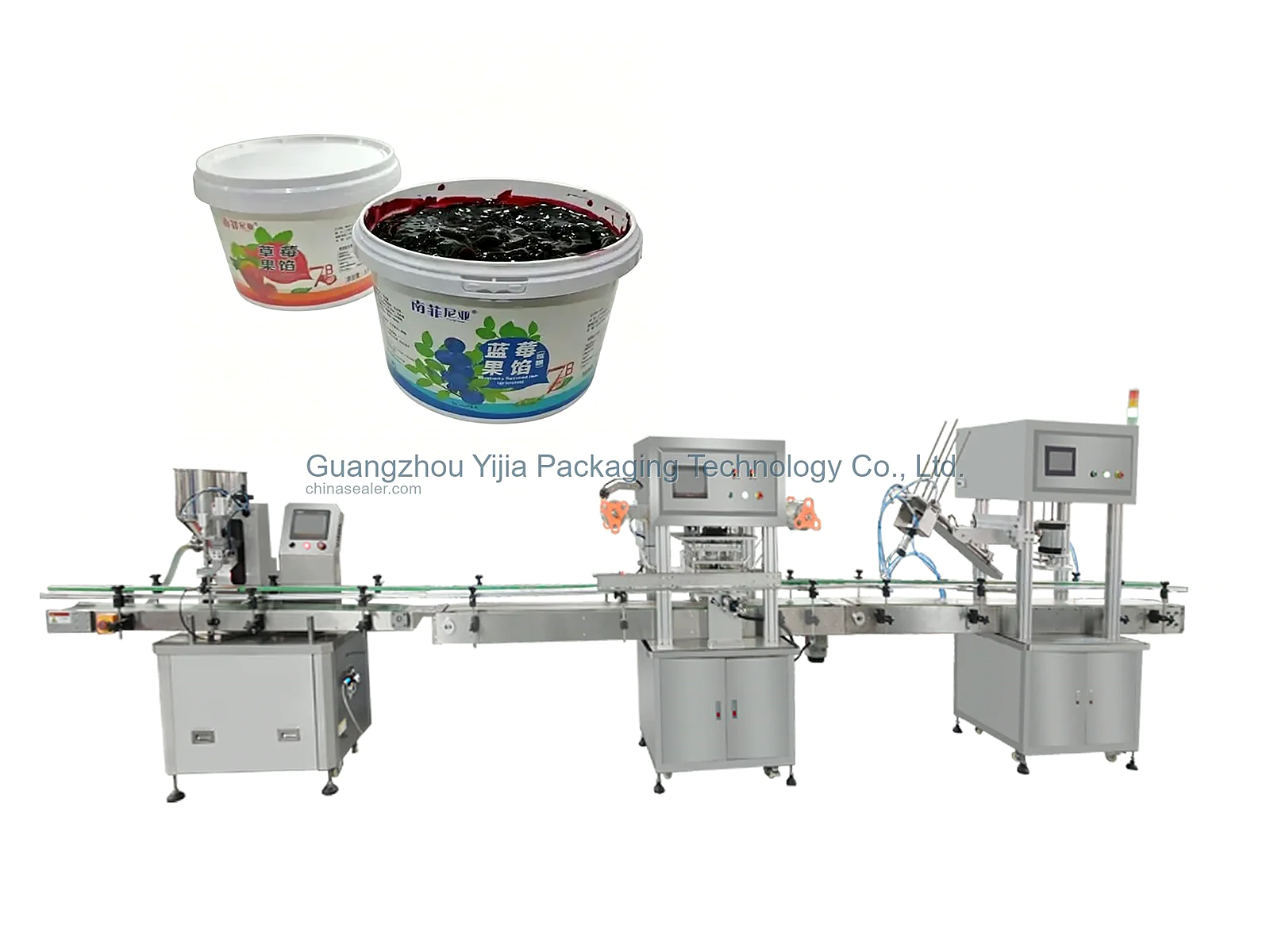 Paper Can and Plastic Pail Foil Heat Sealing and Capping Machine
The machine places foil directly on a paper can, plastic can or pail rim, heat-seals it, then presses the required closure. This differs from induction sealing a foil liner inside a tightened cap. Trial the container,...
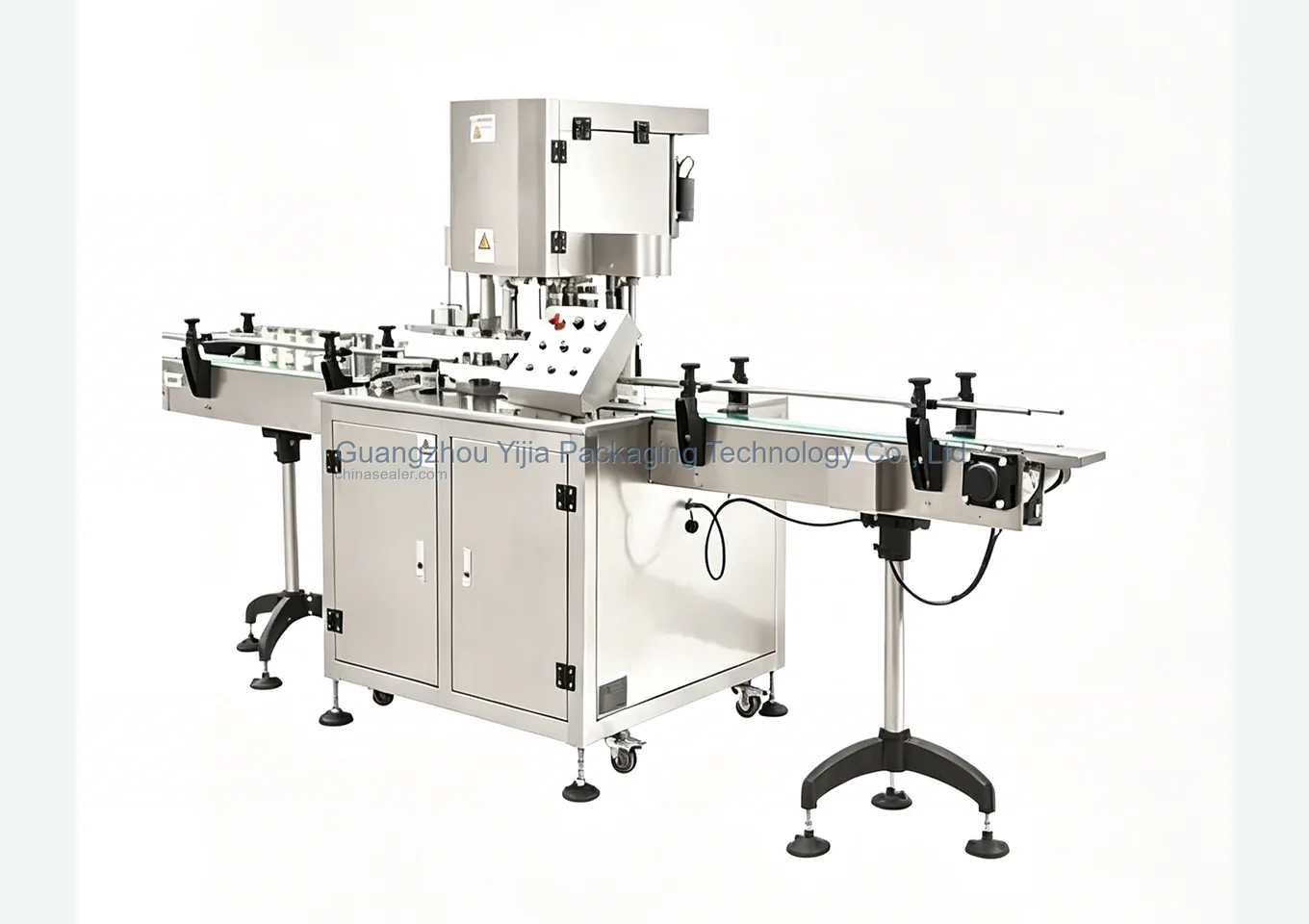 Inline Automatic Can Seaming Machine
Main sealing for the can body; The two processes cannot be merged due to similar container appearance; can body, inner seal components, and outer lid should be tested and retained...
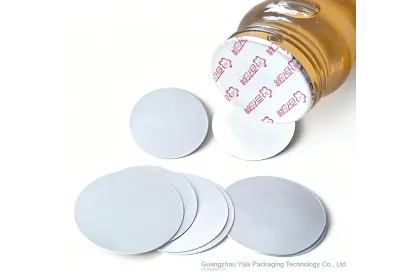 Leak-proof Bottle Cap, Inner Plug and Gasket Set
Group freeze-dried fruit and can lid film; For freeze-dried products such as strawberry, mango, or blueberry, use actual filled sample cans to check whether debris ent...
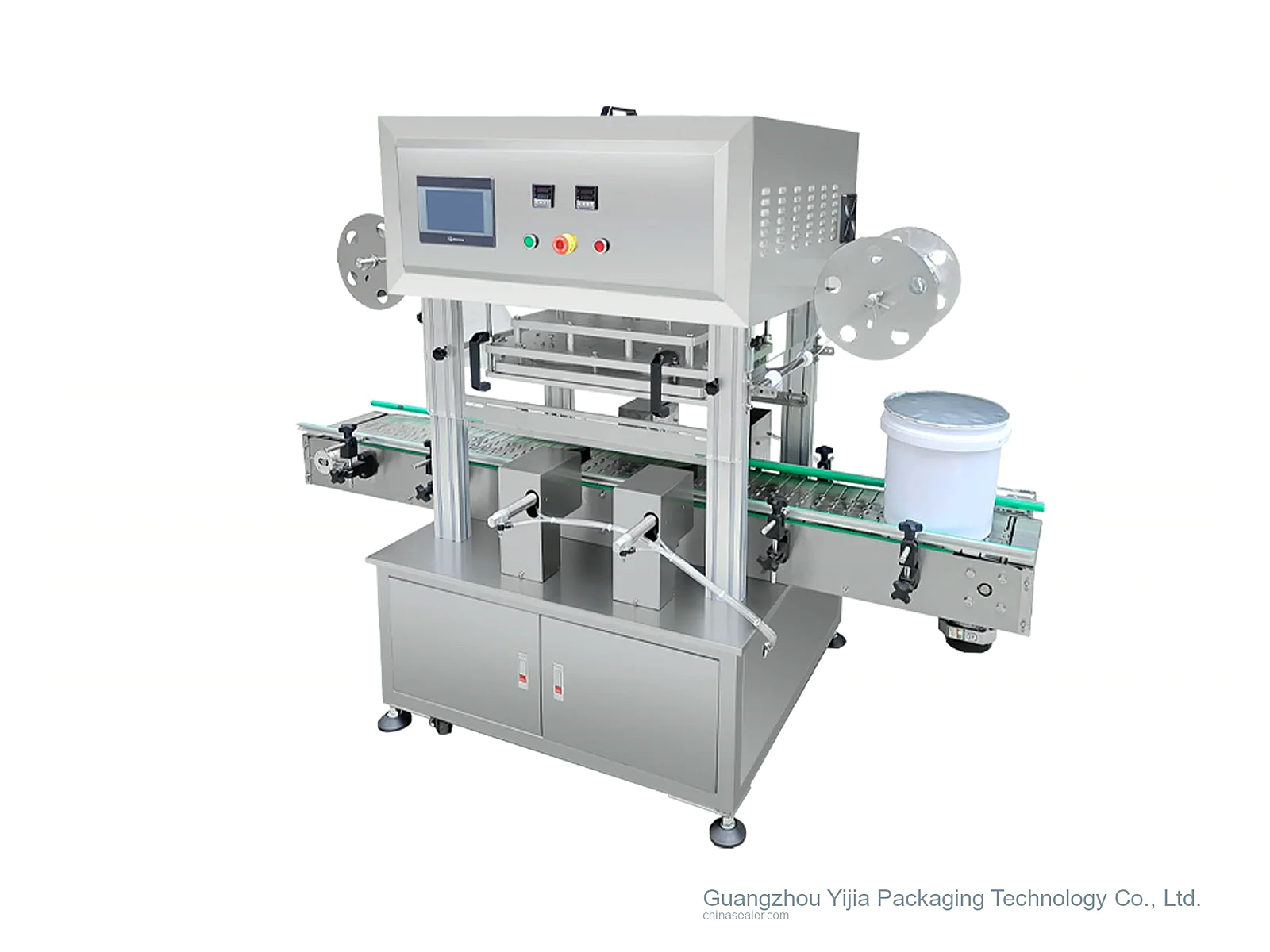 Large-Diameter Pail Heat Seal Sealer
Main sealing for the can body; The two processes cannot be merged due to similar container appearance; can body, inner seal components, and outer lid should be tested and retained...
Core process
First group by metal cans, paper cans, plastic cans, or smaller bottles/cans, then check the rim after filling freeze-dried fruit, lid film structure, and moisture-proof requirements.
Use a sealing and capping machine for paper-plastic cans with direct heat seal film and outer lid pressing, and an online automatic can seamer for metal cans with double seam lids.
For smaller bottles/cans with direct film lidding, evaluate an online heat sealing machine for bottles; when screw caps already have matching aluminum foil gaskets, evaluate an online induction foil sealing machine.
Record the shape, debris, and filling height of the freeze-dried product, and separately specify the nitrogen filling position, gas control method, and how to judge the displacement result.
Match heat seal film, double seam lid, outer lid, inner plug, and gasket to their respective containers; the leak-proof cap, inner plug, and gasket assembly must be checked together with the actual can mouth sample.
Select one of four equipment types based on container and inner seal structure, then place the nitrogen filling interface into an independent verification plan before or during the corresponding sealing process.
Sample details
Actual filled sample cans are used to check rim cleanliness, product breakage, and container headspace, and provide boundaries for nitrogen filling and sealing interfaces.
Provide freeze-dried fruit samples, filling height, debris condition, and each containerInner seal components and lids must be numbered with the corresponding container to avoid mixing double seaming, direct heat sealing, and induction inner sealing in the same judgment.
Metal cans provide double seam lids, paper-plastic cans provide direct heat seal film and outer lids, screw caps provide inner gasketsAssembly samples are used to verify can mouth fit, assembly action, and transportation requirements; individual parts cannot represent the finished packaging.
If there are inner plugs, gaskets, or leak-proof caps, submit complete samples and assembly sequenceThese conditions are used to plan gas interfaces and sampling, and do not change the basic boundaries of metal double seaming, paper-plastic film sealing, or induction inner sealing.
Provide nitrogen filling position, gas control method, inspection method, and acceptance criteriaAfter the main sealing and nitrogen filling interfaces are defined, use this information to evaluate conveying, changeover, and station coordination for continuous production.
Specify shift output, container changeover, available space, and front/rear section infeed and outfeed directionsCommon selection mistakes
First pair the container with the inner seal component one by one, then choose a sealing and capping machine, online automatic can seamer, heat sealing machine, or induction sealing equipment.
The project party should first provide the gas task and acceptance method, then arrange the position and tests within the determined sealing route.
Use actual filled sample cans to check pre-sealing cleanliness and rim residue, and include the operating method in the trial records.
Check the position of the film and the lid structure, then prepare either an online heat sealing machine for bottles or an online induction foil sealing machine.
Assemble all parts in the finished product order for testing, and record the parts needed for can type change and on-site operations.
View detailed technical notes
First Separate Lines by Freeze-Dried Fruit Can Lid Structure
Metal can roll-on sealing, direct heat sealing film for paper-plastic cans, and induction sealing of inner gaskets under screw caps are different sealing methods. Containers, lid films, and freeze-dried products should be checked as a complete set.
Nitrogen Filling Task Is Independent of Sealing Name
After determining the main sealing equipment, separately specify the gas entry position, displacement control, and acceptance methods. The nitrogen filling interface needs to be verified together with the specific can type and sealing process.
Paper-Plastic Cans Can Be Continuously Film-Sealed and Outer Lid Pressed
When paper or plastic cans are directly film-sealed and still require an outer lid press, the paper/plastic can aluminum foil sealing and lid pressing machine can handle both actions in sequence, with simultaneous sample retention for can, film, and lid.
Metal Cans Use Matching Lid Roll-On Sealing
The online automatic can sealing machine handles metal cans and roll-on lids. When changing can body or lid type, re-verify the roll-on components and project inspection methods, and retain samples for each combination separately.
For Small Bottles and Cans, First Check the Film Position
Exposed rims directly covered with film correspond to the online heat sealing machine for bottles, while screw cap inner gaskets correspond to the online induction foil sealing machine; the two sample types are not interchangeable.
Freeze-Dried Debris Enters Pre-Sealing Inspection
Debris generated during filling may occupy the sealing surface. Use actual filled sample cans to observe rim cleanliness and product damage before evaluating subsequent sealing.
Leak-Proof Parts Are Assembled in Finished Product Order
Leak-proof caps, inner plugs, and gaskets should be trial-assembled with the can mouth, recording installation direction, fit status, and opening and usage requirements.
Main Line and Gas Interface Are Accepted Separately
Film sealing, lid pressing, roll-on sealing, or induction results are checked according to their respective samples; gas displacement is sampled separately by the agreed method, and finally continuous conveying is evaluated.
Common questions
Can the route be determined with only photos of freeze-dried fruit cans?
You can start by screening based on metal cans, paper cans, plastic cans, and lid film structures. The main machine and nitrogen filling interface still require freeze-dried fruit, can body, film lid assembly samples, and acceptance methods.
What should the sample list include?
You need freeze-dried fruit, each can body, direct heat seal film or double seam lid, outer lid and gasket, filling height, nitrogen filling task, cycle time, and layout.
Can the same sealing machine be used for paper-plastic and metal cans?
You cannot combine judgments based on can shape. Paper-plastic cans are directly sealed with film and pressed with an outer lid, while metal cans are double seamed with matching lids; the contact surfaces and actuators are different.
How to distinguish direct heat sealing from induction inner sealing?
Direct heat sealing covers the bare rim with a film, while induction inner sealing first screws on a cap with an aluminum foil liner. The sample structure determines the equipment; they are not interchangeable.
Can nitrogen filling be judged together with the sealing equipment?
The main sealing route can be determined first, but the nitrogen filling position, gas displacement, and acceptance method must be verified as independent tasks and coordinated with specific equipment interfaces.
How to select leak-proof caps, inner plugs, and gaskets?
These components must be assembled with the corresponding can mouth as a set, then tested according to transportation and usage requirements. Providing individual part dimensions is insufficient to judge the assembled state.