Solution topic
Paper can aluminum foil inner sealing and labeling: heat sealing film press capping or liner induction
Compare two inner sealing routes for paper cans: direct heat sealing of aluminum foil film followed by capping, versus induction sealing of a liner inside the lid, and explain the
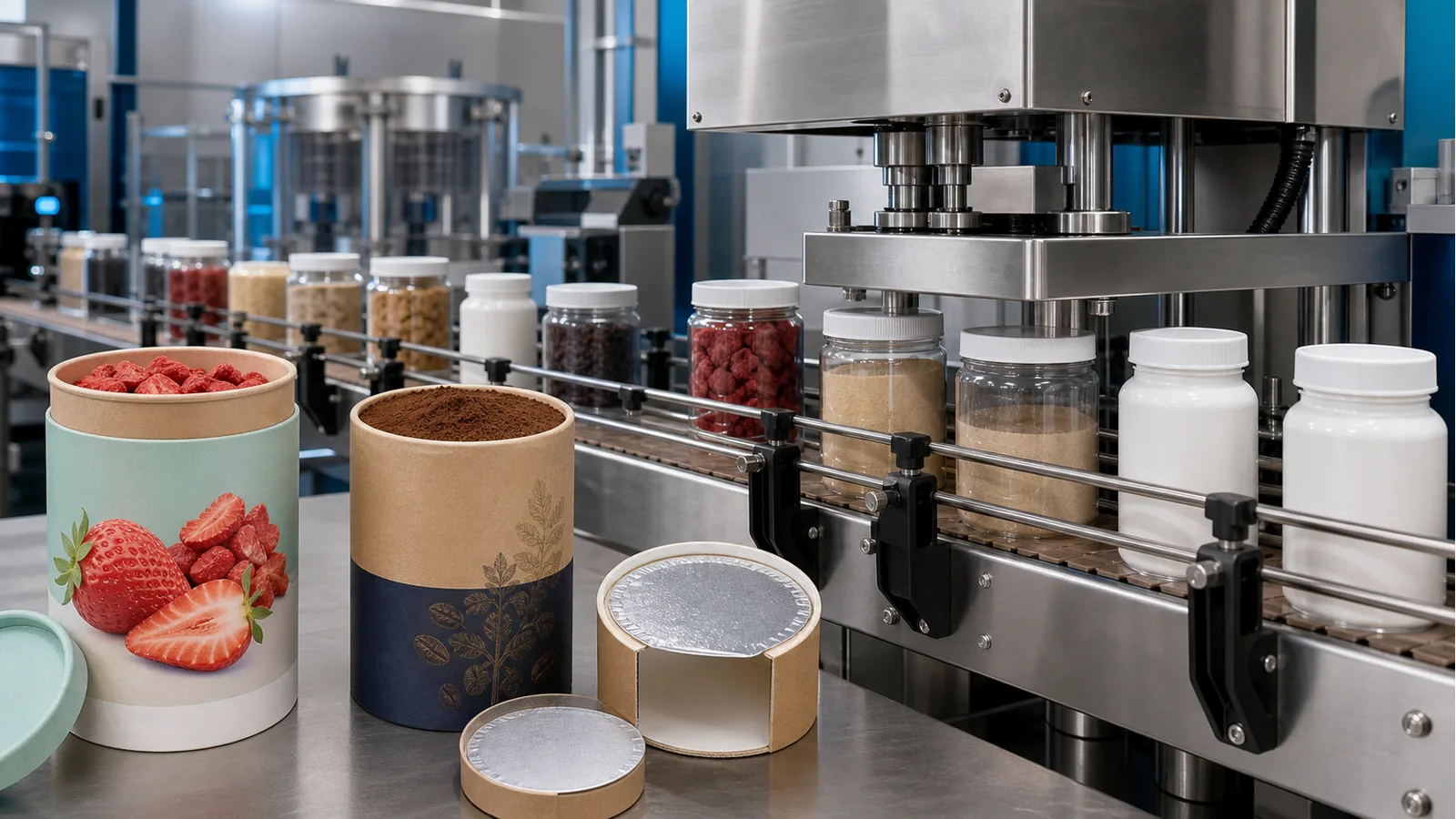
- When aluminum foil film is placed directly on the paper can rim, use a heat sealing film press capping combination; induction sealing is only evaluated when the threaded lid has a matching liner. The listed equipment covers inner sealing, outer lid, labeling, and coding, and does not extend to independent capping equipment without inner sealing.
Solution summary prepared for you
- When aluminum foil film is placed directly on the paper can rim and an outer lid is required, use the heat sealing film then capping combination. Film, can opening, and outer lid must be prototyped as a set.
- When there is a matching aluminum foil gasket inside the lid, cap and press first, then evaluate induction inner sealing. Without a lid gasket, this process cannot be applied.
- After the paper can inner seal and lid components are verified, set up labeling and coding. Projects requiring only capping without inner sealing should select separate lid equipment.
Route comparison
- Packaging where aluminum foil film is placed directly on the paper can rim and an outer lid is assembled after heat sealing inner seal.
- Direct film inner seal and outer lid pressing are completed sequentially in the same equipment combination, with clear process responsibility.
- Can opening support, film positioning, heat seal layer, and outer lid fit all require actual sample verification; it does not handle standalone capping without inner sealing.
- When an aluminum foil composite gasket is already inside the threaded lid, use induction inner sealing after capping.
- Use a paper can plastic pail aluminum foil sealing and capping machine, and debug with paper can, separate film, and outer lid together.
- Packaging where a threaded lid has a suitable aluminum foil composite gasket that lies flat against the paper can rim after capping.
- The outer lid first presses the gasket onto the round can opening, then the induction equipment completes the inner sealing of the lid gasket.
- Can opening, lid gasket, lid pressing, and container material together determine process conditions; equipment type is selected by testing.
- When film is placed directly on the can opening and an outer lid is pressed later, use direct heat sealing combination equipment.
- Evaluate benchtop air-cooled, water-cooled, or universal induction aluminum foil sealing machines based on paper can pass-through method, and trial with can-lid-gasket combination.
- Production where paper can inner seal and outer lid are stable and body labeling and batch traceability are required.
- Body labeling and date/batch coding are set independently after the main inner seal to maintain traceability layout and station inspection boundaries.
- Label material, body seam, clamping, and code adhesion must be verified with finished cans; labeling does not indicate inner seal status.
- When the main inner seal and lid components are still being adjusted, fixing the label position may interfere with subsequent inspection and clamping.
- After paper can dimensions and posture are adapted, use a round/square bottle labeling machine and connect a date/batch coding machine.
Associated Equipment / Consumables
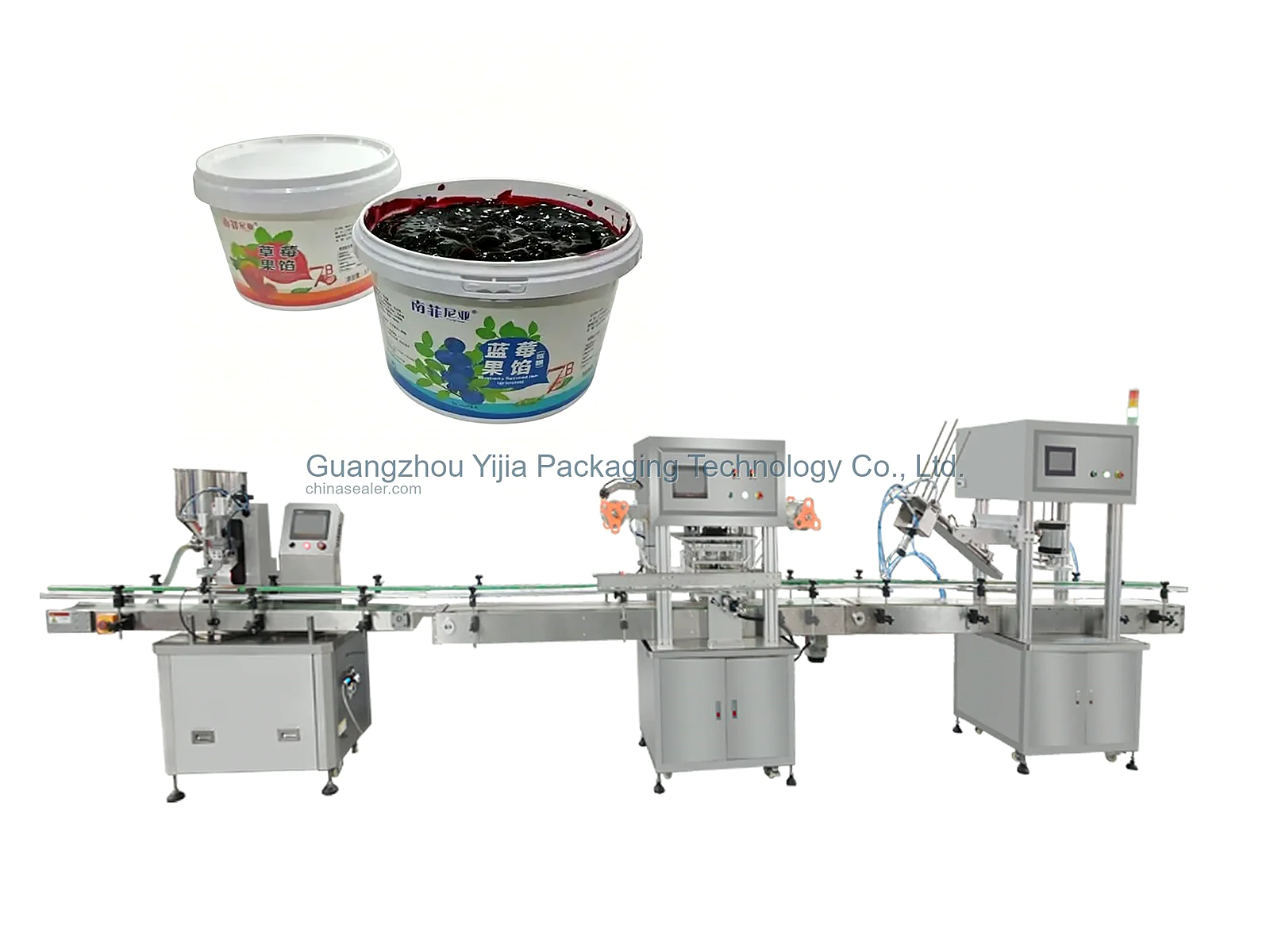 Paper Can and Plastic Pail Foil Heat Sealing and Capping Machine
The machine places foil directly on a paper can, plastic can or pail rim, heat-seals it, then presses the required closure. This differs from induction sealing a foil liner inside a tightened cap. Trial the container,...
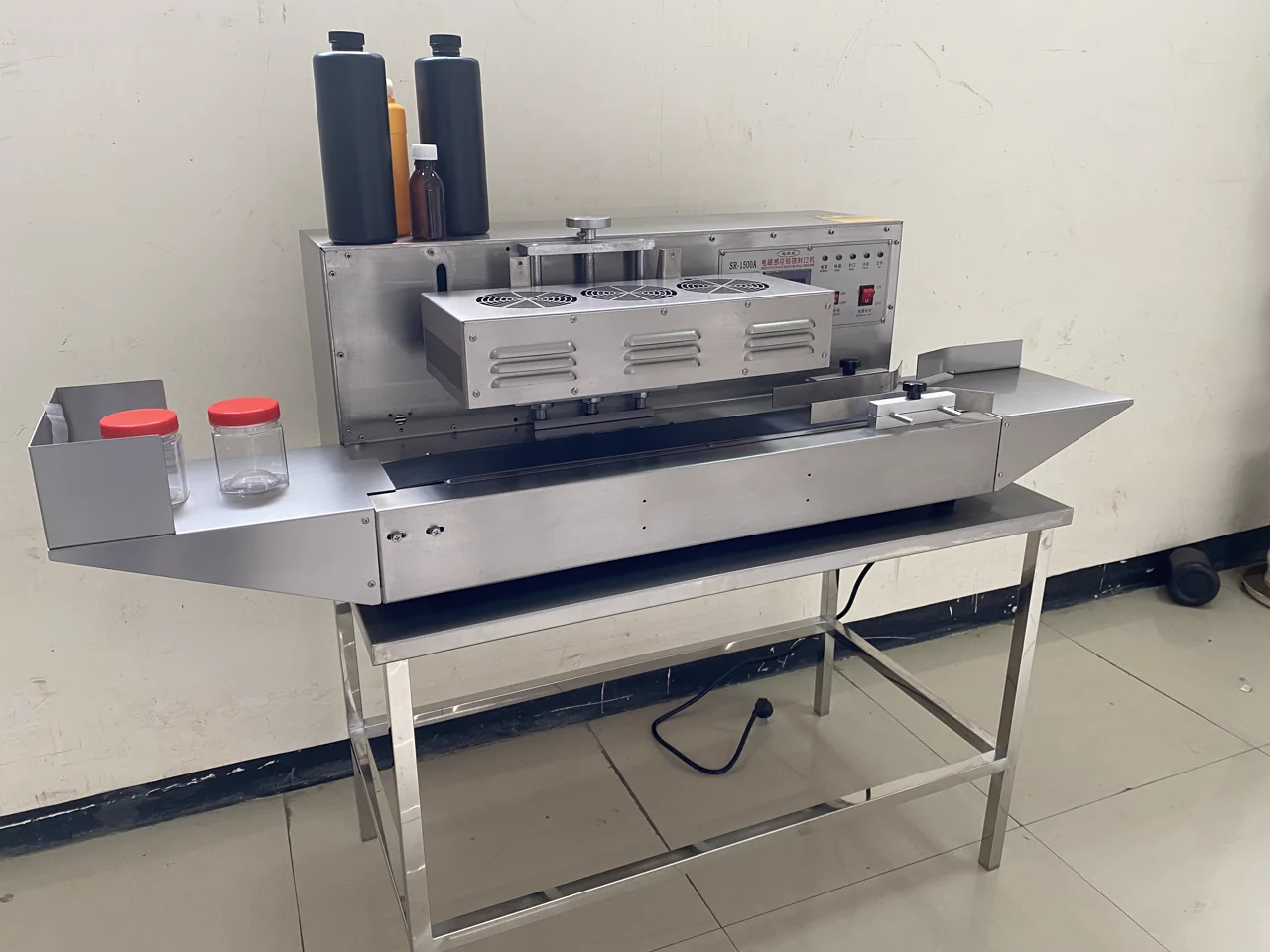 Benchtop Air-Cooled Induction Foil Sealer
Inner seal structure identification; Even if both are called aluminum foil sealing, the action sequence may differ; the sealing component position is the primary factor for e...
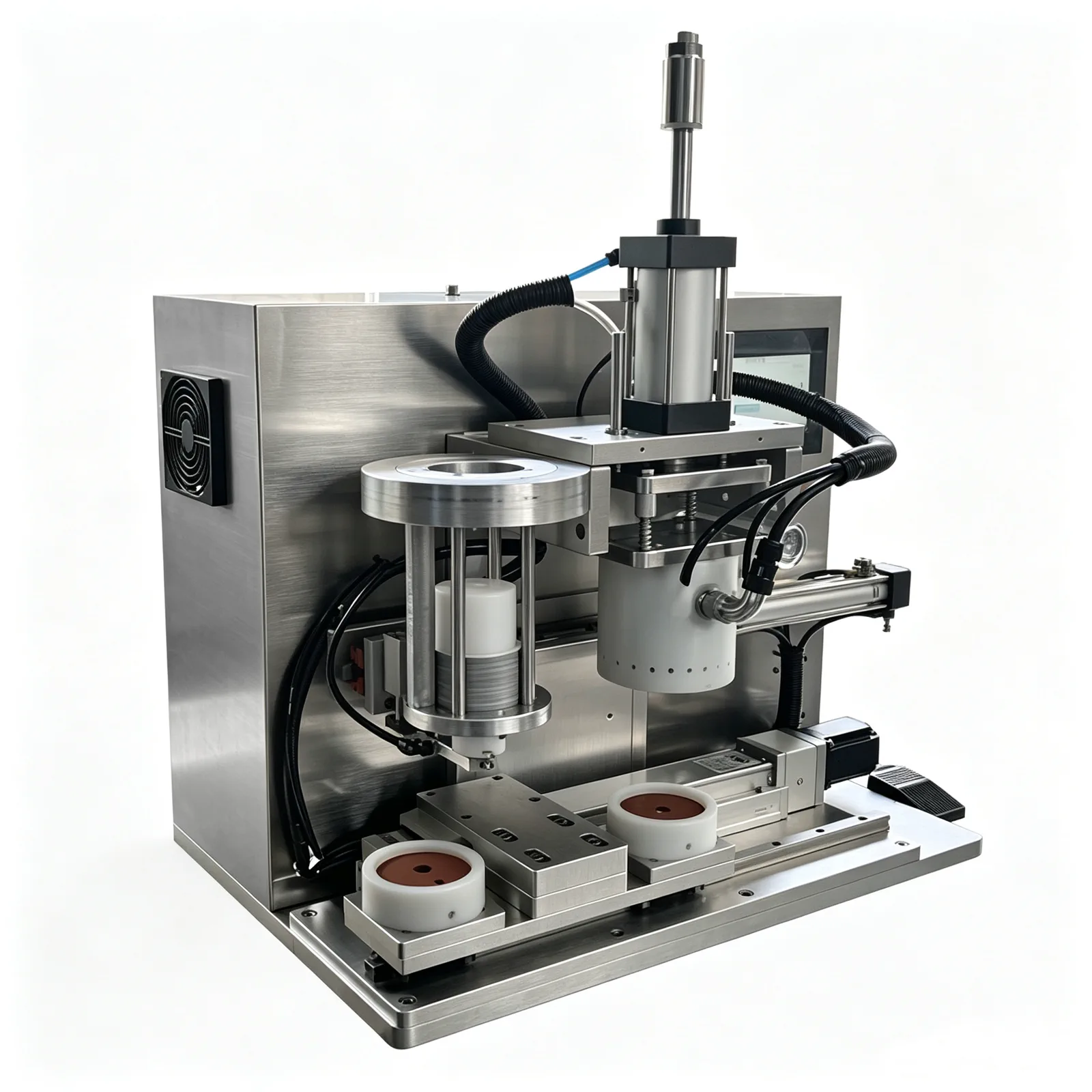 Benchtop Horizontal-Shift Capless Induction Foil Sealer
Inner seal structure identification; Even if both are called aluminum foil sealing, the action sequence may differ; the sealing component position is the primar...
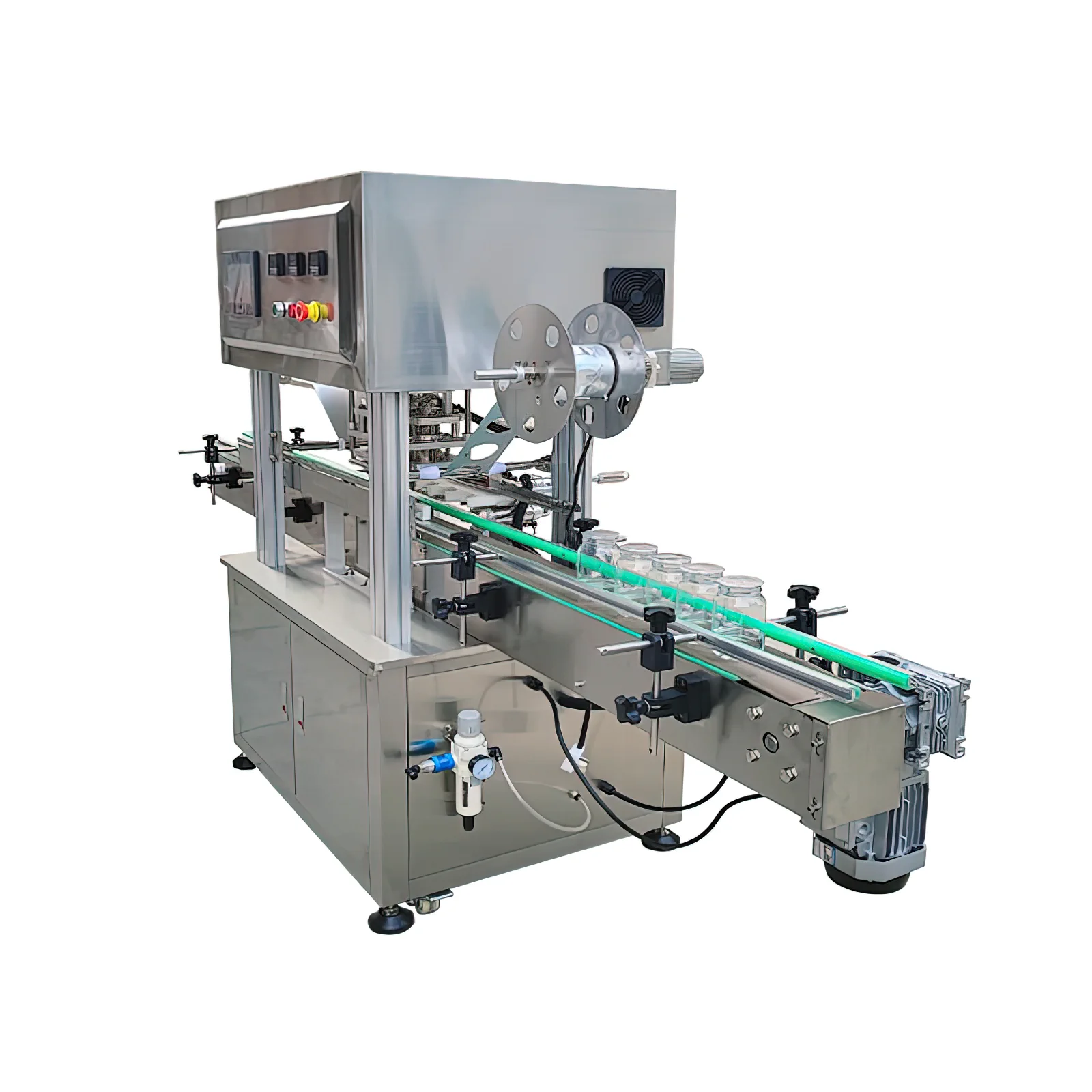 Inline Heat-Press Bottle Sealing Machine
Heat sealing film then capping; Can opening support, film positioning, heat seal layer, and outer lid pressing are all prototyped with the can-film-lid combination; the equipm...
Core process
First disassemble the paper can, can opening, separate film, outer lid, and lid gasket to confirm whether the inner seal component is placed directly on the opening or pre-installed in the lid.
When a separate aluminum foil film is placed directly on the can opening and an outer lid is required, the paper can plastic pail aluminum foil sealing and capping machine sequentially completes heat sealing inner seal and lid pressing.
When a threaded lid has a suitable gasket, press the gasket with the lid first, then evaluate benchtop air-cooled, water-cooled, or universal induction aluminum foil sealing machines based on operation mode.
After the main inner seal passes sample verification, the round/square bottle labeling machine is adjusted according to the paper can circumference or agreed display surface, and the date/batch coding machine sets readable traceability information.
Finished samples are separately retained for direct film heat sealing, lid gasket induction, and marking status to trace film, lid, or label issues by station.
Equipment handover starts when paper cans with completed inner seal and outer lid enter labeling and coding; after packaging structure or can type changes, recheck direction and changeover parts.
Sample details
The paper can rim, body roundness, height, and support surface are used to configure heat sealing tooling, induction pass-through, and labeling clamps.
Submit paper cans of each specification, close-up photos of the rim, key dimensions, and handling posture after sealingSeparate film and lid gasket correspond to different sealing positions and require separate material structures and production samples.
Provide aluminum foil film or lid gasket, and specify heat seal layer, dimensions, and placement directionThe outer lid's thread, press-in, inner plug, and opening method are used to confirm the capping action and its sequence relative to inner sealing.
Submit complete outer lid, inner plug, assembly samples, and planned lid supply methodLabel display surface, body seam, and batch code position should avoid can holding, rim, and friction-prone areas.
Provide label rolls, batch code content, placement position, and coding consumable samplesProduction schedule, can change frequency, site direction, and manual verification determine the handover method for standalone or linked lines.
Explain production batches, changeover plans, site space, upstream/downstream heights, and defective product handlingCommon selection mistakes
A separate film requires can opening support and direct heat sealing, while a lid gasket relies on induction treatment after the lid is pressed.
The combined machine's process scope is direct film heat sealing and subsequent capping; standalone capping without inner sealing is a different requirement.
If there is no suitable gasket inside the lid, the induction equipment lacks the corresponding inner sealing component; the outer lid material name cannot replace gasket confirmation.
The round/square bottle labeling machine must be adjusted according to the paper can roundness, seam, label surface, and pass-through posture.
Heat sealing and induction samples have different packaging materials and inspection methods and cannot be mixed in one general record.
View detailed technical notes
Inner seal position determines process sequence
For paper can aluminum foil inner sealing, first determine whether the foil component is on the can opening or inside the lid. A separate film goes through direct heat sealing and capping, while a lid gasket is induction sealed after capping.
Create separate files for can, film, and lid samples
Paper cans, rims, separate film discs, complete outer lids, and lid liners must be disassembled and recorded separately. Even if the packaging name is the same, the confirmation of the sealing part position cannot be omitted.
Direct film discs use a heat sealing and press capping combination
The paper can plastic pail aluminum foil film sealing and capping machine handles direct film discs at the can mouth and continues to press the outer lid. Can mouth support, heat sealing, and lid actions are debugged according to the complete set of samples.
Liner inside lid: arrange induction after capping
When the threaded lid has a matching liner inside, first place the lid so the liner contacts the round can mouth, then choose from benchtop air-cooled, water-cooled, or universal induction equipment.
Capping without inner sealing is not part of the combined process
Projects that only require capping without inner sealing should select the corresponding lid equipment. The paper can aluminum foil film sealing and capping machine cannot be described as a universal independent capping station; the two types of needs are handled separately from the host machine selection stage.
Labeling and coding start from finished cans
After the inner seal and outer lid pass sample testing, use the round/square bottle labeling machine and date batch coding machine to set up the can body layout. Both labeling and printing are verified with finished cans.
Keep acceptance samples by station
Heat sealing film, induction liner, outer lid, label, and batch number each retain acceptance samples. When abnormalities occur, return to the corresponding station for adjustment; do not use label appearance to replace inner seal judgment.
Common questions
How to distinguish between heat sealing and induction sealing for paper cans?
When a separate film is placed directly on the can opening and an outer lid is required, use an aluminum foil sealing and capping machine. If the lid has a built-in gasket, cap first and then use induction sealing.
Can the sealing and capping machine handle capping alone?
It is used for direct heat sealing of a film on the can opening followed by pressing on an outer lid. For capping only without inner sealing, evaluate the corresponding capping equipment.
What conditions must be met for induction inner sealing of paper cans?
It requires a round or verifiable can opening that matches the lid gasket and a stable capping state, and should be tested with the paper can, lid, and gasket combination.
How to choose the cooling method for induction equipment?
Evaluate benchtop air-cooled, water-cooled, or universal induction equipment based on the paper can, lid gasket, pass-through method, and production schedule.
At which process stage should labeling and coding be placed?
After the main inner seal and lid components pass sample testing, proceed with labeling and coding to avoid label clamping or code position interfering with rim and lid inspection.
What samples should be submitted to confirm the complete configuration?
Prepare paper cans, separate films, complete lid assemblies, lid gaskets, labels, batch code layouts, and acceptance methods for sealed finished products.