Solution topic
Paper Can and Plastic Pail Foil Sealing: Press Capping, Induction and Labeling Configurations
Compare heat-sealed foil film press capping for paper cans and plastic pails, cap liner induction, and labeling routes, explaining container rims, cap types, liners, and downstream
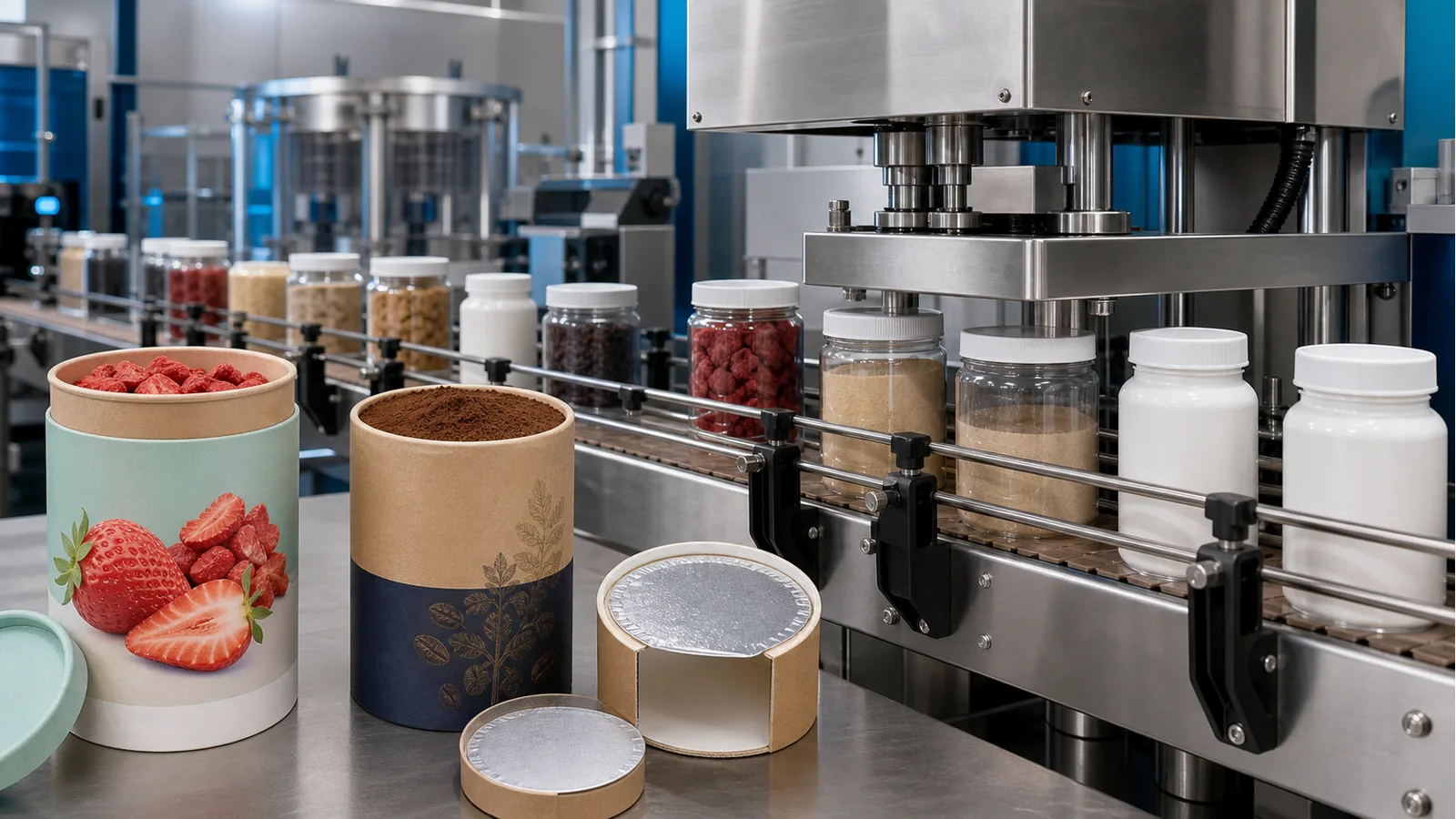
- Direct heat-sealed foil followed by press capping is suitable for corresponding rim structures; for caps with liners, the cap must first be pressed tight before induction sealing. Press capping alone does not equal foil sealing; labeling, coding, and checkweighing should be arranged after the main seal.
Solution summary prepared for you
- For bare-mouth loose film on paper cans or plastic pails, the aluminum foil sealing and capping machine can heat seal and handle the outer lid; the can mouth, film layer, and lid type must be trialed as a set.
- The aluminum foil liner in the lid must first be brought close to the can mouth with the lid, then use an air-cooled, water-cooled, or inline induction foil sealer. Induction equipment does not perform capping.
- Labeling, date/batch coding, and inline checkweighing are arranged after the main seal, and set according to can body orientation, surface, and actual weight samples.
Route comparison
- Suitable for paper cans or plastic pails where the rim can be directly heat sealed with a separate film and the outer lid is handled by the same type of station after the main seal.
- The main machine handles the separate aluminum foil film on the bare can mouth and the matching outer lid, concentrating the main seal and press capping duties.
- Can mouth support, film compatibility, content residue, and lid fit all need testing; not suitable for structures with only a lid liner.
- When the packaging is already defined as a lid liner and requires induction inner sealing after capping, the induction route should be used.
- Use a paper can/plastic pail aluminum foil sealing and capping machine, configuring contact parts according to the can mouth, direct film, and lid type.
- Suitable for non-metal cans or pails with an aluminum foil liner in the lid, where the liner can be brought close to the rim before induction.
- After the lid liner is pressed close to the can mouth with the outer lid, the induction equipment completes the inner seal; suitable for packaging with a stable lid-liner-can relationship.
- Capping and screw capping must be completed separately. Container material, diameter, lid pressure, and liner structure must be verified with actual samples.
- When the can mouth uses a separate film and the outer lid is pressed in after the main seal, the lid liner induction process does not match this structure.
- For small batches, try a benchtop air-cooled induction foil sealer; for continuous production, evaluate a water-cooled induction foil sealer or an inline induction foil sealer.
- Suitable for downstream stages where can mouth sealing and lid assembly are already accepted and traceability, labeling, or weight screening is needed.
- After the main seal passes, body labeling, date characters, and weight screening are done; anomaly sources are easier to distinguish by station.
- Can body surface, incoming direction, and weight samples need separate verification; downstream does not perform film sealing, capping, or main seal testing.
- When the main seal and lid seating state have not yet formed repeatable samples, the labeling and weight check line should not be fixed first.
- Round/square bottle labeling machine followed by date/batch coding machine, with an inline checkweigher configured according to weight check requirements.
Associated Equipment / Consumables
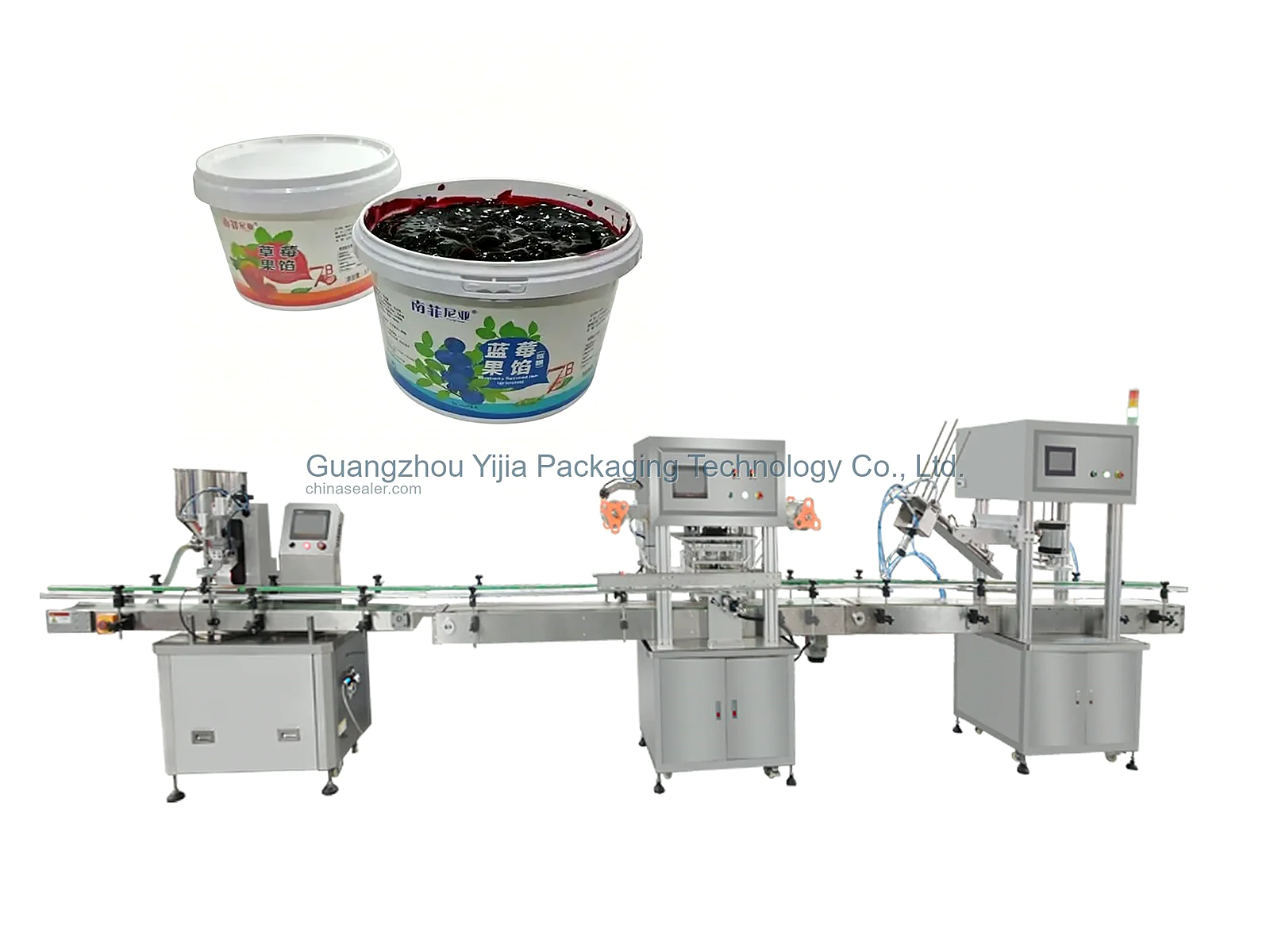 Paper Can and Plastic Pail Foil Heat Sealing and Capping Machine
The machine places foil directly on a paper can, plastic can or pail rim, heat-seals it, then presses the required closure. This differs from induction sealing a foil liner inside a tightened cap. Trial the container,...
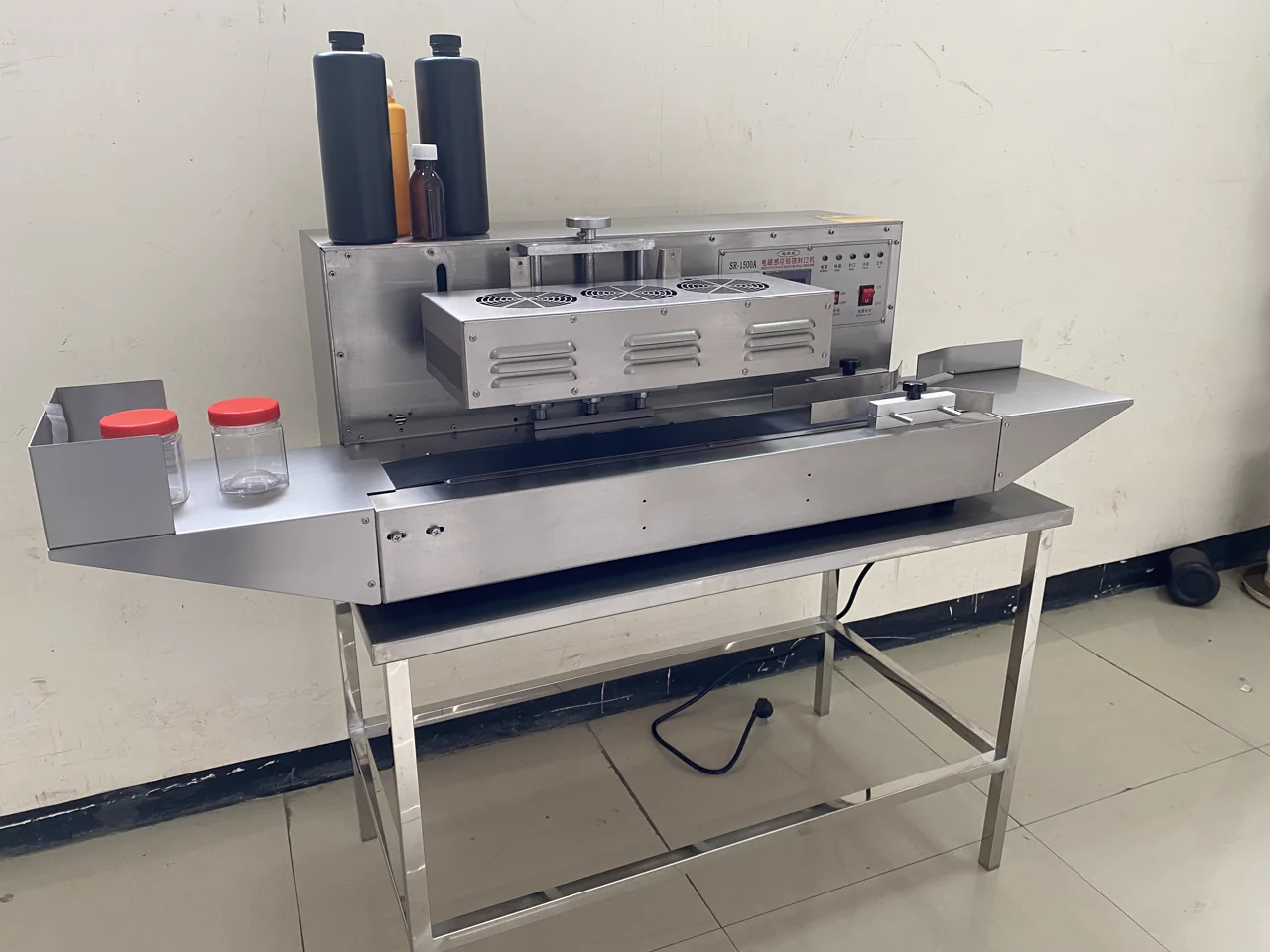 Benchtop Air-Cooled Induction Foil Sealer
Direct film heat sealing and press capping; Rim flatness, film compatibility, content residue, and lid fit must be accepted item by item with filled samples; Paper can/plasti...
 Round-Bottle and Front/Back Labelling Machine
Label and batch code; Can body seams, film, curvature, and post-capping pass orientation together determine the guidance, labeling, and coding positions; Round/square bot...
 Date & Batch Inkjet Printer
Label and batch code; Can body seams, film, curvature, and post-capping pass orientation together determine the guidance, labeling, and coding positions; Round/square bottle labeling machi...
Core process
When a bare can mouth uses a separate aluminum foil film, the paper can/plastic pail aluminum foil sealing and capping machine performs the heat-seal main seal and the matching press capping action.
The lid liner route first seats the lid, then selects benchtop air-cooled, water-cooled, or inline induction foil sealing according to the sample and production method.
After the main seal finished sample passes, the round/square bottle labeling machine applies the body label, and the date/batch coding machine prints characters on the final visible surface.
The inline checkweigher establishes a weight range based on actual filling results and verifies diversion with defined reject samples.
Each can mouth, film, and lid type forms one trial set; content dust or oil is also brought into the pre-seal check according to production state.
Before connecting the line, mark the upstream can incoming state, capping responsibility, sealing method, can orientation, and downstream inspection positions.
Sample details
Rim width, flatness, material, and post-filling deformation affect heat-seal contact and induction liner seating.
Multiple can body samples, diameter and height, material structure, rim tolerance, and filled stateThe process for direct film and lid liner differs, and the lid type determines the press-in or screw-on pre-action.
Production aluminum foil film or liner, heat-seal layer description, inner/outer lid structure, dimensions, and finished samplesContent falling on the rim affects the main seal; actual dust, oil, and cleaning methods should be included in the trial.
Filling material samples, drop state, pre-seal rim cleanliness standard, and product packaging test methodDownstream equipment needs the upstream exit direction, can spacing, and capping state; it cannot be arranged by machine name alone.
Upstream equipment, incoming direction, manual duties, shift targets, buffering, and site layoutThe can body surface and finished orientation determine label character position; weight rules come from actual filled samples.
Label and batch code layout, application surface, weight distribution, reject samples, and diversion requirementsCommon selection mistakes
The equipment name cannot indicate whether the can mouth is bare film heat sealing or lid liner induction sealing; the operation sequences differ.
The outer lid press-in method, support position, and seating height vary with the lid type; looking only at the outer diameter can miss the mating structure.
Cans with similar diameters may have different rim tolerances, body strength, and lid fit; changeover cannot rely only on diameter.
The paper can surface film, seams, or rough areas change label adhesion; a short empty-can trial cannot represent the storage and transport state.
The outer lid hides the aluminum foil; if the main seal is not sampled separately, only the lid is visible later and the seal condition cannot be judged.
View detailed technical notes
Where the Foil Starts
The aluminum foil on paper cans and plastic pails may be a film placed directly on the bare can mouth, or a liner pre-installed in the lid. First clarify the position to arrange the correct sealing and capping sequence.
Direct Film and Press Capping on the Same Line
Bare-rim direct film is heat-sealed by the paper can/plastic pail foil sealing and press capping machine, then press capping is performed to match the machine structure. The rim support and cap type are both adjusted using actual samples.
Induction Station After Capping
The cap liner must first be brought close to the rim with the outer cap before entering the induction equipment. A benchtop air-cooled unit is suitable for sample verification; water-cooled or inline models need to be evaluated based on actual containers and production organization. The capping method, liner material, container mouth diameter, and passing orientation are also recorded.
Capping Is an Independent Upstream Step
The induction foil sealing machine does not place caps on containers or perform screw capping. Manual or upstream capping stations should provide containers with caps in place and liners correctly positioned, and treat loose caps, tilted caps, and misaligned liners as upstream abnormal samples for inspection.
Verify the Foil First, Then the Outer Cap
For main seal acceptance, retain samples before the cap covers the foil. Choose peel, leak, or other packaging tests according to product requirements, and record the corresponding container, film, cap, and process conditions.
Labeling Uses Finished Containers After Sealing
The round/square bottle labeling machine adjusts guides according to the container body curve, square corners, or seams. The label layout must avoid surfaces unsuitable for adhesion, and trial labeling should be done on finished containers.
Characters and Weight Each Have Their Own Judgment Source
The date/batch inkjet coder triggers characters based on the final visible position, while the inline checkweigher sets weight rules and reject diversion based on actual fill distribution.
Fix Each Handover State Before Linking the Line
When expanding from small-batch single machines to a linked line, draw the upstream container output, capping responsibility, sealing direction, labeling surface, and material receiving method in the same flow, then run continuous sample tests.
Common questions
Can paper can aluminum foil only be heat sealed?
More than one. A bare-rim loose film can be heat sealed, while a lid liner is induction sealed after the lid is in place. The choice is determined by actual samples of the can, lid, and film.
Can multiple can mouth sizes share the main machine?
It can be evaluated with change parts, but the diameter, tolerance, lid type, and support differences all need trial assembly. If the differences exceed the machine structure, separate configurations should be used.
Is labeling still needed after sealing and capping?
It depends on the sales packaging. When a can body label is needed, use a round/square bottle labeling machine after the main seal passes to trial-label and confirm the position.
Can the route be evaluated without actual samples?
Photos and dimensions can give a preliminary structural assessment, but the formal configuration still requires can, lid, film, and content samples to complete clamping and sealing trials.
How to define the acceptance method for the aluminum foil main seal?
Peel, leak, or other tests should be selected according to the product packaging requirements, and the can mouth, film, and process combination should be recorded. The outer lid cannot replace the main seal acceptance.
Does a small-batch paper can project need a line?
You can start with a standalone station. After the can, lid, and film orders stabilize, connect labeling and coding according to the actual takt time, handover direction, and exception handling.