Solution topic
Complete Shampoo Bottling Line: Product Feeding through Capping, Labelling, Inspection, Case Packing and Palletising
Configure shampoo feeding and filling by product behaviour, capping and labelling from samples, then integrate inspection, buffering, case packing, sealing, marking and palletising
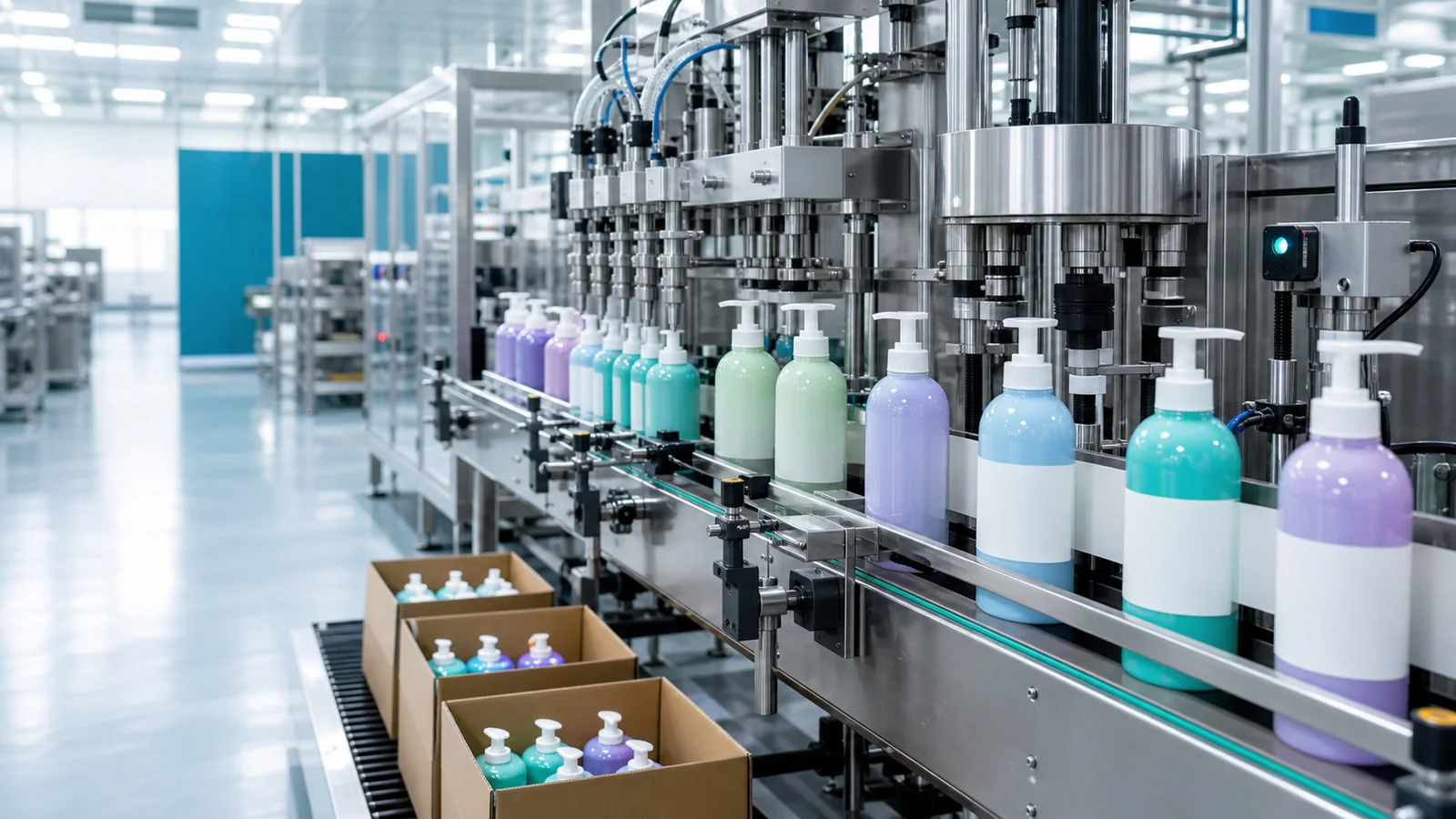
- A line is not a simple sum of machines. Viscosity, bottle, cap, label, buffering, stops, case format and floor space must be commissioned together.
Solution summary prepared for you
- The complete shampoo bottle filling line starts with bottle unscrambling and washing, goes through daily chemical lotion filling, cap placement and screwing, label inspection, and then enters case packing and palletizing.
- Shrink sleeve and self-adhesive labeling are separated according to the packaging layout. Heat sealing film and cap induction liners cannot be mixed in the process.
- Robotic case packing and palletizing take bottle arrangement, carton dimensions, outer carton handling, and pallet plan as inputs, and need to be evaluated with formal samples.
Route comparison
- Suitable for shampoo projects with multiple specification changes, phased construction, or where filling, capping, and labeling processes need independent verification first.
- Filling, capping, and labeling equipment can be put into use and changed over separately. Suitable for project stages where caps and labels need to be verified first.
- Bottles need manual transfer between individual machines. Empty bottle washing, online inspection, case packing, and palletizing also need to be organized separately.
- When manual handling between stations is significant, or when continuous inspection and downstream packaging are required, dispersed standalone machines cannot cover the entire logistics.
- The daily chemical lotion filling machine, automatic screw capper, shrink sleeve machine or round/square bottle labeling machine can be configured in sections. Batch coding is evaluated through collaborative equipment.
- Suitable for projects that first complete the continuous bottle filling process from empty bottle handling to labeling and coding, with case packing and palletizing temporarily handled by existing processes.
- Empty bottle sorting, washing, filling, capping, and bottle body labeling are continuously handed over, reducing the movement of finished bottles between main processes.
- Bottle stability, conveying height, changeover time, and exception handling in each section need overall integration. The material and cleaning of food-grade conveyor lines should also be checked according to the daily chemical site.
- When cartons, case packing arrangement, and pallet plan are already defined and automatic downstream is required, building only the main bottle line will leave new manual transfer.
- The automatic bottle unscrambler and automatic bottle rinser/washer connect to the daily chemical lotion filling machine, then to the cap feeding and placing system, automatic screw capper, and corresponding labeling equipment.
- Suitable for daily chemical projects with clear bottle type, cap type, label, carton, and pallet data, and that wish to extend from empty bottle handling to palletizing.
- Bottled finished products enter case erecting, packing, sealing and marking, and palletizing after inspection, allowing outbound packaging to be included in the same logistics direction.
- Bottle arrangement, carton specifications, dynamic label data, pallet stacking pattern, and site aisles are all indispensable, and restricted equipment must also complete sample testing.
- When product specifications change frequently and the outer carton and pallet scheme are not yet stable, complete packaging data verification first, then decide the scope of downstream automation.
- After the main bottling line, evaluate the automatic case erector, robotic case packer, collaborative carton sealing and outer labeling line, and robotic palletizer.
Associated Equipment / Consumables
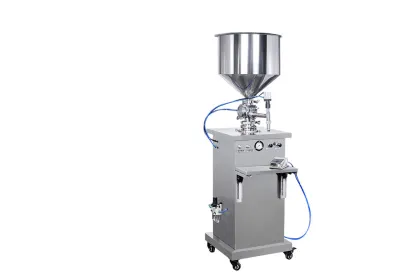 Daily Chemical Lotion Filling Machine
Daily chemical material filling; The bottle mouth condition after filling affects cap placement, optional inner sealing, and label appearance. Station acceptance cannot only reco...
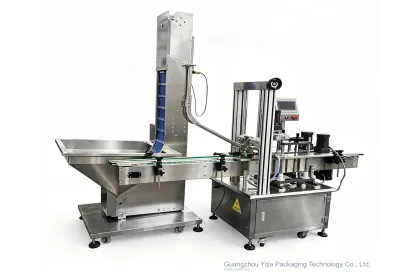 Automatic Screw Capping Machine
Daily chemical material filling; The bottle mouth condition after filling affects cap placement, optional inner sealing, and label appearance. Station acceptance cannot only record the...
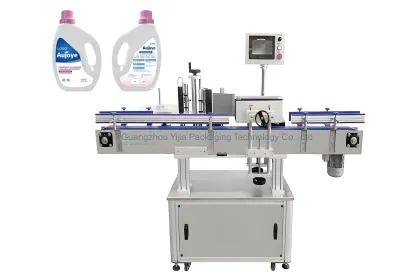 Round-Bottle and Front/Back Labelling Machine
Bottle body labeling and online inspection; Shrink sleeve, labeling, coding, weight, cap, and liquid level inspections each have independent acceptance conditions. Equipm...
Core process
Bottles, caps, labels, inner seal material, cartons, and pallets should come from the same packaging plan so that all stations have a unified dimension and layout reference.
After the automatic bottle unscrambler organizes the empty bottles, the automatic bottle rinser/washer can be evaluated according to the washing process. Washing medium, drainage, and residue requirements are determined by project information.
The daily chemical lotion filling machine handles shampoo filling into bottles. Actual material testing should cover viscosity, foaming, cut-off, liquid hanging on the bottle mouth, and cleaning of liquid contact parts.
The cap feeding and placing system organizes and places the matching caps, and the automatic screw capper closes them. Direct film is heat sealed before capping, while cap liners are induction sealed after capping.
The shrink sleeve machine and the round/square bottle labeling machine are selected one or the other based on the layout, or used for different products. The collaborative date/batch coding machine and inspection equipment are then arranged according to the rules.
The automatic case erector can be evaluated to prepare cartons, and the robotic case packer packs bottles according to the arrangement. After the carton passes through the collaborative sealing and labeling line, the robotic palletizer is evaluated.
Sample details
The bottle mouth, shoulder, bottom, and overall rigidity affect unscrambling, washing, filling positioning, capping clamping, and conveying posture.
Please submit all shampoo bottle types, indicating mouth diameter, bottle height, shape, material, and placement orientation on the conveyor.The cap affects both the cap feeding direction and capping contact parts, and also determines whether there is a direct film or cap liner sealing branch.
Please provide complete samples of flip-top caps, pump heads, or screw caps, and specify the inner seal material, opening method, and closure acceptance method.Shrink sleeve and self-adhesive labels have different feeding, positioning, and application actions. Coding and real-time print-and-apply labeling also involve layout and data.
Please prepare label or shrink sleeve samples, layout drawings, application position, batch code content, and whether dynamic labeling is needed.The production plan will change the filling stations, buffering, and changeover arrangements, and also determine which equipment needs continuous integration.
Please list the main specifications, planned speed, shifts, changeover frequency, and processes that can involve manual labor.Viscosity, foaming, and stringing affect the liquid contact structure and finish of the daily chemical lotion filling machine. Cleaning methods should also be included in the material change plan.
Please provide actual shampoo material or a status description, and describe flow, foaming, particles, stringing, and cleaning requirements.The main bottle line, case packing unit, and palletizing area need a continuous logistics direction, while also leaving space for operation, material preparation, and maintenance.
Please provide the factory layout, power and air supply, material inlet and outlet directions, carton storage area, and pallet operation area.Common selection mistakes
The viscosity, foaming, and stringing behavior of different formulations will change the filling finish. Equipment cannot be determined based only on the name 'shampoo'.
Pump head orientation, thread fit, and bottle body clamping together determine the capping action. A cap that is qualified on its own does not mean it is suitable in the integrated line.
Irregular, round, and square bottles require different label application methods. Shrink sleeve material also goes through a separate shrinking and setting process.
The printing position should avoid label edges, strongly curved bottle surfaces, and frequent friction areas. Plastic surfaces and ink also need trial printing.
Case packing arrangement, outer carton dimensions, and pallet pattern will in turn affect the main bottle line outlet. It is not appropriate to collect this information only after the equipment is finalized.
The complete line needs coordination of conveying height, buffering, control signals, exception handling, and changeover steps. Individual machines arriving on site does not mean they can run continuously directly.
View detailed technical notes
First Map the Full Flow from Empty Bottles to Pallets
A complete shampoo bottling line starts from empty bottle supply and ends with case packing and palletizing. Listing only filling, screw capping, and labeling still misses pre-treatment and outbound packaging.
Line Input Is More Than One Bottle Sample
Bottle and cap types determine the front-end mechanical actions, the actual shampoo product determines filling, label format determines shrink sleeve or self-adhesive labeling, and cartons and pallets determine the end section. Data for each section should be collected together before the line layout.
Segmented Standalone Machines Are Suitable for Item-by-Item Validation
At the initial stage, the daily chemical lotion filling machine, automatic screw capping machine, and shrink sleeve or self-adhesive labeling equipment can be used separately, with the collaborative date/batch inkjet coding machine evaluated separately according to the layout. This approach facilitates machine-by-machine sampling, but bottle transfer, cleaning, and manual case packing still need separate arrangements.
The Main Bottling Line Starts with Bottle Unscrambling and Washing
For continuous bottling, first use an automatic bottle unscrambler to organize empty bottles, then evaluate an automatic bottle rinsing/washing machine, followed by the daily chemical lotion filling machine, cap sorting and placing system, and automatic screw capping machine. At the end, choose a shrink sleeve machine or a round/square bottle labeling machine based on the packaging format.
Downstream Automation Extends to Pallets
After the main bottling line is completed, sequentially evaluate the automatic case erector, robotic case packer, and robotic palletizer. Carton sealing and outer case labeling are evaluated through collaborative line integration. Carton arrangement, pallet scheme, and each restricted equipment must be confirmed through formal samples.
The Complete Set of Packaging Materials Forms a Unified Baseline
Shampoo bottles, pumps or caps, inner seal materials, labels, cartons, and pallets should be numbered as a set, and the trial run of the entire line should use the same set of dimensions and layout data.
Lotion Filling First Addresses Foam and Finishing
The daily chemical lotion filling machine needs to check foam, stringing, material break-off, liquid hanging at the bottle mouth, and cleaning method using actual shampoo, and then determine the liquid receiving configuration.
Cap Placing and Screwing Are Two Consecutive Actions
The cap sorting and placing system is responsible for sorting and placing caps, and the automatic screw capping machine completes the corresponding closure. Pump head orientation, threaded caps, and bottle body clamping are tested separately.
Inner Sealing Is a Branch Triggered by Packaging
Direct membrane is handled by the in-line heat sealing machine before capping, while cap inner gaskets are first screw-capped and then enter the in-line induction foil sealing machine. This station is not added when there is no corresponding packaging material requirement.
Bottle Labeling and Variable Information Are Handled Separately
Shrink sleeve labeling and self-adhesive labeling are selected according to the format, and the collaborative date/batch inkjet coding machine handles variable information. For dynamic labels, the data and application conditions of a real-time print-and-apply labeling machine are evaluated separately.
Common questions
How is the equipment list determined for a complete shampoo bottle filling line?
The equipment list must be checked section by section for bottle unscrambling and washing, filling and screw capping, label inspection, case packing and sealing, and palletizing. The bottle caps, labels, case specifications, and the scope of automation will all change the equipment list.
What core stations are needed for continuous production?
First determine the unscrambling, filling, and screw capping stations based on the target speed and bottle type, then integrate labeling, inspection, and downstream packaging to match the same finished product rhythm.
Can a plan be made when samples are not yet available?
You can initially divide the process sections based on photos, drawings, and production plans, but the filling nozzles, capping contact parts, label positioning, and case packing arrangement still need confirmation with actual samples.
Should an aluminum foil inner seal be added for shampoo bottles?
Only add the corresponding equipment when the packaging uses a direct film seal or an induction liner inside the cap. The sealing sequence and materials are determined by cap and bottle combination tests.
Can labeling and date/batch coding be handled continuously?
Yes. First divide the label and printing areas on the bottle body layout, then verify the station speeds for shrink sleeve labeling, self-adhesive labeling, and collaborative batch coding separately.
Can the main bottle filling line be installed first and case packing added later?
It can be expanded later, but the first phase must reserve the finished bottle handover, carton supply, control interfaces, and maintenance access. New equipment will still need to be re-integrated.